
Butt exercises are strength movements that target the glute muscles to improve lower-body strength, stability, and everyday movement. Training your glutes matters because these muscles support walking, standing, lifting, balance, and posture—not just appearance. With the right exercise selection, you can effectively train your glutes at home using mostly bodyweight and simple progressions.
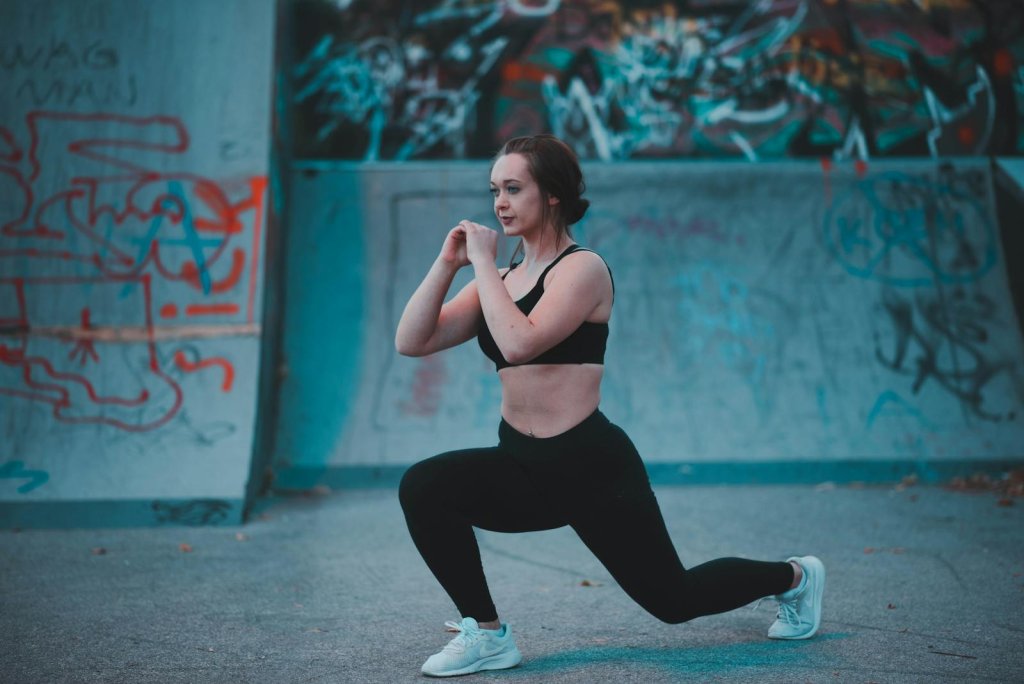
This guide explains what butt exercises are, why they matter, how often to do them, and walks you through 18 evidence-based exercises you can safely perform at home.
What Are Butt Exercises?
Butt exercises—often called glute exercises—are movements designed to strengthen the gluteus maximus, gluteus medius, and gluteus minimus. These muscles extend the hips, stabilize the pelvis, and help control leg movement during daily tasks like climbing stairs or getting up from a chair.
At home, butt exercises typically use:
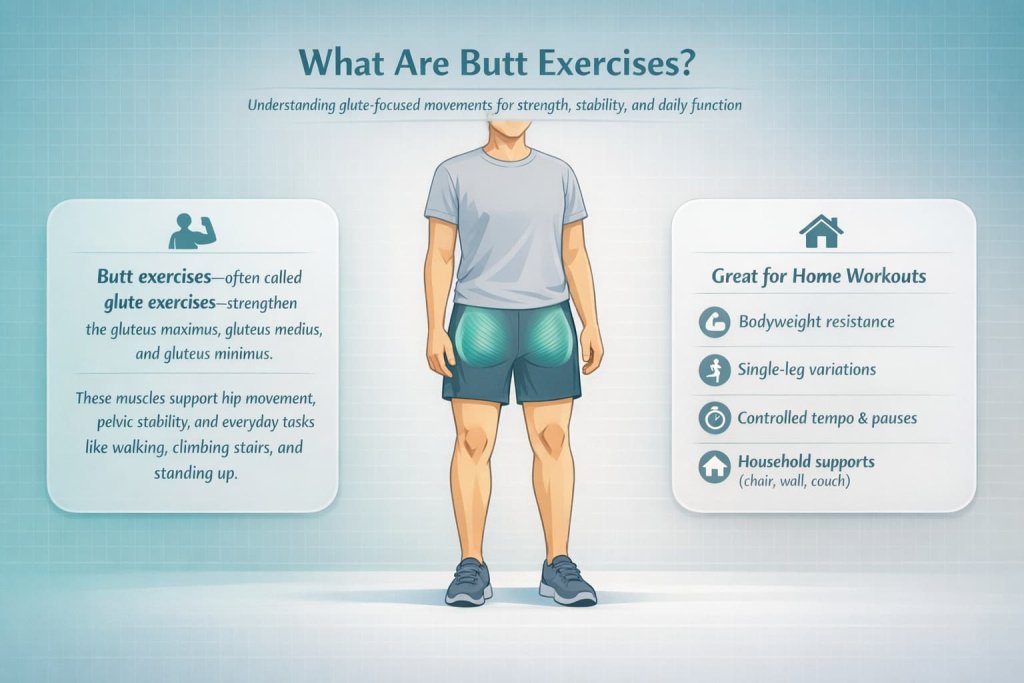
- Bodyweight resistance
- Single-leg variations
- Controlled tempo and pauses
- Household supports (chair, wall, couch)
18 Best Butt Exercises You Can Do at Home
Below is a balanced list covering hip extension, squatting, lunging, stepping, and lateral stabilization patterns.
1. Glute Bridge
How to do it
- Lie on your back with knees bent and feet flat on the floor, hip-width apart
- Place arms by your sides and brace your core gently
- Squeeze your glutes and lift your hips upward
- Raise until your shoulders, hips, and knees form a straight line
- Lower your hips slowly back to the floor with control
Why it works
The glute bridge isolates hip extension, allowing the gluteus maximus to work without excessive strain on the lower back. The floor-supported position makes it especially effective for beginners and home training
Trainer Tip
Pause for 2–3 seconds at the top of each rep to increase glute engagement and reduce momentum.
2. Single-Leg Glute Bridge
How to do it
- Start in a standard glute bridge position
- Extend one leg while keeping thighs aligned
- Drive through the heel of the planted foot to lift hips
- Keep hips level as you raise and lower
- Switch sides after completing reps
Why it works
Unilateral loading increases demand on the working glute and challenges pelvic stability, helping correct left–right strength imbalances.
Trainer Tip
Stop the set if hips begin to rotate or drop—quality matters more than reps.
3. Bodyweight Squat
How to do it
- Stand with feet shoulder-width apart
- Push hips back and bend knees to lower
- Keep chest upright and heels grounded
- Press through your heels to stand tall
Why it works
Squats train the glutes through coordinated hip and knee extension, closely matching real-life movements like standing and lifting.
Trainer Tip
Think “sit between your hips” rather than straight down to emphasize glutes.
4. Chair Sit-to-Stand (Box Squat)
How to do it
- Sit on a chair with feet flat and slightly forward
- Lean your torso slightly forward
- Press through your heels to stand
- Sit back down slowly with control
Why it works
This variation reduces joint stress while reinforcing proper squat mechanics and glute engagement, making it ideal for beginners and older adults.
Trainer Tip
Lower for 3 seconds to increase time under tension.
5. Reverse Lunge
How to do it
- Stand tall with feet hip-width apart
- Step one foot backward into a lunge
- Lower until the front thigh is near parallel
- Push through the front heel to return
Why it works
Stepping backward shifts emphasis to the front-leg glutes while placing less stress on the knees than forward lunges.
Trainer Tip
Maintain an upright torso to keep the glutes loaded.
6. Split Squat
How to do it
- Take a staggered stance with one foot forward
- Lower straight down under control
- Keep most weight on the front leg
- Press through the front heel to rise
Why it works
The split squat builds strength and balance simultaneously, increasing glute activation through a stable, controlled stance.
Trainer Tip
Shorten your stance if balance feels challenging.
7. Step-Ups
How to do it
- Stand facing a step or sturdy platform
- Place one foot fully on the step
- Push through the heel to stand up
- Step down slowly and switch sides
Why it works
Step-ups closely mimic stair climbing, a daily movement that heavily relies on glute strength and hip stability.
Trainer Tip
Avoid pushing off with the trailing foot.
8. Lateral Step-Ups
How to do it
- Stand sideways next to a step
- Place the outside foot on the step
- Push through that heel to rise
- Lower slowly with control
Why it works
Side entry increases demand on the glute medius, which plays a key role in pelvic stability.
Trainer Tip
Move slowly to prevent hip dropping.
9. Hip Thrust (Couch or Chair)
How to do it
- Rest upper back against a couch or chair
- Bend knees with feet flat on the floor
- Squeeze glutes and lift hips upward
- Lower under control
Why it works
Hip thrusts place peak tension on the glutes at full hip extension, making them one of the most effective glute-focused exercises.
Trainer Tip
Keep ribs down to avoid lower-back arching.
10. Frog Pumps
How to do it
- Lie on your back with soles of feet together
- Let knees fall outward
- Lift hips by squeezing glutes
- Lower slowly without resting
Why it works
The shortened range keeps continuous tension on the glutes, making it effective even without added resistance.
Trainer Tip
Use higher reps and steady tempo for best results.
11. Single-Leg Romanian Deadlift (Bodyweight)
How to do it
- Stand on one leg with slight knee bend
- Hinge forward at the hips
- Keep spine neutral as torso lowers
- Return to standing using glutes
Why it works
This movement trains hip hinging while demanding balance and posterior-chain control.
Trainer Tip
Reach the free leg back to improve balance.
12. Standing Hip Extension
How to do it
- Hold a wall or chair for support
- Extend one leg straight behind you
- Keep torso upright
- Return slowly
Why it works
This isolates the glutes with minimal joint stress, making it suitable for rehab and beginners.
Trainer Tip
Avoid arching your lower back during the lift.
13. Side-Lying Leg Raises
How to do it
- Lie on your side with legs stacked
- Lift the top leg upward slowly
- Lower with control
Why it works
This exercise targets the glute medius, a key stabilizer for walking and balance.
Trainer Tip
Angle toes slightly downward to avoid hip flexor takeover.
14. Clamshell
How to do it
- Lie on your side with knees bent
- Keep feet together
- Open the top knee
- Close slowly
Why it works
Clamshells strengthen deep hip stabilizers essential for knee and pelvic control.
Trainer Tip
Small, controlled movements are more effective than large ranges.
15. Lateral Lunges
How to do it
- Step wide to one side
- Sit hips back over the stepping leg
- Push through that heel to return
Why it works
Lateral loading strengthens the glutes in the frontal plane, improving side-to-side movement control.
Trainer Tip
Keep the non-working leg straight for better form.
16. Curtsy Lunge (Optional)
How to do it
- Step one leg diagonally behind
- Lower into a controlled curtsy
- Push through the front heel
Why it works
This variation challenges hip stability and coordination while engaging the glute medius.
Trainer Tip
Skip if knee discomfort appears.
17. Quadruped Hip Extension
How to do it
- Start on hands and knees
- Lift one heel toward the ceiling
- Keep hips square
- Lower with control
Why it works
This low-impact movement isolates the glutes while minimizing spinal load.
Trainer Tip
Brace your core to prevent twisting.
18. Wall-Supported Single-Leg Sit
How to do it
- Stand near a wall for balance
- Sit back onto one leg
- Press through heel to stand
Why it works
This builds unilateral glute strength while allowing balance support, making it safer for home training.
Trainer Tip
Use a chair to control depth if needed.
How to Program Butt Exercises for Best Results
Programming matters just as much as exercise selection. To build stronger, firmer glutes at home while minimizing injury risk, focus on consistency, recovery, and gradual progression.
General programming guidelines:
- Train butt exercises 2–3 non-consecutive days per week
- Choose 4–6 exercises per session
- Perform 1–3 sets of 8–15 controlled repetitions
- Rest 45–90 seconds between sets
- Allow at least 48 hours of recovery between hard lower-body sessions
For beginners, start with bilateral movements (both legs working together) and progress gradually to single-leg variations. Increasing time under tension, pausing at the top of movements, or slowing the lowering phase can improve glute engagement without adding external weight.
Quality movement and recovery are more important than daily volume.
Common Mistakes to Avoid During Butt Exercises
Even effective butt exercises can lose their benefit if performed with poor technique or unrealistic expectations.
Common issues include:
- Rushing repetitions and relying on momentum
- Arching the lower back instead of using the glutes
- Letting knees collapse inward during squats or lunges
- Skipping warm-ups before training
- Training glutes hard every day without recovery
Controlled movement, proper alignment, and rest days help ensure the glutes—not the joints or lower back—are doing the work.
Who Should Be Cautious With Butt Exercises?
Butt exercises are generally safe for most people, but some individuals should proceed carefully and modify movements as needed.
You should be cautious if you:
- Have ongoing knee, hip, or lower-back pain
- Are recovering from surgery or injury
- Experience balance limitations
- Are new to structured strength training
- Are returning to exercise after a long period of inactivity
Using chair-supported, wall-assisted, or reduced-range variations can help maintain safety while building strength.
When to Seek Professional Guidance
Stop exercising and consider professional guidance if you experience:
- Persistent or worsening joint pain
- Sharp pain during or after exercises
- Swelling, instability, or loss of coordination
- Difficulty performing basic daily movements
A qualified fitness professional or healthcare provider can help determine appropriate exercise modifications or whether further evaluation is needed.
Frequently Asked Questions
Are butt exercises and glute exercises the same?
Yes. “Butt” is the common term for the glute muscles.
Can I grow glutes with only home exercises?
Bodyweight exercises can build strength and firmness, especially with progressions like single-leg work and slow tempo.
How long before I see results?
Most people notice strength and control improvements within 4–6 weeks of consistent training.
Are butt exercises safe for beginners?
Yes, when using controlled movements and proper regressions.
Should I train glutes every day?
It’s better to allow rest days so muscles can recover and adapt.
Do butt exercises help knee or back health?
Strong glutes support hip and pelvic control, which may reduce compensations elsewhere.
Conclusion
Butt exercises are a practical, effective way to build stronger, firmer glutes at home while supporting daily movement and joint stability. By combining hip extension, squatting, lunging, and lateral movements—and progressing gradually—you can create a well-rounded glute routine without a gym.
If you’re new, start with fewer exercises and focus on form. Consistency and control matter more than intensity.
References
- CDC: Adult Physical Activity Guidelines (Strength Training 2+ Days/Week)
- WHO 2020 Guidelines on Physical Activity and Sedentary Behaviour (Peer-Reviewed, PMC)
- ACSM Position Stand: Progression Models in Resistance Training (PubMed)
- Mayo Clinic: Strength Training Basics and Safety Guidance
- Harvard Health: Tips for Safe and Effective Strength Training
- Systematic Review: Gluteus Maximus Activation in Common Strength Exercises (PMC)
- Study: Gluteus Maximus Activation—Hip Thrust vs Back Squat vs Split Squat (PubMed)
- EMG Study: Gluteus Medius/Maximus Activation Across Exercises (PMC)