
Hip dips exercises focus on strengthening the muscles around your hips—especially the side glutes—to help improve strength, stability, and the overall appearance of the hip area. Hip dips (sometimes called violin hips) are a normal body-shape variation influenced largely by bone structure. While exercise can’t change your skeleton, targeted training may help build muscle around the hips, which can make the area look more balanced over time.
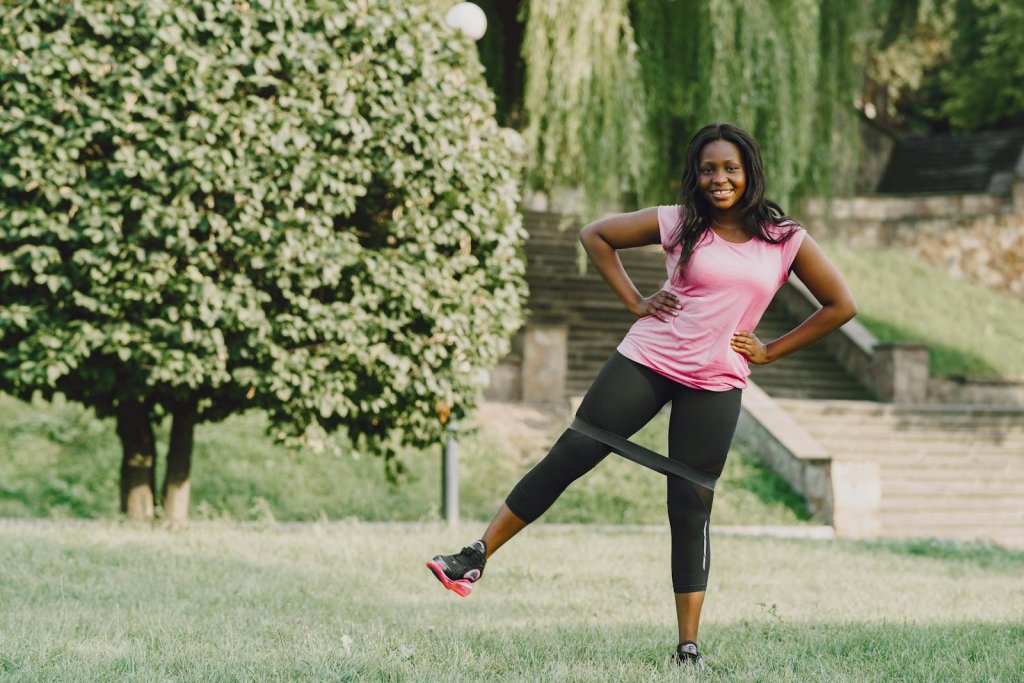
Understanding how hip dips exercises work is important so you set realistic expectations, train safely, and choose movements that actually target the right muscles. This guide walks you through evidence-based exercises, how often to train, common mistakes, and FAQs—so you can get started with confidence.
What Are Hip Dips Exercises?
Hip dips exercises are lower-body movements designed to strengthen the gluteus medius, gluteus minimus, and upper gluteus maximus. These muscles sit on the sides and back of the hips and play a major role in hip stability and shape.
Most hip dips exercise programs emphasize:
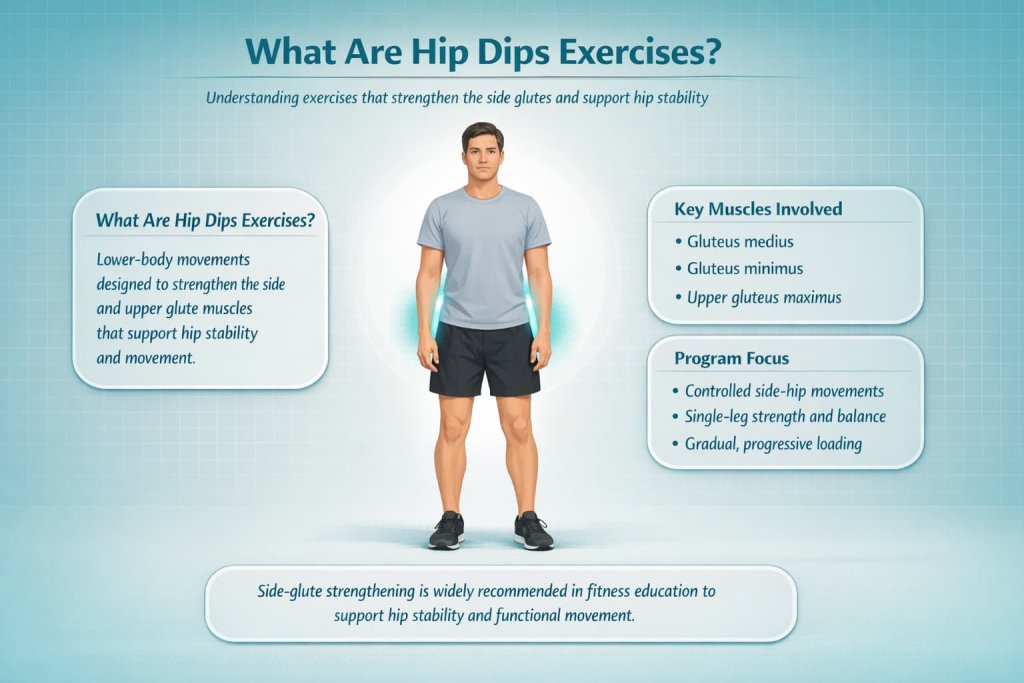
- Controlled side-hip movements
- Single-leg strength and balance
- Consistent, progressive loading
Organizations such as the American Council on Exercise explain that side-glute strengthening is essential for both hip appearance and functional movement.
12 Best Hip Dips Exercises
Hip dips exercises focus on strengthening the side glutes and supporting hip stability rather than changing bone structure. These 12 exercises target the gluteus medius and surrounding muscles to help build strength, balance, and natural hip contour over time.
1. Side-Lying Leg Raises
How to do it:
- Lie on your side with legs straight and stacked
- Rest your head on your lower arm for support
- Keep hips stacked and core lightly engaged
- Slowly lift the top leg upward without rolling back
- Lower with control and repeat
Why it works:
This movement directly targets the side of the hip without loading the spine or knee. The controlled lift helps build strength where hip dips are most visible while keeping joint stress low.
Muscles worked:
Gluteus medius, gluteus minimus, tensor fasciae latae (TFL)
Trainer Tip:
Lift the leg slightly back, not straight up—this keeps the work in the glutes instead of the hip flexors.
2. Clamshell Exercise
How to do it:
- Lie on your side with knees bent and feet stacked
- Keep hips and shoulders aligned
- Open the top knee while keeping feet together
- Pause briefly at the top
- Lower slowly and repeat
Why it works:
Clamshells strengthen the deep hip stabilizers that support pelvic alignment and hip control, which are key for improving outer-hip muscle tone.
Muscles worked:
Gluteus medius, gluteus minimus, deep hip rotators
Trainer Tip:
Avoid rolling your hips backward—small, controlled movement is more effective than lifting high.
3. Fire Hydrants
How to do it:
- Start on all fours with hands under shoulders
- Keep spine neutral and core engaged
- Lift one knee out to the side
- Pause briefly, then return to start
- Switch sides after reps
Why it works:
This exercise trains hip control while challenging the glutes to stabilize the pelvis against gravity.
Muscles worked:
Gluteus medius, gluteus maximus, core stabilizers
Trainer Tip:
Imagine balancing a glass of water on your lower back to avoid twisting.
4. Curtsy Lunges
How to do it:
- Stand tall with feet hip-width apart
- Step one leg diagonally behind the other
- Lower into a controlled lunge
- Push through the front heel to return
- Alternate sides
Why it works:
The diagonal step places higher demand on the side glutes, making this one of the most effective lower-body movements for outer-hip development.
Muscles worked:
Gluteus medius, gluteus maximus, quadriceps, adductors
Trainer Tip:
Keep your chest upright and knees tracking in line with toes.
5. Lateral Band Walks
How to do it:
- Place a resistance band around ankles or thighs
- Slightly bend knees and hinge at hips
- Step sideways with controlled tension
- Keep feet parallel
- Take small, steady steps
Why it works:
Constant band tension keeps the side glutes active throughout the movement, building endurance and strength.
Muscles worked:
Gluteus medius, gluteus minimus, hip stabilizers
Trainer Tip:
Avoid snapping the band—slow steps maintain muscle engagement.
6. Single-Leg Glute Bridge
How to do it:
- Lie on your back with one foot planted
- Extend the opposite leg
- Press through the heel to lift hips
- Pause at the top
- Lower slowly and repeat
Why it works:
Unilateral loading forces each hip to work independently, addressing imbalances that can affect hip shape.
Muscles worked:
Gluteus maximus, gluteus medius, hamstrings
Trainer Tip:
Keep hips level—avoid letting one side drop.
7. Bulgarian Split Squats
How to do it:
- Stand a few feet in front of a bench
- Place rear foot on bench
- Lower into a controlled squat
- Push through front heel
- Repeat before switching sides
Why it works:
This deep single-leg exercise places high demand on the hips, encouraging both strength and muscle development.
Muscles worked:
Gluteus maximus, gluteus medius, quadriceps
Trainer Tip:
Start with bodyweight before adding load.
8. Step-Ups
How to do it:
- Stand in front of a sturdy step or bench
- Step up with one foot
- Drive through the heel to stand
- Step down with control
- Switch sides
Why it works:
Step-ups mimic everyday movements while strengthening hip stabilizers.
Muscles worked:
Glutes, quadriceps, hamstrings
Trainer Tip:
Choose a step height that allows full control—higher isn’t always better.
9. Cable or Band Hip Abductions
How to do it:
- Attach band or cable to ankle
- Stand tall holding support
- Move leg out to the side
- Pause briefly
- Return slowly
Why it works:
Direct isolation helps build the side glutes without compensations.
Muscles worked:
Gluteus medius, gluteus minimus
Trainer Tip:
Keep toes facing forward to avoid hip flexor dominance.
10. Sumo Squats
How to do it:
- Stand with wide stance and toes slightly out
- Sit hips back and down
- Keep chest upright
- Push through heels to stand
Why it works:
The wide stance shifts more work to the hips and upper glutes.
Muscles worked:
Gluteus maximus, adductors, quadriceps
Trainer Tip:
Think “push the floor apart” to activate the hips.
11. Side Lunges
How to do it:
- Stand tall with feet together
- Step wide to one side
- Sit back into the hip
- Push back to center
- Alternate sides
Why it works:
Side lunges strengthen the hips through a wider range of motion, supporting both mobility and strength.
Muscles worked:
Gluteus medius, gluteus maximus, adductors
Trainer Tip:
Keep the non-working leg straight and foot flat.
12. Standing Hip Abduction Holds
How to do it:
- Stand tall holding support
- Lift one leg out to the side
- Hold the position
- Lower with control
- Switch sides
Why it works:
Isometric holds build endurance in the stabilizing hip muscles, which supports posture and control.
Muscles worked:
Gluteus medius, gluteus minimus
Trainer Tip:
Quality matters more than time—stop if form fades.
How to Program Hip Dips Exercises for Best Results
Hip dips exercises work best when programmed with consistency and recovery in mind.
Frequency:
- 2–3 days per week
- Rest at least one day between sessions
Workout structure:
- 3–5 hip-focused exercises per session
- Combine side-glute, single-leg, and compound movements
Sets and reps:
- 2–3 sets per exercise
- 10–15 controlled reps
- 15–30 seconds for holds
Progression tips:
- Start with bodyweight or light resistance
- Increase difficulty gradually
- Focus on control, not speed
This approach supports safe training and long-term results.
What Muscles Do Hip Dips Exercises Target?
Hip dips exercises strengthen the muscles that support and shape the hip area, without changing bone structure.
Primary muscles targeted:
- Gluteus medius – main side-glute muscle that supports hip stability
- Gluteus minimus – deep hip stabilizer that helps control leg movement
- Upper gluteus maximus – contributes to overall hip strength and shape
Supporting muscles:
- Hip abductors and stabilizers (including TFL)
- Core muscles that help maintain pelvic alignment
Strengthening these muscles may improve hip stability, posture, and movement control.
Can Exercises Really Change Hip Dips?
Exercises cannot remove hip dips completely, because pelvic shape is determined by bone structure. However, research-informed fitness guidance shows that building muscle around the hips may change how the area looks by adding support and fullness.
According to educational resources from the Harvard Health Publishing:
- Hip dips are normal and not a medical issue
- Muscle development can influence contour
- Consistency matters more than intensity
Common Mistakes to Avoid
- Using momentum instead of slow control
- Skipping single-leg exercises
- Training inconsistently
- Expecting spot-reduction results
- Ignoring hip discomfort or pain
Who Should Be Careful With Hip Dips Exercises?
You should proceed cautiously or seek professional guidance if you have:
- Hip or lower-back injuries
- Recent surgery
- Persistent joint pain
A certified trainer or physical therapist can help adjust exercises safely.
Frequently Asked Questions
Are hip dips bad for health?
No. Hip dips are a normal anatomical variation and do not indicate a health problem.
How long does it take to see results?
Most people notice strength improvements within 4–6 weeks. Visual changes may take longer and vary by individual.
Can beginners do hip dips exercises?
Yes. Many exercises like clamshells and side-lying leg raises are beginner-friendly.
Do I need equipment?
No. Bodyweight exercises are effective, though bands can add resistance.
Can men do hip dips exercises?
Absolutely. These exercises improve hip strength and stability for all genders.
Should I train hips every day?
No. Rest days help muscles recover and grow.
Conclusion
Hip dips exercises won’t change your bone structure—but they can strengthen your hips, improve stability, and enhance overall lower-body function. With consistent, targeted training and realistic expectations, you can support both how your hips feel and how they look.
If you’re ready to move forward, start with 2–3 exercises from this list, train consistently, and progress gradually.
References
- CDC: Adult Physical Activity Guidelines (Includes 2+ Days/Week Strength Training)
- World Health Organization: Physical Activity (Strength Training 2+ Days/Week)
- Physical Activity Guidelines for Americans, 2nd Edition (HHS PDF)
- ACSM Position Stand: Progression Models in Resistance Training for Healthy Adults (PubMed)
- JOSPT: Gluteal Muscle Activation During Common Therapeutic Exercises (2009)
- Electromyographic Analysis of Gluteus Medius and Gluteus Maximus During Rehab Exercises (Full Text, PMC)
- NCBI Bookshelf: Gluteus Medius/Minimus Anatomy and Function