
Yes, posture exercises for men can help improve alignment, reduce slouching, and build the strength and mobility needed to stand taller and move better. The key is not chasing a perfect “military” posture. It is improving how your neck, upper back, shoulders, core, and hips work together during daily life.
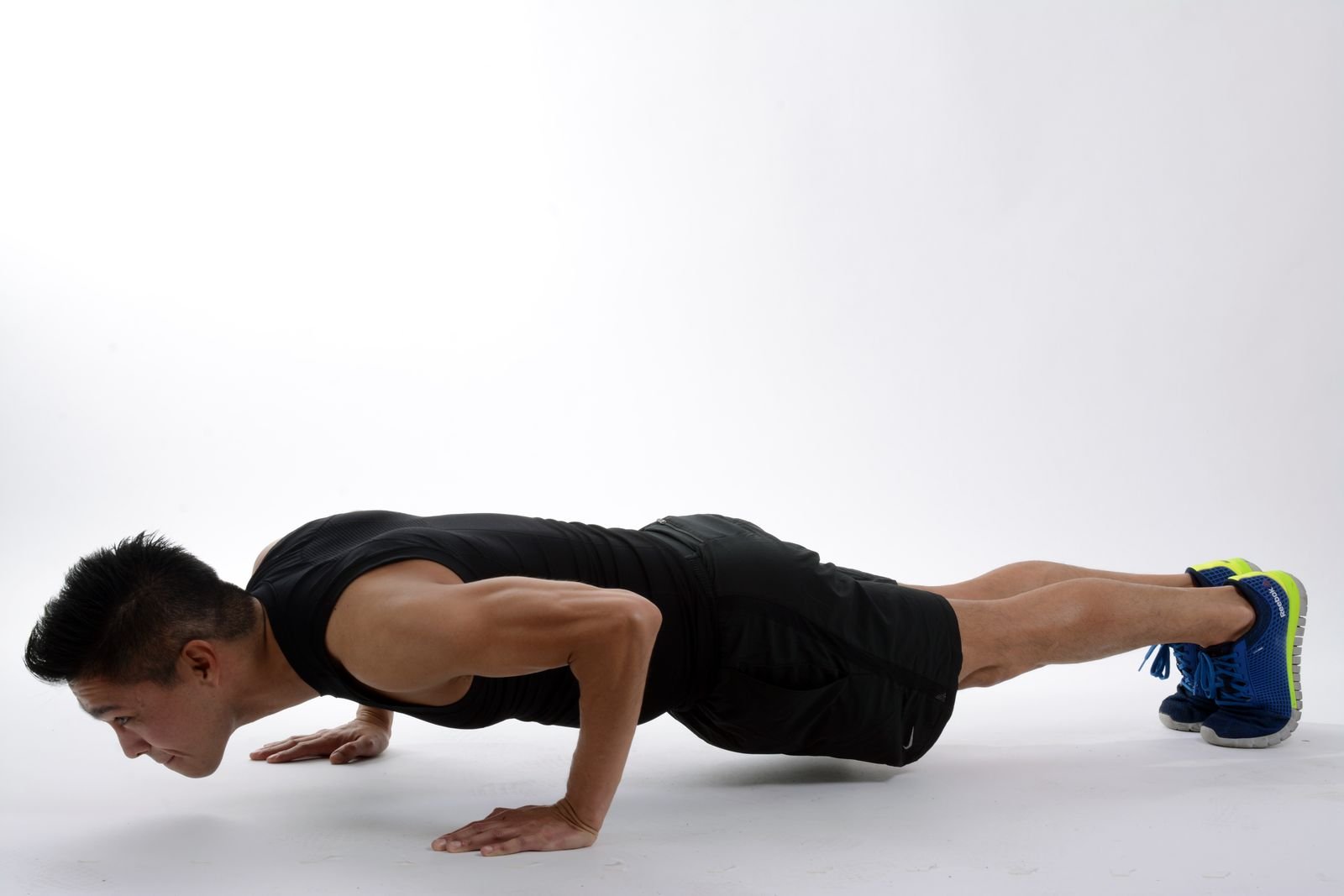
That matters because poor posture is not just about appearance. Over time, repeated slouching, forward head position, stiff chest muscles, and weak upper-back or trunk muscles can add stress to joints and soft tissues. Mayo Clinic Health System notes that poor posture and movement patterns can contribute to pain and limitations, especially when they are repeated for long periods.
In practical terms, the best posture routine usually includes:
- chest and shoulder mobility
- neck and upper-back control
- core stability
- glute strength
- better day-to-day posture habits
Why posture exercises for men matter
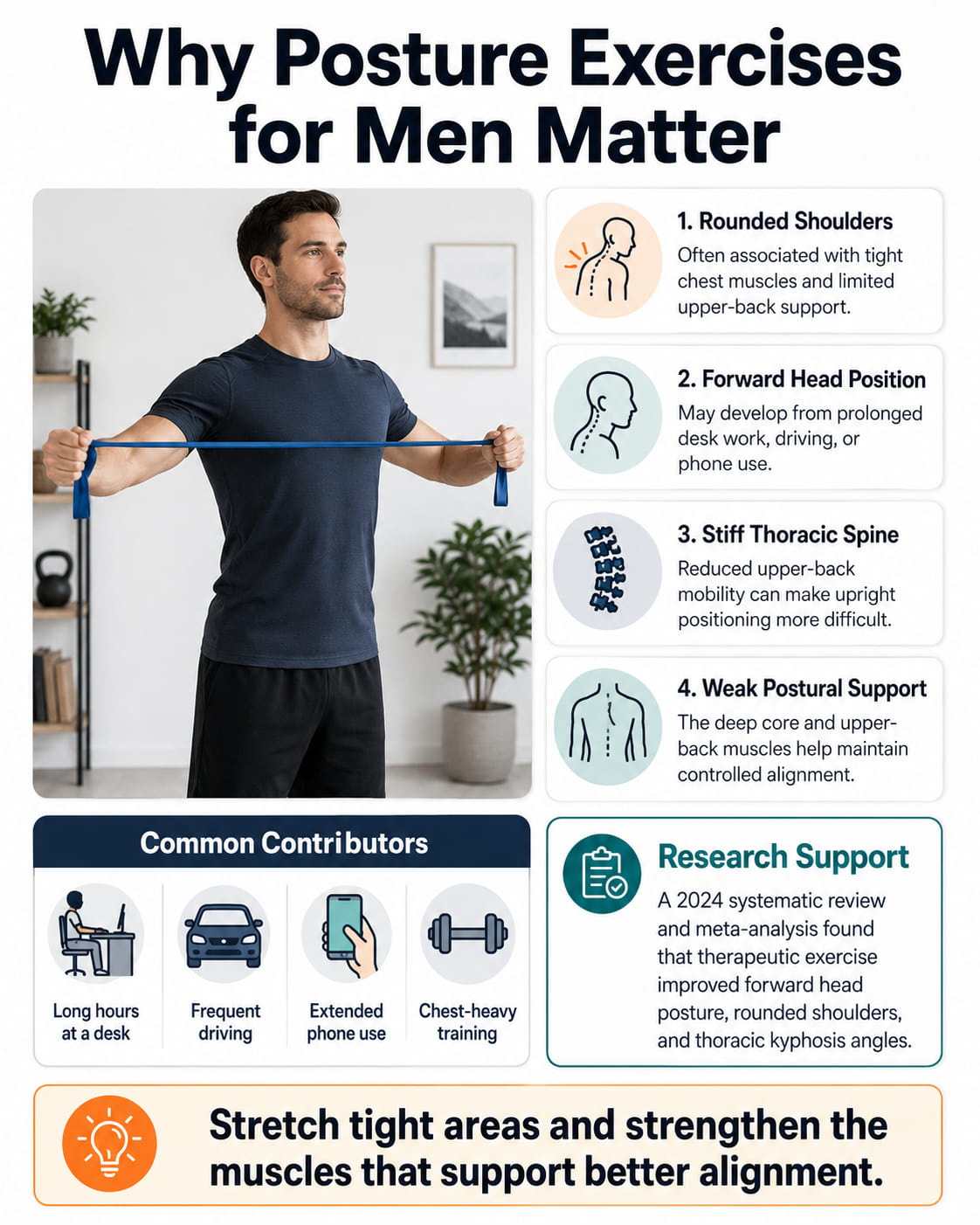
Men are not automatically more prone to posture problems than women, but many men build the same common patterns: tight chest muscles, rounded shoulders, a forward head position, stiff thoracic spine, and weak deep core or upper-back support. Long hours at a desk, driving, phone use, and chest-heavy training can all push posture in the wrong direction.
A 2024 systematic review and meta-analysis in PMC found that therapeutic exercise was effective for improving forward head posture, rounded shoulders, and thoracic kyphosis angles. That does not mean every posture issue disappears with exercise, but it strongly supports a program built around stretching tight areas and strengthening the muscles that help restore better alignment.
10 best posture exercises for men
These 10 best posture exercises for men can help improve alignment, reduce slouching, and build strength in the upper back, core, and hips. Add them to your routine to stand taller, feel stronger, and move with better control.
1. Wall Angels
How to do it
- Stand with your back against a wall.
- Keep your head, upper back, and hips lightly touching the wall.
- Bring your arms into a goalpost position.
- Slowly slide your arms upward, then back down.
- Move only as far as you can without shrugging or losing wall contact.
- Repeat for 8 to 12 slow reps.
Why it works: Wall angels train shoulder mobility and upper-back control at the same time. They also help you feel what a better stacked position looks like. Cleveland Clinic includes wall angels as a practical posture drill for helping stretch the chest and improve alignment.
Muscles worked: Mid and lower trapezius, rear deltoids, rotator cuff muscles, and postural upper-back stabilizers.
Trainer Tip: Keep your ribs down. If your lower back arches hard to get your arms overhead, reduce the range of motion.
2. Chin Tucks
How to do it
- Sit or stand tall with your eyes level.
- Gently pull your head straight back.
- Think of making a “double chin” without tipping the head up or down.
- Hold for 3 to 5 seconds.
- Relax and repeat for 8 to 10 reps.
Why it works: Chin tucks help counter forward head posture by training the deep neck flexors and improving neck position awareness. They are simple, but they can make a big difference when screen time is part of the problem.
Muscles worked: Deep neck flexors and small stabilizing muscles around the cervical spine.
Trainer Tip: The motion is small. Do not jam your chin down toward your chest.
3. Doorway Chest Stretch
How to do it
- Stand in a doorway.
- Place your forearms or hands on the frame with elbows bent.
- Step one foot forward gently.
- Lean forward until you feel a stretch across the chest and front shoulders.
- Hold for 20 to 30 seconds.
- Repeat 2 to 4 times.
Why it works: Tight chest muscles can pull the shoulders forward and make rounded posture worse. Opening the front of the body can make it easier for the upper back to do its job.
Muscles worked: Pectoralis major, pectoralis minor, and the front of the shoulder.
Trainer Tip: Stretch gently. Mayo Clinic recommends stretching smoothly without bouncing and holding stretches for about 30 seconds in most adults.
4. Band Pull-Aparts
How to do it
- Hold a light resistance band at shoulder height.
- Keep your arms mostly straight with a soft bend in the elbows.
- Pull the band apart until your hands move out wide and your shoulder blades come together.
- Return slowly.
- Repeat for 10 to 15 reps.
Why it works: Band pull-aparts strengthen the upper back and reinforce the pattern of opening the shoulders instead of collapsing forward.
Muscles worked: Rear deltoids, rhomboids, middle trapezius, and rotator cuff muscles.
Trainer Tip: Do not shrug. Keep the shoulders down and away from the ears.
5. Face Pulls
How to do it
- Attach a rope or band at upper-chest to face height.
- Grab the handles with palms facing each other.
- Pull toward your face while letting the elbows move out.
- Finish with the upper arms roughly in line with the shoulders.
- Return under control.
- Do 8 to 12 reps.
Why it works: Face pulls combine scapular retraction and external rotation, which makes them one of the best strength moves for men with rounded shoulders from desk work or chest-heavy training.
Muscles worked: Rear deltoids, middle and lower traps, rhomboids, and rotator cuff muscles.
Trainer Tip: Think “pull back and rotate,” not “heave with the lower back.”
6. Thoracic Extension Over a Foam Roller
How to do it
- Lie on your back with a foam roller placed across your upper back.
- Support your head with your hands.
- Keep your hips on the floor.
- Gently extend over the roller through the upper back.
- Pause briefly, then return.
- Roll slightly higher or lower and repeat for 5 to 8 reps.
Why it works: Many men are stiff through the thoracic spine from sitting, driving, and lifting patterns that do not include enough extension work. Improving upper-back mobility can help the chest open and reduce the urge to crane the neck forward.
Muscles worked: This is mainly a mobility drill for the thoracic spine, chest, and upper-back tissues rather than a pure strength exercise.
Trainer Tip: The movement should come from the upper back, not from forcing the lower back to arch.
7. Bird Dog
How to do it
- Start on your hands and knees.
- Brace your core gently.
- Extend one arm forward and the opposite leg back.
- Keep your hips level and your spine neutral.
- Pause for 2 to 3 seconds.
- Return and switch sides.
- Do 6 to 10 reps per side.
Why it works: Bird dog builds spinal control and teaches you to stabilize while the limbs move. That is useful because good posture is really controlled movement, not just static standing.
Muscles worked: Deep core muscles, spinal stabilizers, glutes, shoulders, and upper back.
Trainer Tip: Avoid lifting the leg so high that the lower back takes over.
8. Dead Bug
How to do it
- Lie on your back with arms straight up and hips and knees bent to 90 degrees.
- Flatten your lower back gently into the floor.
- Slowly lower one arm overhead and the opposite leg toward the floor.
- Keep your ribs down and back flat.
- Return to the start and switch sides.
- Do 6 to 10 reps per side.
Why it works: A strong, controlled core helps keep the rib cage and pelvis in better alignment. That can improve standing posture and reduce excessive arching through the lower back.
Muscles worked: Deep abdominals, rectus abdominis, obliques, and hip stabilizers.
Trainer Tip: Only lower the arm and leg as far as you can without losing contact between your lower back and the floor.
9. Glute Bridges
How to do it
- Lie on your back with knees bent and feet flat.
- Brace your core lightly.
- Drive through your heels and lift your hips until your body forms a straight line from shoulders to knees.
- Pause at the top.
- Lower slowly.
- Perform 10 to 15 reps.
Why it works: Weak glutes can contribute to poor pelvic control and an overextended lower back posture. Glute bridges help support a stronger, more balanced base.
Muscles worked: Gluteus maximus, hamstrings, and core stabilizers.
Trainer Tip: Finish with the glutes, not by over-arching the lower back.
10. Prone Y Raise
How to do it
- Lie face down on the floor or an incline bench.
- Extend your arms overhead in a Y shape.
- Keep the thumbs pointing up.
- Lift the arms slightly off the floor while keeping the neck neutral.
- Pause briefly and lower under control.
- Perform 8 to 12 reps.
Why it works: The prone Y targets the lower traps, which are often undertrained in people with slouched posture and shrugged shoulders.
Muscles worked: Lower trapezius, rear shoulders, rotator cuff, and upper-back stabilizers.
Trainer Tip: Lift only as high as you can without neck tension. Small, clean reps work better than big sloppy ones.
Best weekly plan for posture exercises for men
A simple starting point is 3 to 4 short sessions per week. You do not need a long workout to make progress.
A good beginner structure looks like this:
- 2 mobility drills
- 2 upper-back or shoulder strength drills
- 1 core drill
- 1 glute drill
Example:
- Wall angels
- Doorway chest stretch
- Band pull-aparts
- Face pulls
- Dead bug
- Glute bridge
Perform 1 to 3 sets of each exercise. For stretches, hold 20 to 30 seconds. For strength exercises, use slow, controlled reps.
Common mistakes that stop posture progress
Doing only stretches and no strengthening
A looser chest alone will not fix posture if the upper back, core, and glutes stay weak.
Forcing “perfect posture” all day
Rigid posture is not the goal. Better posture is about having more control, more movement options, and less strain.
Training chest hard but ignoring the upper back
Many men do lots of pressing and very little pulling. That imbalance can make rounded shoulders more likely over time.
Letting the lower back compensate
When the upper back is stiff or the core is weak, the lower back often arches too much during overhead and posture drills.
Ignoring daily habits
Exercises help, but workstation setup, phone position, driving posture, and break frequency matter too. The NIH Office of Research Services describes good posture as maintaining a neutral spine, which is just as relevant at your desk as it is in the gym.
How long does it take to improve posture?
Many people notice better body awareness and less stiffness within a few weeks. Visible changes usually take longer and depend on consistency, daily habits, training balance, and whether pain or structural issues are involved.
A realistic expectation is:
- 2 to 4 weeks for better awareness and mobility
- 4 to 8 weeks for noticeable exercise progress
- 8 to 12 weeks or longer for more obvious postural change
Posture habits that make these exercises work better
Pair your routine with a few simple habits:
- keep screens closer to eye level
- take movement breaks every 30 to 60 minutes
- balance pressing workouts with rows, face pulls, and rear-delt work
- keep ears roughly over shoulders when sitting
- avoid locking into one position for too long
- use your legs and hips instead of rounding your back during lifting
FAQs about posture exercises for men
Are posture exercises for men different from posture exercises for women?
Not really. The same evidence-based exercise categories apply to most adults. The difference is usually in individual needs, training history, and daily habits, not sex alone.
Can posture exercises help rounded shoulders?
Yes, they may help when rounded shoulders are linked to tight chest muscles, poor shoulder control, and weak upper-back muscles. A mix of chest mobility and upper-back strengthening usually works best.
Will posture exercises make me look taller?
They can help you stand more upright, which may make you appear taller. They do not increase bone length or actual height.
Should I do posture exercises every day?
Light mobility drills can be done most days. Strength-focused posture work is often best 2 to 4 times per week, depending on recovery and total training load.
What is the single best posture exercise for men?
There is no single best move for everyone. For many men, a combination of chin tucks, wall angels, face pulls, and glute bridges works better than relying on one exercise.
Can lifting weights improve posture?
Yes, when your program is balanced. Rows, rear-delt work, glute training, and core work can support better posture. Too much pressing without enough pulling can do the opposite.
When should I see a professional about posture?
See a clinician if posture problems come with pain, numbness, tingling, weakness, headaches triggered by movement, dizziness, or symptoms that keep getting worse.
Conclusion
Posture exercises for men work best when they improve both mobility and strength. If you want to stand taller and feel stronger, focus on opening the chest, strengthening the upper back, improving core control, and building better daily habits. Start with a few drills you can perform well, repeat them consistently, and progress gradually.
If you are turning this into a weekly routine, begin with 4 to 6 of the exercises above and practice them three times per week.