
Gentle stretches for lower back pain can help reduce stiffness and improve how your back feels and moves, especially when you do them consistently and pair them with light strengthening and daily activity.
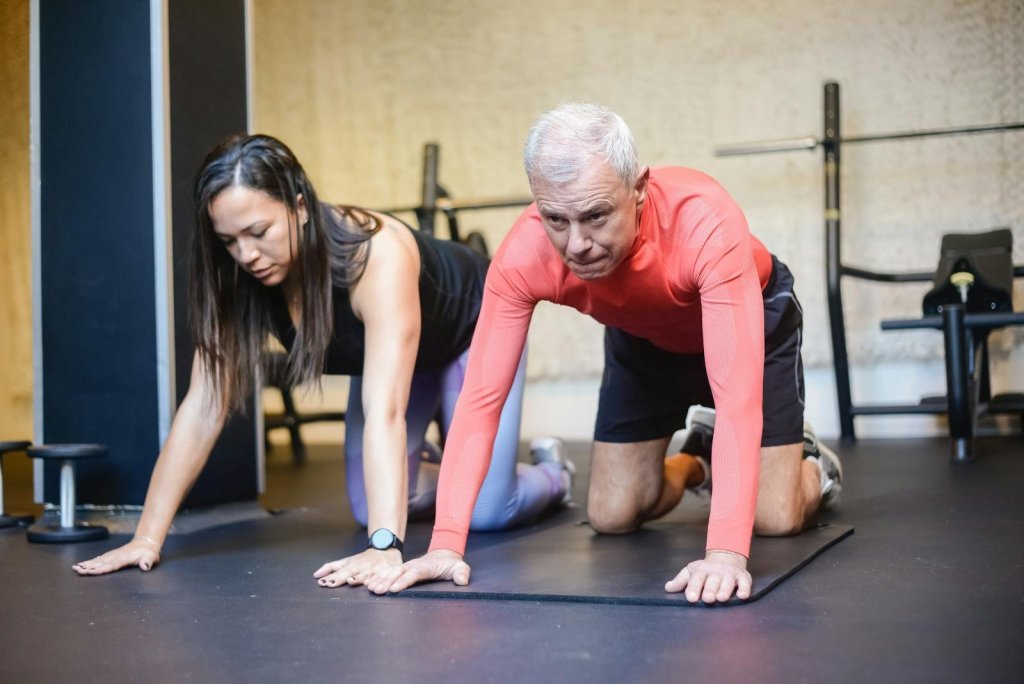
This matters because low back pain is extremely common and is a leading cause of disability worldwide, so safe, repeatable habits can make a real difference over time. Guidance from the NHS notes that specific exercises and stretches may help, but you should stop if pain worsens.
What Causes Lower Back Pain?
Lower back pain is very common and often develops from everyday movement patterns rather than a serious condition. The World Health Organization identifies low back pain as the leading cause of disability worldwide.
Common causes include:
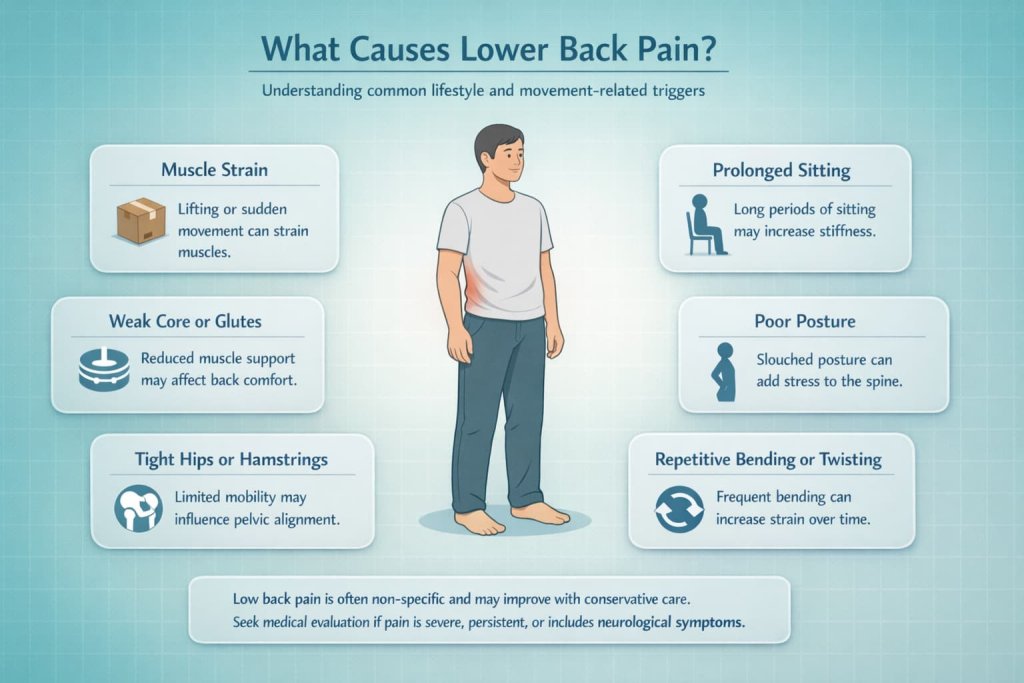
- Muscle strain from lifting or sudden movement
- Prolonged sitting
- Poor posture
- Weak core or glute muscles
- Tight hips or hamstrings
- Repetitive bending or twisting
The Mayo Clinic notes that many cases are “non-specific,” meaning they are not linked to a single structural issue and often improve with conservative care.
Seek medical evaluation if pain is severe, persistent, or includes neurological symptoms.
Are Stretches for Lower Back Pain Actually Effective?
Yes, stretches for lower back pain may help reduce stiffness and improve mobility — especially when combined with strengthening and regular movement.
The American College of Physicians recommends non-drug, noninvasive treatments first for many cases of low back pain.
Stretching may help by:
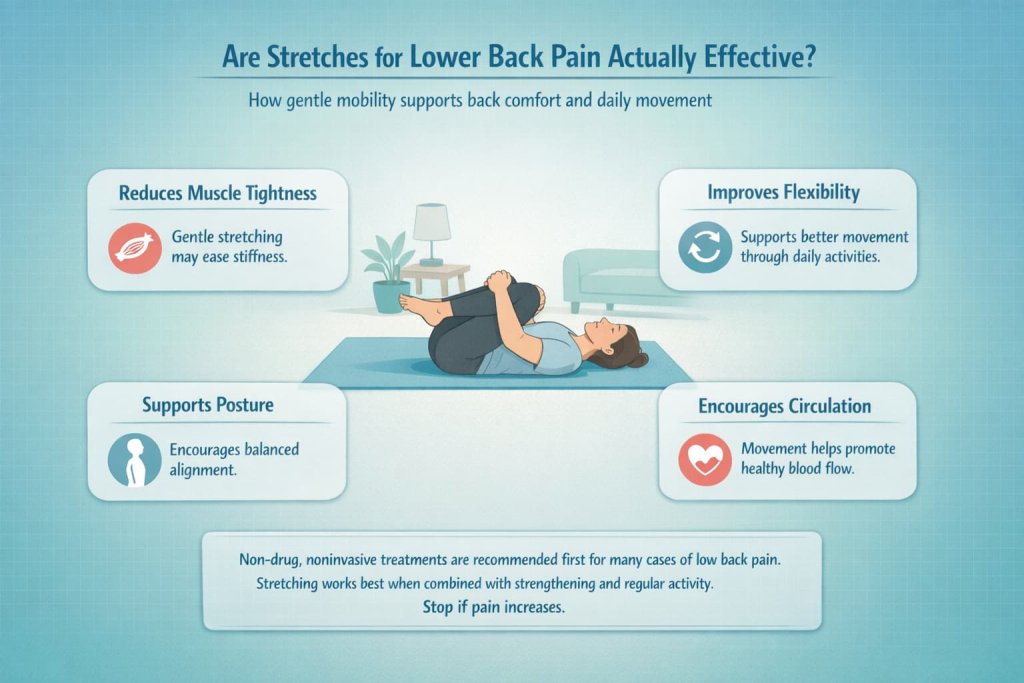
- Reducing muscle tightness
- Improving flexibility
- Supporting posture
- Encouraging circulation
Stretching is not a cure, and results vary. If pain increases, stop and reassess.
10 Best Stretches for Lower Back Pain
Relieve stiffness and improve mobility with these 10 best stretches for lower back pain designed to support daily comfort and flexibility. Each move is gentle, practical, and easy to follow at home, helping you stay active and move with greater ease.
1) Knee-to-Chest Stretch
Why it works:
This stretch gently flexes the lumbar spine and softens tension in the glutes and surrounding hip muscles. It may help relieve the compressed or tight feeling many people experience after long periods of sitting. By drawing the thigh toward the torso, the pelvis slightly rotates, which can reduce strain in the lower back area.
Muscles worked:
Gluteus maximus, deep hip muscles, lower back tissues, and surrounding connective structures.
How to do it:
- Lie on your back with both knees bent and feet flat on the floor
- Keep your head and shoulders relaxed
- Bring one knee slowly toward your chest
- Hold behind the thigh or lightly at the shin
- Keep the opposite foot on the floor (or extend the leg if comfortable)
- Hold for 15–30 seconds while breathing steadily
- Lower slowly and switch sides
- Repeat 1–2 rounds
Trainer Tip:
Keep your tailbone gently anchored to the floor. Avoid pulling forcefully—let the stretch build gradually.
2) Double Knee-to-Chest Stretch
Why it works:
This variation increases lumbar flexion slightly more than the single-leg version. It may create a broader stretch across the lower back and glutes while remaining controlled and low impact. It’s often used to ease general stiffness.
Muscles worked:
Lower back tissues, glute muscles, posterior hip structures.
How to do it:
- Lie on your back with knees bent
- Slowly bring both knees toward your chest
- Hold behind your thighs (not directly on the kneecaps)
- Gently draw the knees closer until a mild stretch is felt
- Hold for 15–30 seconds
- Lower the feet back down slowly
- Repeat 1–2 rounds
Trainer Tip:
If your lower back feels strained, return to the single-knee version or reduce how close you pull your knees.
3) Child’s Pose
Why it works:
This hips-back position lengthens the spine and may reduce overall tension in the lower back and lat muscles. It also encourages slow breathing, which can support relaxation of tight tissues.
Muscles worked:
Lower back tissues, latissimus dorsi, glutes, hips.
How to do it:
- Kneel on a mat or padded surface
- Bring your big toes together and separate knees comfortably
- Sit your hips back toward your heels
- Reach your arms forward along the floor
- Rest your forehead gently down
- Hold for 20–30 seconds while breathing slowly
- Return upright and repeat 1–2 times
Trainer Tip:
If sitting fully back is uncomfortable, place a pillow or folded towel between your hips and heels.
4) Cat-Cow
Why it works:
Cat-Cow promotes gentle spinal mobility rather than static stretching. Moving the spine through controlled flexion and extension may help reduce stiffness and improve awareness of neutral posture.
Muscles worked:
Spinal stabilizers, abdominal wall, upper back muscles, neck extensors and flexors.
How to do it:
- Start on hands and knees with wrists under shoulders and knees under hips
- Inhale and gently arch your back (Cow), lifting chest and tailbone
- Exhale and slowly round your spine (Cat), tucking chin and pelvis
- Move smoothly with your breath
- Stay within a pain-free range
- Perform 6–10 slow repetitions
Trainer Tip:
Focus on smooth, controlled motion. Do not force the arch or round beyond comfort.
5) Supine Trunk Rotation
Why it works:
This stretch introduces gentle rotation to the lumbar region. Controlled rotation may help ease stiffness and reduce tension around the obliques and lower back tissues.
Muscles worked:
Obliques, lower back tissues, glutes, hip rotators.
How to do it:
- Lie on your back with knees bent and feet flat
- Extend arms out to the sides for support
- Slowly lower both knees to one side
- Keep shoulders relaxed on the floor
- Hold for 15–30 seconds
- Return to center and switch sides
- Repeat 1–2 rounds
Trainer Tip:
Only rotate as far as comfortable. The goal is gentle movement, not forcing range.
6) Figure-4 Glute Stretch
Why it works:
Tight glutes and deep hip rotators can influence pelvic positioning. This stretch targets those muscles while keeping the spine supported on the floor.
Muscles worked:
Gluteus maximus, gluteus medius, piriformis, deep hip rotators.
How to do it:
- Lie on your back with knees bent
- Cross one ankle over the opposite thigh
- Thread your hands behind the uncrossed thigh
- Gently pull the thigh toward your chest
- Hold for 20–30 seconds
- Switch sides
- Repeat 1–2 rounds
Trainer Tip:
If your knee feels stressed, pull less or keep the foot closer to the floor.
7) Hip Flexor Stretch (Half-Kneeling)
Why it works:
Prolonged sitting can shorten hip flexors. Improving hip extension may reduce anterior pelvic tilt, which can decrease strain on the lower back.
Muscles worked:
Hip flexors (iliopsoas), rectus femoris, quadriceps.
How to do it:
- Kneel with one knee on the floor and the other foot forward
- Keep torso upright and core gently engaged
- Shift hips slightly forward
- You should feel a stretch at the front of the hip
- Hold 20–30 seconds
- Switch sides
- Repeat 1–2 rounds
Trainer Tip:
Lightly squeeze the glute of the kneeling leg to prevent arching the lower back.
8) Hamstring Stretch (Supine Strap or Towel)
Why it works:
Hamstrings attach to the pelvis. Tightness here may influence pelvic alignment and contribute to stiffness in the lower back.
Muscles worked:
Hamstrings, calves, posterior thigh tissues.
How to do it:
- Lie on your back with one knee bent
- Loop a strap or towel around the opposite foot
- Slowly raise the leg upward
- Keep hips level on the floor
- Hold for 20–30 seconds
- Lower gently and switch sides
- Repeat 1–2 rounds
Trainer Tip:
A slight bend in the raised knee is completely fine.
9) Piriformis Stretch (Knee Across Body)
Why it works:
This variation stretches the outer hip muscles and may reduce tension that can contribute to lower back tightness.
Muscles worked:
Piriformis, glutes, outer hip stabilizers.
How to do it:
- Lie on your back with knees bent
- Bring one knee toward your chest
- Guide the knee gently across your body
- Keep shoulders relaxed
- Hold 20–30 seconds
- Return and switch sides
- Repeat 1–2 rounds
Trainer Tip:
If symptoms travel down the leg or feel sharp, stop and try a gentler option.
10) Sphinx Stretch
Why it works:
This gentle extension position may counteract prolonged sitting and support spinal mobility. Some individuals find extension-based positions soothing for stiffness.
Muscles worked:
Abdominal wall (lengthened), spinal extensors, front-of-body tissues.
How to do it:
- Lie face down on the floor
- Place forearms under shoulders
- Gently lift your chest while keeping hips on the ground
- Keep neck neutral
- Hold 15–30 seconds while breathing calmly
- Lower slowly
- Repeat 1–2 times
Trainer Tip:
If discomfort increases, skip this movement. Back pain varies from person to person.
How Often Should You Do Stretches for Lower Back Pain?
Consistency beats intensity. A simple starting point for many people is:
- Do 5–10 minutes of gentle stretching most days
- Hold each stretch 15–30 seconds
- Repeat 1–2 rounds
Gradually increasing activity and building consistency is also emphasized by NHS Inform.
When to Stop and Get Medical Advice
Seek medical advice urgently if you have symptoms such as:
- Loss of bowel or bladder control
- Numbness in the groin/saddle area
- Significant weakness in the legs
- Fever, unexplained weight loss, or pain after a major fall or accident
For ongoing or recurrent pain, a clinician or physical therapist can teach safe flexibility, strengthening, and posture strategies. The Mayo Clinic explains when medical evaluation is important.
How to Build a Simple Daily Routine
A routine does not need to be long. Consistency matters more than intensity.
Step 1: Light Warm-Up (2–3 minutes)
- Walk around your home
- March in place
- Do gentle pelvic tilts
Step 2: Choose 4–5 Stretches (5–8 minutes)
Include:
- Knee-to-chest
- Supine trunk rotation
- Figure-4 or hip flexor stretch
- Cat-cow
Hold each stretch 15–30 seconds and repeat 1–2 rounds.
Step 3: Stay Active During the Day
The NHS advises staying active rather than resting for most cases of back pain.
Perform stretches most days and adjust based on comfort. If symptoms worsen or persist, consult a healthcare professional.
Before You Start
If your pain is new, severe, or you’re unsure what’s safe, start conservatively. Many reputable sources emphasize staying active when possible and using exercise-based strategies as part of self-care, including advice from the NHS.
Quick safety rules
- You should feel a gentle stretch, not sharp pain.
- Move slowly and breathe normally.
- Stop the stretch if your pain gets worse (or if it triggers new symptoms), as advised by the NHS.
What Else Helps Besides Stretching?
Stretching is one part of recovery. The American College of Physicians recommends non-drug, noninvasive approaches first for many cases of nonradicular low back pain, including movement-based therapies such as yoga and tai chi.
Low back pain is also extremely common worldwide. The World Health Organization identifies it as the leading cause of disability globally and released updated guidance on chronic low back pain in 2023.
FAQs
What is the best stretch for lower back pain?
Knee-to-chest, trunk rotation, and child’s pose are commonly tolerated because they are gentle and easy to control.
Should I stretch my lower back every day?
If stretching feels good and does not increase pain, gentle daily practice is generally acceptable.
How long should I hold a stretch?
A common starting range is 15–30 seconds per stretch, repeated 1–2 times.
Can stretching permanently fix lower back pain?
Stretching may help reduce stiffness and improve flexibility, but lasting improvement often includes strengthening and regular movement.
When should I see a professional?
If pain is severe, worsening, persistent, or accompanied by neurological symptoms, seek medical advice promptly.
Conclusion
The most effective stretches for lower back pain are gentle, consistent, and paired with regular movement. Start with 3–5 exercises, move slowly, and focus on comfort. Over time, consistency matters more than intensity.