
The sumo squat is a wide-stance squat that mainly works your glutes, quads, hamstrings, and inner thighs, and it is especially useful when you want more adductor emphasis than a standard squat.
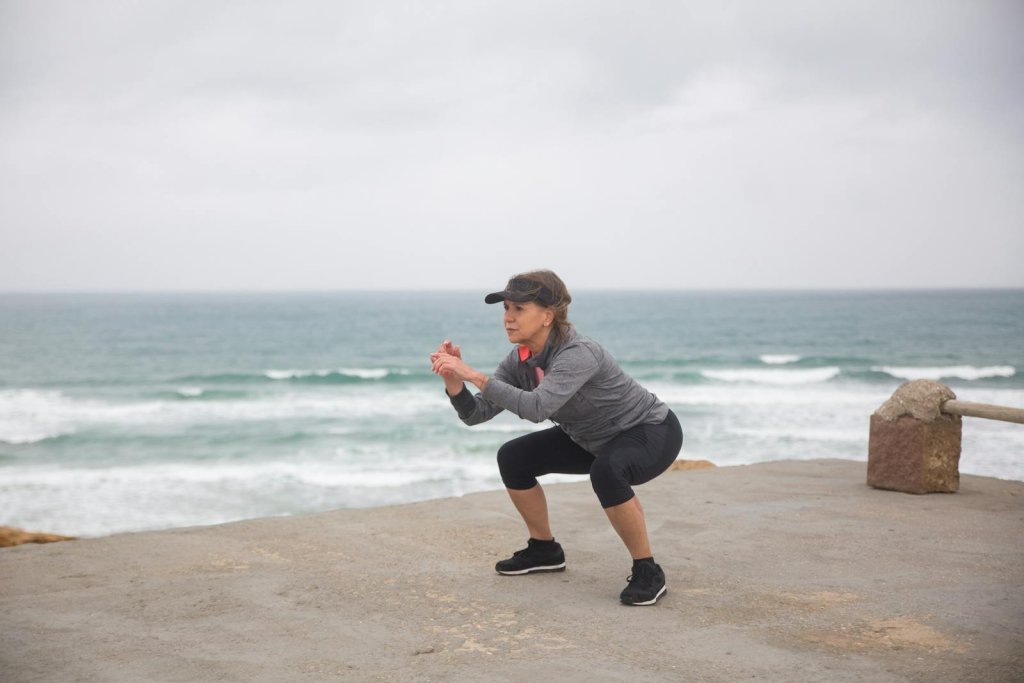
Understanding proper sumo squat form matters because the wider stance changes how your hips, knees, and ankles line up, so good technique helps you get the muscle-building benefits without turning the movement into a balance or mobility problem. Mayo Clinic, Cleveland Clinic, and ACE all support the key basics: a stable stance, knees tracking with the feet, a braced core, and smooth, controlled reps.
What Is a Sumo Squat?
A sumo squat is a squat variation performed with the feet set wider than hip width and the toes turned outward. Compared with a regular squat, that wider setup usually shifts more attention to the inner thighs while still training the rest of the lower body.
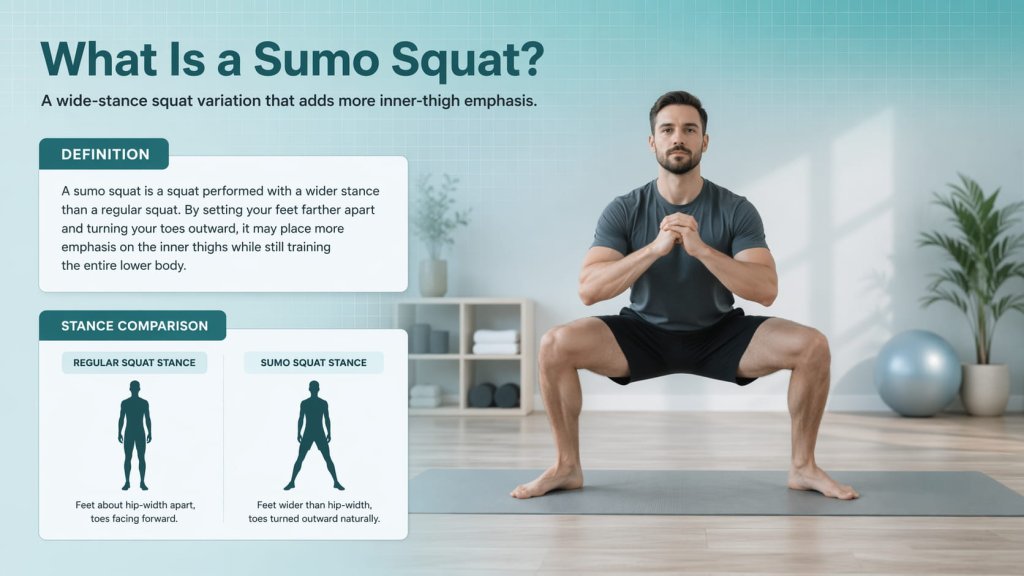
Cleveland Clinic specifically notes that sumo squats are known for targeting the inner thigh muscles more than traditional squats, and ACE’s guidance for the dumbbell sumo squat uses a wide stance with the toes turned out about 45 degrees.
How to Do a Sumo Squat With Proper Form
A good sumo squat should feel strong and controlled, not rushed. The goal is to lower with your feet planted, knees tracking with your toes, and your torso staying braced rather than collapsing forward. Mayo Clinic’s squat guidance and ACE’s sumo squat setup both support these basics.
Bodyweight Sumo Squat
How to do it:
- Stand with your feet wider than hip width.
- Turn your toes outward comfortably, often around 30 to 45 degrees.
- Brace your core and keep your chest tall.
- Start the movement by bending at the hips and knees together.
- Lower until your thighs are about parallel to the floor, or as low as you can go with control.
- Keep your feet flat and your knees tracking in the same direction as your toes.
- Press through your feet to stand back up.
- Exhale as you return to standing and reset before the next rep.
Trainer tip: Think about spreading the floor apart with your feet as you lower. That cue often helps people keep the knees from collapsing inward. This is a practical coaching cue based on the alignment guidance from Mayo Clinic and ACE.
Muscles Worked in a Sumo Squat
The sumo squat is still a full lower-body strength exercise, not just an inner-thigh move. Mayo Clinic explains that squats target the quadriceps and hamstrings and create tension in the legs and buttocks, while ACE highlights the sumo version for its inner-thigh focus.
The main muscles worked are:
- Quadriceps: help extend the knees as you stand up
- Gluteus maximus: helps drive hip extension on the way up
- Hamstrings: assist with hip control and support the movement
- Adductors: the inner-thigh muscles get more attention in the wider stance
- Core muscles: help keep your torso stable and your spine neutral
- Calves and smaller stabilizers: help you stay balanced through the rep
Sumo Squat Variations
Once your bodyweight sumo squat looks controlled, adding a variation can keep the exercise useful and progressive.
1. Dumbbell Sumo Squat
Why it works: Holding a dumbbell adds resistance without making the setup overly complicated. ACE uses this version as a simple progression from bodyweight work.
Muscles worked: Quads, glutes, hamstrings, inner thighs, and core.
How to do it:
- Stand in your normal sumo stance.
- Hold one dumbbell with both hands in front of your body.
- Keep your arms long and the weight close to your center.
- Lower into the squat with control.
- Stop when your depth is still stable and pain-free.
- Press through your feet to return to standing.
- Repeat without letting the knees collapse inward.
Trainer tip: Start with a light dumbbell and make the rep slower before making it heavier. That usually helps form stay cleaner. This progression approach is consistent with Mayo Clinic and Cleveland Clinic guidance to prioritize proper technique and gradual loading.
2. Goblet Sumo Squat
Why it works: Holding the weight higher at chest level can help you stay more upright during the squat. That makes this a useful variation for people who want a posture-friendly way to load the movement while still training the lower body hard.
Muscles worked: The goblet sumo squat works the glutes, quads, hamstrings, and inner thighs, while also increasing the demand on the core and upper back to hold the weight in position.
How to do it:
- Stand with your feet set in your sumo stance.
- Hold a dumbbell or kettlebell close to your chest.
- Brace your core before you start the rep.
- Lower into the squat while keeping your elbows pointed down.
- Keep your heels flat and your knees aligned with your toes.
- Press through the floor to stand tall again.
- Reset your posture before the next rep.
Trainer Tip: Think about keeping your ribs stacked over your hips. That cue usually helps prevent leaning back or flaring the chest too much under load.
3. Paused Sumo Squat
Why it works: Adding a pause at the bottom removes momentum and makes your muscles hold tension longer. This improves control, balance, and position awareness while making light weights feel more challenging.
Muscles worked: The paused sumo squat trains the same main muscles as the standard version, but it often increases the demand on the quads, glutes, adductors, and core because you must stay stable at the hardest part of the rep.
How to do it:
- Set up in your normal sumo squat stance.
- Lower into the bottom of the squat with control.
- Pause for one to three seconds without relaxing.
- Keep your chest tall and feet flat during the hold.
- Press through your feet to stand back up.
- Repeat for the planned number of reps.
Trainer Tip: Make the pause truly still. A real pause builds more control than bouncing at the bottom and calling it a hold.
4. Pulse Sumo Squat
Why it works: This variation increases time under tension by keeping you near the bottom of the movement. It is a simple way to make the legs and inner thighs work harder even when you are using only body weight or a light load.
Muscles worked: Pulse sumo squats mainly challenge the quads, glutes, and adductors, while the core works to keep the torso steady during the repeated short-range motion.
How to do it:
- Start in your regular sumo squat stance.
- Lower into the squat until you reach a strong working depth.
- Rise up only a few inches.
- Lower back down into the same bottom range.
- Continue with short controlled pulses.
- Finish the set by standing all the way up.
Trainer Tip: Small, controlled pulses work better than fast bouncing. Keep the movement deliberate so the muscles stay under tension instead of shifting stress into the joints.
5. Kettlebell Sumo Squat
Why it works: A kettlebell gives you another simple loading option and often feels comfortable to hold with both hands. It is especially useful for home workouts or anyone who prefers kettlebells over dumbbells.
Muscles worked: The kettlebell sumo squat trains the glutes, quads, hamstrings, and inner thighs while also challenging the core to control the hanging load.
How to do it:
- Stand in a sumo stance with a kettlebell between your hands.
- Grip the kettlebell handle firmly with both hands.
- Let the kettlebell hang naturally in front of your body.
- Lower into the squat while keeping your chest lifted.
- Keep your feet flat and your knees moving with your toes.
- Drive through your legs to return to standing.
- Repeat with steady tempo and posture.
Trainer Tip: Let the kettlebell hang naturally instead of lifting it with your arms. The legs should do the work, while the hands simply hold the weight securely.
6. Heel-Raise Sumo Squat
Why it works: This variation adds a small calf and balance challenge at the top of each rep. It can make a basic bodyweight sumo squat feel more dynamic without changing the main lower-body pattern too much.
Muscles worked: This variation still targets the quads, glutes, hamstrings, and adductors, while increasing involvement from the calves and foot stabilizers.
How to do it:
- Perform a regular sumo squat rep.
- Stand all the way up at the top.
- Lift your heels off the floor in a controlled calf raise.
- Lower your heels back down slowly.
- Begin the next squat rep.
- Continue for even, balanced reps.
Trainer Tip: Keep the heel raise controlled and vertical. Do not rush onto your toes, because that usually turns the top position into a balance wobble instead of a useful strength challenge.
Sumo Squat Benefits
The biggest reason to use the sumo squat is that it trains several important lower-body muscles at once while giving extra emphasis to the adductors, or inner thighs. That makes it a practical choice for people who want variety in their leg training or who want a squat pattern that feels different from a shoulder-width stance.
Key sumo squat benefits include:
- Builds lower-body strength
- Adds more inner-thigh emphasis than many standard squat setups
- Trains the glutes, quads, and hamstrings at the same time
- Helps practice core bracing and upright posture
- Can be done with body weight or dumbbells
- Fits well into home workouts and gym workouts alike
For some people, the sumo stance may also feel more comfortable for getting deeper without excessive forward lean. Cleveland Clinic notes that this can be a more comfortable option for some people with limited hip mobility or tight hip flexors, although it still requires enough hip and ankle flexibility to perform safely.
What Research Says About Wide-Stance Squats
Most research on stance width comes from loaded squat variations rather than the exact bodyweight sumo squat, but the findings still help explain why sumo squats can feel different. A widely cited study indexed in PubMed found that a larger stance width was needed for greater gluteus maximus activation during back squats, and a later open-access review summarized findings showing greater hamstring and gastrocnemius activation in wide squats than in narrow squats.
Another biomechanics paper found that stance width changes ankle motion demands and overall squat mechanics. In practical terms, that means wider squats can shift what you feel, but your best stance is still the widest one you can control comfortably with good alignment.
Common Sumo Squat Mistakes
Most sumo squat problems come from trying to go too low, too heavy, or too wide before you have enough control. A cleaner rep usually beats a deeper rep.
Common mistakes include:
- Going too wide: this can make it hard to keep the feet flat or the knees aligned
- Letting the knees cave inward: this usually means you lost tension or picked a stance you cannot control
- Forcing depth: not everyone can hit the same depth safely
- Leaning too far forward: this often shifts the movement away from a clean squat pattern
- Rushing the bottom: fast, sloppy reps usually reduce control
- Using weight too soon: form should look consistent before you add dumbbells
If you notice any of those issues, narrow the stance slightly, reduce the depth, slow the rep down, and rebuild from there. Mayo Clinic advises keeping movements smooth and controlled and stopping when form begins to suffer, while Cleveland Clinic recommends progressive loading and paying attention to technique.
Before You Start Sumo Squats
A short warm-up helps the movement feel better and usually improves control. Mayo Clinic recommends warming up for five to 10 minutes before strength training, and Cleveland Clinic suggests a dynamic warm-up before squat sessions.
A simple warm-up can include:
- Marching or brisk walking for 5 minutes
- Leg swings
- Hip circles
- A few bodyweight squats
- One easy practice set of sumo squats
Who May Benefit From Sumo Squats?
Sumo squats can be a good fit for:
- People who want more inner-thigh involvement in a squat pattern
- Beginners learning a bodyweight lower-body exercise
- Home exercisers who want a no-equipment leg move
- Lifters who want lower-body variety without changing the basic squat pattern
- People who feel more comfortable in a slightly more upright squat setup
They are also easy to progress from body weight to a dumbbell version, which makes them useful for general strength routines. Mayo Clinic includes squats among practical bodyweight strength exercises, and ACE presents the dumbbell sumo squat as a straightforward squat variation.
Who Should Be Careful Before Doing Sumo Squats?
Not every squat variation suits every person. Because the sumo squat asks for hip and ankle mobility, it may need modification if you are dealing with pain, stiffness, or a recent injury. Cleveland Clinic specifically notes that safe performance of the sumo stance requires adequate hip and ankle flexibility. Mayo Clinic also advises stopping a strength exercise if it causes pain.
Use extra caution or get individualized guidance first if you have:
- Recent hip, knee, ankle, or back injury
- Sharp pain during squats
- Major balance problems
- Recent surgery
- Persistent joint swelling or instability
- Trouble keeping the feet flat in the wide stance
A safer starting point may be a shallower range of motion, a narrower stance, a box squat, or working with a qualified trainer or healthcare professional.
How Often Should You Do Sumo Squats?
For most people, sumo squats work well two or three times per week as part of a full lower-body or full-body plan. Mayo Clinic notes that one set of 12 to 15 repetitions with the proper resistance can build strength efficiently in many people, and it advises resting a full day before training the same muscle group again. CDC guidance also says adults should do muscle-strengthening activity at least two days per week.
A practical starting point is:
- Beginners: 1 to 2 sets of 8 to 12 reps
- General fitness: 2 to 4 sets of 8 to 15 reps
- With dumbbells: use a load that makes the last few reps challenging but still clean
Frequently Asked Questions
Are sumo squats better than regular squats?
Not necessarily. They are just different. Sumo squats usually add more inner-thigh emphasis, while a regular squat is often a more general default squat pattern. Your best option depends on your goal, your mobility, and which version you can perform well.
Do sumo squats work the inner thighs?
Yes. That is one of the clearest reasons people use them. ACE and Cleveland Clinic both describe sumo squats as especially effective for focusing on the inner thighs compared with a standard squat.
Are sumo squats good for glutes?
Yes, but they are not only a glute exercise. They also train the quads, hamstrings, and adductors. Research on wider squat stances suggests that stance width can change which muscles are emphasized, but controlled execution still matters more than simply taking the widest possible stance.
How wide should your feet be in a sumo squat?
A good starting point is wider than hip width, with the toes turned outward comfortably. You do not need an extreme stance. The right width is the one that lets you keep your feet flat, knees aligned with your toes, and torso controlled.
Should your knees go over your toes in a sumo squat?
Some knee travel is normal in squats, but the more important point is that the knees track in the same direction as the toes and stay controlled. ACE emphasizes keeping the knees in line with the ankles, and Mayo Clinic emphasizes keeping the knees centered over the feet.
Can beginners do sumo squats?
Yes. A bodyweight sumo squat can be beginner-friendly as long as the stance is not too wide and the range of motion stays controlled. If the movement feels awkward, start with a smaller range or a slightly narrower stance and build from there.
Conclusion
The sumo squat is a simple, useful lower-body exercise that can help you build strength in the quads, glutes, hamstrings, and inner thighs while adding variety to your squat training. Start with a bodyweight version, use a stance you can control, keep your knees tracking with your toes, and only add resistance after your form stays consistent from rep to rep. For most people, that is the fastest way to make the sumo squat both effective and sustainable.
References
- Mayo Clinic — Strength training: Get stronger, leaner, healthier
- PMC — How to squat? Effects of various stance widths, foot placement angles and level of experience on knee, hip and trunk motion and loading
- PMC — A Multi-Experiment Investigation of the Effects of Stance Width, Foot Placement Angle and Experience on Safety, Muscular Activity and Effort Characteristics During the Barbell Back Squat