
Tabata exercises are short, high-intensity interval workouts using 20 seconds of effort followed by 10 seconds of rest, repeated for 8 rounds (4 minutes total). This format is popular because it delivers a challenging, time-efficient workout that can support cardiovascular fitness, muscular endurance, and calorie expenditure when performed at appropriate intensity.
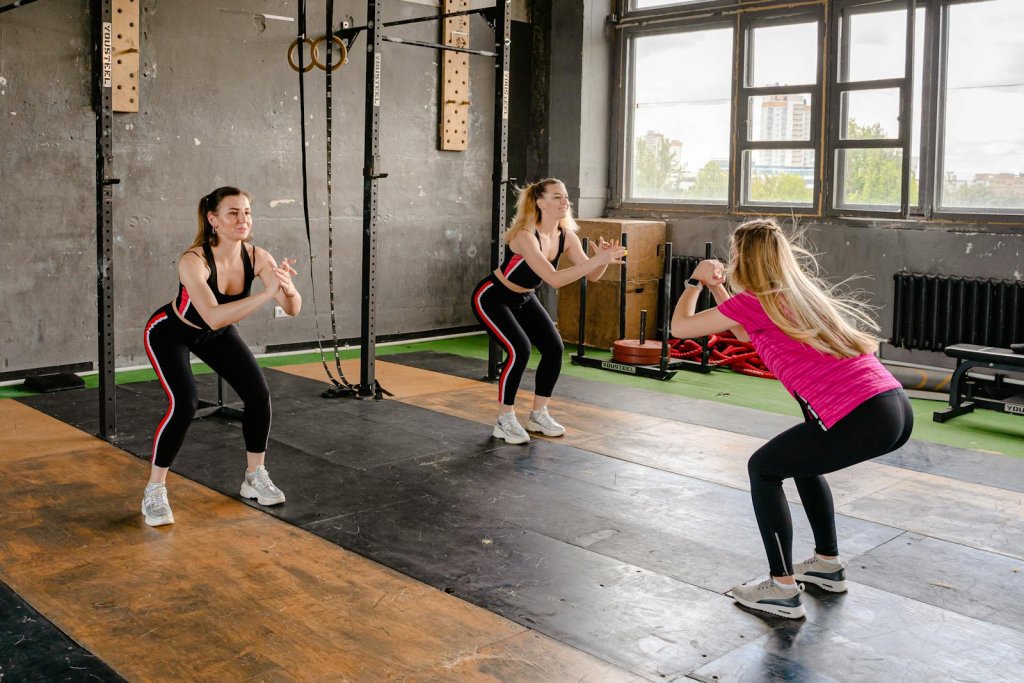
Understanding how Tabata works—and choosing the right exercises—matters because this protocol is very demanding. Major fitness and health organizations emphasize proper scaling, recovery, and progression rather than pushing intensity blindly. When programmed well, Tabata can fit into a safe, effective weekly exercise routine.
Below is a complete, evidence-informed guide to the best Tabata exercises, how to use them, and who should be cautious.
What Are Tabata Exercises?
Tabata exercises are movements performed within the Tabata interval structure:
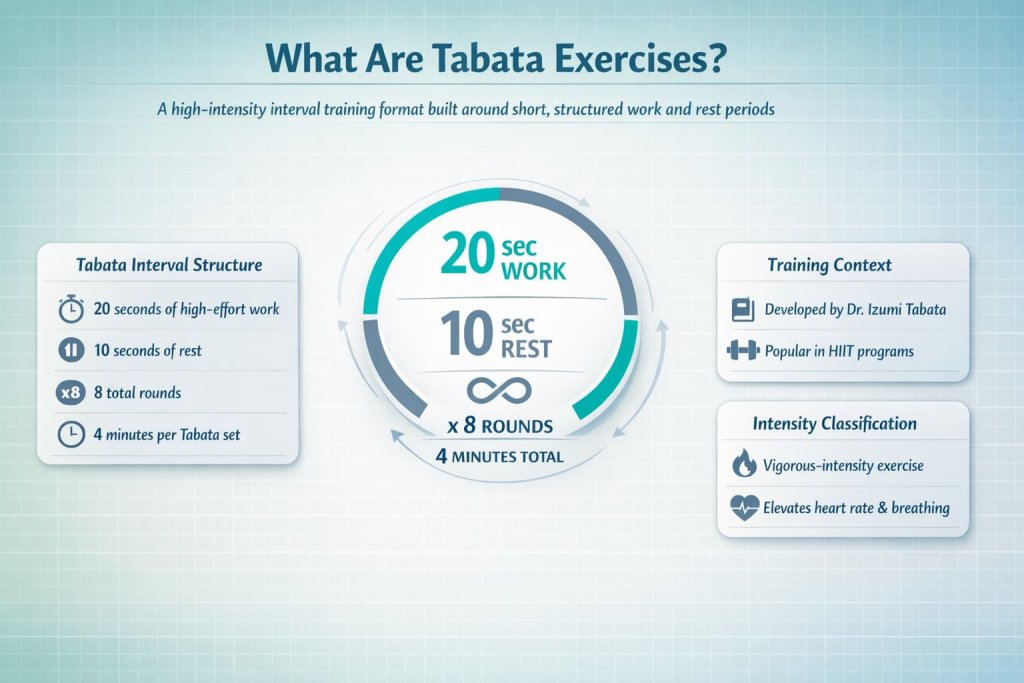
- 20 seconds of high-effort work
- 10 seconds of rest
- 8 total rounds
- 4 minutes per Tabata set
The protocol originated from research led by Japanese scientist Izumi Tabata and is now widely used in high-intensity interval training (HIIT) programs.
Organizations such as the American College of Sports Medicine classify Tabata-style workouts as vigorous-intensity exercise, meaning they significantly elevate heart rate and breathing.
Why Tabata Exercises Are Effective for Fat Burn
Tabata exercises may support fat loss and conditioning by:
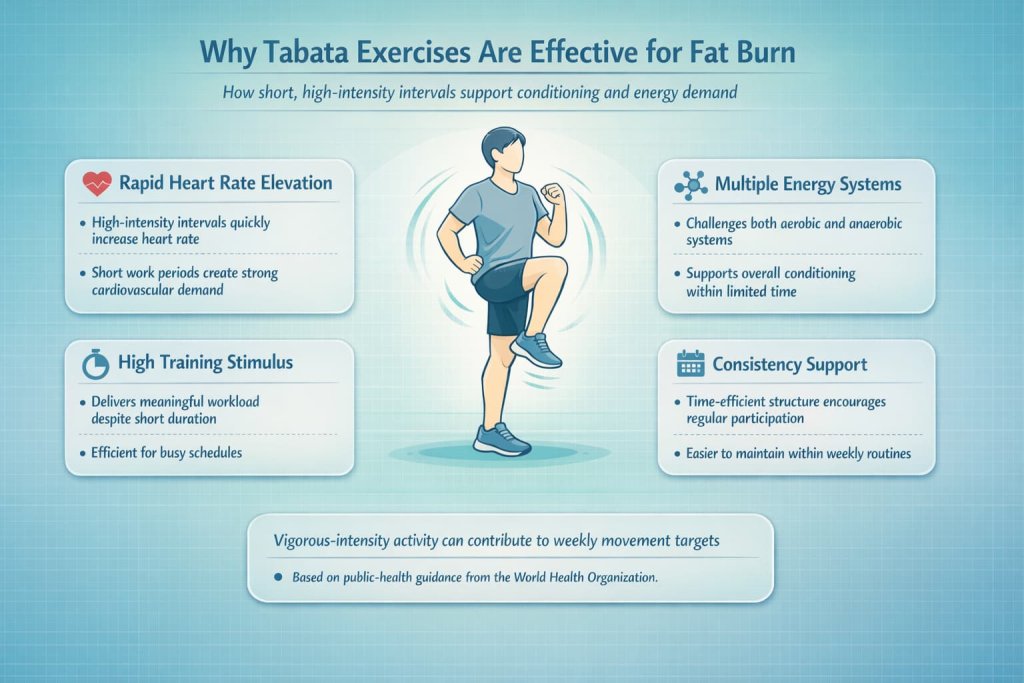
- Increasing heart rate rapidly in a short time
- Challenging both aerobic and anaerobic energy systems
- Creating a high overall training stimulus despite short duration
- Encouraging consistency for people with limited time
According to public-health guidance from the World Health Organization, vigorous-intensity activity can contribute meaningfully toward weekly movement targets when done safely and consistently.
10 Best Tabata Exercises for Full-Body Workouts
These exercises work well within the Tabata format because they are simple, scalable, and recruit large muscle groups.
1. Bodyweight Squats
How to do it:
- Stand with feet shoulder-width apart
- Brace your core and keep your chest tall
- Push hips back and bend knees to lower into a squat
- Press through heels to return to standing
- Move continuously for the full 20-second interval
Why it works:
Bodyweight squats target large lower-body muscle groups, which increases overall energy demand during short, intense intervals. Their simple pattern allows consistent movement quality even as fatigue builds, making them ideal for Tabata timing.
Muscles worked:
Quadriceps, glutes, hamstrings, core stabilizers
Trainer Tip:
Depth matters less than control—only squat as low as you can maintain good posture and steady breathing.
2. Jump Squats
How to do it:
- Start in a standard squat stance
- Lower into a squat with controlled tempo
- Explosively jump upward, extending hips and knees
- Land softly with knees slightly bent
- Immediately transition into the next rep
Why it works:
Jump squats add a power component that rapidly elevates heart rate and challenges the anaerobic system. This makes them effective for short, high-output Tabata intervals when performed with good landing mechanics.
Muscles worked:
Glutes, quadriceps, calves, core
Trainer Tip:
If impact becomes excessive, switch to fast bodyweight squats while maintaining intensity.
3. Push-Ups
How to do it:
- Place hands slightly wider than shoulder width
- Keep body in a straight line from head to heels
- Lower chest toward the floor with elbows tracking back
- Press up until arms are extended
- Continue with steady repetitions
Why it works:
Push-ups provide upper-body strength work while also engaging the core, making them efficient within time-limited Tabata rounds. Variations allow intensity adjustment without disrupting flow.
Muscles worked:
Chest, shoulders, triceps, core
Trainer Tip:
Use knee or incline push-ups early rather than sacrificing alignment under fatigue.
4. Mountain Climbers
How to do it:
- Start in a high plank position
- Drive one knee toward the chest
- Quickly switch legs in a running motion
- Keep shoulders stacked over wrists
- Maintain a steady, controlled rhythm
Why it works:
Mountain climbers combine core stabilization with rapid leg movement, keeping cardiovascular demand high without jumping. This makes them effective for Tabata sessions in limited spaces.
Muscles worked:
Core, hip flexors, shoulders, quadriceps
Trainer Tip:
Prioritize plank stability—speed should never cause hips to sag or shoulders to collapse.
5. Burpees
How to do it:
- Begin standing with feet hip-width apart
- Drop into a squat and place hands on the floor
- Step or jump feet back into a plank
- Return feet forward and stand or jump up
- Repeat fluidly for the interval
Why it works:
Burpees challenge nearly every major muscle group and create rapid heart-rate spikes, making them one of the most metabolically demanding Tabata exercises.
Muscles worked:
Glutes, quadriceps, chest, shoulders, core
Trainer Tip:
Remove the jump or step back instead of jumping if form quality declines.
6. High Knees
How to do it:
- Stand tall with feet hip-width apart
- Drive one knee toward hip height
- Quickly alternate legs in a running pattern
- Keep arms pumping naturally
- Stay light on the balls of the feet
Why it works:
High knees emphasize speed, coordination, and cardiovascular intensity with minimal setup. They are easy to scale and maintain rhythm during short intervals.
Muscles worked:
Hip flexors, quadriceps, calves, core
Trainer Tip:
Height is secondary to consistency—focus on quick, controlled leg turnover.
7. Alternating Reverse Lunges
How to do it:
- Stand upright with feet hip-width apart
- Step one foot backward into a lunge
- Lower until both knees are bent
- Push through the front heel to stand
- Alternate sides smoothly
Why it works:
Reverse lunges reduce forward knee stress while still providing strong unilateral leg loading, making them suitable for Tabata workouts focused on control and strength endurance.
Muscles worked:
Glutes, quadriceps, hamstrings, hip stabilizers
Trainer Tip:
Keep torso upright and step back far enough to avoid knee collapse.
8. Plank Shoulder Taps
How to do it:
- Begin in a high plank position
- Tap one hand to the opposite shoulder
- Return hand to the floor
- Alternate sides while keeping hips stable
- Continue with controlled tempo
Why it works:
This movement challenges anti-rotation core strength while loading the shoulders, making it a low-impact but demanding option for Tabata intervals.
Muscles worked:
Core stabilizers, shoulders, chest
Trainer Tip:
Widen your feet slightly to improve balance if excessive hip sway occurs.
9. Jumping Jacks
How to do it:
- Stand with feet together and arms at sides
- Jump feet outward while raising arms overhead
- Jump feet back together as arms lower
- Maintain a smooth, rhythmic pace
- Continue without pausing
Why it works:
Jumping jacks provide steady cardiovascular output and coordination with minimal learning curve, making them ideal for maintaining pace during Tabata sessions.
Muscles worked:
Calves, quadriceps, shoulders, cardiovascular system
Trainer Tip:
Step jacks are a useful regression if impact becomes uncomfortable.
10. Speed Skaters
How to do it:
- Start standing with knees slightly bent
- Jump laterally to one side
- Land on one foot while the other crosses behind
- Immediately jump to the opposite side
- Maintain balance and fluid motion
Why it works:
Speed skaters add lateral movement to Tabata workouts, challenging balance and hip control while keeping cardiovascular intensity high.
Muscles worked:
Glutes, hip abductors, quadriceps, calves
Trainer Tip:
Control the landing before increasing speed—quality lateral push-offs matter more than distance.
How to Structure a 4-Minute Tabata Workout
A classic Tabata workout uses the 20-second work / 10-second rest format repeated 8 times, totaling 4 minutes.
Common ways to structure a Tabata set:
- Single exercise: Perform one movement for all 8 rounds (beginner-friendly)
- Two exercises: Alternate between two movements (4 rounds each)
For safe and effective sessions:
- Warm up before starting
- Choose exercises you can control under fatigue
- Focus on steady effort rather than all-out speed
- Rest 1–3 minutes before repeating another Tabata set
This approach keeps workouts efficient while supporting good movement quality and recovery.
Who Should Be Cautious With Tabata Exercises?
Tabata is not ideal for everyone at full intensity.
Use caution if you:
- Are new to structured exercise
- Have cardiovascular risk factors
- Are returning from injury
- Experience dizziness, chest pain, or joint pain during intervals
The Mayo Clinic advises that people with medical conditions or long periods of inactivity should seek professional guidance before starting high-intensity interval training.
How Tabata Exercises Support Full-Body Fat Burn
Tabata exercises support full-body fat burn by combining short bursts of high-intensity movement with very brief rest, which quickly elevates heart rate and increases total energy demand.
Key reasons Tabata can support fat-burning goals include:
- Engaging multiple large muscle groups at once
- Challenging both aerobic and anaerobic energy systems
- Creating a high training stimulus in a short time
- Encouraging consistency for people with limited time
When paired with regular activity and appropriate nutrition, Tabata can be a practical tool for improving conditioning and supporting body-composition goals.
Common Tabata Training Mistakes
- Treating every round as an all-out sprint without control
- Using complex exercises that break down under fatigue
- Skipping warm-ups and cooldowns
- Performing Tabata too frequently without recovery
Quality movement and consistency matter more than extreme intensity.
How Often Should You Do Tabata Exercises?
For most people:
- 1–3 sessions per week is sufficient
- Avoid doing Tabata on consecutive days
- Balance with strength training and lower-intensity cardio
This aligns with guidance from organizations such as the Centers for Disease Control and Prevention, which emphasize variety and recovery in weekly activity plans.
FAQs About Tabata Exercises
Are Tabata exercises good for beginners?
They can be, if exercises are simplified, intensity is reduced, and rest is extended.
Is Tabata better than regular HIIT?
Tabata is one form of HIIT. It is shorter and more intense, but not inherently “better” for everyone.
Can Tabata help with weight loss?
Tabata may support calorie expenditure and fitness, but results depend on overall activity, nutrition, and consistency.
Do Tabata exercises require equipment?
No. Most Tabata workouts use bodyweight movements.
Can I do Tabata every day?
Daily Tabata is not recommended due to high stress and recovery demands.
How long should a Tabata workout be?
One Tabata set is 4 minutes. Total workouts typically last 10–20 minutes including rest.
Conclusion
Tabata exercises offer a time-efficient, high-intensity option for building fitness and supporting fat loss when used correctly. The key is smart exercise selection, appropriate scaling, and adequate recovery—not simply pushing harder every round.
If you’re short on time but want meaningful training sessions, Tabata can be a powerful tool when integrated thoughtfully into a balanced routine.
References
- Tabata et al. (1996): Effects of Moderate-Intensity Endurance and High-Intensity Intermittent Training on Anaerobic Capacity and VO2max (PubMed)
- Roy (2013): High-Intensity Interval Training—Efficient, Effective, and a Fun Way to Exercise (ACSM Health & Fitness Journal)
- WHO: Physical Activity Recommendations (Be Healthy: Physical Activity)
- Mayo Clinic (Medical Professionals): Sprint, Rest, Repeat—Exploring the Benefits of HIIT
- WHO: Guidelines on Physical Activity and Sedentary Behaviour (Official Publication Page)