
Exercises for scoliosis can help support posture, improve strength and mobility, and reduce back discomfort when performed correctly and consistently. While exercise does not “cure” scoliosis or reverse spinal curvature in all cases, authoritative medical organizations agree that targeted movement and physical therapy may help many people manage symptoms and function better in daily life.
Understanding which exercises are appropriate—and how to perform them safely—is important for protecting your spine and avoiding unnecessary strain. This guide explains the 9 best exercises for scoliosis, why they’re commonly recommended, and how to approach them responsibly.
What Are Scoliosis Exercises?
Scoliosis Exercises are controlled movements designed to support spinal alignment, strengthen postural muscles, and improve body awareness. They are commonly used alongside physical therapy programs and, in some cases, bracing or other medical care.
Most scoliosis exercise programs focus on:
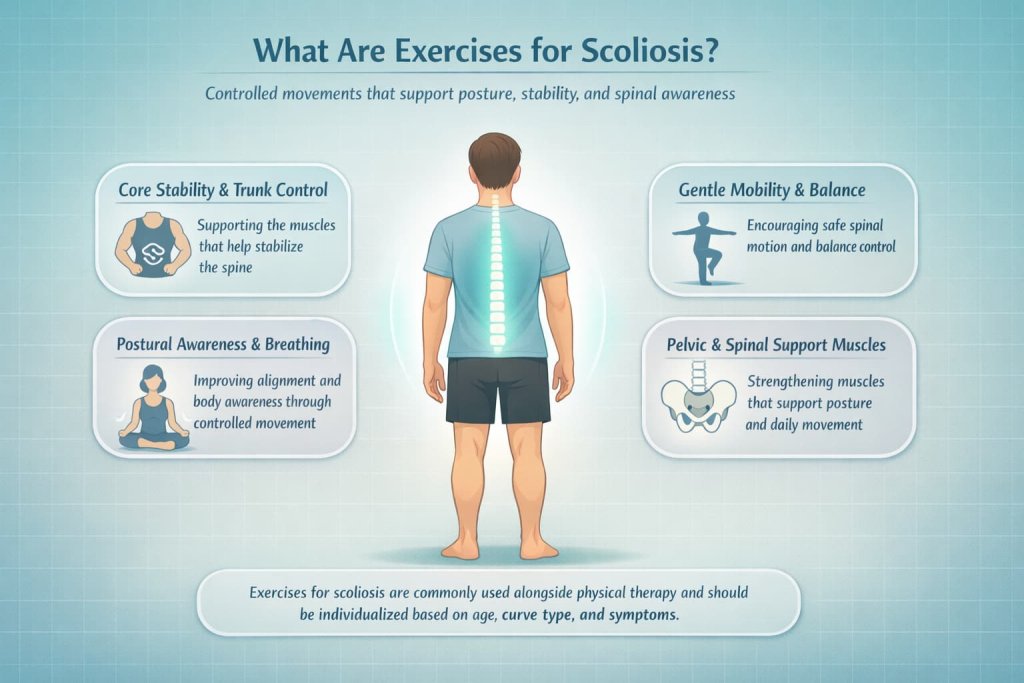
- Core stability and trunk control
- Postural awareness and breathing mechanics
- Gentle spinal mobility and balance
- Strengthening muscles that support the spine and pelvis
Medical guidance consistently emphasizes that exercises should be individualized based on age, curve type, severity, and symptoms.
9 Best Scoliosis Exercises for Better Posture
The following exercises are commonly included in physical therapy–inspired scoliosis programs. They are presented for general educational purposes and should be adapted as needed under professional guidance.
1. Pelvic Tilts
How to do it:
- Lie on your back with knees bent and feet flat on the floor
- Gently tighten your abdominal muscles
- Flatten your lower back into the floor by tilting the pelvis
- Hold for 3–5 seconds
- Slowly relax and return to neutral
- Repeat with controlled breathing
Why it works:
Pelvic tilts improve awareness of neutral spine positioning and gently activate the deep core muscles. This foundational control helps reduce excessive lumbar movement and supports spinal alignment during daily activities.
Trainer Tip:
Move slowly and avoid pushing into discomfort. The goal is control and awareness—not force or range.
2. Cat–Cow Stretch
How to do it:
- Start on hands and knees with a neutral spine
- Inhale and gently arch the back, lifting the chest and tailbone
- Exhale and round the spine, drawing the chin toward the chest
- Move slowly between positions
- Keep movements smooth and pain-free
Why it works:
Cat–cow promotes gentle spinal mobility and helps reduce stiffness. The controlled motion encourages better coordination between breathing and spinal movement.
Trainer Tip:
Stay within a comfortable range and focus on smooth breathing rather than stretching deeply.
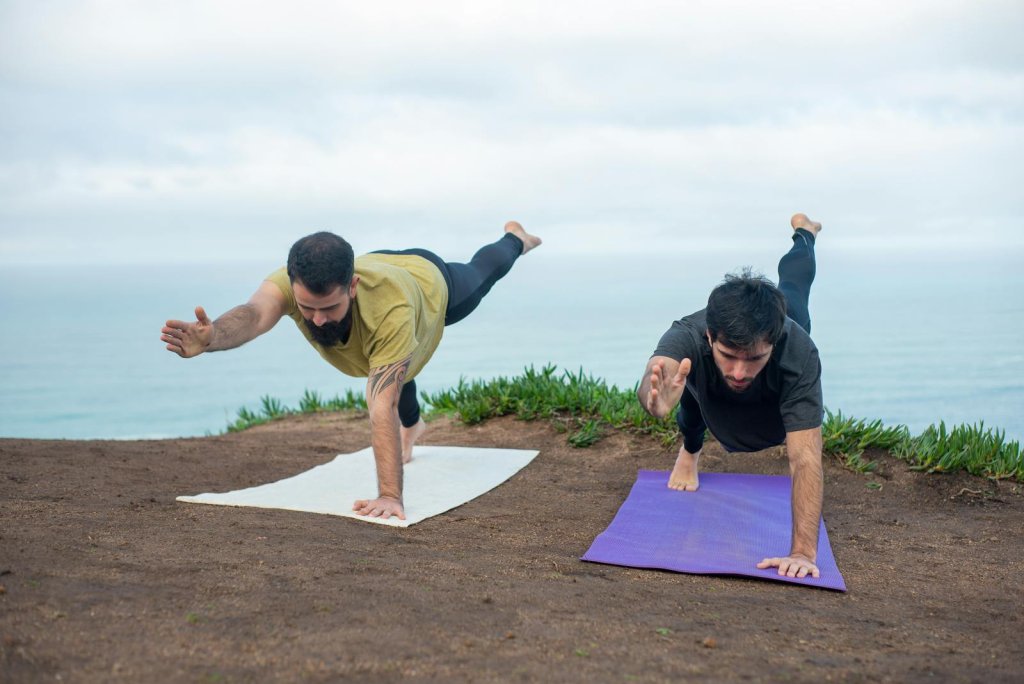
3. Bird Dog
How to do it:
- Begin on hands and knees with a neutral spine
- Extend one arm forward and the opposite leg backward
- Keep hips and shoulders level
- Hold briefly while maintaining balance
- Return slowly and switch sides
Why it works:
Bird dog improves spinal stability by training the core to resist rotation. This control is especially important for supporting posture in scoliosis.
Trainer Tip:
Quality matters more than duration. Stop the movement if your hips rotate or your lower back arches.
4. Side Plank (Modified as Needed)
How to do it:
- Lie on your side with knees bent or legs extended
- Place elbow under the shoulder
- Lift hips to form a straight line from head to knees or feet
- Hold while breathing steadily
- Lower with control and switch sides
Why it works:
Side planks strengthen lateral core muscles that help stabilize the spine and pelvis. This support can improve postural control during standing and walking.
Trainer Tip:
Use knee-supported versions if needed. Proper alignment is more important than holding longer.
5. Wall Angels
How to do it:
- Stand with your back against a wall
- Keep head, upper back, and hips lightly touching the wall
- Raise arms to shoulder height with elbows bent
- Slowly slide arms upward and downward
- Maintain contact with the wall throughout
Why it works:
Wall angels reinforce upright posture and improve thoracic mobility. They help retrain postural awareness, which is often reduced in scoliosis.
Trainer Tip:
Move slowly and avoid arching the lower back to force arm movement.
6. Seated Postural Breathing
How to do it:
- Sit tall with feet flat on the floor
- Place hands lightly on the ribcage
- Inhale deeply, expanding the ribs
- Exhale slowly while maintaining upright posture
- Repeat with calm, controlled breaths
Why it works:
Postural breathing supports rib mobility and trunk awareness. Controlled breathing is often used in scoliosis-specific exercise programs to reinforce alignment.
Trainer Tip:
Focus on rib movement rather than lifting the shoulders during inhalation.
7. Glute Bridges
How to do it:
- Lie on your back with knees bent and feet hip-width apart
- Press through your heels
- Lift hips while keeping ribs down
- Pause briefly at the top
- Lower slowly with control
Why it works:
Strong glute muscles help stabilize the pelvis, which directly influences spinal positioning and load distribution.
Trainer Tip:
Avoid arching the lower back at the top—think of lengthening through the hips.
8. Standing Balance Holds
How to do it:
- Stand tall near a wall or support
- Shift weight onto one leg
- Lift the opposite foot slightly off the floor
- Hold while maintaining upright posture
- Switch sides after holding
Why it works:
Balance exercises improve neuromuscular control and body awareness, which supports safer movement and postural stability.
Trainer Tip:
Use light fingertip support if needed and gradually reduce assistance over time.
9. Chest and Hip Flexor Stretch
How to do it:
- Stand or kneel in a comfortable position
- Gently open the chest or step into a hip flexor stretch
- Maintain upright posture
- Hold while breathing calmly
- Release slowly
Why it works:
Stretching tight chest and hip flexor muscles may help counteract postural imbalances associated with prolonged sitting or asymmetrical posture.
Trainer Tip:
Stretch gently—never force range or push into discomfort.
Can Exercises Help Scoliosis? What the Evidence Says
Exercises are commonly used to support posture, strength, and daily comfort in people with scoliosis, but they are not a guaranteed way to correct spinal curvature.
- May help improve postural awareness and muscle balance
- Often used for pain management and functional support
- Evidence supports symptom relief rather than curve correction
- Frequently included as part of physical therapy programs
Medical organizations such as the Mayo Clinic and the American Academy of Orthopaedic Surgeons emphasize individualized care and realistic expectations.
How Often Should You Do Scoliosis Exercises?
There is no single schedule that works for everyone. Most programs prioritize consistency over intensity.
- Often performed several times per week
- Some posture or breathing drills may be done daily
- Volume and frequency should be adjusted individually
- Progression is typically gradual and symptom-guided
When to Seek Professional Guidance
Professional input is important in certain situations to ensure safety.
- Increasing or persistent back pain
- Numbness, tingling, or weakness
- Severe or rapidly progressing scoliosis
- Post-surgical recovery or movement restrictions
- Children or adolescents with scoliosis
Consulting a qualified professional helps ensure exercises are appropriate and safe.
Safety Guidelines Before Starting Scoliosis Exercises
Before beginning any scoliosis exercise routine:
- Avoid movements that cause sharp or worsening pain
- Start with slow, controlled repetitions
- Focus on posture and breathing rather than intensity
- Progress gradually
- Seek professional advice if pain increases or symptoms change
Organizations such as the Mayo Clinic and NHS consistently advise consulting a healthcare or rehabilitation professional before starting new exercise programs for spinal conditions.
Who Should Be Extra Cautious?
Extra care is advised if you:
- Have severe or rapidly progressing scoliosis
- Experience nerve-related symptoms (numbness, tingling, weakness)
- Are recovering from spinal surgery
- Have been advised to limit certain movements
In these cases, exercise selection should be guided by a qualified professional.
Frequently Asked Questions (FAQs)
Can exercises fix scoliosis permanently?
Exercises do not reliably correct spinal curvature in all cases. They are mainly used to support posture, strength, and symptom management.
Are scoliosis exercises safe for daily practice?
Many gentle exercises may be performed regularly, but frequency and intensity should be individualized.
Do teens and adults need different scoliosis exercises?
Yes. Exercise programs often differ based on growth stage, curve progression risk, and physical capacity.
Is the Schroth Method the best exercise for scoliosis?
Schroth-based exercises are widely recognized but are typically taught by trained therapists and customized per individual.
Should scoliosis exercises cause muscle soreness?
Mild muscle fatigue can occur, but sharp pain or increasing discomfort is not expected and should be addressed.
Can home exercises replace physical therapy?
Home exercises may complement physical therapy but are not always a substitute for professional assessment and guidance.
Conclusion
Exercises for scoliosis can play a valuable role in supporting posture, strength, and daily comfort when chosen carefully and performed with proper technique. The most effective approach is individualized, consistent, and aligned with medical guidance.
If you’re considering starting a scoliosis exercise program, consulting a qualified healthcare or rehabilitation professional can help ensure safety and effectiveness.
This content is for informational purposes only and not medical advice.
References
- Mayo Clinic: Scoliosis – Diagnosis and Treatment
- AAOS OrthoInfo: Nonsurgical Treatment Options for Scoliosis
- AAOS OrthoInfo: Introduction to Scoliosis
- NHS: Scoliosis – Treatment in Adults
- NIAMS: Scoliosis in Children and Teens – Diagnosis, Treatment, and Steps to Take
- Johns Hopkins Medicine: Schroth Method for Scoliosis
- PubMed Central: Physiotherapeutic Scoliosis-Specific Exercises Review (PSSE)
- PubMed Central: 2025 Review (Full Text) on Schroth Exercises and AIS Outcomes