
Hip stretching exercises are controlled movements that gently lengthen the muscles around the hip joint to improve flexibility, comfort, and range of motion. Tight hips are common due to prolonged sitting, limited movement, or repetitive activities, and they can affect posture, walking mechanics, and daily comfort.
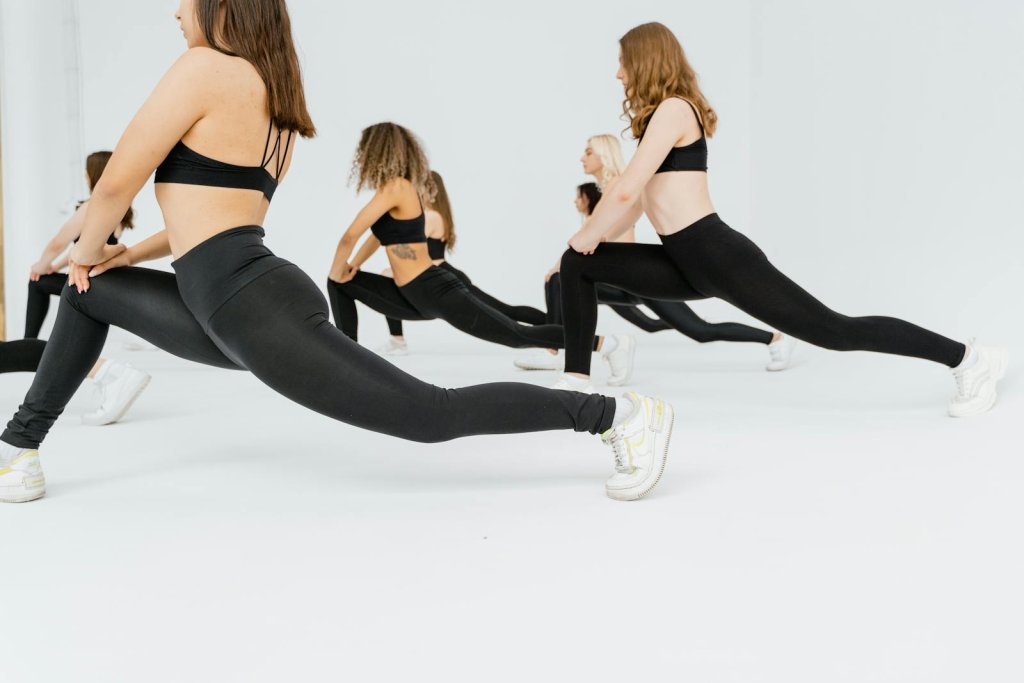
Understanding how to stretch the hips safely and consistently can help you move more freely and feel less restricted during everyday activities.
What Are Hip Stretching Exercises?
Hip stretching exercises focus on lengthening the muscles that support hip movement and stability. These muscles include the hip flexors, glutes, adductors (inner thighs), and deep rotators.
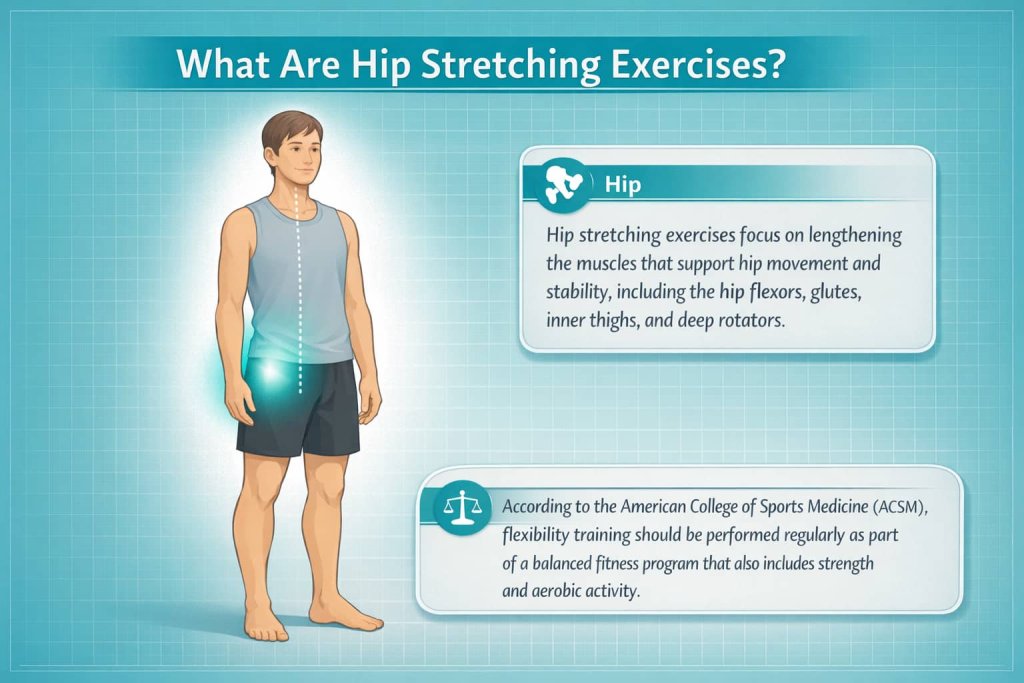
According to the American College of Sports Medicine (ACSM), flexibility training should be performed regularly as part of a balanced fitness program that also includes strength and aerobic activity. Hip stretches are especially important because the hips influence both lower-body and spinal movement.
15 Best Hip Stretching Exercises
These hip stretching exercises focus on improving flexibility, easing stiffness, and supporting comfortable hip movement. They target the hip flexors, glutes, and inner thighs to help promote better daily mobility and posture.
1. Kneeling Hip Flexor Stretch
Why it works:
This stretch gently lengthens the hip flexors, which often become shortened from prolonged sitting. Improving hip flexor length may support better posture and more comfortable walking and standing.
How to do it:
- Kneel on one knee with the other foot placed forward
- Keep your torso upright and core lightly engaged
- Gently shift your hips forward until you feel a stretch in the front of the hip
- Hold for 20–30 seconds, then switch sides
Trainer Tip:
Avoid arching your lower back; think about keeping your ribs stacked over your pelvis.
2. Standing Hip Flexor Stretch
Why it works:
This standing variation provides similar benefits to kneeling stretches while allowing quick mobility breaks during the day, especially at work.
How to do it:
- Step one foot back into a split stance
- Bend the front knee slightly
- Tuck your pelvis gently and shift weight forward
- Hold the stretch, then switch sides
Trainer Tip:
Use a wall or chair for balance to stay relaxed during the stretch.
3. Seated Figure-4 Stretch
Why it works:
This stretch helps release tension in the glutes and deep hip rotators, which may become tight from sitting or repetitive lower-body movement.
How to do it:
- Sit upright on a chair
- Cross one ankle over the opposite knee
- Keep your chest tall and hinge slightly forward
- Hold, then switch sides
Trainer Tip:
If knee pressure occurs, reduce the range or keep the ankle lower on the thigh.
4. Supine Figure-4 Stretch
Why it works:
Performing the stretch on your back allows the hips to relax fully while reducing stress on the spine.
How to do it:
- Lie on your back with knees bent
- Cross one ankle over the opposite knee
- Gently pull the bottom leg toward your chest
- Hold and switch sides
Trainer Tip:
Keep your head and shoulders relaxed against the floor.
5. Butterfly Stretch
Why it works:
This stretch focuses on the inner thighs and groin, supporting hip opening and comfortable side-to-side movement.
How to do it:
- Sit tall with soles of the feet together
- Let knees gently fall outward
- Hold the stretch while breathing calmly
Trainer Tip:
Support knees with cushions if flexibility is limited.
6. Frog Stretch
Why it works:
The frog stretch provides a deeper adductor stretch and may help improve hip opening when performed gently.
How to do it:
- Start on hands and knees
- Slide knees wider while keeping feet outward
- Lower hips slowly toward the floor
- Hold within a comfortable range
Trainer Tip:
Move slowly into position and stop if discomfort becomes sharp.
7. 90/90 Hip Stretch
Why it works:
This position trains both internal and external hip rotation, which is important for balanced hip mobility.
How to do it:
- Sit with one leg bent in front and the other behind at 90 degrees
- Keep your spine upright
- Gently lean forward over the front leg
- Switch sides after holding
Trainer Tip:
Use your hands for support if maintaining posture is challenging.
8. Pigeon Stretch (Modified)
Why it works:
This stretch targets the glutes and piriformis while allowing intensity adjustments for comfort.
How to do it:
- Start in a supported lunge or on the floor
- Bring one knee forward and extend the opposite leg back
- Keep hips level and supported
- Hold, then change sides
Trainer Tip:
Use blocks or cushions under the hips to reduce strain.
9. Side-Lying Hip Abductor Stretch
Why it works:
This stretch gently lengthens the lateral hip muscles, supporting side-to-side hip mobility and reducing outer-hip stiffness.
How to do it:
- Lie on your side with bottom leg bent for stability
- Keep the top leg straight and in line with your body
- Slowly move the top leg slightly behind you and downward
- Let the leg relax toward the floor without forcing
- Hold for 20–30 seconds, then switch sides
Trainer Tip:
Keep hips stacked to avoid twisting the spine.
10. Lying Hip Flexor Stretch
Why it works:
Stretching while lying down minimizes lower-back strain while targeting tight hip flexors.
How to do it:
- Lie near the edge of a bed or bench
- Pull one knee toward your chest
- Let the opposite leg hang relaxed
- Switch sides after holding
Trainer Tip:
Keep your core lightly engaged to maintain stability.
11. Wide-Stance Forward Fold
Why it works:
This stretch combines hip opening with hamstring lengthening, supporting overall lower-body flexibility.
How to do it:
- Stand with feet wider than shoulder-width
- Hinge forward at the hips
- Let arms hang toward the floor
- Hold comfortably
Trainer Tip:
Bend knees slightly if hamstrings feel tight.
12. Low Lunge Stretch
Why it works:
This stretch encourages hip extension and pelvic control, which may support smoother walking mechanics.
How to do it:
- Step one foot forward into a lunge
- Lower the back knee to the floor
- Shift hips forward gently
- Switch sides after holding
Trainer Tip:
Keep shoulders relaxed and avoid leaning forward excessively.
13. Standing Adductor Stretch
Why it works:
This movement improves side-to-side hip motion, useful for daily activities and athletic movements.
How to do it:
- Take a wide stance
- Shift weight to one side while bending that knee
- Keep the opposite leg straight
- Switch sides
Trainer Tip:
Maintain an upright chest to avoid excessive forward lean.
14. Child’s Pose With Hip Bias
Why it works:
This variation encourages gentle hip flexion while promoting relaxation and controlled breathing.
How to do it:
- Start on hands and knees
- Sit hips back toward heels
- Widen knees slightly for hip focus
- Hold and breathe deeply
Trainer Tip:
Place a cushion under hips for added comfort.
15. Seated Hip Internal Rotation Stretch
Why it works:
Internal rotation is often overlooked, yet it plays a key role in balanced hip mobility and joint function.
How to do it:
- Sit upright with knees bent
- Let one foot move outward while knee stays down
- Hold the position gently
- Switch sides
Trainer Tip:
Move slowly and keep the movement small if rotation feels limited.
How Often Should You Do Hip Stretching Exercises?
Most flexibility guidelines suggest:
- Stretching hips 2–3 days per week or daily if comfortable
- Repeating each stretch 2–4 times
- Total stretch time of 60 seconds per muscle group
Common Mistakes to Avoid
- Bouncing or forcing stretches
- Holding breath during stretches
- Stretching cold muscles
- Ignoring discomfort signals
- Overstretching already flexible joints
Slow, controlled movement leads to better outcomes.
Common Causes of Tight Hips
Tight hips are often the result of daily habits and movement patterns rather than a single cause. The hip muscles play a key role in posture, walking, and sitting, so they can gradually lose flexibility when they are underused or held in shortened positions.
Common contributors include:
- Prolonged sitting: Sitting for long periods keeps the hip flexors shortened, which may lead to stiffness over time.
- Limited movement variety: Repeating the same movements or avoiding certain ranges of motion can reduce hip mobility.
- Reduced physical activity: Low activity levels may allow muscles around the hips to become less flexible.
- Imbalanced training routines: Focusing heavily on strength without mobility work may contribute to tightness.
- Age-related changes: Natural changes in joint and muscle elasticity can affect hip flexibility as we age.
Understanding these factors helps set realistic expectations and reinforces the importance of regular, gentle hip stretching exercises.
Why Hip Stretching Exercises important
Regular hip stretching exercises may help support:
- Improved hip mobility and joint range of motion
- Reduced muscle stiffness from prolonged sitting
- Better posture and pelvic alignment
- Easier walking, squatting, and bending movements
- Improved comfort during exercise and daily tasks
How to Perform Hip Stretching Exercises Safely
To keep hip stretching exercises safe and effective:
- Warm up with 5–10 minutes of light movement
- Move slowly into each stretch
- Hold stretches for about 20–30 seconds
- Breathe normally and avoid holding your breath
- Stretch to mild tension, not pain
When to Avoid or Modify Hip Stretching Exercises
You should modify or avoid hip stretching exercises if you have:
- Recent hip surgery or joint replacement
- Acute hip or groin injury
- Sharp pain during movement
- Severe joint instability
Frequently Asked Questions
Are hip stretching exercises good for tight hips?
Yes, regular hip stretching exercises may help support mobility, comfort, and movement quality when performed consistently and pain-free.
How long does it take to see results?
Many people notice improved comfort within 2–4 weeks of regular stretching.
Can I stretch my hips every day?
Yes, gentle hip stretching exercises can be performed daily if they feel comfortable.
Should hip stretches hurt?
No. Stretching should create mild tension, not pain.
Are hip stretches good for people who sit all day?
Yes, they are commonly recommended for desk workers to counter prolonged sitting.
Can beginners do these exercises?
Yes, most hip stretching exercises can be modified for beginners.
Conclusion
Hip stretching exercises are a simple, effective way to support mobility, posture, and daily comfort. By practicing a balanced mix of hip flexor, glute, adductor, and rotational stretches, you can help keep your hips moving well over time. Start slowly, stay consistent, and choose stretches that feel comfortable and controlled.
If you experience ongoing hip pain or movement limitations, consider seeking professional guidance before progressing.
References
- Mayo Clinic — Stretching: Focus on flexibility
- Mayo Clinic — The ideal stretching routine (technique + safety basics)
- Harvard Health Publishing — The ideal stretching routine (hold times + frequency)
- NHS inform — Exercises for hip problems (safe, public-health resource)
- Arthritis UK — Exercises for the hips (joint-friendly guidance + modifications)
- Konrad et al. (2023) — Chronic effects of stretching on range of motion (research review)