
The best alternatives to the overhead press are exercises that strengthen your shoulders without putting excessive stress on the joints.
Movements like the landmine press, Arnold press, and cable lateral raise activate the deltoids while protecting the rotator cuff and spine.
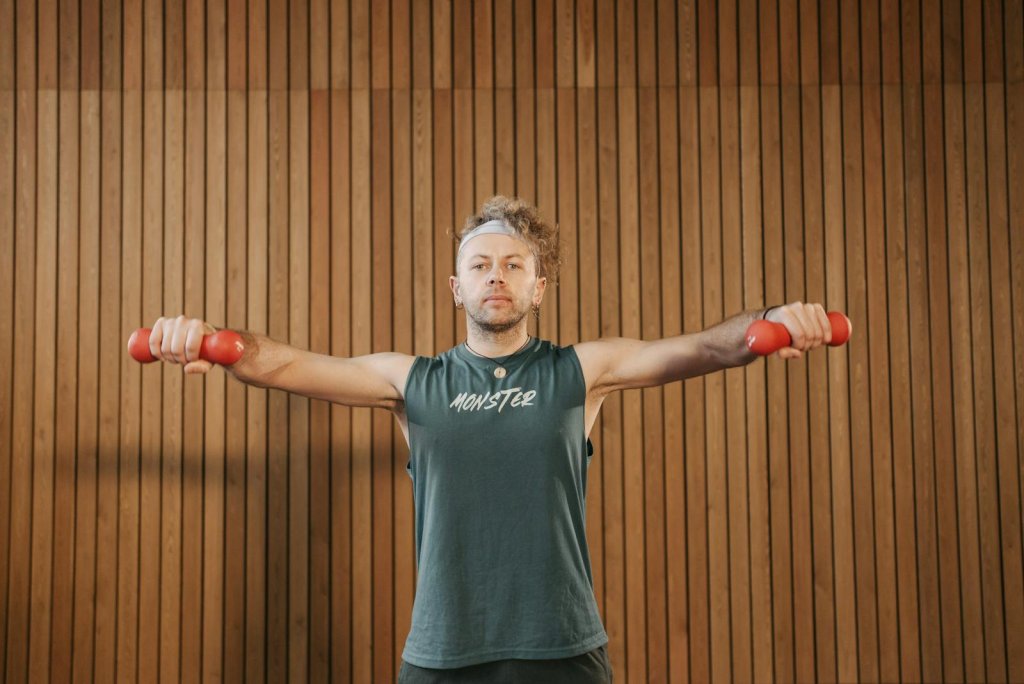
Understanding overhead press alternatives is essential if you experience shoulder discomfort, have limited mobility, or simply want to train smarter. These variations provide similar hypertrophy benefits with safer joint angles and greater stability options. Below, we’ll explore the 15 best replacements backed by current research and training science.
15 Best Overhead Press Alternatives
Each of these exercises can replace the barbell overhead press while maintaining shoulder development.
1. Landmine Press
Why it works:
The landmine press follows a natural arcing path that minimizes shoulder impingement risk and decreases spinal load. The angled motion shifts stress away from the joint while still stimulating deltoid and upper-chest hypertrophy. It’s ideal for lifters recovering from shoulder pain or lacking full overhead mobility.
Muscles worked: Front deltoids, upper chest, triceps, core
How to do it:
- Set a barbell in a landmine attachment or secure one end in a corner.
- Stand facing the bar and hold the loaded end at shoulder height.
- Brace your core and press the bar upward and forward at roughly a 45° angle.
- Slowly return to the start without leaning back.
Trainer Tip: Keep the wrist straight and move smoothly—avoid over-extending your arm or shrugging your shoulders at the top.
2. Arnold Press
Why it works:
This rotational variation recruits both the anterior and lateral deltoids through a long range of motion. The internal-to-external rotation improves shoulder stability and mimics a natural movement pattern, reducing joint strain.
Muscles worked: Front and side delts, triceps, upper chest
How to do it:
- Sit or stand with dumbbells in front of your shoulders, palms facing you.
- Rotate palms outward as you press overhead.
- Reverse the rotation to return to the start.
Trainer Tip: Move under control—avoid jerking through the rotation to protect your shoulders.
3. Dumbbell Z Press
Why it works:
By sitting upright on the floor with legs extended, you eliminate leg drive, forcing your shoulders and core to stabilize completely. This builds true pressing strength and postural control.
Muscles worked: Deltoids, triceps, core stabilizers
How to do it:
- Sit with legs straight, dumbbells at shoulder level.
- Keep torso tall and press overhead until arms are fully extended.
- Lower the weights slowly to shoulder height.
Trainer Tip: Keep ribs pulled down and abs tight—don’t lean back or arch.
4. Seated Dumbbell Shoulder Press
Why it works:
Sitting upright isolates the shoulders while supporting the spine. The controlled movement pattern helps balance strength between arms and maintain consistent tension on the delts.
Muscles worked: Anterior and medial deltoids, triceps
How to do it:
- Sit with your back against a bench.
- Hold dumbbells at shoulder height and press overhead until arms are straight.
- Lower until elbows are just below shoulder level.
Trainer Tip: Keep your feet grounded and avoid locking elbows at the top.
5. Machine Shoulder Press
Why it works:
The fixed path of the machine stabilizes the movement, making it a safer option for beginners or those with limited mobility. It keeps tension on the shoulders through the full range of motion.
Muscles worked: Deltoids, triceps
How to do it:
- Adjust the seat so handles align with your shoulders.
- Grip the handles and press upward smoothly.
- Pause briefly, then lower under control.
Trainer Tip: Don’t let the weights touch between reps—keep constant tension.
6. Push Press
Why it works:
Combines leg drive with pressing force, allowing you to handle heavier loads. Great for athletes training for power, speed, and shoulder explosiveness.
Muscles worked: Shoulders, triceps, legs, core
How to do it:
- Hold a barbell at shoulder height.
- Dip slightly by bending knees.
- Explosively extend legs and press the bar overhead.
- Lower back to shoulders with control.
Trainer Tip: Keep bar path straight; don’t let it drift forward.
7. Single-Arm Dumbbell Press
Why it works:
Training one arm at a time challenges your stabilizers and core anti-rotation control. It also corrects strength imbalances.
Muscles worked: Front deltoids, core, triceps
How to do it:
- Hold one dumbbell at shoulder level.
- Engage your core and press overhead.
- Lower with control and switch sides.
Trainer Tip: Maintain upright posture—don’t tilt toward the non-working side.
8. Cable Lateral Raise
Why it works:
The cable provides continuous tension throughout the lift, isolating the side deltoids more effectively than free weights.
Muscles worked: Lateral deltoid
How to do it:
- Stand next to a low pulley with handle in one hand.
- Raise arm to shoulder height.
- Pause briefly, then lower slowly.
Trainer Tip: Maintain a slight elbow bend and avoid swinging your torso.
9. Standing Front Raise
Why it works:
Emphasizes the front delts responsible for shoulder flexion and complements chest pressing movements.
Muscles worked: Front deltoid, upper chest
How to do it:
- Hold dumbbells in front of thighs, palms down.
- Lift to shoulder level and lower slowly.
Trainer Tip: Keep movements slow and controlled—momentum reduces effectiveness.
10. Pike Push-Up
Why it works:
This body-weight option replicates overhead pressing mechanics with reduced joint strain, making it great for home training.
Muscles worked: Shoulders, triceps, upper chest
How to do it:
- Start in a downward-dog position.
- Lower head toward the ground by bending elbows.
- Press back to the start.
Trainer Tip: Elevate feet on a bench for more resistance.
11. Handstand Push-Up (Against Wall)
Why it works:
An advanced body-weight movement that builds raw shoulder strength and core stability similar to strict pressing.
Muscles worked: Deltoids, triceps, upper chest, core
How to do it:
- Kick up into a wall-supported handstand.
- Lower until head nearly touches floor.
- Press back to full extension.
Trainer Tip: Use cushioning under your head and build up gradually.
12. Lateral Dumbbell Raise
Why it works:
Focuses on developing the side delts for shoulder width and proportion. Maintains constant tension through controlled motion.
Muscles worked: Medial deltoid
How to do it:
- Stand tall, dumbbells by sides.
- Raise arms to shoulder height, elbows slightly bent.
- Lower slowly.
Trainer Tip: Lead with elbows, not hands, to hit the delts directly.
13. Upright Row (Cable or Dumbbell)
Why it works:
Strengthens the deltoids and traps while improving upper-back posture. Cable or dumbbell variations reduce internal rotation stress compared to barbell rows.
Muscles worked: Lateral delts, traps, biceps
How to do it:
- Stand with dumbbells or cable handle in front of thighs.
- Pull up toward the chest, elbows leading.
- Stop at shoulder height, then lower slowly.
Trainer Tip: Keep shoulders relaxed—avoid pulling too high to protect joints.
14. Incline Dumbbell Press
Why it works:
Blends shoulder and chest activation, allowing a heavy pressing stimulus with less shoulder impingement.
Muscles worked: Front deltoids, upper chest, triceps
How to do it:
- Set a bench to a 30–45° incline.
- Press dumbbells upward and together.
- Lower slowly until elbows align with chest.
Trainer Tip: Maintain a slight elbow tuck and avoid excessive arching.
15. Cable Face Pull
Why it works:
Balances heavy pressing by strengthening rear delts and rotator-cuff stabilizers. Essential for shoulder health and posture.
Muscles worked: Rear deltoids, traps, rhomboids, rotator cuff
How to do it:
- Attach a rope to a high pulley.
- Pull toward your face with elbows high and out.
- Squeeze shoulder blades together at the end.
Trainer Tip: Focus on form, not load—lighter weights give better activation.
Why Replace the Overhead Press?
The traditional overhead press is one of the most effective compound lifts for shoulder size and strength—but it’s not for everyone.
Common issues include:
- Shoulder impingement or discomfort when pressing overhead
- Limited thoracic mobility or tight lats restricting proper alignment
- Excessive lumbar arching from poor core engagement
- Lack of equipment (no barbell or rack access)
According to a 2010 review in the Journal of Strength & Conditioning Research, overhead pressing requires optimal scapular control and shoulder external rotation. Lifters lacking mobility often experience rotator cuff strain or compensatory lumbar hyperextension.
What Makes a Good Overhead Press Alternative?
A proper substitute should:
- Target all three deltoid heads (anterior, lateral, posterior)
- Allow for a natural pressing or lifting path
- Reduce spinal compression and shoulder impingement risk
- Offer progression potential for strength and hypertrophy
Exercises that meet these criteria include angled presses, dumbbell variations, cable movements, and machine-supported lifts.
Programming Tips
- Choose 2–3 of these alternatives per session.
- Perform 3–4 sets of 8–12 reps for hypertrophy.
- Rotate exercises every 4–6 weeks for balanced shoulder development.
- Include at least one rear-delt movement to protect rotator cuff health.
Common Mistakes to Avoid
- Arching your lower back: Overcompensates for poor shoulder mobility.
- Using too much weight: Leads to poor form and injury risk.
- Neglecting rear delts: Creates muscular imbalance and posture issues.
- Skipping warm-ups: Always mobilize shoulders with band pull-aparts or arm circles first.
FAQ
1. Are overhead press alternatives as effective for shoulder growth?
Yes. Studies show similar hypertrophy when using dumbbell, cable, or landmine variations with proper load and volume.
2. What’s the best overhead press alternative for beginners?
The seated dumbbell press or machine shoulder press—both are stable and easy to learn.
3. Which alternative is best for shoulder pain?
The landmine press offers a joint-friendly range of motion.
4. Do I still need to train overhead pressing at all?
Not necessarily. You can fully develop shoulders using lateral raises, front raises, and push variations.
5. Can I do these at home?
Yes—try pike push-ups, single-arm presses, or banded raises.
6. How often should I train shoulders?
2 times per week is optimal for most lifters.
7. Should I use barbells or dumbbells for best results?
Both work, but dumbbells offer greater freedom of movement and reduce joint stress.
Conclusion
Overhead press alternatives like the landmine press, Arnold press, and lateral raise offer the same strength and size benefits with less joint strain.
Whether you’re avoiding injury or just seeking variety, these options ensure balanced, pain-free shoulder growth.
Train smart—build strength safely, not painfully.
Research References
- Kettlebell vs. Dumbbell Overhead Press (EMG, stabilizers differ) — helpful when choosing joint-friendly implements for pressing variations. PMC
- Front vs. Back; Barbell vs. Machine Overhead Press (EMG comparison) — shows how implement and bar path change deltoid activation and joint demands. PMC
- Weightlifting Overhead Pressing Derivatives (push press/jerk) review — supports using explosive derivatives as worthwhile alternatives for power/strength. PMC
- Lateral Raise Variations (EMG across rotations/angles) — underpins programming raises with presses to fully target medial delts. PubMed
- Different Shoulder Exercises Affect Deltoid Portions (presses vs flies vs raises) — maps which moves bias anterior/medial/posterior delts. PMC
- Shoulder EMG During Push-Up Variations — supports bodyweight options (pike/HS progressions) as viable overhead-style alternatives at home. PMC
- Optimal Management of Shoulder Impingement (clinical review) — rationale for angled presses, scapular control, and rear-delt/RC work alongside pressing. PMC
- Exercises that Optimize Periscapular Muscle Ratios (systematic review) — guides inclusion of face pulls/scapular-stability drills to balance pressing volume. PMC