
Osteoporosis exercises for women are safe, targeted movements that focus on weight-bearing, muscle-strengthening, and balance training to help support bone strength and reduce fracture risk.
Understanding the right exercises—and which movements to avoid—is critical because women experience bone loss more rapidly with age, especially after menopause. When chosen carefully, exercise can play a key role in maintaining bone health, improving balance, and supporting everyday independence.
This guide explains the best osteoporosis exercises for women, how to do them safely, who should be cautious, and what current research and clinical guidelines recommend.
What Are Osteoporosis Exercises for Women?
Osteoporosis exercises for women are physical activities designed to apply safe, controlled stress to bones and muscles while minimizing fracture risk. According to guidance from organizations such as the Bone Health and Osteoporosis Foundation and the International Osteoporosis Foundation, effective programs usually include:
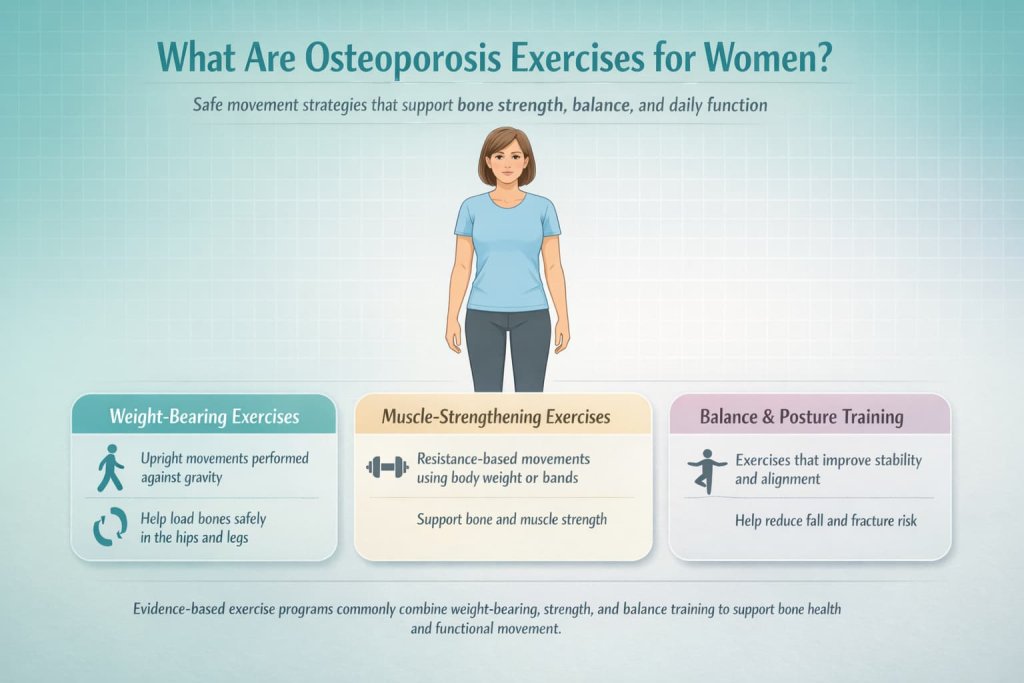
- Weight-bearing exercises performed upright against gravity
- Muscle-strengthening (resistance) exercises
- Balance and posture training
These categories work together to support bone strength, reduce falls, and improve functional movement.
Why Exercise Is Important for Women With Osteoporosis
Women are at higher risk of osteoporosis due to hormonal changes, particularly reduced estrogen after menopause. Research cited by the Centers for Disease Control and Prevention shows that nearly 1 in 5 women over age 50 has osteoporosis at key skeletal sites.
Well-designed exercise programs may help women:
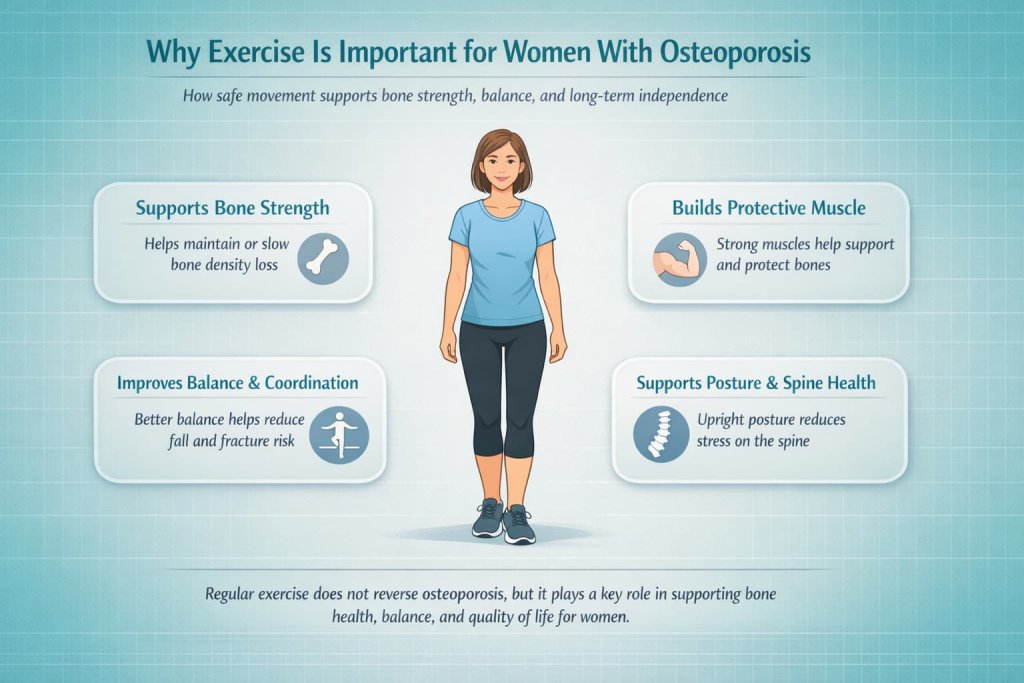
- Maintain or slow loss of bone density
- Improve muscle strength that protects bones
- Enhance balance and coordination to reduce falls
- Support posture and spinal alignment
Exercise does not reverse osteoporosis, but it can be a powerful tool to support bone health and overall quality of life.
9 Best Osteoporosis Exercises for Women
Safe, effective exercises that focus on weight-bearing, strength, balance, and posture to support bone health in women with osteoporosis. These movements are designed to help build strength safely, improve stability, and reduce fracture risk when performed correctly.
1. Brisk Walking (Weight-Bearing)
How to do it
- Walk upright at a pace that slightly increases breathing but still allows conversation
- Keep shoulders relaxed, chest lifted, and arms swinging naturally
- Aim for even steps, consistent rhythm, and heel-to-toe foot contact
Why it works
Brisk walking places gentle, repetitive load through the hips, legs, and spine while remaining low impact. This upright, weight-bearing stress signals bones—especially in the hips and lower body—to maintain strength, making it one of the safest foundational exercises for women with osteoporosis.
Muscles worked
Glutes, quadriceps, hamstrings, calves, hip stabilizers, core stabilizers
Trainer Tip
Choose flat, predictable surfaces and supportive footwear. If balance is a concern, start indoors or on a treadmill with handrails.
2. Stair Climbing
How to do it
- Step up one stair at a time using full foot contact
- Use a handrail lightly for balance if needed
- Step down slowly with control, keeping posture upright
Why it works
Stair climbing increases vertical loading through the hips and thighs more than level walking. This added load helps stimulate bone tissue in areas most affected by osteoporosis, particularly the hips.
Muscles worked
Glutes, quadriceps, hamstrings, calves, core stabilizers
Trainer Tip
Begin with short stair bouts and focus on control rather than speed. Avoid rushing, especially when stepping down.
3. Sit-to-Stand (Chair Squats)
How to do it
- Sit tall near the front edge of a sturdy chair
- Press through your heels to stand up using your legs
- Sit back down slowly with control
Why it works
This movement mimics everyday activities like standing from a chair, reinforcing bone loading at the hips and thighs. It also builds functional strength needed for independence and fall prevention.
Muscles worked
Quadriceps, glutes, hamstrings, core
Trainer Tip
If the movement feels difficult, use a higher chair or place hands lightly on the thighs for assistance.
4. Step-Ups
How to do it
- Step onto a low platform or step with one foot
- Bring the other foot up to stand tall
- Step down carefully and switch sides
Why it works
Step-ups safely load one hip at a time, helping strengthen bones while also challenging balance and coordination. This unilateral loading is especially helpful for hip bone health.
Muscles worked
Glutes, quadriceps, calves, hip stabilizers
Trainer Tip
Start with a very low step height. Progress only when balance and control feel steady.
5. Single-Leg Balance
How to do it
- Stand near a stable support surface
- Lift one foot slightly off the floor
- Hold for time, then switch sides
Why it works
Balance training reduces fall risk, which is one of the most important factors in preventing osteoporosis-related fractures.
Muscles worked
Ankles, calves, hips, core stabilizers
Trainer Tip
Start with short holds and gradually increase time as balance improves.
6. Heel Raises
How to do it
- Stand holding a stable surface for support
- Rise up onto the balls of your feet
- Lower heels slowly back to the floor
Why it works
Heel raises load the bones of the lower leg and improve ankle strength, which is essential for balance reactions during walking and standing.
Muscles worked
Calves (gastrocnemius, soleus), foot and ankle stabilizers
Trainer Tip
Pause briefly at the top to improve control. Perform near a counter or wall for safety.
7. Resistance Band Rows
How to do it
- Anchor a resistance band at chest height
- Pull elbows back while squeezing shoulder blades together
- Return slowly to the starting position
Why it works
Rowing strengthens the upper back and supports upright posture, which is critical for spinal alignment and reducing excessive forward rounding common in osteoporosis.
Muscles worked
Upper back, rhomboids, rear shoulders, arms
Trainer Tip
Focus on posture rather than resistance. Keep the neck long and chest lifted throughout.
8. Wall Push-Ups
How to do it
- Stand facing a wall with hands at chest height
- Bend elbows to bring chest toward the wall
- Push away until arms are straight
Why it works
Wall push-ups build upper-body and core strength with minimal joint stress, making them a safe introduction to pushing movements for women with osteoporosis.
Muscles worked
Chest, shoulders, triceps, core stabilizers
Trainer Tip
The closer your feet are to the wall, the easier the exercise. Adjust distance based on comfort.
9. Standing Hip Abduction
How to do it
- Stand upright while holding a chair or wall for support
- Slowly move one leg out to the side without leaning
- Return to start and switch legs
Why it works
This exercise targets the hip stabilizing muscles that help control pelvis position during walking and standing. Strong hip stabilizers contribute to better balance and reduced fall risk.
Muscles worked
Gluteus medius, gluteus minimus, hip stabilizers
Trainer Tip
Move slowly and with control. Keep toes facing forward to avoid compensations.
Weight-Bearing vs Muscle-Strengthening Exercises
Both are important, but they serve different purposes:
- Weight-bearing exercises load bones directly through standing and movement
- Muscle-strengthening exercises improve the forces muscles place on bones
Clinical guidance from the Mayo Clinic recommends combining both types for best results, alongside balance training.
Exercises and Movements to Avoid With Osteoporosis
Women with osteoporosis should generally avoid:
- Repeated forward bending of the spine
- Forceful twisting movements
- High-impact jumping if fracture risk is high
- Fast, uncontrolled movements
These movements may increase the risk of spinal or hip fractures, especially in those with existing vertebral fractures.
Safety Guidelines Before Starting Osteoporosis Exercises
- Get medical clearance if you have osteoporosis with prior fractures, severe bone loss, or ongoing back pain
- Avoid deep forward bending, forceful twisting, or sudden high-impact movements
- Maintain upright posture and controlled movement during all exercises
- Use stable support (chair, wall, handrail) when balance is limited
- Start with low intensity and progress gradually based on comfort and confidence
- Stop exercising if you experience sharp pain, dizziness, or loss of balance
How Often Should Women With Osteoporosis Exercise?
- Weight-bearing activities: Most days of the week, as tolerated
- Muscle-strengthening exercises: 2–3 days per week, with rest between sessions
- Balance and posture exercises: Daily or near-daily
- Allow adequate recovery and avoid exercising through pain or fatigue
Who Should Be Extra Cautious or Seek Medical Guidance
Extra care is advised for women who:
- Have had previous fractures
- Experience significant back pain
- Have severe or advanced osteoporosis
- Are unsure about exercise technique
Consulting a qualified healthcare provider or physical therapist is recommended before starting a new program.
Frequently Asked Questions
Can women with osteoporosis still exercise?
Yes. Most women with osteoporosis are encouraged to stay active using safe, modified exercises.
How often should osteoporosis exercises be done?
Many guidelines suggest strength and weight-bearing exercise 2–3 days per week, with balance activities done more often.
Are weights safe for women with osteoporosis?
Light to moderate resistance is often appropriate when movements are controlled and spine-safe.
Is yoga safe for osteoporosis?
Some poses may be appropriate, but deep forward bends and twisting should be avoided.
Can exercise increase bone density?
Exercise may help maintain bone density and slow bone loss, but results vary by individual.
What is the safest exercise to start with?
Walking, chair-based strength exercises, and balance work are often good starting points.
Conclusion
Osteoporosis exercises for women focus on safe loading, strength, balance, and posture. When performed consistently and correctly, these exercises may help women stay active, confident, and independent while supporting long-term bone health.
If you are unsure where to begin, start with low-impact movements and progress gradually under professional guidance.