
A seated hip flexor stretch is a chair-based way to reduce “front-of-hip” stiffness by improving hip position, gently opening the hip crease, and relaxing overworked hip flexor muscles. It’s especially useful if you sit a lot, can’t kneel comfortably, or want a quick mobility break at your desk.
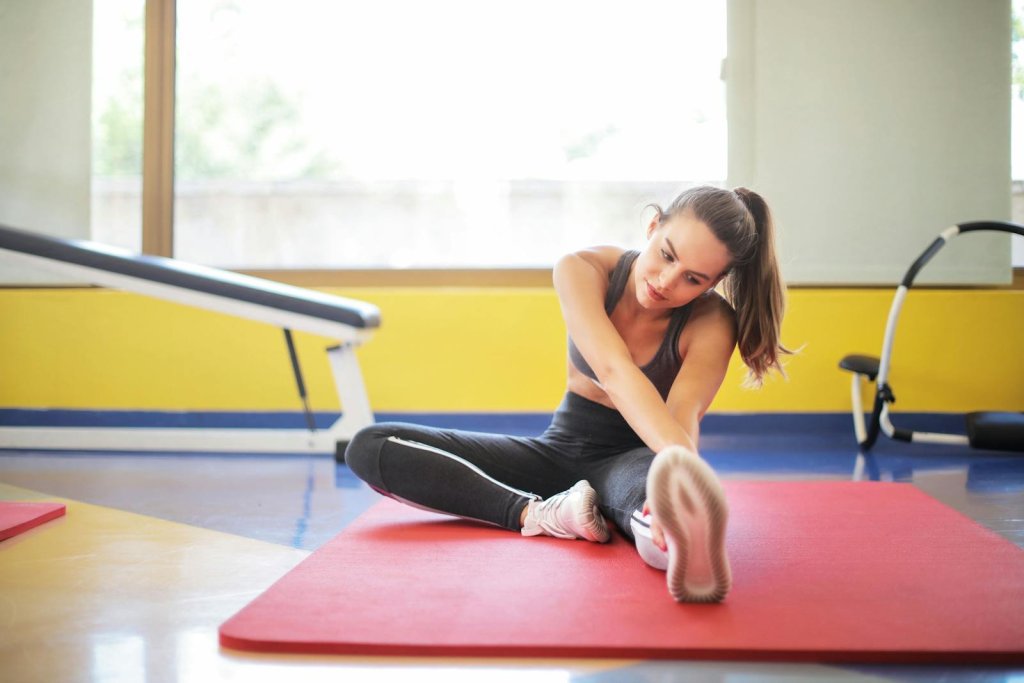
Seated versions can feel different from kneeling or standing hip flexor stretches (because true hip extension is limited in a chair), but they can still help your hips move better when you use good posture, controlled breathing, and the right setup. For safe stretching basics, see flexibility guidance from the Mayo Clinic and practical hip flexor stretching ideas from Harvard Health.
What Is a Seated Hip Flexor Stretch
A seated hip flexor stretch is any stretch done in a chair (or seated on the floor) that targets the muscles at the front of your hips, mainly by:
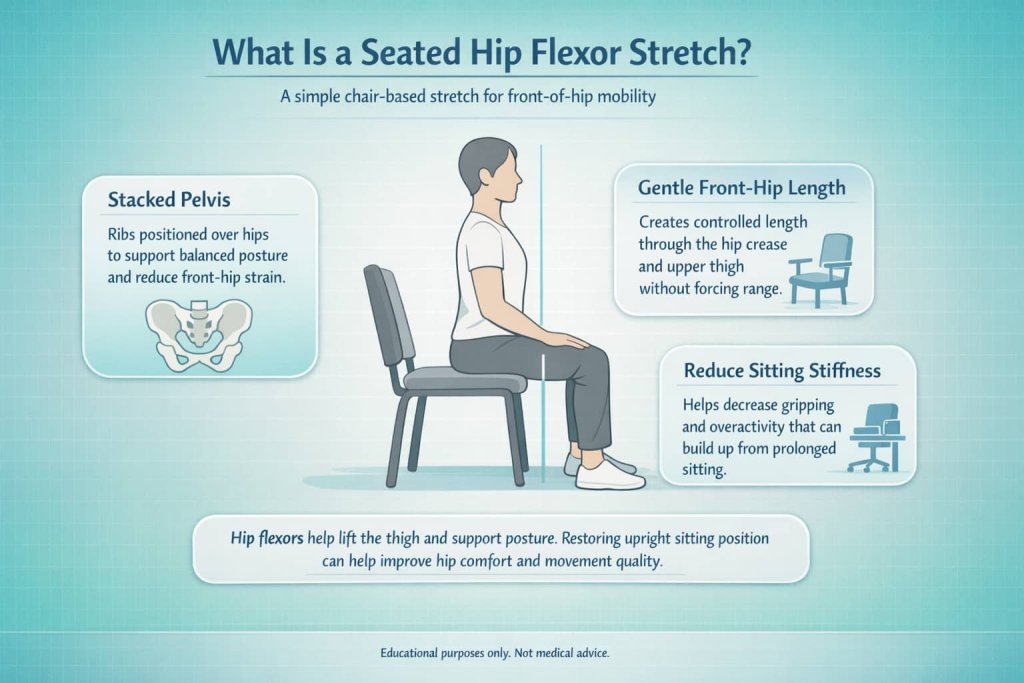
- Getting your pelvis into a more “stacked” position (ribs over hips)
- Creating gentle length through the front of the hip and upper thigh
- Reducing gripping and overactivity from long sitting
Because the hip flexors help lift your thigh and influence trunk and hip mechanics, people often feel relief when they restore a tall posture and better hip motion. The Cleveland Clinic explains that the psoas works with other muscles to support posture and hip movement, which is why hip flexor tightness often feels like front-hip stiffness.
Why Hip Flexors Feel Tight After Sitting
Hip flexors can feel tight for a few common reasons:
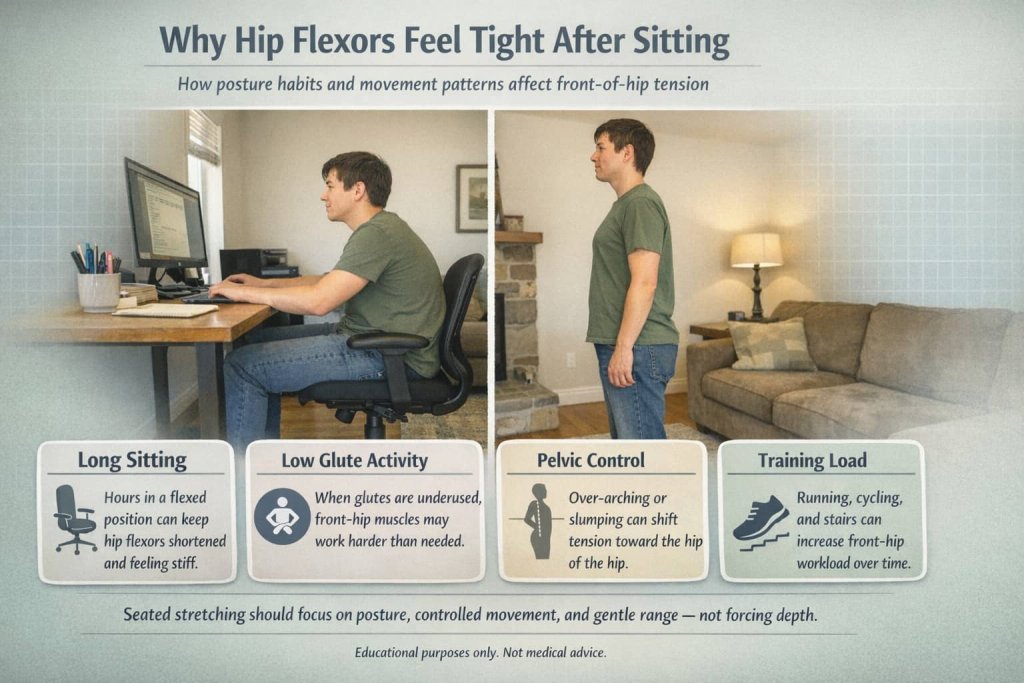
- Long sitting keeps the hip flexors in a shortened position for hours
- Low glute activity can make the front-hip muscles “pick up the slack”
- Poor pelvic control (over-arching or slumping) changes where you feel tension
- High training volume (running, cycling, frequent stairs) can increase front-hip workload
The goal of seated stretching is not to force a deep stretch, but to improve alignment, reduce guarding, and restore comfortable range of motion.
5 Best Seated Hip Flexor Stretches
Improve hip mobility and reduce front-of-hip tightness with these simple seated stretches. Each move is chair-friendly, beginner-safe, and designed to support better posture and daily movement.
1) Seated Hip Flexor Chair Lunge Stretch
How to do it:
- Sit near the front edge of a sturdy chair.
- Step your right foot forward so your knee is bent and your foot is flat.
- Slide your left foot back slightly behind you.
- Sit tall and gently tuck your pelvis (think “zip up” your lower abs).
- Slowly shift your chest and hips forward until you feel a stretch at the front of the left hip or thigh.
- Hold 15–30 seconds while breathing slowly, then switch sides.
Why it works:
This creates the closest chair-based version of hip extension. By anchoring one leg forward for stability and gently shifting your hips forward with a stacked pelvis, you lengthen the muscles at the front of the back hip without excessive strain on the lower back.
Trainer Tip:
If you feel the stretch mostly in your lower back, reduce the forward shift and focus more on a gentle pelvic tuck and tall posture rather than pushing deeper.
2) Seated Posterior Pelvic Tilt Hip Flexor Reset
How to do it:
- Sit tall with feet flat and hip-width apart.
- Place your hands on your lower ribs and pelvis.
- Exhale slowly and gently tuck your pelvis under.
- Keep your chest relaxed and ribs stacked over your hips.
- Hold for 10–20 seconds while breathing steadily.
- Repeat 3–5 rounds.
Why it works:
Many people grip their hip flexors when sitting with an exaggerated lower-back arch. This drill restores a more neutral pelvic position, which can reduce unnecessary tension at the front of the hips.
Trainer Tip:
This is a reset, not a hard abdominal contraction. Keep the effort gentle and smooth, focusing on slow breathing.
3) Seated Knee-Hug With Neutral Spine
How to do it:
- Sit tall with both feet flat on the floor.
- Lift your right knee and hold under the thigh or over the shin.
- Keep your spine long and avoid rounding excessively.
- Gently draw the knee toward your chest until you feel mild tension.
- Hold 15–30 seconds, then switch sides.
Why it works:
Drawing one knee toward your chest can change hip positioning and reduce front-hip tension while maintaining upright posture. It may help downshift overactive hip flexors after long periods of sitting.
Trainer Tip:
If you feel a pinch in the front of the hip, ease off slightly and focus on slow, steady breathing instead of pulling harder.
4) Seated Figure-4 Lean
How to do it:
- Sit tall and cross your right ankle over your left knee.
- Flex your right foot to protect the knee.
- Hinge forward slightly from the hips while keeping your spine long.
- Stop when you feel mild tension in the hip or glute area.
- Hold 15–30 seconds, then switch sides.
Why it works:
Front-hip tightness often includes surrounding hip muscles. This stretch opens the hips more globally, which may reduce compensatory tension that contributes to a stiff feeling at the front of the hip.
Trainer Tip:
Keep the movement controlled and avoid forcing your knee downward. The stretch should feel steady, not aggressive.
5) Seated 90/90 Hip Switch Hold
How to do it:
- Sit on the floor with one leg bent in front at 90 degrees and the other to the side at 90 degrees.
- Sit tall with even weight through both hips.
- Lean slightly forward over the front shin while keeping your chest upright.
- Hold 15–30 seconds, then switch sides slowly and with control.
Why it works:
Improving hip rotation control supports better overall hip mechanics. When the hip joint moves well in multiple directions, it can reduce excessive strain placed on the hip flexors during daily movement.
Trainer Tip:
If your hips feel restricted, sit on a folded towel or yoga block to reduce strain and help maintain an upright posture.
How Long to Hold a Seated Hip Flexor Stretch
Most people do well with short, repeatable holds:
- Hold each stretch 15–30 seconds, repeat 2–4 times, which aligns with general flexibility recommendations discussed in research reviews available through PubMed Central.
- If the area is very stiff, you may build up to about 60 seconds total per side using multiple shorter holds, a practical approach also described by Harvard Health.
A simple rule: stretch to mild-to-moderate tension, not pain, and breathe steadily.
A Simple Seated Hip Flexor Stretch Routine
Try this 5–7 minute sequence once or twice daily:
- Seated posterior pelvic tilt reset: 3–5 slow breaths
- Chair lunge stretch: 2 rounds per side (15–30 seconds)
- Knee-hug hold: 1–2 rounds per side
- Figure-4 lean: 1–2 rounds per side
- Optional 90/90 hold: 1 round per side
If you extend hold times, you can gradually accumulate about 60 seconds per side using shorter intervals, as commonly suggested in flexibility discussions by Harvard Health.
Common Mistakes to Avoid
- Forcing range into pain
- Over-arching the lower back
- Holding your breath
- Bouncing into the stretch
General stretching guidance from the Mayo Clinic emphasizes steady holds and avoiding pain or bouncing.
Safety Guidelines for Seated Hip Flexor Stretching
- Use a stable chair.
- Keep tension mild to moderate.
- Stop if you feel sharp pain, numbness, or tingling.
- Modify range if you have a recent hip or back injury.
When to Seek Professional Guidance
Consider professional evaluation if you experience:
- Persistent or worsening hip pain
- Catching or locking sensations
- Pain that affects walking or daily function
- Numbness, tingling, or weakness in the leg
- Recent trauma followed by new hip symptoms
FAQs
Can seated hip flexor stretches help desk workers?
Yes. They are practical, equipment-free, and easy to perform during short movement breaks.
How often should I do them?
One to two short sessions daily is common, especially on high-sitting days.
How long should I hold each stretch?
Typically 15–30 seconds, repeated several times per side, based on general flexibility recommendations summarized in research reviews on PubMed Central.
Should stretching hurt?
No. You should feel tension, not pain, consistent with safety advice from the Mayo Clinic.
What if I feel it more in my thigh?
That’s common. Seated positions often bias the front thigh muscles depending on pelvic position.
Conclusion
A seated hip flexor stretch routine is a simple, accessible way to reduce desk-related hip stiffness and support smoother daily movement. Focus on posture, gentle tension, and steady breathing rather than forcing deeper range.
Consistency matters more than intensity. Choose two or three stretches, practice them daily, and adjust based on comfort.
This content is for informational purposes only and not medical advice.
Reference
- Cleveland Clinic Health Essentials. (n.d.). Psoas stretch guide for psoas release. Retrieved February 17, 2026, from Cleveland Clinic Health Essentials
- American Heart Association. (n.d.). Flexibility: Stretching. Retrieved February 17, 2026, from American Heart Association
- MedlinePlus. (n.d.). Stretching exercises: Patient instructions. Retrieved February 17, 2026, from MedlinePlus