
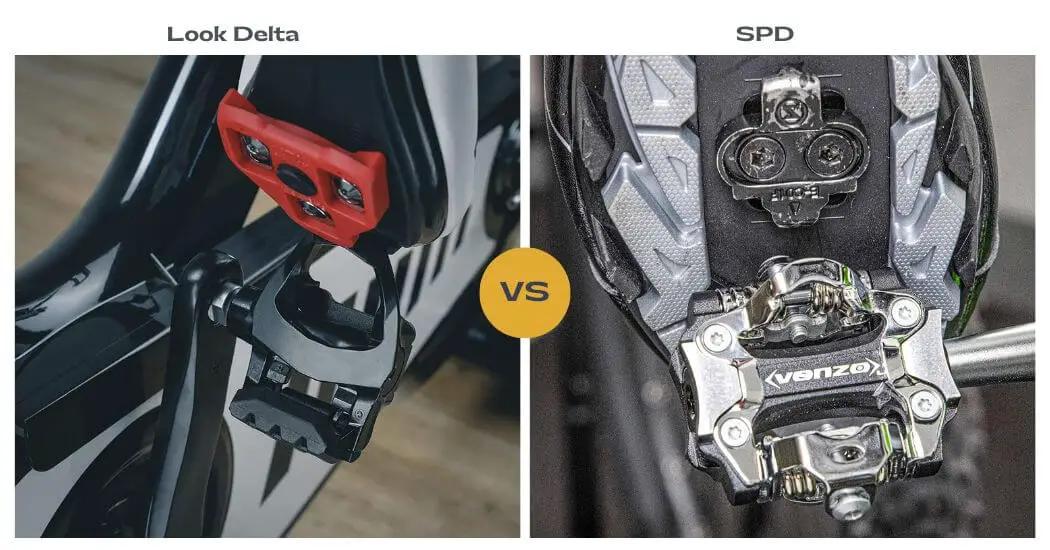
Short answer: Look Delta usually feels more “locked-in” and stable under steady power, while SPD is typically easier to clip in and out—especially for beginners—because SPD pedals let you adjust spring tension and you can choose beginner-friendly multi-release cleats.
If you’re deciding between Look Delta and SPD, the right choice can improve confidence, comfort, and safety—especially when you need to unclip quickly. This guide breaks down the real differences in a simple, fact-based way.
Look Delta vs SPD at a Glance
| Feature | Look Delta | SPD |
|---|---|---|
| Bolt pattern | 3-bolt | 2-bolt |
| Common use | Indoor + road-style cycling | Indoor, MTB, commuting, mixed training |
| “Secure” feel | Very stable platform feel | Secure, and tension is adjustable |
| Ease of clip-out | Moderate (technique matters) | Often easiest (tension + multi-release option) |
| Walking comfort | Poor (cleat protrudes) | Better (many shoes have recessed cleats) |
| Peloton default | Yes (commonly) | No (requires swapping pedals) |
What Is Look Delta?
Look Delta is a 3-bolt road/indoor cleat system often found on indoor bikes (including Peloton’s common “stock” pedal style). Look lists Delta cleats for “Road & Indoor bike” use, with 0° or 9° angular freedom (float) depending on the cleat type.
Source:
Look’s official Delta cleat specifications
What are the benefits of Look Delta?
- Stable platform feel: Many riders like how planted it feels during seated climbs and steady power work.
- Clear float options: Look lists 0° and 9° options (black vs red) on its Delta cleat spec page.
- Simple indoor setup: Common on indoor cycling bikes, so it’s easy to find compatible shoes/cleats.
What shoes are compatible with Look Delta?
- Most 3-bolt cycling shoes (road/indoor style)
- Many “Peloton-compatible” cycling shoes (often 3-bolt)
Pros of Delta
- Very stable under steady output
- Popular indoor standard (easy to match shoes/cleats)
- Float option up to 9° (per Look specs)
Cons of Delta
- Harder to walk in: Delta cleats usually protrude, which can feel slippery/awkward off the bike
- Beginner clip-out may feel less forgiving until you build muscle memory
Is Look Delta the same as SPD-SL?
No. SPD-SL is Shimano’s road-style 3-bolt system, but it’s not interchangeable with Look Delta. The cleats and pedals differ, so you need matching pedals + cleats for the same system.
What Is SPD?
SPD (Shimano Pedaling Dynamics) is a widely used 2-bolt cleat system. A major reason SPD is beginner-friendly is spring tension adjustability: Shimano explains you can reduce spring tension to make clipping out easier, or increase it for a more secure connection.
Source:
Shimano SPD technology overview (spring tension adjustability)
What are the benefits of SPD?
- Easier clip-out tuning: You can dial the release force up/down via spring tension settings.
- Walkable options: Many SPD shoes use recessed cleats, so walking feels more natural.
- Great for mixed workouts: Ideal if you switch between cycling and floor work (bootcamps/strength).
What shoes are compatible with SPD?
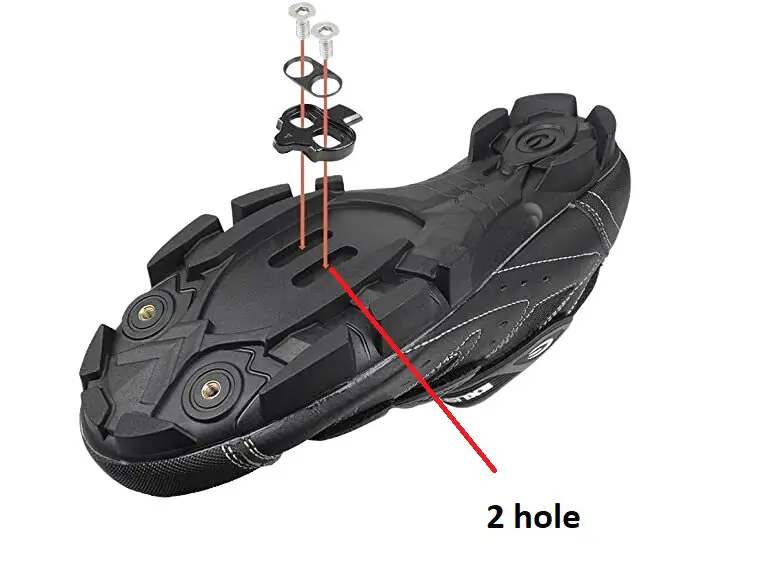
- Most 2-bolt SPD-compatible shoes (MTB, indoor, commuting, and some gravel styles)
- Many styles are designed to be more walk-friendly than road 3-bolt shoes
Pros of SPD
- Highly adjustable feel (especially for beginners)
- Often easier and safer-feeling for quick unclipping
- Better for walking and transitions
Cons of SPD
- Some riders prefer a wider “road platform” feel (this varies by SPD pedal design)
- If you’re on a Peloton with Delta pedals, switching to SPD typically requires a pedal swap
A Summary Table of SPD vs Look Delta (Specs & Practical Differences)
| Category | Look Delta | SPD |
|---|---|---|
| Float / release data (official) | Look lists 0° & 9° angular freedom for Delta cleats | Shimano lists SM-SH51 and SM-SH56 as 13° clip-out angle; SM-SH56 is multi-release |
| Adjustability that impacts “easy clip-out” | More about technique + proper setup | Spring tension adjustability lets you make clip-out easier or harder |
| Walking | Usually awkward (protruding cleat) | Often easier (recessed cleat shoes) |
| Best for | Dedicated indoor riders who want stable platform feel | Beginners, bootcamps, mixed training, walkability |
Official sources:
Look Delta cleat specs,
Shimano SM-SH51 details,
Shimano SM-SH56 multi-release details,
Shimano SPD technology page
Common Questions and Answers About SPD and Delta
Which one is better for power transfer?
Both systems can transfer power efficiently when properly set up. In real-world indoor riding, Look Delta often feels more stable underfoot because it’s typically used with a road/indoor-style platform feel. SPD can also feel very secure—especially when you increase spring tension—but the “platform feel” depends heavily on the SPD pedal model.
Which one is easier to clip in and out?
SPD is usually easier for beginners because you can lower spring tension to make clipping out easier. Shimano explains that decreasing spring tension makes getting out easier, while increasing it gives a more secure connection.
See:
Shimano’s SPD spring tension adjustability explanation
Which is best for bad knees?
This depends more on cleat alignment, float, and comfort than the brand name. If you have knee discomfort, prioritize correct cleat placement and consider a cleat option that gives you comfortable float. If pain persists, consider a professional bike fit.
Delta or SPD: which is easier for walking?
SPD is usually easier for walking because many SPD shoes have recessed cleats. Look Delta cleats typically protrude more, which can feel awkward off the bike.
Delta cleats vs SPD cleats: which do people prefer, and why?
- Indoor-only riders: often prefer Look Delta because it feels stable and familiar.
- Beginners + mixed training: often prefer SPD because it’s easier to tune and easier to walk in.
Is Peloton Delta or SPD?
Peloton commonly uses Look Delta-compatible cleats/pedals for its Bike/Bike+ ecosystem. If you need replacement cleats, Peloton sells them directly.
Peloton:
Peloton replacement parts (cleats listed)
Can I convert Peloton default (Delta) pedals to SPD pedals?
Yes. The straightforward approach is to swap the pedals to an SPD-compatible set. Many riders do this for easier clip-out, walkability, or bootcamp transitions.
If I change the Peloton bike pedals, will I have any warranty issues?
Warranty terms can change, so the safest move is to check Peloton’s current support/warranty guidance and keep the original pedals. If you ever need service, you can reinstall the original pedals to avoid complications.
Can I remove the Delta clip and put regular SPD clips onto Peloton shoes?
Only if your shoe supports a 2-bolt SPD mounting pattern. Many Peloton-branded and road-style shoes are primarily 3-bolt. Always check the sole mounting holes before buying cleats.
Which is best for Peloton Bike Bootcamps: SPD or Delta?
SPD is often better for bootcamps because it’s easier to clip out quickly and SPD shoes can be more walk-friendly for transitions between the bike and the floor.
Pricing & Replacement Parts (Official)
- Peloton cleats: listed at $26 on Peloton’s replacement parts section.
See Peloton’s replacement parts page. - Shimano SPD cleats: Shimano’s Ride Shimano pages list SM-SH51 and SM-SH56 with product details.
SM-SH51 and
SM-SH56 (multi-release).
Final Recommendation (Simple Decision Guide)
Choose Look Delta if you…
- Ride indoor cycling (especially Peloton) most of the time
- Want a stable, road-style platform feel
- Rarely need to walk or do frequent off-bike transitions
Choose SPD if you…
- Are new to clip-in pedals and want easier, more confidence-friendly clip-out
- Do bootcamps, strength transitions, or mixed workouts
- Want walkable shoes and adjustable spring tension
FAQs
1) Which is more secure: Look Delta or SPD?
Both can be very secure when properly set up. Look Delta often feels more “locked-in” due to its typical road/indoor platform feel, while SPD lets you increase spring tension for a more secure connection.
2) What’s the easiest SPD cleat for beginners?
Shimano’s SM-SH56 multi-release cleat is marketed as beginner-friendly because it supports multi-directional release and uses a 13° clip-out angle on its product page.
See:
Shimano SM-SH56 (multi-release) product page
3) Do Look Delta cleats have float?
Yes. Look lists 0° and 9° angular freedom options for Delta cleats on its official specs page.
4) Is SPD better for walking?
Usually yes. Many SPD shoes have recessed cleats, which helps walking feel more normal compared to protruding road/indoor cleats.
5) Can I use SPD on a Peloton?
Yes, but you typically need to swap Peloton’s pedals to SPD-compatible pedals (or dual-sided pedals) and use SPD-compatible shoes/cleats.
6) How do I make SPD clip-out easier?
Reduce the pedal’s spring tension. Shimano explains that decreasing spring tension makes getting out easier, while increasing it provides a more secure connection.
See:
Shimano SPD technology (spring tension adjustability)
7) When should I replace cleats?
Replace cleats when clipping feels inconsistent, you notice excessive play, or clip-in/clip-out becomes unusually difficult. Worn cleats can reduce security and confidence.
Wrapping Up
If you want a stable, indoor-focused setup (especially on Peloton), Look Delta is a solid choice. If your priority is easy clip-in/clip-out, beginner confidence, and walkability, SPD is usually the better pick—especially for bootcamps and mixed training.