
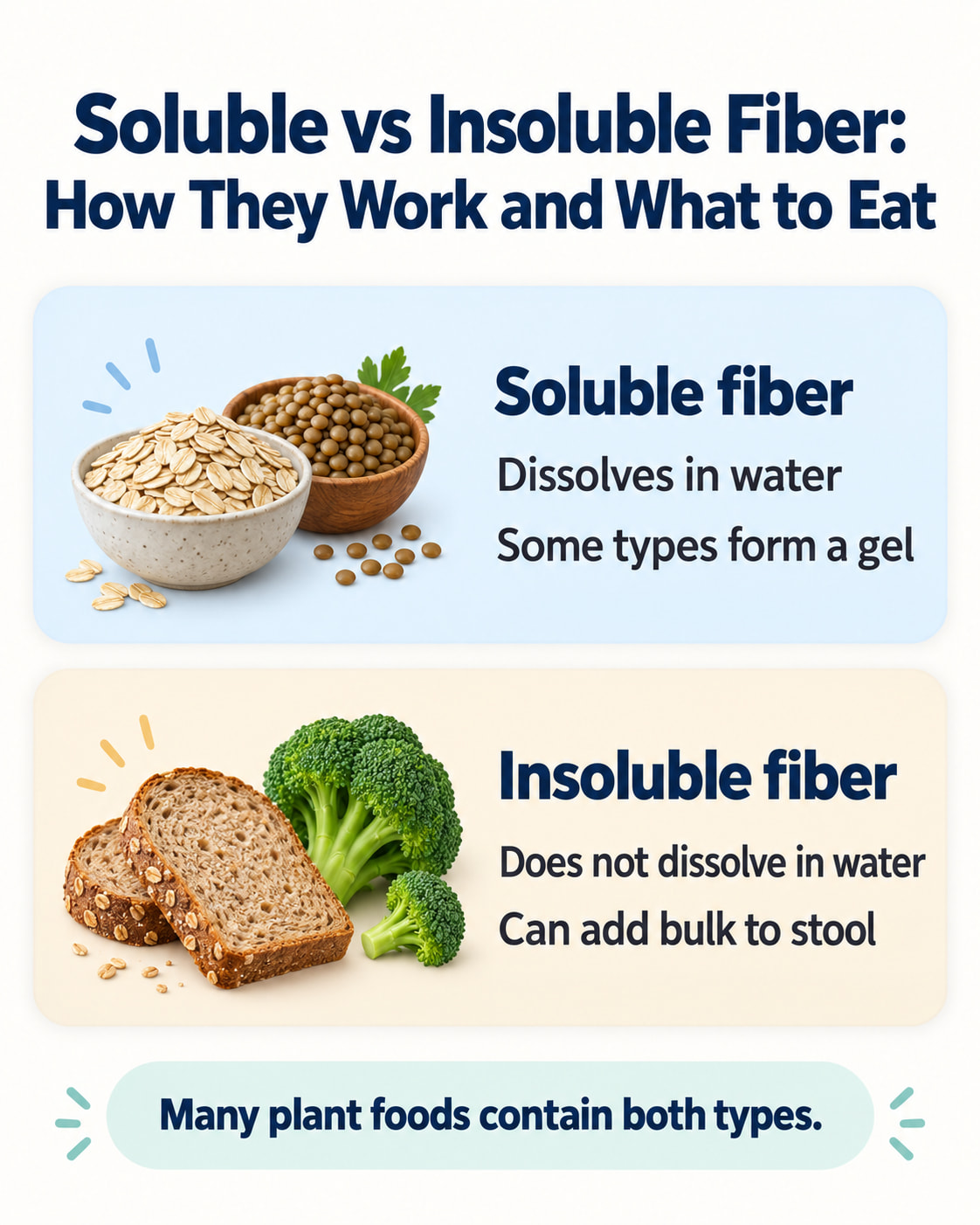
Understanding soluble vs insoluble fiber starts with one basic difference: soluble fiber dissolves in water, while insoluble fiber does not. Some soluble fibers form a gel that affects digestion and stool consistency. Insoluble fiber can add bulk to stool and support regular bowel movements.
Understanding the difference can help you choose foods that suit your needs. But you do not need to sort every meal into separate fiber categories. Many plant foods contain both types. A practical approach is to eat a variety of fiber-containing foods, increase your intake gradually, and pay attention to digestive comfort.
Soluble vs Insoluble Fiber at a Glance
Dietary fiber resists digestion by human enzymes in the small intestine. It reaches the large intestine, where some fibers are broken down by gut microbes and others remain largely intact.
| Feature | Soluble fiber | Insoluble fiber |
|---|---|---|
| Behavior in water | Dissolves; some forms create a thick gel | Does not dissolve |
| Bowel effects | Certain types help retain water and regulate stool consistency | Can increase stool bulk and support movement through the bowel |
| Other potential benefits | Certain viscous types support healthy cholesterol and blood sugar levels | Contributes to the benefits of a varied, fiber-rich diet |
| Food examples | Oats, barley, beans, lentils, and some fruits | Wheat bran, whole-wheat foods, and vegetables |
These food examples overlap. Being a source of soluble fiber does not mean a food contains only soluble fiber.
How Soluble and Insoluble Fiber Work
Soluble Fiber: Gel Formation Depends on the Type
Soluble fiber is a broad category. Beta-glucan in oats and barley can thicken digestive contents. Psyllium, a fiber commonly used in supplements, also forms a gel.
Inulin behaves differently. It dissolves in water and is readily fermented by gut microbes, but it does not form the same viscous gel. This is why two products labeled “soluble fiber” may have different effects.
Insoluble Fiber: Stool Bulk and Regularity
Insoluble fiber remains undissolved as it moves through the digestive tract. Coarse wheat bran, for example, can increase stool bulk and support regularity.
However, insoluble fiber is not the only type that may help with hard stools. Gel-forming psyllium can retain water and help soften them.
Why the Specific Fiber Matters
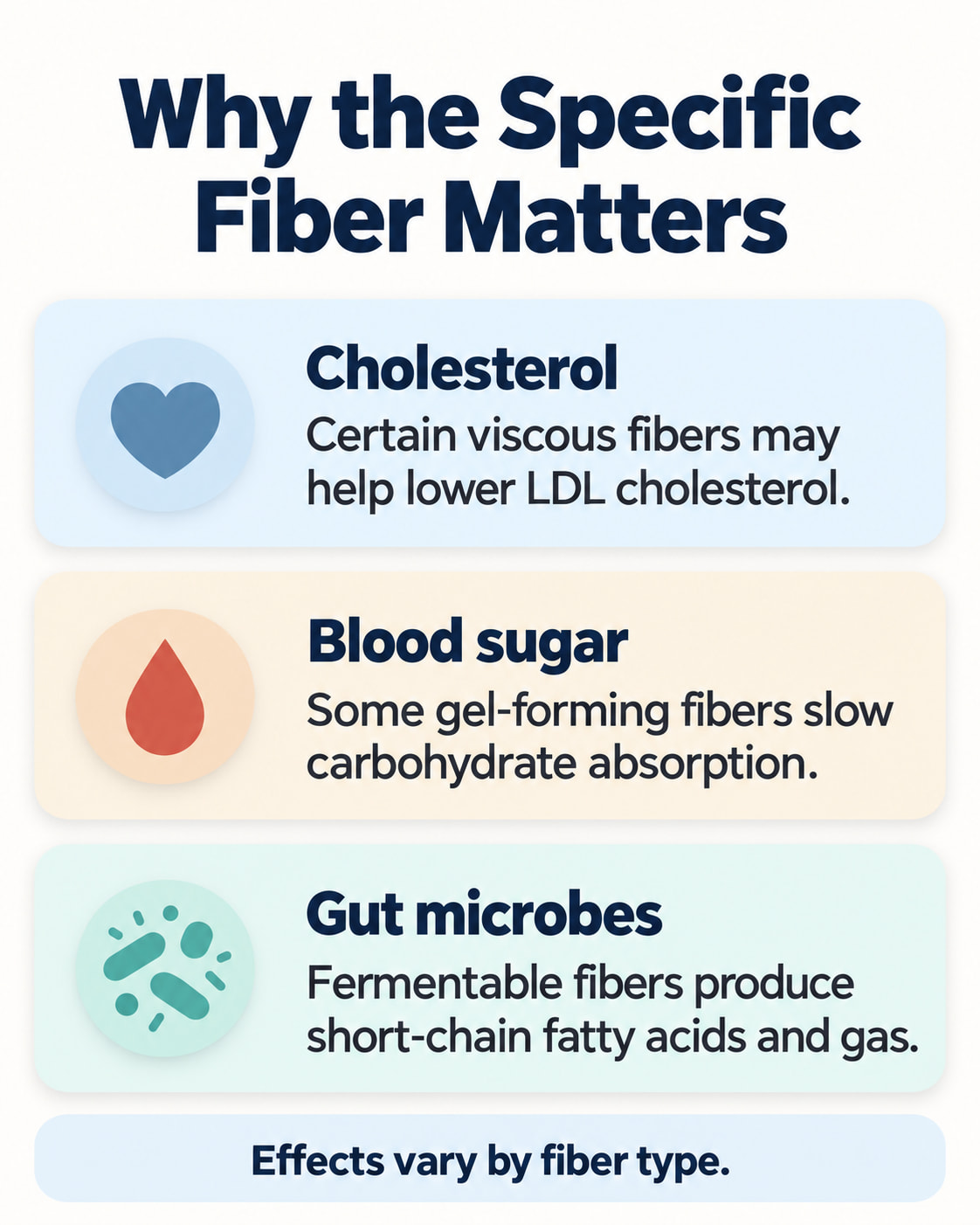
As Oregon State University’s fiber review explains, effects depend on solubility, gel formation, and fermentability:
- Cholesterol: Certain viscous fibers may help lower LDL cholesterol.
- Blood sugar: Some gel-forming fibers slow carbohydrate absorption, moderating the rise after meals.
- Gut microbes: Fermentable fibers produce short-chain fatty acids and gas when microbes break them down.
These effects should not be assumed for every fiber food or supplement.
Soluble vs Insoluble Fiber Foods: What to Eat
For soluble fiber, include foods such as oatmeal, barley, beans, lentils, peas, apples, and citrus fruits. To add insoluble fiber, include whole-wheat bread or pasta, wheat bran, vegetables, nuts, and edible fruit skins.
Think of these as overlapping sources. For example, oatmeal supplies soluble beta-glucan alongside insoluble fiber. An apple with its skin also contributes a mixture.
Fiber Amounts in Common Foods
The amounts below are total dietary fiber, combining the different types present. They are not measurements of soluble fiber alone.
| Food | Serving | Approximate total fiber |
|---|---|---|
| Lentils, cooked | 1 cup | 15.5 g |
| Black beans, cooked | ½ cup | 7.5 g |
| Raspberries | 1 cup | 8 g |
| Pear | 1 medium | 5.5 g |
| Broccoli, cooked | 1 cup | 5 g |
| Apple with skin | 1 medium | 4.5 g |
| Instant oatmeal, cooked | 1 cup | 4 g |
| Almonds | 1 ounce | 3.5 g |
| Whole-wheat bread | 1 slice | 2 g |
These estimates come from Mayo Clinic’s USDA-based food chart, updated in December 2025. Actual amounts vary by portion weight, preparation, and brand.
Easy Ways to Include Both Types
You can build variety into meals without tracking individual fiber types:
- Add fruit to oatmeal at breakfast.
- Stir a small portion of lentils into soup.
- Use whole-wheat bread for a sandwich.
- Serve vegetables and beans with rice.
- Pair a piece of fruit with a small handful of nuts.
Choose one change to begin with if your current diet contains little fiber.
How Much Fiber Do You Need Each Day?
Established Adequate Intakes apply to total fiber:
| Adult group | Daily total-fiber Adequate Intake |
|---|---|
| Women ages 19–50 | 25 g |
| Men ages 19–50 | 38 g |
| Women ages 51 and older | 21 g |
| Men ages 51 and older | 30 g |
| During pregnancy | 28 g |
| During breastfeeding | 29 g |
These values appear in the Dietary Reference Intake tables published by Health Canada, which reflect the shared US–Canadian reference framework. They are population guidance for generally healthy people; individual needs may differ.
There is no established universal ratio of soluble to insoluble fiber that everyone needs to follow. Focus on your total intake and a range of food sources.
Why Food Labels Use 28 Grams
The FDA uses 28 grams as the Daily Value for dietary fiber on US food labels. This provides a consistent reference for comparing products. It is not a personalized requirement for every adult.
According to the FDA’s dietary fiber label guide:
- A serving with 5% Daily Value or less is low in fiber.
- A serving with 20% Daily Value or more is high in fiber.
- Separate soluble and insoluble amounts are generally optional on labels.
Check the serving size alongside the fiber grams. The amount listed applies to that portion, which may differ from how much you eat.
How to Increase Fiber Without Too Much Gas or Bloating
A sudden increase can cause gas, bloating, cramping, or changes in bowel habits. Give your digestive system time to adjust.
- Start with a manageable change. Try a small serving of beans or replace one refined-grain food with a whole-grain option.
- Increase gradually. Build up over several weeks rather than trying to reach a much higher intake immediately.
- Drink adequate fluids. Water helps some fibers work effectively. Follow any fluid limits your healthcare professional has given you.
- Notice your response. If a change causes discomfort, reduce the portion and increase more slowly.
NIDDK emphasizes adding fiber a little at a time and drinking enough liquids. You do not need to force larger portions when they consistently make symptoms worse.
If You Have IBS or Ongoing Digestive Symptoms
For irritable bowel syndrome, research suggests soluble fiber may be more helpful for symptoms, according to NIDDK.
That does not make every soluble-fiber food suitable for every person with IBS. Portion size and other fermentable carbohydrates in a food can also affect symptoms. Beans or apples, for example, may cause discomfort for some people despite supplying useful fiber.
A registered dietitian can help you adjust food choices without unnecessarily removing whole food groups. If you have been prescribed a low-fiber diet, ask your care team before increasing your intake.
Do You Need a Fiber Supplement?
Fiber-containing foods also supply nutrients such as vitamins and minerals. A supplement can help fill a gap, but it does not replace the variety provided by food.
Different supplement ingredients have different properties. Psyllium forms a gel, while inulin is readily fermented and may cause gas. The same number of fiber grams does not guarantee the same digestive effect.
If you use a supplement:
- Follow the product’s directions, including its fluid instructions.
- Do not swallow dry psyllium powder.
- Ask a pharmacist whether it needs to be separated from your medicines.
- Seek advice first if you have difficulty swallowing or a history of intestinal blockage.
MedlinePlus’s psyllium guidance highlights the need for adequate liquid and checking medicines and relevant health conditions with a healthcare professional.
When to Seek Medical Advice
Constipation has several possible causes, so increasing fiber is not always enough. Contact a healthcare professional if symptoms persist despite basic changes or if digestive discomfort repeatedly limits what you can eat.
NIDDK advises prompt medical attention when constipation occurs with:
- Blood in the stool or rectal bleeding.
- Constant abdominal pain.
- Vomiting or inability to pass gas.
- Unexplained weight loss.
Frequently Asked Questions
Is Soluble or Insoluble Fiber Better for Constipation?
Both can play a role. Coarse insoluble fibers can increase stool bulk, while gel-forming soluble fibers such as psyllium can help retain water. The best approach depends on the cause of constipation and your individual response.
Does Oatmeal Contain Soluble or Insoluble Fiber?
Oatmeal contains both. Its beta-glucan is a soluble fiber, but the total-fiber amount on an oatmeal label includes other fibers too.
Which Fruits Contain Soluble Fiber?
Apples, citrus fruits, pears, and berries contain soluble fiber, including pectin. They also provide other fiber types, so they do not belong in an exclusively soluble category.
Does Peeling Fruit Remove All Its Fiber?
No. Peeling can reduce fiber, but the flesh still contains some. Keep edible skins when you enjoy and tolerate them; peeled fruit can still contribute to your diet.
Is Psyllium Soluble or Insoluble Fiber?
Psyllium husk is primarily a source of soluble, gel-forming fiber. Check the specific product’s label for its fiber content and preparation instructions.
Do You Need to Count Soluble and Insoluble Fiber Separately?
Most people do not. Tracking total fiber, if useful to you, is more practical. Eating a variety of whole grains, legumes, vegetables, fruits, nuts, and seeds provides a mixture.
Conclusion
Soluble and insoluble fiber contribute in different ways, and many everyday foods provide both. Start with one practical addition, such as oatmeal, lentils, or a piece of fruit. Build variety and intake gradually, using your digestive comfort as a guide.
This content is for informational purposes only and not medical advice.
References
- MedlinePlus. Soluble vs. insoluble fiber.
- Oregon State University, Linus Pauling Institute. Fiber.
- US Food and Drug Administration. Review of the Scientific Evidence on the Physiological Effects of Certain Non-Digestible Carbohydrates.
- Mayo Clinic. Chart of high-fiber foods.
- Health Canada. Dietary reference intakes tables: Reference values for macronutrients.
- US Food and Drug Administration. Interactive Nutrition Facts Label: Dietary Fiber.
- NIDDK. Eating, Diet, & Nutrition for Constipation.
- NIDDK. Eating, Diet, & Nutrition for Irritable Bowel Syndrome.
- MedlinePlus. Psyllium.
- NIDDK. Symptoms & Causes of Constipation.