
There is no reliable way to get rid of a cold overnight, but rest, fluids, and targeted symptom relief may help you feel more comfortable while you recover. If you are searching for how to get rid of a cold fast, the most useful approach is to address the symptoms bothering you without expecting an instant recovery.

A stuffy nose, sore throat, or cough can make everyday tasks difficult. Simple home measures often help, while medicines and supplements require more care. Most of the options below are intended for adults; children, pregnant people, and anyone taking regular medicines may need different guidance.
How Long Does a Cold Last?
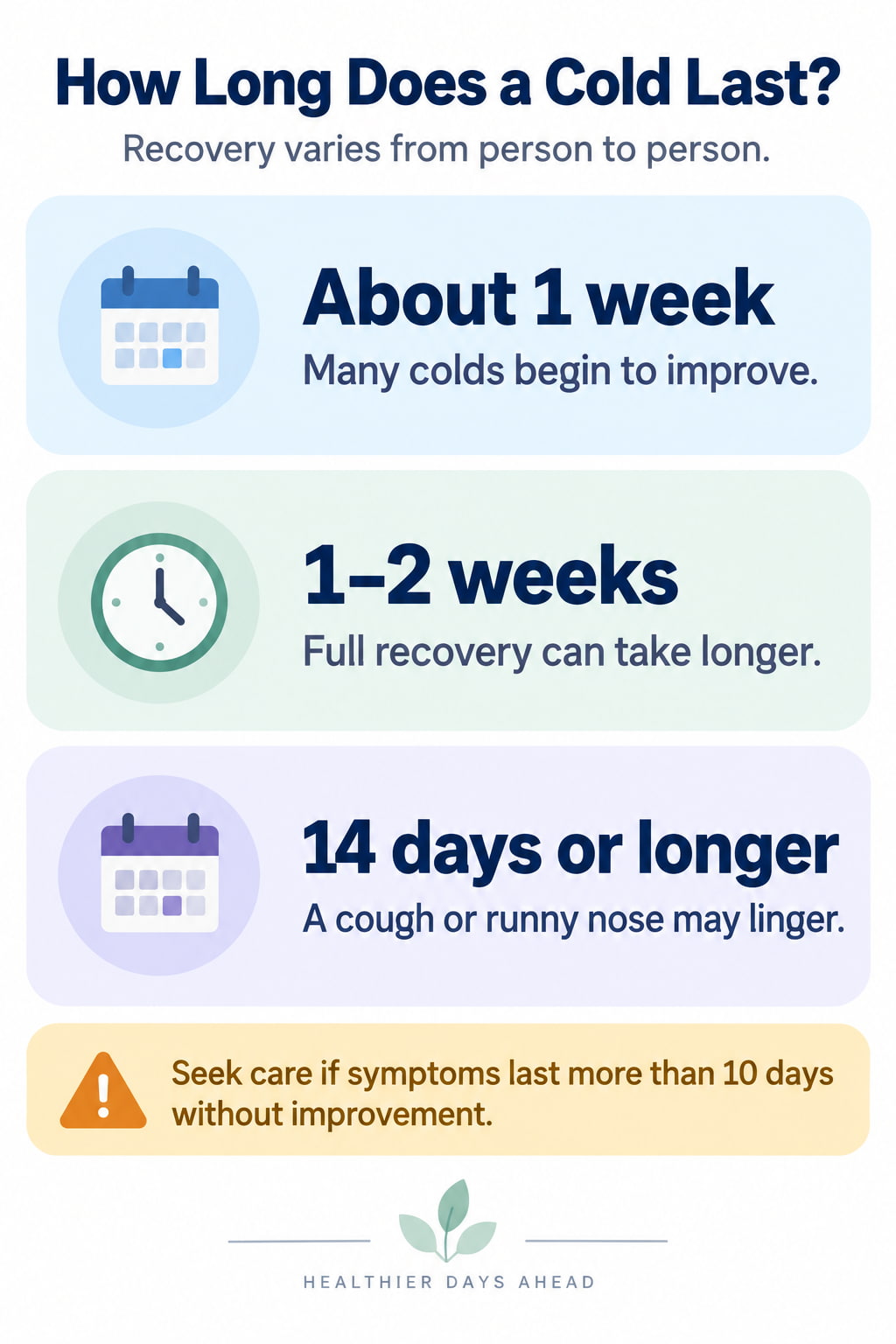
Many colds improve in about a week, although full recovery can take one to two weeks. A cough or runny nose may linger for 14 days or longer. The overall direction matters: symptoms should gradually improve.
Cold-like symptoms can also occur with COVID-19 or flu. Symptoms alone cannot reliably identify the cause. If either is possible, consider testing, especially if you have a higher risk of complications. Contact a clinician promptly rather than waiting for symptoms to become severe.
How to Get Rid of a Cold Fast: 9 Practical Options
Choose measures that match your symptoms. You do not need to use all nine, and zinc has more uncertain benefits than basic comfort measures.
1. Prioritize Sleep and Rest
Give yourself permission to reduce your usual workload while you feel unwell. Keep your normal bedtime when possible, and make room for extra rest if fatigue is interfering with your day.
For example, postponing a nonessential evening task may give you a better opportunity to sleep. Rest is standard supportive care, but extra time in bed has not been shown to eliminate a cold within a fixed number of hours.
2. Stay Hydrated and Sip Warm Liquids
Drink regularly, especially if fever or a reduced appetite means you are taking in less fluid than usual. Water, soup, and warm caffeine-free drinks are practical choices.
Warm liquids may feel soothing on an irritated throat. Keep them comfortably warm to avoid burns. Hydration helps prevent dehydration; it does not flush the virus out of your body.
If you have a prescribed fluid restriction because of a medical condition, follow that guidance instead of increasing fluids on your own.
3. Use Saline Nasal Spray or a Safe Nasal Rinse
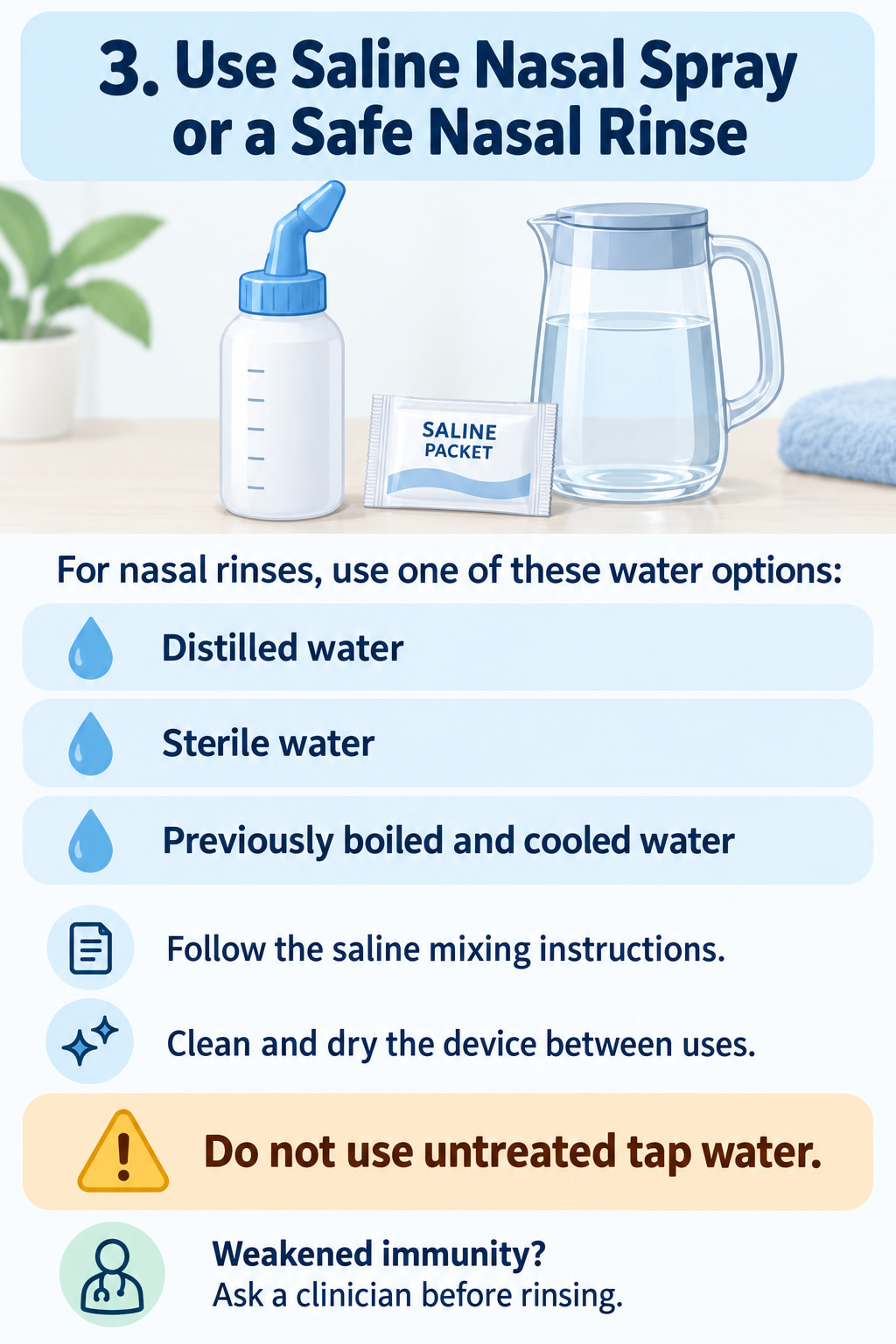
A ready-made saline spray may moisten dry nasal passages. A saline rinse can help loosen and wash away mucus when congestion is bothersome.
If you use a neti pot or squeeze bottle, follow the FDA’s nasal-rinsing safety guidance:
- Use distilled, sterile, or previously boiled and cooled water.
- Prepare the saline solution according to the product instructions.
- Clean the device and let it dry between uses.
- Ask a clinician before nasal irrigation if your immune system is weakened.
Do not use untreated tap water for nasal rinsing. Water that is safe to drink is not necessarily safe to put into your nose.
4. Try Honey for a Bothersome Cough
Honey may help ease coughing, including nighttime coughing. Adults can try a small amount on its own or stirred into a warm drink. It may offer comfort, but it does not remove the underlying infection.
Never give honey to a baby younger than 12 months, including honey mixed into food or drinks, because of the risk of infant botulism.
5. Soothe Your Throat With Gargles or Lozenges
A saltwater gargle may temporarily ease throat discomfort. Mayo Clinic’s overview of cold symptom relief describes mixing ¼–½ teaspoon of salt into an 8-ounce glass of warm water. Gargle and spit it out.
Throat lozenges are another option when used according to their label. Gargling requires the ability to spit safely, and lozenges can cause choking in young children. Neither is an appropriate option for someone who cannot use it safely.
6. Use a Clean Cool-Mist Humidifier
If the air feels dry, a cool-mist humidifier may make nasal and throat irritation more comfortable. It is a comfort measure, with no established ability to shorten a cold.
Change the water daily and clean the unit as the manufacturer directs. A dirty humidifier can release unwanted particles and microorganisms into the air.
Avoid leaning over bowls of boiling water for steam inhalation, particularly around children, because of scalding risk.
7. Consider a Suitable Pain or Fever Reliever
Acetaminophen or ibuprofen may ease a headache, body aches, or fever when appropriate for you. They do not shorten the infection. Follow the package directions and use the medicine only for symptoms you actually have.
Check every product’s active ingredients. For example, taking acetaminophen separately from a combination cold medicine that already contains it can lead to an accidental overdose.
Ask a pharmacist about suitability if you have liver or kidney disease, a history of stomach ulcers or bleeding, take blood thinners, or are pregnant. Do not give aspirin to children or teenagers with a viral illness.
8. Ask About Short-Term Congestion Relief
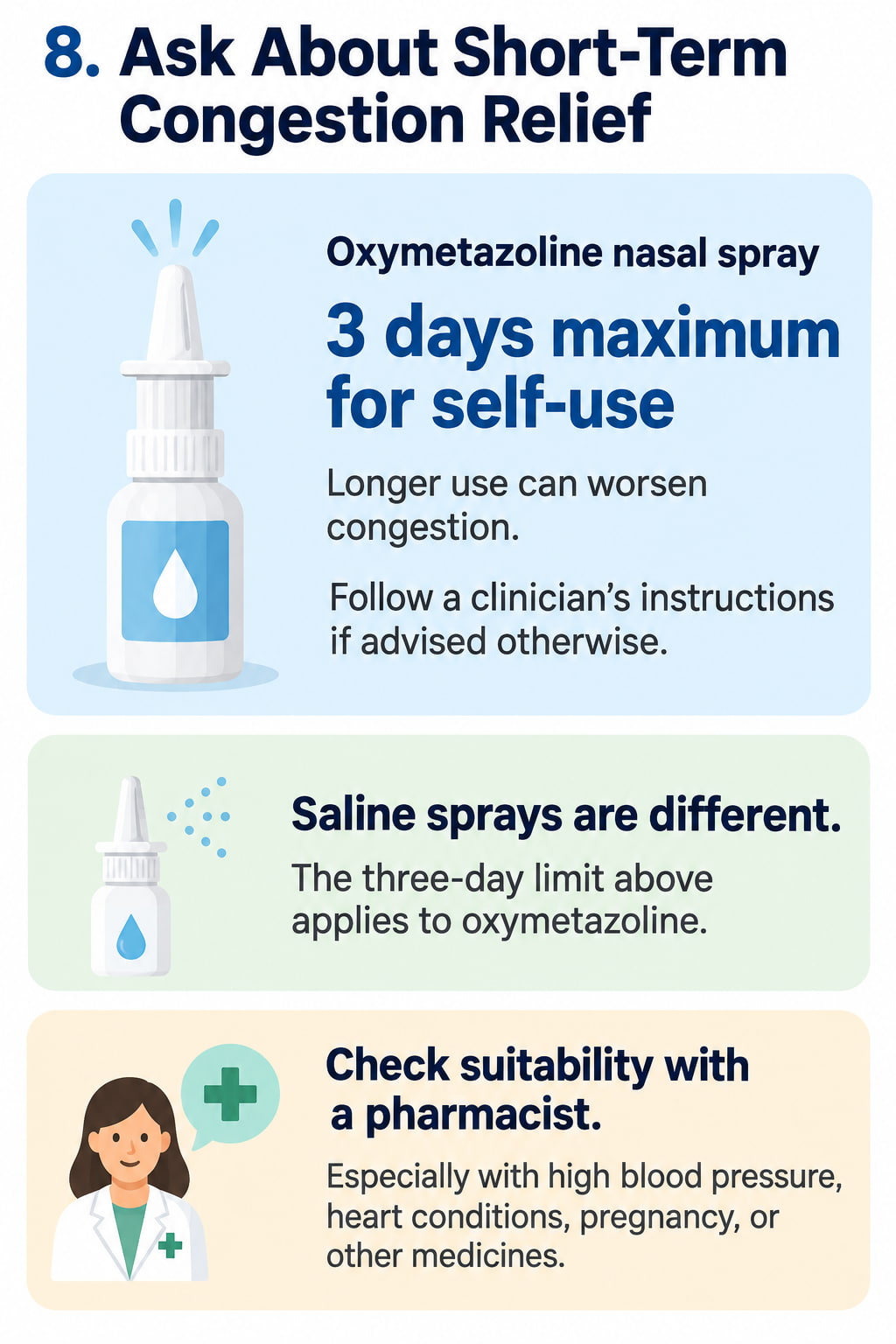
Some decongestants, such as pseudoephedrine or an oxymetazoline nasal spray, may temporarily ease a blocked nose. They are not suitable for everyone, including some people with high blood pressure, heart conditions, or medicine interactions.
For US oxymetazoline nasal sprays, do not use them for more than three days unless a clinician directs otherwise. Longer use can cause congestion to return or worsen. This restriction concerns medicated decongestant sprays; saline sprays are different.
Read ingredient names carefully. The FDA’s review of oral phenylephrine concluded that it is ineffective for nasal congestion. The agency announced a proposed removal from the OTC monograph on November, 2024. That announcement concerns the oral ingredient and does not establish that every medicine sold under the same brand is ineffective.
9. Discuss Oral Zinc With a Pharmacist
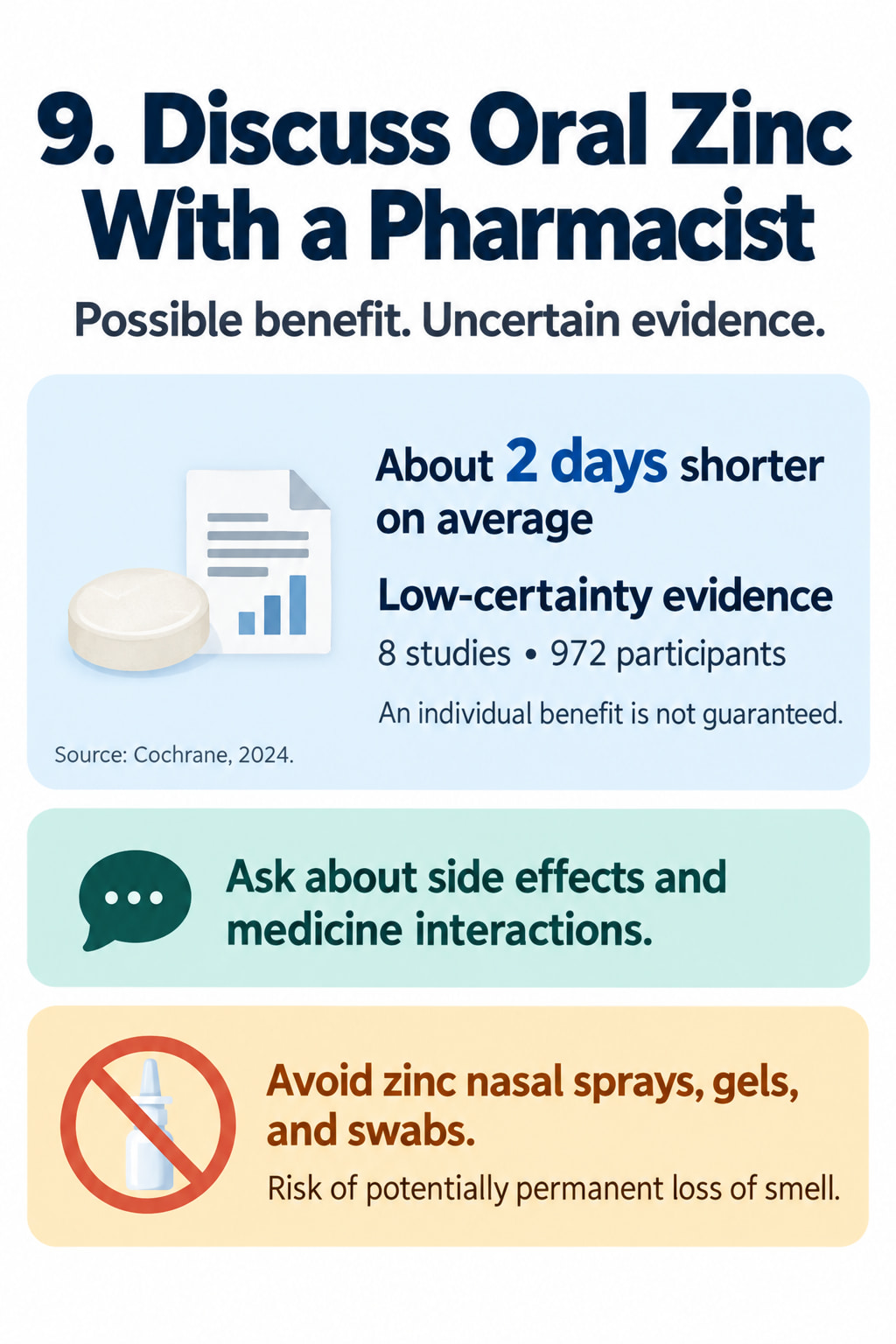
Oral zinc is an optional consideration, with an uncertain effect on how long a cold lasts. Some research has examined lozenges started within 24 hours of symptom onset, but there is no established best product or dose.
A 2024 Cochrane systematic review found that zinc may shorten a cold by about two days on average. That result came from eight studies involving 972 participants, and the certainty of the evidence was low. Whether zinc meaningfully reduces symptom severity remains unclear.
Zinc can cause nausea, stomach upset, and an unpleasant taste. It can also interact with medicines, while prolonged high intake can cause copper deficiency.
Avoid zinc nasal sprays, gels, and swabs, which have been associated with potentially permanent loss of smell. Ask a pharmacist or clinician whether an oral product is suitable before using it.
What Is Unlikely to Help You Recover Faster?
Some popular approaches offer less benefit than their advertising suggests:
- Antibiotics: They do not work against cold viruses. A separate bacterial complication requires a clinician’s assessment.
- Starting high-dose vitamin C after symptoms appear: Research has not shown a consistent reduction in cold duration or severity. Regular supplementation before illness is a different question and offers, at most, modest benefits for most people.
- Echinacea or garlic supplements: Evidence is insufficient or inconsistent, and products can have side effects or interactions.
- Taking several combination cold medicines: More ingredients do not mean faster recovery. They increase the chance of duplicate doses and unnecessary side effects.
Avoid smoking and secondhand smoke while you are unwell because they can aggravate respiratory symptoms.
When to Seek Medical Help
Seek emergency care for trouble breathing or chest pain.
The CDC’s current cold-care guidance, updated March, 2026, also advises medical attention for:
- Dehydration.
- Fever lasting longer than four days.
- Symptoms lasting more than ten days without improvement.
- Symptoms that improve and then return or worsen.
- Worsening of an existing medical condition.
Contact a clinician early if you are at higher risk from COVID-19 or flu, even with mild symptoms. Prescription antiviral options are time-sensitive and may reduce complications when appropriate.
For children, avoid applying adult medicine guidance. CDC does not recommend OTC cough and cold medicines for children younger than 6. Ask a pediatric clinician about age-appropriate symptom care and dosing.
Frequently Asked Questions
Can You Get Rid of a Cold in 24 Hours?
There is no reliable method that makes a cold disappear within 24 hours. You may feel better after symptom relief or a night’s rest, but that does not mean the infection has ended.
What Can Help Cold Symptoms at Night?
Match the approach to what is keeping you awake. Saline may help a stuffy nose, honey may ease coughing in people at least 1 year old, and a warm drink may soothe throat discomfort. Avoid taking a combination medicine simply because it is labeled for nighttime use.
Does Vitamin C Help Once a Cold Starts?
Starting vitamin C after symptoms begin has not consistently shortened colds or reduced their severity. Large doses can cause diarrhea, nausea, and stomach cramps. Eating normal, balanced meals remains a sensible way to meet nutritional needs.
Does Yellow or Green Mucus Mean You Need Antibiotics?
No. Mucus can change color during a viral cold. Color alone does not establish a bacterial infection or a need for antibiotics. Worsening symptoms, persistent illness, and other findings matter more in a clinician’s assessment.
Does Zinc Work for Everyone?
No. Studies have produced different results, and any benefit depends on factors that remain uncertain, including formulation and timing. The average reduction seen in some studies is not a promise that an individual cold will end sooner.
When Can You Return to Work or School?
CDC advises returning to normal activities when symptoms have been improving overall and you have been fever-free without fever-reducing medicine for at least 24 hours. Take added precautions for the following five days, such as improving ventilation, wearing a well-fitting mask, and practicing good hygiene. Follow any additional workplace or school requirements.
Conclusion
The most practical approach to a cold is to make recovery more comfortable: allow time for rest, keep fluids available, and choose relief for the symptoms bothering you most. Check medicine ingredients before taking anything new, and contact a clinician if symptoms are concerning or stop improving.
This content is for informational purposes only and not medical advice.
References
- CDC: Managing the common cold.
- MedlinePlus: Common cold home care.
- Mayo Clinic: Cold remedies and symptom relief.
- MedlinePlus: Ibuprofen precautions.
- FDA: Oral phenylephrine review and proposed order.
- Cochrane: Zinc and the common cold, May 2024 review.
- NIH NCCIH: Clinical digest on the common cold.
- NHS: Common cold guidance.