
If you’re wondering how to increase female libido, start by identifying what may be lowering your desire, then address factors such as stress, fatigue, relationship concerns, discomfort, or medication side effects. The most useful approach depends on what has changed for you.
Sexual desire varies between people and throughout life. There is no required frequency of sex, and having less interest than your partner does not automatically mean something is wrong.
If you want a change, the steps below can help you explore practical options. Your comfort, preferences, and satisfaction should guide the process.
What Causes Low Libido in Women?
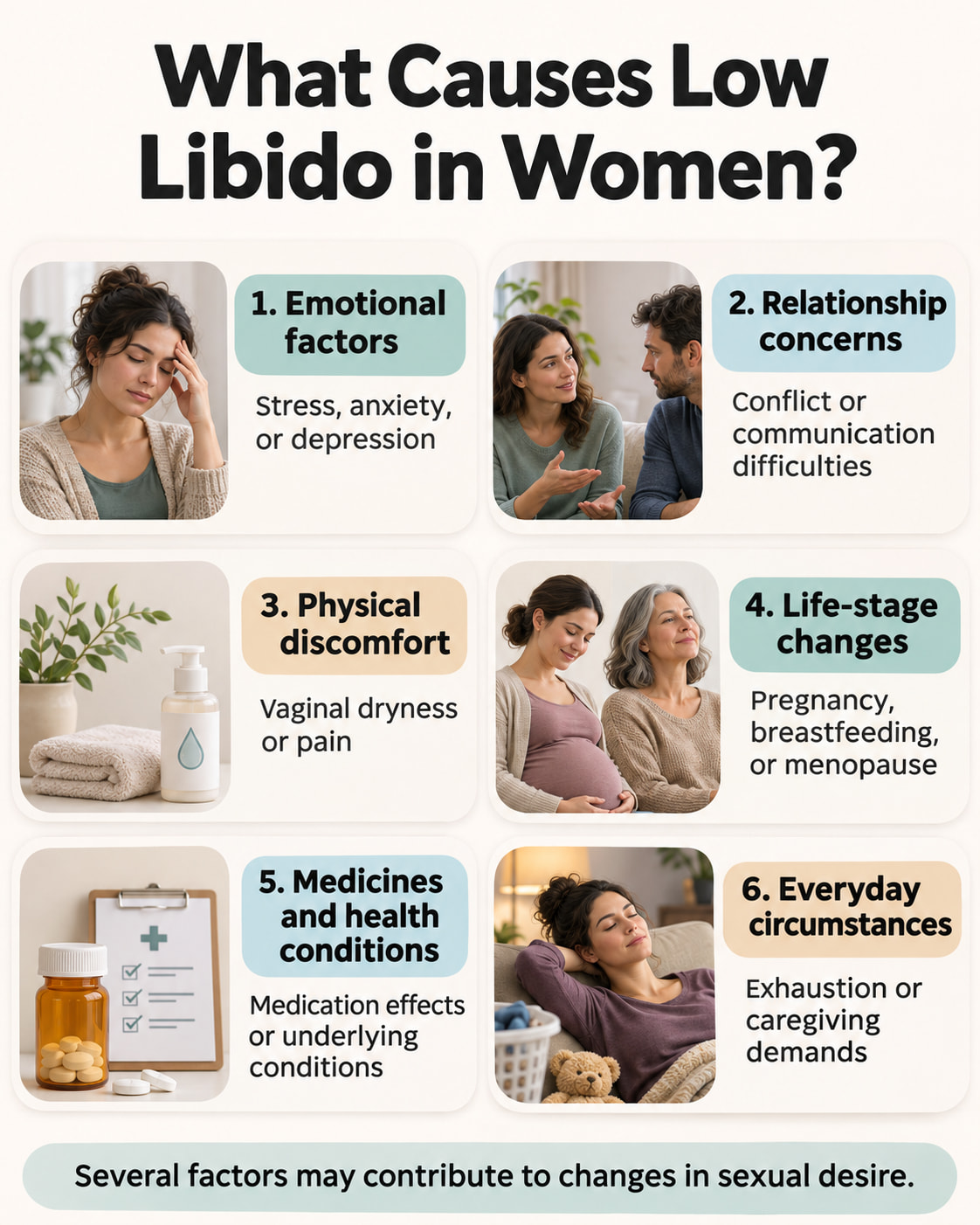
Low libido means reduced interest in sexual activity. It can have several overlapping contributors:
- Emotional factors: Stress, anxiety, depression, or difficult past experiences.
- Relationship concerns: Conflict, limited privacy, or difficulty communicating about sex.
- Physical discomfort: Vaginal dryness, pain, or other symptoms that make intimacy uncomfortable.
- Life-stage changes: Pregnancy, postpartum recovery, breastfeeding, perimenopause, or menopause.
- Medicines and health conditions: Some antidepressants, blood-pressure medicines, hormonal contraceptives, and conditions such as diabetes or an underactive thyroid.
- Everyday circumstances: Exhaustion, caregiving demands, and excess alcohol use.
Understanding the likely contributors helps you choose a relevant next step. For example, persistent pain needs a different approach from feeling too exhausted for intimacy.
How to Increase Female Libido: 10 Practical Ways to Help
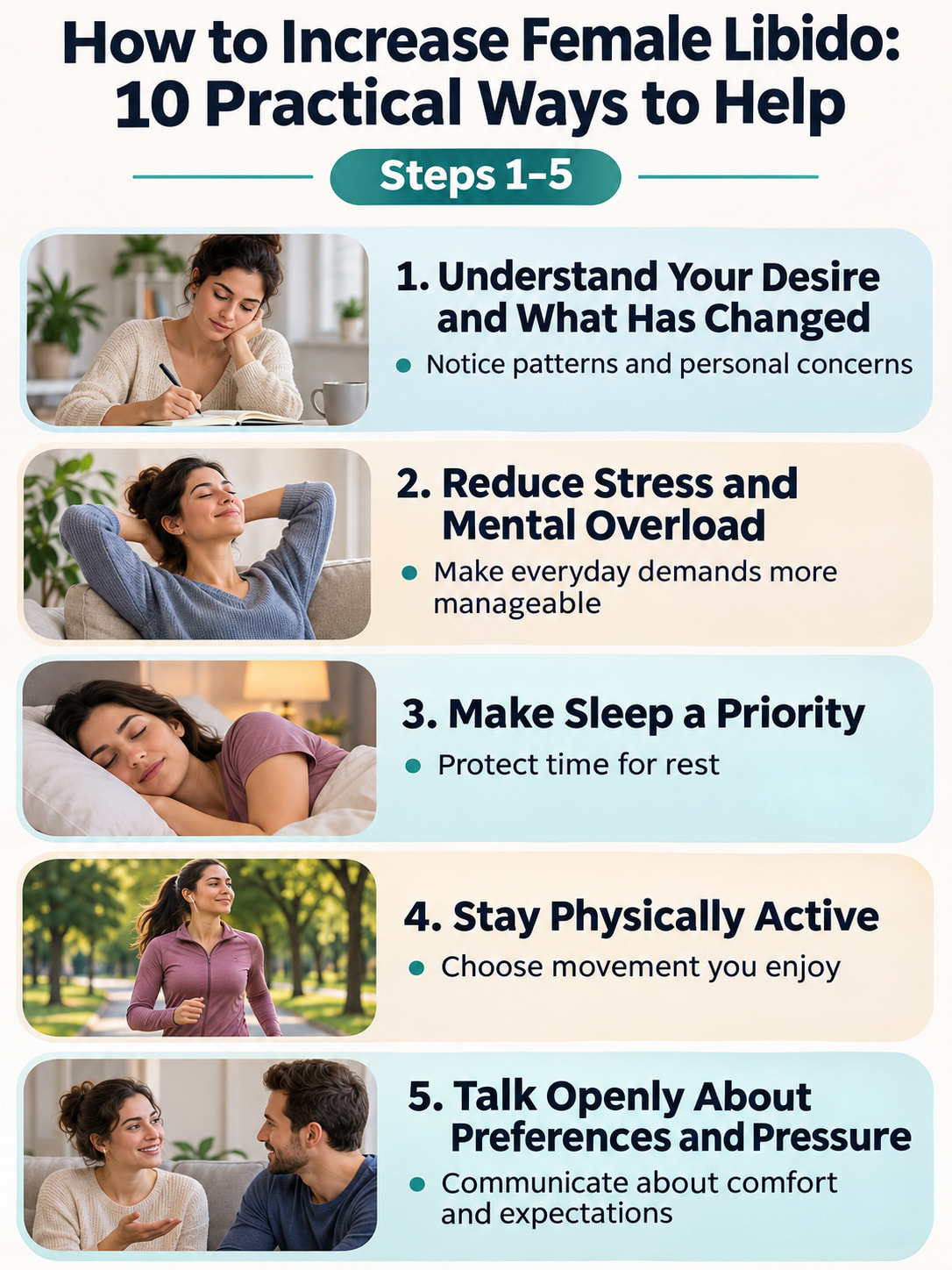
1. Understand Your Desire and What Has Changed
Before trying to increase your sex drive, consider what you want to feel different. Is your concern a lack of interest, difficulty becoming aroused, discomfort, or feeling disconnected from a partner?
Ask yourself:
- Did the change happen gradually or around a particular event?
- Does interest vary depending on the situation or time of day?
- Are you enjoying intimacy once it begins, or does it feel uncomfortable?
- Is your current level of desire bothering you personally?
A few notes about sleep, stress, symptoms, and medication changes can help you explain the pattern at a healthcare appointment. You do not need to track sexual activity as a performance goal.
2. Reduce Stress and Mental Overload
Stress is one possible contributor to low desire. If your attention is occupied by work, caregiving, or unfinished tasks, start by identifying one demand you can make more manageable.
Practical options include:
- Sharing a recurring household or caregiving responsibility.
- Protecting a short period of personal downtime.
- Writing down tomorrow’s tasks before settling down.
- Trying slow breathing, journaling, or a relaxation practice you enjoy.
Choose something realistic. For example, dividing evening chores may make more room for rest than adding another demanding wellness routine.
These steps may help with stress, but they are not a guaranteed way to increase libido. Persistent anxiety or depression deserves support of its own.
3. Make Sleep a Priority
If you are regularly exhausted, consider whether your routine leaves enough opportunity for sleep.
A 2015 study found an association between longer sleep and greater next-day sexual desire. It was observational, so it cannot prove that adding sleep directly increases libido.
You can start by keeping a reasonably consistent bedtime, protecting time to wind down, and discussing nighttime responsibilities with someone who can help.
Also consider when you have the most energy. If late evenings are your most depleted time, you and your partner might prefer time together earlier. That time can remain an opportunity for connection, without a commitment to sexual activity.
4. Stay Physically Active
Regular movement may support sexual well-being through benefits such as better mood, stamina, and body confidence. It does not need to be intense or focused on changing your appearance.
Choose an activity you can comfortably repeat, such as walking, swimming, dancing, cycling, or strength training.
For example, a short walk during a work break may be a manageable starting point. Build a routine around what you enjoy and can sustain.
There is no established exercise dose that guarantees higher female libido. Recent international guidance emphasizes health habits rather than pursuing a particular body weight as the solution to low desire.
5. Talk Openly About Preferences and Pressure
If you have a partner, choose a calm moment to discuss intimacy outside a sexual encounter. Explain what you have noticed and what would make connection feel more comfortable.
You might say:
“I miss feeling close to you, but I’m often exhausted. Could we make time together earlier and keep it relaxed?”
Useful topics include what you enjoy, what feels uncomfortable, how much privacy you need, and whether expectations are creating pressure.
Try to agree on one practical change rather than solve everything in a single conversation. This could be protecting uninterrupted time together or making it clear that affection does not have to lead to sex.
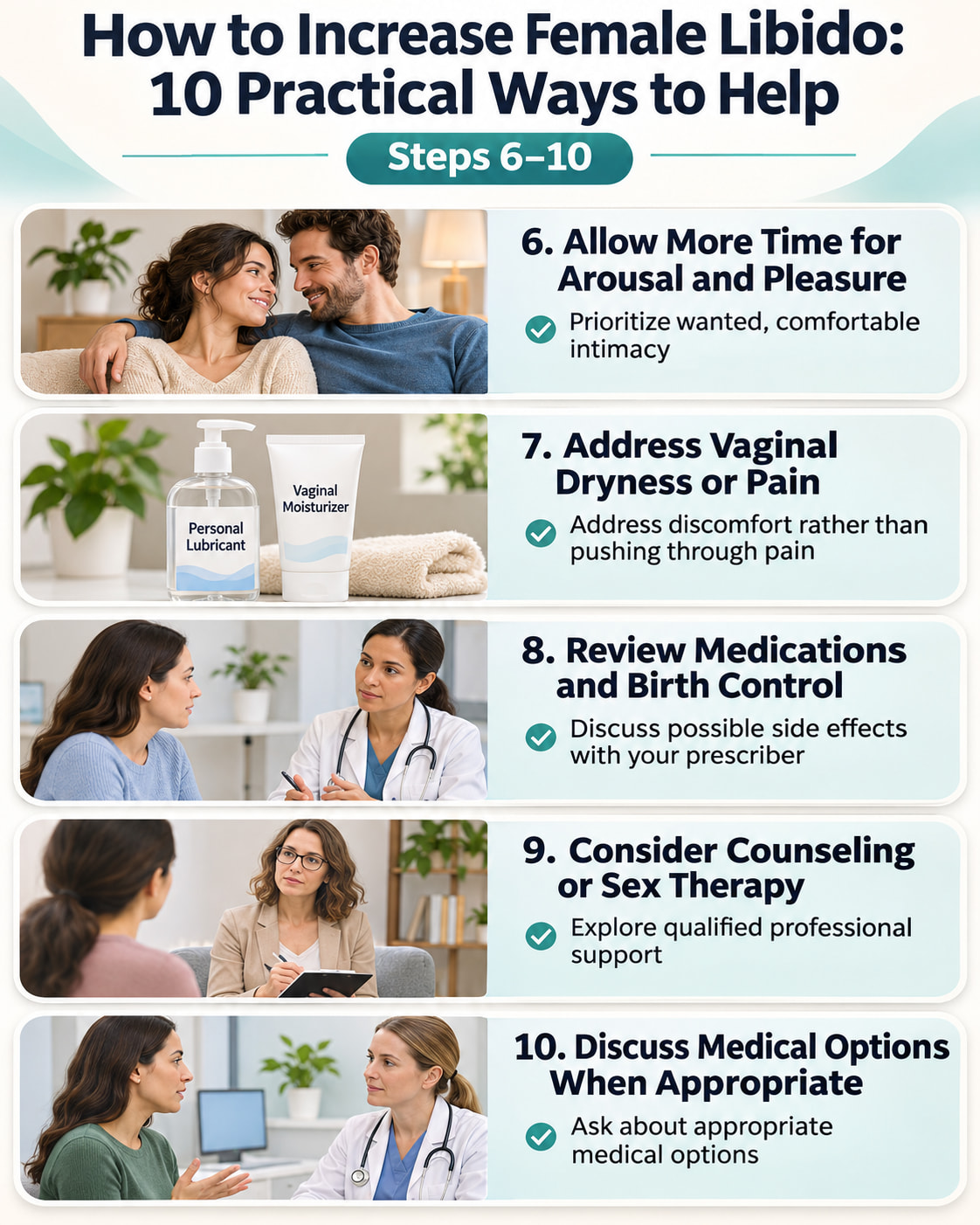
6. Allow More Time for Arousal and Pleasure
Desire does not always arrive before physical closeness. As ACOG guidance explains, some people begin to feel desire after sexual activity has started. This is often called responsive desire.
If you freely want to explore intimacy, allow time for comfortable, enjoyable contact. You might prefer kissing, massage, touching, or learning what feels pleasurable on your own.
Responsive desire is never a reason to begin or continue sexual activity you do not want. You can stop or change your mind at any point.
Avoid making penetration or orgasm a requirement. The useful question is whether the experience feels wanted, comfortable, and satisfying to you.
7. Address Vaginal Dryness or Pain
Discomfort can make intimacy less appealing. If dryness is a concern, it helps to understand two common product categories:
| Product | Main purpose |
|---|---|
| Personal lubricant | Reduces friction during sexual activity. |
| Vaginal moisturizer | Helps manage ongoing vaginal dryness when used according to its directions. |
Water-based or silicone-based lubricants are options compatible with latex condoms. Avoid oil-based products with latex condoms, and stop using a product if it causes irritation.
Allow time for arousal and choose activities that feel comfortable. Do not push through pain.
If pain is frequent or severe, arrange an assessment. As ACOG explains, painful sex can have several causes. Dryness is only one possible explanation; a clinician can check for other causes and discuss appropriate support.
8. Review Medications and Birth Control
Some medicines and hormonal contraceptives may affect sexual desire or other aspects of sexual function. This does not happen to everyone.
If a change started after a new prescription, dose adjustment, or contraceptive change, tell your prescriber. Bring a list of medicines and supplements, along with when the symptoms began.
Depression itself can also affect desire, so the conversation should consider both the condition and possible medication effects.
Do not stop prescribed medicines on your own. Ask whether a different approach is appropriate and how any change would be managed safely.
Mention alcohol use as well, especially if you are considering a medicine that has alcohol-related restrictions.
9. Consider Counseling or Sex Therapy
A therapist trained in sexual health can help you explore concerns involving desire, anxiety, communication, body image, or difficult experiences. Support may involve individual sessions, couples work, or both.
In a 2021 randomized trial, 148 women with sexual interest/arousal difficulties received either mindfulness-based cognitive therapy plus sex education or supportive sex education and therapy. Both groups reported improvements in desire and arousal that persisted through 12 months.
This supports structured professional approaches. It does not mean that a brief meditation exercise will produce the same result.
When looking for support, ask about the therapist’s qualifications and experience with sexual concerns.
10. Discuss Medical Options When Appropriate
If low desire bothers you, you can raise it with a primary care clinician, gynecologist, or sexual-health specialist. You do not need to try every self-help suggestion first.
A useful opening is: “My interest in sex has changed, and I’d like help understanding why.”
An assessment may include questions about symptoms, medications, mood, relationships, and reproductive history. An examination or tests may be appropriate depending on the findings.
Ask what the proposed option is intended to improve, what benefits are realistic, and what side effects or follow-up it involves. The right approach may differ depending on whether the main concern is desire, discomfort, or another symptom.
Can Foods, Vitamins, or Supplements Increase Female Libido?
Evidence for foods commonly promoted as aphrodisiacs is limited. No particular food should be presented as a reliable shortcut to higher desire. A varied diet can support overall health, but it does not guarantee a change in libido.
Evidence for many nonprescription “libido boosters” is also limited. A study of one ingredient does not establish that a commercial blend containing it will work.
“Natural” does not establish safety. An FDA warning, updated in August 2026, reported undeclared prescription-drug ingredients in a product sold for sexual enhancement.
Before buying a libido supplement, discuss its ingredients and possible interactions with a pharmacist or healthcare professional. Be cautious about products promising an instant result or guaranteed hormone changes.
Are There Prescription Options for Low Female Libido?
Some prescription options are available for hypoactive sexual desire disorder, or HSDD. This involves low desire that causes significant distress.
The approved indications below apply to acquired, generalized HSDD: desire has decreased after a period without that problem and is low across situations. They exclude cases explained by another medical or psychiatric condition, relationship problems, or medication/substance effects.
Flibanserin (Addyi)
The FDA prescribing information, revised in December 2025, includes eligible women younger than 65, before or after menopause.
Addyi is a daily bedtime medicine. Its risks include sedation, low blood pressure, and fainting. It must not be used with liver impairment or certain interacting medicines, and alcohol timing requires specific precautions.
A prescriber should review eligibility, interactions, and expected benefits. It is not intended to enhance sexual performance.
Bremelanotide (Vyleesi)
Under the current Vyleesi prescribing information, this as-needed injection is approved for eligible premenopausal women.
It can cause nausea and temporary increases in blood pressure. It is contraindicated in people with uncontrolled high blood pressure or known cardiovascular disease.
Its approved use remains different from Addyi’s expanded indication.
Testosterone and Options for Vaginal Symptoms
Testosterone is sometimes considered off-label for selected women with HSDD, with the strongest established evidence in postmenopausal women. No testosterone product is FDA-approved for female sexual dysfunction.
The ISSWSH clinical practice guideline calls for careful assessment and monitoring, and long-term safety remains uncertain. A testosterone blood test alone cannot diagnose HSDD.
If menopausal dryness or painful sex is the main concern, a clinician may discuss vaginal estrogen or other options for those symptoms. Improving comfort and increasing desire are related but different goals.
When to Talk With a Healthcare Professional
Consider an appointment if:
- Your desire has changed in a way that worries you.
- A medicine or contraceptive may be contributing.
- Sexual activity is frequently or severely painful.
- Dryness or other vaginal symptoms persist.
- You have unexplained bleeding after sex or between periods.
You can ask for help even if the problem is recent or difficult to describe.
Bring a short account of when the change began, any associated symptoms, and your medicines and supplements. Also explain what you hope to improve—for example, less discomfort, more enjoyment, or a better understanding of your changing desire.
Frequently Asked Questions
Is It Normal for Female Libido to Change Over Time?
Yes. Desire can change with life circumstances, health, relationships, pregnancy, breastfeeding, and menopause. There is no universal “normal” level. If your current level is comfortable for you, you do not need to change it to meet someone else’s expectations.
How Can I Support Female Libido Naturally?
Start with the factors relevant to you, such as exhaustion, stress, limited privacy, or uncomfortable intimacy. Sleep, enjoyable movement, communication, and time for wanted pleasure may help. Persistent concerns can still benefit from professional assessment.
Can Female Libido Increase Quickly?
There is no reliable instant method that works for everyone. How quickly things change depends on the cause and the approach. Avoid products that promise an immediate, guaranteed increase in desire.
Do Foods or Vitamins Help With Female Libido?
Foods marketed as aphrodisiacs have limited supporting evidence. Vitamins are not a standard solution for low desire. Before using a supplement for libido, discuss whether there is a relevant nutritional concern and whether the product could interact with your medicines.
Can Birth Control or Antidepressants Affect Sex Drive?
Yes, some can, although effects vary. The underlying condition may also contribute. Discuss the timing and symptoms with your prescriber rather than stopping a medicine or changing contraception without guidance.
What May Help Low Libido After Menopause?
The approach depends on the main concern. Vaginal dryness, painful sex, poor sleep, and relationship circumstances may need attention. Selected prescription options may also be considered after assessment; low desire after menopause is not automatically a testosterone deficiency.
When Should I See a Healthcare Professional About Low Desire?
You can seek support whenever a change bothers you. Arrange an assessment for frequent or severe pain, persistent vaginal symptoms, or unexplained bleeding after sex. You do not have to wait until symptoms become severe to ask questions.
Conclusion
Learning how to increase female libido starts with understanding your experience and choosing a relevant next step. That might mean protecting sleep, sharing responsibilities, having an honest conversation, or getting help with discomfort or medication effects.
Start with one manageable change. If low desire continues to bother you—or pain is part of the picture—make an appointment to discuss it. Your comfort, enjoyment, and preferences should remain central.
This content is for informational purposes only and not medical advice.
References
- ACOG: Your Sexual Health.
- ACOG: When Sex Is Painful.
- Mayo Clinic: Low Sex Drive in Women—Symptoms and Causes.
- Mayo Clinic: Low Sex Drive in Women—Diagnosis and Treatment.
- NHS: Low Sex Drive.
- Kalmbach and colleagues: Sleep and Female Sexual Response.
- Brotto and colleagues: Mindfulness and Supportive Sex Education Trial.
- International Consultation on Sexual Medicine: Recommendations on HSDD.
- Mayo Clinic: Do Natural Aphrodisiacs Work?