
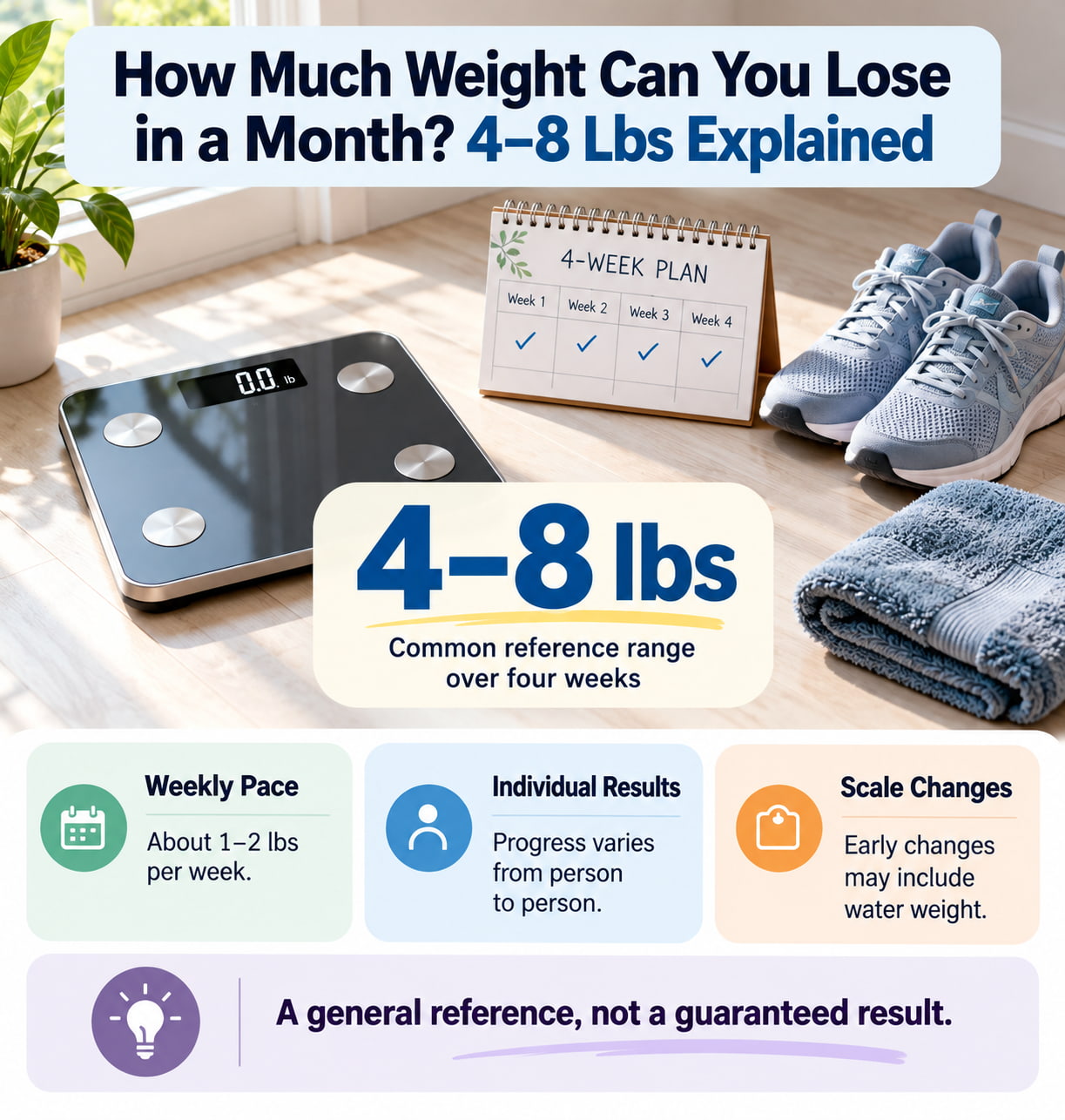
For adults who would benefit from weight loss, about 4–8 pounds over four weeks is a common reference range. This estimate comes from CDC guidance describing a gradual pace of about 1–2 pounds per week.
However, how much weight you can lose in a month varies. Your starting point, health, eating habits, activity, and changes in body water all influence the result. The range is not a promise or a minimum you must reach.
Understanding these differences can help you set realistic expectations and choose habits you can maintain beyond the first month.
How Much Weight Can You Lose in a Month?
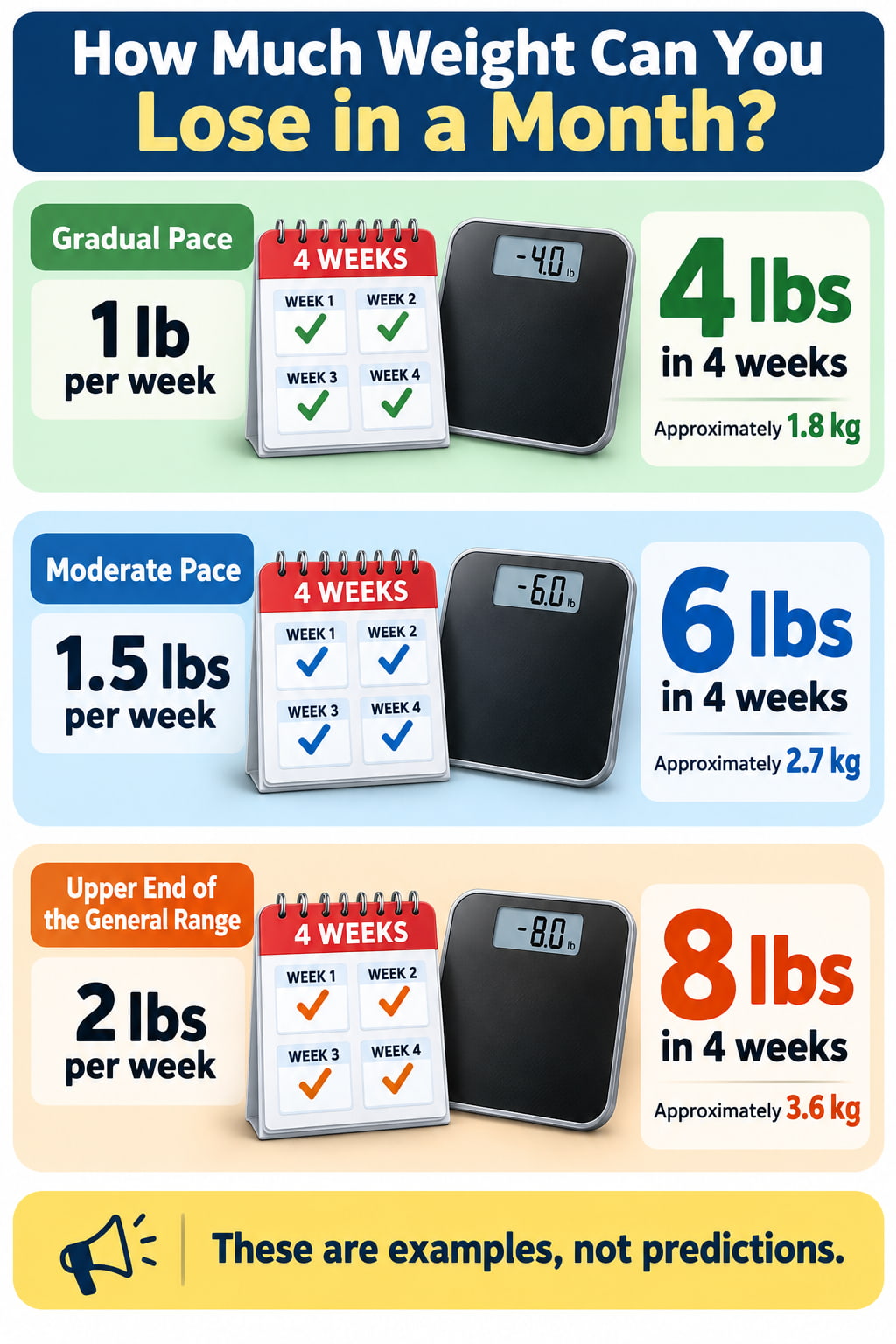
The 4–8-pound estimate translates the weekly guideline into a four-week period:
| Average weekly change | Change over four weeks | Approximate equivalent in kilograms |
|---|---|---|
| 1 pound | 4 pounds | 1.8 kilograms |
| 1.5 pounds | 6 pounds | 2.7 kilograms |
| 2 pounds | 8 pounds | 3.6 kilograms |
These are calculations, not predictions. Most calendar months are slightly longer than four weeks, and weight does not necessarily decrease at an even pace.
Losing less than 4 pounds does not mean your efforts have failed. A slower pace may fit your circumstances and longer-term goals.
For perspective, NIDDK guidance on weight-loss programs recommends an initial goal of 5%–10% of starting weight within six months. At a starting weight of 200 pounds, that means 10–20 pounds over six months. This is a separate longer-term goal, not a requirement to lose a fixed amount every month.
Why Your First Month May Include Water Weight Loss
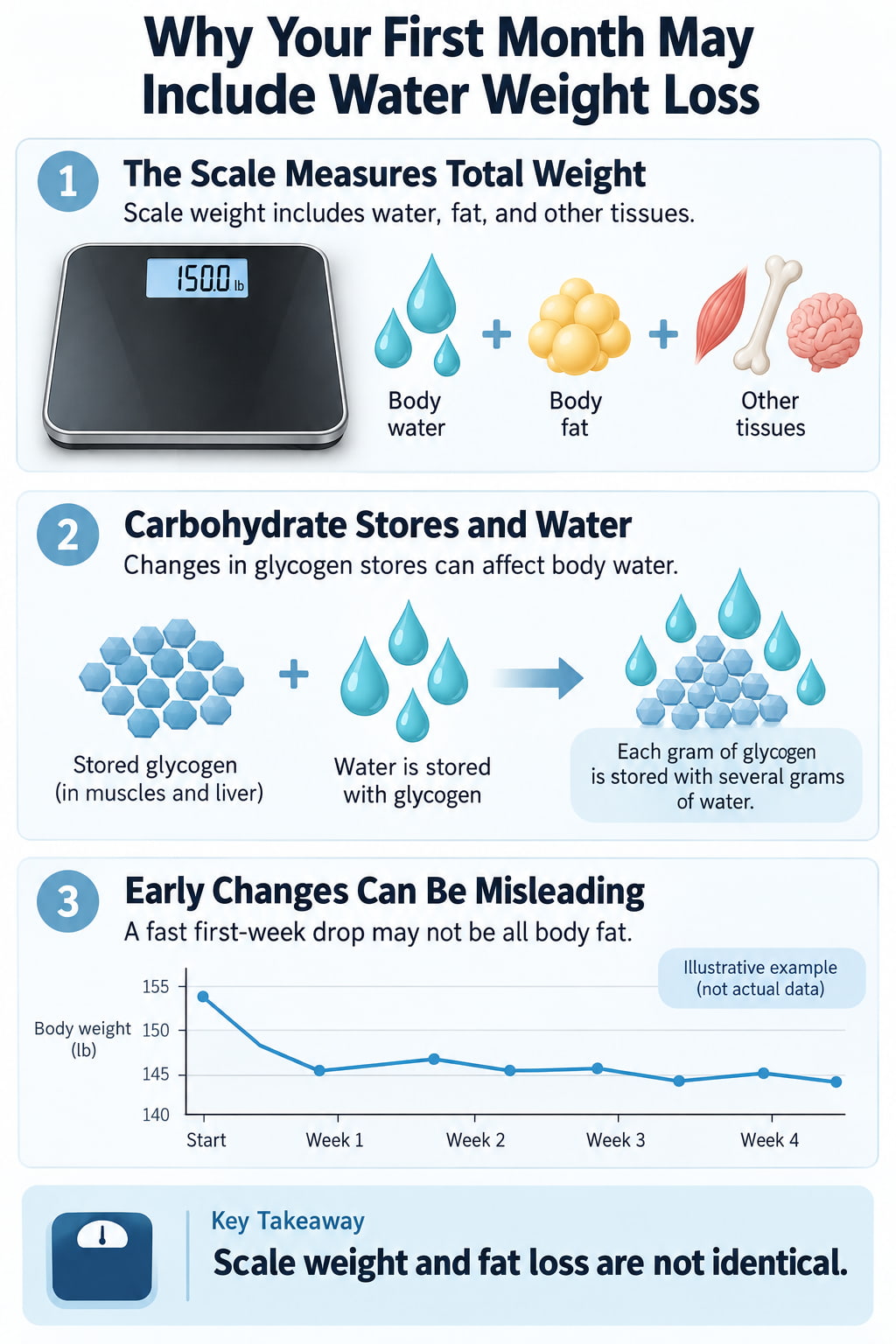
A bathroom scale measures total body weight. It cannot tell you exactly how much of a change came from fat, water, or other body tissues.
Your body stores carbohydrate as glycogen, which is associated with water. Changes in food intake, particularly carbohydrate intake, can change those stores and the amount of water your body carries. That can affect the scale before substantial fat loss occurs.
In a small NIH study published in 2016, participants experienced a rapid initial weight drop after switching to a ketogenic diet. The reduction in scale weight substantially exceeded measured fat loss, and researchers considered much of the early change likely to be water. The study illustrates the difference between weight and fat loss; it does not establish what everyone should expect from a particular diet.
This means a fast first week may not continue throughout the month. It also means that a short-term increase on the scale does not automatically show that you have gained body fat.
What Affects How Much Weight You Lose in a Month?
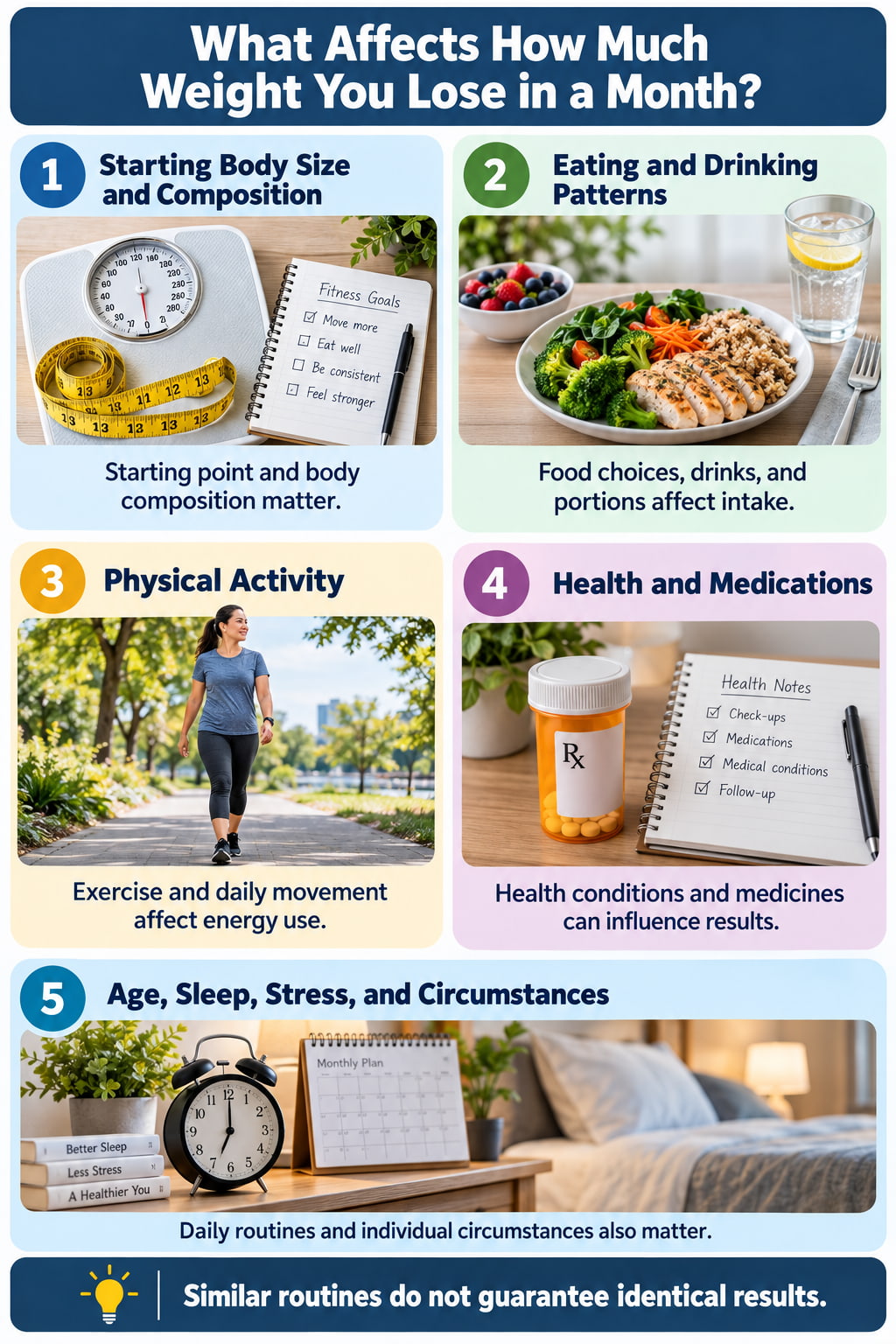
Several factors can influence your progress:
- Starting body size and composition: These affect energy needs and how the body responds to changes in intake.
- Eating and drinking patterns: Portions, beverages, snacks, and meal choices all contribute to overall energy intake.
- Physical activity: Exercise and everyday movement affect energy use.
- Health and medications: Medical conditions and some medicines can influence weight management.
- Age, sleep, stress, and other circumstances: These can affect weight management and the habits you can maintain.
The CDC identifies several biological and environmental influences on weight, while NIDDK’s weight-planning research accounts for individual differences and changing energy needs. Two people following similar routines should not assume they will see identical results.
How to Support Steady Weight Loss
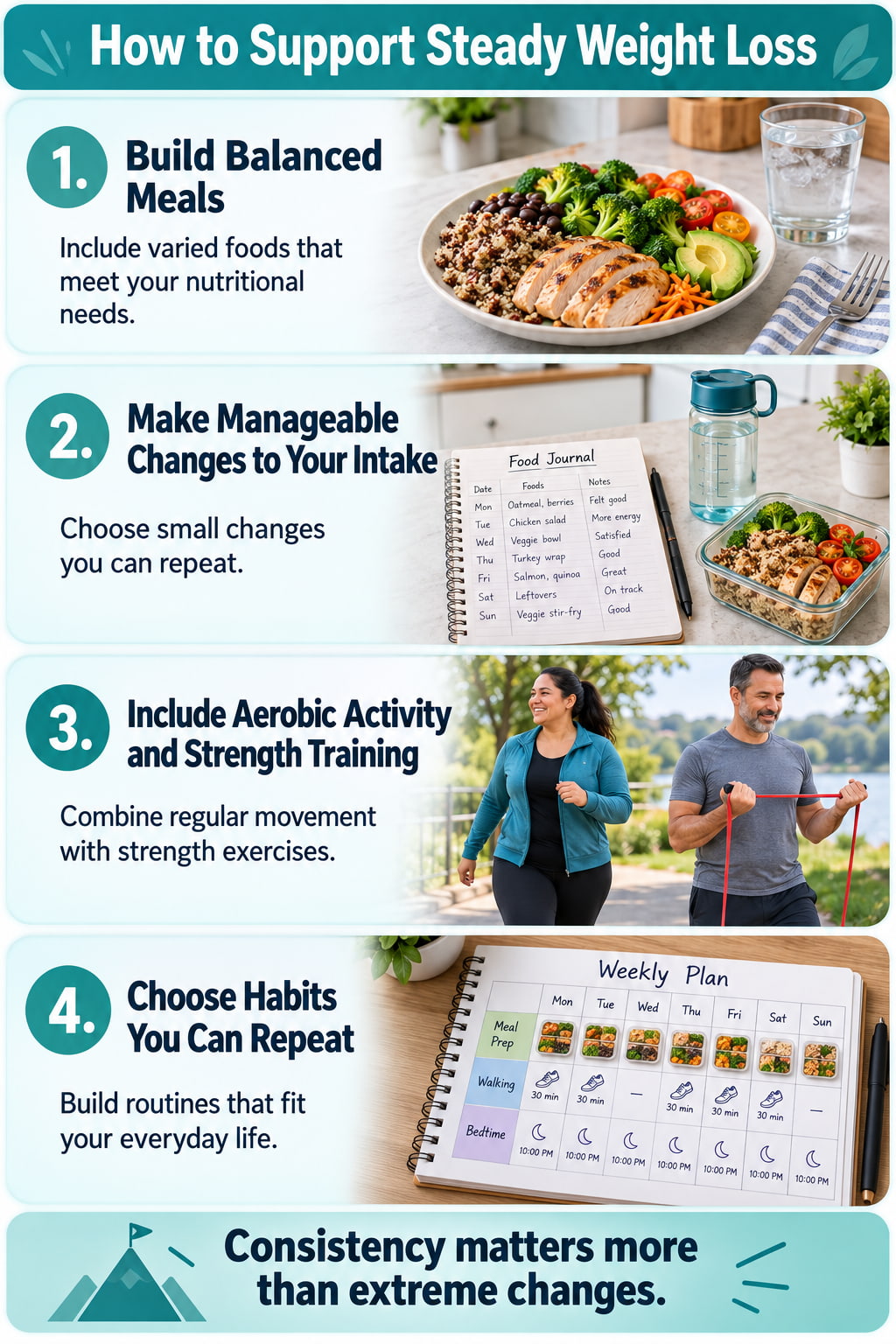
A practical approach combines adequate nutrition, manageable changes in intake, regular activity, and habits that fit your life.
1. Build Balanced Meals
Choose a variety of foods that meet your nutritional needs. CDC guidance supports vegetables, fruit, whole grains, protein foods, dairy without added sugars, and healthy fats within individual calorie needs.
Simple ways to put this into practice include:
- Include a protein food, such as eggs, beans, tofu, fish, chicken, or yogurt.
- Add vegetables or fruit to meals and snacks.
- Include whole grains or other foods you enjoy in portions that fit your needs.
- Pay attention to beverages, dressings, and other additions when reviewing your overall intake.
For example, a meal could include rice, beans, cooked vegetables, and a small amount of olive oil. Another option is eggs with whole-grain toast and fruit. You can adjust portions and ingredients to suit your preferences and circumstances.
2. Make Manageable Changes to Your Intake
Weight loss generally involves an energy deficit: using more energy than you consume over time. However, calorie calculations cannot guarantee an exact monthly result.
NIDDK explains that the familiar “3,500 calories equals one pound” rule overlooks changes in energy expenditure as weight changes. A fixed calorie reduction therefore does not produce the same predictable loss indefinitely.
Start by identifying changes you can repeat. Examples include replacing a regularly consumed sugary drink with water, planning meals before grocery shopping, or checking serving sizes when portions are difficult to estimate.
You do not need to adopt someone else’s calorie target. A registered dietitian can help you choose an eating pattern that fits your nutritional needs, preferences, and health circumstances.
3. Include Aerobic Activity and Strength Training
The CDC’s physical activity recommendations call for adults to get at least 150 minutes of moderate-intensity aerobic activity each week, or an equivalent amount of vigorous activity, plus muscle-strengthening activity on at least two days.
Brisk walking, cycling, swimming, and dancing are possible aerobic options. Strength work can involve weights, resistance bands, or suitable bodyweight exercises.
If you are currently inactive, begin with a manageable amount and build gradually. The general activity recommendations support health; they do not promise a particular monthly weight loss.
A 2026 systematic review of 34 randomized trials involving 1,455 participants found that adding exercise to calorie restriction helped limit the loss of fat-free mass. That measure includes muscle and other nonfat components. The studies varied, and potential publication bias limits how precisely the benefit can be estimated for an individual.
4. Choose Habits You Can Repeat
A useful plan needs to work during ordinary weeks, including busy days and occasional setbacks.
You might choose two or three specific goals:
- Prepare lunch at home on three workdays.
- Take a short walk after dinner when your schedule allows.
- Keep ingredients available for a few simple meals.
- Set a more consistent bedtime.
Review how these habits are working before adding more. The CDC recommends specific, realistic goals and includes sleep and stress management as part of a healthy approach to weight.
Can You Lose More Than 8 Pounds in a Month?
A larger first-month change can occur, particularly when body water changes. Some medically supervised programs also produce faster weight loss. The number alone does not establish whether an approach is appropriate.
Trying to force rapid loss through severe restriction can carry risks. MedlinePlus guidance on rapid weight loss recommends professional supervision and identifies possible concerns such as muscle loss, fatigue, and digestive symptoms. NIDDK also explains that very rapid weight loss can increase gallstone risk.
Medically supervised weight-loss programs have specific eligibility, nutrition, and monitoring requirements. Their results should not become targets for an unsupervised diet.
If your weight keeps falling quickly, or your approach leaves you feeling unwell, discuss your progress with a healthcare professional.
How to Track Progress Over Time
NIDDK includes weekly weight checks and monitoring of eating, activity, and sleep among the features of a successful weight-management program.
To make comparisons more useful:
- Use the same scale under similar conditions. For example, choose a consistent time of day and similar clothing.
- Look at several weeks of results. One reading provides less context than a series of measurements.
- Record the habits you are practicing. A brief note about meals, activity, and sleep can help you identify what is working.
- Notice other changes. Walking tolerance, exercise strength, and consistency with meals can help you assess your routine beyond the scale.
If progress differs from your expectations, review the overall pattern before making a major change. A healthcare professional or registered dietitian can help you assess whether your goal, plan, or timeline needs adjusting.
When to Talk With a Healthcare Professional
The general monthly benchmark is intended for adults pursuing appropriate, intentional weight loss. Individual guidance is especially relevant if you have a medical condition, take medication that may affect weight, or are considering a restrictive diet.
Children and teenagers, as well as people who are pregnant or breastfeeding, have different needs. NIDDK’s adult Body Weight Planner specifically excludes these groups.
Also seek medical advice if you are losing weight without trying, particularly when the loss is persistent or accompanied by other symptoms. Unexplained weight loss needs a different assessment from planned weight management.
Frequently Asked Questions
Is Losing 4 Pounds in a Month Good Progress?
If weight loss is appropriate for you, 4 pounds over four weeks equals about 1 pound per week. That falls within the commonly cited gradual range. Smaller changes can also contribute to your longer-term goal.
Can You Lose 10 Pounds in a Month?
It is possible to see that change on the scale, but it does not necessarily represent 10 pounds of body fat. Water changes and individual circumstances matter. A larger result should not become a target to achieve through severe restriction.
Is Losing 20 Pounds in a Month Realistic?
Twenty pounds over four weeks averages 5 pounds per week, well above the general 1–2-pound weekly reference. It is not a suitable general target for self-directed weight loss. Faster-loss medical programs require individualized supervision.
How Much Weight Can You Lose in a Month Without Exercise?
There is no reliable number that applies to everyone. Weight loss can occur when food and drink intake creates an energy deficit, but the result depends on individual needs and the size of that deficit. Physical activity still offers health benefits beyond weight change.
Why Does Weight Loss Often Slow After the First Week?
Early changes may include water loss, especially when carbohydrate intake changes. Later progress may therefore look slower. Over time, changing energy needs also make a fixed rate of weight loss unlikely.
Does Losing 8 Pounds Mean You Lost 8 Pounds of Fat?
No. Scale weight includes body fat, water, and other tissues. A change in total weight cannot show exactly how much fat you lost. Early dietary changes can produce a substantial difference between scale loss and fat loss.
Conclusion
A month is a useful period for reviewing your habits and progress, but it does not determine your long-term success. Use the general weight-loss range as a reference while considering your health, starting point, and the changes you can maintain.
Start with two or three manageable habits, review your progress over several weeks, and seek individualized support when you need help choosing an appropriate goal.
This content is for informational purposes only and not medical advice.
References
- CDC: Steps for Losing Weight — January 2025.
- NIDDK: Choosing a Safe & Successful Weight-loss Program — reviewed February 2024.
- Hall et al.: Quantification of the Effect of Energy Imbalance on Bodyweight — The Lancet, 2011.
- Hall et al.: Energy Expenditure and Body Composition Changes After an Isocaloric Ketogenic Diet — The American Journal of Clinical Nutrition, 2016.
- NIDDK: NIH Body Weight Planner Explanation — July 2018.
- CDC: Tips for Healthy Eating for a Healthy Weight — April 2026.
- CDC: Physical Activity and Your Weight and Health — April 2026.