
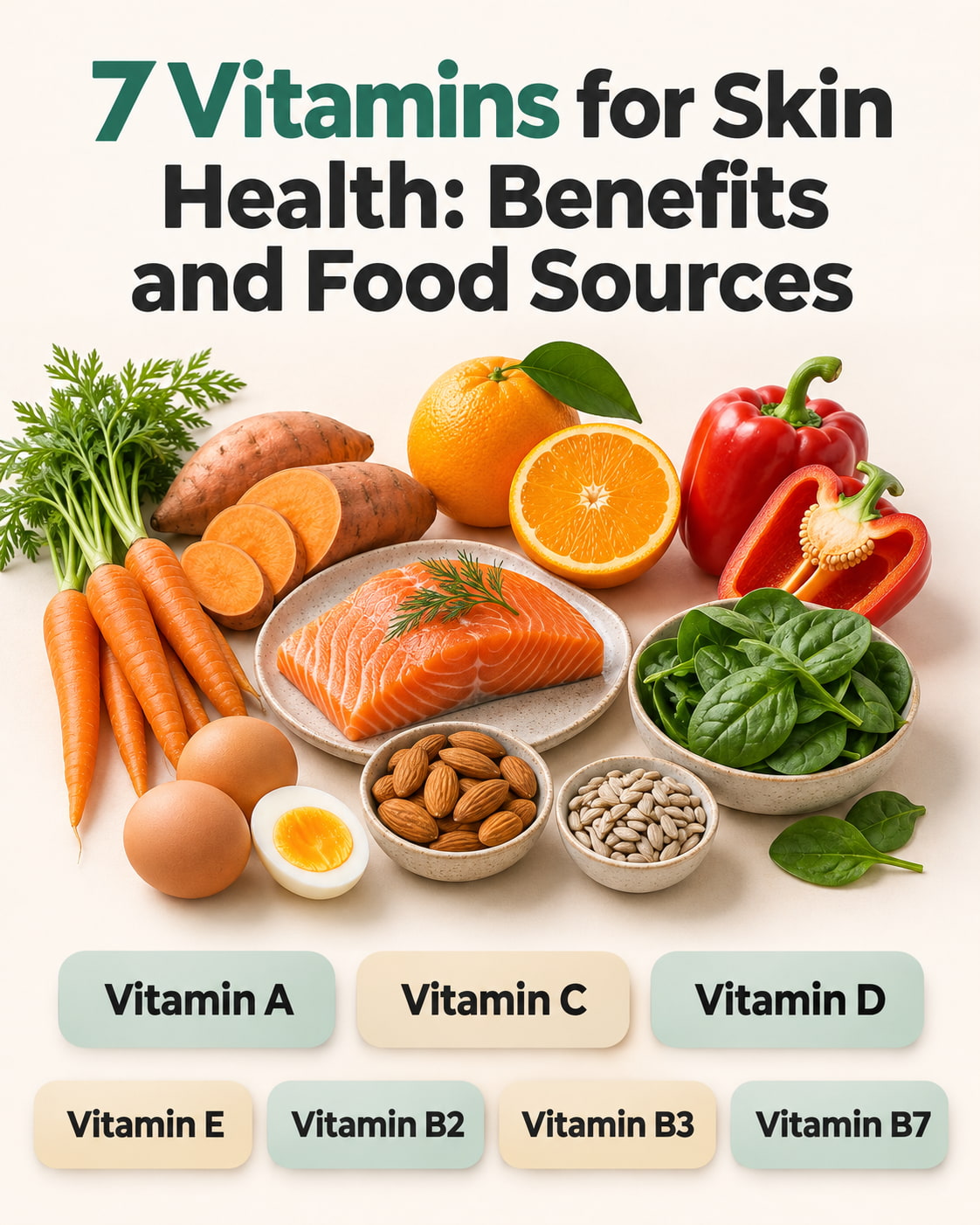
Vitamins A, C, D, E, B2, B3, and B7 support functions that help keep skin healthy, and food is the best starting point for most adults. Choosing vitamins for skin health means meeting your nutritional needs and understanding when supplements may be useful.
These nutrients contribute to normal cell function, collagen formation, and antioxidant defenses. However, their benefits depend on your nutritional status. Taking more than you need does not automatically produce clearer, smoother, or younger-looking skin.
The American Academy of Dermatology recommends meeting nutrient needs through food if you are otherwise healthy. Supplements may be appropriate when a clinician identifies a deficiency or another specific need.
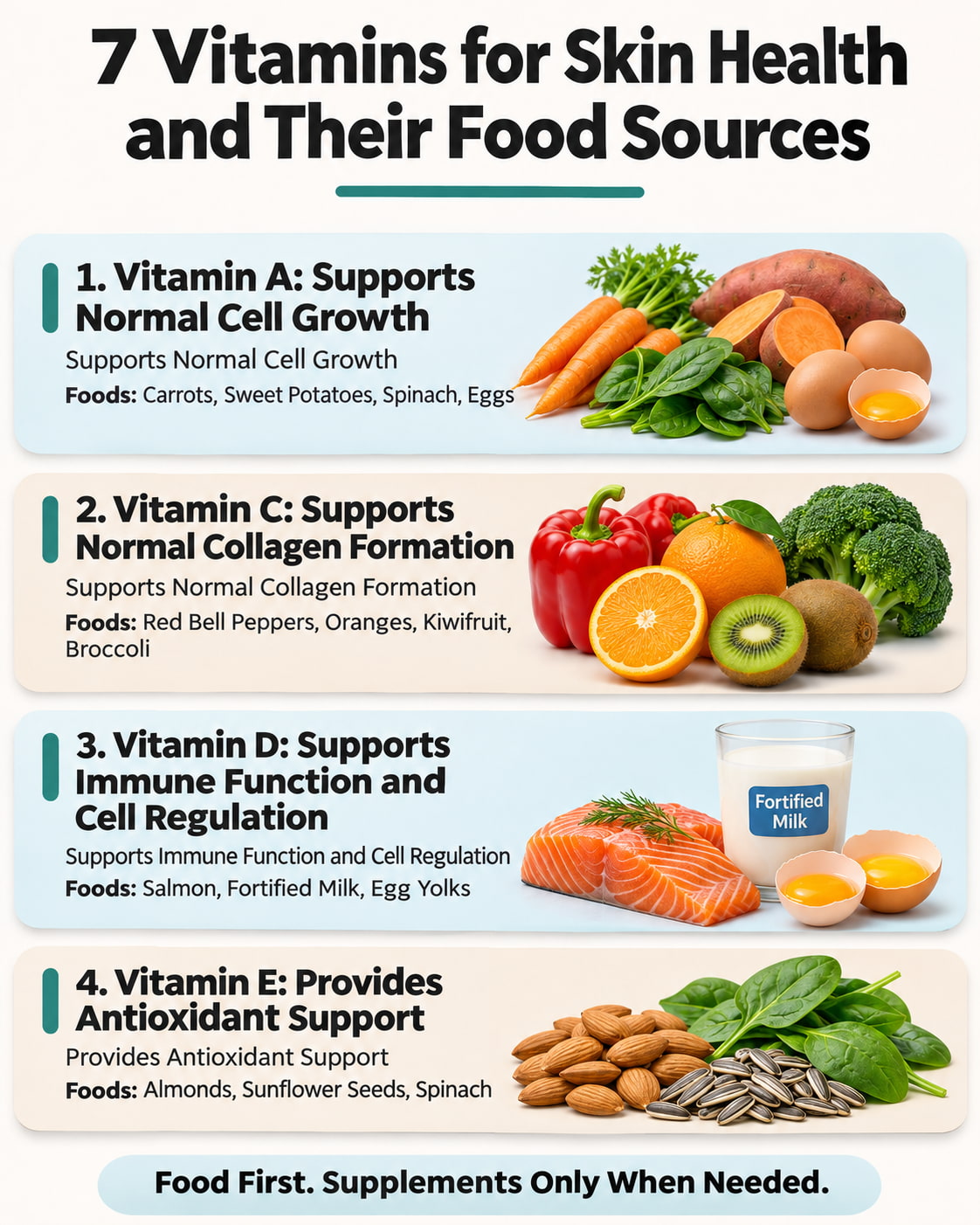
7 Vitamins for Skin Health and Their Food Sources
The nutrient functions and food amounts below are based on NIH Office of Dietary Supplements fact sheets. Food values are approximate and depend on the serving size, preparation method, and product.
1. Vitamin A: Supports Normal Cell Growth
Vitamin A supports normal cell growth and differentiation—the process through which cells develop specialized functions. It also helps maintain epithelial tissue, which includes skin.
Animal foods provide preformed vitamin A. Plant foods provide carotenoids, such as beta-carotene, that your body can convert into vitamin A.
Food sources include:
- Raw carrots, ½ cup: About 459 mcg RAE.
- One whole sweet potato baked in its skin: About 1,403 mcg RAE.
- Other options: Spinach, eggs, and vitamin A-fortified milk.
Dietary vitamin A has a nutritional role. Its effects should not be confused with those of topical retinoids or prescription medicines, which involve different formulations and uses.
2. Vitamin C: Supports Normal Collagen Formation
Vitamin C is required to make collagen, a structural protein in skin and other connective tissues. It also acts as an antioxidant. Inadequate intake can interfere with normal wound repair.
Food sources include:
- Raw red bell pepper, ½ cup: About 95 mg.
- One medium orange: About 70 mg.
- Other options: Kiwifruit, strawberries, broccoli, and Brussels sprouts.
Adding a vitamin C-rich fruit or vegetable to meals is a practical way to support adequate intake. Prolonged cooking can reduce vitamin C content, so including some raw produce or using shorter cooking methods can help preserve it.
3. Vitamin D: Supports Immune Function and Cell Regulation
Vitamin D participates in immune function and the regulation of cell growth. These biological roles help explain its relevance to skin, but they do not establish that extra vitamin D improves skin appearance.
Food sources include:
- Cooked sockeye salmon, 3 ounces: About 14.2 mcg, or 570 IU.
- Vitamin D-fortified 2% milk, 1 cup: About 2.9 mcg, or 120 IU.
- Other options: Trout, fortified plant beverages, egg yolks, and UV-exposed mushrooms.
Check labels because fortification varies. Ordinary mushrooms and unfortified plant beverages may provide much less vitamin D.
The AAD’s vitamin D guidance advises obtaining vitamin D through dietary sources and fortified foods rather than intentional sun exposure or tanning. Continue using shade, protective clothing, and broad-spectrum, water-resistant SPF 30 or higher sunscreen.
4. Vitamin E: Provides Antioxidant Support
Vitamin E is a fat-soluble antioxidant that helps protect cells from oxidative damage. It also participates in normal immune function.
Food sources include:
- Dry-roasted almonds, 1 ounce: About 6.8 mg.
- Dry-roasted sunflower seeds, 1 ounce: About 7.4 mg.
- Other options: Hazelnuts, sunflower oil, peanut butter, and spinach.
You can add almonds to yogurt, sprinkle sunflower seeds over a salad, or use an appropriate vegetable oil when preparing food.
Vitamin E’s antioxidant role does not establish that oral supplements remove scars or reverse wrinkles. High-dose supplements also have risks that ordinary food portions do not share.
5. Vitamin B2: Supports Normal Cellular Function
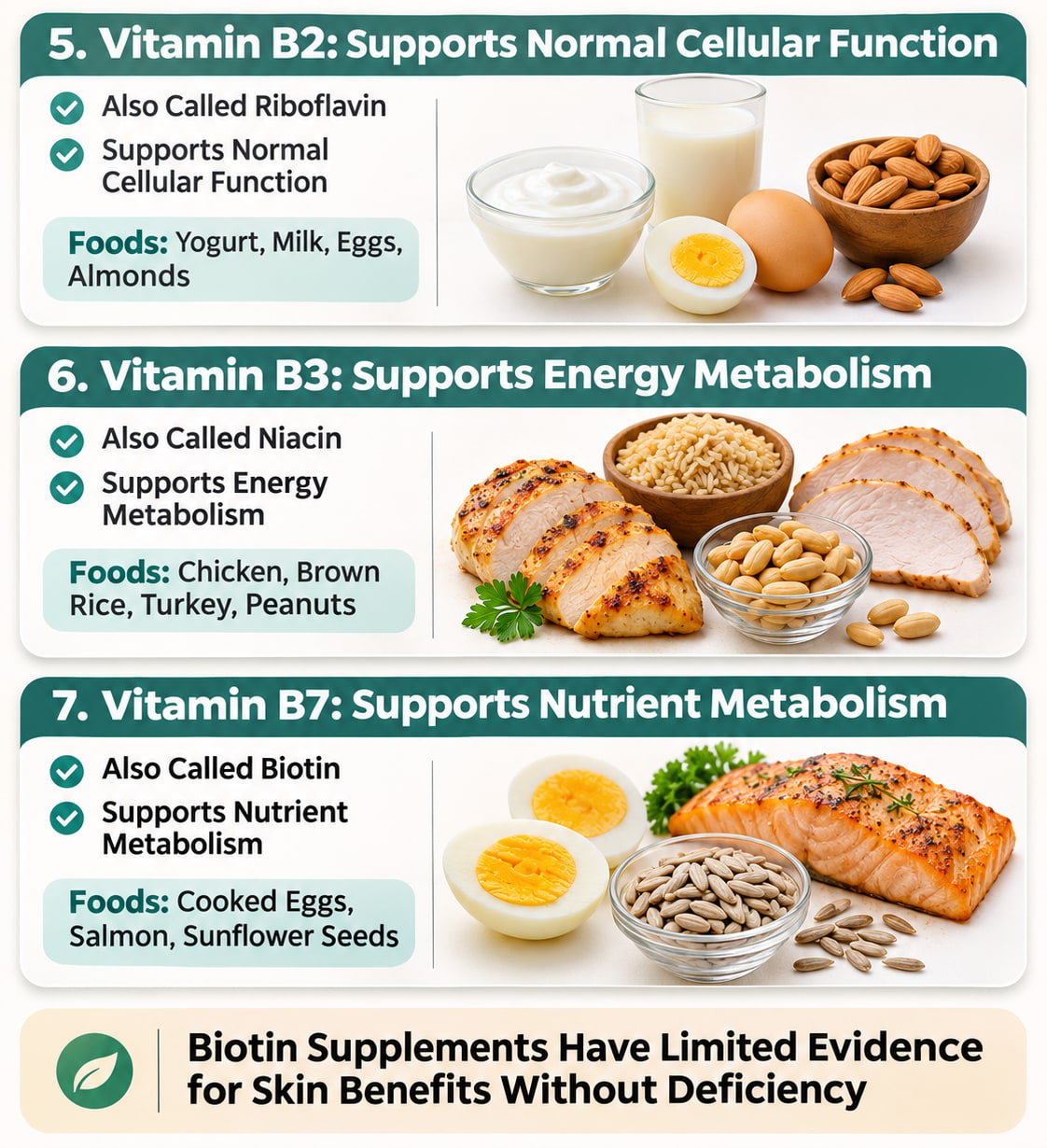
Vitamin B2, also called riboflavin, helps the body produce energy and supports normal cellular growth and function.
Deficiency can involve skin disorders, cracked lips, and changes at the corners of the mouth. These symptoms can have other causes, so they should not be used to diagnose a deficiency.
Food sources include:
- Plain, fat-free yogurt, 1 cup: About 0.6 mg.
- 2% milk, 1 cup: About 0.5 mg.
- Other options: Eggs, almonds, fortified cereals, and mushrooms.
The useful goal is adequate intake. Taking extra riboflavin beyond your needs has not been established as a way to improve skin appearance.
6. Vitamin B3: Supports Energy Metabolism
Vitamin B3, or niacin, helps form coenzymes involved in energy production and normal cellular processes. Severe deficiency can cause pellagra, which includes a rash on sun-exposed skin.
Food sources include:
- Grilled chicken breast, 3 ounces: About 10.3 mg niacin.
- Cooked brown rice, 1 cup: About 5.2 mg.
- Other options: Turkey, salmon, peanuts, and enriched or fortified grains.
You may recognize niacinamide from skin-care products. It is a form of vitamin B3, but evidence about a topical formulation cannot establish the same effects from eating more niacin or taking an oral supplement.
7. Vitamin B7: Supports Nutrient Metabolism
Vitamin B7, better known as biotin, helps the body metabolize fats, carbohydrates, and amino acids.
Biotin deficiency can cause a scaly rash, but deficiency is rare. The NIH biotin fact sheet explains that evidence supporting biotin supplements for skin health is very limited.
Food sources include:
- One whole cooked egg: About 10 mcg.
- Canned pink salmon in water, 3 ounces: About 5 mcg.
- Other options: Sunflower seeds, sweet potatoes, and almonds.
Biotin’s presence in “hair, skin, and nails” products does not mean you need additional amounts. Supplements can also interfere with certain blood tests.
How Much of Each Vitamin Do You Need?
These recommendations describe total daily nutritional intake, including food. They are not special supplement doses for improving skin.
The table applies to generally healthy adults age 19 and older who are not pregnant or breastfeeding, with the vitamin D age exception noted below.
| Vitamin | Adult women | Adult men |
|---|---|---|
| Vitamin A | 700 mcg RAE | 900 mcg RAE |
| Vitamin C | 75 mg | 90 mg |
| Vitamin D, ages 19–70 | 15 mcg, or 600 IU | 15 mcg, or 600 IU |
| Vitamin E | 15 mg | 15 mg |
| Vitamin B2 | 1.1 mg | 1.3 mg |
| Vitamin B3 | 14 mg NE | 16 mg NE |
| Vitamin B7 | 30 mcg | 30 mcg |
A few details help explain these numbers:
- RAE means retinol activity equivalents, which account for different forms of vitamin A.
- NE means niacin equivalents, including niacin the body can make from the amino acid tryptophan.
- Biotin’s figure is an adequate intake. The other figures are recommended dietary allowances.
- Adults older than 70 need 20 mcg, or 800 IU, of vitamin D daily.
- People who smoke need 35 mg more vitamin C per day.
- Pregnancy and breastfeeding can change nutrient requirements.
How to Get Vitamins for Skin Health Through Food
Build variety into meals using foods you enjoy and can obtain regularly. Different foods contribute different nutrients, so relying on one “skin food” is unnecessary.
Here are simple combinations:
- Breakfast: Plain yogurt with strawberries and almonds.
- Lunch: Chicken, brown rice, spinach, and red bell peppers.
- Dinner: Salmon with a baked sweet potato and broccoli.
- Snack: An orange with a small serving of sunflower seeds.
These are meal ideas, not a calculated plan that guarantees every daily target.
If you avoid dairy, compare fortified plant beverages and check their nutrient labels. If you avoid eggs or fish, include a range of nuts, seeds, vegetables, and appropriately fortified foods.
Fortification deserves attention, particularly for vitamin D. Two similar-looking products may contain different amounts.
Do You Need Supplements for Skin Health?
A supplement may make sense when your usual intake falls short or a clinician identifies a deficiency or another specific need. The choice should account for your diet, medical history, medications, and any supplements you already use.
A product marketed for skin is not automatically more suitable than an ordinary food source or a supplement selected for a particular nutritional need.
According to the FDA’s dietary supplement guidance, the FDA regulates supplements but does not approve them for safety and effectiveness before they are sold.
Before adding a product, check:
- Which vitamins it contains and the amount per serving.
- Whether it duplicates a multivitamin or another supplement.
- Whether its ingredients could interact with your medications.
- Whether there is a clear reason you need it.
Safety Considerations Before Taking Skin Supplements
Vitamin A: Excess preformed vitamin A can cause toxicity and birth defects during pregnancy. The adult upper limit for preformed vitamin A is 3,000 mcg RAE daily from food and supplements combined. This is a safety ceiling, not a recommended target. Beta-carotene in ordinary plant foods does not carry the same pregnancy-related risk.
Vitamin E: High-dose supplements can increase bleeding risk, particularly when combined with anticoagulant or antiplatelet medicines.
Niacin: Supplemental nicotinic acid can cause flushing. Much higher doses can cause more serious problems, including liver damage.
Vitamin C: High doses can cause diarrhea, nausea, and abdominal cramps.
Biotin: Supplements can distort certain laboratory results, including some thyroid and troponin tests. Tell your clinician and laboratory about biotin-containing products before testing.
If you have persistent skin concerns or suspect a deficiency, a clinician can assess your symptoms and nutritional history before deciding whether testing or supplementation is appropriate.
Frequently Asked Questions
Which Vitamin Is Best for Skin Health?
There is no single vitamin that meets every skin-related nutritional need. Vitamin C supports collagen formation, vitamin E provides antioxidant support, and other vitamins contribute to normal cell function. The most useful choice depends on whether your intake is adequate.
Can You Get Enough Vitamins for Skin Health From Food?
A varied diet can provide these vitamins. Include fruits, vegetables, nuts, seeds, protein foods, and suitable fortified products. Vitamin D may require particular attention because relatively few foods naturally contain substantial amounts.
Do Vitamin C Supplements Increase Collagen?
Vitamin C is required for normal collagen production. However, that does not mean larger supplement doses produce better-looking skin when you already get enough. Meeting nutritional needs is the priority.
Does Biotin Improve Skin?
Evidence for biotin supplements improving skin in people without a deficiency is very limited. Its essential role in metabolism does not establish an additional cosmetic benefit from high doses.
Can Vitamins Help With Dry Skin?
Dry skin alone does not show whether a vitamin deficiency is involved. A supplement should not be assumed to address the cause. If dryness persists or becomes troublesome, ask a clinician about appropriate evaluation and care.
How Long Does It Take Vitamins to Improve Skin?
There is no dependable timeline for visible changes. The outcome depends on whether a deficiency exists and what is causing the skin concern. Be cautious about products promising smoother or clearer skin within a fixed number of days.
Conclusion
Vitamins support healthy skin by helping your body carry out normal functions. Start with varied meals and practical food choices, then address any specific nutritional gaps. If you are considering supplements, ask a qualified health professional to review whether you need them and which amounts are appropriate.
This content is for informational purposes only and not medical advice.
References
- NIH Office of Dietary Supplements: Vitamin A and Carotenoids.
- NIH Office of Dietary Supplements: Vitamin C.
- NIH Office of Dietary Supplements: Vitamin D.
- NIH Office of Dietary Supplements: Vitamin E.
- NIH Office of Dietary Supplements: Riboflavin.
- NIH Office of Dietary Supplements: Niacin.
- NIH Office of Dietary Supplements: Biotin.