
The best time to take ashwagandha depends on your goal: morning may work better for daytime stress support, while night may work better for sleep support. There is no proven single best time for everyone, so consistency, product quality, dose, and personal tolerance matter more than the exact hour.
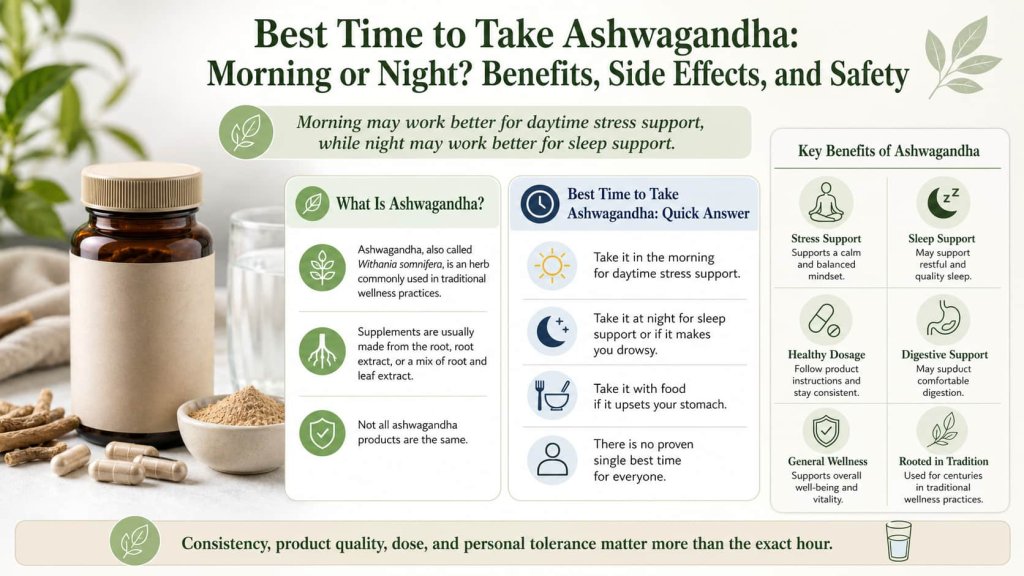
Ashwagandha is a popular herbal supplement used for stress, relaxation, and sleep. Research is promising, but it is not risk-free. The NIH Office of Dietary Supplements notes that ashwagandha may help with stress, anxiety, and sleep in some studies, but long-term safety is still not well known.
Best Time to Take Ashwagandha: Quick Answer
For most healthy adults who choose to use ashwagandha, the best timing depends on why they are taking it.
| Goal | Best Time to Consider | Why It May Help |
|---|---|---|
| Daytime stress support | Morning or early afternoon | May fit better if you want calm focus during the day |
| Sleep support | Evening or 30–60 minutes before bed | May fit better if your goal is relaxation or sleep quality |
| Sensitive stomach | With food | May reduce nausea, loose stools, or stomach discomfort |
| Drowsiness | Night | Better if it makes you sleepy |
| Twice-daily supplement directions | Morning and evening | Some products and studies use split dosing |
The most practical rule is simple: take it at the time you can use it consistently and tolerate it well.
Should You Take Ashwagandha in the Morning?
Morning may be a good time to take ashwagandha if your main goal is stress support during the day.
This may be helpful if you feel tense, mentally overloaded, or stressed during work, school, or daily responsibilities. Ashwagandha is not a stimulant like caffeine, so it should not be expected to provide a quick energy boost. Instead, it is usually studied as a daily supplement taken for several weeks.
A 2024 systematic review and meta-analysis found that ashwagandha significantly reduced stress, anxiety, and cortisol compared with placebo across nine studies, with doses ranging from 125–600 mg daily for 30–90 days. However, the authors also noted the need for more long-term safety research.
Morning May Be Better If You Want To
- Support calm focus during the day
- Avoid taking supplements close to bedtime
- Build a simple morning wellness routine
- Prevent possible nighttime stomach discomfort
- Pair it with breakfast to improve tolerance
Should You Take Ashwagandha at Night?
Night may be a better time to take ashwagandha if your main goal is sleep support.
Ashwagandha may help some people relax, fall asleep more easily, or improve sleep quality. The strongest sleep-related evidence is still limited, but it is promising. A PLOS One systematic review and meta-analysis found that ashwagandha extract had a beneficial effect on sleep in adults, with stronger effects seen in people with insomnia, doses of at least 600 mg per day, and use lasting at least 8 weeks.
Nighttime use may also make sense if ashwagandha causes drowsiness for you. In that case, taking it earlier in the day may leave you feeling too relaxed or sluggish.
Night May Be Better If You Want To
- Support relaxation before bed
- Improve your bedtime routine
- Avoid daytime drowsiness
- Use it mainly for sleep quality
- Pair it with a calm evening routine
Morning vs Night: Which Is Better?
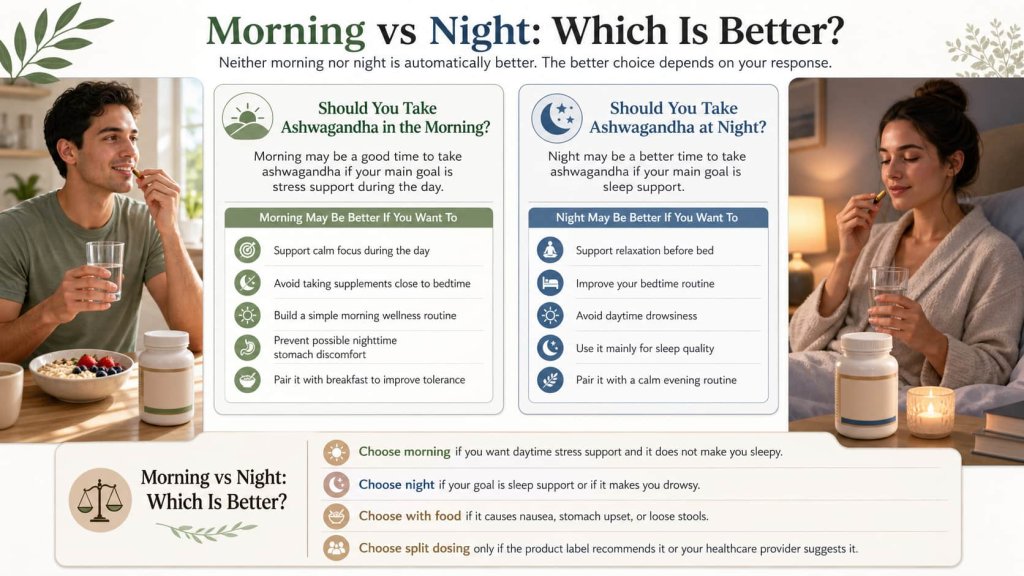
Neither morning nor night is automatically better. The better choice depends on your response.
- Choose morning if you want daytime stress support and it does not make you sleepy.
- Choose night if your goal is sleep support or if it makes you drowsy.
- Choose with food if it causes nausea, stomach upset, or loose stools.
- Choose split dosing only if the product label recommends it or your healthcare provider suggests it.
Can You Take Ashwagandha With Food?
Yes, ashwagandha can usually be taken with food, and this may be the better option if it bothers your stomach.
Digestive side effects such as nausea, loose stools, diarrhea, vomiting, and stomach upset have been reported. Taking ashwagandha with a meal or snack may make it easier to tolerate.
Good options include taking it with:
- Breakfast
- Dinner
- A protein shake
- Yogurt or oatmeal
- A balanced meal with healthy fat
Avoid taking it with alcohol or sedative products unless your healthcare provider says it is safe.
How Long Does Ashwagandha Take To Work?
Ashwagandha is not usually a “take it once and feel it immediately” supplement. Most studies use daily supplementation for several weeks.
Many stress and sleep studies run for about 6–8 weeks. That means it may take a few weeks of consistent use before you can judge whether it helps you. If you feel worse, unusually sleepy, nauseated, itchy, or unwell, stop using it and speak with a healthcare professional.
What Is the Best Ashwagandha Dosage?
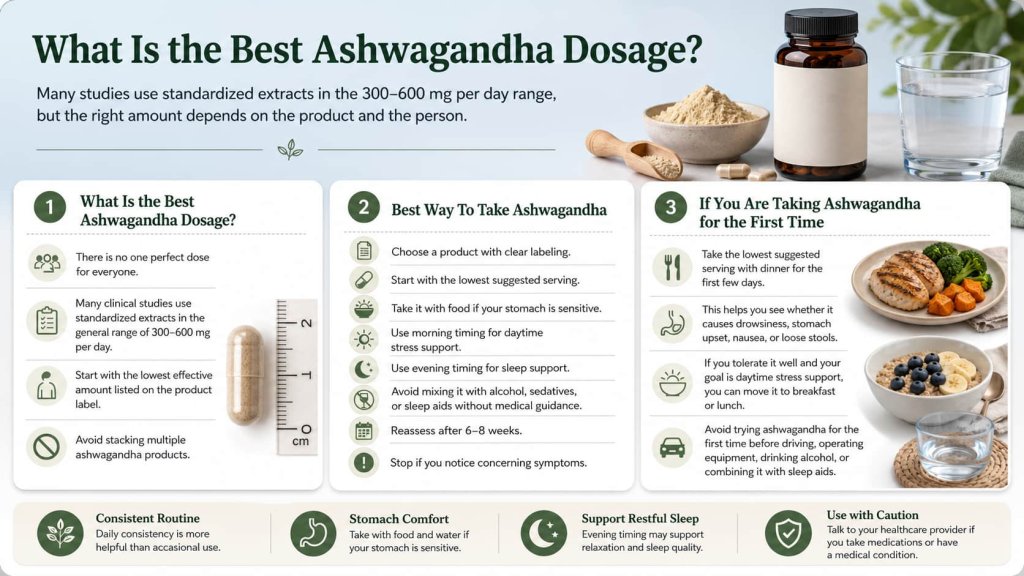
There is no one perfect dose for everyone. Dose depends on the product type, extract strength, withanolide content, your health status, and your reason for using it.
Many clinical studies use standardized extracts in the general range of 300–600 mg per day, but some studies use lower or higher amounts. NIH ODS reports that stress and anxiety studies have used a wide range of extract doses, including 240–1,250 mg per day, while sleep studies often use root extracts in the 250–600 mg per day range.
A safe article-level recommendation is not to chase high doses. Start with the lowest effective amount listed on the product label, avoid stacking multiple ashwagandha products, and ask a clinician if you take medication or have a health condition.
Side Effects of Ashwagandha
Ashwagandha is often tolerated in short-term studies, but side effects can happen.
Possible side effects include:
- Drowsiness
- Nausea
- Loose stools
- Diarrhea
- Vomiting
- Stomach upset
- Headache
- Dizziness
- Skin rash
The National Center for Complementary and Integrative Health warns that ashwagandha may interact with some medications and may not be appropriate for certain groups, including people who are pregnant, breastfeeding, about to have surgery, or living with autoimmune or thyroid disorders.
Safety: Who Should Avoid Ashwagandha?
Ashwagandha is not appropriate for everyone.
You should avoid ashwagandha or speak with a healthcare professional first if you:
- Are pregnant
- Are breastfeeding
- Have thyroid disease
- Have an autoimmune condition
- Have liver disease
- Have hormone-sensitive prostate cancer
- Are scheduled for surgery
- Take sedatives or sleep medications
- Take thyroid medication
- Take diabetes medication
- Take blood pressure medication
- Take immunosuppressant medication
- Take anticonvulsant medication
Ashwagandha may affect thyroid function, immune activity, blood sugar, blood pressure, sedation, and hormone-related pathways. This is why people with medical conditions or prescription medications should be careful.
Medication Interaction Safety Box
Talk with a healthcare professional before using ashwagandha if you take prescription medication. This is especially important if you use medicine for thyroid disease, diabetes, high blood pressure, seizures, sleep, anxiety, immune suppression, or organ transplant care.
Ashwagandha may affect blood sugar, blood pressure, thyroid hormone activity, immune function, and sedation. Combining it with medications that affect the same systems could increase the risk of side effects or make your medication plan less predictable.
Do not stop or change prescribed medication just because you want to try ashwagandha. Use it only as a supplement, not as a replacement for medical treatment.
Liver Safety Warning
Rare liver injury cases have been reported with ashwagandha. This does not mean everyone will have liver problems, but it does mean the supplement should be used carefully.
NIH LiverTox reports that liver injury linked to ashwagandha has typically appeared 2 to 12 weeks after starting, often with jaundice and itching. People with cirrhosis or advanced chronic liver disease should avoid ashwagandha.
Stop using ashwagandha and seek medical care if you develop:
- Yellowing of the skin or eyes
- Dark urine
- Severe itching
- Unusual fatigue
- Upper abdominal pain
- Persistent nausea
- Pale stools
Supplement Quality Matters
Ashwagandha supplements can vary widely. One product may use root extract, another may use root-and-leaf extract, and another may not clearly state the extract strength.
The FDA explains that dietary supplements do not need FDA approval before they are marketed, and the agency does not test supplements before they are sold. That means the manufacturer is responsible for product quality, safety, and labeling.
When choosing a product, look for:
- Clear serving size
- Clear extract type
- Standardized withanolide information
- Third-party testing when available
- No hidden stimulant blends
- No exaggerated disease-treatment claims
- A reputable manufacturer
Avoid combining several stress, sleep, hormone, or “adaptogen” blends unless a healthcare professional has reviewed them.
Recent Safety Concerns
Some international authorities have become more cautious about ashwagandha. The German Federal Institute for Risk Assessment advises that children, pregnant women, breastfeeding women, and people with acute or pre-existing liver disease should avoid ashwagandha supplements. It also notes concerns related to digestive complaints, drowsiness, headaches, dizziness, skin rashes, liver reports, and possible effects on the immune and endocrine systems.
This does not mean ashwagandha is dangerous for every healthy adult, but it does mean the safest approach is to use it carefully, avoid unnecessary high doses, and pay attention to side effects.
Best Way To Take Ashwagandha
Use this simple approach:
- Choose a product with clear labeling.
- Start with the lowest suggested serving.
- Take it with food if your stomach is sensitive.
- Use morning timing for daytime stress support.
- Use evening timing for sleep support.
- Avoid mixing it with alcohol, sedatives, or sleep aids without medical guidance.
- Reassess after 6–8 weeks.
- Stop if you notice concerning symptoms.
If You Are Taking Ashwagandha for the First Time
If you are new to ashwagandha, start with a simple and cautious routine instead of taking the highest serving right away.
A practical first step is to take the lowest suggested serving with dinner for the first few days. This helps you see whether it causes drowsiness, stomach upset, nausea, or loose stools. If you tolerate it well and your goal is daytime stress support, you can move it to breakfast or lunch.
Avoid trying ashwagandha for the first time before driving, operating equipment, drinking alcohol, or combining it with sleep aids. This is especially important because drowsiness and digestive side effects can happen in some people.
Who May Benefit Most From Morning Use?
Morning use may fit people who want help with daily stress, calm focus, or a steady routine.
It may work well if you:
- Feel more stressed during the day
- Want to take supplements with breakfast
- Do not feel sleepy after taking it
- Prefer not to take supplements near bedtime
- Use ashwagandha as part of a daytime wellness plan
Who May Benefit Most From Night Use?
Night use may fit people who use ashwagandha mainly for sleep or relaxation.
It may work well if you:
- Feel more stressed at night
- Have trouble winding down
- Notice drowsiness after taking it
- Want to pair it with a bedtime routine
- Prefer taking supplements after dinner
Can You Take Ashwagandha Every Day?
Many studies use daily ashwagandha for several weeks, but that does not mean everyone should take it indefinitely.
Short-term use up to about 3 months appears to be better studied than long-term use. Long-term safety over many months or years is still unclear. If you want to use ashwagandha longer than a few months, it is wise to discuss it with a healthcare professional.
Can You Take Ashwagandha With Magnesium or Melatonin?
Some people combine ashwagandha with magnesium or melatonin for sleep, but this should be done carefully.
Combining calming supplements may increase drowsiness. This matters if you drive, operate equipment, take sedating medication, or are sensitive to sleep aids. Start with one product at a time so you can tell what helps and what causes side effects.
Can Ashwagandha Make You Sleepy During the Day?
Yes, it can. Drowsiness is a possible side effect.
If it makes you sleepy, avoid taking it before driving, work, studying, or exercise. Consider evening use instead, or stop using it if the drowsiness is uncomfortable.
Can Ashwagandha Upset Your Stomach?
Yes. Some people experience nausea, loose stools, diarrhea, vomiting, or stomach discomfort.
Taking it with food may help. If symptoms continue, stop taking it. Do not keep increasing the dose if your stomach is already reacting poorly.
When Should You Stop Taking Ashwagandha?
Stop taking ashwagandha if you develop unusual symptoms after starting it, especially symptoms that feel stronger than mild stomach discomfort.
Stop use and seek medical advice if you notice yellow skin or eyes, dark urine, severe itching, ongoing nausea, unusual fatigue, abdominal pain, rash, dizziness, extreme sleepiness, or worsening anxiety.
You should also stop before surgery unless your healthcare provider gives different instructions. Because ashwagandha may affect sedation, immune activity, thyroid function, blood pressure, and blood sugar, it is safer to review it with a clinician before any planned procedure.
FAQs About the Best Time to Take Ashwagandha
Is it better to take ashwagandha in the morning or at night?
Morning may be better for daytime stress support. Night may be better for sleep support or if it makes you drowsy. There is no proven best time for everyone.
Can I take ashwagandha before bed?
Yes, some people take ashwagandha before bed for relaxation or sleep support. If it causes stomach upset, take it with dinner instead of right before lying down.
Can I take ashwagandha on an empty stomach?
You can, but it may bother your stomach. If you notice nausea, loose stools, or discomfort, take it with food.
How long before bed should I take ashwagandha?
A practical option is 30–60 minutes before bed. If that bothers your stomach, take it earlier with dinner.
Does ashwagandha work immediately?
Usually not. Most studies use daily supplementation for several weeks. Give it time, but stop sooner if you feel unwell.
Can I take ashwagandha every night?
Some people use it nightly for short periods, but long-term safety is not well known. If you plan to use it for more than a few months, ask a healthcare professional.
Should women take ashwagandha?
Some women may use ashwagandha, but it should be avoided during pregnancy and breastfeeding. Women with thyroid disease, hormone-related conditions, autoimmune conditions, liver disease, or medication use should ask a healthcare professional first.
Should men take ashwagandha?
Some men may use it for stress, sleep, or fitness goals, but men with hormone-sensitive prostate cancer should avoid it unless a clinician specifically advises otherwise.
What should you not mix with ashwagandha?
Be careful combining ashwagandha with sedatives, alcohol, sleep aids, thyroid medication, diabetes medication, blood pressure medication, immunosuppressants, and anticonvulsants.
Conclusion
The best time to take ashwagandha depends on your goal. Take it in the morning if you want daytime stress support. Take it at night if you want sleep support or it makes you drowsy. Take it with food if it upsets your stomach.
Ashwagandha may be helpful for some people, but it is still a supplement with real safety considerations. Choose a quality product, avoid high doses, watch for side effects, and ask a healthcare professional if you are pregnant, breastfeeding, taking medication, or managing a health condition.
This content is for informational purposes only and not medical advice.
References
- NIH Office of Dietary Supplements — Ashwagandha: Is it helpful for stress, anxiety, or sleep?
- National Center for Complementary and Integrative Health — Ashwagandha: Usefulness and Safety
- PLOS One — Effect of Ashwagandha Extract on Sleep: A Systematic Review and Meta-Analysis
- PubMed — Effects of Ashwagandha on Stress and Anxiety: Systematic Review and Meta-Analysis
- German Federal Institute for Risk Assessment — Ashwagandha: Food Supplements With Potential Health Risks