
No, protein does not automatically make you gain weight. In most cases, weight gain happens when you regularly eat more calories than your body uses, and protein still counts toward that total because it provides 4 calories per gram. According to MedlinePlus, weight gain comes from taking in more calories than you use, and the FDA’s protein label guide explains the calorie value of protein.
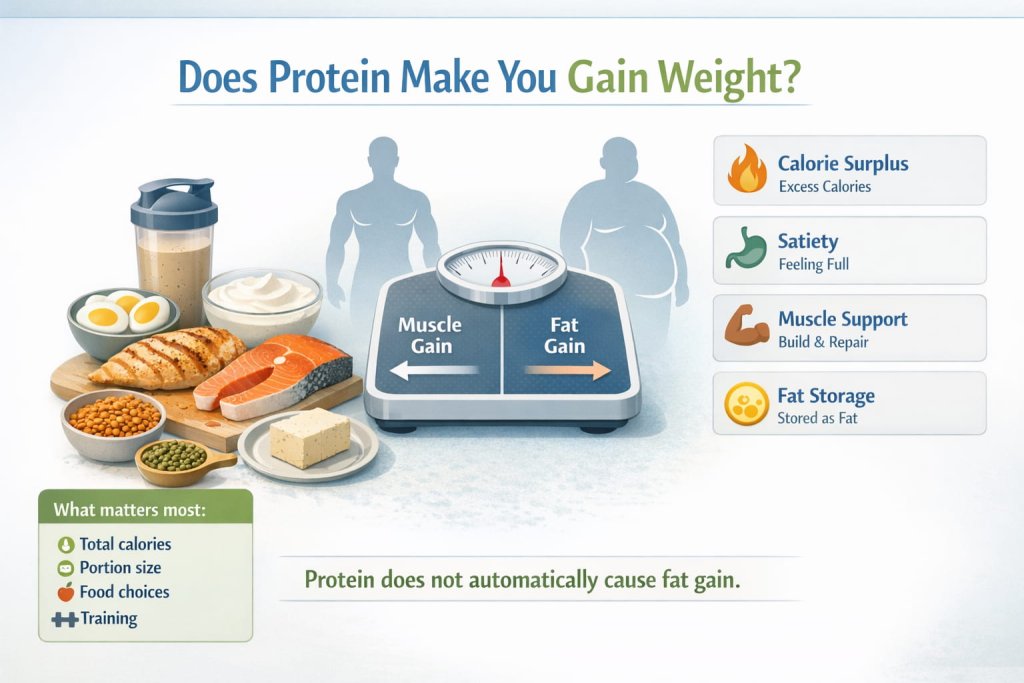
That said, protein is often misunderstood. It can raise the number on the scale for very different reasons. Sometimes it adds calories you did not account for. Other times, especially with strength training, it helps support lean mass rather than body fat. That difference matters if you are trying to lose fat, maintain muscle, or simply understand why your weight changed. A practical approach is to look at your total calories, portions, food choices, and training, not just protein alone.
Why Protein Does Not Automatically Cause Fat Gain
Protein is one of the three macronutrients that provide energy. Like carbohydrate, it provides 4 calories per gram, while fat provides more per gram. So protein is not “free,” but it is not uniquely fattening either. The main driver of fat gain is still a consistent calorie surplus.
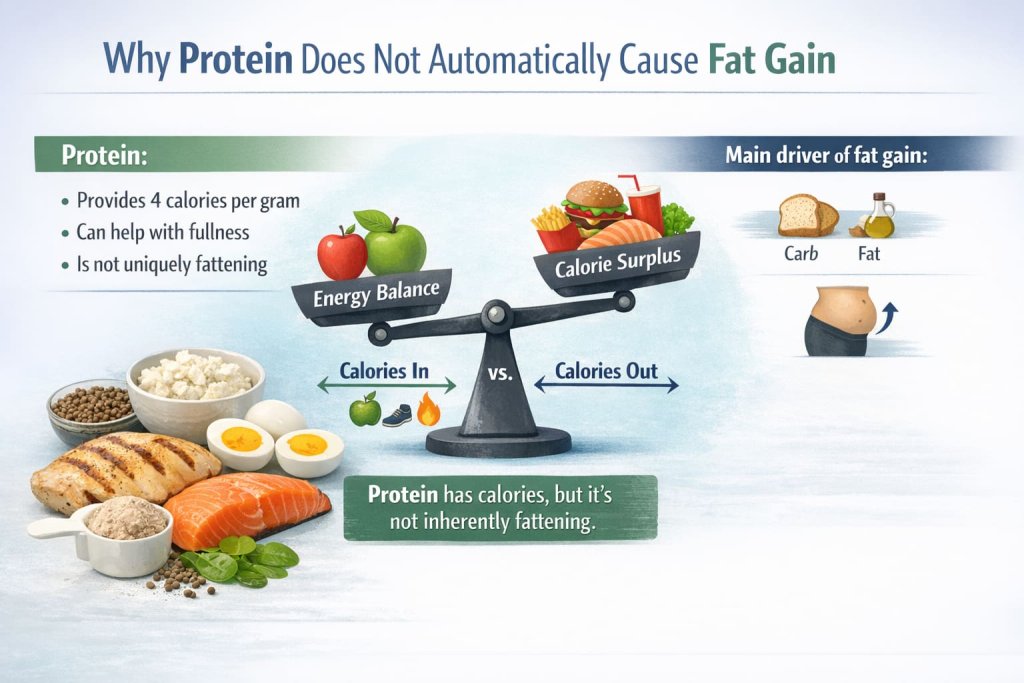
This is why two people can eat more protein and get different results. One person may add extra shakes, bars, and snacks on top of their usual diet and end up in a surplus. Another person may replace pastries or sugary snacks with Greek yogurt, eggs, beans, tofu, fish, or chicken and end up feeling fuller on similar or even fewer calories. Protein itself is not the whole story; what it replaces or adds to matters.
When Protein Can Make You Gain Weight
Protein can contribute to weight gain when it increases your overall calorie intake enough to push you above maintenance needs. This often happens in real life when people:
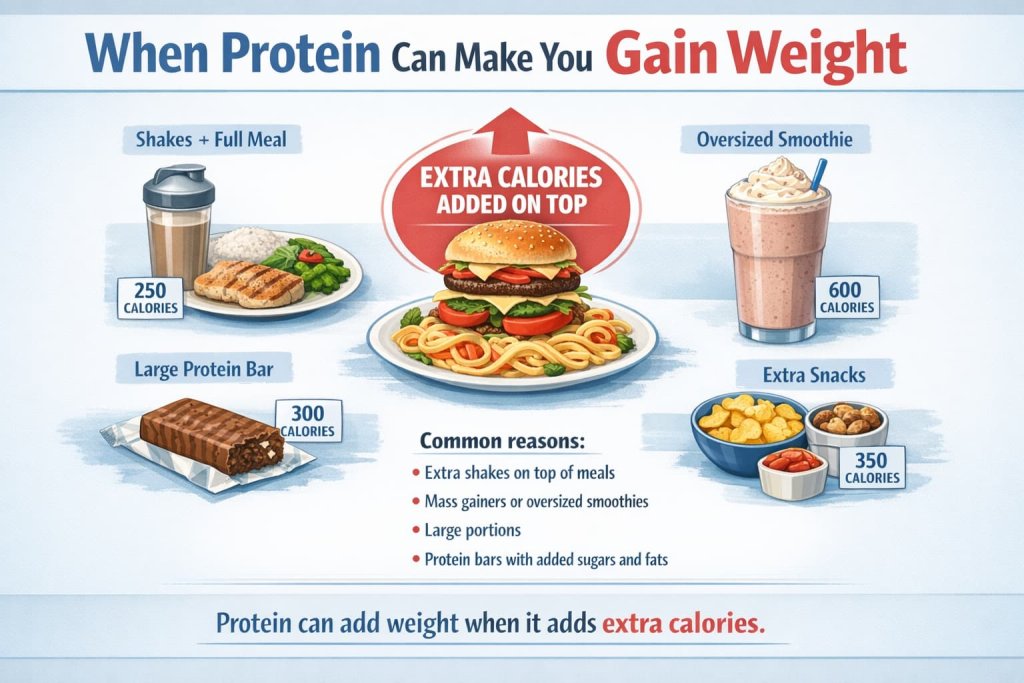
- drink protein shakes in addition to meals instead of using them as a replacement
- use mass gainers or oversized smoothies
- eat large portions of calorie-dense protein foods
- choose protein bars or snacks with substantial added sugars and fats
- assume “high protein” means they do not need to watch calories or serving sizes
The FDA Nutrition Facts guidance is useful here because it reminds you to check serving size, calories, protein, and added sugars on packaged foods instead of relying on front-of-package marketing.
A classic overfeeding study helps explain this clearly. In a controlled trial, people who ate extra calories gained weight regardless of protein level. Body fat still went up with overfeeding, but the higher-protein groups gained more lean body mass and had higher energy expenditure than the low-protein group. In other words, the excess calories mattered most for fat gain, while protein influenced what kind of weight was gained. This PubMed study is one of the most useful pieces of evidence on this question.
When Higher Protein May Help With Weight Loss or Weight Maintenance
Protein is not a magic fat burner, but it can still be helpful for weight management. A review in the American Journal of Clinical Nutrition found that higher-protein diets often improve appetite control, body weight management, fat mass loss, and lean-mass preservation, especially in shorter-term controlled studies. The same review also found a modest satiety effect, meaning people often feel fuller after higher-protein meals. You can read that evidence summary on PubMed.
That helps explain why protein is common in weight-loss plans. It may make it easier to stick to a lower-calorie diet, and preserving lean mass is important during weight loss because losing muscle along with fat is not ideal. But the key word is may. Protein supports a better plan; it does not override overeating.
Protein, Muscle Gain, and Scale Weight
One reason people think protein causes weight gain is that the scale sometimes goes up after they start eating more of it. That does not always mean fat gain.
If you combine higher protein intake with resistance training, you may gain or preserve more lean body mass. A large meta-analysis found that protein supplementation during resistance training significantly improved gains in muscle size and strength in healthy adults, and a more recent meta-analysis found small added gains in lean body mass and lower-body strength with increased daily protein intake in adults doing resistance exercise. See the 2018 PubMed meta-analysis and the 2022 PubMed meta-analysis.
That means the scale can move up for a better reason. If your waist is stable, your strength is improving, and your body composition is changing in the right direction, a higher weight is not always a negative outcome. For many people, the more useful question is not “Did I gain weight?” but “Did I gain fat, muscle, or both?”
How to Judge Weight Changes More Accurately
If you recently increased protein and started resistance training, do not rely on the scale alone. A stable or smaller waist measurement, better gym performance, and a weight trend viewed over several weeks usually tell you more than a day-to-day fluctuation. Scale weight by itself cannot show whether the change came from fat, lean mass, water, or simply more food volume in your system.
This matters because many people assume any increase on the scale means protein is making them gain fat. In real life, body composition and trend data are much more useful than a single weigh-in.
How Much Protein Do You Actually Need?
For healthy adults, the current baseline Recommended Dietary Allowance is 0.8 grams of protein per kilogram of body weight per day. The Acceptable Macronutrient Distribution Range for adults is 10% to 35% of total calories from protein. Those benchmarks come from the National Academies’ Dietary Reference Intake tables.
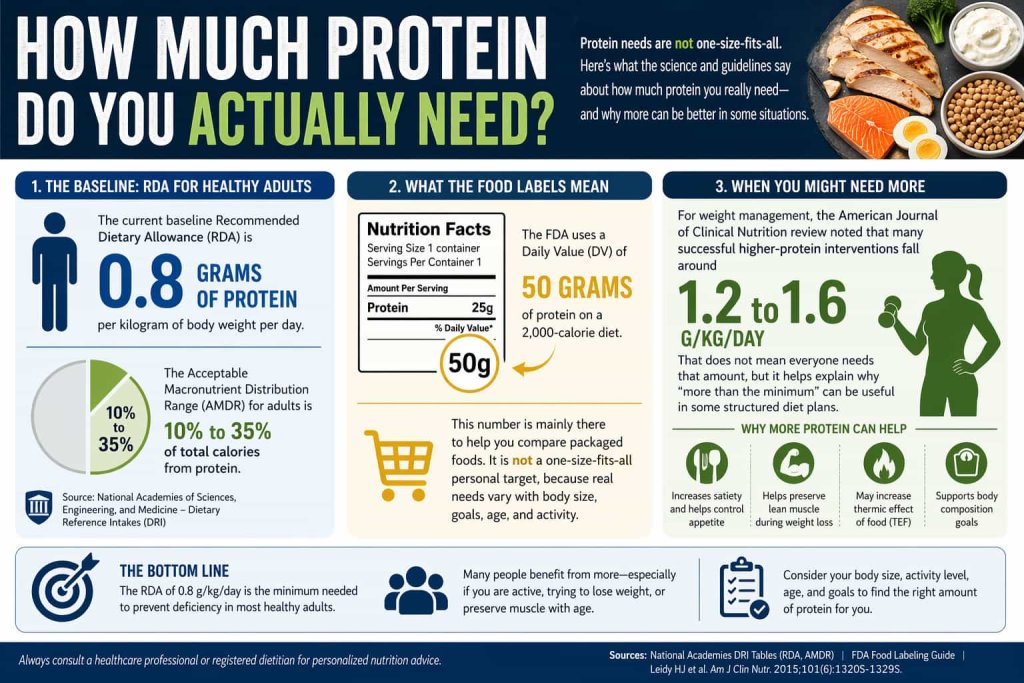
On food labels, the FDA uses a Daily Value of 50 grams of protein on a 2,000-calorie diet. That number is mainly there to help you compare packaged foods. It is not a one-size-fits-all personal target, because real needs vary with body size, goals, age, and activity.
For weight management, the American Journal of Clinical Nutrition review noted that many successful higher-protein interventions fall around 1.2 to 1.6 g/kg/day. That does not mean everyone needs that amount, but it helps explain why “more than the minimum” can be useful in some structured diet plans.
A Quick Protein Target Example
For example, a 150-pound adult weighs about 68 kilograms. Using the RDA of 0.8 g/kg/day, that comes out to about 54 grams of protein per day. Using the 1.2 to 1.6 g/kg/day range often seen in higher-protein weight-management plans, the same person would land at about 82 to 109 grams per day. That comparison helps show why the FDA Daily Value of 50 grams is a useful label reference, but not a personalized target for everyone.
Best Protein Choices if You Are Watching Your Weight
The Dietary Guidelines for Americans and the FDA’s protein education materials both recommend choosing a variety of protein foods from plant and animal sources, with an emphasis on nutrient-dense options and leaner forms of meat and poultry. They also encourage plant proteins and seafood in place of some meat choices.
Good options include:
- beans, peas, and lentils
- tofu and other soy foods
- eggs
- Greek yogurt or cottage cheese
- fish and seafood
- chicken or turkey
- unsalted nuts and seeds in sensible portions
These foods can make it easier to raise protein without letting calories climb too fast. By contrast, heavily processed meats, oversized restaurant portions, and dessert-like protein snacks can make a calorie surplus easier.
Protein Shakes and Bars: Helpful or a Hidden Calorie Source?
Protein shakes and bars are not automatically a problem. They can be useful when you need convenience, especially after training or during a busy day. But they are easy to misread.
A practical checklist is to look at:
- serving size
- total calories
- grams of protein
- added sugars
- saturated fat
- whether you are using it instead of another food or in addition to your normal intake
This is exactly where the Nutrition Facts label helps. A product marketed as “fit,” “lean,” or “high protein” can still be calorie-dense enough to slow fat loss or contribute to weight gain if you use it often and do not count it as part of your day.
Who Should Be Careful With High-Protein Diets?
For most healthy adults, eating enough protein within a balanced eating pattern is not the same as eating “too much.” But there is an important exception: chronic kidney disease.
The National Kidney Foundation says that people with CKD who are not on dialysis are often advised to limit protein, while people on dialysis may need more. This is why broad advice like “just eat as much protein as possible” is not a good idea for everyone. If you have kidney disease or another medical condition that affects your diet, your clinician or renal dietitian should guide your intake.
Safety note: A higher-protein diet may not be appropriate for everyone. If you have chronic kidney disease, are on dialysis, or have been told to follow a medically tailored diet, get individualized advice before making a major change in protein intake.
Practical Examples: When Protein Helps and When It Backfires
A Protein Habit That May Help
You replace a pastry breakfast with eggs and fruit, or swap chips for Greek yogurt. Your protein goes up, fullness improves, and your daily calories may stay the same or even fall.
A Protein Habit That May Lead to Weight Gain
You add a shake, a bar, and a large peanut butter snack on top of your usual meals because they are “healthy.” Your protein goes up, but so do your calories.
That is the real answer behind the question. Protein does not have a special power to cause fat gain. It affects your weight through the same energy-balance rules as other calories, while also affecting fullness, food choices, and lean mass.
FAQs
Can Too Much Protein Turn Into Fat?
A consistent calorie surplus from any macronutrient, including protein, can contribute to body fat gain over time. Protein is not exempt from calorie balance.
Do Protein Shakes Make You Gain Belly Fat?
Not by themselves. They can contribute to fat gain if they regularly push your total intake above your calorie needs. Checking the Nutrition Facts label helps you catch hidden calories and added sugars.
Does Whey Protein Make You Gain Weight?
Not automatically. Whey protein is simply a convenient source of protein, not a special cause of fat gain. It may support muscle gain when paired with resistance training, but it can also add unwanted calories if you use it on top of your normal meals or in large, calorie-dense shakes. What matters most is your total calorie intake and how the whey fits into your overall diet.
Is Protein Good for Weight Loss?
It can be. Higher-protein diets often help with fullness and lean-mass retention, which can support weight loss or weight-loss maintenance when total calories are controlled.
Will Eating More Protein Make Me Gain Muscle Instead of Fat?
It can help support muscle gain or muscle retention when it is paired with resistance training, but it does not guarantee muscle gain on its own. Training still matters.
What Is a Good Daily Protein Target?
A practical starting point for healthy adults is the RDA of 0.8 g/kg/day, while many weight-management studies use higher intakes around 1.2 to 1.6 g/kg/day. Your best target depends on your size, goals, training, and health status.
Bottom Line
Protein does not automatically make you gain weight. What matters most is whether your overall diet puts you into a calorie surplus. Protein can sometimes help with fullness, diet quality, and muscle retention, which is one reason it often supports weight management rather than working against it. But it can still lead to unwanted weight gain if you add enough extra calories through shakes, bars, oversized portions, or calorie-dense “healthy” foods.
If you want the most useful next step, look at how your protein fits into your total calories, serving sizes, and food quality. That will tell you much more than the word “protein” on a label ever will.
References
- U.S. Food and Drug Administration — Daily Value on the Nutrition and Supplement Facts Labels
- National Academies / NCBI Bookshelf — Reference Tables: Dietary Reference Intakes
- U.S. Department of Agriculture and U.S. Department of Health and Human Services — Dietary Guidelines for Americans, 2020–2025
- PubMed — The role of protein in weight loss and maintenance
- PubMed — Effect of dietary protein content on weight gain, energy expenditure, and body composition during overeating: a randomized controlled trial
- PubMed — A systematic review, meta-analysis and meta-regression of the effect of protein supplementation on resistance training–induced gains in muscle mass and strength in healthy adults
- PubMed — Systematic review and meta-analysis of protein intake to support muscle mass and function in healthy adults
- National Kidney Foundation — CKD Diet: How much protein is the right amount?