
Morning stretches for seniors are gentle movements designed to reduce stiffness, support mobility, and help you feel more comfortable and steady as you start the day. Many older adults experience morning tightness due to reduced circulation during sleep and age-related changes in joints and muscles. A short, consistent stretching routine can help prepare your body for daily activities like walking, dressing, and household tasks.
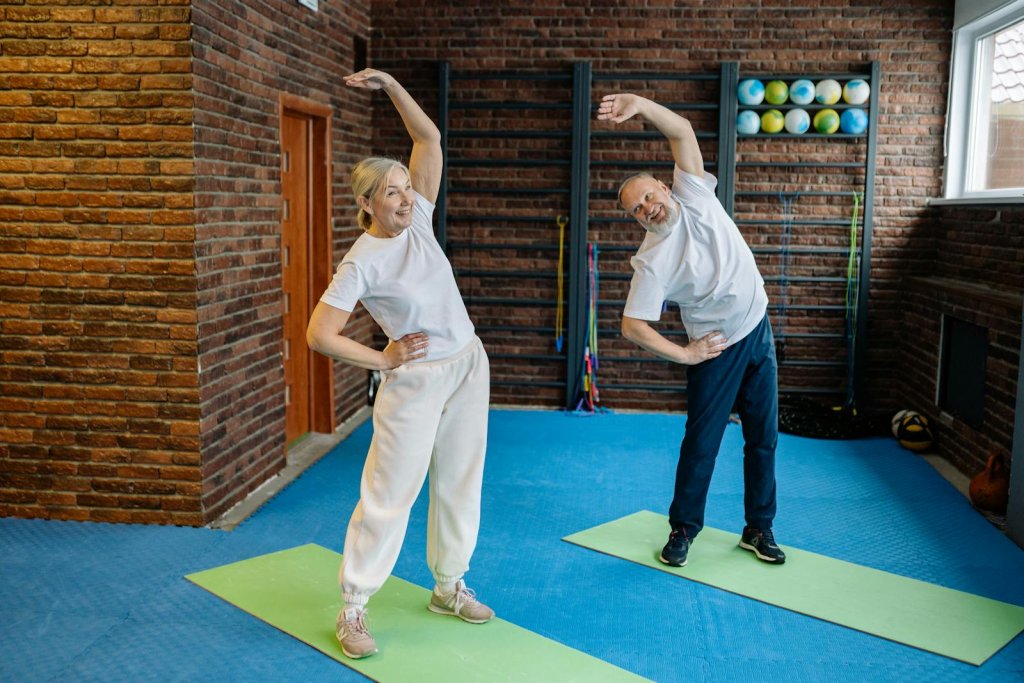
Health organizations such as the CDC, NHS, and the National Institute on Aging recommend regular movement that includes flexibility, balance, and strength as part of healthy aging. Morning stretching is a simple, low-impact way to support those goals safely at home.
Below are 10 senior-friendly morning stretches that can be done slowly, with a chair or wall nearby for support if needed.
What Are Morning Stretches for Seniors?
Morning stretches for seniors are gentle, controlled movements that help the body ease from rest into daily activity. After sleep, muscles and joints often feel stiff due to reduced circulation and limited movement. Light stretching in the morning helps reintroduce movement gradually and comfortably.
These stretches are designed to support daily function—not athletic performance or extreme flexibility. The focus is on safe, pain-free movement that prepares the body for everyday tasks.
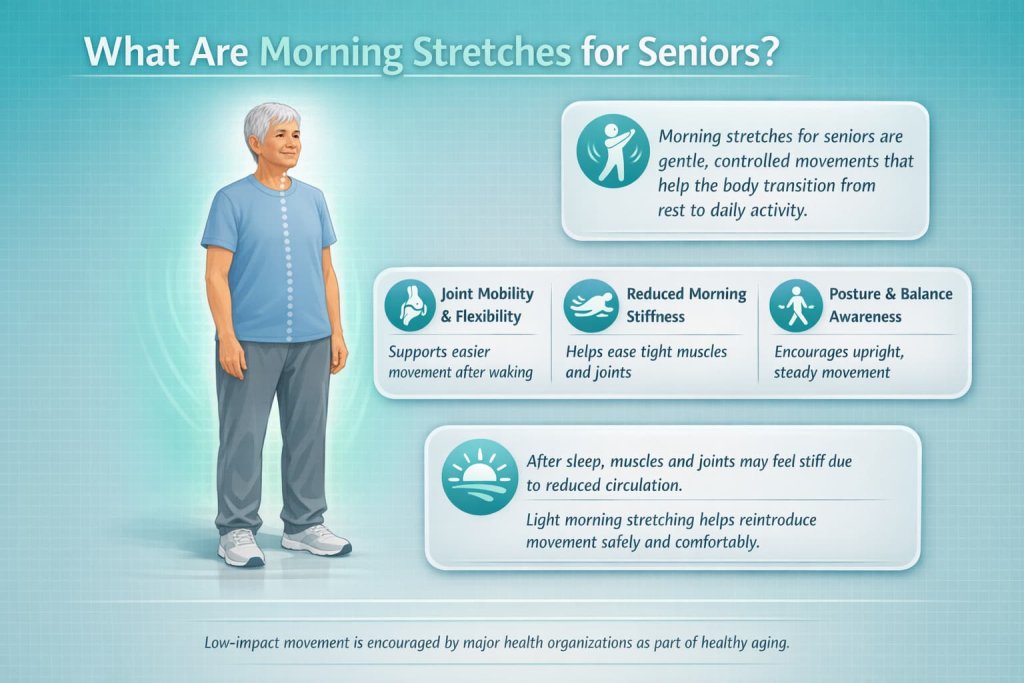
Morning stretches for seniors typically focus on:
- Improving joint mobility and flexibility
- Reducing morning stiffness
- Supporting posture and balance awareness
- Making walking, standing, and reaching feel easier
Health organizations such as the CDC, NHS, and the National Institute on Aging encourage regular, low-impact movement as part of healthy aging, especially when exercises are performed slowly and within a comfortable range.
10 Best Morning Stretches for Seniors
These 10 morning stretches for seniors are gentle, safe movements designed to reduce stiffness and wake up the body after sleep. Practicing them regularly may help support mobility, balance, and a more comfortable start to the day.
1. Neck Side Stretch
Why it works
Neck stiffness is common in the morning due to reduced movement during sleep and prolonged sitting habits. This gentle side stretch helps release tension along the sides of the neck and supports easier head movement for daily activities like driving, reading, or checking surroundings.
Muscles worked
Upper trapezius, levator scapulae, neck stabilizer muscles
How to do it
- Sit or stand tall with your spine upright and shoulders relaxed
- Slowly tilt your head toward your right shoulder
- Keep both shoulders level and down
- Hold for a comfortable moment
- Return to center and repeat on the left side
Trainer Tip
Move only within a pain-free range. The stretch should feel mild and relaxing, not intense.
2. Shoulder Rolls
Why it works
Shoulder rolls gently increase blood flow to the upper body and help reduce stiffness caused by sleeping positions or poor posture. This movement prepares the shoulders for reaching, lifting, and everyday arm use.
Muscles worked
Deltoids, upper trapezius, shoulder stabilizers
How to do it
- Sit or stand upright with arms relaxed by your sides
- Lift both shoulders toward your ears
- Roll them back and down in a smooth, circular motion
- Continue for several repetitions
- Reverse the direction
Trainer Tip
Imagine slow circles rather than large movements. Smooth control is more beneficial than speed.
3. Chest Opener Stretch
Why it works
Many seniors develop rounded shoulders from sitting and daily activities. This stretch gently opens the chest, supports better posture, and helps the upper back feel more relaxed and upright.
Muscles worked
Pectoral muscles, anterior deltoids
How to do it
- Sit or stand tall with your chest lifted
- Gently clasp your hands behind your back
- Draw your shoulders slightly backward
- Open the chest without forcing the arms upward
- Hold briefly, then relax
Trainer Tip
Focus on posture rather than stretch depth. Even a small opening can be effective.
4. Standing Side Stretch
Why it works
Side bending helps maintain spinal flexibility and gently activates the muscles that support balance and trunk stability. This can make bending and reaching movements feel easier throughout the day.
Muscles worked
Obliques, quadratus lumborum, side trunk muscles
How to do it
- Stand with feet hip-width apart
- Raise one arm overhead
- Gently lean your torso to the opposite side
- Return to center
- Switch sides
Trainer Tip
Keep your hips facing forward. Avoid twisting while bending sideways.
5. Seated Spinal Twist
Why it works
Gentle spinal rotation supports comfortable turning movements, such as looking behind you or reaching across your body. It also helps reduce morning stiffness in the back.
Muscles worked
Spinal rotators, erector spinae
How to do it
- Sit tall on a sturdy chair
- Place one hand on the back of the chair
- Slowly rotate your torso toward that side
- Keep hips facing forward
- Return to center and switch sides
Trainer Tip
Move with your breath and avoid forcing the twist deeper.
6. Cat–Cow Stretch (Seated or Standing)
Why it works
This flowing movement gently mobilizes the spine through flexion and extension, helping reduce stiffness and improve awareness of spinal posture.
Muscles worked
Spinal extensors, abdominal muscles, back stabilizers
How to do it
- Sit or stand with hands resting on thighs
- Inhale and gently arch your back, lifting the chest
- Exhale and slowly round your spine
- Continue moving smoothly between positions
Trainer Tip
Let your breath guide the motion. The goal is mobility, not maximum range.
7. Seated Hamstring Stretch
Why it works
Tight hamstrings can affect walking, standing up, and bending. This seated stretch gently lengthens the muscles without placing strain on the lower back.
Muscles worked
Hamstrings
How to do it
- Sit near the edge of a chair
- Extend one leg forward with heel on the floor
- Keep your back straight
- Lean forward slightly from the hips
- Switch legs after holding
Trainer Tip
If you feel the stretch in your back, sit taller and reduce the forward lean.
8. Ankle Circles
Why it works
Ankle mobility is essential for balance and safe walking. Circling the ankles helps lubricate the joint and activate stabilizing muscles.
Muscles worked
Ankle stabilizers, tibialis anterior, calf muscles
How to do it
- Sit comfortably with feet flat on the floor
- Lift one foot slightly
- Slowly rotate the ankle in circles
- Change direction
- Switch to the other foot
Trainer Tip
Make the circles slow and controlled, especially if stiffness is present.
9. Calf Stretch (Standing or Seated)
Why it works
Flexible calves support circulation, balance, and smoother walking. Morning stretching can help reduce lower-leg tightness after inactivity.
Muscles worked
Gastrocnemius, soleus
How to do it
- Stand while holding a chair or wall
- Step one foot slightly back
- Keep the heel gently pressed toward the floor
- Hold briefly
- Switch legs
Trainer Tip
If standing feels unstable, perform this stretch seated with the leg extended.
10. Gentle Marching in Place
Why it works
Marching gently raises circulation, activates major lower-body muscles, and helps transition from stretching into daily movement.
Muscles worked
Hip flexors, quadriceps, glutes
How to do it
- Stand tall while holding a chair or counter
- Lift one knee slightly
- Lower with control
- Alternate sides
- Maintain an upright posture
Trainer Tip
Focus on steady rhythm and balance rather than lifting the knees high.
How to Prepare Your Body Before Morning Stretches
Preparing your body before stretching is an important safety step, especially for seniors. Muscles and joints respond better to stretching when they are slightly warmed up, reducing the risk of strain or discomfort.
Before starting your stretches:
- Begin with 1–2 minutes of gentle movement, such as slow marching in place or arm swings
- Focus on steady, relaxed breathing
- Perform stretches in a well-lit area with enough space to move safely
- Keep a sturdy chair, wall, or countertop nearby for balance support
Warming up should feel easy and comfortable. If your body feels stiff or unsteady, take extra time before moving into deeper stretches.
How Often Should Seniors Do Morning Stretches?
Most seniors can safely perform light morning stretches daily if movements feel comfortable. Holding each stretch for about 10–30 seconds and repeating 2–3 times per side is commonly recommended by exercise and medical organizations. Consistency matters more than intensity.
Common Mistakes Seniors Should Avoid
- Stretching cold muscles without a warm-up
- Holding the breath during stretches
- Pushing into pain or discomfort
- Moving too fast or bouncing
- Skipping balance support when needed
When to Modify or Stop Morning Stretches
While morning stretches are generally safe for most seniors, it is important to listen to your body and know when to adjust or stop. Stretching should never cause sharp pain, dizziness, or discomfort.
You should modify or stop a stretch if you experience:
- Sudden or sharp pain in the joints or muscles
- Dizziness, lightheadedness, or shortness of breath
- Loss of balance or unsteadiness
- Numbness, tingling, or unusual sensations
If you are recovering from surgery, managing a chronic condition, or experiencing a flare-up of joint pain, use smaller movements or skip certain stretches as needed. A healthcare professional can help guide you on appropriate activity levels if you are unsure.
Benefits of Morning Stretches for Seniors
Regular morning stretches may help support:
- Reduced joint and muscle stiffness after sleep
- Improved circulation and range of motion
- Better posture and balance awareness
- Easier walking, bending, and reaching during the day
- A calmer, more confident start to daily movement
These stretches are not meant to force flexibility or cause pain. Gentle, controlled movement is the priority.
Safety Guidelines Before You Start
- Warm up with 1–2 minutes of easy movement (marching in place, arm swings).
- Move slowly and avoid bouncing.
- Stretch only to mild tension, never pain.
- Breathe normally throughout each movement.
- Use a sturdy chair, wall, or countertop for balance if needed.
- Stop if you feel dizziness, sharp pain, or discomfort.
Frequently Asked Questions
Are morning stretches safe for seniors?
Yes, when done slowly and within a comfortable range of motion, morning stretches are generally safe for most seniors.
How long should a morning stretch routine take?
A simple routine can take 5–15 minutes, depending on how many stretches you include.
Should seniors stretch every morning?
Many older adults benefit from gentle daily stretching, but rest days are fine if the body feels tired or sore.
Can morning stretches help with balance?
Stretching supports mobility and body awareness, which may help with balance when combined with strength and balance exercises.
What if I have arthritis or joint pain?
Use smaller ranges of motion and avoid painful positions. A healthcare professional can help tailor a routine if needed.
Is it better to stretch sitting or standing?
Both are effective. Sitting or holding support is often safer for balance concerns.
Conclusion
Morning stretches for seniors are a simple, effective way to reduce stiffness, support mobility, and feel more confident moving through the day. By keeping movements gentle, controlled, and consistent, you can create a daily routine that supports comfort and independence over time. Start slowly, listen to your body, and make morning stretching a regular habit.