
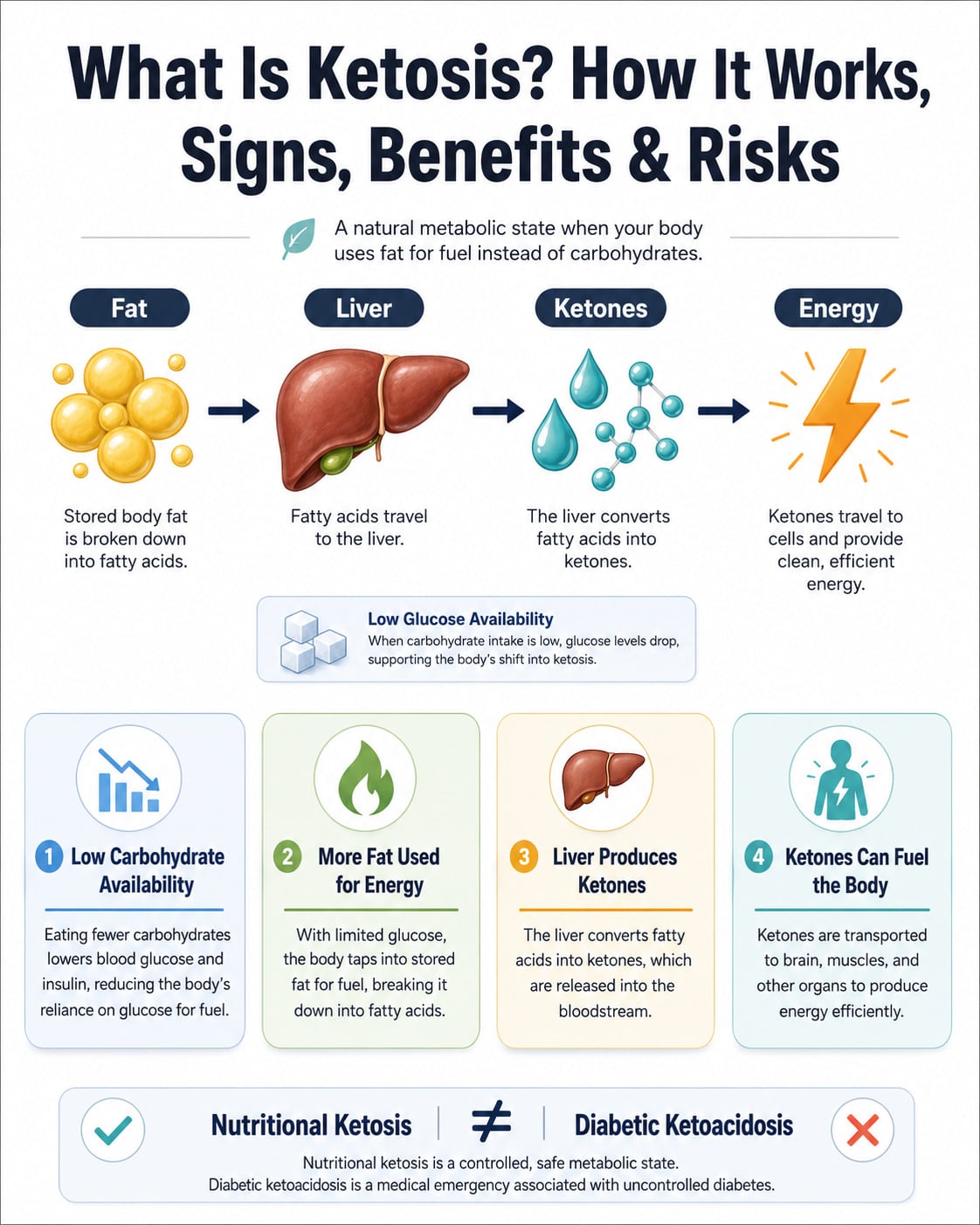
Ketosis is a metabolic state in which your liver produces ketones from fat because relatively little glucose is available for energy. It can occur during a very-low-carbohydrate diet, fasting, prolonged exercise, or certain medical conditions.
Nutritional ketosis is not automatically dangerous, but it is not appropriate for everyone. It is also very different from diabetic ketoacidosis, or DKA, which makes the blood abnormally acidic and requires immediate medical care. Understanding the difference is especially important if you have diabetes, take glucose-lowering medication, are pregnant, or have liver, kidney, pancreatic, or metabolic health concerns.
What Is Ketosis?
Ketosis occurs when your body increases its use of fat and produces molecules called ketone bodies. Your liver makes three primary ketones:
- Beta-hydroxybutyrate, or BHB
- Acetoacetate
- Acetone
Beta-hydroxybutyrate and acetoacetate can provide energy to the brain, heart, skeletal muscles, kidneys, and other tissues when carbohydrate availability is low. Acetone is mostly removed through the breath, which can create a fruity or nail-polish-remover-like odor.
According to the National Library of Medicine’s overview of ketogenesis, ketone production is a regulated metabolic response that becomes more active during fasting, starvation, carbohydrate restriction, or uncontrolled diabetes.
Ketosis itself is not a diet. The ketogenic diet is simply one way to encourage the body to enter nutritional ketosis.
How Does Ketosis Work?
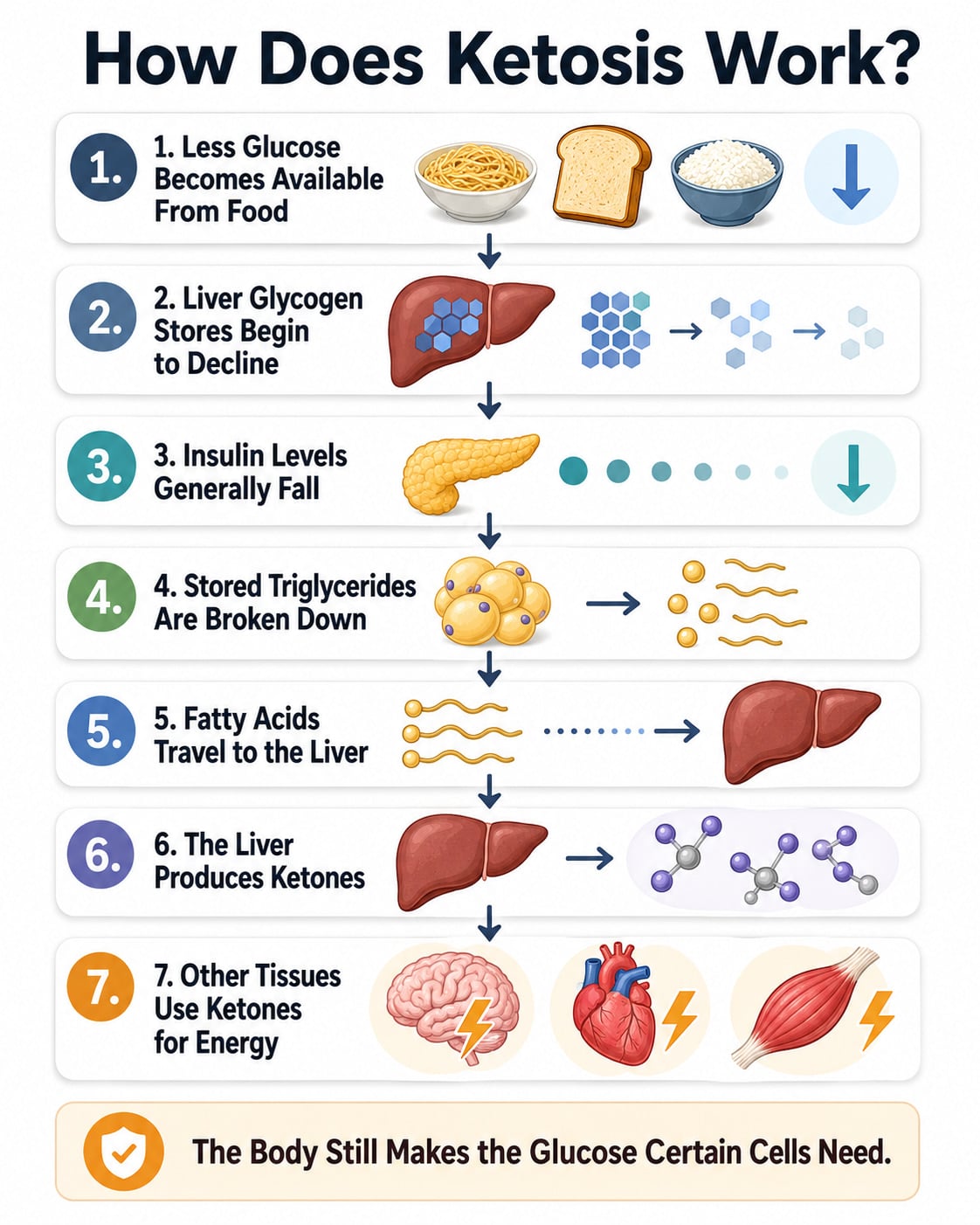
Carbohydrates are normally broken down into glucose. Some glucose is used immediately, while some is stored as glycogen in the liver and muscles.
When carbohydrate availability drops substantially, the following process occurs:
- Less glucose becomes available from food.
- Liver glycogen stores begin to decline.
- Insulin levels generally fall.
- Stored triglycerides are broken into fatty acids and glycerol.
- Fatty acids travel to the liver.
- The liver converts some fatty acids into ketones.
- Other tissues begin using those ketones as an alternative energy source.
Your body does not completely stop using glucose during ketosis. It continues making the glucose required by certain cells through a process called gluconeogenesis, using substances such as glycerol, lactate, and some amino acids.
A typical very-low-carbohydrate ketogenic diet limits carbohydrate intake to approximately 20–50 grams per day, although the amount required to raise ketone production differs between individuals. Protein intake, calorie intake, activity level, metabolism, medications, and previous eating patterns can all affect the response.
What Can Cause Ketosis?
Ketosis may develop in several situations:
| Cause | Why ketones increase | Important consideration |
|---|---|---|
| Very-low-carbohydrate diet | Less carbohydrate is available for glucose production | May produce regulated nutritional ketosis |
| Fasting | Stored glycogen declines as time without food increases | Prolonged fasting may cause dehydration or nutrient deficiencies |
| Prolonged exercise | Muscles use glycogen, increasing reliance on fat | Ketone levels depend on exercise duration, intensity, and food intake |
| Severe calorie restriction or starvation | The body relies more heavily on stored fat | Can progress to dangerous metabolic and nutritional problems |
| Persistent vomiting or diarrhea | Food and carbohydrate intake fall while dehydration increases | Medical assessment may be necessary |
| Insufficient insulin | Glucose cannot enter cells effectively and ketones rise rapidly | Can cause diabetic ketoacidosis |
| Heavy alcohol use with little food | Alcohol metabolism and inadequate food intake disrupt normal energy use | Can cause alcoholic ketoacidosis |
The presence of ketones does not, by itself, show whether the cause is harmless or dangerous. Symptoms, blood glucose, hydration status, medication use, and blood acidity also matter.
How Long Does It Take to Enter Ketosis?
Some people begin producing noticeably more ketones within several days of substantially reducing carbohydrate intake. Others take longer or may not maintain measurable nutritional ketosis consistently.
Factors that can affect the timing include:
- Daily carbohydrate intake
- Starting glycogen levels
- Exercise volume
- Overall calorie intake
- Protein intake
- Sleep and stress
- Individual insulin sensitivity
- Diabetes medications or other prescription drugs
Eating fewer than 50 grams of carbohydrate does not guarantee a particular ketone level. It is also unnecessary to chase the highest possible reading. Higher ketones do not automatically mean greater fat loss or better health.
Signs You May Be in Ketosis
A measurable increase in ketones is more reliable than physical symptoms. The signs commonly associated with ketosis are nonspecific and may have other causes.
Possible signs include:
Acetone-Like Breath
Acetone leaves the body through the lungs and can give the breath a fruity, sweet, or solvent-like smell.
However, fruity breath can also occur during diabetic ketoacidosis. It should not automatically be considered a harmless sign, especially when accompanied by vomiting, excessive thirst, rapid breathing, abdominal pain, or confusion.
Reduced Appetite
Some people report less hunger while following a ketogenic diet. This may relate to greater protein and fat intake, changes in food choices, ketones, or appetite-regulating hormones.
Appetite reduction is not universal, and the absence of reduced hunger does not mean you are not producing ketones.
Early Water-Weight Loss
Stored glycogen holds water. As glycogen levels decline during carbohydrate restriction, some associated water is released.
This can cause rapid weight loss during the first several days. Much of that initial change may be water rather than body fat.
Headache, Fatigue, or Dizziness
Some people develop temporary headache, weakness, fatigue, dizziness, or difficulty concentrating after sharply reducing carbohydrates.
These symptoms are sometimes called “keto flu,” although that is an informal term rather than a medical diagnosis. Changes in fluid balance, electrolyte intake, food intake, sleep, or medication needs may contribute.
Digestive Changes
Constipation can occur when a ketogenic eating pattern provides too little fiber or fluid. Other people experience nausea, diarrhea, abdominal discomfort, or reflux.
Persistent digestive symptoms should not simply be accepted as a necessary part of ketosis.
Changes in Exercise Performance
High-intensity exercise may initially feel more difficult because it relies heavily on muscle glycogen. Responses to lower-intensity endurance activity vary.
Fatigue, dizziness, chest pain, fainting, or unusual shortness of breath during exercise requires more attention than an ordinary adjustment in performance.
How to Test for Ketosis
Ketones can be measured in blood, urine, or breath. Each method provides different information.
| Testing method | What it measures | Advantages | Limitations |
|---|---|---|---|
| Blood ketone meter | Beta-hydroxybutyrate | Provides a current numerical result | Requires a finger prick and test strips |
| Urine ketone strip | Primarily acetoacetate | Inexpensive and easy to find | Affected by hydration and may lag behind blood changes |
| Breath ketone device | Acetone | Noninvasive and reusable | Accuracy and interpretation vary by device |
The MedlinePlus guidance on blood ketone testing explains that home blood meters and urine strips may be useful when a healthcare professional recommends ketone monitoring.
What Ketone Level Indicates Nutritional Ketosis?
In nutrition research and ketogenic-diet programs, a blood beta-hydroxybutyrate level of 0.5 mmol/L or higher is commonly used to indicate nutritional ketosis. A range of approximately 0.5–3.0 mmol/L is often discussed in connection with diet-induced ketosis.
That range should not be used as a universal safety rule. People with diabetes may receive different instructions based on their blood glucose, symptoms, medication regimen, and individualized sick-day plan.
A single home reading cannot diagnose or rule out diabetic ketoacidosis. DKA involves a combination of elevated ketones and metabolic acidosis, usually in the setting of diabetes or significant hyperglycemia. The 2024 international consensus criteria include beta-hydroxybutyrate of at least 3.0 mmol/L and blood pH below 7.3 or bicarbonate below 18 mmol/L, along with diabetes or glucose of at least 200 mg/dL. DKA can occasionally occur with lower glucose, particularly in people taking SGLT2 inhibitors.
Potential Benefits of Ketosis
The possible benefits depend on why ketosis is being used, the quality of the diet, the person’s medical condition, and whether the plan can be followed safely.
May Reduce Seizure Frequency in Drug-Resistant Epilepsy
The strongest established clinical role for a ketogenic diet is as a supervised therapeutic option for certain people with drug-resistant epilepsy.
A Cochrane review of ketogenic diets for drug-resistant epilepsy included 13 studies with 932 participants. Children assigned to ketogenic dietary therapy may have been more likely to become seizure-free or experience a substantial reduction in seizure frequency than children receiving usual care. However, the certainty of the evidence was low to very low, and poor tolerance contributed to discontinuation.
Medical ketogenic diets for epilepsy are carefully calculated and monitored. They should not be confused with an unsupervised weight-loss diet.
May Support Short-Term Weight Loss
A ketogenic diet may help some people lose weight by:
- Restricting many calorie-dense processed foods
- Reducing appetite in some individuals
- Increasing protein intake
- Simplifying food choices
- Creating an overall calorie deficit
Ketosis does not guarantee body-fat loss. The body can burn dietary fat as well as stored body fat. A person can remain in ketosis while maintaining or gaining weight if calorie intake consistently exceeds energy needs.
Early losses also include water released as glycogen declines. Longer-term results depend heavily on total food intake, diet quality, activity, adherence, sleep, medications, and individual physiology.
May Improve Some Blood Sugar Measures
Carbohydrate restriction can reduce the amount of glucose entering the bloodstream after meals. Some studies in adults with type 2 diabetes have reported improvements in HbA1c, fasting glucose, body weight, or medication requirements.
However, a ketogenic diet is not clearly superior to every other healthy eating pattern. In the randomized Keto-Med trial involving adults with prediabetes or type 2 diabetes, both ketogenic and Mediterranean-plus eating patterns improved HbA1c and produced weight loss. The ketogenic phase lowered triglycerides more but also increased LDL cholesterol, provided less fiber and certain nutrients, and was considered less sustainable by participants.
Anyone using insulin or a sulfonylurea may need prompt medication adjustments when carbohydrate intake falls. Making those changes without professional guidance can cause hypoglycemia.
May Lower Triglycerides
Ketogenic diets often lower triglyceride levels, particularly when they reduce refined carbohydrates, added sugars, excess calories, and body weight.
That does not mean every cholesterol marker improves.
A 2026 systematic review in BMC Cardiovascular Disorders analyzed 53 randomized controlled trials. Compared with control diets, ketogenic diets reduced triglycerides by an average of about 22 mg/dL and increased HDL cholesterol by about 3.5 mg/dL. They also increased LDL cholesterol by about 8.2 mg/dL and total cholesterol by about 8.1 mg/dL. Responses varied substantially, and the long-term effects on heart attacks, strokes, and cardiovascular mortality remain uncertain.
Other Proposed Benefits Remain Uncertain
Ketogenic diets and ketones are being studied in connection with:
- Alzheimer’s disease
- Parkinson’s disease
- Cancer
- Polycystic ovary syndrome
- Mental health conditions
- Metabolic dysfunction-associated steatotic liver disease
- Athletic performance
These uses remain investigational or condition-specific. Ketosis should not be promoted as a proven solution for cancer, dementia, depression, or other serious conditions.
Ketosis Risks and Side Effects
Short-Term Side Effects
Possible early effects include:
- Headache
- Fatigue
- Dizziness
- Nausea
- Constipation or diarrhea
- Bad breath
- Increased urination
- Dehydration
- Electrolyte changes
- Temporary reduction in exercise performance
- Low blood sugar in people using diabetes medication
Mild symptoms may improve as food and fluid intake stabilize. Severe or persistent symptoms require a different response than simply waiting for the body to “adapt.”
Longer-Term Concerns
A poorly planned or prolonged ketogenic diet may contribute to:
- Inadequate fiber intake
- Vitamin or mineral deficiencies
- Higher LDL cholesterol
- Kidney stones
- Reduced bone mineral health
- Unwanted loss of lean mass
- Growth concerns in children receiving long-term therapeutic diets
- Constipation and other ongoing digestive problems
- Social restriction and difficulty maintaining the diet
- Worsening of restrictive or disordered eating behaviors
Many ketogenic-diet trials last less than one year, so evidence about long-term safety, sustainability, and cardiovascular outcomes remains limited.
Nutritional Ketosis vs. Diabetic Ketoacidosis
Nutritional ketosis and diabetic ketoacidosis both involve ketones, but they are not the same metabolic condition.
| Feature | Nutritional ketosis | Diabetic ketoacidosis |
|---|---|---|
| Common cause | Very-low-carbohydrate diet or fasting | Severe insulin deficiency, illness, missed insulin, or certain medications |
| Insulin activity | Usually sufficient to regulate ketone production | Insufficient to control ketone production |
| Ketone level | Elevated but generally regulated | Often substantially elevated |
| Blood glucose | May be normal, lower, or mildly elevated | Often high, but may be near normal in euglycemic DKA |
| Blood acidity | Normal blood pH | Blood becomes abnormally acidic |
| Symptoms | May cause mild appetite, breath, energy, or digestive changes | Often causes dehydration, vomiting, abdominal pain, rapid breathing, and confusion |
| Urgency | Usually not an emergency in an otherwise healthy adult | Medical emergency |
Ketone level alone does not establish the difference. Blood acidity, insulin status, blood glucose, symptoms, medications, and the clinical situation must also be considered.
Warning Signs of Ketoacidosis
Seek immediate medical care for possible ketoacidosis if you experience:
- Persistent nausea or vomiting
- Severe abdominal pain
- Deep, rapid, or difficult breathing
- Severe thirst or frequent urination
- Confusion or unusual sleepiness
- Marked weakness
- Inability to keep fluids down
- Severe dehydration
- Fruity-smelling breath with other concerning symptoms
- High or rising ketone readings
- Ketones during illness or after missed insulin
A person with symptoms suggestive of DKA should seek urgent help even if they have never previously been diagnosed with diabetes.
Who Should Avoid a Ketogenic Diet or Seek Medical Guidance First?
A ketogenic diet requires professional guidance if you:
- Have type 1 diabetes
- Take insulin or a sulfonylurea
- Take an SGLT2 inhibitor
- Are pregnant or breastfeeding
- Are a child or adolescent
- Have pancreatitis
- Have liver failure
- Have kidney disease or a history of kidney stones
- Have a fat-metabolism disorder
- Have a history of an eating disorder
- Are being medically managed for epilepsy or another neurological condition
- Have experienced ketoacidosis in the past
The American Diabetes Association’s 2026 Standards of Care state that very-low-carbohydrate eating plans should be avoided by people taking SGLT2 inhibitors because of the risk of euglycemic DKA.
A ketogenic diet is not a substitute for insulin. Never stop or reduce prescribed insulin solely to increase ketones.
How to Reduce Risk If You Are Considering a Ketogenic Diet
Before making a major carbohydrate reduction:
- Review your medications with a healthcare professional. This is essential for insulin, sulfonylureas, SGLT2 inhibitors, blood pressure medicines, and diuretics.
- Discuss appropriate baseline testing. Depending on your health, this may include glucose, HbA1c, kidney function, liver enzymes, electrolytes, and a lipid panel.
- Prioritize unsaturated fats. Use foods such as olive oil, nuts, seeds, avocado, and fish more often than butter, processed meats, or large amounts of coconut oil.
- Include fiber-containing foods. Nonstarchy vegetables, seeds, nuts, and other suitable foods can help support digestive health.
- Avoid extreme calorie restriction. Very little food combined with carbohydrate restriction increases the risk of dehydration, weakness, and nutrient inadequacy.
- Pay attention to warning symptoms. Persistent vomiting, rapid breathing, abdominal pain, confusion, or severe weakness is not ordinary “keto flu.”
- Reassess whether the plan is helping. Ketone production is not, by itself, a meaningful health outcome. Consider blood sugar, cholesterol, nutrition quality, energy, symptoms, and sustainability.
Frequently Asked Questions
Is Ketosis Safe?
Nutritional ketosis may be tolerated by many otherwise healthy adults, but safety depends on the cause, diet quality, medications, and medical history. It is not automatically safe for people with diabetes, pregnancy, pancreatitis, liver failure, kidney concerns, eating disorders, or fat-metabolism disorders.
How Many Carbs Do You Need to Eat to Reach Ketosis?
Many ketogenic eating patterns limit carbohydrate intake to approximately 20–50 grams per day. The amount needed varies, and eating within that range does not guarantee a particular ketone level.
Can You Be in Ketosis Without Losing Weight?
Yes. Ketosis shows that your body is producing and using more ketones; it does not prove that you are losing stored body fat. Weight loss still depends largely on sustained energy balance and adherence.
Does Fruity Breath Mean You Are in Ketosis?
It may reflect acetone produced during ketosis, but it is not a reliable confirmation. Fruity breath accompanied by vomiting, severe thirst, rapid breathing, abdominal pain, or confusion may indicate ketoacidosis and requires urgent medical attention.
Can Fasting Cause Ketosis?
Yes. As the period without food increases and glycogen availability declines, the liver may increase ketone production. Prolonged or extreme fasting can also cause dehydration, nutrient deficiencies, muscle loss, or starvation ketoacidosis.
Is Ketosis Good for Type 2 Diabetes?
A carefully supervised low-carbohydrate or ketogenic diet may improve blood glucose, triglycerides, or body weight for some adults with type 2 diabetes. It can also create medication-related risks. Insulin, sulfonylureas, and SGLT2 inhibitors require particular attention.
Do You Need to Test Your Ketones on a Keto Diet?
Most otherwise healthy people following a ketogenic diet for personal reasons do not need frequent ketone testing. Testing may be medically important for people with diabetes, but they should follow an individualized plan rather than general online target ranges.
Conclusion
Ketosis is a normal metabolic adaptation in which the liver produces ketones from fat when glucose availability is limited. It may support specific goals, particularly medically supervised ketogenic dietary therapy for drug-resistant epilepsy and short-term weight or blood sugar management in selected adults.
However, ketosis is not proof of fat loss, and a ketogenic diet is not automatically healthier than other eating patterns. Side effects, nutrient gaps, medication interactions, LDL cholesterol increases, and ketoacidosis risk all deserve attention. Before making a major carbohydrate reduction, consider your medical history, medications, diet quality, and whether the plan is realistic enough to maintain safely.
This content is for informational purposes only and not medical advice.
References
- National Library of Medicine: Biochemistry, Ketogenesis
- National Library of Medicine: The Ketogenic Diet—Clinical Applications and Safety
- MedlinePlus: Ketones in Blood
- American Diabetes Association: Standards of Care in Diabetes—2026
- International Consensus Report: Hyperglycemic Crises in Adults With Diabetes
- Cochrane: Ketogenic Diets for Drug-Resistant Epilepsy
- PubMed: The Keto-Med Randomized Crossover Trial
- BMC Cardiovascular Disorders: Ketogenic Diet–Induced Changes in Adult Lipid Metabolism