
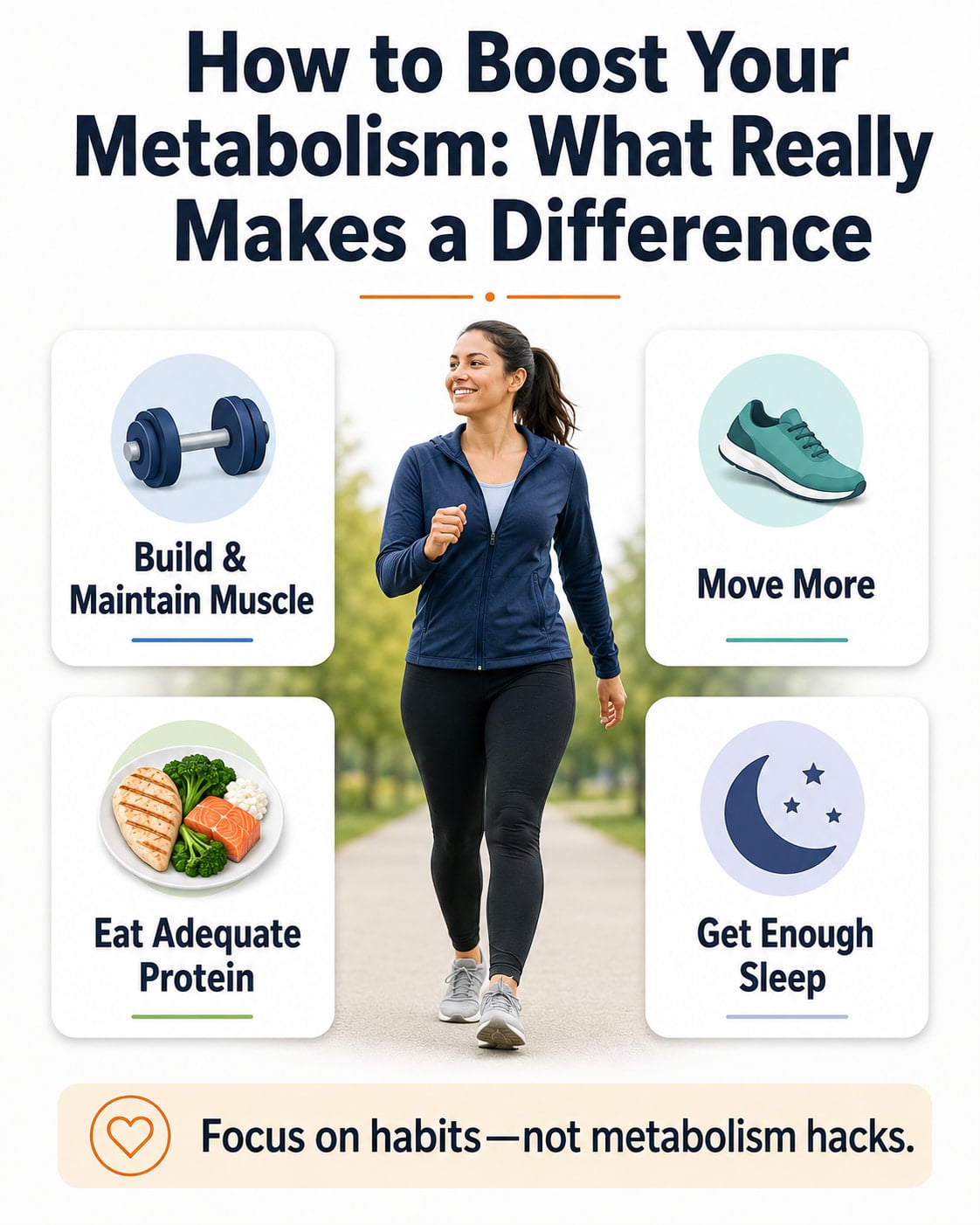
The most effective ways to boost your metabolism are to build or preserve muscle, exercise regularly, move more throughout the day, eat adequate protein, sleep well, and avoid extreme dieting. Coffee, spicy foods, and green tea may produce small, temporary effects, but no food, drink, or supplement can dramatically speed up your metabolism.
Your metabolism is influenced by your body size, muscle mass, activity level, age, genetics, health, and food intake. You cannot control every factor, but you can improve the habits that affect how much energy your body uses and how well you maintain lean muscle.
What Does Metabolism Mean?
Metabolism includes all the chemical processes your body uses to stay alive and function. These processes allow you to breathe, circulate blood, repair tissues, digest food, regulate body temperature, and move.
When people talk about a “fast” or “slow” metabolism, they are usually referring to how many calories their body uses each day. Total daily energy expenditure has three main components:
| Component | What it means |
|---|---|
| Resting energy expenditure | Energy used for essential functions such as breathing, circulation, brain activity, and temperature regulation |
| Thermic effect of food | Energy used to digest, absorb, transport, and store nutrients |
| Physical activity expenditure | Energy used during formal exercise and ordinary movement, such as walking, cleaning, standing, and taking stairs |
Resting energy expenditure is usually the largest component. However, physical activity is the component you can change most directly.
According to the National Academies’ Dietary Reference Intakes for Energy, the thermic effect of food accounts for approximately 10% of daily energy expenditure, while physical activity is the most variable component.
Can You Actually Boost Your Metabolism?
You can influence your metabolism, but the change is usually modest. Claims that a particular drink, food, workout, or supplement can turn your body into a “fat-burning machine” are misleading.
The most practical goals are to:
- Preserve or increase lean muscle
- Increase energy use through exercise
- Reduce long periods of sitting
- Support exercise recovery and appetite regulation
- Avoid unnecessary muscle loss during weight loss
Strength training may produce a small increase in resting metabolic rate. A 2020 systematic review and meta-analysis found that resistance exercise increased resting metabolic rate by an average of about 96 calories per day compared with control conditions. However, results differed among studies, and the researchers noted inconsistent methods and a high risk of bias. The effect should therefore be viewed as a possible average—not a guaranteed result.
More importantly, exercise directly uses energy and helps preserve muscle, physical function, and fitness.
How to Boost Your Metabolism With Habits That Work
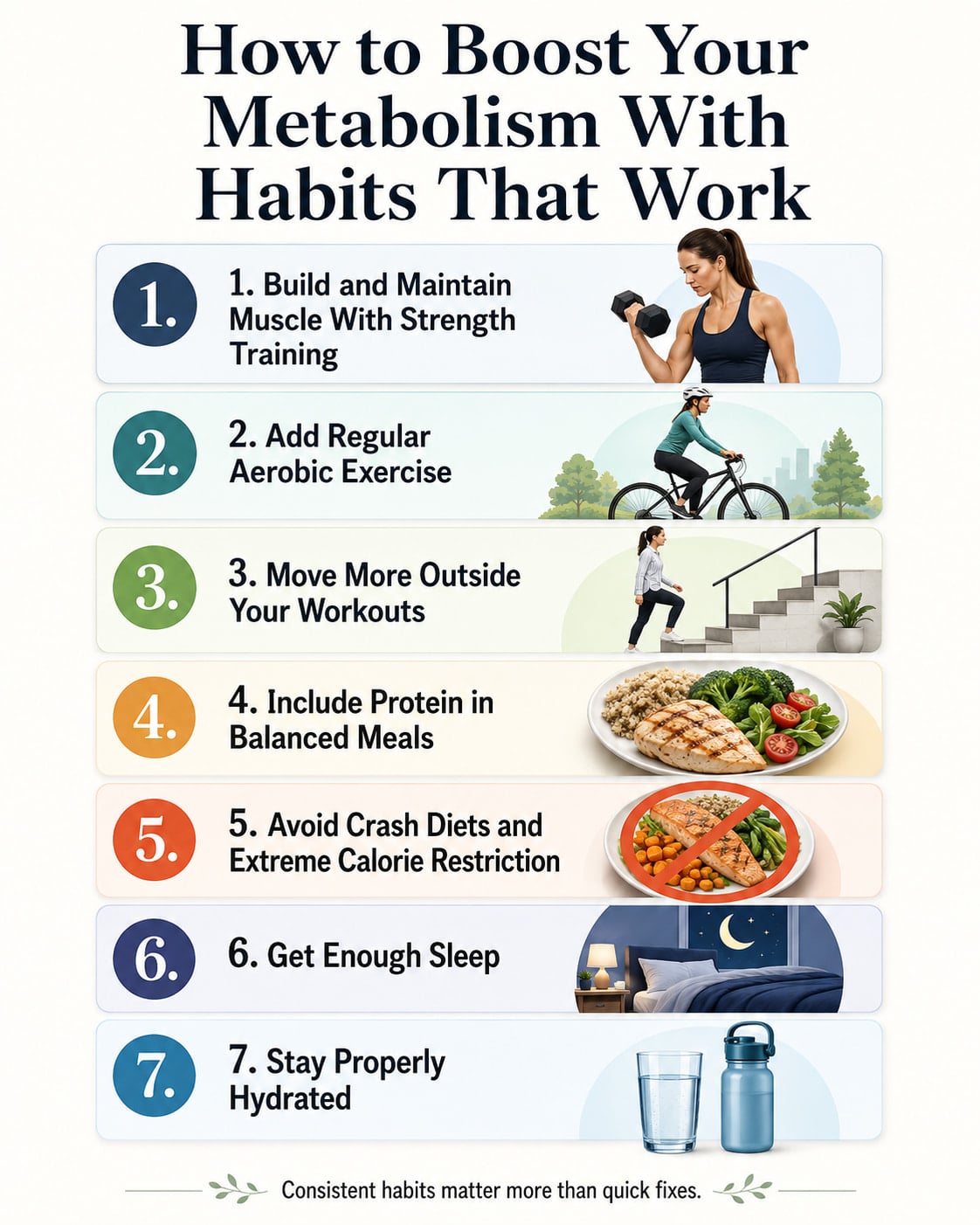
1. Build and Maintain Muscle With Strength Training
Muscle is metabolically active tissue. Although gaining a few pounds of muscle will not make you burn hundreds of additional calories at rest, maintaining lean mass can support resting energy expenditure—especially as you age or lose weight.
Aim to train all major muscle groups at least twice per week. You can use:
- Free weights
- Resistance bands
- Weight machines
- Bodyweight exercises
- Household items when appropriate
A simple full-body workout might include:
- A squat or sit-to-stand
- A hip hinge or Romanian deadlift
- A push-up or chest press
- A row or pulldown
- A step-up or supported lunge
- A carry or core-stability exercise
Beginners can start with one or two controlled sets per exercise. Choose a resistance that feels challenging while allowing you to maintain proper form. Increase the resistance, repetitions, or sets gradually as you become stronger.
The current Physical Activity Guidelines for Americans recommend muscle-strengthening activities involving all major muscle groups on at least two days each week.
2. Add Regular Aerobic Exercise
Aerobic exercise increases energy expenditure while you are doing it. It also supports cardiovascular fitness, endurance, mobility, and metabolic health.
Useful options include:
- Brisk walking
- Cycling
- Swimming
- Jogging
- Dancing
- Rowing
- Hiking
- Low-impact cardio classes
Adults should generally aim for 150–300 minutes of moderate-intensity aerobic activity per week or 75–150 minutes of vigorous activity. An equivalent combination also counts.
At a moderate intensity, your breathing should be faster, but you should still be able to speak in short sentences. Beginners do not need to complete long workouts immediately. Several shorter sessions can contribute to the weekly total.
Aerobic exercise may not permanently raise your resting metabolism by a large amount, but it increases daily energy use and can make weight management easier when combined with suitable eating habits.
3. Move More Outside Your Workouts
Formal exercise is only one part of daily movement. Non-exercise activity thermogenesis, or NEAT, includes energy used for activities such as standing, walking around the house, completing chores, gardening, shopping, carrying groceries, and maintaining posture.
Small movements may appear insignificant, but they accumulate across the day. Physical activity expenditure also varies widely depending on occupation, body size, movement habits, and lifestyle.
Practical ways to increase daily movement include:
- Take a short walk after a meal
- Use the stairs when appropriate
- Stand and stretch periodically during desk work
- Walk while taking phone calls
- Complete household or yard work
- Park farther from an entrance
- Make several short trips instead of carrying everything at once
- Choose active recreation on weekends
You do not need to perform every suggestion. Choose changes that fit your schedule, mobility, and environment.
4. Include Protein in Balanced Meals
The body uses energy to digest and process food. Protein has a higher thermic effect than carbohydrate or fat.
Estimated thermic effects are approximately:
- Protein: 20%–30% of its energy
- Carbohydrate: 5%–10%
- Fat: 0%–3%
For example, the body may use roughly 20–30 of every 100 calories from protein while digesting and processing it. This does not make protein “free,” and eating excessive amounts will not automatically cause fat loss.
Protein’s main value is that it supports muscle repair and maintenance. It may also make meals more satisfying.
Useful protein sources include:
- Eggs
- Fish and seafood
- Poultry
- Lean meat
- Milk, Greek yogurt, and cottage cheese
- Beans and lentils
- Tofu, tempeh, and edamame
- Nuts and seeds
Try to include a suitable protein source in each main meal. Your ideal intake depends on your age, body size, activity, overall diet, and health. People with kidney disease or another condition that affects protein needs should seek personalized guidance from a qualified healthcare professional.
5. Avoid Crash Diets and Extreme Calorie Restriction
Your body requires fewer calories after weight loss because a smaller body generally uses less energy. Energy expenditure may also fall somewhat more than expected through a process known as adaptive thermogenesis.
This response is sometimes described online as “starvation mode.” That term is misleading. A calorie deficit does not make fat loss physically impossible, and dieting does not necessarily cause permanent metabolic damage.
However, aggressive restriction can make a plan harder to sustain and may contribute to:
- Muscle loss
- Fatigue
- Strong hunger
- Reduced workout performance
- Less spontaneous daily movement
- Nutrient deficiencies
- Weight regain
A systematic review found evidence of adaptive thermogenesis after weight loss, but the amount varied considerably and often became smaller after weight stabilization.
When weight loss is the goal, use a moderate and sustainable approach. Continue strength training, consume adequate protein, and adjust your food intake gradually rather than following an unsupervised very-low-calorie diet.
6. Get Enough Sleep
Sleep is not a direct metabolism booster, but it supports the behaviors and body functions involved in weight management.
Insufficient sleep may affect:
- Hunger and appetite
- Food choices
- Exercise motivation
- Recovery from training
- Blood sugar regulation
- Daytime movement and energy
Most adults need at least seven hours of sleep per night. The amount an individual needs can vary, and sleep quality also matters.
Helpful sleep habits include maintaining consistent sleep and wake times, keeping the bedroom dark and quiet, getting daylight earlier in the day, and limiting caffeine late in the day.
Persistent snoring, gasping during sleep, severe daytime sleepiness, or ongoing insomnia should be discussed with a healthcare professional.
7. Stay Properly Hydrated
Water is necessary for circulation, digestion, temperature regulation, physical performance, and other normal body processes. Dehydration may make exercise feel harder and reduce your ability to stay active.
However, drinking cold water does not create a meaningful long-term metabolism boost. The body may use a small amount of energy to warm the water, but this effect is not large enough to serve as a weight-loss strategy.
Water may be more helpful when it replaces:
- Sugary soft drinks
- Sweetened coffee drinks
- Sweet tea
- Energy drinks
- Other high-calorie beverages
There is no single fluid target that is right for everyone. Needs vary with body size, climate, activity, pregnancy, diet, and health. People who have been advised to restrict fluid because of heart, kidney, or liver disease should follow their clinician’s recommendations.
Do Coffee, Green Tea, and Spicy Foods Boost Metabolism?
Some foods and drinks can temporarily increase energy expenditure, but the expected effect is usually small.
| Food or drink | What it may do | What it cannot do |
|---|---|---|
| Coffee or caffeine | May temporarily increase alertness, energy expenditure, and fat breakdown | Cannot produce substantial fat loss without changes to overall energy balance |
| Green tea | Caffeine and catechins may have a small effect on thermogenesis | Does not create a major or reliable increase in metabolism |
| Chili peppers | Capsaicin may cause a small, temporary increase in heat production | Cannot replace exercise or an appropriate diet |
| Cold water | Supports hydration and may use a tiny amount of energy during warming | Does not meaningfully “melt fat” |
| Protein-rich foods | Require more energy to process and support muscle maintenance | Do not cancel excess calories |
Regular caffeine users may develop tolerance, reducing its effects over time. Too much caffeine may cause anxiety, sleep disruption, a rapid heartbeat, or increased blood pressure. Improving sleep will usually be more useful than consuming extra caffeine to chase a small thermogenic effect.
Unsweetened coffee or tea can still fit into a balanced diet. Just avoid treating them as fat-loss products.
Metabolism Boosters That Do Not Make a Meaningful Difference
Eating Every Two or Three Hours
Eating causes a temporary increase in energy expenditure because food must be digested. However, dividing the same amount of food into six meals instead of three does not appear to create a meaningful independent metabolism advantage.
Choose a meal pattern that helps you manage hunger, nutrition, and your schedule.
Eating Breakfast to “Start” Your Metabolism
Breakfast can be a nutritious and useful meal, but skipping it does not automatically switch off your metabolism.
Some people feel and perform better after breakfast. Others prefer eating later. Overall food quality, calorie intake, protein intake, and consistency matter more than forcing a specific meal schedule.
Detoxes and Cleanses
Detox teas, juice cleanses, and restrictive detox diets do not remove stored body fat by cleansing your metabolism. Rapid changes on the scale are often related to water, glycogen, and digestive contents rather than a large loss of body fat.
Some detox products also contain laxatives or stimulants that may cause dehydration, diarrhea, medication interactions, or electrolyte problems.
Saunas and Sweating
Sweating cools the body. It is not evidence that a significant amount of body fat is being burned.
A lower scale weight after a sauna session usually reflects temporary fluid loss. The weight returns after fluids are replaced.
Metabolism Pills and Fat Burners
The NIH Office of Dietary Supplements reports that there is little scientific evidence that weight-loss supplements work. Some products may also interact with medications or cause harmful effects.
The FDA’s weight-loss product notifications warn that some pills, teas, supplements, and products marketed as “fat burners” may contain dangerous hidden ingredients. The page included new product notifications dated August 18, 2026, showing that this remains a current safety concern. The FDA also states that its list represents only a small fraction of contaminated products, so a product’s absence from the list does not prove it is safe.
Avoid products that promise rapid fat loss, dramatic metabolic acceleration, or prescription-like results without medical supervision.
Does Metabolism Slow Down With Age?
Metabolism does not necessarily collapse when you reach age 30 or 40.
A large study of 6,421 people from 29 countries found that total energy expenditure adjusted for body size and composition was generally stable from approximately ages 20 through 60. Adjusted expenditure then began declining later in life.
You can read the study through PubMed’s record for daily energy expenditure across the human life course.
This does not mean that energy needs remain identical for every person between ages 20 and 60. Muscle mass, body weight, activity, sleep, health, medication use, pregnancy, and menopause-related body-composition changes can all affect an individual’s needs.
Middle-age weight gain may be influenced by:
- Less daily movement
- More time spent sitting
- Reduced muscle mass
- Changes in food portions or alcohol intake
- Poorer sleep
- Stress
- Health conditions or medications
Strength training, regular activity, and adequate nutrition become particularly valuable as you age because they help preserve muscle and physical function.
Signs a Medical Condition May Be Affecting Your Metabolism
Difficulty losing weight does not automatically mean you have a thyroid problem or a damaged metabolism. Weight can change for many reasons.
However, seek medical advice when unexplained weight gain occurs with symptoms such as:
- Persistent fatigue
- Unusual sensitivity to cold
- Dry skin
- Dry or thinning hair
- Joint or muscle discomfort
- Constipation
- Heavy or irregular menstrual periods
- Depression
- A slowed heart rate
These symptoms may occur with hypothyroidism, but they are not specific to thyroid disease. The National Institute of Diabetes and Digestive and Kidney Diseases notes that fatigue and weight gain are common and do not necessarily mean someone has a thyroid disorder. Diagnosis requires an appropriate medical assessment and usually blood testing.
Unexplained weight loss, a rapid or irregular heartbeat, shaking, heat intolerance, or excessive sweating also deserves medical attention.
Do not take thyroid hormones, iodine supplements, or products marketed as “thyroid support” unless a qualified healthcare professional has recommended them.
A Practical Metabolism-Supporting Routine
You do not need a complicated plan. Start with the habits that produce the greatest overall benefit:
| Area | Practical starting goal |
|---|---|
| Strength training | Two full-body sessions per week |
| Aerobic activity | Work gradually toward at least 150 minutes of moderate activity per week |
| Daily movement | Add short walks and interrupt long periods of sitting |
| Protein | Include a suitable protein food in each main meal |
| Dieting | Avoid extreme restriction and protect muscle during weight loss |
| Sleep | Aim for at least seven hours for most adults |
| Hydration | Drink regularly and replace sugary beverages with water when practical |
Begin with one or two changes that you can repeat consistently. A realistic routine followed for months is more useful than an extreme plan followed for a few days.
Frequently Asked Questions About How to Boost Your Metabolism
What is the fastest way to boost your metabolism?
Physical activity produces the most immediate increase in energy expenditure. Brisk walking, cycling, resistance training, and other forms of movement all require energy.
For lasting benefits, combine regular aerobic activity with strength training and increased daily movement. No food or supplement can safely produce a dramatic permanent increase.
Does eating protein increase metabolism?
Protein has a higher thermic effect than carbohydrate or fat, so the body uses more energy to digest and process it. Protein also supports muscle maintenance.
The effect is still modest. Your total calorie intake and overall eating pattern remain important.
Does lifting weights speed up metabolism?
Strength training may modestly increase resting metabolic rate by helping you gain or preserve muscle. It also uses energy during the workout and helps reduce muscle loss during weight loss or aging.
Results depend on your training, nutrition, recovery, starting body composition, and genetics.
Can drinking water increase metabolism?
Water supports normal body function and exercise performance. Replacing calorie-containing drinks with water may also help reduce calorie intake.
The small amount of energy needed to warm cold water is not enough to cause meaningful fat loss.
Does metabolism slow down after age 30?
Not necessarily. Large-scale research suggests that energy expenditure adjusted for body size and composition is generally stable from the 20s through approximately age 60.
Changes in activity, muscle mass, sleep, diet, and health often explain more than an automatic metabolic slowdown during early or middle adulthood.
Does eating small meals throughout the day boost metabolism?
Eating more frequently does not meaningfully increase total metabolism when daily calories and nutrients remain the same.
Some people prefer smaller, frequent meals for hunger control. Others do better with two or three larger meals. Choose the pattern you can maintain.
Do metabolism supplements work?
Most do not have strong evidence showing meaningful, lasting results. Some contain stimulants, interact with medications, or include hidden drug ingredients.
Discuss any supplement with a healthcare professional, especially if you have high blood pressure, diabetes, heart disease, liver disease, kidney disease, or take medication.
Conclusion
Learning how to boost your metabolism is less about finding a shortcut and more about improving the habits that influence daily energy use and muscle maintenance.
Prioritize strength training, aerobic exercise, daily movement, adequate protein, sufficient sleep, hydration, and a sustainable eating pattern. Treat coffee, tea, or spicy food as optional preferences—not metabolism solutions—and avoid unverified fat burners.
Choose one practical change today, such as scheduling two strength workouts or adding a daily walk, and build from there.
This content is for informational purposes only and not medical advice.
References
- National Academies of Sciences, Engineering, and Medicine — Dietary Reference Intakes for Energy
- Office of Disease Prevention and Health Promotion — Physical Activity Guidelines for Americans
- PubMed — Daily Energy Expenditure Through the Human Life Course
- PubMed — Exercise Interventions and Resting Metabolic Rate
- CDC — Sleep and Adult Health
- NIH Office of Dietary Supplements — Dietary Supplements for Weight Loss
- FDA — Weight Loss Product Notifications
- NIDDK — Hypothyroidism