
The best barbell core exercises build a stronger midsection by training your trunk to resist extension, rotation, and side-bending while you brace and breathe under load. That’s exactly what you need for safer, stronger squats, deadlifts, presses, and carries.
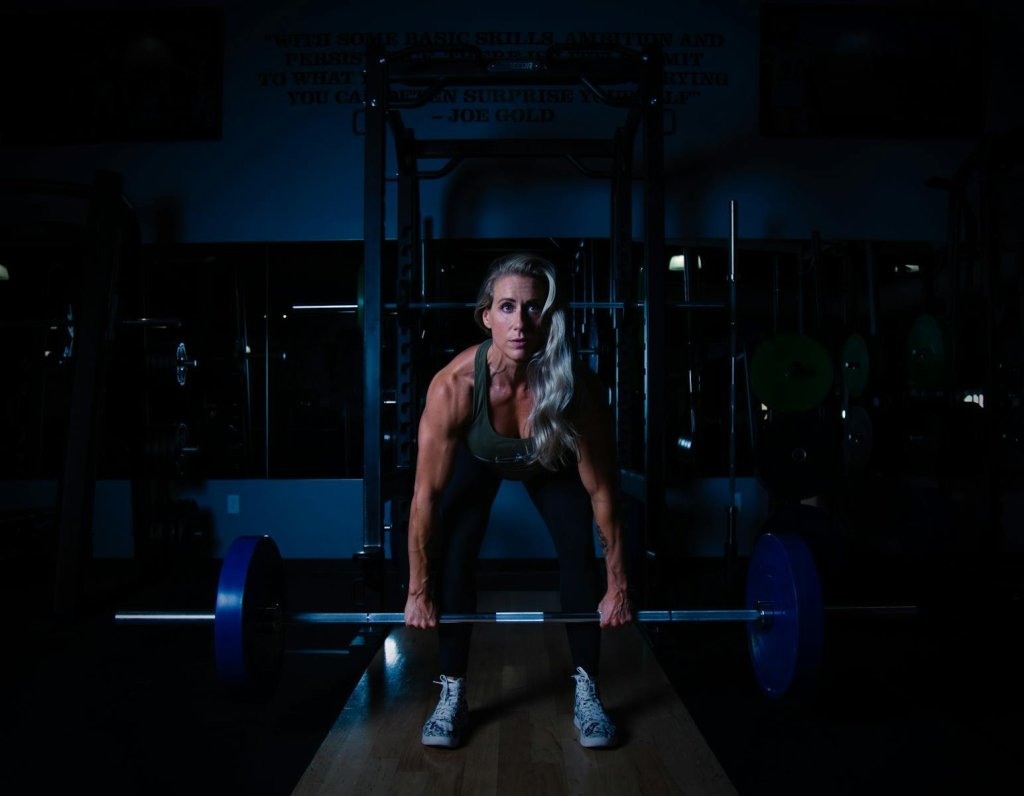
If you want a core that actually transfers to heavy lifting, think “stability + force transfer,” not endless crunches. Strength and conditioning education commonly emphasizes training the core to resist motion (anti-extension, anti-rotation, anti-lateral flexion) so the hips and shoulders can produce force efficiently while the spine stays controlled, as explained in a coaching resource from the NSCA.
A smart barbell-focused core plan also respects breathing and bracing. For most lifters and most reps, don’t hold your breath for long stretches; Mayo Clinic recommends exhaling on the effort and inhaling on the easier phase.
What makes a “barbell core exercise” actually effective
A stronger midsection isn’t just visible abs. It’s your ability to keep the ribcage stacked over the pelvis and maintain trunk stiffness while load tries to pull you out of position.
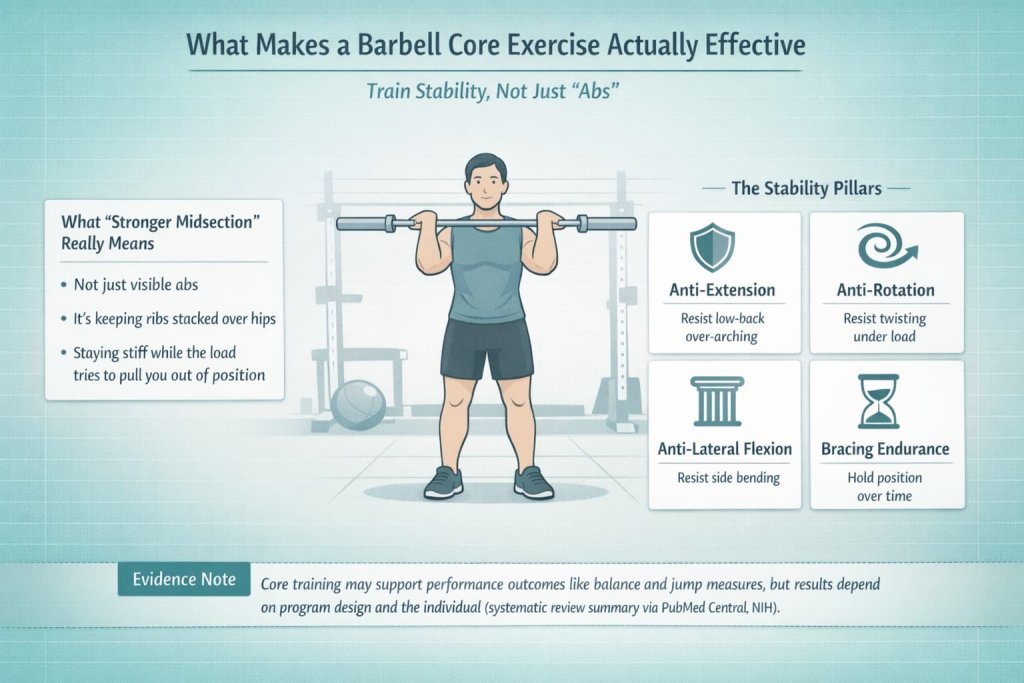
Prioritize exercises that train:
- Anti-extension: resist low-back over-arching
- Anti-rotation: resist twisting
- Anti-lateral flexion: resist side-bending
- Bracing endurance: keep position for time under tension
Research summaries also support that core training can improve performance outcomes like balance and jump performance in many settings, though results depend on the program and population, as summarized in a 2023 systematic review available through PubMed Central (NIH).
Quick safety checklist before you start
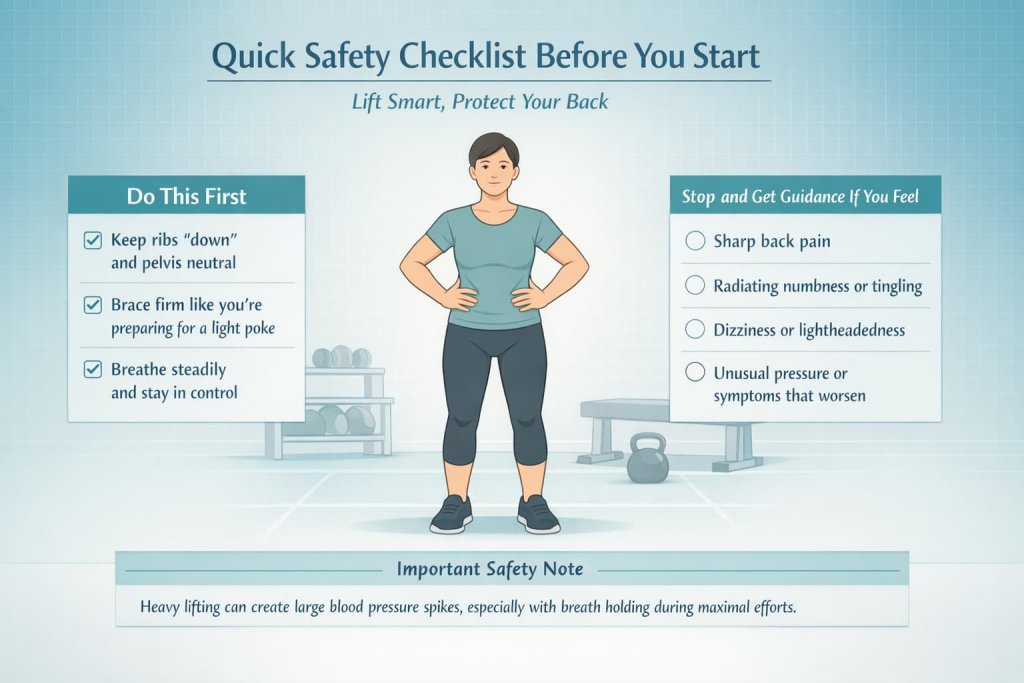
- Keep ribs “down” and pelvis neutral (avoid flared ribs and excessive arching).
- Brace like you’re preparing for a light poke—firm, not breathless.
- If you feel sharp back pain, radiating symptoms, dizziness, or unusual pressure, stop and get guidance.
- Heavy lifting can produce large blood pressure spikes, especially with breath holding during maximal efforts, which is a key safety consideration highlighted in classic heavy lifting research indexed on PubMed.
6 best barbell core exercises
Build a stronger midsection with these 6 barbell core exercises that train bracing, stability, and real-world strength for lifting. Use controlled form and steady progress to improve support for squats, deadlifts, and presses.
1) Barbell roll-out (from knees)
How to do it
- Load small plates on the barbell so it rolls smoothly.
- Start kneeling, hands on the bar just outside shoulder width.
- Brace, then roll the bar forward slowly as far as you can without losing a neutral spine.
- Keep glutes lightly engaged and ribs stacked.
- Pull the bar back by driving elbows toward your hips and tightening the abs.
Why it works
This is one of the most direct anti-extension drills you can do with a barbell. It teaches you to keep the trunk from “opening up” into an arch as your arms reach away.
Muscles worked
Rectus abdominis, transverse abdominis, obliques, lats, serratus anterior, hip flexors (as stabilizers).
Trainer Tip
Your range is only “good” if you can keep the lower back from sagging. Shorter range with perfect control beats longer range with an arch.
Programming
2–4 sets of 5–10 controlled reps, 2–3 times per week.
2) Landmine anti-rotation press (standing or half-kneeling)
How to do it
- Set the barbell in a landmine and hold the free end at chest height.
- Stand with feet shoulder-width, or half-kneel with the inside knee down (knee closest to the bar).
- Brace and keep hips and shoulders square.
- Press the bar forward and slightly up, then return with control.
- Don’t let your torso twist toward the bar.
Why it works
The landmine’s angle creates a constant pull that tries to rotate you. Resisting that builds anti-rotation strength that carries over to loaded squats, pulls, and athletic movement.
Muscles worked
Obliques, transverse abdominis, glutes (stabilizers), serratus anterior, shoulders and triceps (pressing).
Trainer Tip
If you keep “turning” as you press, lighten the load and widen your stance (or use half-kneeling).
Programming
2–4 sets of 6–10 reps per side.
3) Landmine rotations (controlled “around the world”)
How to do it
- Hold the bar’s sleeve with both hands, arms extended but not locked.
- Start with the bar angled up in front of you.
- Rotate the bar in an arc toward one hip, then up and across toward the other side.
- Keep hips mostly square and rotate through the upper trunk with control.
- Move slowly—no bouncing or yanking.
Why it works
This trains rotation under control, which is different from anti-rotation. You’re building the ability to rotate without losing spinal position—useful for sports and for general trunk coordination.
Muscles worked
Obliques, rectus abdominis, spinal stabilizers, lats, hips (as stabilizers).
Trainer Tip
You should feel work in the sides of the trunk, not pinching in the low back. Reduce range or load if your back takes over.
Programming
2–3 sets of 6–12 total arcs (each side counted once).
4) Front rack carry (barbell carry)
How to do it
- Clean the bar to the front rack, or set it on J-hooks and unrack into the front rack.
- Elbows slightly forward, bar resting across the front shoulders.
- Brace, keep ribs stacked, and walk with short, controlled steps.
- Keep eyes forward and avoid leaning back.
Why it works
A front rack load challenges anti-extension and bracing endurance hard. You’re forced to stay tall while the weight encourages rib flare and a back arch.
Muscles worked
Deep core, rectus abdominis, obliques, spinal stabilizers, upper back, hips.
Trainer Tip
If wrists or shoulders limit you, use straps around the bar so you can keep elbows up without pain.
Programming
3–5 carries of 15–40 meters (or 20–45 seconds), resting as needed.
5) Zercher carry (barbell in the elbows)
How to do it
- Set the bar in a rack around elbow height.
- Cradle it in the crooks of your elbows (use a pad if needed).
- Stand tall, brace, and walk slowly with tight posture.
- Keep shoulders down and avoid rounding forward.
Why it works
The Zercher position loads the trunk aggressively and challenges anti-flexion (resisting rounding) while still demanding anti-extension control.
Muscles worked
Entire trunk, upper back, glutes, quads, biceps (isometric), forearms.
Trainer Tip
Think “zip up the ribs” and keep the sternum from dumping forward. Go lighter than you think at first.
Programming
3–5 carries of 10–30 meters (or 15–40 seconds).
6) Overhead barbell carry (advanced)
How to do it
- Press or push press the bar overhead to a stable lockout.
- Ribs down, glutes lightly on, biceps by the ears.
- Walk slowly and quietly—no wobbling steps.
- If you can’t keep the bar stacked over midfoot, stop and reset.
Why it works
This is a high-level test of total-body stacking: shoulders stable, ribs controlled, pelvis neutral. It heavily trains anti-extension and full-body bracing.
Muscles worked
Core (especially anti-extension), shoulders/scapular stabilizers, upper back, glutes.
Trainer Tip
If your low back arches to “hold” the bar, you’re not ready. Build overhead stability first with lighter loads and shorter carries.
Programming
2–4 carries of 10–25 meters (or 10–30 seconds), light to moderate load with perfect form.
How to program barbell core exercises for results
Use one of these simple setups:
Option A: Add-on after main lifts (most lifters)
- Pick 1 anti-extension move (roll-out or front rack carry)
- Pick 1 anti-rotation/rotation move (landmine press or landmine rotations)
- Do 2–4 sets each, 2–3 days per week
Option B: Core-focused finisher (short and effective)
- 8–12 minutes total
- Rotate through 2 movements, resting as needed
- Keep technique perfect and stop shy of form breakdown
Barbell Core Exercise Form Cues That Protect Your Back
Use these cues to keep the load on your core, not your low back.
- Stack ribs over pelvis: Avoid rib flare and big low-back arch.
- Brace 360 degrees: Tighten front, sides, and back evenly (not just “suck in”).
- Breathe with control: Exhale on effort and inhale on the easier phase as recommended by the Mayo Clinic.
- Slow down: If you can’t control the lowering phase, it’s too heavy.
- Own your range: Stop the rep before you lose neutral spine.
- Stay centered: In carries, keep the load over midfoot—no leaning or side-bending.
- Stop on warning signs: Sharp pain, dizziness, or radiating numbness/tingling = stop and get help.
How to Choose the Right Load and Progress Safely
Progress only when your reps stay clean from start to finish.
- Start lighter than you think: You should feel core work, not low-back strain.
- Leave 1–3 reps in reserve: Stop before form breaks.
- Progress in this order:
- Better control (slower reps, cleaner holds)
- More time/distance (longer carries)
- More reps/sets
- More load (last)
- Use small jumps: Add the smallest plate increase you can.
- End the set if: ribs flare, spine arches/rounds, you twist, or you can’t breathe and brace.
Common mistakes that limit core gains
- Letting the ribs flare and calling it “strong bracing”
- Using too much load and turning carries into sloppy leaning
- Moving too fast on landmine rotations (momentum instead of control)
- Rolling out past your control and dumping into the low back
- Holding your breath too long during normal training sets
People also ask about barbell core exercises
Are barbell core exercises better than bodyweight ab workouts?
They can be better for lifters because they teach bracing and trunk stiffness under load, which transfers directly to barbell training. Bodyweight work is still useful, but barbell-based drills often build more “lift-ready” stability.
Can beginners do barbell core exercises?
Yes, but start with the easiest progressions: light front rack carries, half-kneeling landmine presses, and short-range roll-outs. Keep loads modest until you can maintain a stacked position.
How often should I train core with a barbell?
Most people do best with 2–3 sessions per week, using 2 movements per session. More isn’t always better—quality bracing matters most.
Will these help protect my lower back?
They can support better trunk control and bracing habits, which may reduce stress from poor positioning. But pain has many causes—if you have persistent symptoms, get individualized guidance.
Should I use the Valsalva maneuver for these exercises?
For general training, avoid long breath holds. Brief bracing is sometimes coached for heavy attempts, but if you have blood pressure concerns, prioritize steady breathing and get medical advice.
What’s the best barbell core exercise for visible abs?
Visible abs are mostly influenced by overall body composition, while these drills build strength and stability. For performance and strength, prioritize the six exercises above.
Can I do barbell roll-outs if my shoulders are tight?
Often yes with a shorter range and careful rib control, but if you feel shoulder pain or compensation, prioritize landmine presses/carries first and work on shoulder mobility and control.
Conclusion
Barbell core exercises work best when they train what your core really does in lifting: resist motion, keep you stacked, and transfer force. Pick two movements from this list, train them 2–3 times per week, and focus on controlled reps and clean posture—your squats, pulls, and presses will usually feel more stable fast.
References
- PubMed Central (NIH): The Impact of Core Training on Overall Athletic Performance Meta-Analysis (2025)
- PubMed: Hemodynamic Response to a Brief Valsalva Maneuver (2012)
- NCBI Bookshelf: Valsalva Maneuver Overview and Safety Considerations (StatPearls)
- PubMed Central (NIH): Core Endurance and Low Back Dysfunction in Athletes (2016)