
Gymnastics exercises are bodyweight-based movements that build full-body strength, balance, coordination, and joint control using simple patterns like bracing, pushing, pulling, hinging, and landing mechanics.
These exercises align well with public health guidance from the Physical Activity Guidelines for Americans published by the U.S. Department of Health and Human Services, which emphasize regular muscle-strengthening and balance-focused activity.
What Are Gymnastics Exercises?
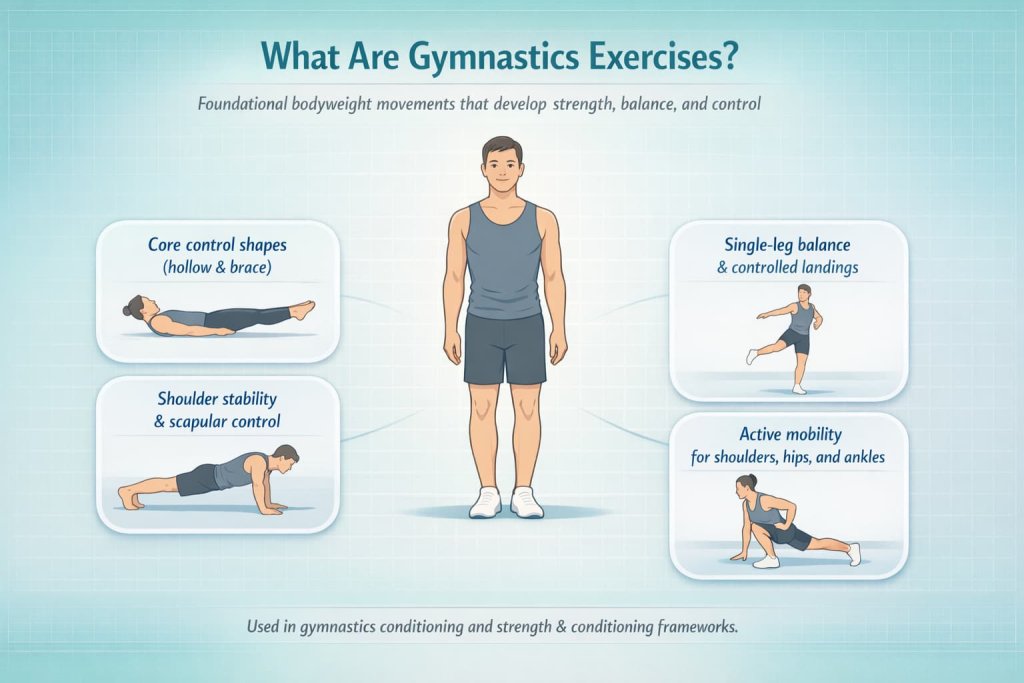
Gymnastics exercises are not limited to competitive skills. In fitness and general conditioning, they refer to foundational movement drills used to develop control, stability, and efficient movement patterns.
These exercises commonly include:
- Core control shapes such as hollow and braced positions
- Shoulder stability and scapular control
- Single-leg balance and controlled landings
- Active mobility for shoulders, hips, and ankles
This approach mirrors training principles widely used in gymnastics conditioning programs and strength and conditioning frameworks supported by the National Strength and Conditioning Association (NSCA).
Why Gymnastics Exercises Improve Strength, Balance, and Mobility
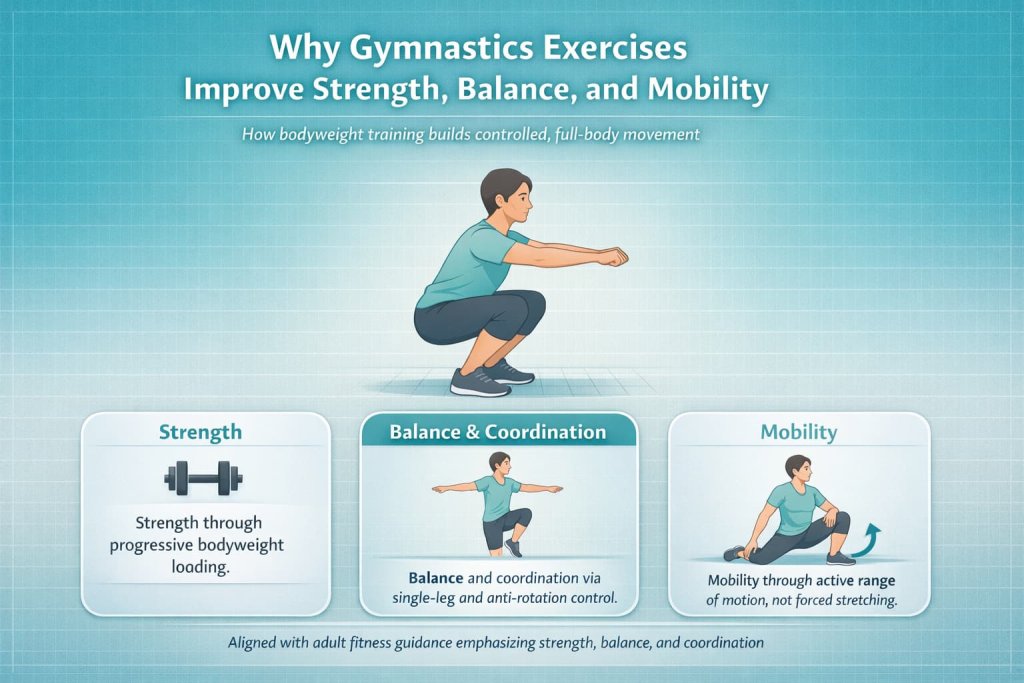
Gymnastics-style training works because it combines strength and stability in a single movement system. Rather than isolating muscles, it teaches the body to control force through coordinated patterns.
Gymnastics exercises help support:
- Strength through progressive bodyweight loading
- Balance and coordination via single-leg and anti-rotation control
- Mobility by developing active range of motion instead of forced flexibility
This combination closely matches recommendations highlighted in adult fitness guidance from the Centers for Disease Control and Prevention, which emphasize strength training alongside balance and coordination activities for long-term physical function.
14 Best Gymnastics Exercises
These 14 gymnastics exercises focus on controlled bodyweight movements that help develop strength, balance, coordination, and mobility. They are suitable for beginners to advanced levels when performed with proper technique and progression.
1. Hollow Body Hold
How to do it:
- Lie on your back with arms extended overhead
- Gently press your lower back into the floor to remove the natural arch
- Lift your shoulders and legs slightly off the ground
- Keep ribs pulled down and legs together
- Hold the position while breathing steadily
Why it works:
The hollow body hold teaches foundational core bracing used throughout gymnastics. It improves the body’s ability to maintain a stable spine while the arms and legs move, supporting posture, strength transfer, and injury-resistant movement patterns.
Muscles worked:
Deep core stabilizers, rectus abdominis, hip flexors, serratus anterior.
Trainer Tip:
If your lower back lifts or your ribs flare, bend your knees or raise your legs higher to maintain proper alignment.
2. Dead Bug (Gymnastics Bracing Version)
How to do it:
- Lie on your back with hips and knees bent to 90 degrees
- Extend arms straight toward the ceiling
- Press your lower back gently into the floor
- Slowly extend the opposite arm and leg away from your body
- Return to start and switch sides
Why it works:
This exercise reinforces spinal stability while the limbs move independently, a key skill for gymnastics and everyday movement. It trains the core to resist extension and rotation, helping protect the lower back.
Muscles worked:
Deep core muscles, obliques, hip flexors.
Trainer Tip:
Move slowly and deliberately. If your back arches, shorten the range of motion.
3. Arch Hold (Superman Hold)
How to do it:
- Lie face down with arms extended overhead
- Gently squeeze glutes and lift chest and thighs slightly
- Keep neck in a neutral position
- Hold the position briefly with control
Why it works:
The arch hold strengthens the posterior chain and balances flexion-based core work. It improves spinal extension control, which is essential for posture, overhead movements, and safe landing mechanics.
Muscles worked:
Glutes, spinal extensors, upper back muscles.
Trainer Tip:
Focus on length through the spine rather than lifting as high as possible.
4. Plank With Shoulder Taps
How to do it:
- Start in a strong plank with hands under shoulders
- Keep ribs pulled down and hips level
- Lift one hand to tap the opposite shoulder
- Alternate sides slowly without shifting weight
Why it works:
This movement builds anti-rotation strength and shoulder stability while reinforcing full-body tension. It challenges the core to stay stable as weight shifts, which is vital for gymnastics-style control.
Muscles worked:
Core muscles, shoulders, scapular stabilizers.
Trainer Tip:
Widen your feet to reduce instability as you build control.
5. Scapular Push-Ups
How to do it:
- Hold a plank position on hands or knees
- Keep elbows straight throughout the movement
- Allow shoulder blades to move together slightly
- Push the floor away to spread shoulder blades apart
Why it works:
Scapular push-ups improve shoulder blade movement and control, which supports pressing strength and reduces shoulder strain during overhead and pushing exercises.
Muscles worked:
Serratus anterior, upper back stabilizers.
Trainer Tip:
Use a small, controlled range rather than rushing the movement.
6. Pike Push-Ups
How to do it:
- Begin in a pike position with hips high
- Keep arms straight as you lower your head toward the floor
- Bend elbows slightly backward, not flared wide
- Press back up to the starting position
Why it works:
Pike push-ups develop overhead pushing strength while maintaining a safer shoulder position than full handstands, making them ideal for progressive gymnastics training.
Muscles worked:
Shoulders, triceps, upper chest.
Trainer Tip:
Only elevate feet when you can maintain shoulder control and neutral spine alignment.
7. Wall-Facing Lean Hold
How to do it:
- Face a wall and place hands on the floor
- Walk feet back slightly
- Lean shoulders forward toward the wall
- Push tall through arms and hold
Why it works:
This drill builds shoulder endurance and teaches stacked alignment without full inversion, reinforcing safe overhead mechanics.
Muscles worked:
Shoulders, serratus anterior, core.
Trainer Tip:
You should feel effort in the shoulders, not compression in the neck.
8. Hanging Knee Raises
How to do it:
- Hang from a bar with shoulders engaged
- Keep body still and avoid swinging
- Lift knees toward chest slowly
- Lower with full control
Why it works:
Hanging knee raises strengthen the core while demanding grip and shoulder stability, which are fundamental gymnastics qualities.
Muscles worked:
Core muscles, hip flexors, forearms, lats.
Trainer Tip:
Use assistance or reduce range if grip or shoulders fatigue early.
9. Active Hang
How to do it:
- Hang from a bar with arms straight
- Gently pull shoulder blades downward
- Hold the active position briefly
- Relax and repeat
Why it works:
Active hangs strengthen the shoulder’s support system and teach proper hanging mechanics, reducing stress on passive structures.
Muscles worked:
Lats, lower trapezius, grip muscles.
Trainer Tip:
Avoid fully passive hanging if discomfort occurs.
10. Inverted Row
How to do it:
- Hold rings or a bar with body straight
- Keep heels on the floor
- Pull chest toward hands
- Lower slowly with control
Why it works:
Inverted rows balance pushing exercises and strengthen postural muscles essential for shoulder health and upper-body control.
Muscles worked:
Upper back, lats, biceps.
Trainer Tip:
Adjust body angle to make the exercise easier or harder.
11. Bear Crawl
How to do it:
- Start on hands and knees
- Lift knees slightly off the floor
- Move opposite hand and foot together
- Crawl slowly while keeping hips level
Why it works:
Bear crawls build total-body coordination, core endurance, and shoulder stability in a dynamic yet controlled pattern.
Muscles worked:
Shoulders, core, hips.
Trainer Tip:
Quiet movement indicates good control and stability.
12. Single-Leg Balance Reach
How to do it:
- Stand on one leg with knee softly bent
- Reach opposite leg backward
- Maintain balance as torso leans forward
- Return to upright position
Why it works:
This exercise improves balance, hip control, and ankle stability, all essential for safe landings and directional changes.
Muscles worked:
Glutes, ankle stabilizers, core.
Trainer Tip:
Use light support until balance improves.
13. Step-Down Control Drill
How to do it:
- Stand on a low step
- Slowly lower one foot toward the floor
- Lightly tap heel
- Push back up to standing
Why it works:
Step-downs improve knee tracking and single-leg strength, supporting safer movement during stairs, landings, and sport activity.
Muscles worked:
Quadriceps, glutes, calves.
Trainer Tip:
Keep the knee aligned over the middle toes throughout.
14. 90/90 Hip Switches
How to do it:
- Sit in a 90/90 hip position
- Rotate knees slowly to the opposite side
- Keep chest tall and controlled
- Move smoothly between sides
Why it works:
90/90 hip switches develop controlled hip rotation, supporting mobility and joint resilience rather than passive flexibility.
Muscles worked:
Hip rotators, glutes, core.
Trainer Tip:
Prioritize smooth control over forcing range of motion.
How Often Should You Do Gymnastics Exercises?
A practical structure for most adults:
- 2–4 sessions per week
- 20–40 minutes per session
- Rotate focus between core, upper body, lower body, and mobility
Guidance from the World Health Organization supports including muscle-strengthening activities on two or more days per week, while balance-focused training is particularly beneficial as people age.
Safety Guidelines Before You Start
While gymnastics exercises are highly effective, they should always be approached with control and patience.
Follow these basic safety principles:
- Focus on quality movement, not speed or volume
- Stop immediately if you feel sharp pain, joint catching, or dizziness
- Avoid advanced skills such as flips or release moves without coaching
- Use controlled flexibility methods where you remain in charge of the stretch, a key principle emphasized in updated flexibility guidance from British Gymnastics
These guidelines help reduce injury risk and support long-term joint health.
How to Choose the Right Gymnastics Exercises for Your Level
Choosing the right gymnastics exercises depends on movement quality, joint control, and current strength, not how advanced an exercise looks. The goal is to select drills that challenge you without breaking form.
Beginner level
- Start with floor-based core work (hollow holds, dead bugs, planks)
- Use supported balance exercises (single-leg balance with light support)
- Prioritize slow tempo and short hold times
- Focus on learning proper alignment and breathing
Intermediate level
- Progress to longer holds and controlled transitions
- Add hanging, inverted rows, and pike push-ups
- Reduce external support in balance drills
- Begin combining movements (for example, plank variations with limb motion)
Advanced level
- Increase time under tension and movement complexity
- Use more demanding lever positions and angles
- Combine strength, balance, and mobility within the same session
- Progress difficulty only when control remains consistent across repetitions
A simple rule: if form breaks down, the exercise is too advanced for your current level. Regress first, then build back up.
Who Should Be Careful or Seek Professional Guidance?
Gymnastics exercises are adaptable, but some individuals should take extra care or seek guidance before progressing.
You may benefit from professional input if you:
- Have a history of shoulder, wrist, spine, hip, or knee injuries
- Experience pain, numbness, or joint instability during bodyweight exercises
- Have balance disorders, frequent falls, or neurological conditions
- Are returning to exercise after surgery or long inactivity
- Are pregnant, postpartum, or managing medical conditions that affect movement tolerance
Older adults and beginners can safely use many gymnastics exercises, but starting with lower-intensity, well-supported variations helps reduce injury risk and builds confidence.
When in doubt, guidance from a qualified fitness professional, physical therapist, or healthcare provider can help ensure exercises are appropriate, progressive, and safe.
Common Mistakes
- Rushing progressions
- Skipping pulling exercises
- Overarching the lower back
- Forcing flexibility
- Ignoring shoulder or grip fatigue
Conclusion
Gymnastics exercises offer a powerful, equipment-light way to improve strength, balance, and mobility. By focusing on controlled movement, progressive difficulty, and consistency, you can build resilient, athletic movement patterns that support daily life and long-term physical health.
References
- Physical Activity Guidelines for Americans, 2nd Edition (U.S. Department of Health and Human Services)
- Physical Activity Guidelines (Overview Page) (U.S. Department of Health and Human Services)
- Adult Physical Activity Guidelines (Centers for Disease Control and Prevention)
- Physical Activity Guidelines Index (Centers for Disease Control and Prevention)
- Physical Activity Guidance (World Health Organization)
- WHO Guidelines on Physical Activity and Sedentary Behaviour (NCBI Bookshelf)
- Updated Flexibility Guidance for Gymnasts and Coaches (British Gymnastics)
- Quantity and Quality of Exercise for Developing Fitness (ACSM Position Stand, PubMed