
The best upper body dumbbell exercises build strength, improve muscle definition, and enhance everyday functional movement—even with just one pair of dumbbells. Upper-body training matters because it supports posture, balance, injury-resilience, and total-body strength. Whether you’re at home or at the gym, dumbbells allow smooth, controlled movement patterns that work your chest, shoulders, back, biceps, and triceps safely and efficiently.
In this guide, you’ll get a clear, research-informed list of the 16 best upper body dumbbell exercises, step-by-step instructions, benefits, training frequency, safety tips, FAQs, and official resource links.
The 16 Best Upper Body Dumbbell Exercises
Below are the most effective dumbbell movements to strengthen your chest, back, shoulders, biceps, and triceps.
Best Dumbbell Chest Exercises
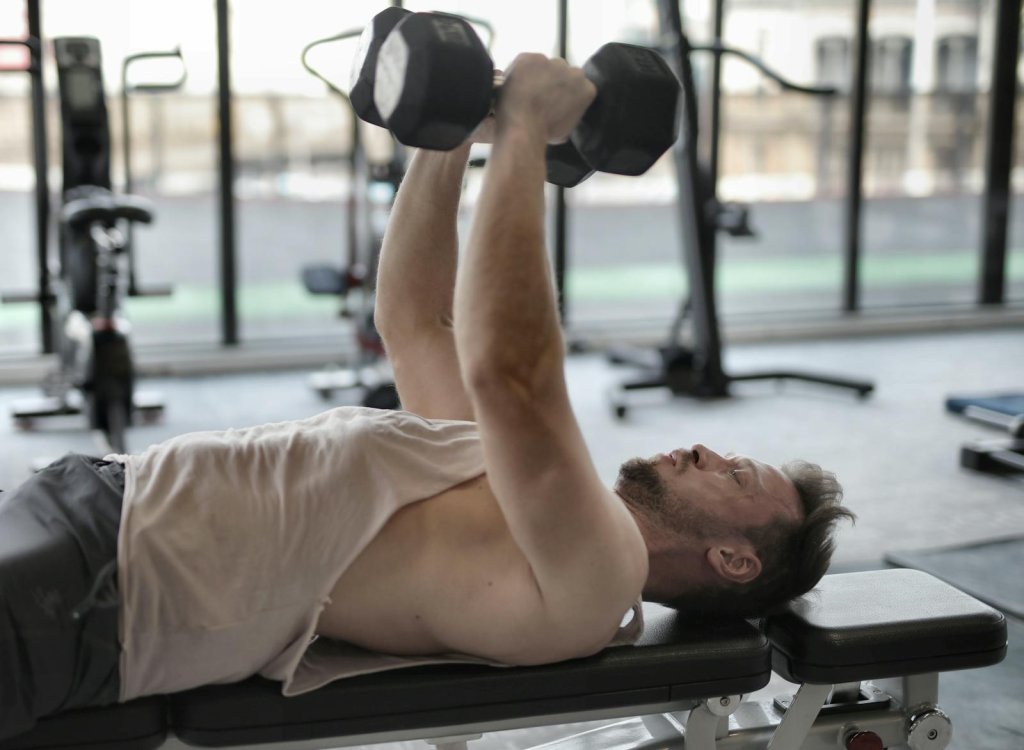
1. Dumbbell Chest Press
Why it works:
This movement strengthens your entire pushing chain—chest, shoulders, and triceps—while allowing natural wrist and shoulder motion. Dumbbells train each side independently, improving muscle balance and joint stability.
Muscles worked:
Pectoralis major, anterior deltoids, triceps, serratus anterior.
How to do it:
- Lie on a flat bench with dumbbells held at chest level.
- Press the weights upward until arms are fully extended.
- Lower slowly with elbows at a 45-degree angle.
- Keep feet flat and core braced throughout the movement.
Trainer Tip:
Pause for one second at the bottom to increase time under tension and prevent using momentum.
2. Incline Dumbbell Press
Why it works:
The inclined angle shifts more emphasis to the upper chest and shoulders, improving upper-body aesthetics and helping correct weak upper pecs.
Muscles worked:
Upper pectoralis, anterior deltoids, triceps.
How to do it:
- Set a bench to 30–45 degrees.
- Press dumbbells upward from chest level to full elbow extension.
- Lower under control, keeping elbows slightly tucked.
Trainer Tip:
Avoid overly steep inclines—anything over 45 degrees turns it into a shoulder-dominant press.
3. Dumbbell Floor Press
Why it works:
The floor limits shoulder extension, reducing stress on the joint while still strengthening the chest and triceps. Ideal for beginners and home workouts.
Muscles worked:
Chest, anterior deltoids, triceps.
How to do it:
- Lie on your back with knees bent, dumbbells at chest height.
- Press straight up until arms lock.
- Lower until your elbows lightly touch the floor, then press again.
Trainer Tip:
Focus on a strong triceps lockout—this version emphasizes the upper portion of the press.
4. Dumbbell Chest Fly
Why it works:
This isolation movement stretches and contracts the chest through a wide arc, enhancing definition and chest width.
Muscles worked:
Pectoralis major, anterior deltoids.
How to do it:
- Lie on a bench holding dumbbells above your chest with a slight bend in the elbows.
- Open arms wide in a controlled arc.
- Bring dumbbells back together over the chest without clashing the weights.
Trainer Tip:
Use light to moderate weights—flies are about stretch and control, not heavy lifting.
Best Dumbbell Back Exercises
5. One-Arm Dumbbell Row
Why it works:
Trains each side separately to improve back symmetry. The supported stance reduces core fatigue so you can fully engage the lats and mid-back.
Muscles worked:
Lats, rhomboids, middle trapezius, posterior deltoids, biceps.
How to do it:
- Place one knee and one hand on a bench.
- Pull the dumbbell toward your hip, keeping elbow close.
- Lower with control until arm fully extends.
Trainer Tip:
Aim the elbow toward your back pocket—not straight up—to maximize lat activation.
6. Chest-Supported Dumbbell Row
Why it works:
Removes lower-back involvement so you can isolate the upper back with less fatigue. Great for posture and definition.
Muscles worked:
Middle trapezius, rhomboids, lats, posterior deltoids, biceps.
How to do it:
- Lie face-down on an incline bench.
- Let arms hang straight down holding dumbbells.
- Pull elbows up and back.
- Lower slowly to starting position.
Trainer Tip:
Keep your chest glued to the bench to avoid turning it into a partial shrug.
7. Dumbbell Pullover
Why it works:
A unique exercise that targets both the chest and lats while improving shoulder mobility and rib expansion.
Muscles worked:
Lats, pectoralis major, serratus anterior, triceps (long head), core stabilizers.
How to do it:
- Lie on a bench with one dumbbell held above the chest.
- Lower the weight behind your head in an arc.
- Pull back to the starting position using your lats and chest.
Trainer Tip:
Keep elbows slightly bent to protect the shoulders and maintain tension.
8. Bent-Over Dumbbell Reverse Fly
Why it works:
Strengthens the rear deltoids and mid-back stabilizers—critical for posture and counteracting forward-shoulder positions.
Muscles worked:
Posterior deltoids, rhomboids, mid and lower trapezius.
How to do it:
- Hinge at the hips with a flat back.
- Raise dumbbells outward in a T-shape.
- Lower slowly with full control.
Trainer Tip:
Think about “spreading the floor apart with your arms” for better rear-delt activation.
Best Dumbbell Shoulder Exercises
9. Dumbbell Shoulder Press
Why it works:
Builds full-shoulder strength while training overhead stability and triceps power.
Muscles worked:
Anterior, lateral, and posterior deltoids; triceps; upper traps.
How to do it:
- Sit or stand with dumbbells at shoulder level.
- Press overhead in a straight path.
- Lower slowly to the starting point.
Trainer Tip:
Keep ribs down and avoid arching your lower back during the press.
10. Dumbbell Lateral Raise
Why it works:
Isolates the middle deltoids, enhancing shoulder width and definition.
Muscles worked:
Lateral deltoids, upper trapezius (minor involvement).
How to do it:
- Hold dumbbells at your sides with a slight bend in the elbows.
- Raise arms to shoulder height.
- Lower under control.
Trainer Tip:
Lead with your elbows, not your wrists—this keeps tension on the side delts.
11. Dumbbell Front Raise
Why it works:
Builds front-shoulder strength and improves control in overhead patterns.
Muscles worked:
Anterior deltoids, upper chest (slight), core stabilizers.
How to do it:
- Hold dumbbells at your thighs with palms facing down.
- Raise one or both arms to shoulder height.
- Lower slowly without swinging.
Trainer Tip:
Use light weights to avoid compensating with traps or momentum.
12. Dumbbell Arnold Press
Why it works:
The rotation increases shoulder activation through a longer range of motion, improving mobility and stability.
Muscles worked:
Deltoids (all heads), triceps, upper trapezius.
How to do it:
- Start with dumbbells in front of your chest, palms facing you.
- Rotate wrists outward as you press overhead.
- Reverse the motion on the way down.
Trainer Tip:
Move smoothly through the rotation—don’t rush the transition.
Best Dumbbell Arm Exercises
13. Dumbbell Biceps Curl
Why it works:
A classic movement that builds biceps strength, size, and arm definition when performed with strict form.
Muscles worked:
Biceps brachii, brachialis, brachioradialis.
How to do it:
- Stand tall with dumbbells at your sides.
- Curl weights upward by bending elbows only.
- Lower slowly with full extension.
Trainer Tip:
Keep elbows pinned to your sides to prevent shoulder involvement.
14. Hammer Curl
Why it works:
Neutral-grip position shifts focus to the brachialis, helping add thickness to the upper arms.
Muscles worked:
Brachialis, biceps brachii, brachioradialis.
How to do it:
- Hold dumbbells with palms facing each other.
- Curl upward while maintaining the neutral grip.
- Lower with control.
Trainer Tip:
Avoid swinging—slow tempo builds more arm strength and definition.
15. Overhead Dumbbell Triceps Extension
Why it works:
Stretches and trains the long head of the triceps, contributing to greater upper-arm mass.
Muscles worked:
Triceps (long head), core stabilizers.
How to do it:
- Hold one or two dumbbells overhead.
- Bend elbows to lower the weight behind your head.
- Extend elbows to return to the top.
Trainer Tip:
Keep elbows close to your head to maximize triceps engagement.
16. Dumbbell Triceps Kickback
Why it works:
Isolates the triceps during the fully shortened portion of the movement, improving definition and control.
Muscles worked:
Triceps (lateral and long head).
How to do it:
- Hinge at the hips with one foot forward.
- Bend elbow to 90 degrees.
- Extend the arm straight back.
- Return slowly to the starting point.
Trainer Tip:
Keep your upper arm parallel to the floor—this maintains constant tension on the triceps.
How Often Should You Do Upper Body Dumbbell Exercises?
General evidence-based guidelines (ACSM, WHO, CDC) recommend:
- 2–3 upper-body sessions per week
- 2–4 sets per exercise
- 8–12 reps per set for strength and definition
- 60–90 seconds rest between sets
- Progress load by 2–10% when reps become easy
- At least 48 hours of rest between upper-body sessions
Consistent weekly training improves strength, muscle tone, and movement quality.
Training Tips for Better Results
- Use weights that challenge the final 2–3 reps.
- Train full range of motion, not partial reps.
- Maintain neutral spine and avoid shrugging shoulders.
- Increase weight gradually to prevent overuse injuries.
- Balance pushing and pulling exercises for better posture.
Sample Upper Body Dumbbell Workout
Perform 2–3 times per week
Chest & Shoulders
- Dumbbell Chest Press – 3×10
- Shoulder Press – 3×10
- Lateral Raise – 3×12
Back & Arms
- One-Arm Row – 3×10 each side
- Hammer Curl – 3×12
- Triceps Kickback – 3×12
Rest 60–90 seconds between sets.
Safety Tips
- Start with weights you can control without strain.
- Move slowly and avoid locking joints.
- Stop if you feel sharp or sudden pain.
- Consult a qualified professional before starting any new exercise routine.
FAQ
1. Are dumbbells enough to build upper-body strength?
Yes. Properly programmed dumbbell training can build significant strength and muscle definition.
2. How many dumbbell exercises should I do per workout?
Most adults benefit from 4–6 exercises, 2–4 sets each.
3. What weight should beginners start with?
Start with a weight you can lift for 10–12 controlled reps with good form.
4. Can I train upper body two days in a row?
Not recommended. Aim for 48 hours rest between sessions for the same muscle group.
5. Should I prioritize heavy or light dumbbells?
Moderate loads (8–12 reps) are best for strength and definition.
6. Are dumbbell presses safer than barbell presses?
Yes, for many people. Dumbbells allow natural joint movement and reduce shoulder strain.
7. Can I do these exercises at home?
Absolutely—most require only one pair of dumbbells and minimal space.
Conclusion
Upper body dumbbell exercises are a flexible, accessible, and efficient way to build strength and definition at home or in the gym. With consistent training, proper form, and gradual progression, these 16 exercises can help you develop a balanced, strong upper body. Start with manageable weights, focus on technique, and build from there.