
The best hip thrust alternatives include weighted glute bridges, squats, Romanian deadlifts, Bulgarian split squats, step-ups, leg presses, reverse lunges, and glute kickbacks. These exercises train the glutes through different movement patterns and can help you build strength and muscle without performing barbell hip thrusts.
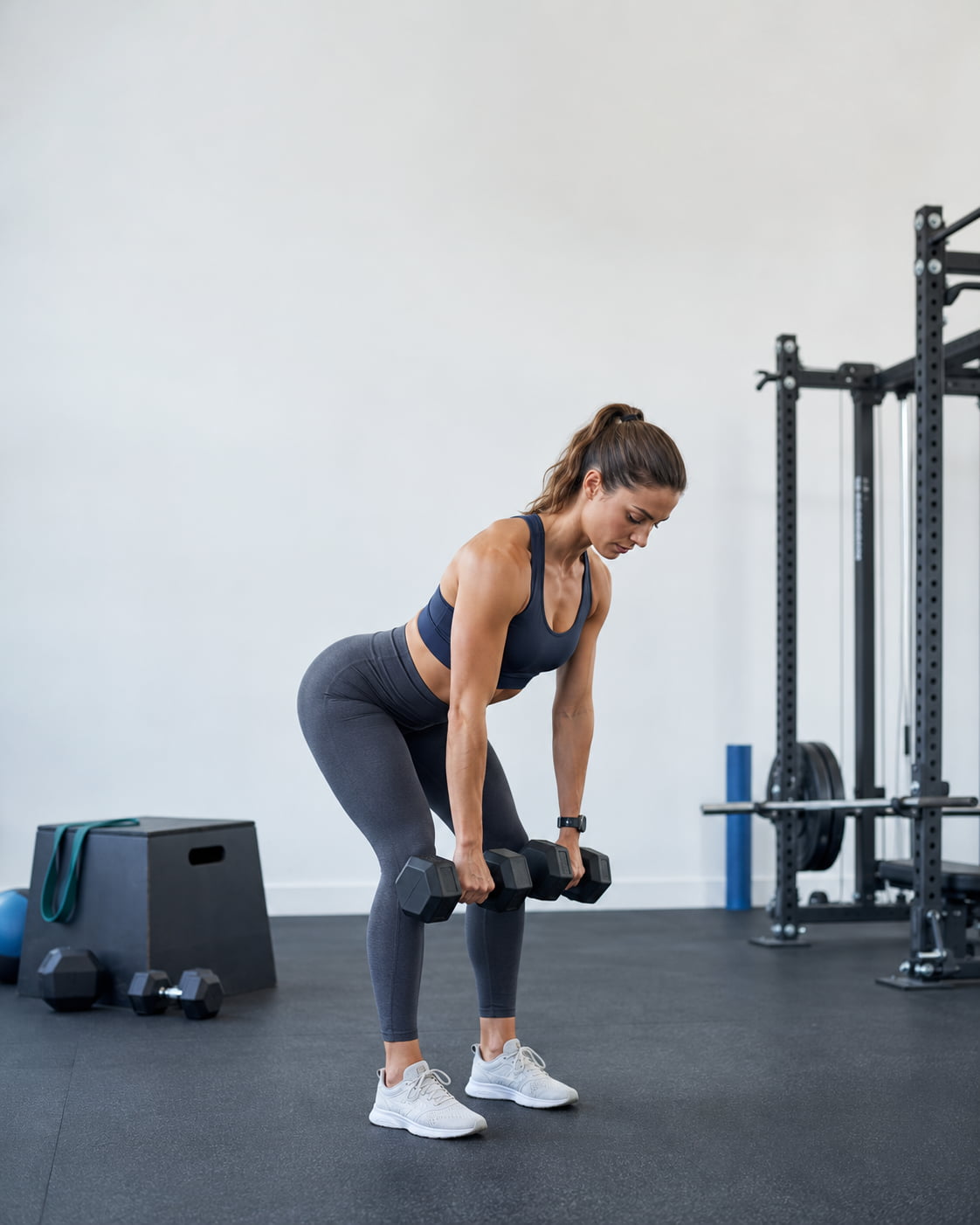
You may need an alternative because you do not have a suitable bench, find the setup uncomfortable, train with limited equipment, or simply want more variety. No single exercise replaces every feature of a hip thrust, but a well-designed combination can train your glutes effectively.
A 2025 systematic review found that both single-joint and multi-joint resistance exercises can support gluteus maximus growth. Programs combining different hip-extension exercises were also effective, meaning hip thrusts are useful but not mandatory.
Hip Thrust Alternatives at a Glance
| Exercise | Equipment | Best for |
|---|---|---|
| Weighted glute bridge | Dumbbell, barbell, or resistance band | The closest floor-based substitute |
| Back squat | Barbell and rack | Overall leg and glute development |
| Romanian deadlift | Dumbbells or barbell | Glutes and hamstrings |
| Bulgarian split squat | Bench and optional weights | Unilateral strength |
| Step-up | Stable box or bench | Single-leg strength and balance |
| Leg press | Leg press machine | Stable, progressively loaded training |
| Reverse lunge | Bodyweight, dumbbells, or barbell | Home or gym workouts |
| Kneeling glute kickback | Bodyweight, band, or cable | Glute isolation |
What Muscles Do These Exercises Work?
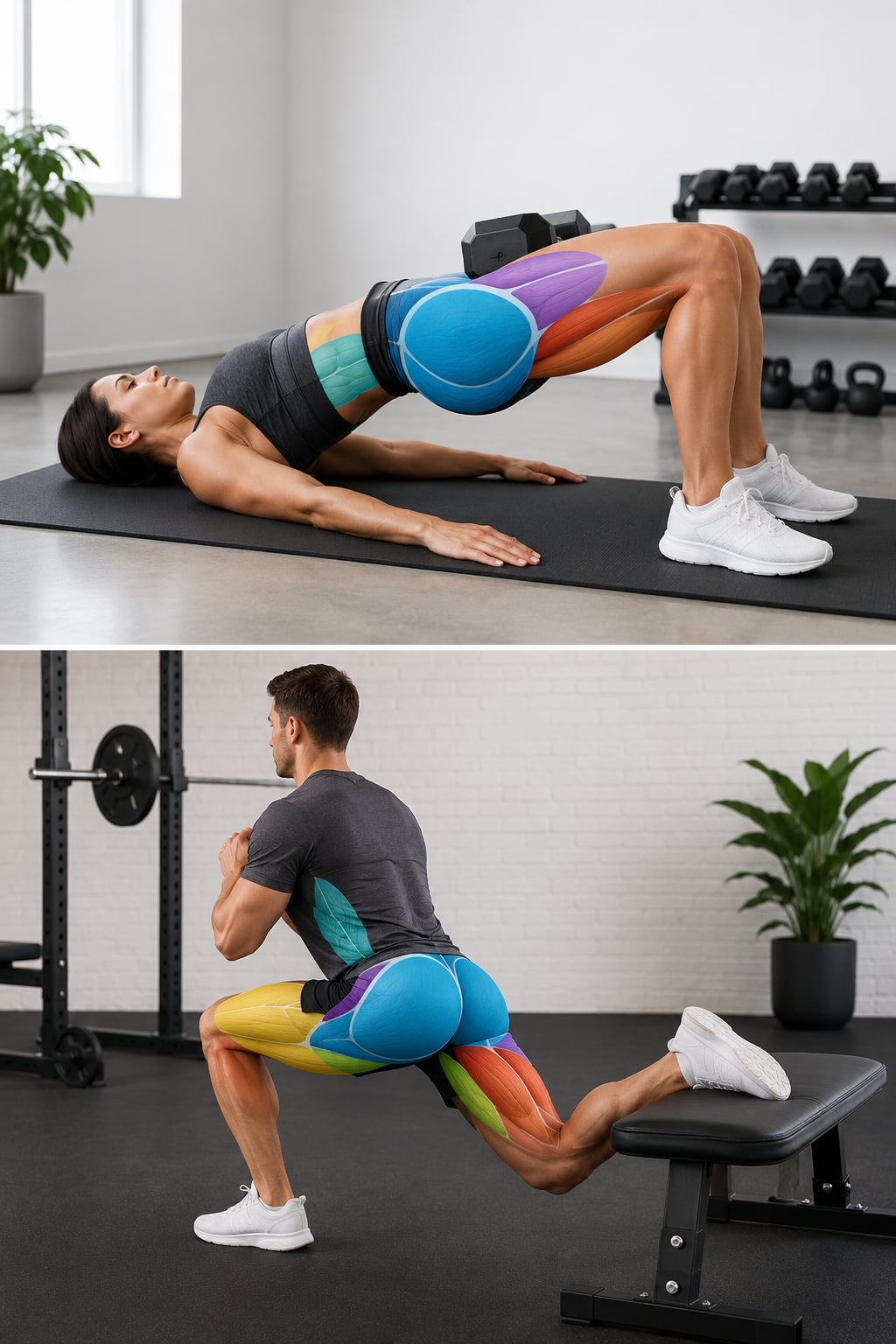
The gluteal region contains three main muscles:
- Gluteus maximus: The largest glute muscle and the primary muscle responsible for powerful hip extension.
- Gluteus medius: Helps move the thigh outward and stabilizes the pelvis during single-leg exercises.
- Gluteus minimus: Assists the gluteus medius with hip movement and pelvic control.
Most hip thrust alternatives also train the hamstrings, quadriceps, adductors, core, or spinal stabilizers. The exact contribution of each muscle depends on the exercise, technique, range of motion, and resistance used.
8 Best Hip Thrust Alternatives
The best hip thrust alternatives train the glutes through different movement patterns, including bridges, squats, hinges, lunges, step-ups, and isolation exercises. Choose the options that match your equipment, comfort, and training goals while allowing steady progression.
1. Weighted Glute Bridge
Why it works: The weighted glute bridge is the closest alternative to a hip thrust because it uses a similar hip-extension movement. Your shoulders remain on the floor instead of being elevated on a bench, which simplifies the setup and usually reduces the available range of motion. It can be performed with a dumbbell, barbell, resistance band, or body weight.
Muscles worked: The gluteus maximus is the primary target. The hamstrings, adductors, abdominal muscles, and lower-back stabilizers assist with hip movement and trunk control.
How to do it:
- Lie on your back with your knees bent and feet flat on the floor.
- Position your feet approximately hip-width apart.
- Place a padded dumbbell or barbell across the front of your hips.
- Brace your abdomen and gently press through your heels and midfoot.
- Raise your hips until your torso and thighs form a straight line.
- Pause briefly without excessively arching your lower back.
- Lower your hips under control.
Trainer Tip: Begin with 2–3 sets of 10–15 controlled repetitions. Keep your ribs down and stop the upward movement when your hips are fully extended. The ACE glute bridge guide also recommends maintaining abdominal control and avoiding excessive lower-back arching.
2. Back Squat
Why it works: The back squat trains the glutes while also developing the quadriceps and adductors. It loads the glutes most heavily as you control the bottom portion and stand from a flexed hip position. Squats are especially useful when you want one exercise that develops both the glutes and thighs.
A nine-week study involving novice trainees found similar glute growth from back-squat and hip-thrust training. Squats produced more quadriceps and adductor growth, while hip thrusts were more glute-specific. Because the participants were inexperienced lifters, the results should not be assumed to apply identically to every person.
Muscles worked: Back squats train the gluteus maximus, quadriceps, adductors, hamstrings, calves, abdominal muscles, and spinal stabilizers.
How to do it:
- Position a barbell securely across your upper back.
- Stand with your feet around shoulder-width apart.
- Brace your abdomen and keep your feet firmly planted.
- Bend your hips and knees to descend under control.
- Keep your knees tracking in the same general direction as your toes.
- Descend as far as you can while maintaining a stable, comfortable position.
- Push through your feet to return to standing.
Trainer Tip: Use 3–4 sets of 6–12 repetitions. Choose a squat depth you can control without your heels lifting, knees collapsing inward, or lower back losing its stable position.
3. Romanian Deadlift
Why it works: The Romanian deadlift trains hip extension from a stretched position. Unlike a glute bridge, which is most demanding near the top, the Romanian deadlift places greater tension on the glutes and hamstrings as the hips move backward and the muscles lengthen.
This makes it a useful complement or alternative to hip thrusts rather than an exact movement replacement.
Muscles worked: The main muscles are the gluteus maximus, hamstrings, and adductor magnus. The spinal erectors, upper back, abdominal muscles, forearms, and hands stabilize the load.
How to do it:
- Stand tall while holding dumbbells or a barbell in front of your thighs.
- Soften your knees without turning the movement into a squat.
- Brace your torso and push your hips backward.
- Keep the weight close to your legs as it travels downward.
- Stop when you feel a strong hamstring stretch and can no longer move your hips back without changing your spinal position.
- Drive your hips forward to stand tall.
- Finish with your glutes without leaning backward.
Trainer Tip: Start with 3 sets of 8–12 repetitions. Think “hips back” rather than “weight down.” Lower only as far as your mobility and control allow.
4. Bulgarian Split Squat
Why it works: The Bulgarian split squat trains one leg at a time, making it valuable for developing unilateral strength and improving control between sides. A slightly longer stance and modest forward torso angle can increase the demand on the glutes, although your exact setup should remain comfortable and stable.
Muscles worked: The front-leg gluteus maximus and quadriceps perform most of the work. The adductors, hamstrings, gluteus medius, calves, and core assist with movement and balance.
How to do it:
- Stand a comfortable distance in front of a bench.
- Place the top of one foot lightly on the bench behind you.
- Keep most of your pressure through the front foot.
- Bend your front knee and lower your hips under control.
- Allow a small forward torso angle while keeping your spine stable.
- Descend to a depth you can control without pain or loss of balance.
- Push through the front foot to stand.
Trainer Tip: Perform 2–3 sets of 8–12 repetitions per leg. If balance limits your effort, lightly hold a rack or wall. Support lets you focus more on training the working leg.
5. Step-Up
Why it works: Step-ups train hip and knee extension while requiring each leg to work independently. They can be adjusted by changing the platform height, load, and speed. A lower step is easier to control, while a higher step generally requires more hip flexion and glute contribution.
Muscles worked: Step-ups primarily train the gluteus maximus and quadriceps. The hamstrings, adductors, calves, gluteus medius, and core assist with balance and pelvic control.
How to do it:
- Stand in front of a stable box, step, or bench.
- Place your entire working foot on the platform.
- Lean slightly forward from the hips while keeping your torso controlled.
- Push through the elevated foot to raise your body.
- Avoid jumping from or strongly pushing through the trailing leg.
- Stand tall on the platform without losing balance.
- Step down slowly and repeat.
Trainer Tip: Use 2–3 sets of 8–12 repetitions per leg. Select a platform low enough that you can keep the working foot flat and rise without swinging or pushing aggressively from the floor.
6. Leg Press
Why it works: The leg press allows you to train the glutes and thighs without the balance and bar-position demands of squats or lunges. It is easy to adjust the load and can be useful for accumulating additional lower-body training volume.
The 2025 systematic review found evidence that leg-press training can contribute to gluteus maximus hypertrophy. However, results still depend on factors such as range of motion, effort, technique, weekly volume, and progression.
Muscles worked: The leg press trains the gluteus maximus, quadriceps, and adductors. The hamstrings and calves may assist depending on foot position and machine design.
How to do it:
- Sit in the machine with your back and hips supported.
- Place your feet securely on the platform.
- Release the safety mechanism while keeping your knees controlled.
- Lower the platform by bending your hips and knees.
- Stop before your hips roll away from the pad or your lower back rounds excessively.
- Push the platform away through your whole foot.
- Finish the repetition without forcefully locking your knees.
Trainer Tip: Perform 3–4 sets of 8–15 repetitions. Use a foot position that feels stable and allows a controlled range of motion. Placing your feet extremely high is not necessary and may reduce stability.
7. Reverse Lunge
Why it works: The reverse lunge is a practical hip thrust alternative for home or gym workouts. Stepping backward allows the front foot to remain planted, which many people find easier to control than stepping forward.
A longer step and small forward torso angle can increase the hip-extension demand, while a shorter, more upright lunge usually places more emphasis on the quadriceps.
Muscles worked: Reverse lunges train the gluteus maximus, quadriceps, hamstrings, adductors, calves, gluteus medius, and core stabilizers.
How to do it:
- Stand tall with your feet around hip-width apart.
- Step one foot backward and land on the ball of that foot.
- Lower your body by bending both knees.
- Keep the front foot flat and the front knee tracking with the toes.
- Descend as far as you can while remaining controlled.
- Push through the front foot to return to standing.
- Complete the repetitions on one side or alternate legs.
Trainer Tip: Start with 2–3 sets of 8–12 repetitions per leg. Hold dumbbells at your sides when bodyweight repetitions become easy and stable.
8. Kneeling Glute Kickback
Why it works: The kneeling glute kickback isolates hip extension with little contribution from the quadriceps. It works well as a lighter accessory exercise after squats, deadlifts, or lunges. You can perform it with body weight, a resistance band, an ankle weight, or a low cable.
Research reviewed in 2025 indicates that kneeling hip-extension exercises can contribute to gluteus maximus growth.
Muscles worked: The gluteus maximus is the primary target. The gluteus medius, hamstrings, abdominal muscles, shoulders, and spinal stabilizers help control the position.
How to do it:
- Begin on your hands and knees with your spine in a neutral position.
- Brace your abdomen and keep your hips facing the floor.
- Extend one hip by moving your foot backward and slightly upward.
- Keep your knee bent or nearly straight, depending on the variation.
- Stop before your lower back begins to arch or your pelvis rotates.
- Pause briefly and return your knee under control.
- Complete all repetitions before changing sides.
Trainer Tip: Use 2–3 sets of 12–20 repetitions per leg. A larger movement is not always better. Keep the motion at the hip instead of creating extra range by arching your back.
How to Choose the Right Hip Thrust Alternative
The best alternative depends on what you want from the exercise.
For the Closest Movement Replacement
Choose a weighted glute bridge. It uses the same general hip-extension action and emphasizes the top portion of the movement without requiring a bench.
For Glutes and Overall Leg Development
Choose back squats, Bulgarian split squats, step-ups, leg presses, or reverse lunges. These exercises train the glutes while placing greater demands on the quadriceps and other lower-body muscles.
For Glutes and Hamstrings
Choose a Romanian deadlift. It trains the posterior chain from a lengthened position and pairs well with bridges, squats, or lunges.
For Home Workouts
Use:
- Bodyweight or dumbbell glute bridges
- Dumbbell Romanian deadlifts
- Reverse lunges
- Step-ups
- Banded glute kickbacks
For Limited Balance
Choose a weighted glute bridge or leg press. You can also perform supported split squats or reverse lunges while lightly holding a stable surface.
For Glute Isolation
Choose a kneeling, banded, or cable glute kickback. Treat it as an accessory exercise rather than the only exercise in your glute program.
How Many Sets and Reps Should You Do?
There is no single repetition range that everyone must use. Choose a range that lets you perform challenging repetitions without losing control.
A practical starting guide is:
| Exercise type | Sets | Repetitions |
|---|---|---|
| Squats and Romanian deadlifts | 3–4 | 6–12 |
| Split squats, step-ups, and lunges | 2–3 | 8–12 per leg |
| Glute bridges and leg presses | 3–4 | 8–15 |
| Kickbacks and lighter isolation exercises | 2–3 | 12–20 per leg |
Train the glutes around two or three times per week, depending on your total training volume and recovery. Avoid performing every exercise in this article during the same session.
The American College of Sports Medicine’s 2026 resistance-training position stand emphasizes regular, individualized resistance training rather than unnecessarily complicated programming. The update drew on 137 reviews and data representing more than 30,000 participants.
For most sets:
- Use a load that becomes challenging near the end of the set.
- Stop before your technique noticeably breaks down.
- Increase the resistance when you can exceed the target range with consistent form.
- Allow enough recovery before training the same muscles hard again.
- Reduce the load or range if an exercise causes discomfort that does not improve with a simple technique adjustment.
Sample Hip Thrust Alternative Workout
You do not need all eight exercises in one workout. Choose one main lower-body exercise, one hip hinge or unilateral exercise, and one lighter glute movement.
Gym Glute Workout
- Back squat: 3 sets of 6–10 repetitions
- Romanian deadlift: 3 sets of 8–12 repetitions
- Bulgarian split squat: 2 sets of 8–12 repetitions per leg
- Cable or kneeling kickback: 2 sets of 12–20 repetitions per leg
Home Glute Workout
- Dumbbell Romanian deadlift: 3 sets of 8–12 repetitions
- Weighted glute bridge: 3 sets of 10–15 repetitions
- Reverse lunge: 2 sets of 8–12 repetitions per leg
- Banded kickback: 2 sets of 15–20 repetitions per leg
Rest approximately 60–90 seconds after lighter accessory exercises and longer when needed after demanding compound sets.
Common Mistakes to Avoid
Using Every Alternative at Once
More exercises do not automatically produce better results. Choose a small number of movements you can perform consistently and progress.
Adding Weight Before Learning the Movement
A heavier load is not helpful when it causes bouncing, twisting, shortened range, or loss of balance. Build control before increasing resistance.
Turning Hip Extension Into Lower-Back Extension
This commonly occurs during bridges and kickbacks. Brace your abdomen and stop the movement when your hips are fully extended rather than forcing extra height.
Pushing Mainly Through the Trailing Leg
During step-ups, lunges, and split squats, use the working leg to produce most of the movement. The other leg should provide only the support needed for balance.
Judging an Exercise Only by the Burn
A strong burn or high muscle-activation reading does not prove that an exercise will produce more long-term growth. In the squat-versus-hip-thrust study, hip thrusts produced higher short-term glute activation, but both groups experienced similar glute growth.
Never Progressing
Once you can complete every repetition easily, gradually increase the weight, repetitions, range of motion, or control. Change only one or two variables at a time.
Frequently Asked Questions
Can you build your glutes without hip thrusts?
Yes. Squats, Romanian deadlifts, glute bridges, step-ups, lunges, leg presses, and hip-extension exercises can all contribute to glute development. Your results depend on consistent resistance training, adequate effort, progressive overload, nutrition, sleep, and recovery.
What is the closest alternative to a hip thrust?
The weighted glute bridge is the closest option. It uses a similar hip-extension movement but keeps your shoulders on the floor, eliminating the need for a bench.
Can glute bridges replace hip thrusts?
Glute bridges can replace hip thrusts when you prefer a floor-based exercise or lack a suitable bench. Their shorter range of motion may make heavy progressive loading more difficult, but dumbbells, barbells, bands, pauses, and single-leg variations can increase the challenge.
Are squats a good alternative to hip thrusts?
Squats are a strong alternative for combined glute and thigh development. They are not an exact replacement because their mechanics and resistance profile differ from hip thrusts. A 2023 study found similar glute growth from both exercises in novice participants, while squats produced greater quadriceps and adductor growth.
What can I do instead of hip thrusts without a bench?
Good options include floor glute bridges, Romanian deadlifts, reverse lunges, squats, step-ups, leg presses, and glute kickbacks. Your choice depends on the weights and equipment available.
Can Romanian deadlifts replace hip thrusts?
Romanian deadlifts can serve as a primary glute exercise, but they challenge the muscles differently. Romanian deadlifts emphasize the glutes and hamstrings in a stretched position, while hip thrusts are generally most demanding near full hip extension. Using both movement styles can provide a more varied program.
How often should I train my glutes?
Most people can train their glutes two or three times per week. Adjust the frequency according to your weekly exercise volume, training experience, performance, and recovery.
Conclusion
Hip thrusts can be effective, but they are only one way to train your glutes. Weighted glute bridges provide the closest substitute, while squats, Romanian deadlifts, split squats, step-ups, leg presses, lunges, and kickbacks offer different benefits.
Choose two or three exercises that fit your equipment and ability. Practice controlled technique, record your repetitions and resistance, and gradually progress as you become stronger. Consistency matters more than forcing one specific exercise into every program.
This content is for informational purposes only and not medical advice.