
Knee mobility exercises are gentle, controlled movements designed to improve how comfortably your knee bends, straightens, and moves during daily activities. Maintaining knee mobility is important because the knee plays a central role in walking, sitting, climbing stairs, and exercise, and stiffness can limit overall movement confidence and quality of life.
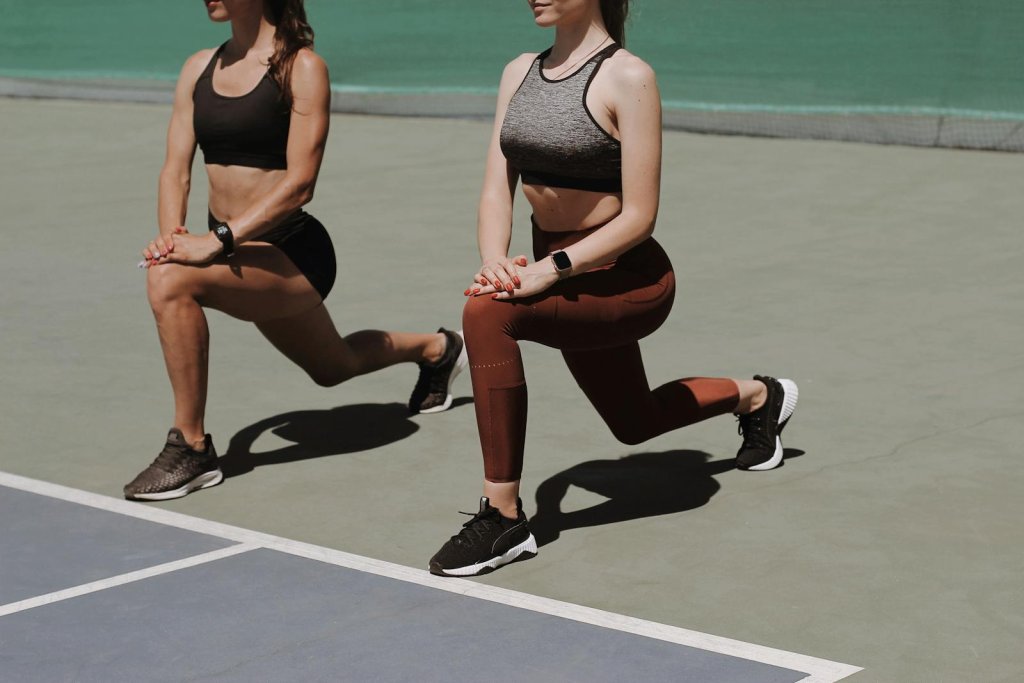
Understanding knee mobility exercises helps you move more freely, support joint comfort, and maintain functional independence as you age. Most programs combine controlled range-of-motion drills, light strengthening, and flexibility work, all performed without forcing the joint. Reputable fitness and clinical organizations such as the American College of Sports Medicine emphasize gradual progression, pain-free movement, and consistency rather than intensity.
Below is a clear, evidence-informed guide to the 10 best knee mobility exercises, along with benefits, safety guidance, FAQs, and research references.
What Are Knee Mobility Exercises?
Knee mobility exercises focus on maintaining or improving movement at the knee joint through comfortable flexion (bending) and extension (straightening). These exercises often involve:
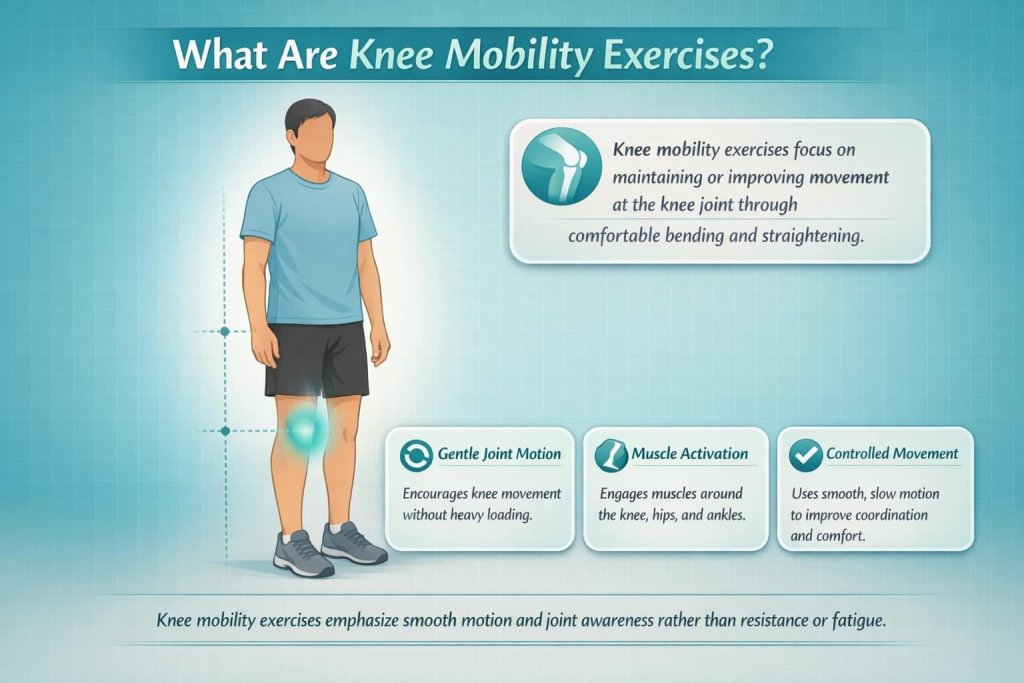
- Gentle joint motion without heavy loading
- Muscle activation around the knee, hips, and ankles
- Controlled, slow movement to improve coordination and comfort
Unlike strength training, knee mobility exercises prioritize smooth motion and joint awareness rather than resistance or fatigue.
Why Knee Mobility Exercises Matter
Regular knee mobility work may help support:
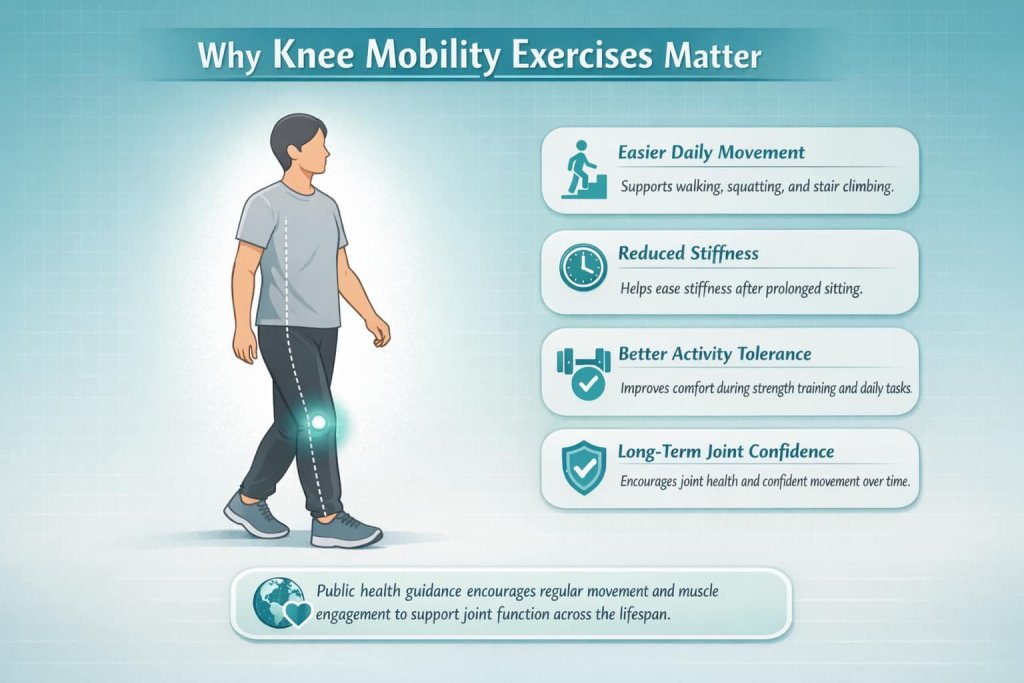
- Easier walking, squatting, and stair climbing
- Reduced stiffness after long periods of sitting
- Better tolerance to strength training and daily activity
- Long-term joint health and movement confidence
Public health guidance from organizations such as the Centers for Disease Control and Prevention and the World Health Organization encourages regular movement and muscle engagement to support joint function across the lifespan.
10 Best Knee Mobility Exercises
These knee mobility exercises focus on gentle, controlled movement to support comfortable bending and straightening of the knee. They are designed to improve flexibility, coordination, and everyday movement confidence without heavy joint loading.
1. Heel Slides
Why it works:
Heel slides gently move the knee through flexion and extension without bodyweight loading. This controlled motion helps maintain joint lubrication, supports comfortable range of motion, and is commonly used in early-stage mobility and recovery programs.
Muscles worked:
Quadriceps, hamstrings (light activation)
How to do it:
- Lie on your back with both legs extended and relaxed
- Slowly slide one heel along the floor toward your hips
- Allow the knee to bend only as far as feels comfortable
- Pause briefly at the end range
- Slide the heel back to the starting position with control
- Repeat on both sides
Trainer tip:
Use a smooth surface or socks to reduce friction and keep the movement slow and relaxed.
2. Seated Knee Extensions
Why it works:
This exercise reinforces active knee straightening and improves coordination between the brain and quadriceps. It supports everyday movements like standing up, walking, and stair navigation.
Muscles worked:
Quadriceps
How to do it:
- Sit upright in a chair with feet flat and hips all the way back
- Slowly extend one leg until the knee straightens comfortably
- Pause briefly at the top
- Lower the foot back to the floor under control
- Alternate sides
Trainer tip:
Think about lifting the shin rather than “locking” the knee for smoother control.
3. Standing Hamstring Stretch
Why it works:
Tight hamstrings can limit knee extension and affect walking mechanics. Improving hamstring flexibility helps the knee move more freely during daily activities.
Muscles worked:
Hamstrings, calves
How to do it:
- Place one heel on a low step, bench, or chair
- Keep the knee softly bent, not locked
- Hinge forward at the hips while keeping the spine neutral
- Hold the stretch comfortably
- Switch sides
Trainer tip:
You should feel gentle tension behind the thigh, not pulling behind the knee.
4. Quad Sets
Why it works:
Quad sets activate the muscles that support knee alignment and stability. This exercise helps reinforce knee control without joint movement or impact.
Muscles worked:
Quadriceps
How to do it:
- Sit or lie down with one leg extended
- Tighten the muscles on the front of the thigh
- Gently press the back of the knee toward the floor or mat
- Hold for a few seconds
- Relax and repeat
Trainer tip:
Focus on feeling the thigh tighten rather than pressing harder into the floor.
5. Sit-to-Stand
Why it works:
Sit-to-stand trains coordinated knee bending and straightening in a functional, real-world pattern. It supports strength, balance, and movement confidence.
Muscles worked:
Quadriceps, glutes, hamstrings
How to do it:
- Sit on a chair with feet hip-width apart
- Lean slightly forward from the hips
- Stand up slowly using your legs
- Sit back down under control
- Repeat at a steady pace
Trainer tip:
Use a higher chair or armrests if needed to keep the movement smooth.
6. Standing Calf Stretch
Why it works:
Ankle mobility directly affects knee movement during walking and squatting. Flexible calves allow the knee to track more naturally over the foot.
Muscles worked:
Gastrocnemius, soleus
How to do it:
- Step one foot back into a staggered stance
- Keep the back heel down
- Bend the front knee slightly
- Hold the stretch, then switch sides
Trainer tip:
If the stretch feels too intense, shorten your stance.
7. Knee Flexion Stretch (Standing)
Why it works:
This stretch gently improves knee bending while maintaining upright posture, helping reinforce controlled flexion without excessive joint load.
Muscles worked:
Quadriceps, hamstrings
How to do it:
- Stand next to a wall or chair for balance
- Bend one knee, bringing the heel toward the glutes
- Hold briefly at a comfortable range
- Lower the foot back down
- Switch sides
Trainer tip:
Let the knee bend naturally—avoid forcing extra range.
8. Step-Back Lunges (Shallow Range)
Why it works:
Stepping backward reduces forward knee stress while still encouraging controlled knee motion. This variation supports mobility, balance, and coordination.
Muscles worked:
Quadriceps, glutes, hamstrings
How to do it:
- Stand tall with feet hip-width apart
- Step one foot backward into a short lunge
- Lower slightly, keeping the front knee comfortable
- Push through the front foot to return to standing
- Alternate sides
Trainer tip:
Keep the range shallow and pain-free—depth is optional.
9. Ankle Pumps
Why it works:
Smooth ankle movement supports proper knee mechanics during walking and standing. This simple drill helps maintain circulation and joint motion.
Muscles worked:
Calves, tibialis anterior
How to do it:
- Sit or lie down with legs extended
- Point the toes away from you
- Pull the toes back toward your shins
- Move rhythmically through a comfortable range
Trainer tip:
This exercise works well as a warm-up, cooldown, or desk-break drill.
10. Gentle Cycling (Low Resistance)
Why it works:
Cycling provides repetitive knee bending and straightening with minimal joint impact. The circular motion encourages smooth, continuous knee mobility.
Muscles worked:
Quadriceps, hamstrings, calves
How to do it:
- Use a stationary bike or pedal machine
- Set resistance to low
- Pedal smoothly at a relaxed pace
- Start with short durations and build gradually
Trainer tip:
Adjust the seat so the knee stays slightly bent at the bottom of each pedal stroke.
How Often Should You Do Knee Mobility Exercises?
Most general fitness and orthopedic guidelines suggest performing knee mobility exercises 2–5 days per week, depending on comfort and activity level. The American Academy of Orthopaedic Surgeons commonly recommends consistent, moderate routines rather than infrequent intense sessions.
Common Mistakes to Avoid
- Forcing the knee into painful ranges
- Moving too fast or bouncing during stretches
- Ignoring hip and ankle mobility
- Skipping rest days when the knee feels irritated
Common Causes of Knee Stiffness and Limited Mobility
Knee stiffness and limited mobility often develop gradually and are commonly influenced by everyday movement habits rather than a single issue. Recognizing these factors helps set realistic expectations and supports safer exercise choices.
Common, non-medical contributors include:
- Prolonged sitting or inactivity – Long periods of sitting can temporarily reduce joint movement and cause stiffness when standing or walking.
- Limited use of full knee range – Avoiding bending or squatting may reduce flexibility over time.
- Muscle tightness around the knee – Tight quadriceps, hamstrings, calves, or hips can affect smooth knee motion.
- Lower physical activity levels – Reduced movement may decrease joint coordination and ease of motion.
- Age-related movement changes – Without regular movement, joint tissues may become less adaptable with age.
These factors are common and often manageable with consistent, pain-free mobility exercises and regular daily movement.
When to Consider Professional Guidance
Knee mobility exercises are generally safe when performed slowly and within a comfortable range. However, there are situations where guidance from a qualified professional may be appropriate.
Consider seeking professional advice if you experience:
- Persistent knee swelling or warmth that does not improve with rest
- Sharp, catching, or worsening pain during or after movement
- Significant movement limitations that interfere with walking, standing, or daily tasks
- Recent knee injury or surgery, especially during early recovery
- Repeated feelings of instability or giving way in the knee
A licensed physical therapist, orthopedic specialist, or qualified healthcare professional can help determine appropriate movement strategies and exercise progressions tailored to your needs.
Who Should Be Cautious?
You should consider professional guidance if you have:
- Recent knee surgery or injury
- Persistent swelling or sharp pain
- Known joint conditions requiring supervision
Clinical guidelines from organizations such as the Arthritis Foundation consistently emphasize that exercise can be safe when appropriately selected and progressed.
FAQs About Knee Mobility Exercises
1. Can knee mobility exercises help with stiffness?
They may help support smoother movement and reduce the feeling of stiffness when performed consistently and comfortably.
2. Are knee mobility exercises safe for beginners?
Yes, most are low-impact and suitable for beginners when done without pain.
3. How long does it take to notice improvement?
Many people notice improved comfort within a few weeks of regular practice.
4. Should knee mobility exercises hurt?
No. Mild tension is acceptable, but sharp or worsening pain is not.
5. Can I do knee mobility exercises every day?
Light mobility drills can often be done daily, depending on tolerance.
6. Do I need equipment?
Most exercises require no equipment or simple household items like a chair.
Conclusion
Knee mobility exercises are a simple, effective way to support joint comfort, movement confidence, and everyday function. By practicing gentle, controlled movements consistently, you can help maintain healthy knee motion and stay active longer. Start with the exercises that feel most comfortable and progress gradually.
This content is for informational purposes only and not medical advice.
References
- Knee Conditioning Program (OrthoInfo) – American Academy of Orthopaedic Surgeons (AAOS)
- Knee Conditioning Program (PDF) – AAOS
- Knee Rehabilitation Exercises – AAOS OrthoInfo
- Exercises for Knee Muscle and Joint Problems – NHS inform
- Adult Physical Activity Guidelines (Adults Need 150 Minutes + 2 Days Strength) – CDC
- Physical Activity Guidelines for Americans, 2nd Edition (PDF) – U.S. Department of Health and Human Services
- 2019 ACR/Arthritis Foundation Guideline for Osteoarthritis (Hand, Hip, Knee) – PubMed
- Osteoarthritis of the Knee Clinical Care Standard 2024 (PDF) – Australian Commission on Safety and Quality in Health Care