
Diastasis recti exercises for men focus on rebuilding deep core control and managing abdominal pressure—not aggressive ab training. When done correctly, targeted exercises may help improve core strength, stability, and function without worsening the separation.
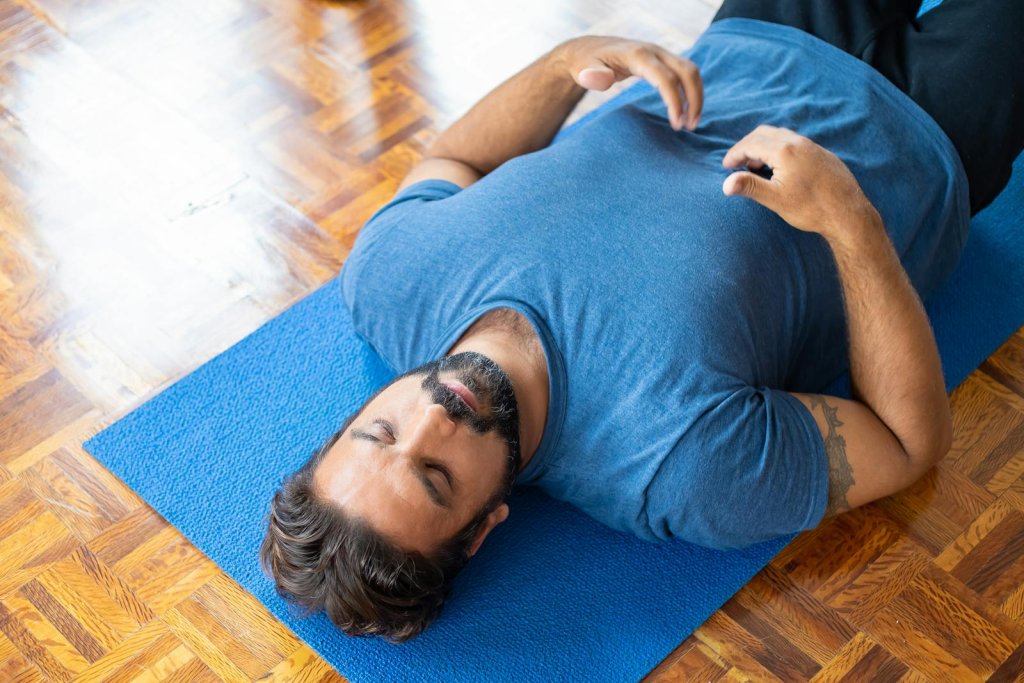
Diastasis recti (a separation along the midline of the abdominal wall) is commonly discussed in pregnancy, but men can develop it too—often due to excess abdominal pressure, heavy lifting, weight gain, or poor core mechanics. Understanding which exercises are safe and effective helps you train confidently while protecting your core.
Below is a science-aligned, physiotherapy-inspired guide to the best diastasis recti exercises for men, along with safety rules, progressions, FAQs, and trusted references.
What Is Diastasis Recti in Men?
Diastasis recti abdominis (DRA) is a widening of the connective tissue (linea alba) between the left and right sides of the rectus abdominis muscles.
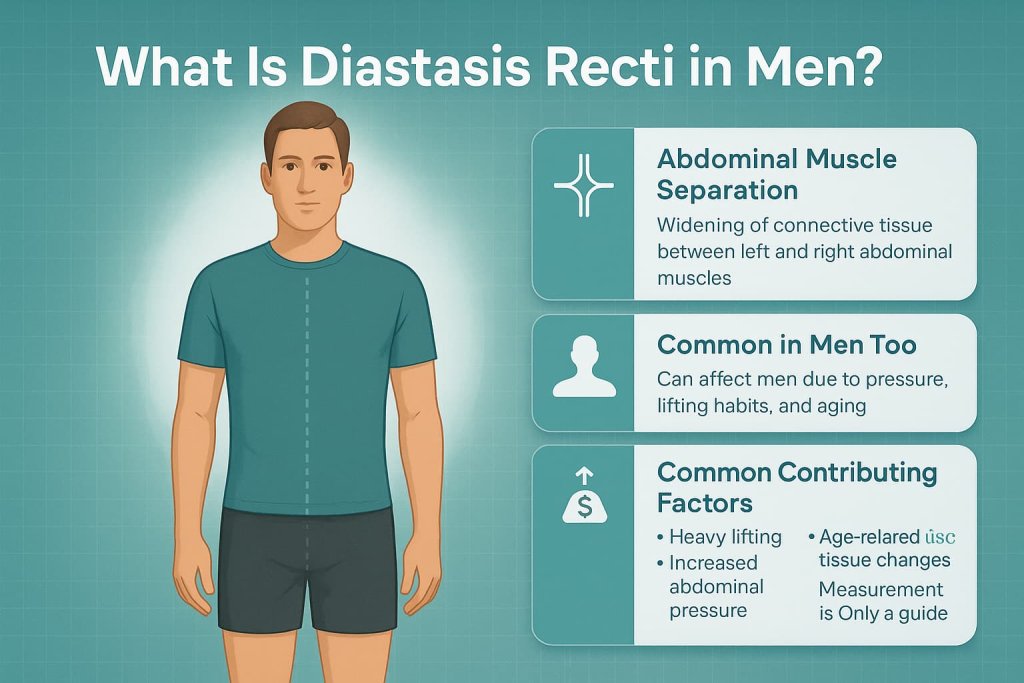
In men, common contributing factors include:
- Increased abdominal pressure (obesity or heavy lifting)
- Poor breathing and bracing habits
- Repetitive strain during strength training
- Aging-related connective-tissue changes
According to the Cleveland Clinic, a separation of around 2 cm or more is often used as a reference point, but symptoms and function matter more than the measurement alone.
What Causes Diastasis Recti in Men?
Diastasis recti in men typically develops when the abdominal wall is repeatedly exposed to excessive or poorly managed internal pressure. Over time, this pressure can stretch the connective tissue (linea alba) that runs down the center of the abdomen.
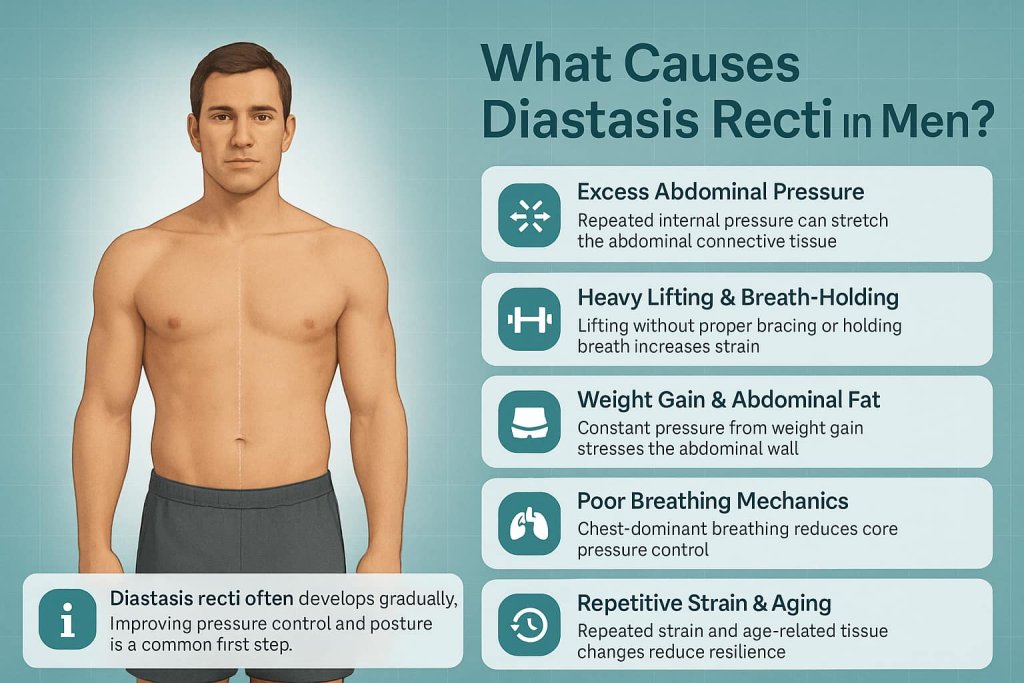
Common contributing factors include:
- Heavy lifting without proper core bracing, especially when breath-holding is involved
- Increased abdominal fat or rapid weight gain, which raises constant pressure on the abdominal wall
- Poor breathing mechanics, such as chest-dominant breathing instead of rib-based breathing
- Repetitive strain from certain exercises, particularly aggressive sit-ups or twisting movements
- Age-related connective-tissue changes, which may reduce tissue resilience
In many cases, diastasis recti develops gradually rather than from a single event. Improving pressure control, posture, and deep core coordination is often the first step in conservative management.
Can Exercises Help Diastasis Recti in Men?
Yes—exercise is considered a first-line, conservative approach for managing diastasis recti.
Clinical guidance emphasizes:
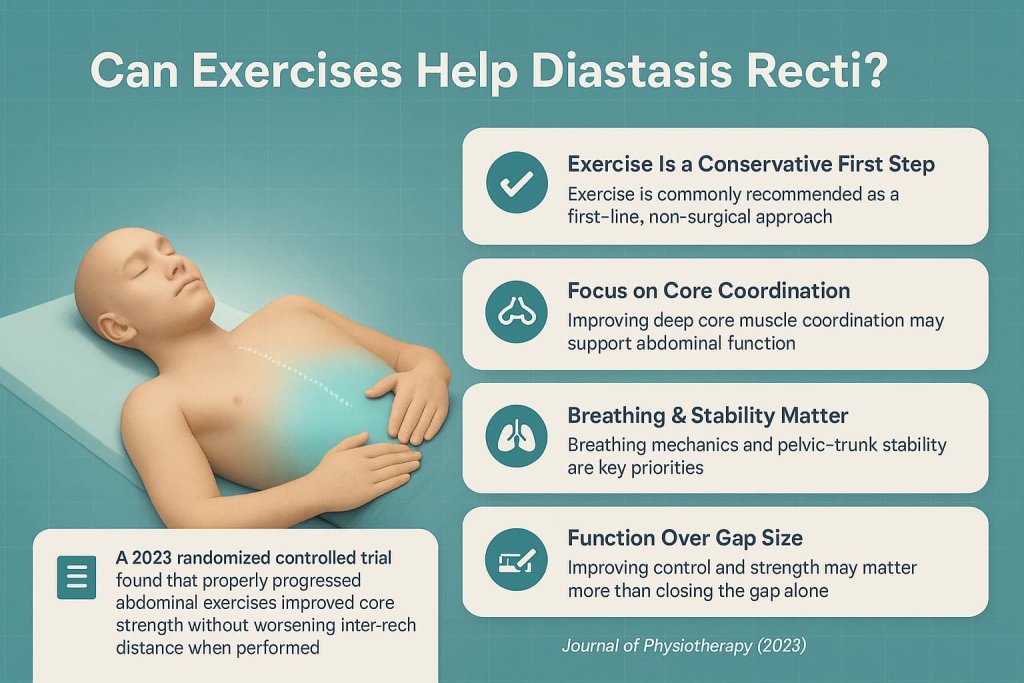
- Deep core muscle coordination (especially the transverse abdominis)
- Proper breathing mechanics
- Trunk and pelvic stability
- Avoiding movements that cause visible “doming” or bulging at the midline
Research shows that well-chosen abdominal exercises, when performed with correct technique and breathing, do not automatically worsen diastasis recti and may improve core strength and function.
10 Best Diastasis Recti Exercises for Men
These exercises are commonly used in physical therapy and core-rehab programs. They prioritize control, alignment, and pressure management.
1. Diaphragmatic Breathing
Why it works
Diaphragmatic breathing helps regulate intra-abdominal pressure, which is essential for managing diastasis recti. Instead of pushing pressure outward against the abdominal wall, this breathing pattern encourages the rib cage, diaphragm, and deep core muscles to work together. Over time, this coordination supports better core control during daily movements and exercise.
Muscles worked
Diaphragm, transverse abdominis, pelvic floor, deep core stabilizers
How to do it
- Lie on your back with knees bent and feet flat
- Place one hand on your chest and the other on your abdomen
- Inhale slowly through your nose, allowing your rib cage to expand outward
- Keep the chest relatively still
- Exhale slowly through your mouth, gently drawing the abdomen inward
- Maintain relaxed shoulders and neck throughout
Trainer Tip
Think of expanding your ribs “360 degrees” rather than pushing your belly up aggressively.
2. Supine Abdominal Bracing
Why it works
Supine abdominal bracing teaches you how to activate the deep abdominal wall without spinal movement. This skill is critical for men with diastasis recti because it builds tension in the core while minimizing strain on the linea alba. It forms the foundation for safer lifting and more advanced exercises.
Muscles worked
Transverse abdominis, internal obliques, spinal stabilizers
How to do it
- Lie on your back with knees bent
- Take a relaxed breath in
- Gently tighten your core as if preparing for a light cough
- Keep your spine and pelvis neutral
- Continue breathing normally while holding the brace
- Hold for 5–10 seconds, then relax
Trainer Tip
You should feel firmness under your fingers, not a hard “sucking in” of the stomach.
3. Posterior Pelvic Tilt
Why it works
This movement improves awareness and control of pelvic position. Many men with diastasis recti over-arch their lower back, increasing abdominal pressure. Posterior pelvic tilts teach controlled spinal positioning while engaging the lower abdominals in a safe, low-load way.
Muscles worked
Lower abdominals, glutes, deep spinal stabilizers
How to do it
- Lie on your back with knees bent
- Inhale gently to prepare
- Exhale and tilt your pelvis so your lower back flattens into the floor
- Hold the position briefly
- Relax and return to neutral
Trainer Tip
Focus on slow control rather than pushing your back hard into the floor.
4. Heel Slides
Why it works
Heel slides challenge your ability to maintain core tension while the legs move independently. This mimics everyday activities like walking and stepping while keeping abdominal pressure under control.
Muscles worked
Transverse abdominis, hip flexors (light), stabilizing core muscles
How to do it
- Lie on your back with knees bent
- Lightly brace your core
- Slowly slide one heel away along the floor
- Keep your pelvis and spine stable
- Slide the heel back to the starting position
- Alternate sides
Trainer Tip
Only slide as far as you can without losing abdominal control or seeing doming.
5. Bent-Knee Fallouts
Why it works
Bent-knee fallouts train anti-rotation strength, which helps prevent unwanted twisting through the trunk. This type of control is especially important for men who lift, carry, or rotate frequently in daily life.
Muscles worked
Obliques, transverse abdominis, deep core stabilizers
How to do it
- Lie on your back with knees bent and feet flat
- Brace your core gently
- Slowly allow one knee to fall outward
- Keep hips level and pelvis steady
- Bring the knee back to center
- Switch sides
Trainer Tip
Move slowly—speed increases pressure and reduces control.
6. Marching Toe Taps
Why it works
This exercise progresses core stability by increasing lever length while maintaining spinal neutrality. It helps bridge the gap between basic core activation and more functional movement patterns.
Muscles worked
Deep abdominals, hip flexors, stabilizing core muscles
How to do it
- Lie on your back with hips and knees bent to about 90 degrees
- Brace your core
- Slowly lower one foot to lightly tap the floor
- Keep your lower back position steady
- Return to start and alternate legs
Trainer Tip
If your lower back arches or your abdomen bulges, reduce the range.
7. Glute Bridge (Controlled)
Why it works
The glute bridge strengthens the posterior chain while reinforcing coordinated core bracing. Strong glutes reduce compensatory strain on the lower back and help manage abdominal pressure during lifting and standing tasks.
Muscles worked
Glutes, hamstrings, transverse abdominis, spinal stabilizers
How to do it
- Lie on your back with knees bent and feet hip-width apart
- Brace your core lightly
- Squeeze your glutes and lift your hips
- Keep ribs down and spine neutral
- Lower hips slowly with control
Trainer Tip
Exhale gently as you lift to improve pressure management.
8. Bird Dog
Why it works
Bird dog trains cross-body coordination and spinal stability, both of which are essential for functional core strength. It challenges the core without excessive compression or flexion.
Muscles worked
Core stabilizers, glutes, shoulders, spinal extensors
How to do it
- Start on hands and knees
- Brace your core lightly
- Extend the opposite arm and leg
- Keep spine neutral and hips level
- Hold briefly, then switch sides
Trainer Tip
Imagine balancing a glass of water on your lower back—no shifting.
9. Side Plank (Short Lever)
Why it works
Side planks build lateral core strength with less abdominal pressure than traditional planks. This supports trunk stability and helps protect the abdominal wall during rotational movements.
Muscles worked
Obliques, transverse abdominis, shoulder stabilizers
How to do it
- Lie on your side with knees bent
- Stack shoulders and hips
- Brace your core
- Lift hips off the floor
- Hold briefly, then lower
Trainer Tip
Master the bent-knee version before progressing to straight legs.
10. Pallof Press (Band or Cable)
Why it works
The Pallof press trains the core to resist rotation, a key component of real-world strength. It reinforces stable bracing while the arms move, which is crucial for lifting, carrying, and sport activities.
Muscles worked
Deep core muscles, obliques, shoulder stabilizers
How to do it
- Stand sideways to a band or cable
- Hold the handle close to your chest
- Brace your core
- Press arms straight forward
- Resist rotation and return slowly
Trainer Tip
Start with very light resistance and prioritize control over load.
How Often Should Men Do Diastasis Recti Exercises?
Most men can perform diastasis recti exercises 3 to 5 days per week, depending on comfort, fatigue, and overall activity level.
General programming guidelines include:
- Start with 1–2 sets per exercise, focusing on slow, controlled repetitions
- Keep effort at a moderate intensity, avoiding strain or breath-holding
- Rest as needed between exercises to maintain proper form
- Stop or modify any exercise that causes midline bulging or discomfort
Consistency and technique are more important than volume. Gradual progression, combined with good breathing and posture habits throughout the day, tends to support better long-term outcomes.
How These Exercises Were Selected
The exercises in this guide were selected based on clinical rehabilitation principles commonly used by physical therapists when managing diastasis recti.
Selection criteria included exercises that:
- Emphasize deep core muscle coordination rather than maximal strength
- Support neutral spine and pelvic control
- Encourage proper breathing and pressure management
- Minimize excessive spinal flexion, twisting, or abdominal bulging
- Are commonly used in early-to-intermediate core rehabilitation programs
Rather than focusing on “closing the gap,” these exercises prioritize improving core function, stability, and movement control, which are widely considered more meaningful indicators of progress.
Key Safety Rules Before You Start
Before trying any diastasis recti exercises for men, follow these principles:
- Stop or regress any exercise that causes midline bulging or doming
- Exhale gently during effort to manage abdominal pressure
- Avoid breath-holding (Valsalva) in early stages
- Focus on slow, controlled movement—not intensity
- If you suspect a hernia, consult a healthcare professional before training
Exercises Men With Diastasis Recti Should Avoid (Initially)
Avoid or modify exercises that create excessive pressure, including:
- Sit-ups and aggressive crunches
- Russian twists
- Heavy deadlifts without proper bracing
- Planks that cause doming
- Breath-holding during lifts
These movements may be reintroduced later with professional guidance.
How Long Does It Take to See Results?
Most men notice improvements in core control and stability within 6–12 weeks when exercises are performed consistently and correctly. Closing the gap completely is not always necessary—function and symptom improvement are the primary goals.
When to See a Professional
Consult a physical therapist or healthcare provider if:
- You see persistent bulging despite correct exercise
- You have pain, discomfort, or suspected hernia
- Core weakness limits daily activities
Frequently Asked Questions
Can men really get diastasis recti?
Yes. While more common postpartum, diastasis recti also occurs in men due to abdominal pressure, lifting habits, and weight changes.
Should men with diastasis recti do crunches?
Traditional crunches are often discouraged early on. Core-safe alternatives are usually recommended first.
Can diastasis recti heal without surgery?
Mild to moderate cases often improve with conservative exercise. Severe cases may require medical evaluation.
Is lifting weights bad for diastasis recti?
Not necessarily—but poor bracing and breath-holding can worsen symptoms. Technique matters.
Do planks fix diastasis recti?
Only if they can be performed without doming. Modified planks are usually safer initially.
How often should I do these exercises?
Most programs recommend 3–5 days per week with low fatigue and high control.
Conclusion
Diastasis recti exercises for men are about training smarter, not harder. By focusing on breathing, deep core control, and gradual progressions, you can rebuild strength while protecting your abdominal wall.
If you’re unsure where to start, begin with the foundational exercises above and progress slowly. When in doubt, professional guidance can help ensure safe, long-term results.
References
- Cleveland Clinic — Diastasis Recti (Abdominal Separation)
- StatPearls (NCBI Bookshelf) — Diastasis Recti Rehabilitation
- PubMed — Diastasis Recti Abdominis: A Comprehensive Review (2025)
- PubMed — Curl-Up Exercises Improve Strength Without Worsening Inter-Recti Distance (RCT, 2023)
- PubMed — Conservative Interventions and Inter-Recti Distance: Systematic Review & Meta-Analysis (2023)
- PMC Full Text — Conservative Interventions for Diastasis Recti: Systematic Review & Meta-Analysis (2022)
- PubMed — The Valsalva Maneuver and Safety Considerations During Resistance Exercise (2013)
- American Council on Exercise (ACE) — Standing Anti-Rotation Press (Pallof Press) Exercise Library