
The best leg extension alternatives include resistance-band leg extensions, reverse Nordic curls, Spanish squats, heel-elevated squats, Bulgarian split squats, step-ups, hack squats, and leg presses. These exercises strengthen the quadriceps without requiring a traditional leg extension machine.
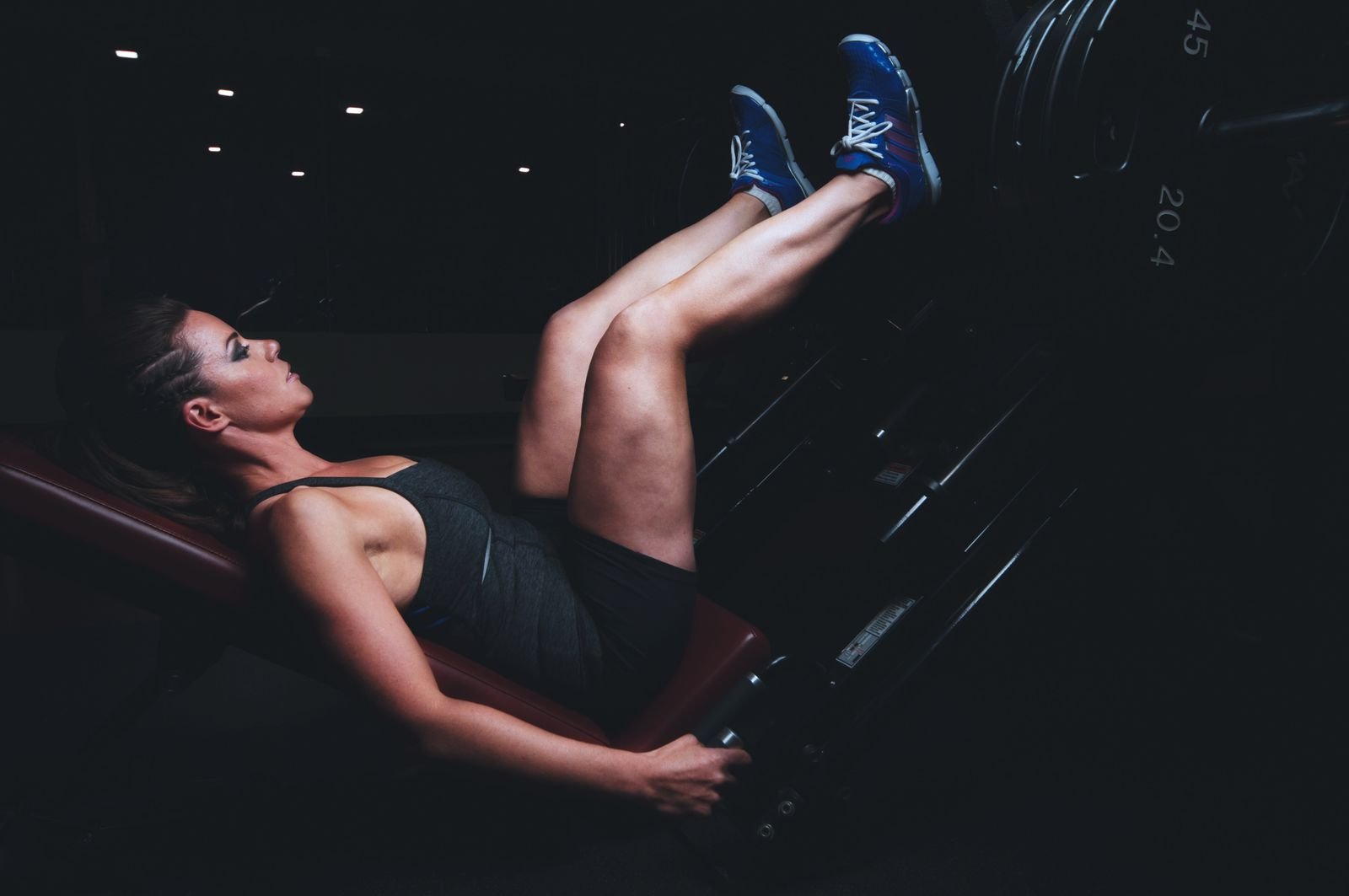
The right choice depends on your equipment, experience, mobility, and training goal. Band leg extensions closely reproduce the machine movement, while squats, step-ups, and leg presses train the quadriceps alongside the glutes and other supporting muscles.
Leg extensions are not automatically harmful or ineffective. However, you may need an alternative when training at home, changing your routine, working around an uncomfortable machine setup, or looking for a compound exercise that trains more of the lower body.
Best Leg Extension Alternatives at a Glance
| Exercise | Best for | Equipment | Difficulty |
|---|---|---|---|
| Seated resistance-band leg extension | Closest home substitute | Resistance band and chair | Beginner |
| Reverse Nordic curl | Bodyweight quad training | Exercise mat | Intermediate |
| Spanish squat | Constant quadriceps tension | Heavy resistance band | Beginner to intermediate |
| Assisted sissy squat | Advanced bodyweight quad training | Stable support | Advanced |
| Heel-elevated goblet squat | Dumbbell quad workouts | Dumbbell and heel wedge | Beginner to intermediate |
| Bulgarian split squat | Single-leg strength and size | Bench and optional weights | Intermediate |
| Step-up | Accessible unilateral training | Stable box or bench | Beginner |
| Hack squat | Stable gym-based quad training | Hack squat machine | Intermediate |
| Leg press | Heavy progressive loading | Leg press machine | Beginner to advanced |
What Muscles Do Leg Extensions Work?
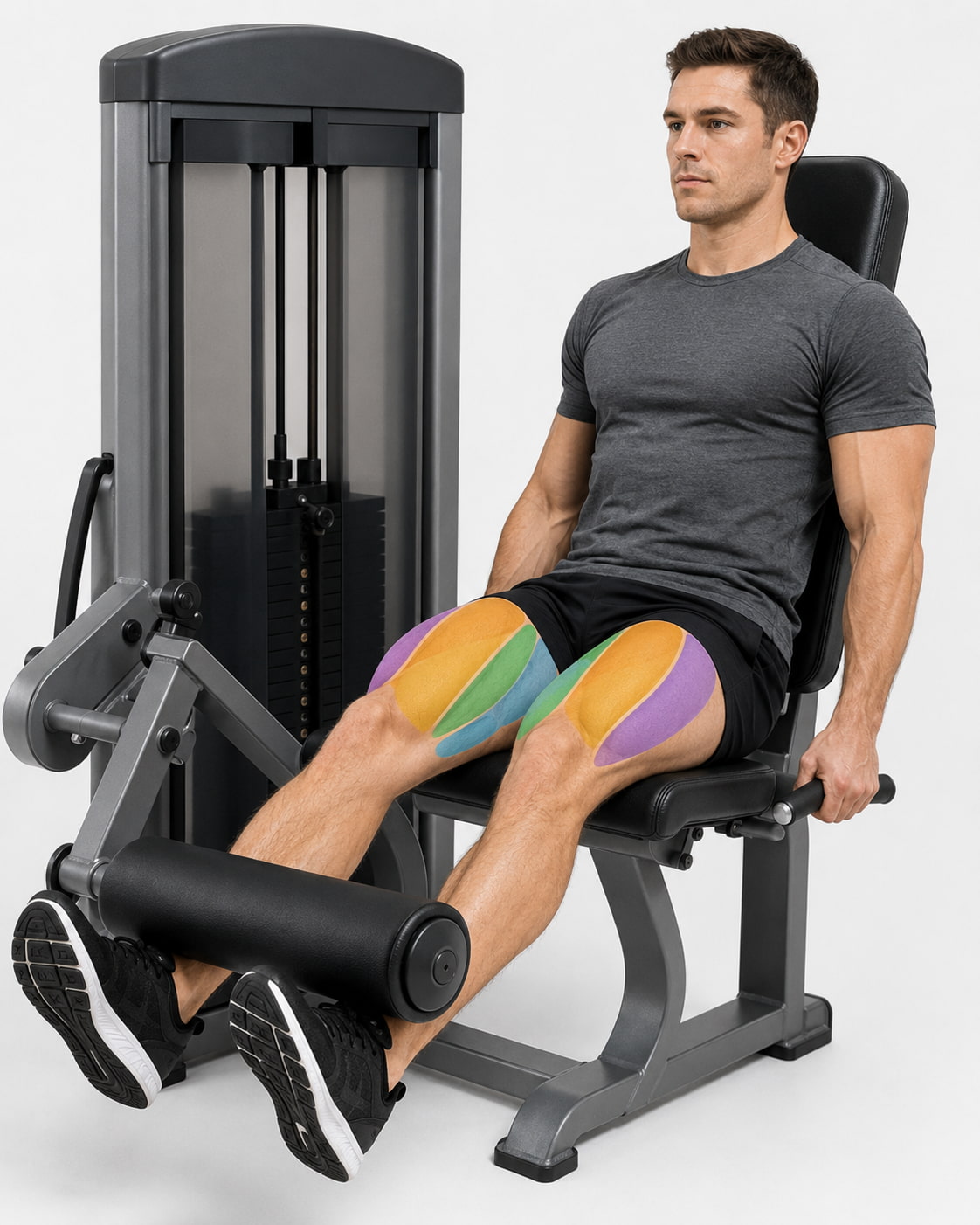
Leg extensions primarily work the quadriceps at the front of the thigh. The quadriceps group contains four muscles:
- Rectus femoris
- Vastus lateralis
- Vastus medialis
- Vastus intermedius
All four contribute to straightening the knee. The rectus femoris also crosses the hip and assists with hip flexion. The National Library of Medicine identifies knee extension as the quadriceps group’s main shared function.
Most leg extension alternatives also involve the glutes, hamstrings, calves, core, and hip stabilizers. That does not make them inferior, but it means they are not exact copies of the machine exercise.
A recent comparison of Smith-machine squats and leg extensions found that the two exercises produced different regional quadriceps adaptations. Leg extensions favored rectus femoris growth, while squats produced greater growth at a measured region of the vastus lateralis and improved squat strength more. This suggests that isolation and compound exercises can complement each other rather than serving as perfect replacements.
9 Best Leg Extension Alternatives
These nine leg extension alternatives target the quadriceps using bodyweight, bands, dumbbells, and gym machines. Choose the options that match your equipment, fitness level, and training goals.
1. Seated Resistance-Band Leg Extension
Why it works: The seated resistance-band leg extension is one of the closest machine-free substitutes because it uses the same basic action: extending the knee against resistance. It is inexpensive, portable, and easy to include in a home workout or as a high-repetition finisher.
Muscles worked: This exercise primarily targets the quadriceps, including the rectus femoris, vastus lateralis, vastus medialis, and vastus intermedius. The hip and core muscles work lightly to keep your upper body stable.
How to do it:
- Secure a resistance band to a heavy, stable object behind your chair.
- Loop the other end around one ankle.
- Sit tall with your hips and back supported.
- Begin with your knee comfortably bent.
- Extend your lower leg until the knee is nearly straight.
- Pause briefly while contracting your quadriceps.
- Lower your foot slowly to the starting position.
- Complete all repetitions before changing legs.
Trainer Tip: Keep your thigh still instead of lifting it from the chair. Begin with two or three sets of 12–20 controlled repetitions per leg. Move farther from the anchor or use a stronger band when you can complete the top of the range without losing control.
2. Reverse Nordic Curl
Why it works: The reverse Nordic curl challenges the quadriceps as you lean backward while keeping the hips extended. It requires no machine and creates a demanding eccentric, or lowering, phase. Research supports it as a viable quadriceps exercise, although it does not consistently produce greater quadriceps activation than every squat-based movement.
Muscles worked: The quadriceps perform most of the work, with considerable involvement from the rectus femoris because the exercise combines knee flexion with an extended hip position. The glutes and abdominal muscles help maintain a straight line from the knees through the shoulders.
How to do it:
- Kneel on a padded mat with your knees approximately hip-width apart.
- Point your feet behind you or keep your toes tucked, depending on comfort.
- Squeeze your glutes and brace your abdomen.
- Keep your torso and thighs in one straight line.
- Lean backward slowly by bending only at the knees.
- Descend as far as you can control without breaking at the hips.
- Contract your quadriceps to return to the upright position.
Trainer Tip: Start with a small range of motion. Two or three sets of 6–10 repetitions may be enough for beginners to this movement. Hold a resistance band in front of you for assistance rather than dropping quickly into a deep position.
3. Spanish Squat
Why it works: The Spanish squat allows you to sit backward while a strong band supports the area behind your knees. This setup helps keep the torso relatively upright and maintains quadriceps tension throughout the movement. It can be performed dynamically or held as an isometric squat.
Muscles worked: The quadriceps are the primary muscles involved. The glutes, calves, and core assist with stability, but the upright position and forward shin angle can keep the exercise strongly knee-extensor focused.
How to do it:
- Attach a heavy resistance band to a secure anchor at approximately knee height.
- Step inside the band so it rests behind both knees.
- Walk backward until the band is tight.
- Stand with your feet around shoulder-width apart.
- Keep your torso upright and sit backward against the band.
- Bend your knees until you reach a comfortable squat depth.
- Pause briefly while keeping your feet flat.
- Drive through your feet to stand.
Trainer Tip: The anchor must be strong enough to support your body weight. Start with two or three sets of 8–15 repetitions. You can also hold the bottom position for 20–40 seconds, but do not use this exercise to self-manage an existing knee or tendon condition without professional guidance.
4. Assisted Sissy Squat
Why it works: The assisted sissy squat keeps the hips relatively extended while the knees travel forward, producing a strong quadriceps challenge with little equipment. Holding a stable support makes it easier to control the movement and reduces the balance requirement.
Muscles worked: The quadriceps perform most of the work, especially as the knees bend and the body leans backward. The calves, abdominals, and hip muscles help maintain balance and body alignment.
How to do it:
- Stand beside a secure rack, post, or other stable support.
- Hold the support lightly with one or both hands.
- Position your feet approximately hip-width apart.
- Rise slightly onto the balls of your feet.
- Brace your core and keep your hips extended.
- Allow your knees to move forward as your body leans backward.
- Descend only as far as you can control.
- Contract your quadriceps to return to standing.
Trainer Tip: This is an advanced option, not a required exercise. Begin with a shallow range for two or three sets of 6–10 repetitions. Choose a band leg extension or heel-elevated squat when this movement feels unstable or uncomfortable.
5. Heel-Elevated Goblet Squat
Why it works: Elevating the heels can make it easier to keep the torso upright and allow more forward knee travel, increasing the demand on the quadriceps. Holding a dumbbell at chest level provides an accessible way to add resistance without using a leg extension machine.
Muscles worked: The quadriceps are heavily involved, while the gluteus maximus, adductors, calves, and core contribute to the squat. Unlike a leg extension, this is a multi-joint movement involving both the knees and hips.
How to do it:
- Place your heels on a solid squat wedge or two secure weight plates.
- Stand with your feet around shoulder-width apart.
- Hold one dumbbell vertically against your chest.
- Brace your abdomen and keep your chest comfortably upright.
- Bend your knees and hips to lower into a squat.
- Keep your feet planted and your knees tracking with your toes.
- Descend to a depth you can control.
- Push through your feet to return to standing.
Trainer Tip: Use a low, stable heel elevation rather than balancing on an unstable object. Perform three sets of 8–15 repetitions. Increase the weight only after you can maintain consistent foot pressure, knee control, and depth.
6. Bulgarian Split Squat
Why it works: The Bulgarian split squat trains one leg at a time, making it useful for building quadriceps strength, balance, and side-to-side control. A shorter stance and upright torso generally create a more knee-dominant movement, while a longer stance often increases hip involvement.
Muscles worked: The front-leg quadriceps and gluteus maximus perform most of the work. The hamstrings, adductors, calves, core, and hip stabilizers assist with balance and control.
How to do it:
- Stand a short distance in front of a stable bench.
- Place the top of one foot on the bench behind you.
- Keep most of your weight over the front leg.
- Brace your core and keep your front foot flat.
- Bend your front knee and lower your back knee toward the floor.
- Keep the front knee moving in line with the toes.
- Descend as far as you can without losing balance.
- Push through the front foot to stand.
- Complete all repetitions before switching sides.
Trainer Tip: Learn the exercise with body weight before adding dumbbells. Start with two or three sets of 8–12 repetitions per side. If balance limits your quadriceps more than strength does, hold a rack lightly with one hand.
7. Step-Up
Why it works: Step-ups train the quadriceps through a practical single-leg movement that can be adjusted by changing the box height or external load. They are generally easier to learn than Bulgarian split squats and can expose differences in strength or control between sides.
Muscles worked: Step-ups primarily involve the quadriceps and gluteus maximus of the working leg. The hamstrings, calves, core, and hip stabilizers support the movement. Biomechanical research shows that quadriceps muscle force rises as external load increases during step-ups and split squats.
How to do it:
- Stand in front of a secure box or bench.
- Place one entire foot on top of the platform.
- Brace your core and lean forward only slightly.
- Push through the elevated foot to lift your body.
- Stand tall at the top without forcefully locking the knee.
- Lower yourself slowly under control.
- Keep the working foot on the box for all repetitions.
- Complete the set before switching legs.
Trainer Tip: Use a box height that lets you keep the whole foot planted and the pelvis level. Avoid jumping from the lower leg. Begin with two or three sets of 8–12 repetitions per side before adding dumbbells.
8. Hack Squat
Why it works: The hack squat machine supports the torso and follows a fixed path, allowing you to focus on the legs without balancing a free weight. It is not an isolation exercise, but it offers a stable way to train the quadriceps with progressively heavier loads.
Muscles worked: The quadriceps, gluteus maximus, and adductors contribute to the movement. The exact emphasis depends on the machine design, foot position, stance, depth, and individual body proportions.
How to do it:
- Position your shoulders and back firmly against the machine pads.
- Place your feet on the platform around shoulder-width apart.
- Release the safety handles according to the machine instructions.
- Bend your knees and hips while keeping your feet planted.
- Lower the platform to a depth you can control.
- Keep your knees aligned with your toes.
- Push through your feet to extend your knees and hips.
- Stop before forcefully locking your knees.
- Reengage the safety mechanism after the set.
Trainer Tip: Do not place your feet extremely low simply to chase more knee travel. Use a position that allows stable feet and controlled repetitions. Three sets of 6–12 repetitions work well for many strength and muscle-building programs.
9. Leg Press
Why it works: The leg press provides back support and a stable platform, making it easier to progressively load the lower body without balancing a barbell. It is a practical alternative for people who want a machine-based quad exercise but do not have access to a leg extension.
Muscles worked: The quadriceps, glutes, and adductors are the main contributors, with assistance from the hamstrings and calves. Research comparing maximal squats and leg presses found broadly similar quadriceps activity, although joint and muscle forces differed between the exercises.
How to do it:
- Adjust the seat so your hips and lower back remain supported.
- Place your feet around shoulder-width apart on the platform.
- Release the safety handles.
- Lower the platform by bending your knees and hips.
- Stop before your pelvis begins to roll away from the pad.
- Keep your knees tracking in line with your toes.
- Push through your feet to extend your legs.
- Avoid forcefully locking the knees at the top.
- Secure the machine before getting out.
Trainer Tip: A lower foot position may increase knee demand, while a higher position generally involves more hip movement. Use the setup that keeps your feet stable and your hips supported. The American Council on Exercise provides additional machine setup and technique guidance.
Direct Leg Extension Substitutes vs. Compound Alternatives
Not every exercise on this list replaces the leg extension in exactly the same way.
Direct or Near-Direct Substitutes
These movements emphasize knee extension while limiting hip movement:
- Seated resistance-band leg extension
- Reverse Nordic curl
- Spanish squat
- Assisted sissy squat
Choose one of these when you want a more focused quadriceps exercise or a simple finisher after your main lower-body lifts.
Compound Quad Exercises
These movements train the quadriceps while also involving the hips and other lower-body muscles:
- Heel-elevated goblet squat
- Bulgarian split squat
- Step-up
- Hack squat
- Leg press
Compound exercises are often easier to progressively load, but they do not reproduce the exact stimulus of a seated leg extension.
How to Choose the Right Leg Extension Alternative
Your best option depends on your situation.
- For the closest home replacement: Choose seated resistance-band leg extensions.
- For bodyweight training: Try reverse Nordic curls or assisted sissy squats.
- For beginners: Start with band leg extensions, Spanish squats, low step-ups, or heel-elevated goblet squats.
- For single-leg strength: Use Bulgarian split squats or step-ups.
- For heavier gym training: Choose hack squats or leg presses.
- For a complete quad workout: Combine one compound exercise with one direct or near-direct substitute. For example, pair leg presses with band leg extensions or heel-elevated squats with reverse Nordic curls.
Sets and Reps for Quad Strength and Size
There is no single repetition range that everyone must use. Your sets need to be challenging enough to stimulate adaptation while still allowing controlled technique.
A practical starting point is:
| Training goal | Sets | Repetitions | Rest |
|---|---|---|---|
| General strength | 3–5 | 4–8 | 2–3 minutes |
| Strength and size | 3–4 | 6–12 | 90–180 seconds |
| Higher-repetition quad work | 2–4 | 12–20 | 45–90 seconds |
| Isometric Spanish squat | 2–4 | 20–45 seconds | 60–90 seconds |
The 2026 American College of Sports Medicine position stand emphasizes progressive resistance training rather than one universally superior program. Heavier loads tend to favor maximal strength, while sufficient weekly volume supports muscle growth. Training to complete failure is not required for every set.
For most exercises, finish with approximately one to three controlled repetitions still possible. Add a small amount of weight or one or two repetitions when you reach the top of your target range with consistent form.
Example Quad Workout Without Leg Extensions
Home Quad Workout
| Exercise | Sets and reps |
|---|---|
| Heel-elevated goblet squat | 3 × 8–12 |
| Step-up | 3 × 8–12 per leg |
| Seated band leg extension | 2–3 × 12–20 per leg |
| Reverse Nordic curl | 2 × 6–10 |
Gym Quad Workout
| Exercise | Sets and reps |
|---|---|
| Hack squat | 3–4 × 6–10 |
| Bulgarian split squat | 3 × 8–12 per leg |
| Leg press | 2–3 × 10–15 |
| Spanish squat | 2 × 20–40 seconds |
You do not need to perform every exercise in one session. Two to four well-chosen movements are usually enough when the sets are challenging and recovery is appropriate.
Common Mistakes to Avoid
Treating Every Alternative as an Exact Replacement
A squat or leg press trains the quadriceps, but it also involves the hips. Use a band leg extension or another knee-dominant exercise when you specifically want isolated knee extension.
Adding Resistance Too Quickly
More weight is useful only when you can control it. Increase the load gradually instead of sacrificing depth, balance, or knee alignment.
Using Momentum
Bouncing from the bottom of a squat or swinging through band extensions reduces control. Lower the resistance when you cannot pause or reverse the movement smoothly.
Forcing a Specific Range of Motion
Your usable depth depends on mobility, experience, equipment, and comfort. Increase range gradually rather than forcing your knees or hips into a position you cannot control.
Ignoring Equipment Stability
Anchor bands to a structure that cannot slide or tip. Use a box designed to support step-ups, and engage the safety mechanisms on gym machines.
Doing Too Much Quad Volume at Once
Adding several new quad exercises in one workout can create unnecessary soreness and interfere with recovery. Introduce one or two alternatives first and increase your workload gradually.
Are Leg Extensions Bad for Your Knees?
Leg extensions are not automatically bad for healthy knees. They create resistance at the knee, but squats, lunges, step-ups, and leg presses also load the joint in different ways.
The right exercise depends on the person, load, range of motion, technique, training history, and current symptoms. Describing all open-chain knee extensions as dangerous or all closed-chain exercises as safe is inaccurate.
Stop or modify an exercise when it produces sharp pain, increasing swelling, joint locking, unexpected weakness, or a feeling that the knee may give way. The American Academy of Orthopaedic Surgeons recommends medical assessment for symptoms such as severe pain, an inability to move the knee, substantial swelling, or instability following an injury.
People recovering from surgery or managing an existing knee condition should use a program provided or approved by a qualified healthcare professional.
Frequently Asked Questions
What is the best substitute for leg extensions?
A seated resistance-band leg extension is the closest simple substitute because it uses the same knee-extension action. Reverse Nordic curls and assisted sissy squats are useful bodyweight options, while hack squats and leg presses are better for heavier compound training.
Can squats replace leg extensions?
Squats can replace leg extensions when your main goal is general quadriceps and lower-body strength. However, they do not provide the exact same stimulus. Research indicates that squats and leg extensions may produce different regional quadriceps adaptations, so using both movement types can be beneficial.
What is the best leg extension alternative at home?
Resistance-band leg extensions are the most direct home alternative. Heel-elevated goblet squats, step-ups, Spanish squats, and reverse Nordic curls are also effective choices depending on your equipment and experience.
Can I build quads without a leg extension machine?
Yes. Squats, split squats, step-ups, leg presses, and knee-dominant bodyweight movements can all provide progressive resistance to the quadriceps. Consistent training, sufficient effort, adequate recovery, and gradual progression matter more than access to one specific machine.
Are reverse Nordic curls good for quad growth?
Reverse Nordic curls provide a challenging eccentric stimulus to the quadriceps and may support strength and muscle development. However, current research does not show that they are universally superior to squat-based bodyweight exercises.
How often should I train my quads?
Many people can train their quadriceps two or three times per week, provided total volume and intensity allow recovery. Beginners may start with two sessions separated by at least one recovery day.
Should I do leg extension alternatives before or after squats?
Perform a demanding compound exercise such as a hack squat, Bulgarian split squat, or leg press early in the workout when strength is the priority. Place band extensions, reverse Nordics, or Spanish squats later as targeted accessory work. You can reverse the order occasionally when using light pre-fatigue work, but it may reduce the weight you can use on the compound exercise.
Conclusion
Leg extension alternatives make it possible to train your quadriceps effectively at home or in the gym. Resistance-band extensions provide the closest direct replacement, while heel-elevated squats, Bulgarian split squats, step-ups, hack squats, and leg presses offer more complete lower-body training.
Choose one compound exercise and one knee-dominant accessory that fit your equipment and ability. Practice controlled repetitions, track your sets and loads, and progress gradually instead of changing exercises every workout.
This content is for informational purposes only and not medical advice.
References
- American College of Sports Medicine: Resistance Training Prescription for Muscle Function, Hypertrophy, and Physical Performance
- National Library of Medicine: Anatomy of the Quadriceps Femoris
- PubMed: Comparison of Squat and Leg Extension Training
- PubMed: Reverse Nordic Curl and Quadriceps Activation
- American Academy of Orthopaedic Surgeons: Common Knee Injuries