
Pilates exercises for beginners are low-impact, controlled movements that help build core strength, flexibility, balance, and posture without stressing the joints. If you’re new to exercise, returning after a break, or looking for a gentle but effective full-body workout, beginner Pilates offers a safe and accessible starting point.
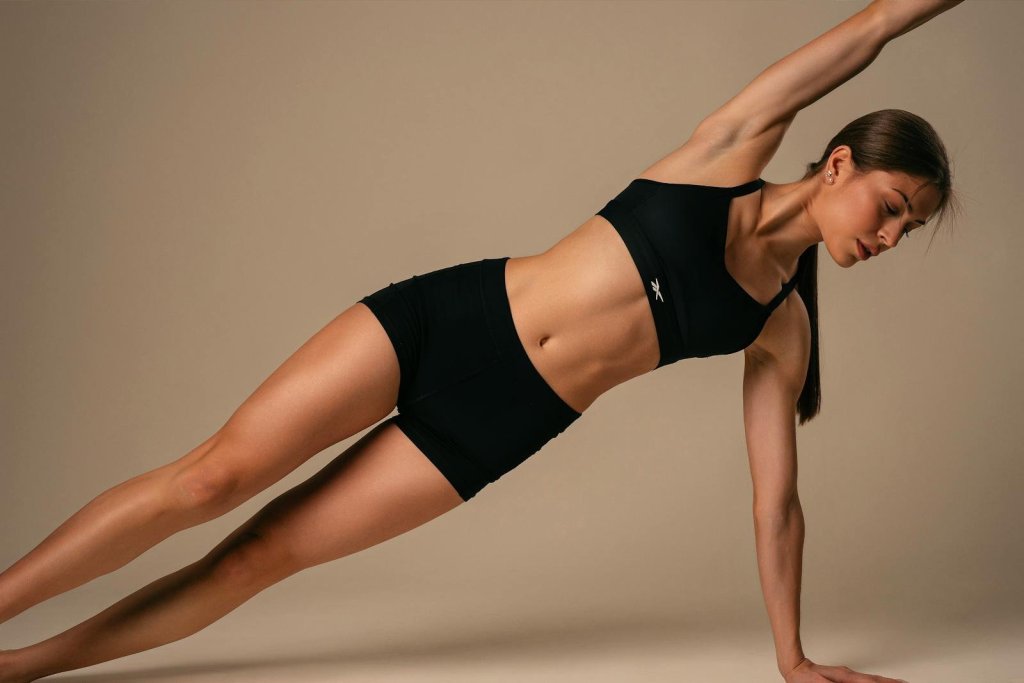
Pilates focuses on quality of movement rather than speed or heavy resistance. Understanding the basics helps you move with better control, reduce strain, and build a strong foundation you can progress from over time.
What Are Pilates Exercises for Beginners?
Pilates exercises for beginners are simplified mat-based movements designed to teach proper breathing, posture, and core engagement. Unlike high-impact workouts, beginner Pilates emphasizes slow, controlled motion and body awareness.
Beginner Pilates typically includes:
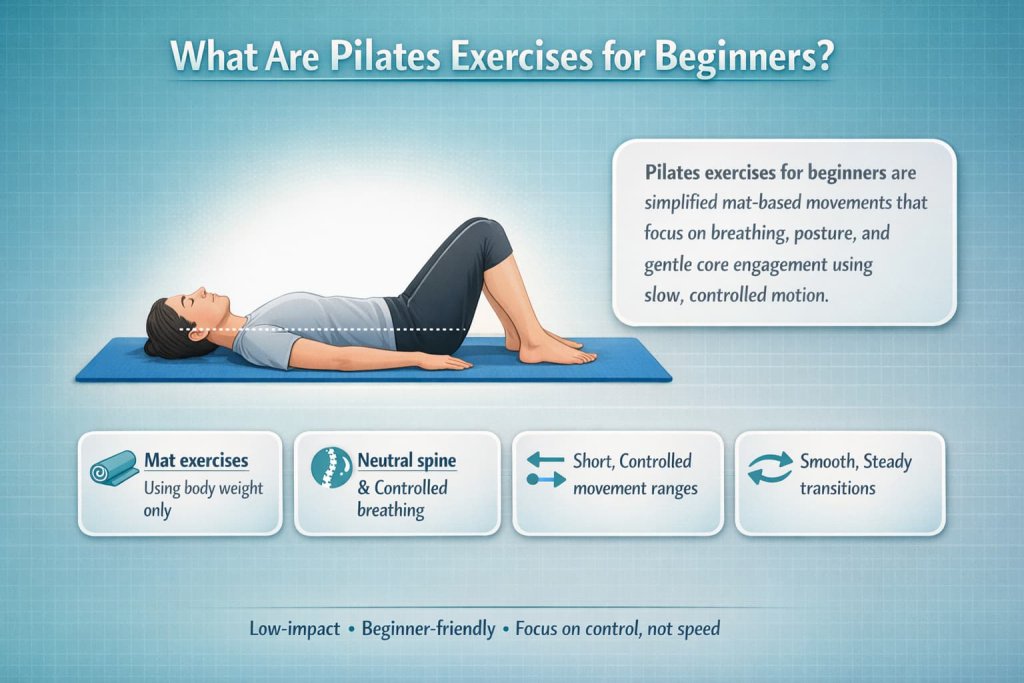
- Mat exercises using body weight only
- Neutral spine positioning and controlled breathing
- Short movement ranges with a focus on form
- Smooth transitions rather than fast repetitions
These features make Pilates approachable for beginners of all ages and fitness levels.
12 Best Pilates Exercises for Beginners
Below are beginner-friendly Pilates exercises commonly used in introductory mat routines. Perform each movement slowly and with control.
1. Pelvic Tilt
How to do it:
- Lie on your back with knees bent and feet flat on the floor
- Keep arms relaxed by your sides
- Inhale to prepare
- Exhale and gently draw your belly button toward your spine
- Flatten your lower back into the mat by tilting the pelvis
- Hold for 3–5 seconds, then relax to neutral
Why it works:
Pelvic tilts teach beginners how to find and control a neutral spine. This movement builds awareness of deep core engagement without loading the spine, making it an essential foundation for all Pilates exercises.
Muscles worked:
The transversus abdominis is the primary muscle activated, with support from the pelvic floor and deep spinal stabilizers.
Trainer Tip:
Think of gently “zipping up” your lower abs rather than pressing hard into the floor—this keeps the movement controlled and precise.
2. Pilates Breathing
How to do it:
- Lie on your back or sit upright with a tall spine
- Place one hand on your rib cage
- Inhale through your nose, expanding the ribs outward
- Exhale slowly through pursed lips
- Keep shoulders relaxed and abs gently engaged
- Repeat for 5–8 controlled breaths
Why it works:
Pilates breathing trains coordination between breath and movement. Proper breathing helps activate the deep core muscles while reducing unnecessary tension in the neck and shoulders.
Muscles worked:
The diaphragm works in coordination with the transversus abdominis and pelvic floor.
Trainer Tip:
Focus on expanding the ribs sideways rather than lifting the chest upward.
3. Knee Folds
How to do it:
- Lie on your back with knees bent and feet on the floor
- Engage your core gently
- Lift one knee toward a tabletop position
- Keep the pelvis still and stable
- Lower the foot back down with control
- Alternate sides
Why it works:
Knee folds introduce single-leg movement while teaching pelvic stability. This helps beginners learn how to control the core as the limbs move independently.
Muscles worked:
Lower abdominals, hip flexors, and deep core stabilizers.
Trainer Tip:
If your pelvis rocks, reduce the range of motion or slow the movement.
4. Heel Slides
How to do it:
- Lie on your back with knees bent
- Engage your core lightly
- Slide one heel away from your body along the mat
- Keep hips level and spine neutral
- Slide the heel back to start
- Switch sides
Why it works:
Heel slides challenge core control without lifting the leg, making them ideal for beginners who need stability-focused movements.
Muscles worked:
Transversus abdominis, hip flexors, and quadriceps.
Trainer Tip:
Move slowly—control matters more than how far the leg extends.
5. Toe Taps
How to do it:
- Lie on your back with legs in tabletop position
- Engage your core and maintain a neutral spine
- Lower one foot to tap the floor lightly
- Return to tabletop
- Alternate sides
Why it works:
Toe taps develop coordination between the core and hips while reinforcing spinal stability in a supported position.
Muscles worked:
Lower abdominals, hip flexors, and stabilizing spinal muscles.
Trainer Tip:
Stop the movement if your lower back lifts off the mat.
6. Chest Lift (Modified)
How to do it:
- Lie on your back with knees bent
- Place hands behind your head for light support
- Inhale to prepare
- Exhale and lift head and shoulders slightly
- Keep gaze forward and neck relaxed
- Lower back down with control
Why it works:
This modified version strengthens the front abdominal muscles while minimizing strain on the neck and spine.
Muscles worked:
Rectus abdominis with assistance from the deep core muscles.
Trainer Tip:
Lift only as high as you can without neck tension—small movement is enough.
7. Single Leg Stretch (Beginner Version)
How to do it:
- Lie on your back with one knee bent and the other foot on the floor
- Lift the bent knee toward your chest
- Hold briefly while keeping the core engaged
- Lower the foot and switch sides
Why it works:
This exercise improves core control while gently mobilizing the hips, making it a safe progression for beginners.
Muscles worked:
Lower abdominals, hip flexors, and stabilizing core muscles.
Trainer Tip:
Keep shoulders relaxed and avoid pulling the knee aggressively.
8. Spine Stretch Forward
How to do it:
- Sit upright with legs extended and feet hip-width apart
- Arms reach forward at shoulder height
- Inhale to sit tall
- Exhale and gently round forward from the spine
- Inhale to return to upright
Why it works:
Spine Stretch Forward improves spinal mobility and encourages length through the back while reinforcing postural awareness.
Muscles worked:
Spinal extensors, abdominals, and hamstrings.
Trainer Tip:
Think of stacking your spine on the way up rather than snapping upright.
9. Cat–Cow Stretch
How to do it:
- Start on hands and knees
- Inhale and arch the spine gently
- Exhale and round the spine upward
- Move slowly between positions
- Repeat for several breaths
Why it works:
Cat–Cow promotes spinal mobility and helps beginners connect breath with movement.
Muscles worked:
Spinal muscles, abdominals, and back extensors.
Trainer Tip:
Move smoothly—this is about flow, not force.
10. Side-Lying Leg Lifts
How to do it:
- Lie on your side with legs extended
- Keep hips stacked and core engaged
- Lift the top leg slightly
- Lower with control
- Repeat before switching sides
Why it works:
This exercise strengthens the hips, which play a key role in balance and pelvic stability.
Muscles worked:
Gluteus medius, gluteus minimus, and core stabilizers.
Trainer Tip:
Keep the leg slightly behind your body to avoid hip flexor dominance.
11. Arm Reaches (Supine)
How to do it:
- Lie on your back with arms reaching toward the ceiling
- Engage your core gently
- Lower one arm overhead without arching the back
- Return to start and alternate
Why it works:
Arm reaches teach beginners how to maintain core engagement while moving the upper body.
Muscles worked:
Shoulders, upper back, and deep core muscles.
Trainer Tip:
Keep ribs down to avoid flaring as the arm lowers.
12. Standing Roll-Down (Modified)
How to do it:
- Stand tall with feet hip-width apart
- Inhale to prepare
- Exhale and slowly roll down through the spine
- Let arms hang naturally
- Inhale at the bottom
- Exhale and roll back up
Why it works:
This movement improves spinal awareness and flexibility while reinforcing controlled movement patterns.
Muscles worked:
Spinal extensors, abdominals, and hamstrings.
Trainer Tip:
Bend your knees slightly if hamstrings feel tight.
How Often Should Beginners Do Pilates?
For beginners, 2–3 Pilates sessions per week is a realistic and sustainable starting point. Sessions can be as short as 20–30 minutes.
General physical-activity guidance from the Physical Activity Guidelines for Americans recommends:
- Muscle-strengthening activities at least 2 days per week
- Balance-focused activities for older adults
Beginner Pilates can count toward these goals when practiced consistently.
Benefits of Pilates Exercises for Beginners
Pilates exercises for beginners offer a low-impact way to improve overall movement quality while building a strong foundation for future training. Rather than focusing on speed or heavy resistance, Pilates emphasizes controlled motion and body awareness.
Regular beginner Pilates practice may help support:
- Core strength and trunk stability during daily activities
- Improved flexibility and joint mobility without aggressive stretching
- Better posture awareness while sitting, standing, and moving
- Balanced muscle engagement between the upper and lower body
- Improved coordination between breathing and movement
According to Harvard Health Publishing, Pilates is commonly associated with improved strength, flexibility, and balance when practiced consistently and with proper form.
Who Should Try Pilates Exercises for Beginners?
Pilates exercises for beginners may be suitable for:
- People new to exercise
- Adults seeking low-impact workouts
- Desk workers focused on posture and mobility
- Older adults looking to maintain strength and balance
- Anyone easing back into movement after time off
If you have a medical condition, ongoing pain, or are recovering from surgery or injury, professional guidance is recommended before starting.
Who Should Be Careful Before Starting Pilates
While Pilates exercises for beginners are generally low impact and accessible, some individuals should take extra care before starting a new routine.
Use caution if you:
- Have ongoing joint, back, or neck discomfort
- Are recovering from surgery or a recent injury
- Have a diagnosed medical condition affecting movement or balance
- Experience dizziness, numbness, or pain during exercise
- Are pregnant or recently postpartum
How to Prepare for Pilates as a Beginner
Preparing properly helps beginners feel confident, comfortable, and safe during Pilates sessions. A simple setup and mindful approach can improve movement quality and reduce unnecessary strain.
Before starting Pilates:
- Wear comfortable clothing that allows free movement
- Use a padded exercise mat for joint comfort and stability
- Choose a quiet space with enough room to lie down and move
- Start with slow, controlled movements rather than rushing
- Focus on breathing steadily throughout each exercise
Beginner Pilates is most effective when practiced with patience and consistency. Starting with short sessions and gradually increasing duration allows your body to adapt safely over time.
Beginner Pilates Safety Tips
To get the most from Pilates exercises for beginners:
- Move slowly and focus on control, not repetitions
- Stop any exercise that causes sharp or worsening discomfort
- Keep breathing steady—avoid holding your breath
- Use a padded mat for comfort and joint support
- Prioritize form over range of motion
Common Beginner Mistakes to Avoid
- Rushing through movements
- Over-tensing the neck or shoulders
- Arching or flattening the spine excessively
- Ignoring breathing cues
- Advancing exercises too quickly
Progress in Pilates comes from consistency and control, not intensity.
Pilates Exercises for Beginners vs. Yoga
While both are low-impact, Pilates and yoga have different focuses:
- Pilates emphasizes core control and precise movement
- Yoga often emphasizes flexibility, balance, and longer holds
Many beginners enjoy combining both for a well-rounded routine.
Frequently Asked Questions
Are Pilates exercises for beginners good for core strength?
Yes. Beginner Pilates emphasizes deep core muscles that support posture and movement.
Can beginners do Pilates at home?
Yes. Most beginner Pilates exercises require only a mat and enough floor space to move comfortably.
How long does it take to see results from beginner Pilates?
Many people notice improved body awareness and control within a few weeks when practicing consistently.
Is Pilates safe for older adults?
Beginner-level Pilates is commonly used by older adults because it is low-impact and adaptable.
Do I need equipment for beginner Pilates?
No. Beginner mat Pilates typically uses body weight only.
Can Pilates help with posture?
Pilates may help support posture awareness by strengthening core and postural muscles.
Should beginners take a class or follow videos?
Both can work. Structured beginner classes or reputable guided videos can help ensure proper technique.
Conclusion
Pilates exercises for beginners offer a practical, low-impact way to build strength, flexibility, balance, and body awareness. By starting with simple, controlled movements and progressing gradually, you can create a sustainable routine that supports long-term fitness and daily movement quality.
If you’re ready to begin, start with a short beginner mat session, focus on breathing and control, and build consistency over time.
References
- CDC — Adding Physical Activity as an Adult (150 minutes + strength 2 days/week)
- World Health Organization (WHO) — Physical activity (Fact sheet)
- PubMed — Effects of Pilates on Body Posture: A Systematic Review (2024)
- PubMed — Transversus abdominis and obliquus internus activity during Pilates exercises (2008)