
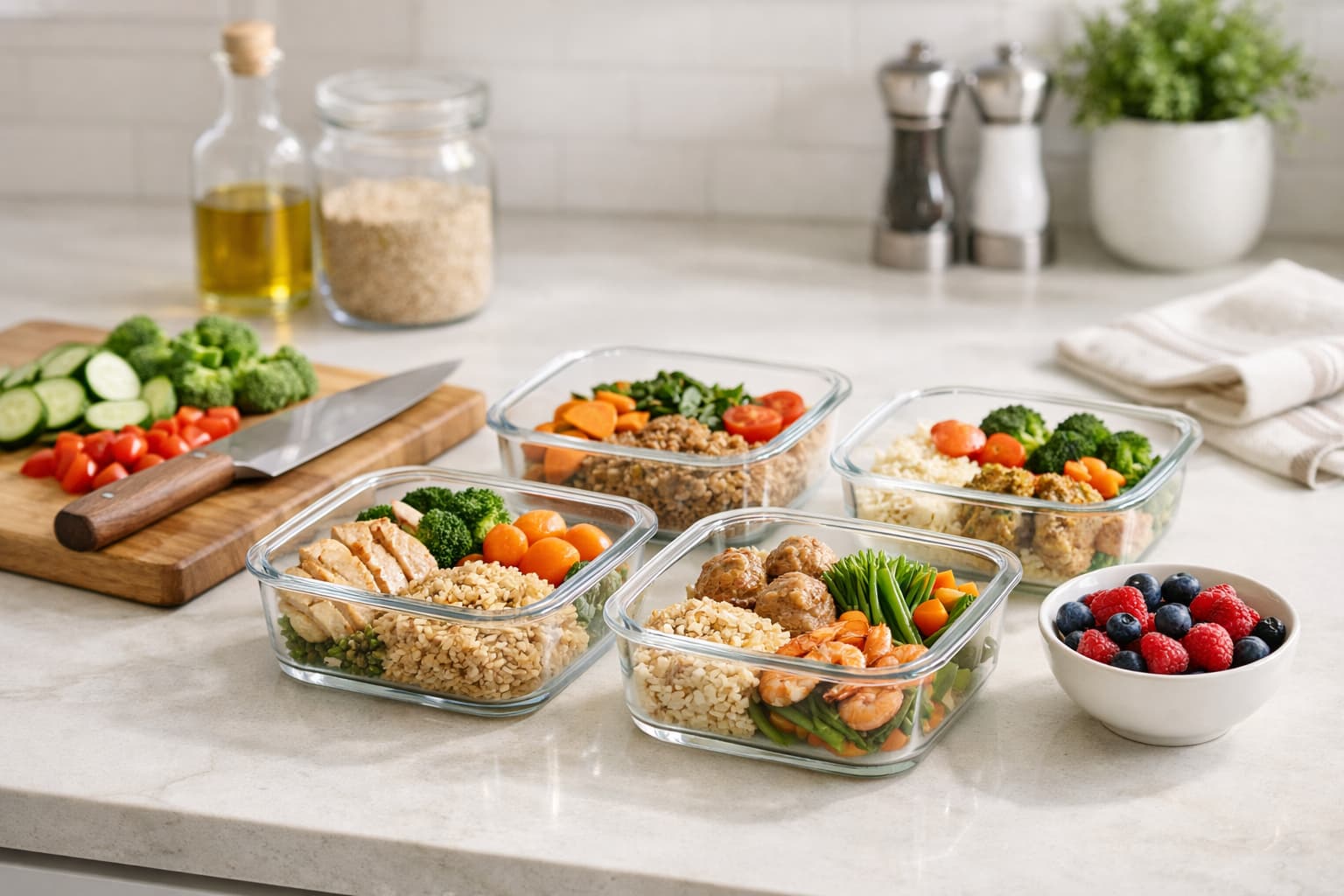
A healthy meal plan for weight loss is a balanced, portion-aware way of eating that prioritizes protein, fiber-rich foods, and minimally processed meals so you can create a sustainable calorie deficit while still meeting nutrient needs. The latest U.S. Department of Agriculture guidance for 2025–2030 emphasizes “eat real food” and limiting highly processed foods, added sugars, and refined carbohydrates—an approach that supports overall wellness, not quick fixes.
This 7-day plan focuses on nutrition quality, steady energy, and habits you can keep. For safe expectations, the Centers for Disease Control and Prevention notes that gradual loss (about 1–2 pounds per week) is more likely to last than rapid loss.
How to use this 7-day plan for weight loss
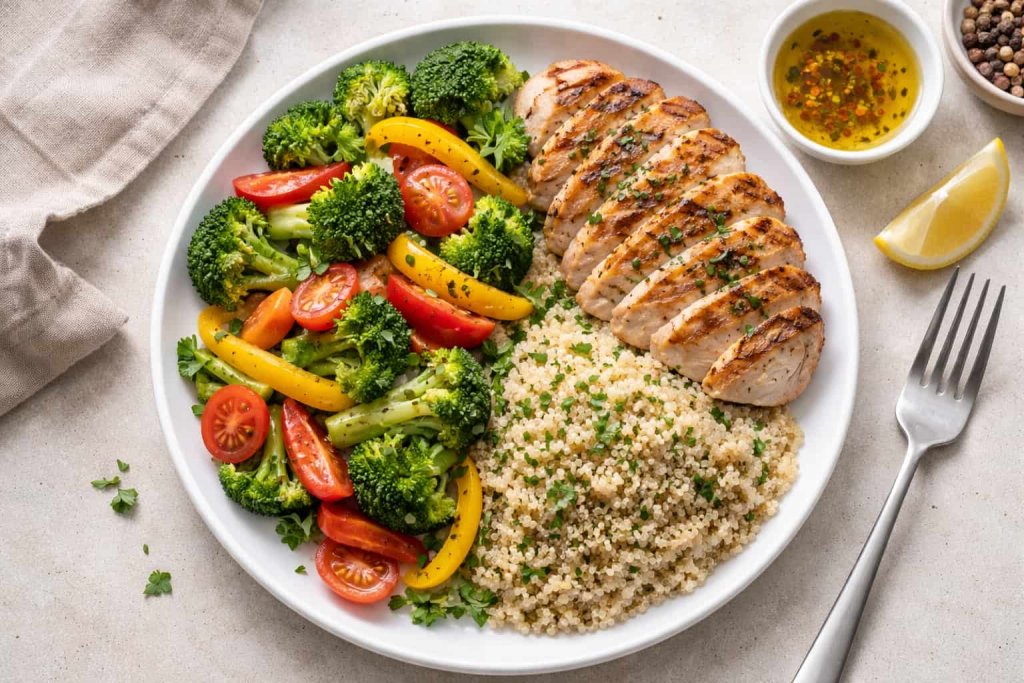
Build each meal with a simple plate structure
Use a “balanced plate” most of the time:
- Half plate: non-starchy vegetables (or vegetables + fruit)
- Quarter plate: protein
- Quarter plate: high-fiber carbs (whole grains, beans, starchy vegetables)
- Add: a small amount of healthy fat (olive oil, nuts, avocado)
This aligns well with the food-group balance shown by MyPlate and the “eat real food” direction emphasized in the newest Dietary Guidelines for Americans resources.
Balanced plate examples
| Protein + Vegetables + Fiber-rich carbs + Healthy fat | Example meal |
|---|---|
| Protein + veggies + whole grain + healthy fat | Chicken + veggies + quinoa + olive oil |
| Plant protein + veggies + whole grain + healthy fat | Beans + salad + brown rice + avocado |
| Protein + veggies + whole grain | Eggs + sautéed veggies + whole-grain toast |
Keep portions realistic (without tracking everything)
If you don’t count calories, portion consistency matters. The National Institute of Diabetes and Digestive and Kidney Diseases explains the difference between a “serving” on a label and the “portion” you actually eat—helpful for weight management.
Quick hand-guide (approximate):
- Protein: palm-sized portion
- High-fiber carbs: fist-sized portion
- Healthy fats: thumb-sized portion
- Non-starchy vegetables: 1–2 fists (more is usually fine)
How to adjust portions based on hunger, body size, and activity
You can keep the same meal structure and adjust portions gently:
- If you’re more active (or doing regular strength training): add ½–1 fist of high-fiber carbs at one meal (like oats, brown rice, beans, or potatoes) or add 1 palm of protein at lunch/dinner.
- If you’re less active right now: subtract ½–1 fist of starchy carbs at one meal while keeping vegetables and protein steady, or reduce 1 thumb of added fat (like oil or nuts).
- Hunger check rule: aim for satisfied, not stuffed. If you’re truly hungry between meals, increase protein and vegetables first (they tend to be more filling for their calories) before adding extra snacks.
Use label reading for smarter swaps
When comparing packaged foods, the U.S. Food and Drug Administration suggests a simple rule: 5% Daily Value is low, 20% is high—useful for sodium, saturated fat, fiber, and added sugars.
Support results with movement and sleep
A meal plan works best with consistent activity. The U.S. Department of Health and Human Services recommends 150–300 minutes/week of moderate activity (or 75–150 vigorous), plus muscle strengthening at least 2 days/week. Also, the Centers for Disease Control and Prevention highlights that stress management and enough sleep support healthy weight patterns.
Who should be more cautious before starting a weight-loss meal plan
Most people benefit from improving food quality and portions, but some situations deserve extra caution and personalized guidance:
- Pregnancy or breastfeeding
- Teens who are still growing
- Older adults with frailty or unintentional weight loss
- Diabetes (especially if using insulin or medications that affect blood sugar)
- Kidney disease or other conditions requiring nutrient/fluid limits
- Current or past eating disorder history, or highly anxious feelings about food/weight
- Anyone taking blood pressure medicines, diuretics (“water pills”), or appetite/weight-loss medications
If you have a medical condition or take medications, check with a licensed clinician before changing calories or macros. If you use glucose-lowering medications, changing meal timing or carb portions may affect blood sugar—get personalized guidance.
The 7-day healthy meal plan for weight loss
Notes before you start
- Drink water regularly and keep sugary drinks minimal.
- Choose mostly minimally processed foods; use convenience items (frozen vegetables, canned beans, rotisserie chicken) when needed.
- Adjust portions up/down based on hunger, activity, body size, and medical advice.
Simple hydration and beverage guidance
- Water is the default. If you want variety, unsweetened tea, coffee, or sparkling water can also fit well.
- Keep sugary drinks and juice occasional, since they can add calories quickly without much fullness.
- Alcohol can add calories and may make food choices harder. If you drink, keep it moderate and consider choosing either a drink or dessert rather than both.
Portion guide for the plan
- Protein: 1 palm per meal (or 1.5 palms if you’re very active or strength training regularly)
- Starchy carbs: 1 fist per meal (adjust up/down based on hunger and activity)
- Healthy fat: 1 thumb per meal (oil, nuts, seeds, avocado)
- Vegetables: 1–2 fists per meal (more is usually fine)
- Fruit: 1–2 servings per day
- Snack: choose one planned snack if needed (especially on longer days or higher-activity days)
7-day plan table
Use these as templates. Mix and match days if you prefer.
| Day | Breakfast | Lunch | Dinner | Snack options (choose 1–2 if needed) |
|---|---|---|---|---|
| Day 1 | Greek yogurt + berries + chia + cinnamon | Turkey or chickpea salad bowl (greens, veggies, olive oil + lemon) | Salmon + roasted broccoli + quinoa | Apple + peanut butter; carrots + hummus |
| Day 2 | Veggie omelet + whole-grain toast | Lentil soup + side salad | Chicken stir-fry (mixed veggies) + brown rice | Cottage cheese + fruit; handful of nuts |
| Day 3 | Overnight oats (oats, milk/soy milk, chia) + berries | Tuna (or tofu) wrap + veggie side | Turkey chili (beans + veggies) | Plain yogurt + walnuts; air-popped popcorn |
| Day 4 | Smoothie (protein-rich base: Greek yogurt or soy milk) + spinach + berries | Leftover chili over greens + avocado | Shrimp (or tempeh) + sheet-pan vegetables + sweet potato | Hard-boiled egg; fruit + string cheese |
| Day 5 | Oatmeal + pumpkin seeds + banana | Chicken (or bean) burrito bowl (beans, salsa, veggies, brown rice) | Lean beef (or lentils) + mixed salad + whole grain | Edamame; cucumber + tzatziki |
| Day 6 | Cottage cheese bowl + berries + flax | Mediterranean plate (chicken or chickpeas, cucumbers, tomatoes, olive oil, whole grain) | Baked cod (or tofu) + veggies + farro | Trail mix (portion); roasted chickpeas |
| Day 7 | Scramble + sautéed veggies + fruit | Big salad with protein + beans + olive oil dressing | Homemade “real food” pasta bowl (whole-grain pasta, veggies, lean protein) | Kefir or yogurt; berries + dark chocolate square |
Easy swaps (same structure, different foods)
Use these swaps to keep the plan flexible without rethinking every meal.
Protein swaps:
- Chicken ↔ tofu/tempeh ↔ beans/lentils ↔ fish/seafood ↔ eggs ↔ Greek yogurt/cottage cheese
Carb swaps:
- Rice ↔ quinoa ↔ potatoes/sweet potatoes ↔ whole-grain pasta ↔ oats ↔ beans (as a carb + protein combo)
Vegetable swaps:
- Fresh vegetables ↔ frozen vegetable mixes ↔ bagged salad kits (watch dressing portions) ↔ canned tomatoes/low-sodium canned veggies
Snack swaps (keep portions planned):
- Fruit + protein (yogurt, cottage cheese, egg)
- Veg + dip (hummus, tzatziki)
- Nuts (pre-portioned)
- Roasted chickpeas or edamame
Repeatable breakfast + lunch rotation
Most people do best with simple repetition.
- Pick 2 breakfasts + 2 lunches and rotate them for the week.
- Keep dinners more flexible, or repeat 2–3 favorite dinners as well.
Easy rotation examples from this plan:
- Breakfast options: Greek yogurt + berries + chia, veggie omelet + whole-grain toast
- Lunch options: turkey or chickpea salad bowl, lentil soup + side salad
What to eat more often for weight loss and overall wellness
Protein at each meal (supports fullness)
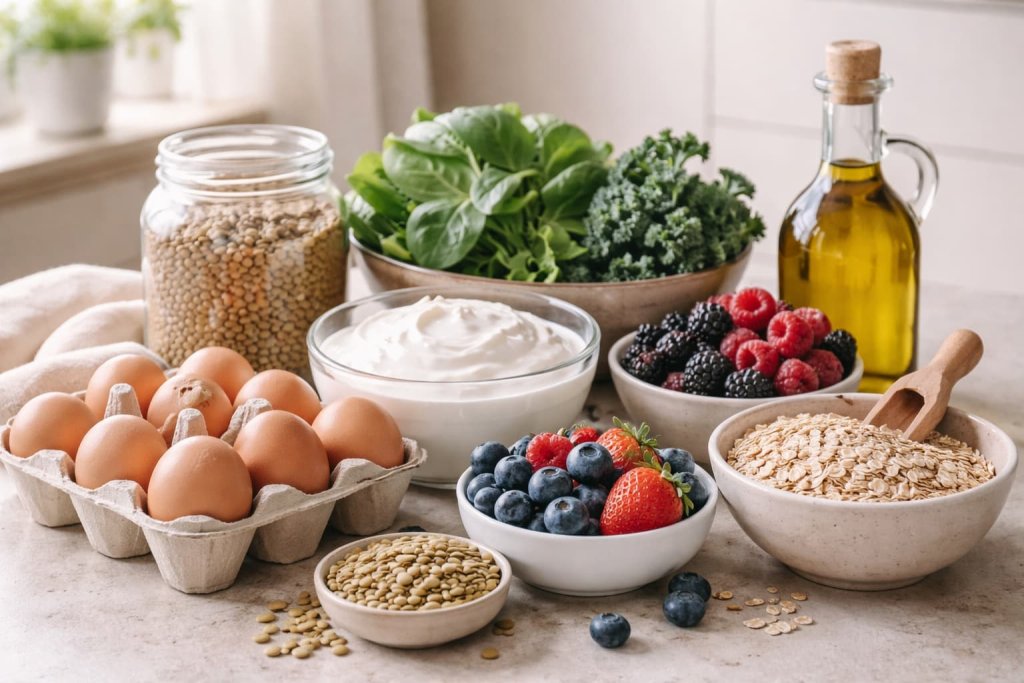
A protein-forward pattern may help you stay satisfied and preserve lean mass during weight loss. The newest U.S. Department of Agriculture consumer guidance emphasizes prioritizing nutrient-dense protein foods.
Good options:
- Eggs, fish, poultry, lean meats
- Beans, lentils, peas, tofu/tempeh, edamame
- Greek yogurt, cottage cheese
Fiber-rich plants (supports digestion and steadier energy)
Aim to include:
- Non-starchy vegetables daily (fresh or frozen)
- Fruits (especially whole fruit)
- Beans and lentils several times/week
- Whole grains you tolerate well (oats, brown rice, quinoa, whole-grain bread)
Added sugar: keep it low most days
The World Health Organization recommends keeping free sugars under 10% of total energy (and notes that lower may provide added benefits). A practical approach: choose mostly unsweetened staples (plain yogurt, unsweetened oatmeal) and add fruit for sweetness.
Fiber + protein minimums habit target
- Try to include protein at every meal.
- Include at least one high-fiber food daily (beans, oats, berries, vegetables).
- If cravings are high, check whether protein or fiber at lunch is too low and adjust before adding extra snacks.
Micronutrients that commonly get missed during weight loss
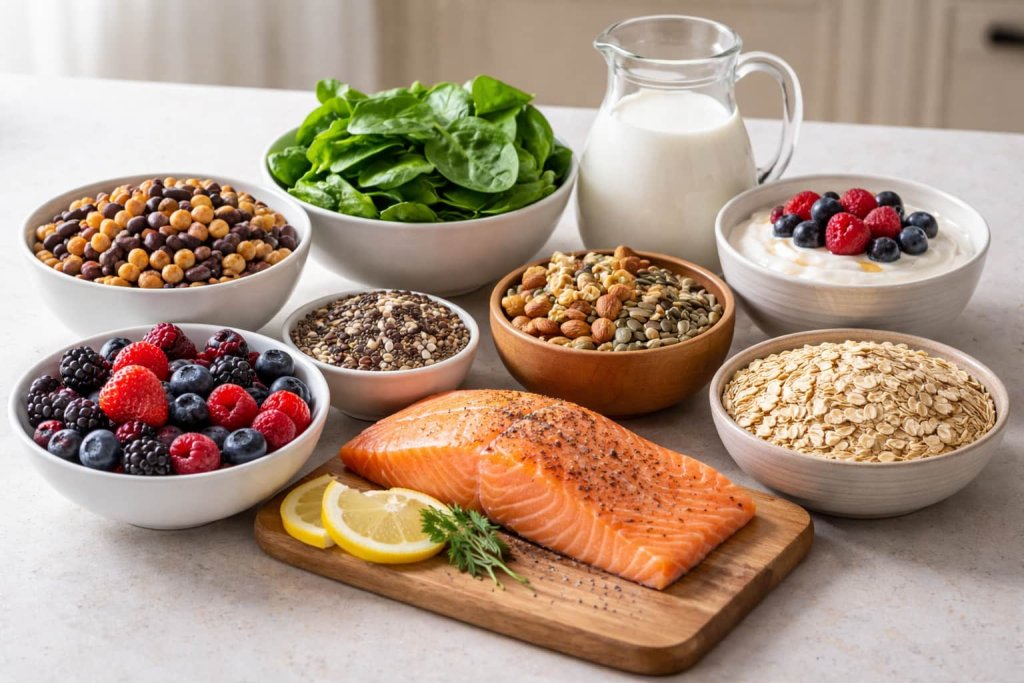
When people reduce calories, nutrient gaps can happen if meals get too repetitive or too low in variety. These are common “wellness nutrients” to keep on your radar:
- Fiber: beans, oats, vegetables, berries, chia/flax
- Calcium and vitamin D: dairy foods or fortified alternatives (like fortified soy milk), yogurt, some canned fish with bones
- Iron: beans, lentils, lean meats, spinach (pair plant-based iron with vitamin C foods like citrus, strawberries, bell peppers)
- Potassium: beans, potatoes, leafy greens, yogurt, bananas
- Omega-3 fats: fatty fish like salmon and sardines; if you don’t eat fish, prioritize omega-3-rich foods like chia/flax and walnuts (food-based support, not a “quick fix”)
Shopping list for the 7-day plan
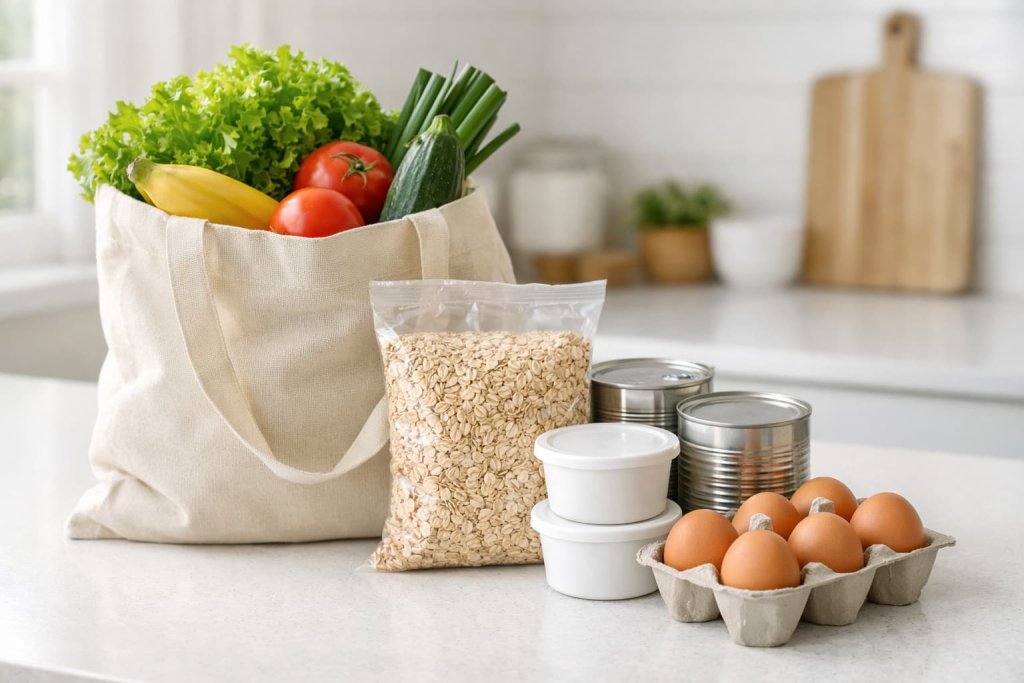
Proteins
- Eggs
- Greek yogurt or plain yogurt
- Chicken breast or thighs
- Salmon, cod, tuna (canned OK)
- Beans (black beans, chickpeas) and lentils
- Tofu or tempeh
Produce
- Leafy greens (spinach, mixed greens)
- Broccoli, peppers, onions, carrots, cucumbers
- Tomatoes (fresh or canned)
- Berries, apples, bananas, citrus
- Sweet potatoes
High-fiber carbs
- Oats
- Brown rice or quinoa
- Whole-grain bread or wraps
- Whole-grain pasta (optional)
Healthy fats and flavor
- Olive oil
- Nuts/seeds (chia, flax, pumpkin seeds, walnuts)
- Avocados
- Salsa, vinegar, herbs/spices, mustard
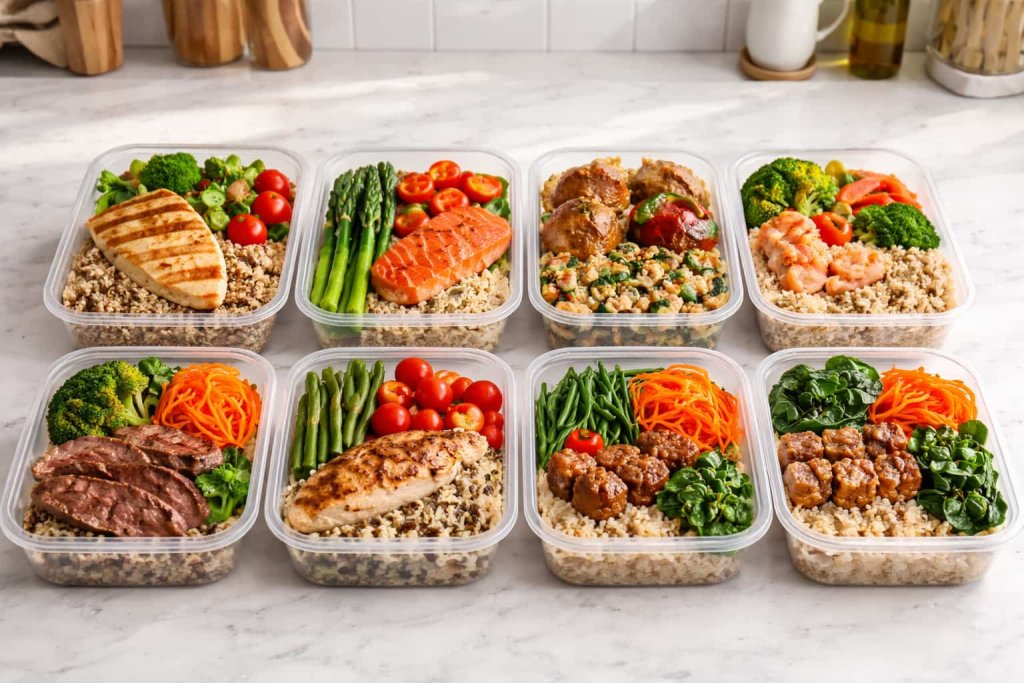
Meal prep plan (60–90 minutes for an easier week)
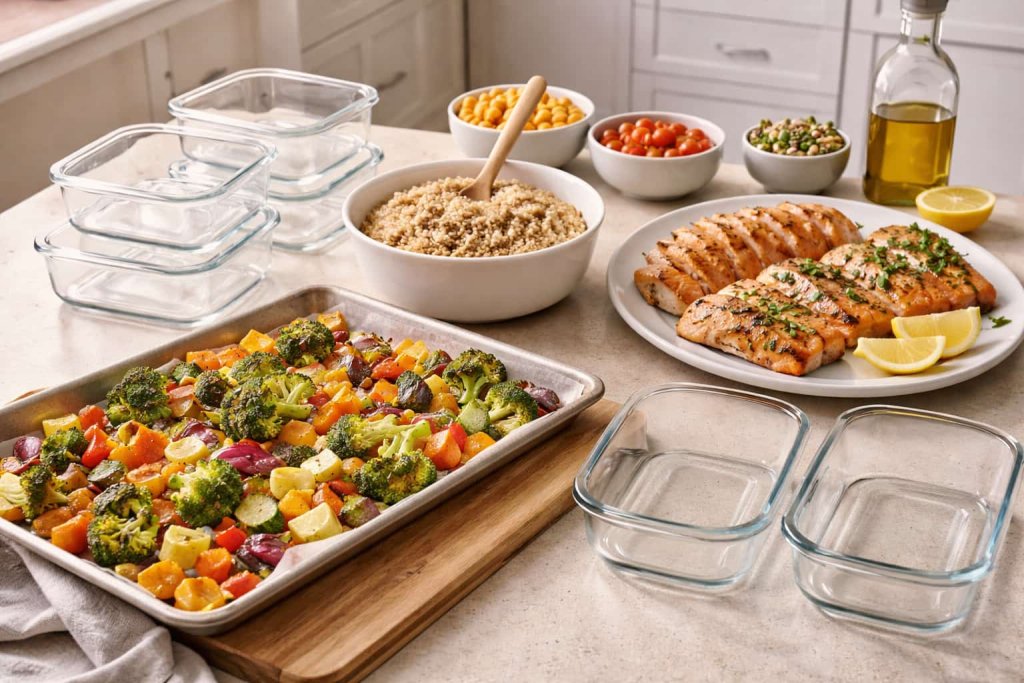
Do once, use all week
- Cook 1–2 grains (brown rice, quinoa)
- Roast a sheet pan of vegetables
- Make a pot of lentil soup or turkey chili
- Wash/chop salad veggies
- Portion snacks (nuts, hummus + veggies)
Keep “fast meals” ready
- Rotisserie chicken + bagged salad + microwavable brown rice
- Canned tuna or beans + olive oil + lemon + veggies
- Eggs + frozen veggie mix
Food safety and storage basics
- Refrigerate perishable foods promptly after cooking or serving.
- Store cooked meals in the fridge for a few days; freeze extra portions if you won’t eat them soon.
- Reheat leftovers until steaming hot before eating.
- When in doubt (off smell, odd texture, questionable time in the fridge), discard it.
Simple swaps to fit your calories, preferences, and budget
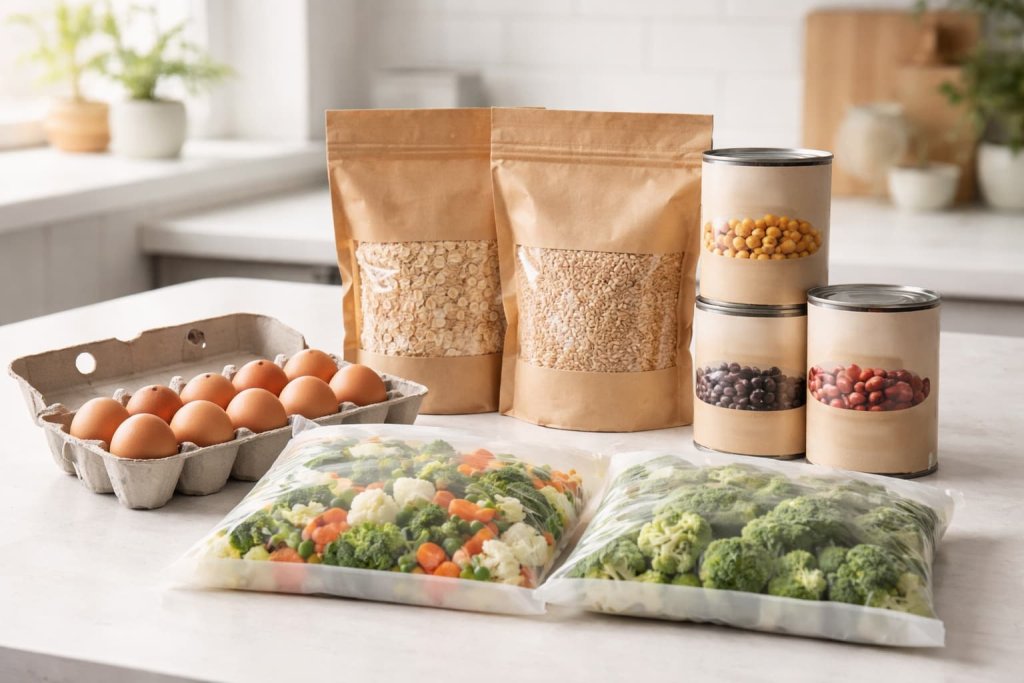
If you’re hungrier than expected
- Add more non-starchy vegetables
- Add 1 extra protein portion per day (especially at lunch)
- Add a small serving of healthy fat (nuts/olive oil) if meals feel too “light”
If weight loss is not moving after 2–3 weeks
- Slightly reduce starchy carbs at one meal (keep vegetables + protein steady)
- Limit calorie-dense snacks to one planned portion
- Check packaged foods for added sugars/sodium using the U.S. Food and Drug Administration %DV rule
Plateau troubleshooting checklist (quick self-audit):
- Portion creep: oils, nuts, cheese, “healthy” snacks, and big servings of granola can quietly add up
- Weekend vs weekday gap: two higher-calorie days can offset five consistent days
- Sleep and stress consistency: poor sleep and high stress can increase cravings and reduce follow-through
- Protein and fiber consistency: low protein or low fiber often leads to more snacking
- Steps and activity consistency: if daily movement dropped, progress may slow even if food feels “the same”
If you don’t eat certain foods
- Fish → chicken, tofu, beans
- Dairy → lactose-free dairy or fortified soy options (MyPlate includes fortified soy as a dairy alternative)
- Meat → beans/lentils, tofu/tempeh, eggs (if you eat them)
Dining out and social situations
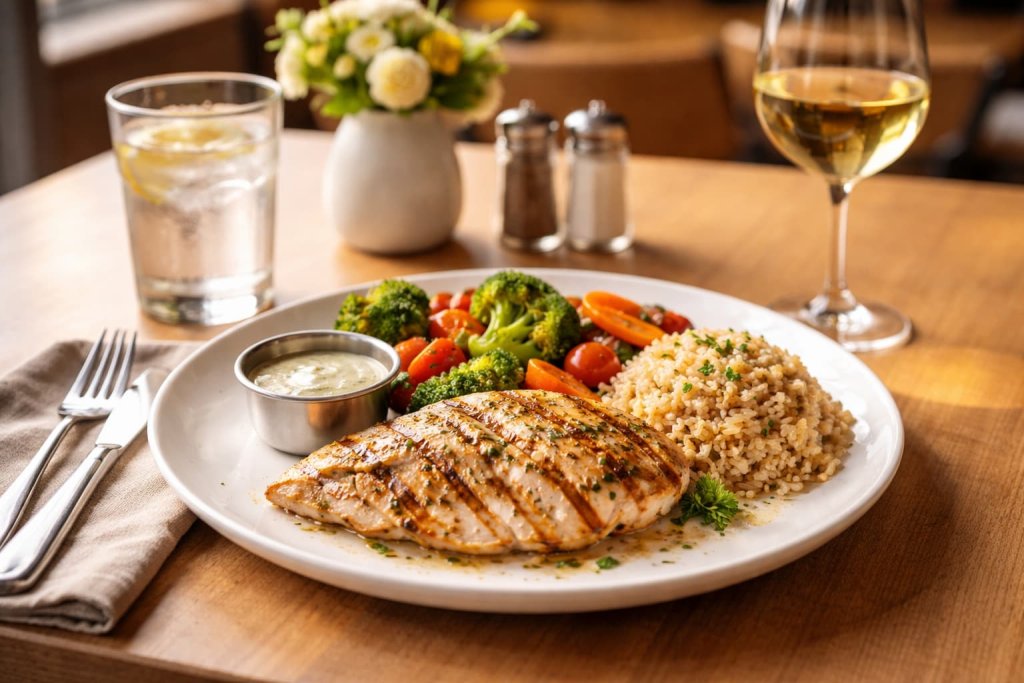
Eating out doesn’t have to “ruin the week.” Use a few simple defaults:
- Choose a protein + veggie-based entrée (grilled chicken, fish, tofu, bean-based bowls)
- Ask for sauce/dressing on the side and add it gradually
- Start with a salad or vegetable soup if you tend to arrive very hungry
- Decide your “one treat” ahead of time (drink or dessert, not both), then enjoy it without turning it into an all-day thing
Common mistakes that stall progress
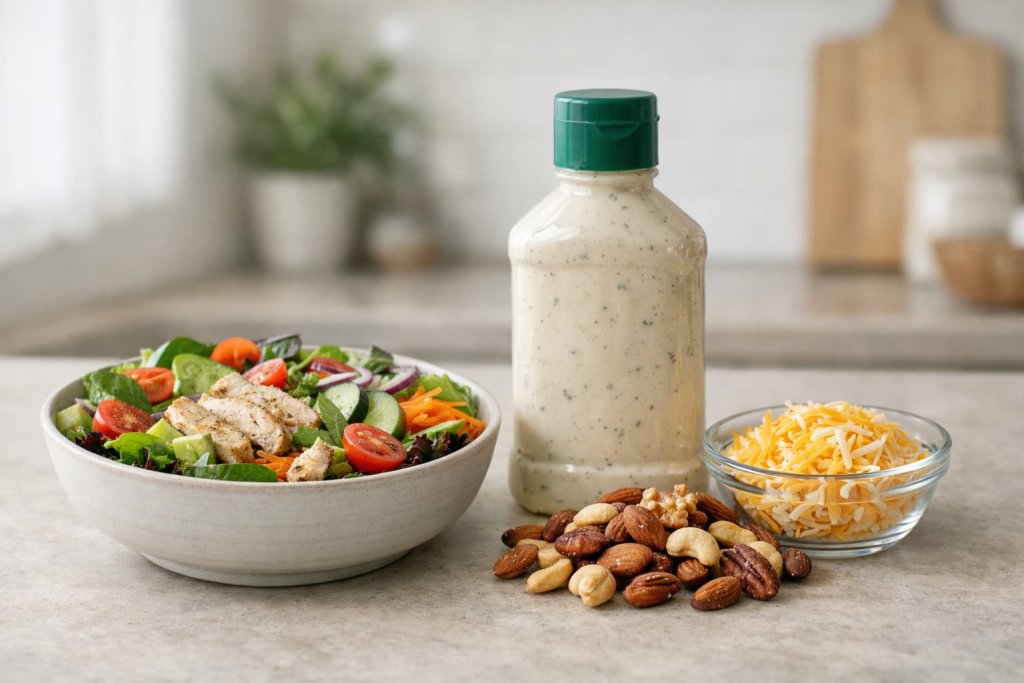
Relying on “healthy” ultra-processed foods
Even “high-protein” bars and snacks can be easy to overeat. The newest Dietary Guidelines for Americans messaging puts strong emphasis on minimizing highly processed foods and refined carbs.
Skipping meals, then overeating later
Long gaps can drive intense hunger. A consistent meal rhythm (3 meals + optional planned snack) often supports better choices.
Drinking extra calories without noticing
Sweetened coffee drinks, juice, and sugary beverages can add up quickly. Water, unsweetened tea, and sparkling water are easier defaults.
Frequently asked questions
What is the best meal plan for weight loss?
The best plan is the one you can follow consistently: protein at each meal, lots of vegetables, fiber-rich carbs, and mostly minimally processed foods—plus portions that match your needs.
Should I cut carbs to lose weight?
Not necessarily. Many people do well with moderate portions of high-fiber carbs (beans, oats, whole grains). If you reduce carbs, keep vegetables and protein strong so meals stay filling.
How much protein should I eat for weight loss?
Protein needs vary by body size and activity. The newest U.S. Department of Agriculture consumer guidance emphasizes prioritizing nutrient-dense protein foods as part of a healthy pattern. If you have kidney disease or other conditions, ask a clinician for personalized targets.
Can I lose weight without counting calories?
Yes. Portion consistency, meal structure, and limiting highly processed foods can support a calorie deficit without tracking—especially when you use label awareness and repeat simple meals.
What snacks are best for weight loss?
Choose snacks with protein and/or fiber: fruit + yogurt, veggies + hummus, cottage cheese, nuts (pre-portioned), or roasted chickpeas.
How fast is “healthy” weight loss?
The Centers for Disease Control and Prevention notes that losing about 1–2 pounds per week is a more sustainable pace for many people.
Conclusion
A healthy meal plan for weight loss doesn’t need extreme rules. Focus on real food, balanced plates, consistent portions, and repeatable meals you enjoy. Start with this 7-day plan, pick 2–3 breakfasts and lunches you can rotate, and prep the basics once per week to make healthy choices easier.
This content is for informational purposes only and not medical advice.