
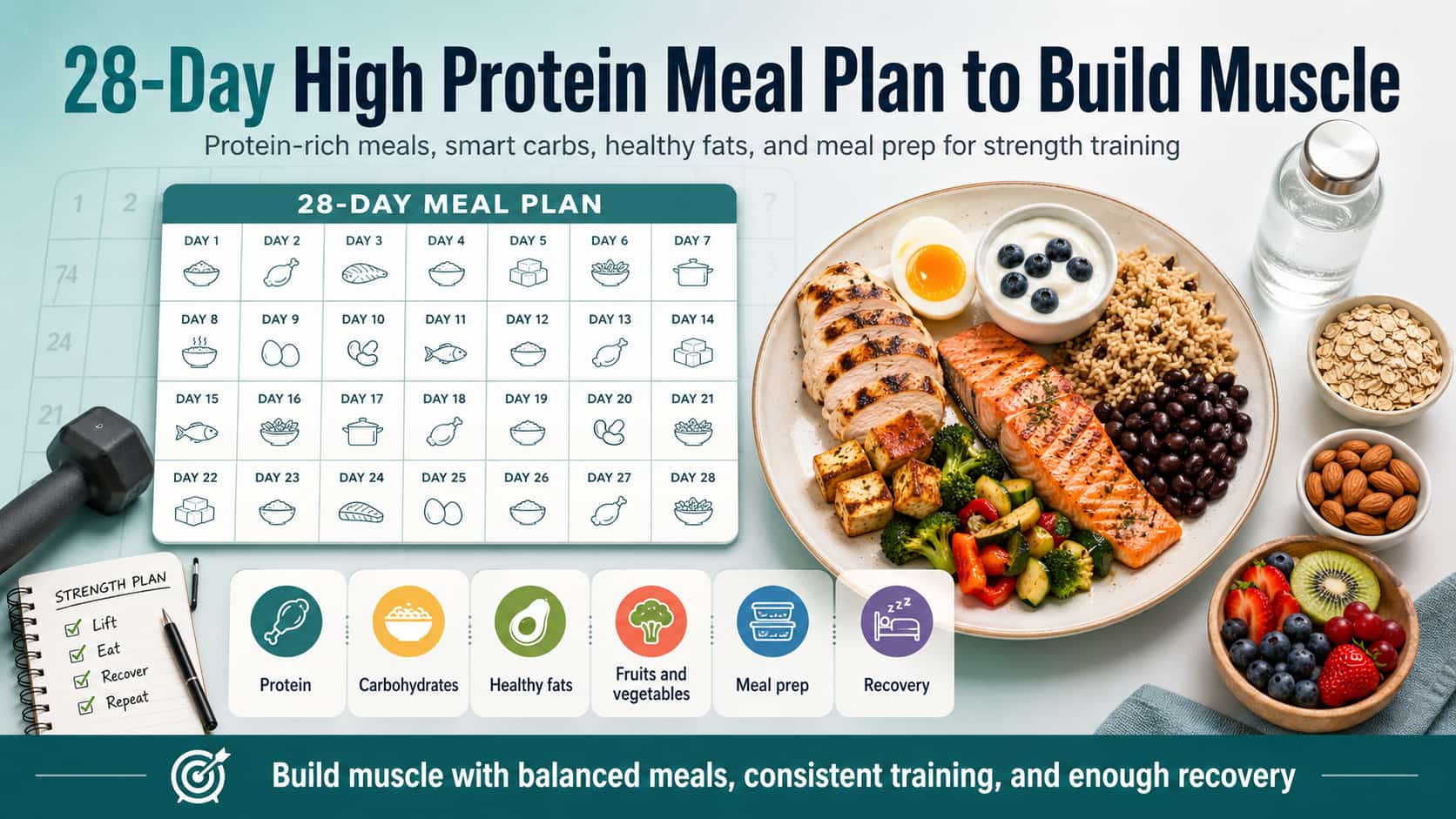
A high protein meal plan can help you build muscle when it gives your body enough protein, calories, carbohydrates, and nutrients to recover from strength training. Protein matters, but it works best when it is paired with progressive resistance training, enough total food, smart meal timing, sleep, and recovery.
This 28-day high protein meal plan is designed for generally healthy adults who want a practical muscle-building eating structure. It includes protein-rich meals, balanced carbohydrates, healthy fats, fruits, vegetables, and simple meal-prep ideas you can repeat without getting bored.
What Is a High Protein Meal Plan?
A high protein meal plan is an eating plan that includes protein at most meals and snacks. The goal is to give your body a steady supply of amino acids, which are the building blocks used to repair and build muscle tissue after training.
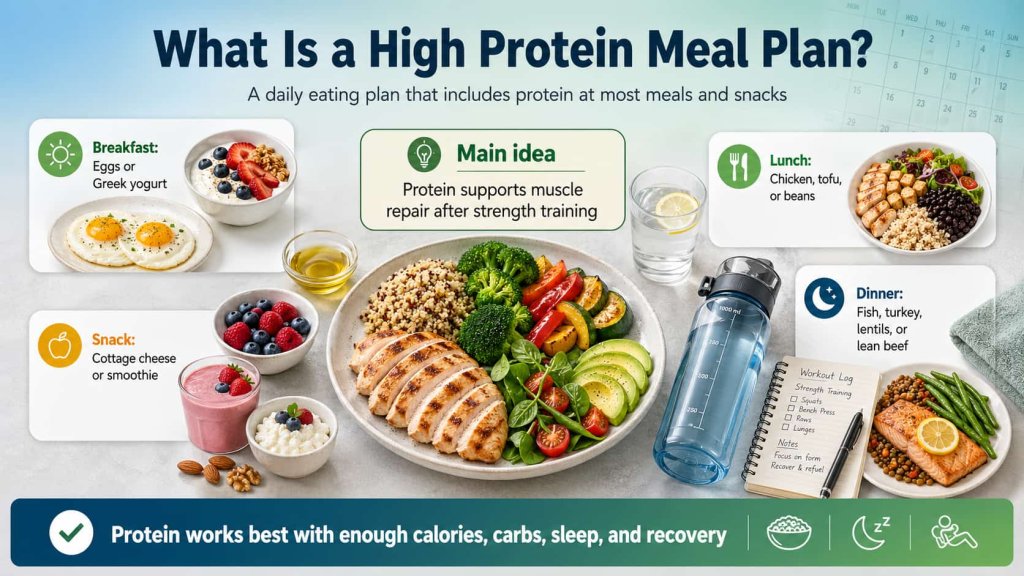
For muscle gain, a high protein meal plan should also include:
- Strength training
- Enough daily calories
- Carbohydrates for workout energy
- Healthy fats for overall nutrition
- Fruits and vegetables for fiber, vitamins, and minerals
- Sleep and recovery days
The Dietary Guidelines for Americans emphasize nutrient-dense foods such as protein foods, dairy, vegetables, fruits, healthy fats, and whole grains, while limiting highly processed foods, added sugars, excess sodium, and refined carbohydrates.
How Much Protein Do You Need to Build Muscle?
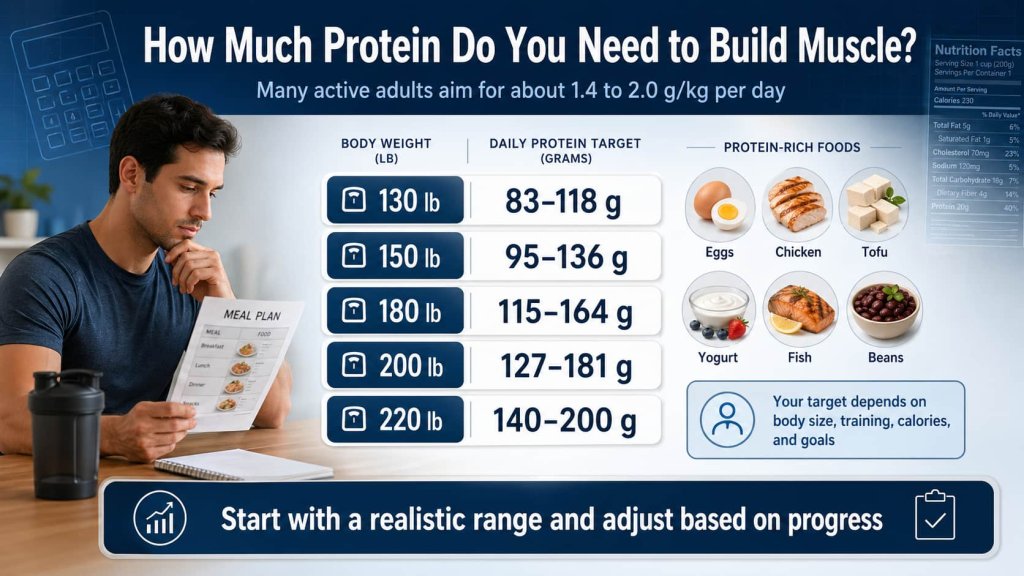
For many active adults who lift weights, a useful muscle-building protein range is about 1.4 to 2.0 grams of protein per kilogram of body weight per day. The International Society of Sports Nutrition supports this range for many exercising individuals who want to build or maintain muscle.
Here is what that looks like in real life:
| Body weight | Approximate daily protein range |
|---|---|
| 130 lb | 83–118 g protein |
| 150 lb | 95–136 g protein |
| 180 lb | 115–164 g protein |
| 200 lb | 127–181 g protein |
| 220 lb | 140–200 g protein |
This does not mean everyone must hit the highest number. Beginners, smaller adults, and people eating at maintenance calories may do well near the lower or middle part of the range. Larger lifters, advanced trainees, or people dieting while trying to preserve muscle may need a more personalized target.
The FDA lists the Daily Value for protein as 50 grams per day on a 2,000-calorie diet, but that number is mainly used for food-label reference. It is not a personalized muscle-building goal.
How to Spread Protein Across the Day
You do not need to eat all your protein in one meal. A better approach is to spread it across breakfast, lunch, dinner, and one or two snacks.
For muscle-building nutrition, research summarized by the International Society of Sports Nutrition suggests that 20–40 grams of high-quality protein every 3–4 hours may support muscle protein synthesis well.
A simple daily structure could look like this:
| Meal | Protein target |
|---|---|
| Breakfast | 25–40 g |
| Lunch | 30–45 g |
| Snack | 15–30 g |
| Dinner | 30–45 g |
| Optional evening snack | 15–30 g |
The exact number depends on your body size, calorie needs, training schedule, and appetite.
Best Foods for a High Protein Meal Plan
A good high protein meal plan should use a variety of protein sources. This helps you get different nutrients instead of relying on the same food every day.
The USDA MyPlate protein foods group includes seafood, meat, poultry, eggs, beans, peas, lentils, nuts, seeds, and soy products.
Good high-protein foods include:
- Eggs and egg whites
- Greek yogurt
- Cottage cheese
- Milk or fortified soy milk
- Chicken breast or thighs
- Turkey
- Lean beef
- Salmon, tuna, shrimp, cod, and sardines
- Tofu, tempeh, and edamame
- Beans, lentils, and chickpeas
- Protein powder, when helpful
- Nuts, seeds, and nut butters
- Quinoa and higher-protein whole grains
The American Heart Association recommends choosing healthy protein sources, including mostly plant proteins, fish and seafood, low-fat or fat-free dairy, and lean unprocessed meat or poultry when included.
Foods to Limit or Use Carefully
A high protein meal plan does not need to be perfect, but some foods should not become your main protein sources.
Limit or use carefully:
- Processed meats such as bacon, sausage, hot dogs, and deli meats
- Deep-fried protein foods
- Protein bars with lots of added sugar
- Very high-sodium packaged meals
- Large amounts of full-fat processed meats
- “Mass gainer” shakes that are mostly sugar and calories
- Ultra-restrictive low-carb plans that leave you with poor workout energy
Convenient foods can still fit when needed. Just make sure most of your meals come from simple, nutrient-dense foods.
How This 28-Day High Protein Meal Plan Works
This 28-day high protein meal plan is built around four weekly menus. Each day includes breakfast, lunch, dinner, and one or two snacks.
Use the plan as a flexible template. You can adjust portions based on your calorie needs, appetite, body size, and training goal.
For muscle gain, many people need:
- A small calorie surplus or maintenance calories
- Protein at each meal
- Carbohydrates around training
- Strength training 3–5 days per week
- Rest and sleep for recovery
The CDC recommends adults do muscle-strengthening activities at least 2 days per week and get at least 150 minutes of moderate-intensity aerobic activity per week for general health.
28-Day High Protein Meal Plan to Build Muscle
This meal plan uses common foods and repeatable meals. Protein amounts are estimates because brands, recipes, and portion sizes vary.
Week 1
| Day | Breakfast | Lunch | Snack | Dinner |
|---|---|---|---|---|
| Day 1 | Greek yogurt with oats, berries, and chia seeds | Chicken rice bowl with vegetables and avocado | Cottage cheese with fruit | Salmon, sweet potato, and broccoli |
| Day 2 | Eggs with whole-grain toast and spinach | Turkey wrap with Greek yogurt dip and salad | Protein smoothie with banana | Lean beef chili with beans |
| Day 3 | Protein oatmeal with milk and peanut butter | Tuna quinoa bowl with cucumber and olive oil | Boiled eggs and fruit | Chicken stir-fry with rice |
| Day 4 | Cottage cheese bowl with berries and granola | Tofu and edamame noodle bowl | Greek yogurt | Turkey meatballs with pasta and salad |
| Day 5 | Egg scramble with potatoes and vegetables | Chicken burrito bowl with beans | Protein shake and apple | Shrimp tacos with slaw |
| Day 6 | Overnight oats with protein powder | Lean beef and rice meal-prep bowl | Hummus with whole-grain pita | Baked cod, quinoa, and roasted vegetables |
| Day 7 | Greek yogurt pancakes with fruit | Chicken salad sandwich on whole-grain bread | Cottage cheese with nuts | Turkey burger, potatoes, and vegetables |
Week 2
| Day | Breakfast | Lunch | Snack | Dinner |
|---|---|---|---|---|
| Day 8 | Eggs, oats, and berries | Salmon salad bowl with rice | Greek yogurt with honey | Chicken fajita plate with beans |
| Day 9 | Smoothie with protein powder, milk, banana, and oats | Turkey and cheese sandwich with side salad | Edamame and fruit | Lean beef pasta with vegetables |
| Day 10 | Cottage cheese toast with eggs | Chicken quinoa bowl | Protein bar with lower added sugar | Tofu curry with rice |
| Day 11 | Protein oatmeal with berries | Tuna salad wrap with vegetables | Boiled eggs | Turkey chili with beans |
| Day 12 | Greek yogurt parfait with nuts | Chicken pesto pasta salad | Cottage cheese and pineapple | Salmon bowl with rice and greens |
| Day 13 | Egg and turkey breakfast wrap | Lentil and chicken soup with bread | Protein smoothie | Shrimp stir-fry with noodles |
| Day 14 | Omelet with vegetables and cheese | Lean beef burger bowl with potatoes | Greek yogurt | Chicken, couscous, and roasted vegetables |
Week 3
| Day | Breakfast | Lunch | Snack | Dinner |
|---|---|---|---|---|
| Day 15 | Overnight protein oats | Chicken Caesar-style wrap with Greek yogurt dressing | Cottage cheese with berries | Lean steak, rice, and asparagus |
| Day 16 | Eggs with avocado toast | Tuna pasta salad | Protein smoothie | Turkey tacos with beans |
| Day 17 | Greek yogurt with banana and granola | Tofu grain bowl with edamame | Boiled eggs and fruit | Chicken curry with rice |
| Day 18 | Cottage cheese pancakes | Salmon sandwich with salad | Greek yogurt | Lean beef and vegetable stir-fry |
| Day 19 | Protein smoothie bowl | Chicken and sweet potato meal-prep bowl | Hummus and vegetables | Shrimp rice bowl with avocado |
| Day 20 | Egg scramble with beans and salsa | Turkey quinoa salad | Cottage cheese | Baked chicken, pasta, and vegetables |
| Day 21 | Greek yogurt, oats, and fruit | Lentil soup with chicken or tofu | Protein shake | Salmon, potatoes, and green beans |
Week 4
| Day | Breakfast | Lunch | Snack | Dinner |
|---|---|---|---|---|
| Day 22 | Protein oatmeal with berries | Chicken rice bowl with vegetables | Greek yogurt | Turkey meatloaf, potatoes, and salad |
| Day 23 | Eggs with toast and fruit | Tuna and chickpea salad | Cottage cheese | Lean beef tacos with rice |
| Day 24 | Smoothie with protein powder, oats, and peanut butter | Tofu stir-fry bowl | Boiled eggs and fruit | Chicken pasta with vegetables |
| Day 25 | Greek yogurt parfait | Turkey avocado wrap | Edamame | Salmon, quinoa, and broccoli |
| Day 26 | Cottage cheese toast with eggs | Chicken burrito bowl | Protein smoothie | Shrimp pasta with salad |
| Day 27 | Omelet with vegetables and potatoes | Lean beef chili with beans | Greek yogurt with nuts | Tofu curry with rice |
| Day 28 | Overnight oats with protein powder | Chicken salad bowl with whole grains | Cottage cheese and fruit | Turkey burger plate with roasted vegetables |
Simple High Protein Meal Prep Plan
Meal prep makes this 28-day high protein meal plan easier to follow. You do not need to cook every meal from scratch.
Prep proteins first
Choose 2–3 protein sources for the week:
- Grilled chicken
- Turkey meatballs
- Lean beef chili
- Baked salmon
- Boiled eggs
- Tofu or tempeh
- Lentils or beans
- Greek yogurt or cottage cheese
Prep carbohydrates for training energy
Carbohydrates help fuel hard workouts. Choose easy options:
- Rice
- Potatoes
- Oats
- Pasta
- Quinoa
- Whole-grain bread
- Beans
- Fruit
Prep vegetables for easy meals
Keep vegetables simple and repeatable:
- Roasted broccoli
- Mixed salad greens
- Frozen stir-fry vegetables
- Bell peppers and onions
- Cucumber and tomato salad
- Green beans
- Spinach
Use sauces to prevent boredom
Flavor makes consistency easier. Try:
- Salsa
- Greek yogurt ranch-style dressing
- Pesto
- Teriyaki-style sauce
- Hot sauce
- Lemon and olive oil
- Curry sauce
- Garlic yogurt sauce
Sample High Protein Grocery List
Use this list as a starting point. Adjust based on your food preferences, budget, and dietary needs.
| Category | Foods |
|---|---|
| Animal proteins | Eggs, chicken, turkey, salmon, tuna, shrimp, lean beef, cottage cheese, Greek yogurt |
| Plant proteins | Tofu, tempeh, edamame, lentils, black beans, chickpeas, peanut butter |
| Carbohydrates | Oats, rice, potatoes, quinoa, pasta, whole-grain bread, tortillas, fruit |
| Vegetables | Broccoli, spinach, peppers, onions, carrots, salad greens, tomatoes, cucumbers |
| Fats | Avocado, olive oil, nuts, seeds, nut butter |
| Extras | Salsa, herbs, spices, lower-sugar sauces, protein powder if needed |
How to Adjust the Plan for Muscle Gain
This plan is a framework, not a fixed prescription. To build muscle, you may need more or less food depending on your body size, training volume, current weight trend, and appetite.
Add calories if your weight is not moving
If your goal is muscle gain and your weight has not changed for 2–3 weeks, add a small amount of food.
Easy additions include:
- Extra rice or potatoes at lunch
- A glass of milk with dinner
- A banana and peanut butter snack
- Extra olive oil on a salad
- More oats at breakfast
- A larger portion of lean protein after training
Reduce calories slightly if fat gain is too fast
Some weight gain can happen during a muscle-building phase, but rapid gain may mean your calorie surplus is higher than needed.
You can adjust by:
- Reducing added fats slightly
- Using smaller portions of calorie-dense snacks
- Keeping protein the same
- Keeping training performance high
- Tracking weekly trends instead of daily scale changes
Keep carbohydrates in the plan
Carbs are not the enemy of muscle gain. Rice, oats, potatoes, fruit, beans, and whole grains can help fuel training and recovery.
A very low-carb plan may make it harder to train hard, especially if you lift with higher volume.
High Protein Meal Plan for Training Days
On training days, place protein and carbohydrates around your workout.
A simple structure:
- Pre-workout meal: Protein plus easy-to-digest carbohydrates
- Post-workout meal: Protein, carbohydrates, and fluids
- Rest of day: Balanced meals with vegetables and healthy fats
Examples:
| Timing | Meal idea |
|---|---|
| 1–3 hours before lifting | Chicken and rice bowl |
| 30–60 minutes before lifting | Banana with Greek yogurt |
| After lifting | Salmon, potatoes, and vegetables |
| Evening snack | Cottage cheese with berries |
You do not need perfect timing, but consistent meals can help you train and recover better.
High Protein Vegetarian Meal Plan Options
You can follow a high protein meal plan without meat. The key is to combine higher-protein plant foods throughout the day.
Good vegetarian protein options include:
- Greek yogurt
- Cottage cheese
- Eggs
- Tofu
- Tempeh
- Edamame
- Lentils
- Chickpeas
- Black beans
- Soy milk
- Seitan
- Protein powder, if needed
Vegetarian meal examples:
| Meal | High-protein vegetarian option |
|---|---|
| Breakfast | Greek yogurt with oats and chia seeds |
| Lunch | Tofu quinoa bowl with edamame |
| Snack | Cottage cheese with fruit |
| Dinner | Lentil pasta with vegetables |
| Post-workout | Soy milk smoothie with protein powder |
For fully plant-based diets, soy foods, legumes, seitan, lentil pasta, and protein powder can make it easier to reach higher protein targets.
Common Mistakes That Limit Muscle Gain
A high protein meal plan helps, but these mistakes can slow your progress.
Eating protein but not enough total calories
Protein supports muscle repair, but your body still needs enough energy. If calories are too low, muscle gain becomes harder.
Skipping carbohydrates
Carbohydrates help fuel intense workouts. If your training performance drops, your muscle-building results may suffer.
Relying only on shakes and bars
Protein powders and bars can be convenient, but whole foods should make up most of your plan.
Training without progression
Your muscles need a reason to grow. Gradually increase reps, weight, sets, or control over time.
Ignoring sleep
Muscle growth depends on recovery. Poor sleep can make training feel harder and reduce consistency.
Changing the plan too often
A basic plan followed for 28 days is better than a “perfect” plan followed for three days.
Who Should Be Careful With a High Protein Meal Plan?
A high protein meal plan is not right for everyone without medical guidance.
Speak with a doctor or registered dietitian before increasing protein if you:
- Have kidney disease or reduced kidney function
- Have liver disease
- Are pregnant or breastfeeding
- Have diabetes or take blood sugar medication
- Have a history of disordered eating
- Follow a medically restricted diet
- Are a teen or are still growing
- Have been told to limit protein, sodium, potassium, or phosphorus
The National Kidney Foundation notes that people with chronic kidney disease may need to limit protein if they are not on dialysis, while people on dialysis may need more protein. Protein needs should be personalized with a dietitian in that situation.
Frequently Asked Questions
Is a high protein meal plan enough to build muscle?
No. A high protein meal plan supports muscle growth, but strength training is the main signal that tells your body to build muscle. You also need enough calories, recovery, and progressive overload.
Can I build muscle without protein powder?
Yes. Protein powder is optional. You can build muscle with foods like eggs, Greek yogurt, chicken, fish, tofu, lentils, beans, cottage cheese, and lean meats.
How many meals should I eat per day to build muscle?
Most people do well with 3 meals and 1–2 snacks. The main goal is to reach your daily protein and calorie needs consistently.
Should I eat protein before or after a workout?
Both can help. Try to have a protein-containing meal within a few hours before or after training. If your last meal was many hours ago, a post-workout protein meal or snack can be useful.
Can a high protein meal plan help with fat loss and muscle gain?
It may help, especially for beginners or people returning to training. Protein supports fullness and muscle retention, but fat loss still depends on overall calorie balance.
Is it safe to eat high protein every day?
For many healthy adults, a higher-protein diet can fit into a balanced eating pattern. However, people with kidney disease or other medical conditions should get personalized advice before increasing protein.
Conclusion
A 28-day high protein meal plan can help you build muscle when it is balanced, realistic, and paired with consistent strength training. Focus on protein at each meal, enough calories, quality carbohydrates, fruits, vegetables, healthy fats, and recovery.
Start with the plan as written, adjust portions to your body and training, and repeat the meals that make you feel strong, satisfied, and consistent.
This content is for informational purposes only and not medical advice.
References
- Dietary Guidelines for Americans — Current Dietary Guidelines
- International Society of Sports Nutrition — Protein and Exercise Position Stand
- International Society of Sports Nutrition — Nutrient Timing Position Stand
- FDA — Daily Value on the Nutrition and Supplement Facts Labels
- American Heart Association — Picking Healthy Proteins
- CDC — Adult Physical Activity Guidelines
- National Kidney Foundation — CKD Diet: How Much Protein Is the Right Amount?