
Skin bumps on face can come from acne, trapped keratin, irritation, follicle infections, or benign growths—and the right treatment depends on the cause. Some bumps improve with appropriate skin care or medication. Others need no treatment unless they become bothersome.
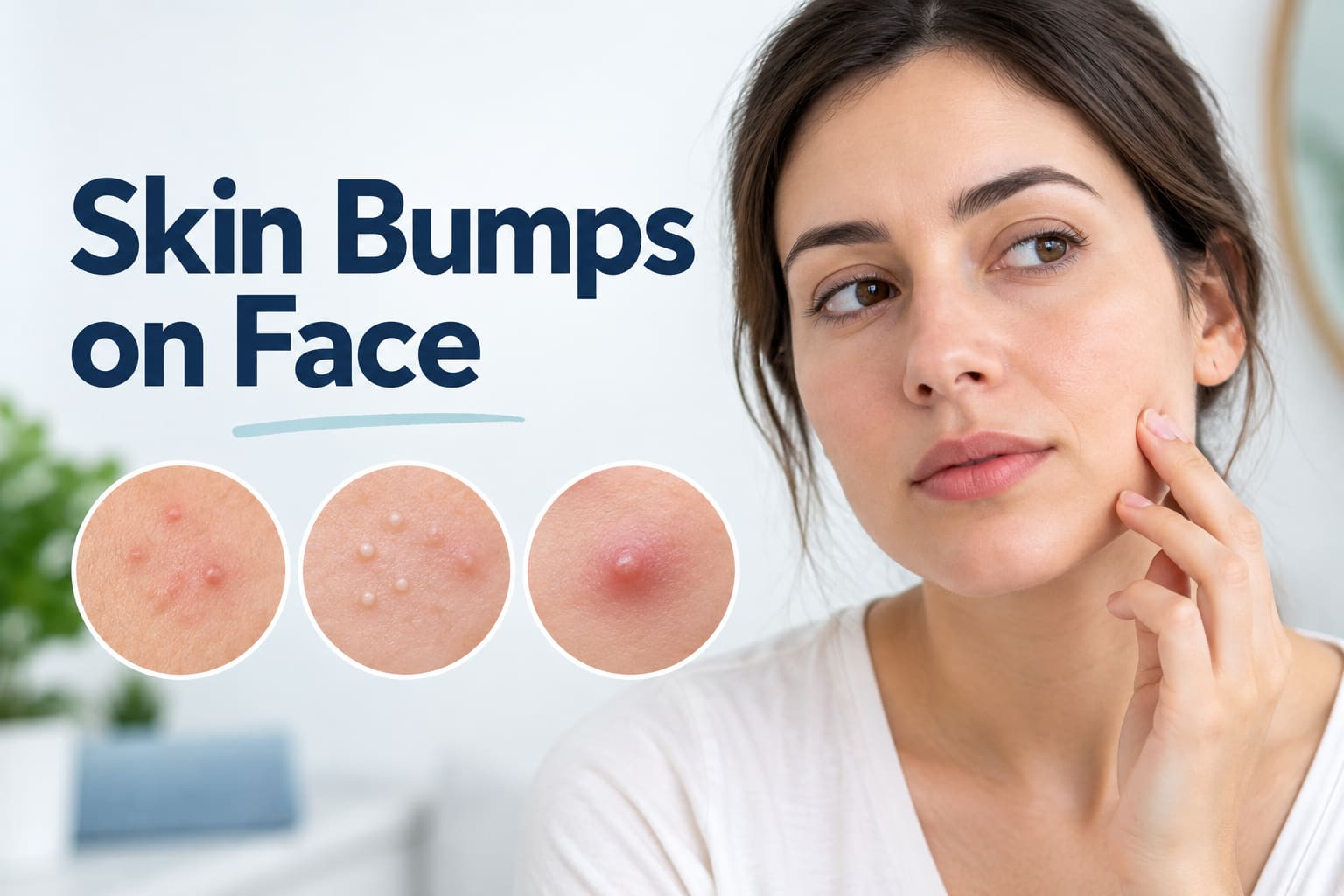
Knowing the difference can help you avoid unnecessary products and irritation. The American Academy of Dermatology’s diagnostic guidance explains that conditions such as folliculitis and perioral dermatitis can resemble acne but require different care.
Use the descriptions below as clues, not a diagnosis. A persistent, changing, or bleeding growth needs professional assessment rather than identification from an online description alone.
What Causes Skin Bumps on Face?
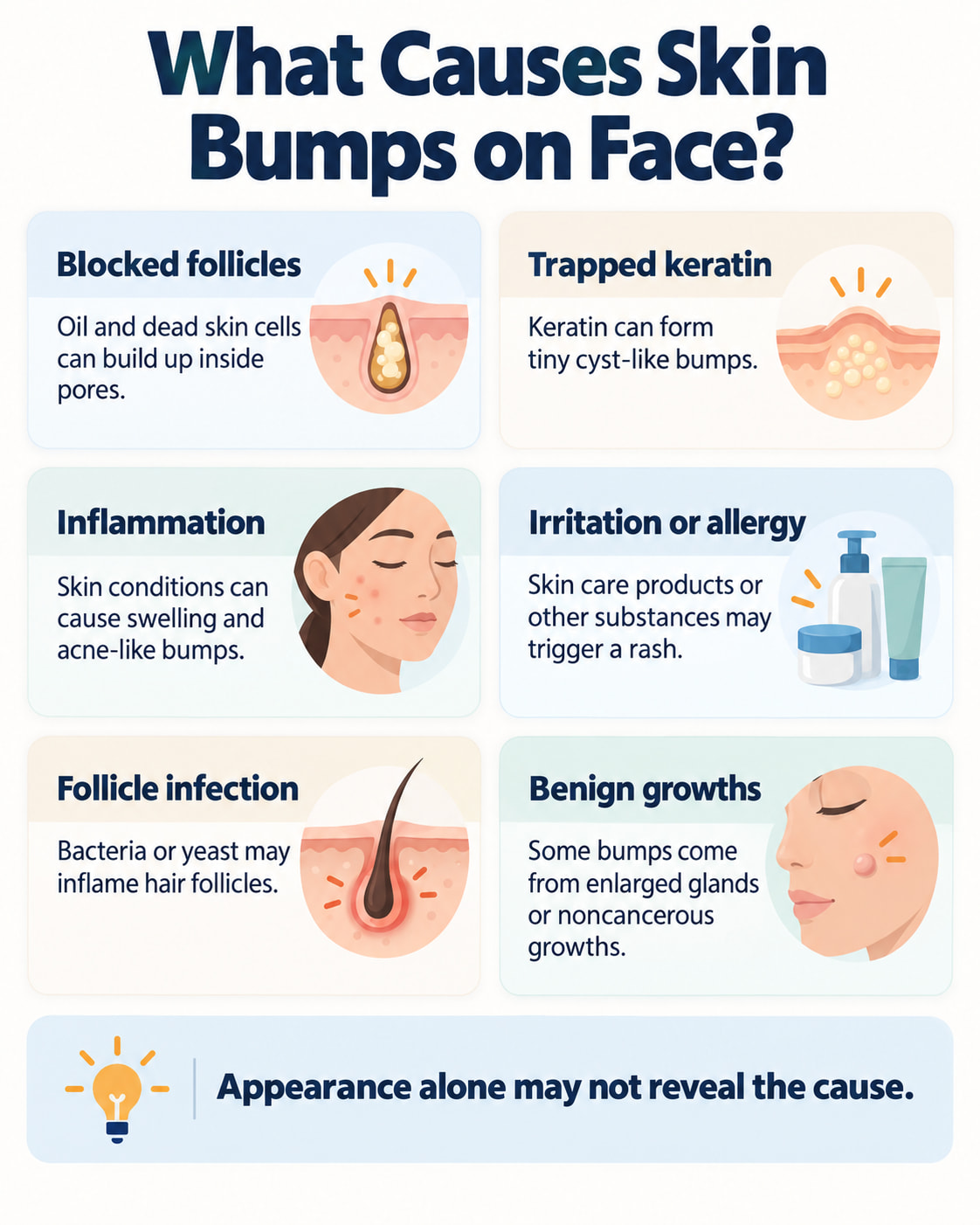
Facial bumps can develop when oil and skin cells block follicles, keratin becomes trapped beneath the surface, or something irritates the skin. Other bumps involve infections, enlarged oil glands, or noncancerous skin growths. These are different processes, so one “bump-clearing” product cannot address them all.
Before a dermatology appointment, note when the bumps appeared, whether they itch or hurt, and whether they followed shaving or a product change. Bring a list of your skin care products and medications. This history can help a clinician distinguish an irritated rash from other conditions.
10 Types of Skin Bumps on Face
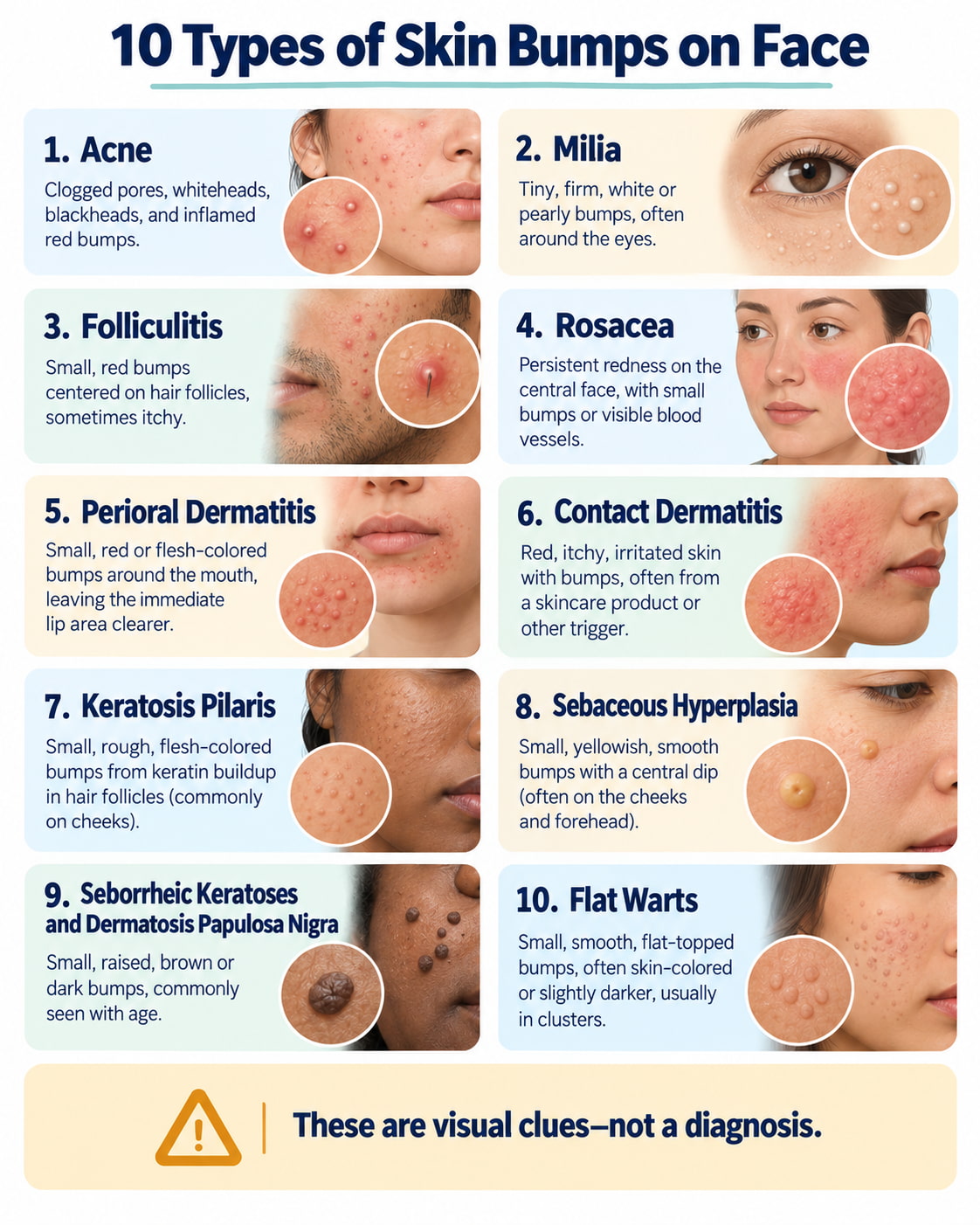
The following comparison covers ten useful categories, not every possible cause. Several conditions can look similar.
| Type | Clues you might notice |
|---|---|
| Acne | A mixture of whiteheads, blackheads, inflamed pimples, or deeper painful bumps. |
| Milia | Tiny, firm, pearly-white bumps, often near the eyes or cheeks. |
| Folliculitis | Acne-like bumps around follicles that may itch or feel tender. |
| Rosacea | Central facial bumps with flushing, warmth, or persistent color changes. |
| Perioral dermatitis | Small bumps around the mouth, nose, or eyes, sometimes with dryness or burning. |
| Contact dermatitis | An itchy rash, sometimes with bumps or blisters, after an irritant or allergen exposure. |
| Keratosis pilaris | Small, rough bumps that give the skin an uneven, sandpapery texture. |
| Sebaceous hyperplasia | Small yellowish bumps, sometimes with a visible central opening. |
| Seborrheic keratoses and dermatosis papulosa nigra | Raised, waxy-looking growths or small, smooth, dark facial bumps. |
| Flat warts | Clusters of small bumps with smooth, flat surfaces. |
1. Acne
Acne develops when oil and dead skin cells accumulate inside hair follicles, with bacteria and inflammation contributing to breakouts. You may have whiteheads, blackheads, pus-filled pimples, or deeper nodules. Hormonal changes and family history can influence your likelihood of developing acne.
Treatment options: The AAD acne guideline supports options including benzoyl peroxide, topical retinoids, salicylic acid, and azelaic acid. A dermatologist selects treatment according to the acne type, severity, and your medical circumstances. More severe acne may require prescription oral medication.
Seek professional care for deep, painful, persistent, or scarring acne rather than repeatedly switching over-the-counter products.
Pregnancy precaution: Topical retinoids such as adapalene and tretinoin are generally avoided during pregnancy. Discuss acne products with your obstetrician or dermatologist before using them while pregnant.
2. Milia
Milia are small cysts containing keratin, a protein found in skin. They commonly appear as firm, pearly-white bumps around the eyelids and cheeks. Unlike whiteheads, they are not ordinary acne-related clogged pores.
Treatment options: Confirmed milia often need no treatment. Some disappear on their own, while persistent or bothersome bumps can be removed professionally. Avoid trying to pierce or dig them out yourself, particularly near the eyes; minimizing skin trauma is important.
3. Folliculitis
Folliculitis involves inflammation of hair follicles, often from infection. It may resemble a sudden acne breakout, with itchy or tender bumps. Shaving, friction, and damage to follicles can contribute. Some cases improve after the trigger is removed; others require medication selected for the cause.
Treatment options: Bacterial folliculitis and yeast-associated folliculitis need different approaches. The condition commonly called “fungal acne” is Malassezia folliculitis, not ordinary acne. It can cause similarly sized, itchy bumps around the forehead or hairline, but appearance alone does not confirm it. A clinician may use a skin sample to clarify the diagnosis before recommending antifungal medication.
Not every shaving bump is infected. Ingrown-hair razor bumps, called pseudofolliculitis, are an inflammatory reaction to hairs reentering the skin. They can resemble—and sometimes coexist with—infectious folliculitis.
4. Rosacea
Rosacea can produce acne-like bumps across the cheeks and nose, often with flushing, warmth, sensitive skin, or lasting discoloration. Depending on skin tone, the color may look red, violet, or brown. On darker skin, warmth may be more noticeable than visible flushing.
Treatment options: Gentle skin care, sun protection, and management of individual triggers support a rosacea treatment plan. Depending on symptoms, a dermatologist may recommend azelaic acid, ivermectin cream, metronidazole, or oral medication. These options are not interchangeable with every acne product.
Mention gritty, burning, unusually dry, or sore eyes to a clinician. Rosacea can also involve the eyes.
5. Perioral Dermatitis
Perioral dermatitis causes small acne-like bumps around the mouth. Similar bumps may develop near the nose or eyes. Dryness, flaking, burning, or itching can accompany the rash. Its exact cause is not always clear, but facial corticosteroid use can contribute.
Treatment options: A clinician may recommend a simpler skin care routine and prescription medication, sometimes an antibiotic. The AAD’s perioral dermatitis guidance distinguishes self-directed hydrocortisone use from prescribed corticosteroids: it advises stopping unsupervised hydrocortisone used for this rash, but checking with the prescriber before changing prescribed medication.
The rash can temporarily worsen after steroid withdrawal. That does not mean repeatedly restarting the cream is the solution; ask the prescriber how to manage the change.
6. Contact Dermatitis
Contact dermatitis develops when something touching your skin causes irritation or an allergic reaction. It often produces itching followed by a rash, which may include bumps or blisters. Skin care products can be responsible, including products marketed as “natural” or “clean.”
An itchy rash after a new serum, for example, should not automatically be dismissed as an acne breakout. Allergic reactions can also take hours or days to become apparent after exposure.
Treatment options: Identifying and avoiding the trigger is central. A dermatologist may recommend medication for inflammation and patch testing when an allergic cause is suspected. Facial and eyelid rashes deserve guidance rather than experimenting with increasingly strong products.
7. Keratosis Pilaris
Keratosis pilaris causes small, rough bumps when keratin accumulates in hair follicles. Although it commonly affects the upper arms and thighs, it can also appear on the face. The bumps may match your skin tone or look red or brown, and the surrounding skin may feel dry.
Treatment options: Moisturizers can support dry skin. Products containing ingredients such as urea or lactic acid may help soften the rough texture. For facial bumps, ask a clinician about a suitable formulation rather than assuming a strong body product is appropriate. Confirmed keratosis pilaris is harmless and not contagious.
8. Sebaceous Hyperplasia
Sebaceous hyperplasia means enlarged oil glands. It commonly appears in middle-aged and older adults as small, yellowish bumps on the forehead or cheeks. A central opening may be visible on close inspection.
Treatment options: Once the diagnosis is confirmed, these benign bumps usually need no treatment. A dermatologist may offer procedures such as electrocautery or laser treatment when they are bothersome or removal is desired.
Assessment matters because sebaceous hyperplasia can resemble basal cell carcinoma. A central dip or yellowish color is not enough to establish the diagnosis at home.
9. Seborrheic Keratoses and Dermatosis Papulosa Nigra
Seborrheic keratoses are noncancerous growths that often develop with age. They may look raised, waxy, or wart-like and are commonly tan or brown, although their color varies.
Dermatosis papulosa nigra, or DPN, is closely related. It produces small, smooth, dark-brown or black bumps, often on the face and neck. DPN is particularly common in people with darker skin tones and may run in families.
Treatment options: Confirmed benign growths do not automatically need removal. For DPN, professional removal options include carefully selected procedures, but pigment changes, scarring, and keloids are possible. Discuss those risks before pursuing cosmetic treatment.
10. Flat Warts
Flat warts are caused by human papillomavirus, or HPV. They have smooth, flat surfaces and often appear in clusters on the face. Their color may be similar to the surrounding skin, pink, brown, or purplish. Shaving and other hair-removal methods can spread them.
Treatment options: Facial warts should be assessed by a dermatologist. The AAD specifically identifies warts on the face as a reason to seek professional care rather than use an at-home removal routine. Avoid applying wart acids or home-freezing products to facial bumps on your own.
How to Care for Skin Bumps on Face
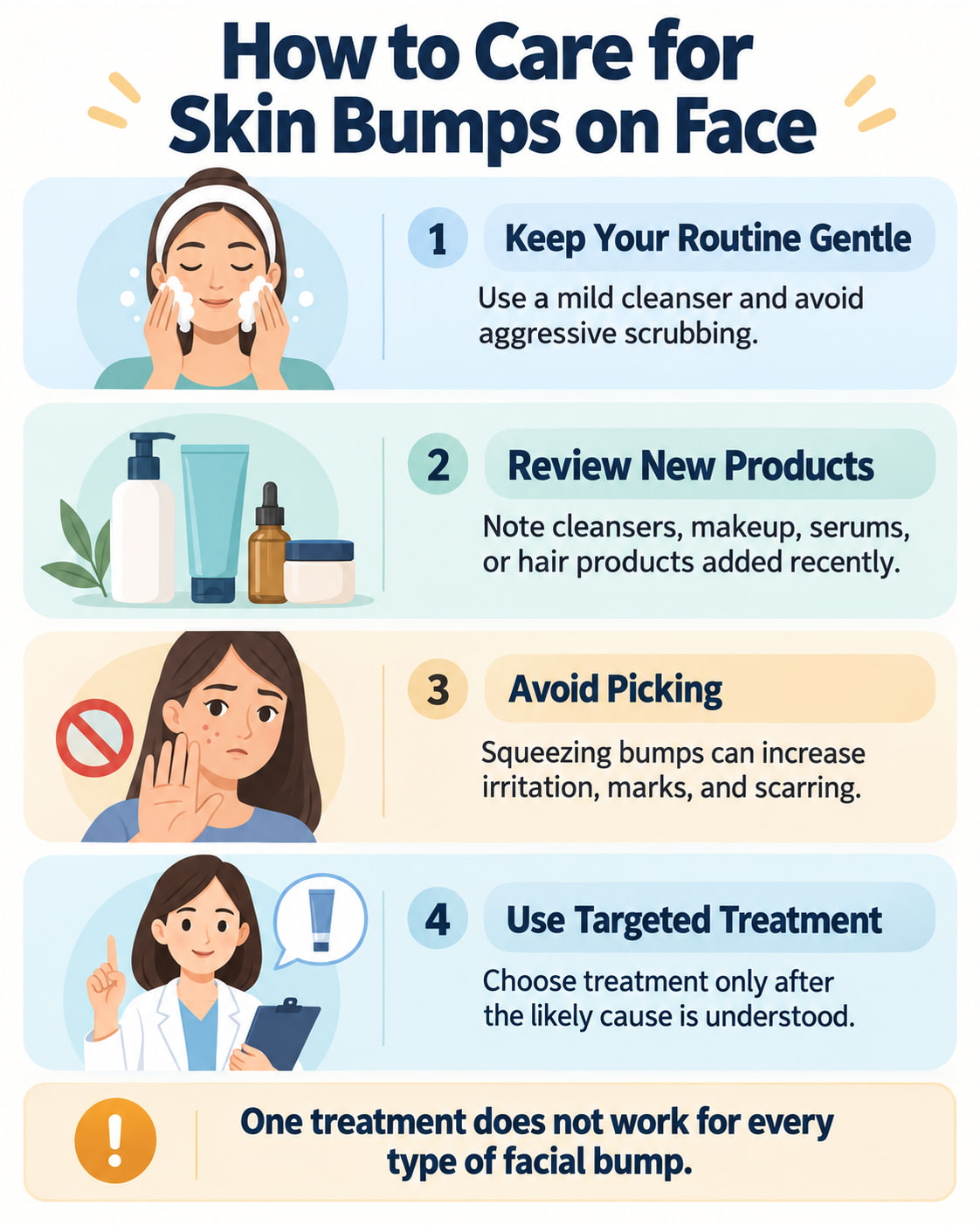
Keep Your Routine Gentle
Use a mild, nonabrasive cleanser and your fingertips rather than scrubbing tools. For acne-prone skin, the AAD recommends gentle washing up to twice daily and after sweating, along with broad-spectrum, water-resistant sunscreen with SPF 30 or higher when outdoors.
When skin feels dry, a suitable moisturizer may help. Look for “noncomedogenic” or “won’t clog pores” labeling when acne is a concern. Moisturizer can also help reduce dryness associated with some acne medications.
Review Products Without Abruptly Changing Prescriptions
Write down recently introduced cleansers, makeup, serums, and hair products. A clinician may suggest temporarily removing suspected triggers. Check with the prescriber before changing a prescription product, especially a corticosteroid.
Avoid Picking and Aggressive Exfoliation
Picking or squeezing acne increases the risk of scars and lingering dark marks. Scrubbing and repeatedly switching acne treatments can also irritate the skin.
Exfoliating ingredients have a role in some conditions, but they are not a universal solution. For example, salicylic acid is an acne option, while milia may need no intervention and facial warts need professional assessment.
How Long Do Skin Bumps on Face Take to Go Away?
The timeline depends on the diagnosis and treatment—not simply the size of the bumps.
For acne, the AAD advises allowing at least 6–8 weeks before expecting fewer breakouts. Complete clearing can take longer. For rosacea-related bumps, noticeable improvement with topical treatment commonly takes 2–3 months.
Milia may disappear within weeks or months, but some persist longer. Perioral dermatitis often improves gradually over weeks to months. Neither has a reliable overnight solution.
These timelines are not a reason to delay care for a worsening rash or a changing growth.
When to See a Dermatologist
Get Emergency Help for Breathing Problems or Sudden Swelling
Seek emergency care for trouble breathing or swallowing, or sudden swelling of the lips or eyes with a new rash. The AAD’s rash warning-sign guidance identifies these as symptoms requiring immediate attention.
Seek Prompt Care for a Painful, Spreading, or Blistering Rash
Arrange prompt medical assessment when a rash spreads quickly, becomes painful, accompanies fever or illness, develops blisters or open sores, or involves the eyes. Increasing warmth, swelling, drainage, or crusting with worsening discomfort may indicate infection.
Have Persistent or Changing Growths Examined
Book a dermatology appointment for a growth that enlarges, repeatedly bleeds or crusts, or becomes a sore that never fully closes or keeps reopening. Basal cell carcinoma can appear as a slowly growing bump and may cause little discomfort. A painless growth is not automatically harmless.
Professional help is also appropriate when breakouts are deep, leave scars, or do not improve with an appropriate treatment plan.
Frequently Asked Questions
What Causes Small Bumps on the Face That Are Not Acne?
Possibilities include milia, folliculitis, rosacea, dermatitis, keratosis pilaris, and benign growths. Their appearance can overlap, so the location, symptoms, and examination findings matter more than the word “bump.”
Why Do I Have Tiny White Bumps on My Face?
Two possibilities are whiteheads and milia. Whiteheads involve plugged follicles; milia contain trapped keratin and often appear around the eyelids or cheeks. A white appearance alone cannot tell you which condition is present.
Can Skin Care Products Cause Bumps on the Face?
Yes. Some products can contribute to breakouts, while others cause irritation or an allergic rash. Even products labeled “natural” can trigger contact dermatitis. Note when symptoms started and which products were used before they appeared.
Should You Exfoliate Skin Bumps on Your Face?
Not automatically. Selected ingredients may help acne or keratosis pilaris, but harsh exfoliation can irritate skin. Persistent, itchy, burning, or unexplained bumps should be assessed before adding stronger exfoliating products.
Are Skin Bumps on the Face Contagious?
Some causes, such as warts, can spread. Others, including contact dermatitis, keratosis pilaris, and seborrheic keratoses, are not contagious. Whether precautions are needed depends on the diagnosis.
Can Skin Bumps on the Face Be Cancer?
Some skin cancers, including basal cell carcinoma, can appear as bumps. A growing spot, repeated bleeding or crusting, or a persistent sore warrants assessment. Comparing a spot with pictures cannot reliably rule out skin cancer.
The Bottom Line
Skin bumps on face do not all need the same approach. Some require acne care, others need a different diagnosis, and confirmed benign growths may need no treatment at all.
Start by noting the bumps’ appearance, symptoms, and timing. Keep skin care gentle, avoid picking, and schedule an assessment for persistent, changing, painful, or concerning bumps rather than continuing to experiment with products.
This content is for informational purposes only and not medical advice.
References
- National Institute of Arthritis and Musculoskeletal and Skin Diseases: Acne: Overview, Symptoms, and Causes.
- American Academy of Dermatology: Acne Treatment During Pregnancy.
- DermNet: Milium and Milia.
- American Academy of Dermatology: Perioral Dermatitis.
- DermNet: Keratosis Pilaris.
- DermNet: Sebaceous Hyperplasia.
- American Academy of Dermatology: Rash Warning Signs.
- American Academy of Dermatology: Basal Cell Carcinoma: Symptoms and Care.