
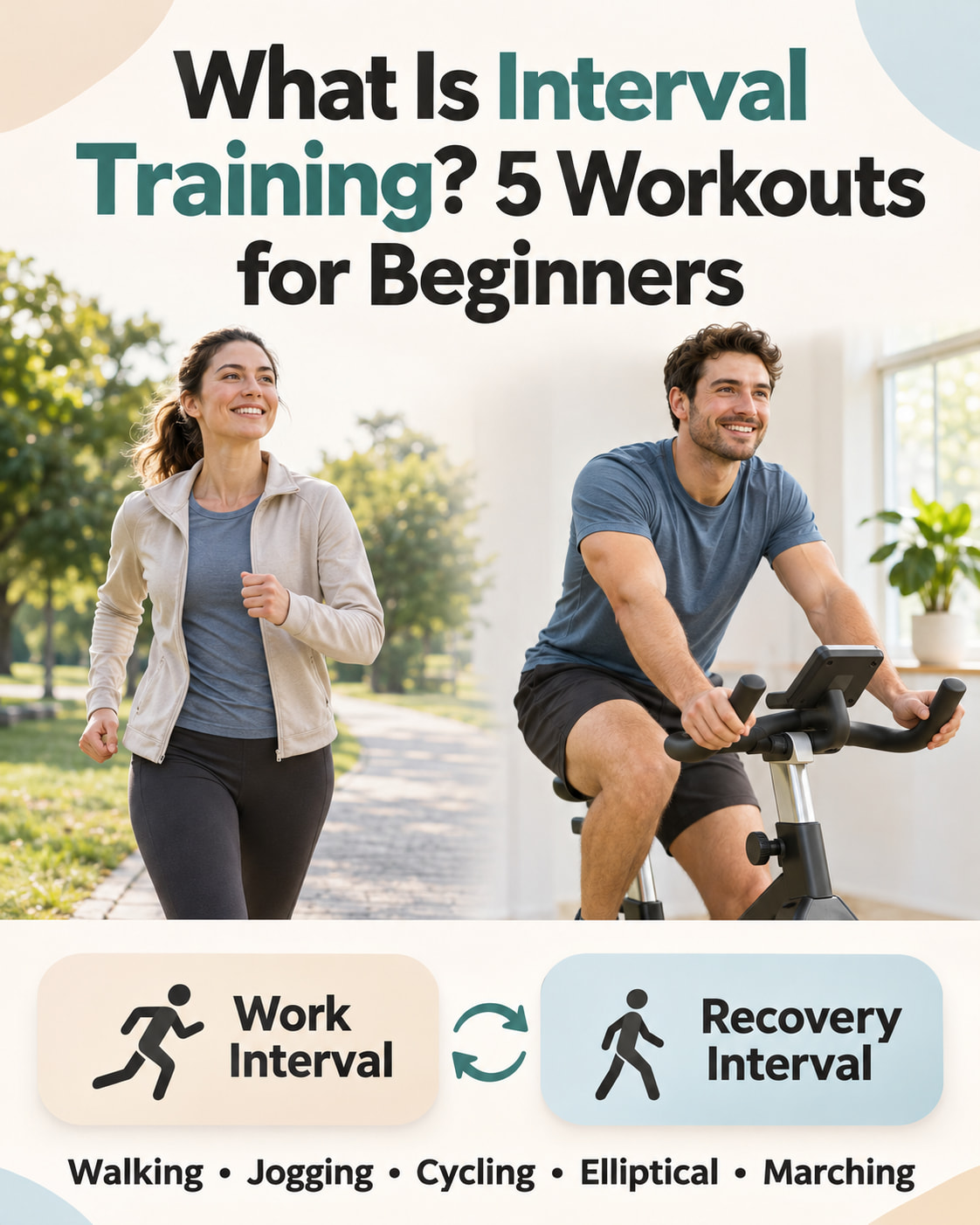
Interval training is a workout method that alternates periods of greater effort with easier movement or rest. A simple example is walking briskly for one minute, then walking slowly for two minutes.
You can adjust the activity, pace, and recovery time to your current fitness. Walking, cycling, and indoor marching all work, so you can choose a familiar movement and start with a manageable amount. The five workouts below show you how.
What Is Interval Training and How Does It Work?
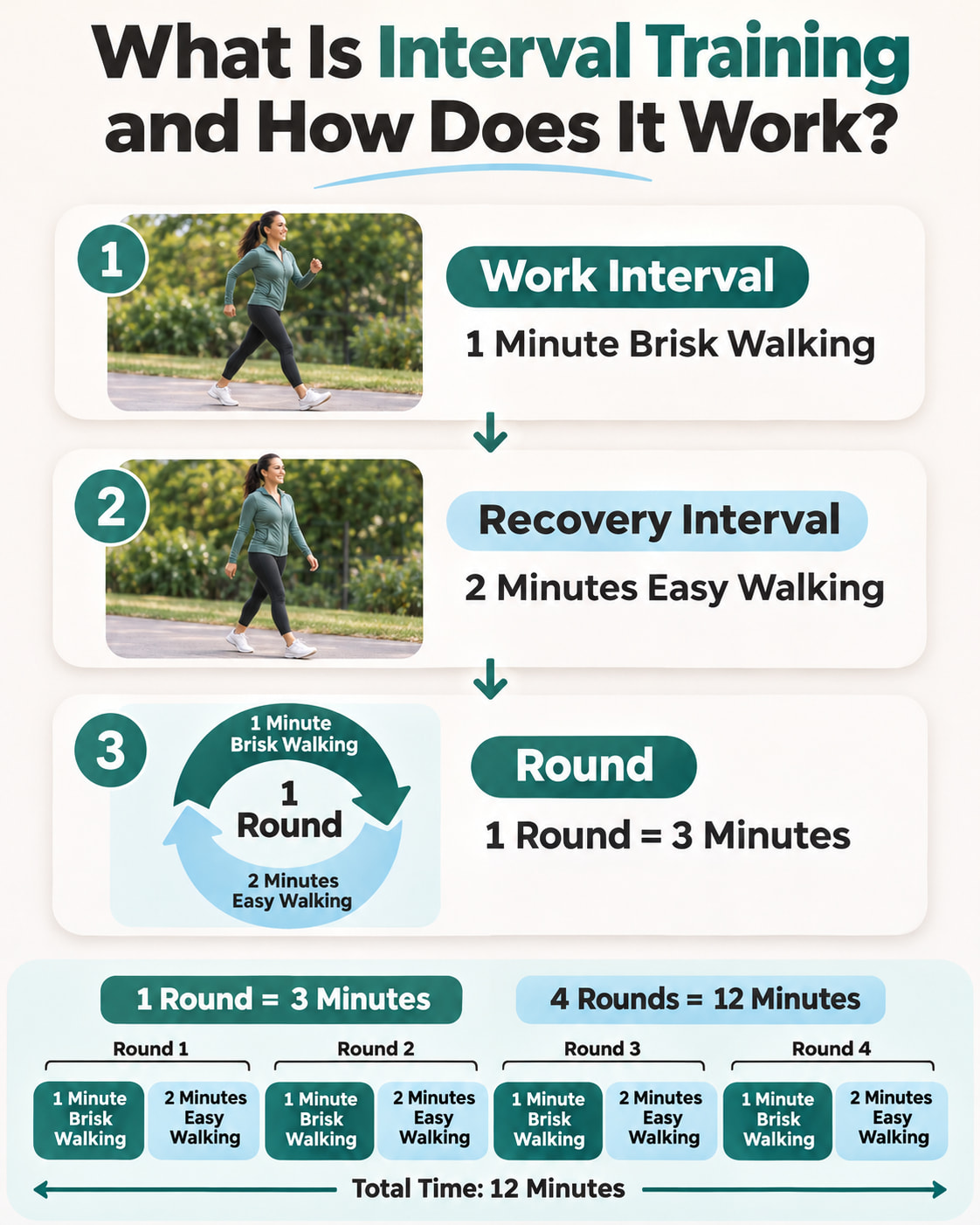
An interval workout has three basic parts:
- Work interval: A period when you increase your effort.
- Recovery interval: Easier movement or rest before the next effort.
- Round: One work interval plus one recovery interval.
For example, one minute of brisk walking followed by two minutes of easy walking makes one three-minute round. Four rounds take 12 minutes, before adding a warm-up and cool-down.
Recovery can be active. You might walk slowly between faster walking intervals or pedal gently between harder cycling intervals. Mayo Clinic’s walking guidance, updated in May 2026, specifically describes alternating brisk and slower walking as interval training.
Interval Training vs. HIIT
High-intensity interval training, or HIIT, is one form of interval training. Its work periods involve demanding effort. Beginner intervals can alternate moderate effort with easy recovery.
| Approach | Main pattern | Example |
|---|---|---|
| Interval training | Greater effort alternated with recovery | Brisk walking followed by easy walking |
| HIIT | High-intensity effort alternated with recovery | Demanding cycling intervals followed by easy pedaling |
| Continuous training | A relatively steady effort | Walking at a consistent, comfortable pace |
You do not need to sprint, jump, or reach maximum effort to use an interval structure. Choose the level of effort that fits your experience and ability.
How Hard Should Beginner Interval Training Feel?
For the workouts below, aim for controlled, moderate effort during the work intervals and comfortable movement during recovery.
According to CDC intensity guidance, updated December, 2025, moderate activity generally feels like 5–6 out of 10. Vigorous activity begins around 7–8 out of 10.
The talk test can help you judge your effort:
| Effort | What you should notice |
|---|---|
| Easy recovery | Breathing settles and conversation feels comfortable |
| Moderate work interval | You can talk, but singing would be difficult |
| Vigorous effort | You can say only a few words before pausing for breath |
Effort is personal. A walking speed that feels moderate to one person may feel vigorous to someone else. Even gentle jogging can be demanding for a beginner.
Use your breathing and movement quality to guide adjustments. Slow down or extend recovery when the next interval would feel rushed or difficult to control.
Benefits of Interval Training
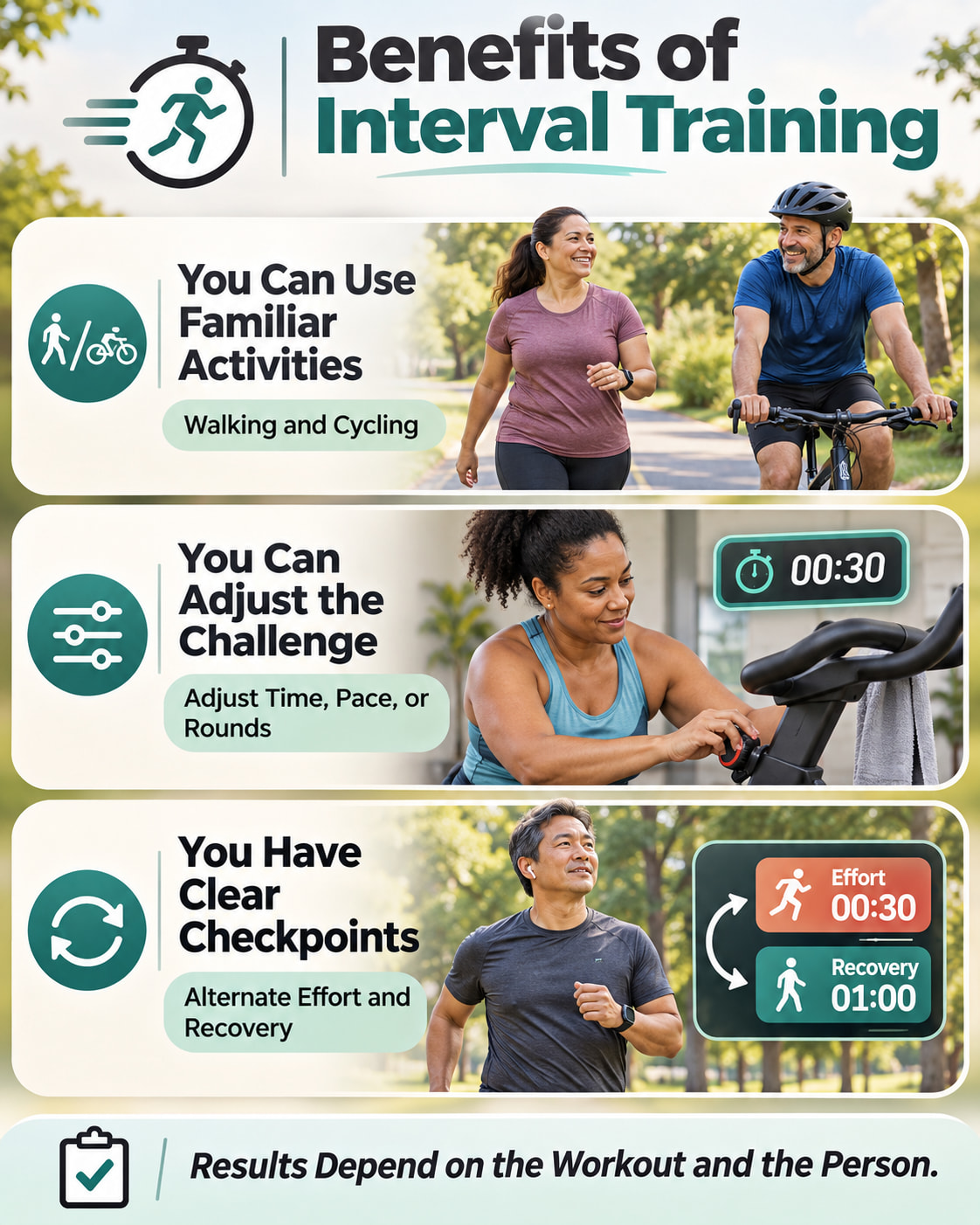
Interval training can support aerobic fitness and endurance. Its flexible structure also gives you several practical advantages:
- You can use familiar activities. Walking and cycling can become interval workouts simply by changing your effort.
- You can adjust the challenge. Change the length of the work period, recovery period, or number of rounds.
- You have clear checkpoints. A timer tells you when to increase your effort and when to ease back.
Results depend on the workout and the person. In an August 2026 randomized trial, 40 sedentary young men were assigned to four exercise formats; 38 completed eight weeks. HIIT improved peak aerobic fitness more than moderate intervals, but researchers did not detect differences between the groups in body-composition changes.
The study was small and limited to young men. It does not establish that one format is best for everyone. Choose a routine you can perform comfortably and repeat consistently.
5 Interval Training Workouts for Beginners
These are adjustable sample workouts for adults who can comfortably perform the chosen movement. Choose one workout per session. You can complete fewer rounds or take longer recovery periods when needed.
The American Heart Association recommends warming up and cooling down for 5–10 minutes each. The totals below include five minutes for each; allow more time if you need it.
For the warm-up and cool-down, use the same movement at an easier pace.
1. Brisk Walking Intervals
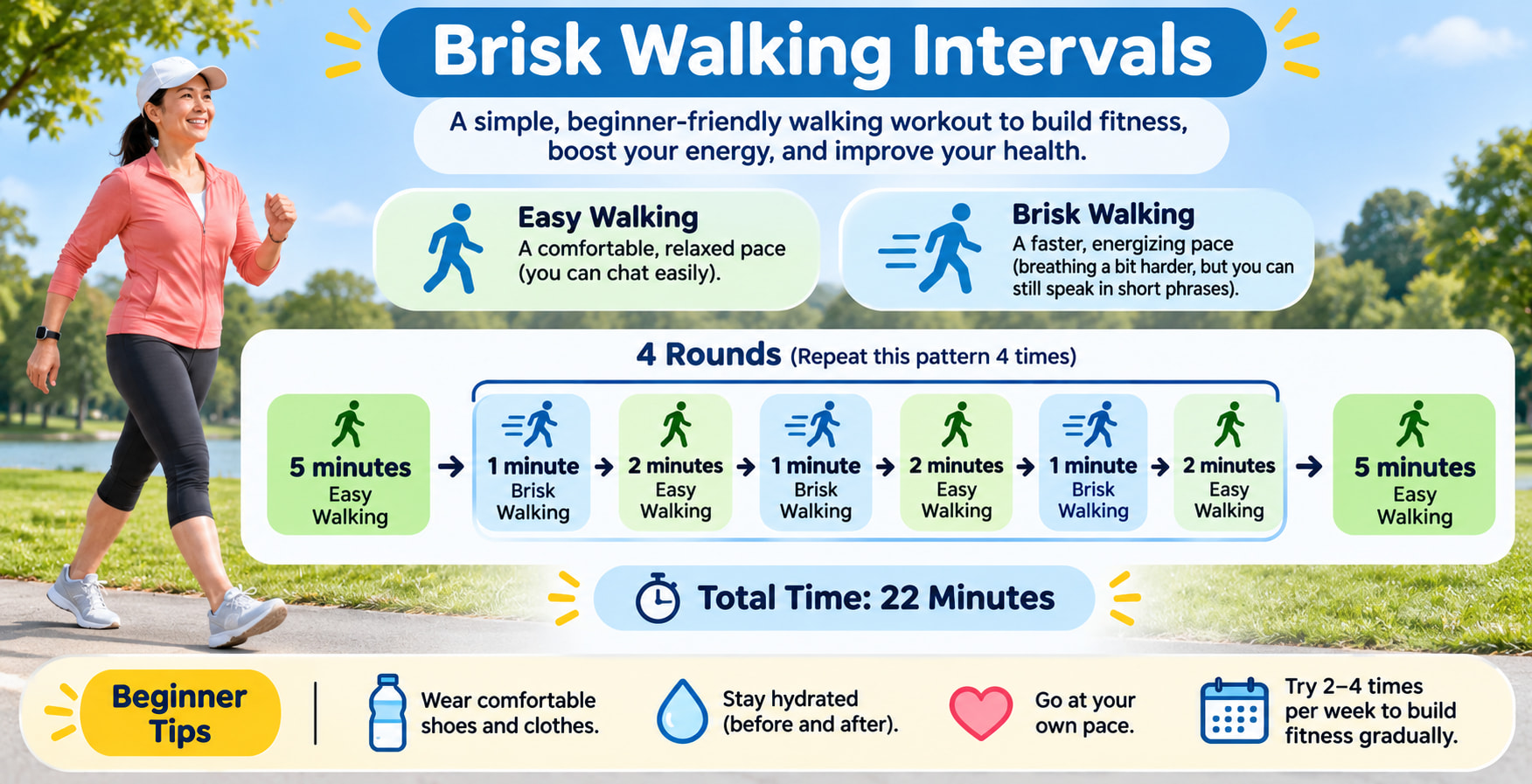
Total time: 22 minutes
This is a straightforward starting option if you already walk comfortably. Choose a level route where you can change pace without navigating traffic or uneven ground.
- Walk easily for 5 minutes.
- Alternate 1 minute of brisk walking with 2 minutes of easy walking. Complete 4 rounds.
- Finish with 5 minutes of easy walking.
During the brisk sections, look ahead, relax your shoulders, and let your arms swing naturally. Increase your pace without forcing unusually long steps.
Make it easier: Complete two rounds, or shorten each brisk interval to 30 seconds. Keep the recovery comfortable.
2. Walk–Jog Intervals
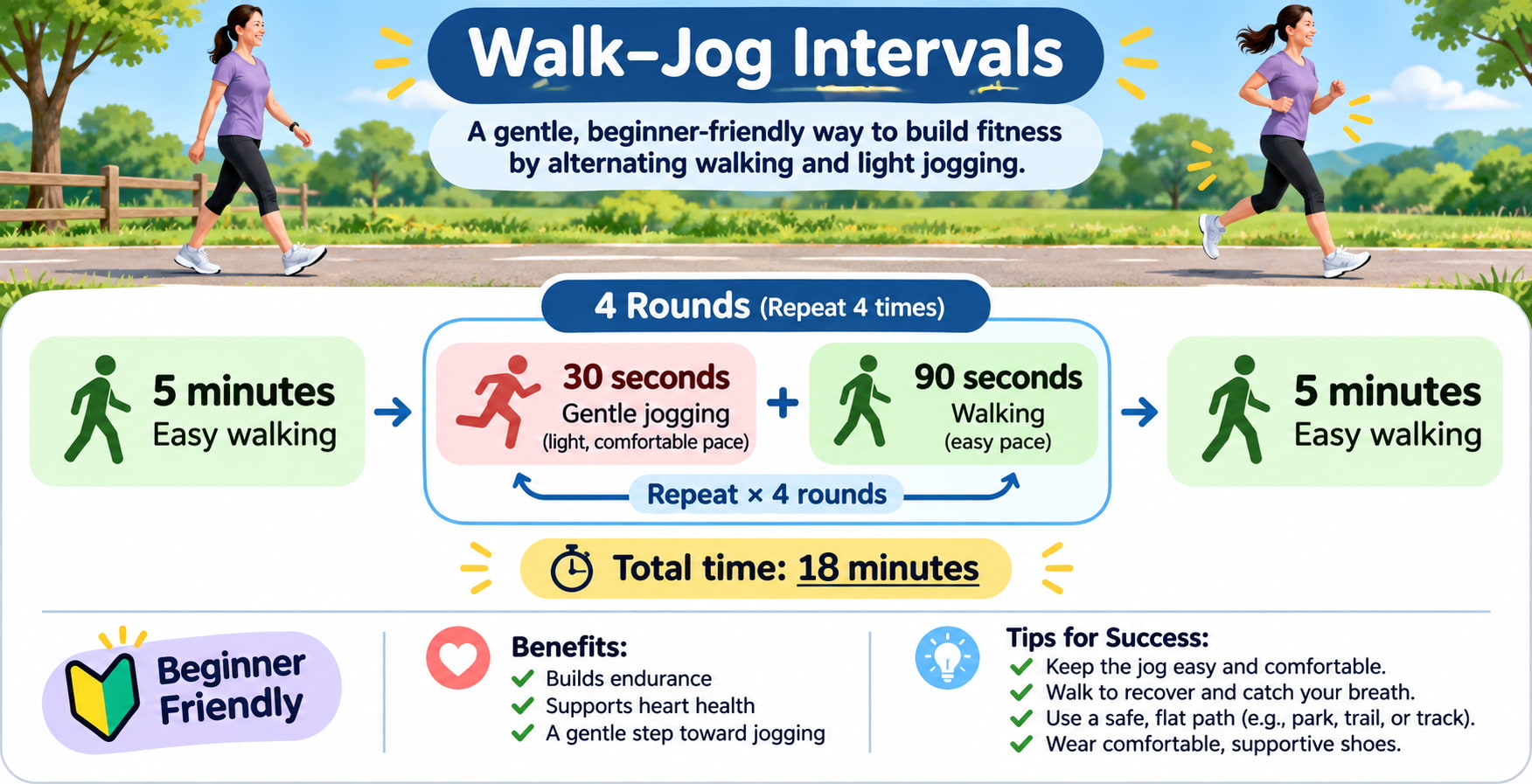
Total time: 18 minutes
Choose this option when you feel ready to introduce running. The jogging portions should be controlled; they are not sprints.
- Walk easily for 5 minutes, gradually increasing your pace.
- Alternate 30 seconds of gentle jogging with 90 seconds of walking. Complete 4 rounds.
- Finish with 5 minutes of easy walking.
Use a pace that lets you stay relaxed. If jogging makes it difficult to speak or maintain control, replace it with brisk walking.
Make it easier: Try two rounds or use 15-second jogging intervals with longer walking recovery. Leave an easy activity day or rest day between beginner running sessions.
3. Stationary Bike Intervals
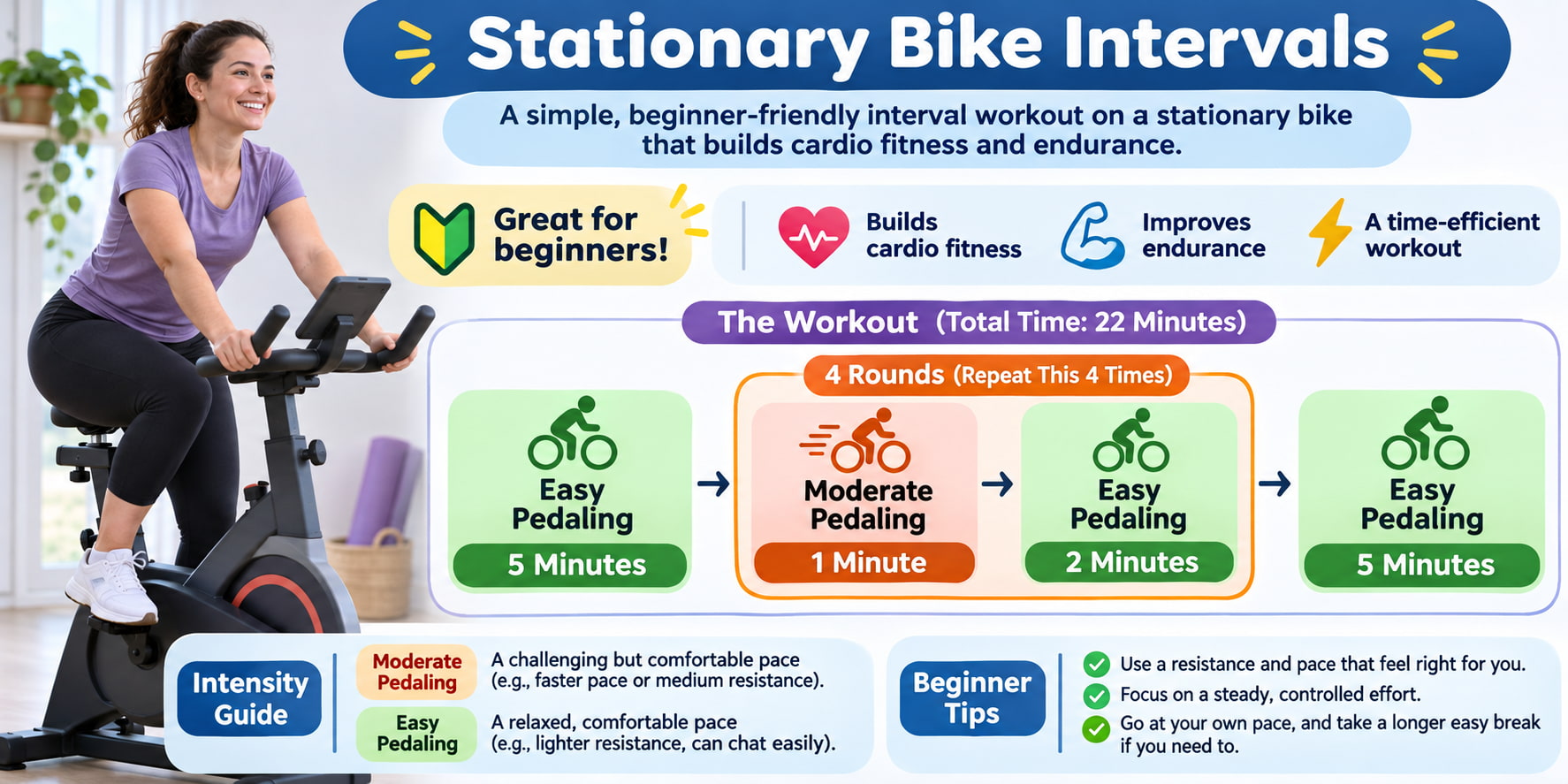
Total time: 22 minutes
A stationary bike lets you change effort without managing road traffic. Familiarize yourself with the seat adjustment, resistance controls, and stopping mechanism before starting.
- Pedal easily for 5 minutes.
- Alternate 1 minute of moderate pedaling with 2 minutes of easy pedaling. Complete 4 rounds.
- Cool down with 5 minutes of easy pedaling.
Stay seated and keep your upper body relaxed. Use a small increase in resistance or pedaling pace to reach moderate effort. Avoid adding so much resistance that you have to strain through each turn.
Make it easier: Keep resistance light and use 30-second work intervals.
4. Elliptical Intervals
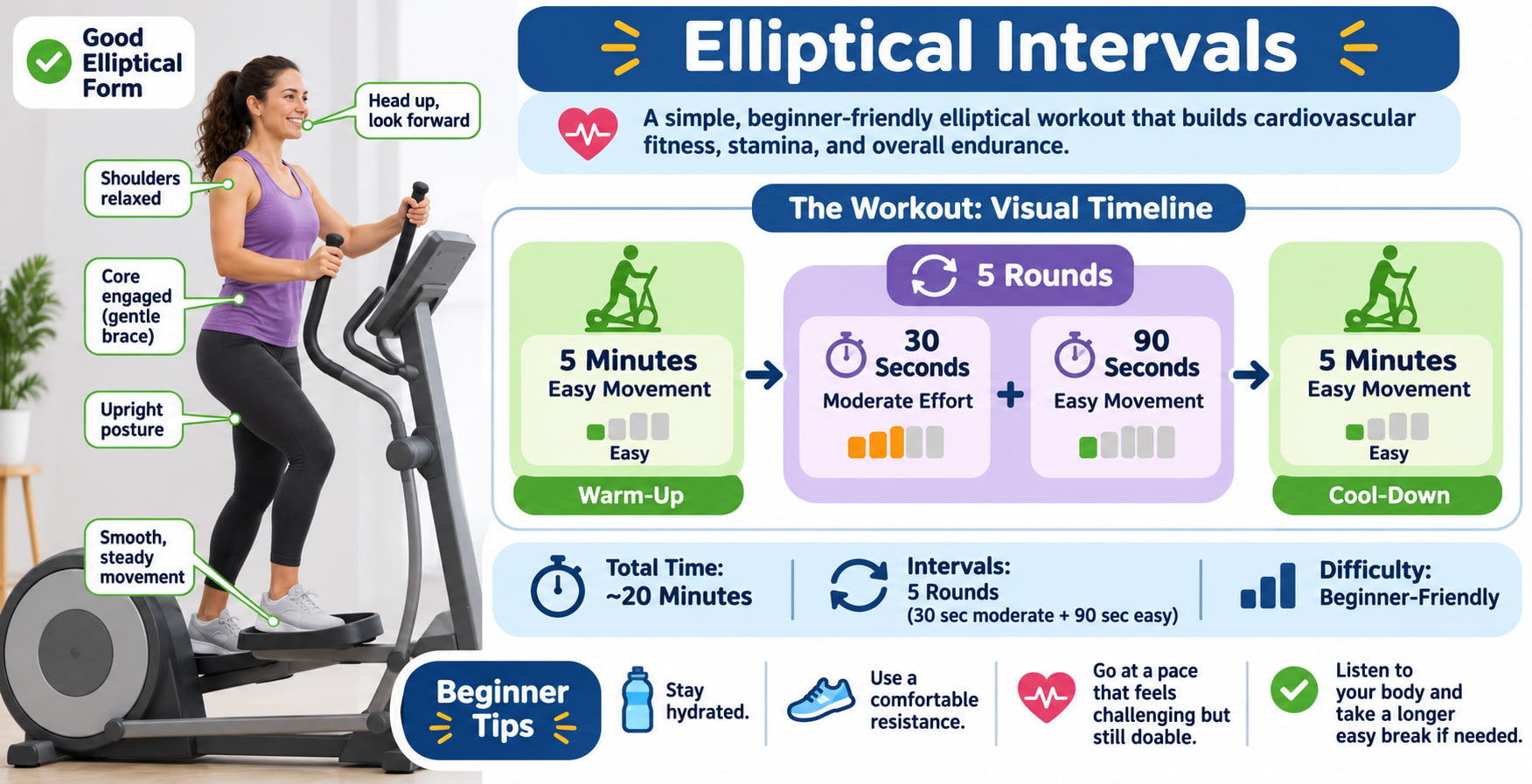
Total time: 20 minutes
Use this option if you already feel comfortable getting on, moving, and stopping on an elliptical machine.
- Move at an easy pace for 5 minutes.
- Alternate 30 seconds of moderate effort with 90 seconds of easy movement. Complete 5 rounds.
- Cool down for 5 minutes at an easy pace.
Stand comfortably upright and use the handles for balance as needed. Adjust speed or resistance gradually, keeping the movement smooth. Wait until the pedals stop before stepping off.
Make it easier: Complete three rounds and keep the resistance low throughout.
5. Low-Impact Marching Intervals
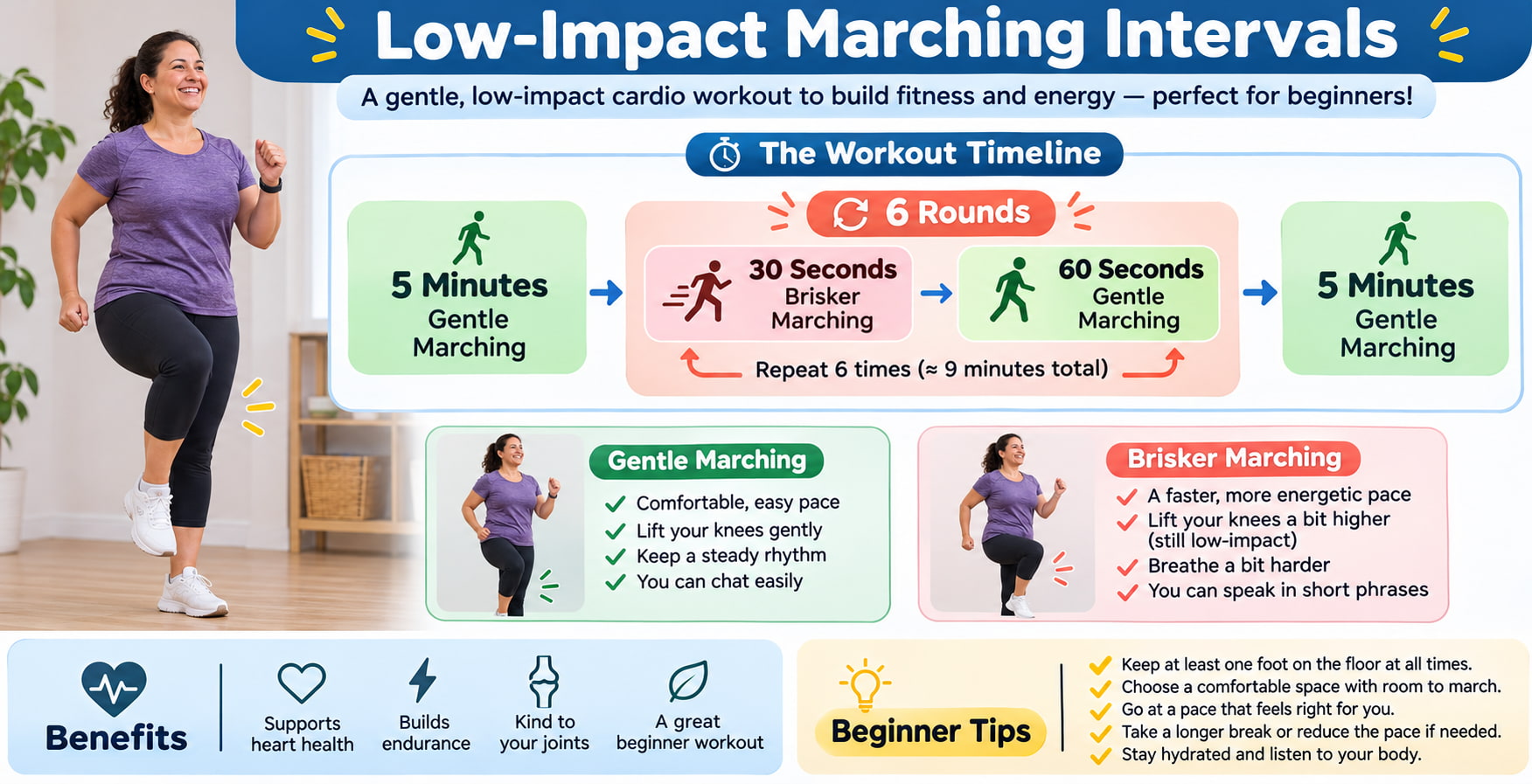
Total time: 19 minutes
This equipment-free option works well when you want to exercise at home. Clear enough floor space to move comfortably, and keep a stable support nearby if you need help with balance.
- March gently for 5 minutes.
- Alternate 30 seconds of brisker marching with 60 seconds of gentle marching. Complete 6 rounds.
- Finish with 5 minutes of gentle marching.
Keep one foot on the floor at a time. Lift your feet only as high as feels comfortable, and let your arms move naturally. You do not need high knees or jumping.
Make it easier: Complete three rounds or use smaller steps during the brisker intervals.
How Often Should You Do Interval Training?
For a beginner, one or two interval sessions per week can be a practical starting schedule. This is an adjustable suggestion, not a requirement for every person.
Use easy activity or rest between demanding sessions, especially when introducing jogging. Gentle walking intervals may require less recovery than running or vigorous cycling.
If you have been inactive, start with an amount of comfortable activity you can manage. Add faster sections as ordinary movement begins to feel easier.
How Interval Workouts Fit Into Weekly Activity Goals
The CDC’s adult activity guidelines recommend:
- At least 150 minutes of moderate-intensity aerobic activity per week, or
- 75 minutes of vigorous-intensity activity, or an equivalent combination.
- Muscle-strengthening activity on at least two days per week.
Short sessions can contribute to those goals, and some activity is better than none.
However, elapsed workout time is different from moderate-intensity activity time. The 22-minute walking example includes only four minutes specifically assigned to brisk walking. Its easy portions count toward the moderate target only if they actually reach moderate intensity for you.
These workouts are starting examples. Build your overall activity gradually rather than treating one short session as a complete weekly exercise plan.
How to Progress Your Interval Workouts
Repeat a manageable routine before making it harder. You are looking for controlled movement, recovery that feels sufficient, and a session that fits comfortably into your week.
Change one part of the workout at a time. For example:
- Add one round while keeping the same pace.
- Extend a work interval from 30 to 45 seconds.
- Slightly increase pace or resistance while keeping the timing unchanged.
You do not need to shorten recovery to make progress. Keep it long enough to begin the next effort comfortably.
For the walking workout, adding one three-minute round increases the total from 22 to 25 minutes. That gives you a clear progression without changing speed and duration together.
If the revised session feels too demanding, return to the earlier version.
Common Interval Training Mistakes
- Starting too fast: Choose an effort you can repeat with control.
- Treating recovery as a deadline: Take longer when your breathing has not settled.
- Changing several things at once: Increasing speed, resistance, and rounds together makes it harder to judge the appropriate workload.
- Letting the timer override discomfort: Stop or modify the activity when movement becomes painful.
- Making every workout demanding: Include easier activity and recovery in your routine.
When to Get Medical Guidance
Moderate activity is suitable for most people. However, CDC guidance recommends discussing appropriate exercise with a clinician if you have a chronic condition, such as heart disease, arthritis, or diabetes. It also advises checking before vigorous exercise if you have been inactive or have certain other risk factors.
Get individualized guidance if an injury, recent surgery, or existing exercise restriction affects your ability to use these workouts.
Stop exercising if you develop chest discomfort, dizziness, or severe or unusual shortness of breath. Seek medical advice before resuming. Call 911 for possible heart attack symptoms, such as chest pressure with shortness of breath, cold sweating, or pain spreading to the arm or jaw.
Frequently Asked Questions
Is Interval Training the Same as HIIT?
HIIT is a form of interval training that uses high-intensity work periods. Interval training can also alternate moderate effort with easy recovery, as in brisk and slower walking.
Can Beginners Do Interval Training?
Yes, when the activity and effort match their abilities. Start with a familiar movement, brief work intervals, and generous recovery. If ordinary walking already feels demanding, build comfort with that first.
What Is a Good Work-to-Recovery Ratio for Beginners?
There is no single ideal ratio. One minute of moderate effort followed by two minutes of easy movement is a practical example. Adjust recovery according to how you feel rather than forcing a particular ratio.
How Long Should a Beginner Interval Workout Last?
The examples above last 18–22 minutes, including warm-up and cool-down. You can shorten them by completing fewer rounds. The appropriate length depends on your starting fitness, activity choice, and effort.
Can You Do Interval Training by Walking?
Yes. Alternate a brisk pace with a slower, comfortable pace. You can do this outdoors or on a treadmill, provided you can adjust your speed safely.
Is Interval Training Better Than Steady Cardio for Weight Loss?
It is not guaranteed to produce greater weight loss. The small 2026 trial discussed above did not find differences in body-composition changes between the exercise formats. Choose a form of activity you can maintain, without expecting a particular workout structure to guarantee results.
Conclusion
Interval training gives you a simple way to organize changes in effort. Begin with a familiar activity, keep the faster sections controlled, and allow enough recovery to repeat them comfortably.
Choose one workout above for your next suitable exercise day. Start with the number of rounds you can manage, and build gradually as the routine becomes easier.
References
- Mayo Clinic: Walking—Trim Your Waistline, Improve Your Health.
- CDC: How to Measure Physical Activity Intensity.
- Zheng et al.: Comparing Four Training Modalities on Body Composition, Cardiorespiratory Fitness and Cardiovascular Responses in Sedentary Young Men.
- American Heart Association: Warm Up, Cool Down.
- CDC: Adult Activity—An Overview.