
Pecans vs walnuts comes down to your goal: walnuts are better for plant-based omega-3 ALA and protein, while pecans are better for fiber, monounsaturated fat, and lower net carbs. Both nuts can fit into a healthy diet when you eat them in sensible portions and choose unsalted versions most of the time.
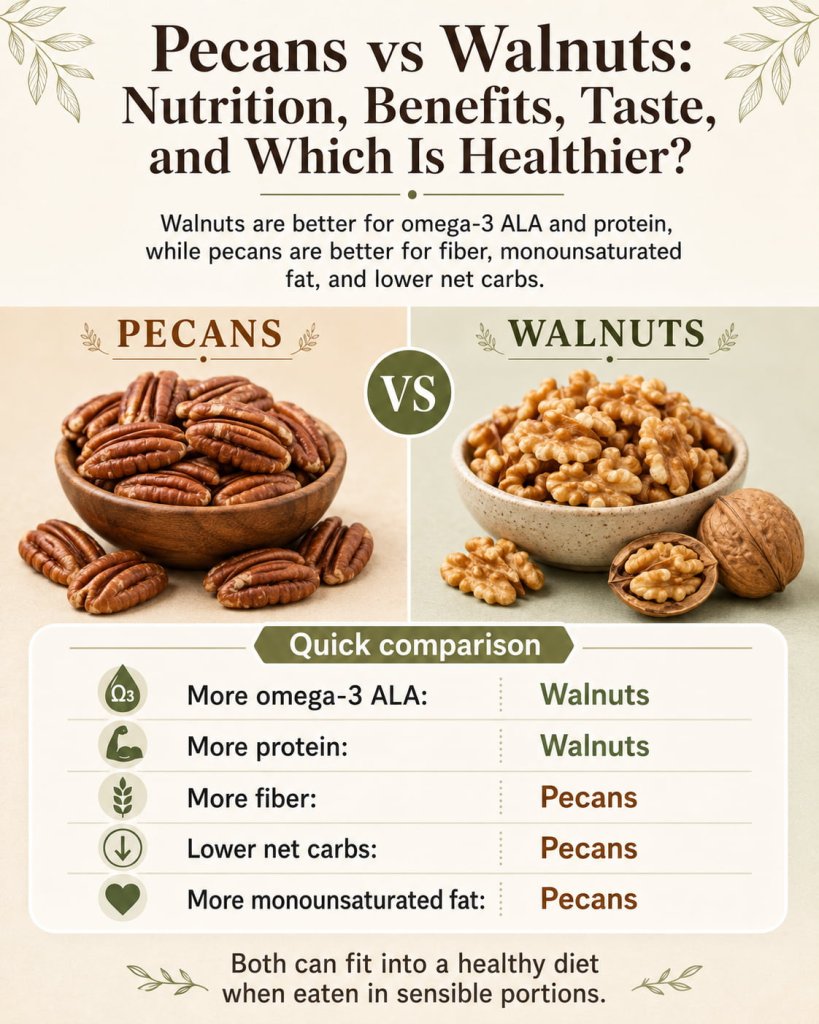
Pecans are rich, buttery, and slightly sweet. Walnuts are earthier, more bitter, and higher in polyunsaturated fats. If you want a heart-friendly snack, either can work. If you want more omega-3s, choose walnuts. If you want a lower-carb nut for snacking or baking, pecans may be the better pick.
Pecans vs Walnuts: Quick Answer
Pecans and walnuts are both tree nuts with healthy unsaturated fats, fiber, minerals, and plant compounds. The biggest difference is the type of fat they provide.
Walnuts contain much more alpha-linolenic acid, or ALA, which is a plant-based omega-3 fat. Pecans contain more monounsaturated fat, the same general category of fat found in foods like olive oil and avocados.
Here is the simplest comparison:
| Goal | Better choice |
|---|---|
| More omega-3 ALA | Walnuts |
| More protein | Walnuts |
| More fiber | Pecans |
| Lower net carbs | Pecans |
| More monounsaturated fat | Pecans |
| Lower calories per ounce | Walnuts, slightly |
| Better for baking sweetness | Pecans |
| Better for earthy flavor | Walnuts |
Pecans vs Walnuts Nutrition Facts
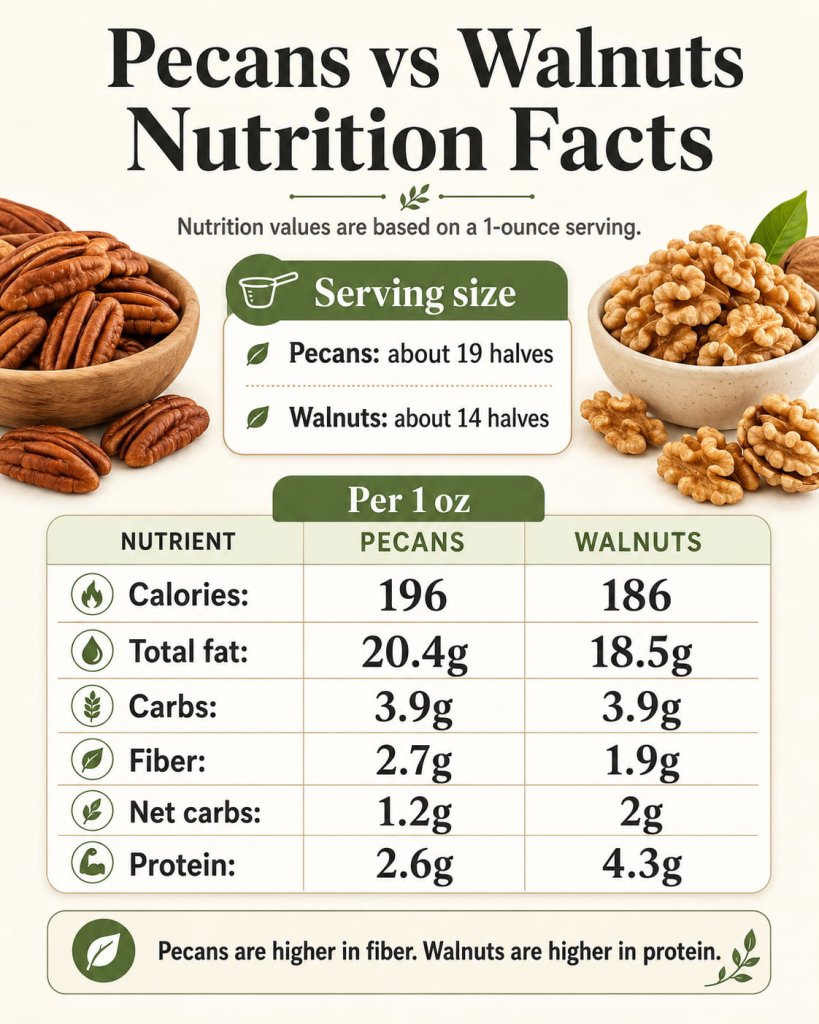
Nutrition values below are based on a 1-ounce serving. That is about 19 pecan halves or 14 walnut halves, according to USDA-based nutrition data from MyFoodData’s pecan nutrition facts and MyFoodData’s walnut nutrition facts.
| Nutrient per 1 oz | Pecans | Walnuts |
|---|---|---|
| Calories | 196 | 186 |
| Total fat | 20.4g | 18.5g |
| Saturated fat | 1.8g | 1.7g |
| Carbs | 3.9g | 3.9g |
| Fiber | 2.7g | 1.9g |
| Net carbs | 1.2g | 2g |
| Protein | 2.6g | 4.3g |
| Calcium | 19.9mg | 27.8mg |
| Iron | 0.72mg | 0.83mg |
| Potassium | 116.4mg | 125.2mg |
| Phosphorus | 78.7mg | 98.3mg |
Pecans are slightly higher in calories and total fat. Walnuts are slightly lower in calories and higher in protein. Both have similar carbohydrate amounts, but pecans provide more fiber, which makes their net carbs lower.
Because both nuts are high in fat, the type of fat matters more than the total fat number. Pecans are much higher in monounsaturated fat, while walnuts are much higher in polyunsaturated fat, including plant-based omega-3 ALA.
| Fat type per 1 oz | Pecans | Walnuts | What it means |
|---|---|---|---|
| Monounsaturated fat | About 11.6g | About 2.5g | Higher in pecans |
| Polyunsaturated fat | About 6.1g | About 13.4g | Higher in walnuts |
| Omega-3 ALA | Much lower | About 2.57g | Walnuts are the clear winner |
This is why pecans are often described as rich and buttery, while walnuts are usually highlighted for omega-3 content.
Key Differences Between Pecans and Walnuts
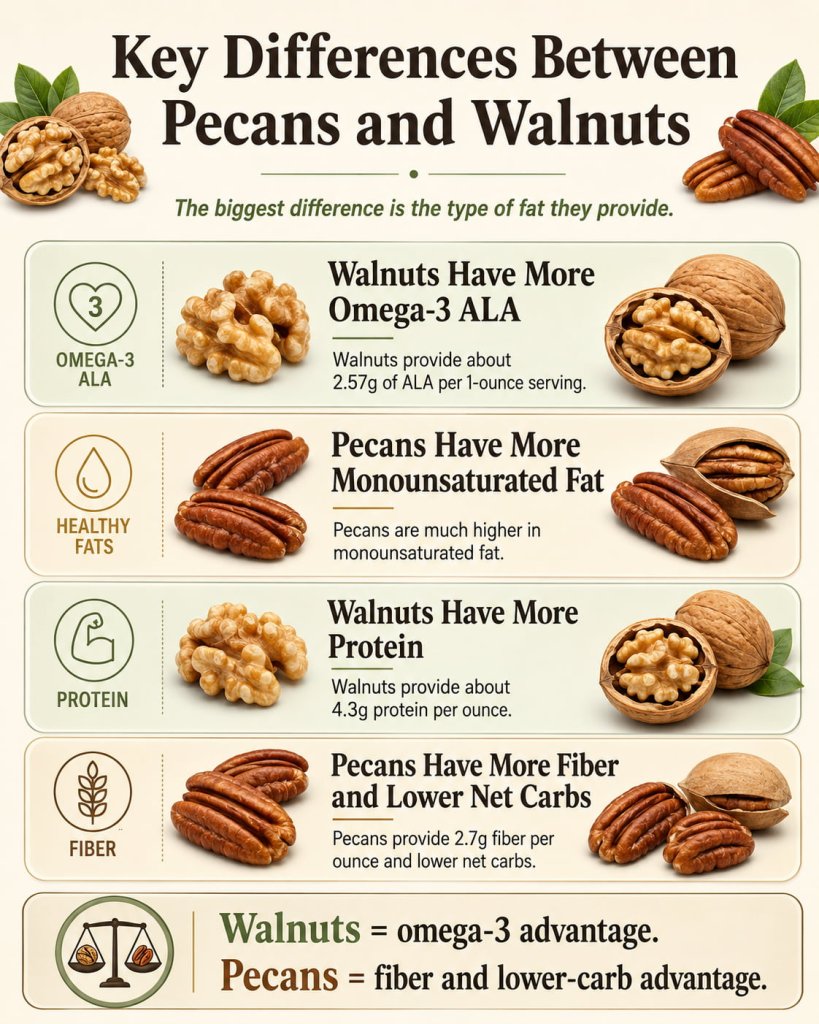
Walnuts Have More Omega-3 ALA
Walnuts are one of the best common nuts for plant-based omega-3 ALA. The NIH Office of Dietary Supplements lists English walnuts as providing 2.57g of ALA per 1-ounce serving. NIH also lists adult ALA Adequate Intakes as 1.6g per day for men and 1.1g per day for women.
That means 1 ounce of walnuts can provide more than a full day’s ALA target for many adults. This does not mean walnuts replace fish, because ALA is not the same as EPA and DHA from seafood. Still, walnuts are a strong choice if you want more plant-based omega-3 fat.
Pecans Have More Monounsaturated Fat
Pecans are especially rich in monounsaturated fat. That makes them a good option when you want a rich, satisfying nut that fits well into a heart-conscious eating pattern.
The American Heart Association recommends replacing saturated fats with unsaturated fats, including monounsaturated and polyunsaturated fats, as part of a heart-healthy eating pattern. Nuts are one of the foods the AHA lists as a source of unsaturated fat.
Walnuts Have More Protein
Walnuts provide about 4.3g of protein per ounce, compared with 2.6g in pecans. That does not make walnuts a high-protein food in the same way as chicken, Greek yogurt, eggs, tofu, or beans, but they do provide more protein than pecans.
For a snack, walnuts may be slightly more filling for people who want a little more protein with their healthy fats.
Pecans Have More Fiber and Lower Net Carbs
Pecans provide 2.7g of fiber per ounce, while walnuts provide 1.9g. Since both have about 3.9g of total carbs per ounce, pecans come out lower in net carbs.
That makes pecans especially useful for:
- Lower-carb snacks
- Keto-style meal planning
- Salad toppings
- Nut crusts for fish or chicken
- Low-sugar desserts
Walnuts can still fit into lower-carb eating, but pecans have the edge if net carbs are the main concern.
Which Is Healthier: Pecans or Walnuts?
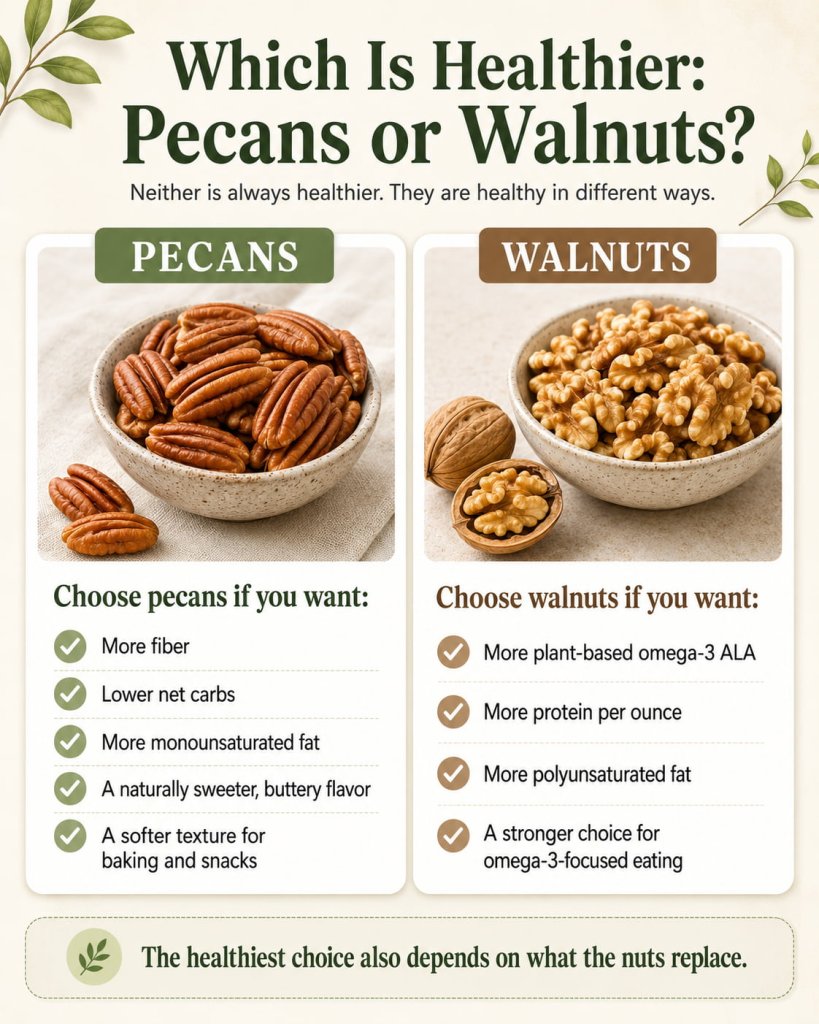
Neither pecans nor walnuts is always healthier. They are healthy in different ways.
Choose walnuts if you want:
- More plant-based omega-3 ALA
- More protein per ounce
- More polyunsaturated fat
- A stronger choice for omega-3-focused eating
Choose pecans if you want:
- More fiber
- Lower net carbs
- More monounsaturated fat
- A naturally sweeter, buttery flavor
- A softer texture for baking and snacks
The healthiest choice also depends on what the nuts replace. A handful of unsalted pecans or walnuts is usually a better snack than candy, chips, pastries, or cookies. But adding large portions of nuts on top of an already calorie-heavy diet can make it easier to overeat.
Pecans vs Walnuts for Heart Health
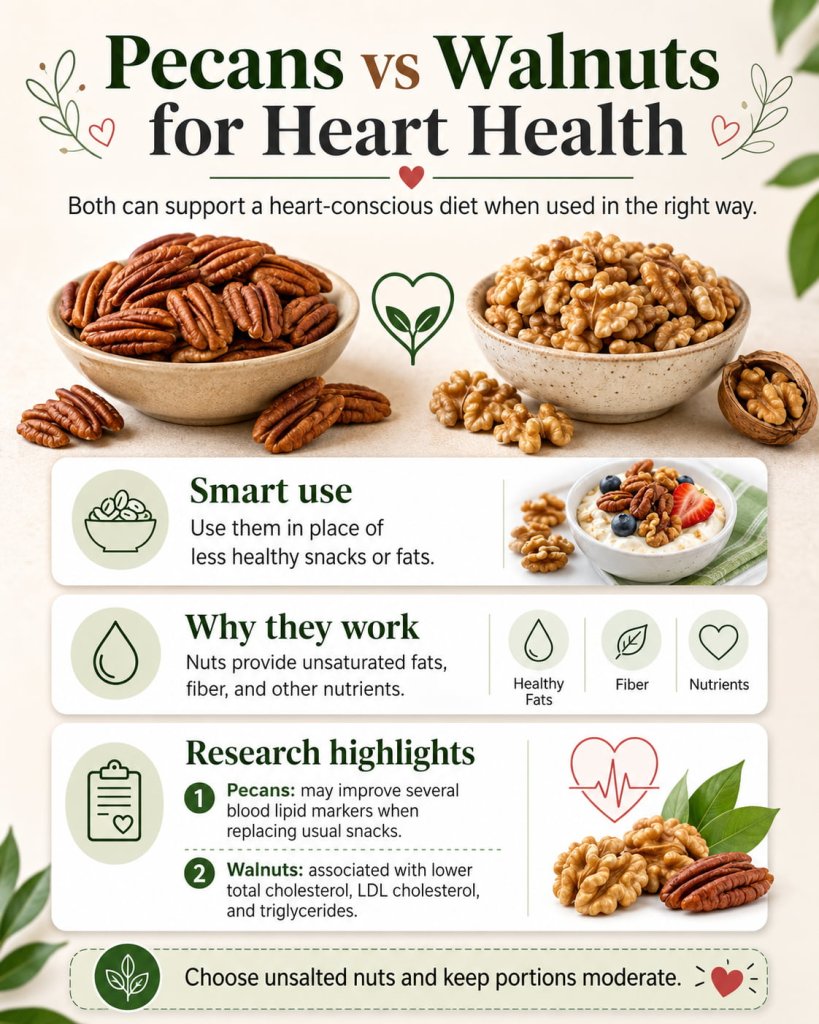
Both pecans and walnuts can support a heart-conscious diet when used in the right way. The key is to use them in place of less healthy snacks or fats, not simply add extra calories.
The American Heart Association notes that replacing saturated fats with unsaturated fats can help lower LDL cholesterol and triglycerides. Nuts provide unsaturated fats, fiber, and other nutrients, which makes them a smart choice in many balanced eating patterns.
A 2025 randomized controlled trial published in The American Journal of Clinical Nutrition found that replacing usual snacks with 57g per day of pecans for 12 weeks improved several blood lipid markers and overall diet quality in adults at increased cardiometabolic risk, although it did not improve vascular health markers.
Walnuts also have research support. A 2022 systematic review and meta-analysis of randomized controlled trials found that walnut intake was associated with reductions in total cholesterol, LDL cholesterol, and triglycerides.
The practical takeaway is simple: both can be heart-friendly when eaten in moderate portions, especially unsalted and in place of highly processed snacks.
Pecans vs Walnuts for Protein and Fitness Goals
Walnuts win for protein, but only slightly in the bigger picture.
One ounce of walnuts gives about 4.3g of protein. One ounce of pecans gives about 2.6g. That difference matters if you eat nuts often, but neither nut should be your main protein source if your goal is muscle building, strength training, or body recomposition.
Use walnuts or pecans as a supporting food with higher-protein options such as:
- Greek yogurt
- Cottage cheese
- Eggs
- Chicken or turkey
- Fish
- Tofu or tempeh
- Lentils or beans
- Protein smoothies
A good fitness snack could be Greek yogurt with walnuts, oatmeal with chopped pecans, or cottage cheese with a small handful of either nut.
Pecans vs Walnuts for Low-Carb or Keto Eating
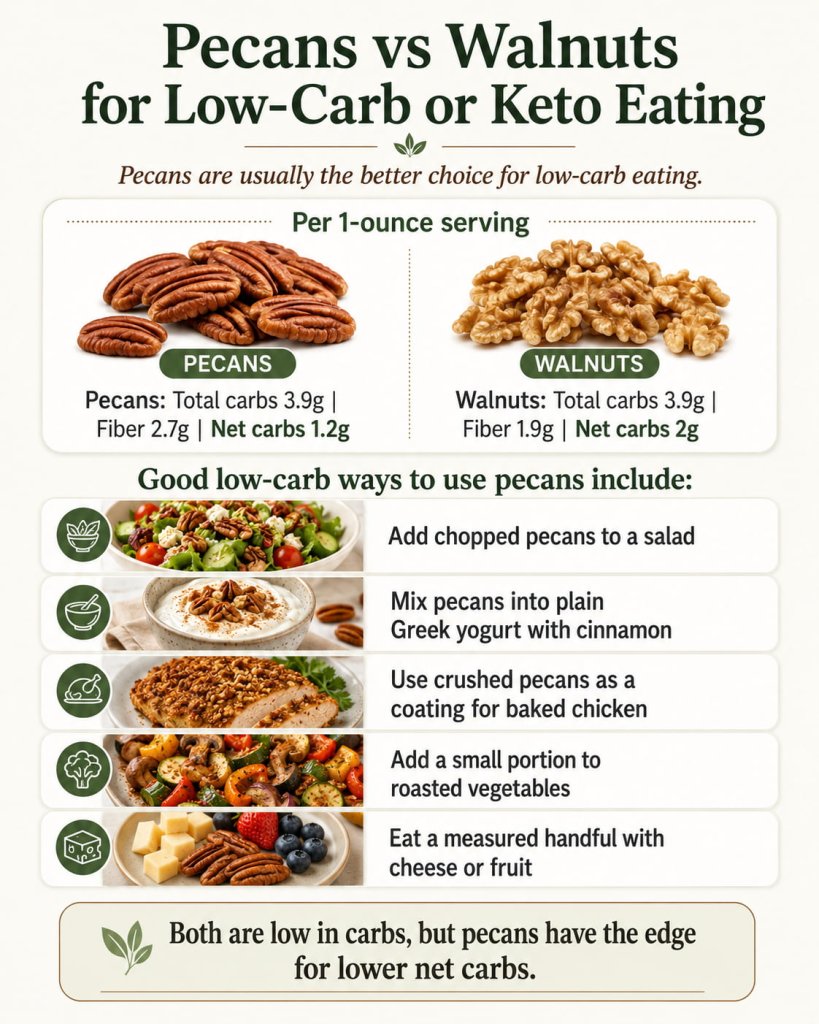
Pecans are usually the better choice for low-carb eating because they have more fiber and fewer net carbs per ounce.
Per 1-ounce serving:
| Nut | Total carbs | Fiber | Net carbs |
|---|---|---|---|
| Pecans | 3.9g | 2.7g | 1.2g |
| Walnuts | 3.9g | 1.9g | 2g |
Both are low in carbs compared with grains, sweet snacks, and many fruits. But pecans are especially easy to fit into low-carb meals.
Good low-carb ways to use pecans include:
- Add chopped pecans to a salad
- Mix pecans into plain Greek yogurt with cinnamon
- Use crushed pecans as a coating for baked chicken
- Add a small portion to roasted vegetables
- Eat a measured handful with cheese or fruit
Pecans vs Walnuts for Omega-3s
Walnuts are the clear winner for omega-3 ALA.
NIH lists English walnuts at 2.57g ALA per ounce. Pecans contain much less omega-3 fat, so they are not the best nut if omega-3 intake is your main goal.
However, it is important to be precise. Walnuts provide ALA, a plant omega-3. Fish and seafood provide EPA and DHA, the long-chain omega-3 fats most often discussed for heart and brain health. Your body can convert some ALA into EPA and DHA, but the conversion is limited.
So, walnuts are excellent for plant-based ALA, but they should not be described as the same as salmon, sardines, or other fatty fish.
Taste and Texture: Pecans vs Walnuts
Pecans taste sweeter, richer, and more buttery. They have a softer crunch and work very well in baked dishes, oatmeal, salads, roasted vegetables, and snack mixes.
Walnuts taste earthier and slightly bitter. They have a firmer texture and work well in oatmeal, banana bread, pesto, grain bowls, salads, and savory dishes.
Can You Substitute Pecans for Walnuts?
Yes, you can usually substitute pecans for walnuts in recipes, but the flavor and texture will change slightly. Pecans are sweeter, softer, and more buttery, so they work especially well in desserts, oatmeal, granola, and salads. Walnuts are earthier and slightly more bitter, so they work well in banana bread, savory dishes, pesto, and grain bowls.
For most recipes, use a 1:1 swap. For example, if a recipe calls for 1 cup of walnuts, you can use 1 cup of pecans instead. If the recipe is already very sweet, pecans may make it taste richer and sweeter, so you may want to slightly reduce added sugar.
Best Uses for Pecans
Pecans are best for:
- Pecan pie
- Oatmeal toppings
- Yogurt bowls
- Roasted sweet potatoes
- Salads with apples or pears
- Low-carb nut crusts
- Homemade granola
- Trail mix
Best Uses for Walnuts
Walnuts are best for:
- Banana bread
- Oatmeal
- Pesto
- Grain bowls
- Salads with goat cheese or berries
- Homemade energy bites
- Chopped topping for roasted vegetables
- Snacks when you want more omega-3 ALA
How Much Should You Eat?
A practical serving is 1 ounce per day. That is about:
- 19 pecan halves
- 14 walnut halves
MedlinePlus lists 1 ounce of nuts or seeds as a serving in the protein foods group, and it also notes that nuts are nutritious but calorie-dense, so portioning them ahead of time can help prevent overeating.
A good daily portion looks like a small handful, not a large bowl. For most people, the best option is raw or dry-roasted nuts with little or no added salt.
Be more careful with candied pecans, honey-roasted walnuts, chocolate-covered nuts, and heavily salted snack mixes. These can add extra sugar, sodium, and calories quickly. For everyday eating, check the ingredient list and choose nuts with simple ingredients such as “pecans,” “walnuts,” or “dry-roasted walnuts” without added sugar.
Who Should Be Careful With Pecans and Walnuts?
People With Tree Nut Allergies
Pecans and walnuts are tree nuts. The FDA identifies tree nuts as major food allergens, and allergic reactions can be serious. FDA labeling guidance also says the specific type of tree nut, such as pecans or walnuts, must be declared on labels.
If you have a diagnosed tree nut allergy, avoid the nut your clinician told you to avoid and read labels carefully. Cross-contact can also be an issue in mixed nut products, bakeries, and bulk bins.
People Watching Calories
Nuts are nutrient-dense, but they are also calorie-dense. Pecans have about 196 calories per ounce, and walnuts have about 186 calories per ounce.
That does not make them “bad” for weight management. It just means portion size matters. Use a small handful, not repeated handfuls straight from the bag.
People on Low-Sodium Diets
Plain pecans and walnuts are naturally very low in sodium. The issue is added salt in flavored or roasted products. If you are limiting sodium, choose unsalted nuts most of the time.
Young Children and Choking Risk
Whole nuts can be a choking hazard for young children. For kids, use age-appropriate forms such as finely ground nuts, thin nut butters, or chopped nuts only when developmentally appropriate.
Are Pecans or Walnuts Better for Weight Loss?
Pecans and walnuts can both fit into a weight-loss diet, but neither causes weight loss on its own. Fat loss still depends on your overall calorie intake, food quality, activity level, sleep, and consistency.
Walnuts may be a little more filling for some people because they have more protein. Pecans may work better for low-carb diets because they have fewer net carbs. The best choice is the one that helps you stay satisfied without overeating.
Smart weight-loss uses include:
- Add 1 tablespoon chopped nuts to oatmeal instead of sugar
- Use nuts as a salad topping instead of croutons
- Pair a small handful with fruit
- Pre-portion nuts into small containers
- Choose plain nuts instead of candied nuts
Pecans vs Walnuts: Which One Should You Buy?
Buy walnuts if you want a stronger nutrition edge for omega-3 ALA. They are especially useful if you rarely eat fish or want more plant-based omega-3 foods.
Buy pecans if you want a lower-carb nut with more fiber and a naturally sweet flavor. They are especially good for baking, salads, and snacks where you want a buttery crunch.
For most people, the best answer is to use both. Rotating nuts gives you a wider mix of fats, minerals, flavors, and textures.
How to Store Pecans and Walnuts
Pecans and walnuts contain healthy fats, but those fats can turn rancid if the nuts are stored too long in warm, bright, or humid conditions. Walnuts are especially delicate because they are higher in polyunsaturated fat.
For best freshness:
- Store opened bags in an airtight container.
- Keep them in a cool, dark place for short-term use.
- Refrigerate them if you will not use them quickly.
- Freeze extra nuts for longer storage.
- Avoid nuts that smell sharp, bitter, paint-like, or stale.
Buying smaller bags can also help if you do not eat nuts often. Fresh nuts should taste clean, rich, and naturally nutty, not sour or oily.
FAQs About Pecans vs Walnuts
Are pecans healthier than walnuts?
Pecans are healthier for some goals, especially lower net carbs, fiber, and monounsaturated fat. Walnuts are healthier for omega-3 ALA and protein. Both can be healthy when eaten in moderate portions.
Are walnuts better than pecans for omega-3?
Yes. Walnuts are much higher in plant-based omega-3 ALA. NIH lists English walnuts as providing 2.57g of ALA per ounce.
Are pecans or walnuts better for keto?
Pecans are usually better for keto because they have fewer net carbs per ounce. Walnuts can still fit, but pecans are the lower-net-carb option.
Which has more protein, pecans or walnuts?
Walnuts have more protein. A 1-ounce serving of walnuts has about 4.3g of protein, while pecans have about 2.6g.
Which has more fiber, pecans or walnuts?
Pecans have more fiber. A 1-ounce serving of pecans has about 2.7g of fiber, while walnuts have about 1.9g.
Can you eat pecans and walnuts every day?
Yes, many people can eat a small portion daily as part of a balanced diet. A good serving is about 1 ounce. People with tree nut allergies should avoid them unless advised otherwise by a qualified clinician.
Are roasted pecans and walnuts still healthy?
They can be. Dry-roasted or lightly roasted nuts are still nutritious. Watch for added salt, sugar, candy coatings, and oils. Unsalted raw or dry-roasted nuts are usually the best everyday choice.
Final Verdict: Pecans vs Walnuts
Pecans and walnuts are both healthy nuts, but they shine in different ways. Walnuts are the better choice for omega-3 ALA and protein. Pecans are the better choice for fiber, monounsaturated fat, lower net carbs, and a naturally sweet flavor.
For everyday eating, choose unsalted nuts, measure a 1-ounce serving, and use them to replace less nutritious snacks. If you enjoy both, keep both in your kitchen: walnuts for omega-3-rich snacks and pecans for low-carb crunch, baking, and naturally sweet flavor.
References
- MyFoodData — Nutrition Facts for Pecans
- MyFoodData — Nutrition Facts for Walnuts
- NIH Office of Dietary Supplements — Omega-3 Fatty Acids Fact Sheet
- American Heart Association — The Facts on Fats
- MedlinePlus — Dietary Guidelines for Americans 2025–2030
- FDA — Food Allergies
- FDA — Allergen Labeling Requirements for Tree Nuts
- The American Journal of Clinical Nutrition — Pecan Snack Randomized Controlled Trial
- PubMed — The Effect of Walnut Intake on Lipids: A Systematic Review and Meta-Analysis