
A cutting diet plan is a structured fat-loss plan that uses a moderate calorie deficit, enough protein, resistance training, and recovery habits to help you lose fat while keeping as much muscle as possible. It is not a crash diet, starvation plan, or “eat as little as possible” approach.
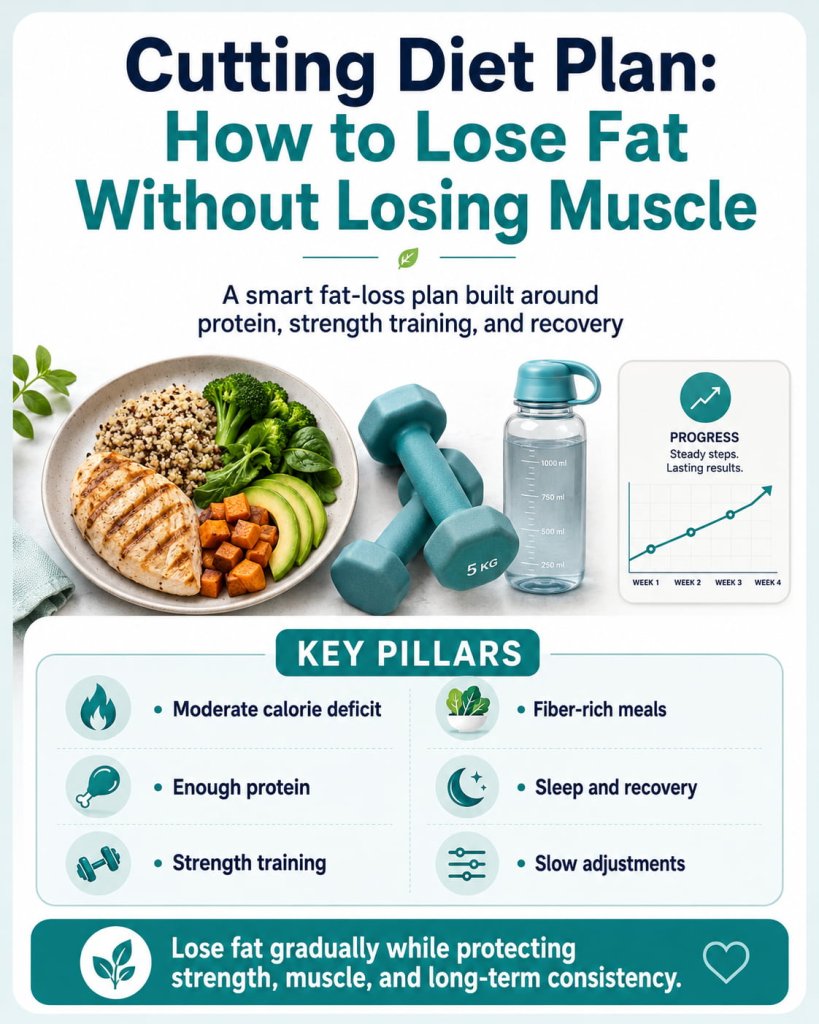
The best cutting diet plan keeps your calories low enough to lose fat, but high enough to train well, recover, and maintain strength. That usually means eating mostly nutrient-dense foods, lifting weights consistently, sleeping enough, and adjusting your plan slowly based on real progress.
What Is a Cutting Diet Plan?
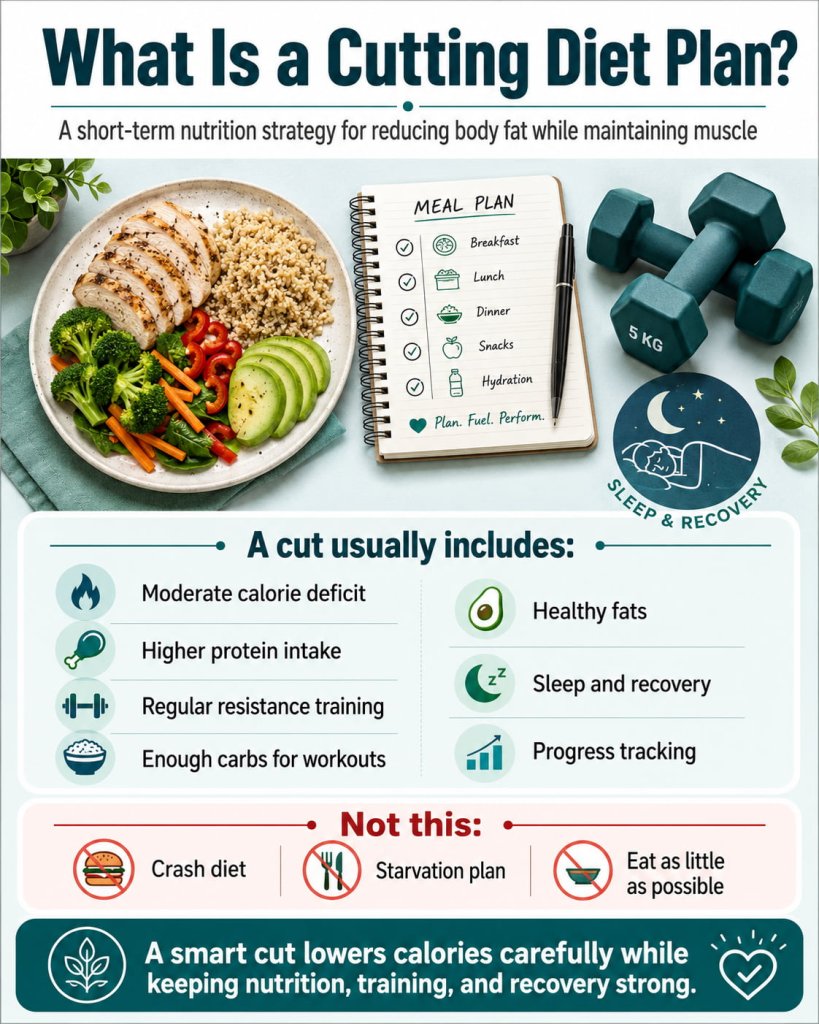
A cutting diet plan is a short-term nutrition strategy used to reduce body fat while maintaining muscle mass. It is common in bodybuilding, fitness, and sports, but the basic idea can also apply to adults who want a leaner body composition in a safe, realistic way.
A cut usually includes:
- A moderate calorie deficit
- Higher protein intake
- Regular resistance training
- Enough carbohydrates to support workouts
- Healthy fats for overall nutrition
- Sleep, stress management, and progress tracking
The CDC emphasizes that healthy weight loss includes eating patterns, physical activity, sleep, and stress management, not dieting alone. The CDC also notes that gradual weight loss is more likely to be maintained than rapid weight loss.
Cutting Diet Plan: The Quick Answer
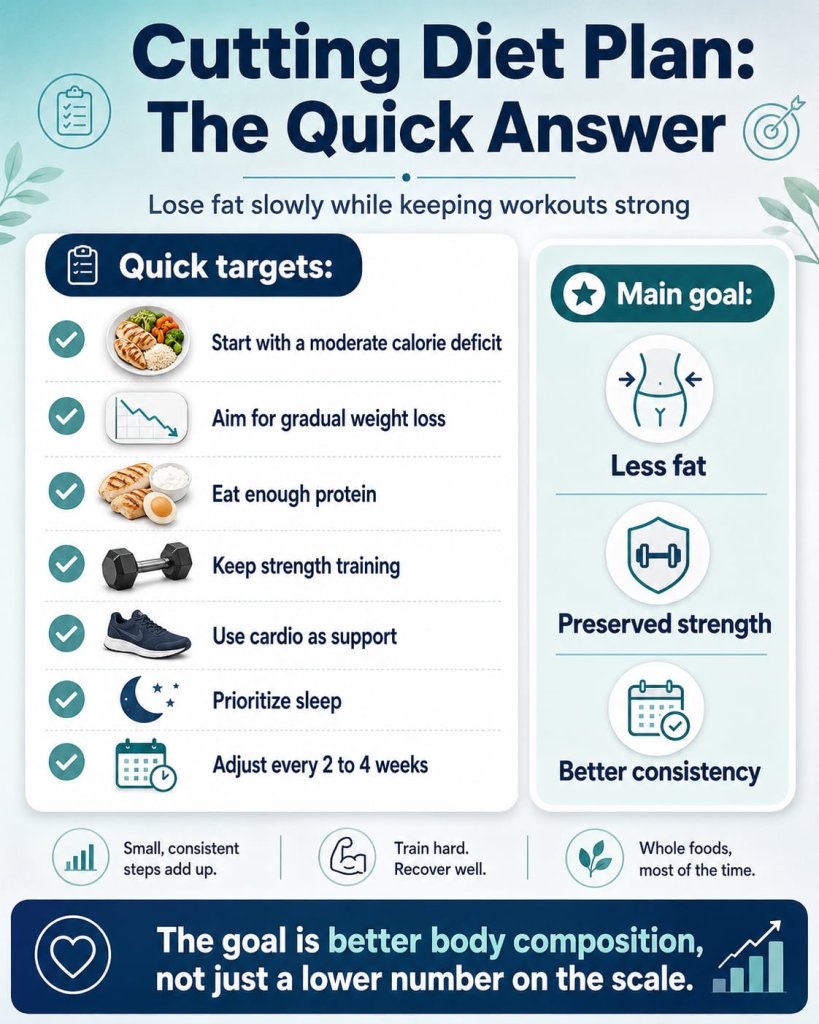
A good cutting diet plan should help you lose fat slowly while keeping your workouts strong.
For most healthy adults, the basic approach is:
| Cutting Diet Factor | Practical Target |
|---|---|
| Calorie deficit | Start moderate, not extreme |
| Weight-loss speed | About 1 to 2 pounds per week for many adults |
| Protein | About 1.4 to 2.0 g/kg/day for most active people |
| Strength training | At least 2 days per week, often 3 to 5 for lifters |
| Cardio | Use as a support tool, not a punishment |
| Sleep | Prioritize consistency and recovery |
| Adjustments | Change slowly based on 2 to 4 weeks of progress |
The goal is not just a lower scale number. The goal is better body composition: less fat, preserved strength, and a plan you can actually follow.
Who This Cutting Diet Plan Is For
This cutting diet plan is for healthy adults who want to lose fat while maintaining strength and muscle through food, training, and recovery.
It is not meant for teens, pregnant or breastfeeding women, or anyone with a history of disordered eating. If you have diabetes, kidney disease, a medical condition, or take medication that affects appetite, blood sugar, or body weight, speak with a doctor or registered dietitian before starting a calorie deficit.
How a Cutting Diet Helps You Lose Fat
Fat loss happens when your body uses more energy than you take in over time. This is called a calorie deficit.
You can create that deficit by:
- Eating slightly fewer calories
- Increasing daily movement
- Adding structured exercise
- Combining diet and activity changes
However, an aggressive deficit can backfire. If calories are too low, you may feel tired, train poorly, recover slowly, and increase the risk of losing muscle along with fat.
Mayo Clinic explains that cutting calories can support weight loss, but results vary based on body size, sex, activity level, and other factors. Mayo Clinic also notes that weight loss can include a mix of fat, water, and lean tissue, which is why muscle-preserving habits matter.
How Many Calories Should You Eat on a Cut?
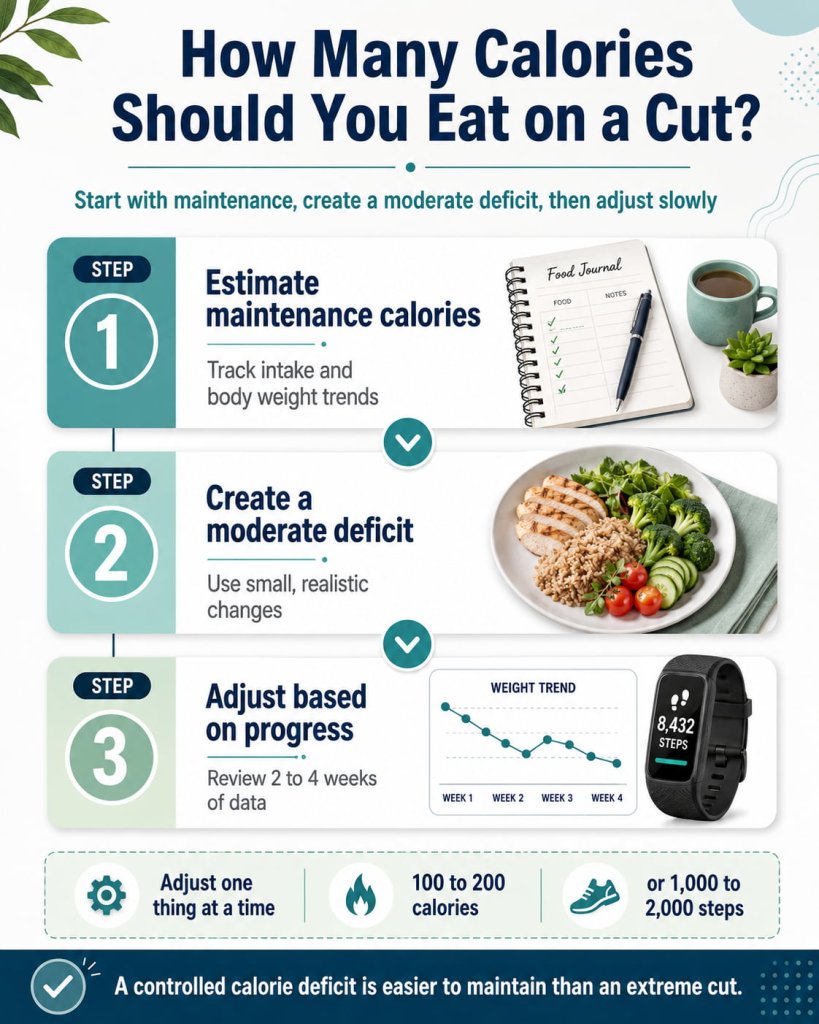
There is no perfect cutting calorie target for everyone. Your needs depend on your body size, age, activity level, training volume, health status, and current eating habits.
A practical starting point is to estimate your maintenance calories, then reduce intake slightly.
Step 1: Estimate Maintenance Calories
Maintenance calories are the amount of energy you need to keep your current weight stable.
You can estimate this by:
- Tracking your usual intake for 1 to 2 weeks
- Watching your average body weight trend
- Using a reputable calculator as a rough starting point
- Working with a registered dietitian for a personalized plan
The NIDDK Body Weight Planner can help adults estimate calorie needs, but NIDDK states that the tool is for adults age 18 and older and not for younger people or pregnant or breastfeeding women.
Step 2: Create a Moderate Deficit
Instead of making a huge cut, start with a smaller change you can maintain.
For many adults, this may look like:
- Reducing portions slightly
- Swapping high-calorie snacks for higher-protein options
- Replacing sugary drinks with lower-calorie drinks
- Adding more vegetables and lean protein to meals
- Increasing daily walking
Avoid cutting calories so low that you feel weak, dizzy, obsessed with food, or unable to train.
Step 3: Adjust Based on Progress
Use your average weekly weight, waist measurement, gym performance, hunger, mood, and recovery to guide changes.
If your weight is not changing after 2 to 4 weeks, you may need a small adjustment. If your strength is dropping fast, hunger is intense, or your energy is poor, your deficit may be too aggressive.
A helpful rule is to adjust one thing at a time. If progress stalls, avoid cutting hundreds of calories immediately. Start with a small change, such as reducing daily intake by 100 to 200 calories, adding 1,000 to 2,000 daily steps, or tightening weekend portions. Then watch your 2-week trend before changing again.
This keeps the plan controlled and makes it easier to know what is actually working.
Best Macros for a Cutting Diet Plan
Macros are protein, carbohydrates, and fats. A cutting diet should not remove any entire macronutrient unless there is a medical or personal reason to do so.
The right macro balance should help you:
- Stay full
- Train hard
- Recover well
- Hit protein goals
- Maintain a realistic eating routine
Protein for Muscle Retention
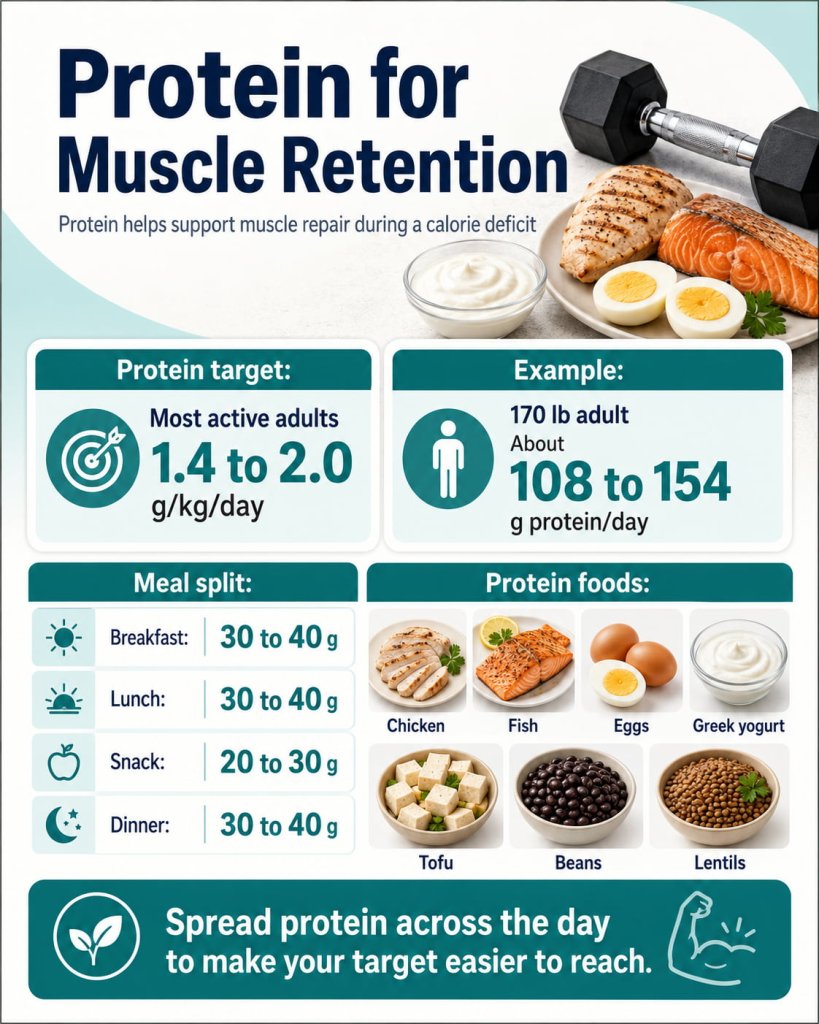
Protein is the most important macro during a cut because it supports muscle repair and helps preserve lean mass while calories are lower.
The International Society of Sports Nutrition states that about 1.4 to 2.0 grams of protein per kilogram of body weight per day is sufficient for most exercising individuals. Higher intakes may be useful in some lean, resistance-trained people during a calorie deficit, but needs vary.
Simple protein examples:
| Body Weight | Protein Range Per Day |
|---|---|
| 120 lb | About 76 to 109 g |
| 150 lb | About 95 to 136 g |
| 180 lb | About 114 to 164 g |
| 200 lb | About 127 to 182 g |
For example, a 170-pound adult weighs about 77 kilograms. Using the 1.4 to 2.0 g/kg/day protein range, that person would aim for roughly 108 to 154 grams of protein per day.
A simple way to spread that out is:
- 30 to 40 grams at breakfast
- 30 to 40 grams at lunch
- 20 to 30 grams in a snack
- 30 to 40 grams at dinner
This makes the protein target easier to hit without relying on one oversized meal.
Good protein sources include:
- Chicken breast or turkey
- Fish and seafood
- Eggs or egg whites
- Greek yogurt or cottage cheese
- Lean beef
- Tofu, tempeh, or edamame
- Beans and lentils
- Protein powder, if needed for convenience
You do not need to eat all your protein at once. Most people do better spreading it across meals.
Carbs for Training Performance
Carbohydrates are not the enemy during a cut. They help fuel hard training, support performance, and make meals more satisfying.
Good cutting-friendly carb sources include:
- Oats
- Rice
- Potatoes
- Sweet potatoes
- Whole-grain bread or wraps
- Beans and lentils
- Fruit
- Low-fat dairy
- Vegetables
If your workouts feel flat, your carbs may be too low. Many people perform better by placing more carbs around training, such as before and after workouts.
Fats for Health and Hormones
Dietary fat supports overall health and helps make meals satisfying. Cutting fat too low can make your diet harder to follow.
Healthy fat sources include:
- Olive oil
- Avocado
- Nuts
- Seeds
- Peanut butter or almond butter
- Fatty fish
- Whole eggs
The goal is balance. Fats are calorie-dense, so portions matter during a cut, but they should not be removed completely.
What to Eat on a Cutting Diet Plan
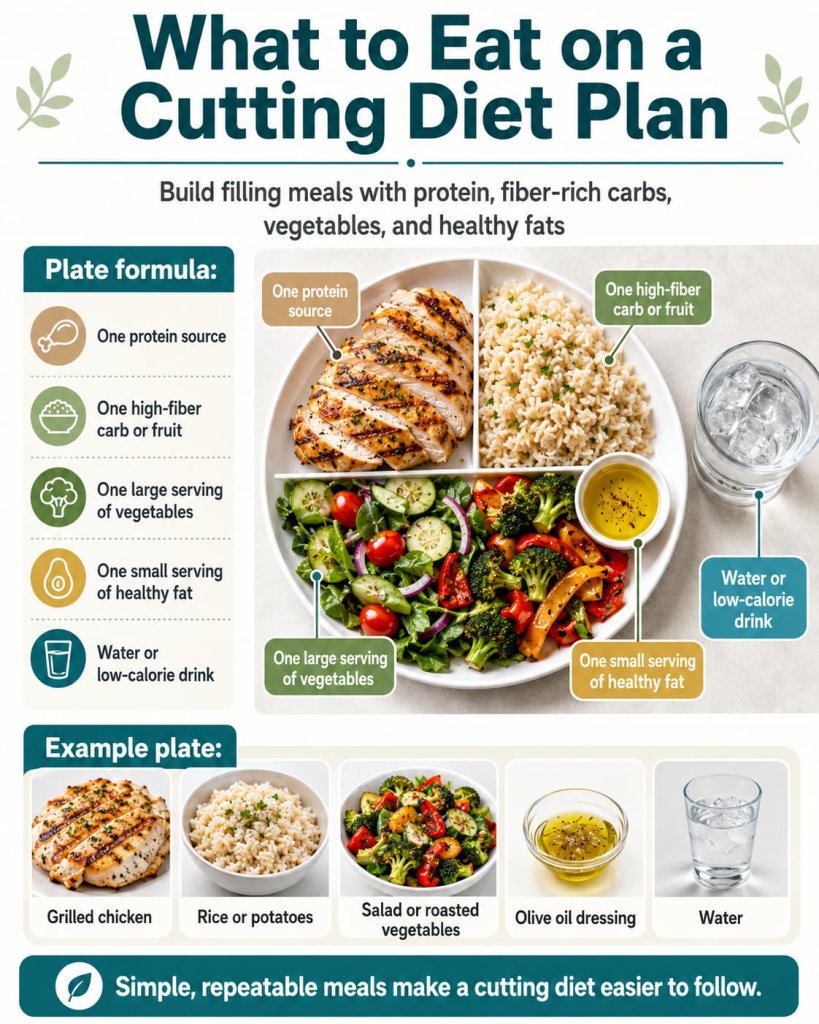
The best cutting foods are filling, nutrient-dense, and easy to repeat.
The current Dietary Guidelines for Americans provide nutrition guidance across the lifespan and help shape federal nutrition policy. For a cutting diet, the same foundation applies: build meals around nutrient-dense foods that support health, not just low-calorie foods.
Build Most Meals With This Formula
A simple cutting meal can include:
- One protein source
- One high-fiber carb or fruit
- One large serving of vegetables
- One small serving of healthy fat
- Water or another low-calorie drink
Example plate:
- Grilled chicken
- Rice or potatoes
- Salad or roasted vegetables
- Olive oil-based dressing
- Water
This kind of meal is simple, filling, and easier to track than random snacking.
Do Not Ignore Fiber and Hydration
Fiber matters during a cut because it helps meals feel more filling and supports digestion. The FDA lists the Daily Value for dietary fiber as 28 grams per day based on a 2,000-calorie diet, though individual needs can vary.
Good high-fiber cutting foods include:
- Beans and lentils
- Oats
- Berries
- Apples
- Vegetables
- Potatoes with the skin
- Whole grains
- Chia seeds or ground flaxseed
Increase fiber gradually and drink enough water. Adding too much fiber too quickly can cause bloating or digestive discomfort.
Best Foods for a Cutting Diet Plan
Use these foods as flexible options, not strict rules.
| Food Group | Good Choices |
|---|---|
| Lean protein | Chicken, turkey, fish, eggs, Greek yogurt, tofu, lentils |
| High-fiber carbs | Oats, potatoes, beans, brown rice, whole grains |
| Vegetables | Broccoli, spinach, peppers, carrots, salad greens |
| Fruits | Berries, apples, oranges, bananas, melon |
| Healthy fats | Olive oil, avocado, nuts, seeds, salmon |
| Drinks | Water, unsweetened tea, black coffee, low-calorie drinks |
You can still include favorite foods. A cutting diet becomes easier when most of your meals are structured, but not every meal has to be “perfect.”
Foods to Limit During a Cut
You do not need to ban foods to lose fat. However, some foods make a cut harder because they are easy to overeat and not very filling.
Limit these most of the time:
- Sugary drinks
- Large desserts
- Fried fast foods
- Highly processed snacks
- Oversized restaurant meals
- Alcohol
- Creamy sauces and high-calorie dressings
- “Healthy” snacks with large portions, such as nuts or granola
The point is not guilt. The point is calorie awareness. Many foods can fit, but portion size matters.
Sample Cutting Diet Meal Plan
This sample cutting diet meal plan is only an example. Adjust portions based on your body size, activity level, hunger, food preferences, and goals.
| Meal | Example |
|---|---|
| Breakfast | Greek yogurt with berries, oats, and chia seeds |
| Lunch | Chicken or tofu rice bowl with vegetables and salsa |
| Snack | Protein shake or cottage cheese with fruit |
| Dinner | Salmon or lean beef with potatoes and salad |
| Optional snack | Boiled eggs, fruit, or air-popped popcorn |
Simple High-Protein Cutting Day
Breakfast:
- Eggs or Greek yogurt
- Oats or whole-grain toast
- Fruit
Lunch:
- Lean protein
- Rice, potatoes, or beans
- Large serving of vegetables
Pre-workout snack:
- Banana
- Yogurt or a protein shake
Dinner:
- Fish, chicken, tofu, or lean meat
- Vegetables
- Small serving of healthy fat
This structure gives you protein at each meal, enough carbs to train, and plenty of volume from vegetables and fruit.
How to Train While Cutting
Training is what tells your body to keep muscle while calories are lower. Without resistance training, weight loss is more likely to include lean mass loss.
The CDC physical activity guidance for adults recommends at least 150 minutes of moderate-intensity physical activity per week and 2 days of muscle-strengthening activity each week. For people trying to maintain muscle during a cut, resistance training is especially important.
Strength Training Priorities During a Cut
Focus on keeping your main lifts strong.
Good training options include:
- Squats or leg presses
- Deadlift variations or hip hinges
- Rows
- Pull-ups or pulldowns
- Bench press or push-ups
- Overhead presses
- Lunges
- Core exercises
You do not need to chase maximum soreness. Your goal is to keep enough training stimulus to preserve strength and muscle.
Cardio During a Cut
Cardio can help increase calorie burn and improve heart health, but more is not always better.
Good options include:
- Brisk walking
- Cycling
- Incline treadmill walking
- Swimming
- Jogging
- Short conditioning sessions
Start with a manageable amount. If you add too much cardio too fast, recovery and lifting performance may suffer.
How Fast Should You Lose Weight on a Cut?
For many adults, losing about 1 to 2 pounds per week is a realistic and safer target. Some smaller or leaner people may need to lose more slowly. People with higher starting body weight may initially lose faster, especially from water weight.
A good cutting rate is usually slow enough that you can:
- Keep most of your strength
- Sleep well
- Manage hunger
- Stay consistent
- Avoid extreme food rules
- Continue normal life and social meals
If your weight drops very fast and your workouts crash, the plan may be too aggressive.
Signs Your Cutting Diet Is Too Aggressive
A cut should feel structured, not miserable.
Your cutting diet may be too aggressive if you notice:
- Constant hunger that feels hard to manage
- Big strength drops in the gym
- Poor sleep
- Dizziness or weakness
- Irritability or low mood
- Feeling cold all the time
- Loss of motivation to train
- Obsessive food thoughts
- Binge-restrict cycles
- Skipping social life because of food anxiety
If these signs show up, raise calories slightly, reduce cardio, improve sleep, or take a diet break. If symptoms are severe or persistent, speak with a qualified healthcare professional.
Who Should Be Careful Before Starting a Cutting Diet?
A cutting diet is not appropriate for everyone.
Be careful and seek professional guidance if you are:
- Under 18
- Pregnant or breastfeeding
- Recovering from an eating disorder
- Living with diabetes
- Living with kidney disease
- Managing a medical condition that affects weight or appetite
- Taking medication that affects blood sugar, appetite, or body weight
- Already very lean
- A competitive athlete with high training demands
The NIDDK says a safe weight-loss program should include realistic goals, a healthy reduced-calorie eating plan, physical activity, behavioral support, and long-term maintenance planning. It also warns against unrealistic promises and quick-fix claims.
Common Mistakes That Cause Muscle Loss During a Cut
A cutting diet can work well, but these mistakes make muscle loss more likely.
Cutting Calories Too Low
A severe deficit may make the scale move faster, but it can also hurt training performance and recovery. Start moderate and adjust slowly.
Not Eating Enough Protein
Protein should be planned first. If you wait until the end of the day, it is easy to miss your target.
Stopping Strength Training
Cardio alone is not enough to preserve muscle. Keep lifting and try to maintain strength.
Doing Too Much Cardio
Cardio is useful, but excessive cardio can interfere with recovery if calories are already low.
Removing All Carbs
Low-carb diets can work for some people, but many lifters train better with carbs. If your workouts suffer, consider adding carbs around training.
Ignoring Sleep
Poor sleep can increase hunger, reduce motivation, and make recovery harder. Sleep is part of the plan, not an extra.
Changing the Plan Every Few Days
Body weight changes daily from water, sodium, digestion, and hormones. Use weekly averages instead of reacting to one weigh-in.
How to Track Progress on a Cutting Diet Plan
Do not rely only on the scale. The scale is useful, but it does not show the full picture.
Track a few simple markers:
- Body weight average across the week
- Waist measurement
- Progress photos, if comfortable
- Gym performance
- Hunger level
- Energy
- Sleep quality
- Step count or daily movement
If your average weight is slowly dropping and your strength is mostly stable, your cutting diet is probably working.
When to Adjust Your Cutting Diet
Give your plan enough time before changing it. One high-sodium meal or hard workout can cause temporary water weight changes.
Consider adjusting after 2 to 4 weeks if:
- Your weekly average weight is not changing
- Waist measurement is not changing
- You are consistently overeating because hunger is too high
- Your workouts are getting worse every week
- Your energy is too low to function well
Possible adjustments include:
- Reduce calories slightly
- Increase steps
- Add a small amount of cardio
- Improve meal timing
- Add more protein and vegetables
- Take a short maintenance break if fatigue is high
Small changes work better than dramatic resets.
What to Do After the Cut
A cutting diet should not last forever. Once you reach your goal, or once fatigue and hunger are getting harder to manage, move into a maintenance phase instead of jumping back to old habits.
A good post-cut plan can include:
- Slowly increasing calories toward maintenance
- Keeping protein intake consistent
- Continuing strength training
- Keeping daily steps steady
- Tracking body weight less aggressively
- Practicing flexible meals without losing structure
This helps you protect your results and build a long-term routine instead of repeating the same cut-and-regain cycle.
Cutting Diet Plan FAQ
Can You Lose Fat Without Losing Muscle?
You can reduce the risk of muscle loss, but no plan can guarantee zero muscle loss. The best strategy is a moderate calorie deficit, enough protein, consistent resistance training, and good recovery.
How Much Protein Do I Need on a Cutting Diet?
Most active adults do well around 1.4 to 2.0 grams of protein per kilogram of body weight per day. Lean, advanced lifters in a calorie deficit may need more individualized guidance.
Should I Cut Carbs to Lose Fat?
You do not have to cut carbs to lose fat. Fat loss depends mainly on a calorie deficit. Carbs can help support training performance, especially if you lift weights.
Is Cardio Required for Cutting?
Cardio is not strictly required, but it can help create a calorie deficit and support heart health. Strength training should remain the priority for muscle retention.
How Long Should a Cutting Diet Last?
It depends on your starting point and goal. Many people do better with shorter cutting phases followed by maintenance breaks instead of dieting hard for months without rest.
What Is the Biggest Mistake During a Cut?
The biggest mistake is trying to lose fat too quickly. Extreme restriction can reduce training quality, increase hunger, and make the plan harder to maintain.
Conclusion
A cutting diet plan should help you lose fat without sacrificing your strength, health, or relationship with food. The best approach is simple: use a moderate calorie deficit, eat enough protein, lift consistently, keep carbs and fats balanced, and adjust slowly based on real progress.
Start with sustainable habits before chasing aggressive results. A smart cut should make you leaner, stronger, and more confident in your routine, not burned out.
This content is for informational purposes only and not medical advice.
References
- CDC — Steps for Losing Weight
- Mayo Clinic — Counting Calories: Get Back to Weight-Loss Basics
- NIDDK — Body Weight Planner
- NIDDK — Choosing a Safe and Successful Weight-loss Program
- Dietary Guidelines for Americans — 2025–2030
- CDC — Adult Physical Activity Guidelines
- International Society of Sports Nutrition — Protein and Exercise Position Stand
- FDA — How to Understand and Use the Nutrition Facts Label