
A 1400 calorie meal plan is a lower-calorie eating plan that may help some adults lose weight when it creates a safe calorie deficit. It is not right for everyone, so the best plan depends on your body size, activity level, health history, and goals.
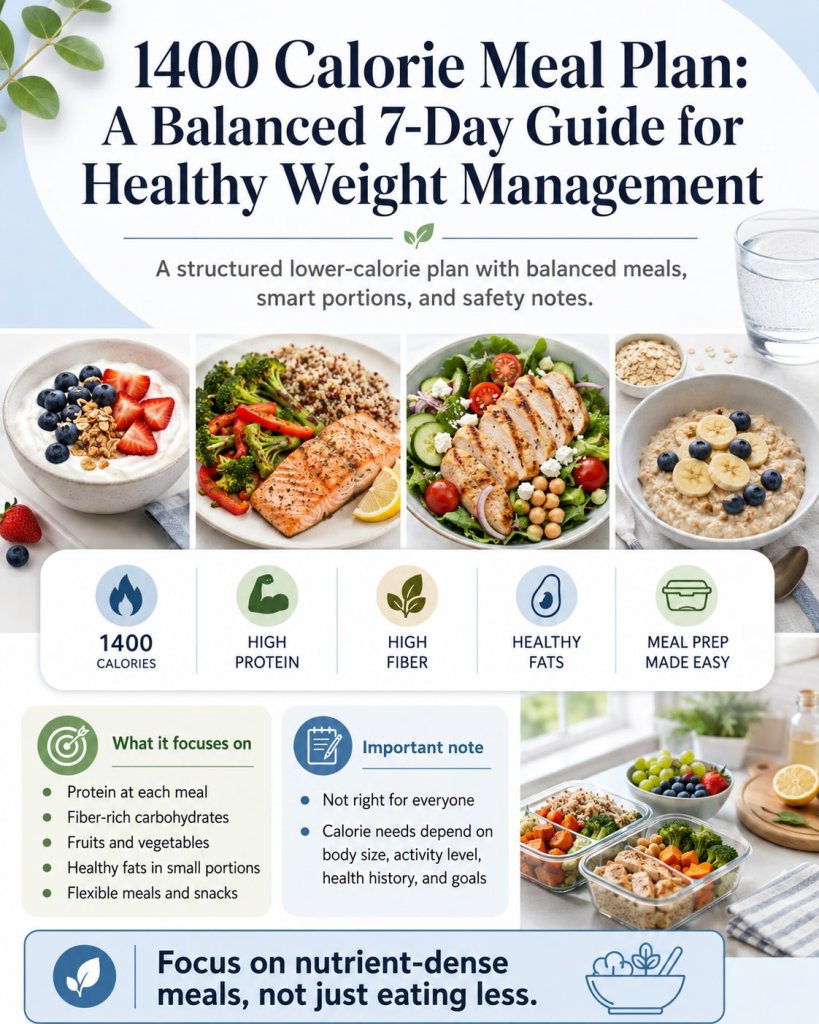
A good 1400 calorie meal plan should not feel like starvation. It should include protein, fiber-rich carbohydrates, fruits, vegetables, healthy fats, and enough variety to help you stay consistent. The goal is simple: eat fewer calories while still giving your body the nutrients it needs.
The Dietary Guidelines for Americans, 2025–2030 recommends prioritizing whole, nutritious foods and limiting highly processed foods, added sugars, and refined carbohydrates. For a 1400 calorie meal plan, that means every meal needs to work hard for you.
What Is a 1400 Calorie Meal Plan?
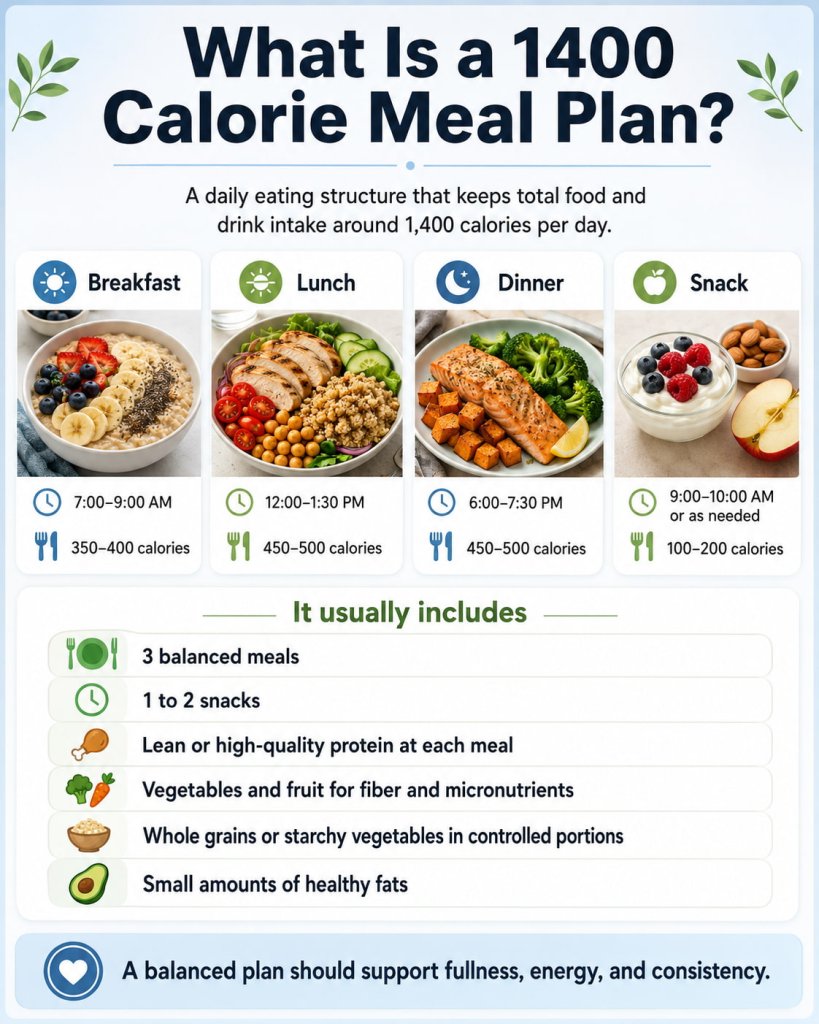
A 1400 calorie meal plan is a daily eating structure that keeps total food and drink intake around 1,400 calories per day.
It usually includes:
- 3 balanced meals
- 1 to 2 snacks
- Lean or high-quality protein at each meal
- Vegetables and fruit for fiber and micronutrients
- Whole grains or starchy vegetables in controlled portions
- Small amounts of healthy fats
This calorie level is often used for weight loss, but it should still be balanced. A plan made mostly of tiny portions, “diet” snacks, or skipped meals may leave you hungry, tired, and more likely to overeat later.
Is a 1400 Calorie Meal Plan Good for Weight Loss?
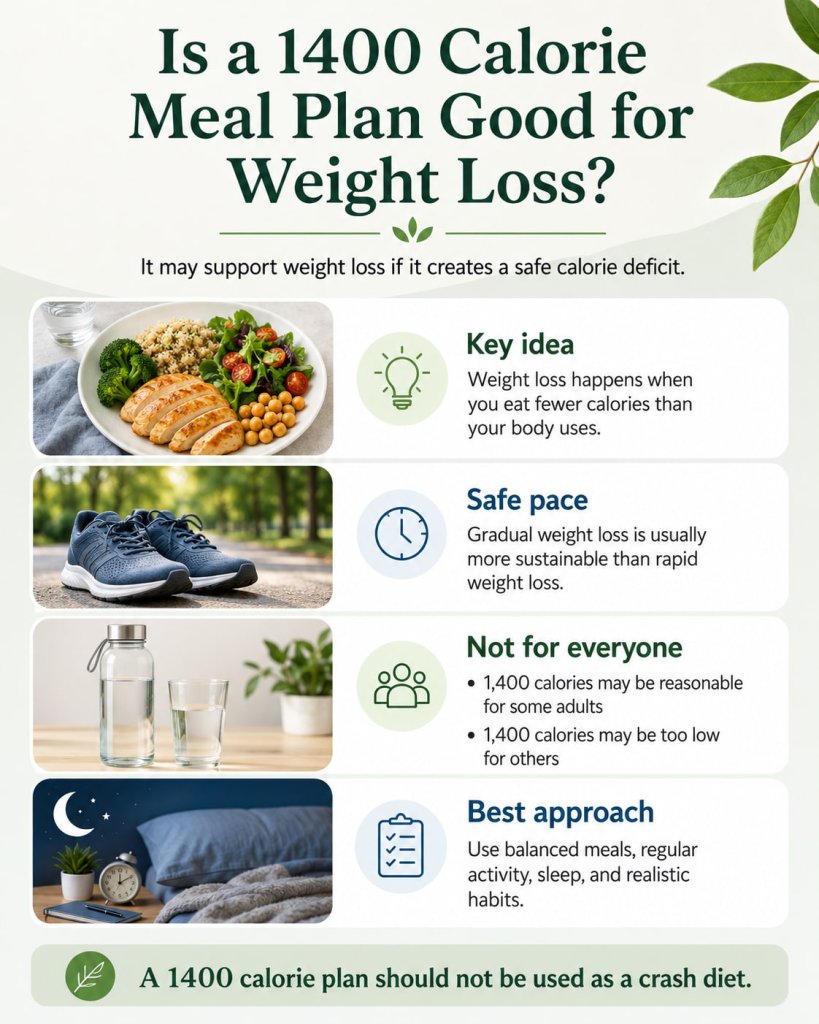
A 1400 calorie meal plan may support weight loss if it puts you in a calorie deficit. That means you are eating fewer calories than your body uses.
The CDC recommends a gradual weight-loss pace of about 1 to 2 pounds per week because steady weight loss is more likely to be maintained. A 1400 calorie plan should not be used as a crash diet or quick-fix plan.
For some adults, 1,400 calories may be reasonable. For others, it may be too low. Taller adults, many men, very active people, athletes, pregnant or breastfeeding people, and anyone with certain medical conditions may need more calories.
Who May Benefit From a 1400 Calorie Meal Plan?
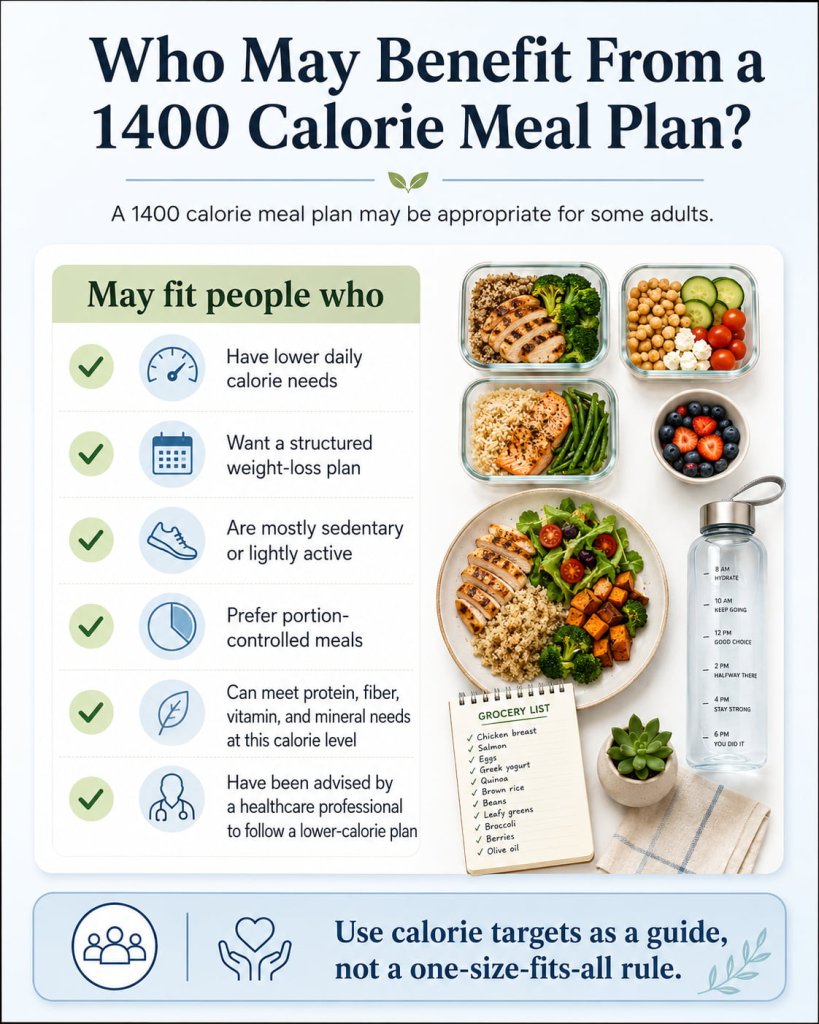
A 1400 calorie meal plan may be appropriate for some adults who:
- Have lower daily calorie needs
- Want a structured weight-loss plan
- Are mostly sedentary or lightly active
- Prefer portion-controlled meals
- Can meet protein, fiber, vitamin, and mineral needs at this calorie level
- Have been advised by a healthcare professional to follow a lower-calorie plan
The NIDDK Body Weight Planner can help adults estimate calorie needs for weight goals, but it is not meant for children, teens, pregnant people, or breastfeeding people.
Who Should Be Careful With a 1400 Calorie Meal Plan?
A 1400 calorie meal plan may be too low for many people. Talk with a healthcare professional or registered dietitian before starting if you:
- Are pregnant or breastfeeding
- Are under 18
- Have diabetes or take blood sugar medication
- Have kidney disease, heart disease, or another medical condition
- Have a history of eating disorders or disordered eating
- Are underweight
- Are very active or training hard
- Are an older adult with poor appetite or unintended weight loss
- Feel dizzy, weak, overly hungry, or unusually tired on lower-calorie plans
MedlinePlus notes that low-calorie diets are often around 1,200 to 1,500 calories per day for women and 1,500 to 1,800 calories per day for men, but they should still be supervised when used for weight loss.
Signs 1400 Calories May Be Too Low for You
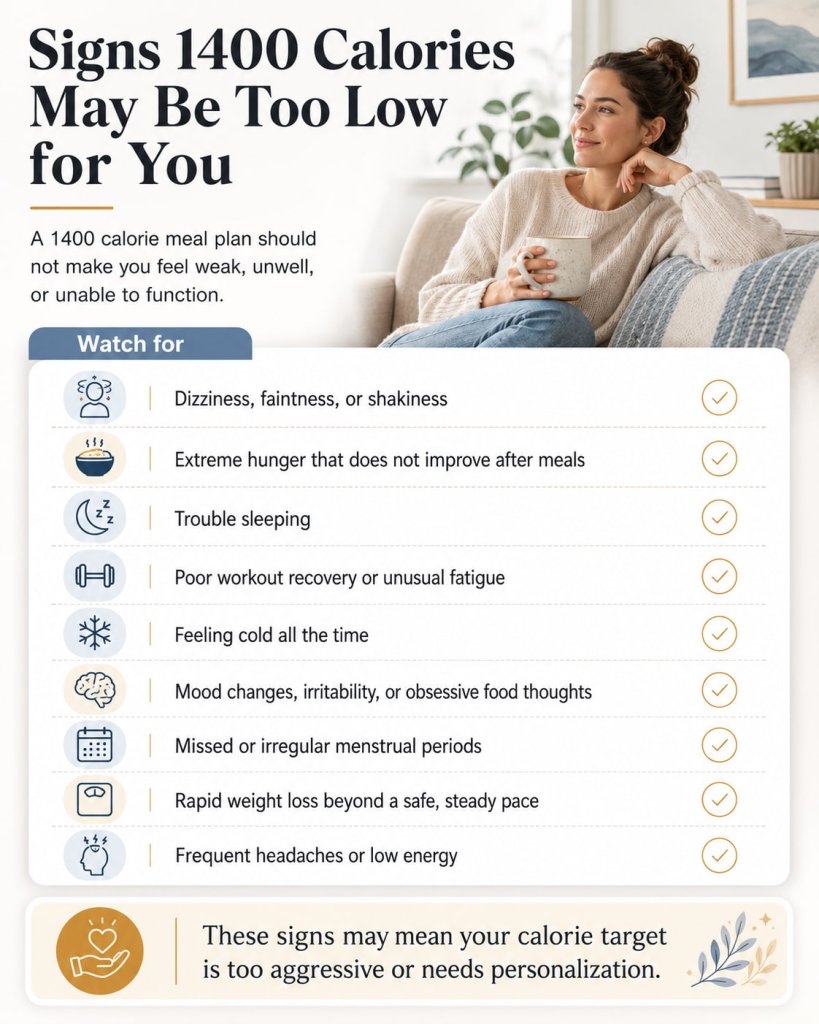
A 1400 calorie meal plan should not make you feel weak, unwell, or unable to function. Increase your intake and consider getting professional guidance if you notice:
- Dizziness, faintness, or shakiness
- Extreme hunger that does not improve after meals
- Trouble sleeping
- Poor workout recovery or unusual fatigue
- Feeling cold all the time
- Mood changes, irritability, or obsessive food thoughts
- Missed or irregular menstrual periods
- Rapid weight loss beyond a safe, steady pace
- Frequent headaches or low energy
These signs may mean your calorie target is too aggressive, your meals are not balanced enough, or you need a more personalized plan.
How to Build a Balanced 1400 Calorie Meal Plan
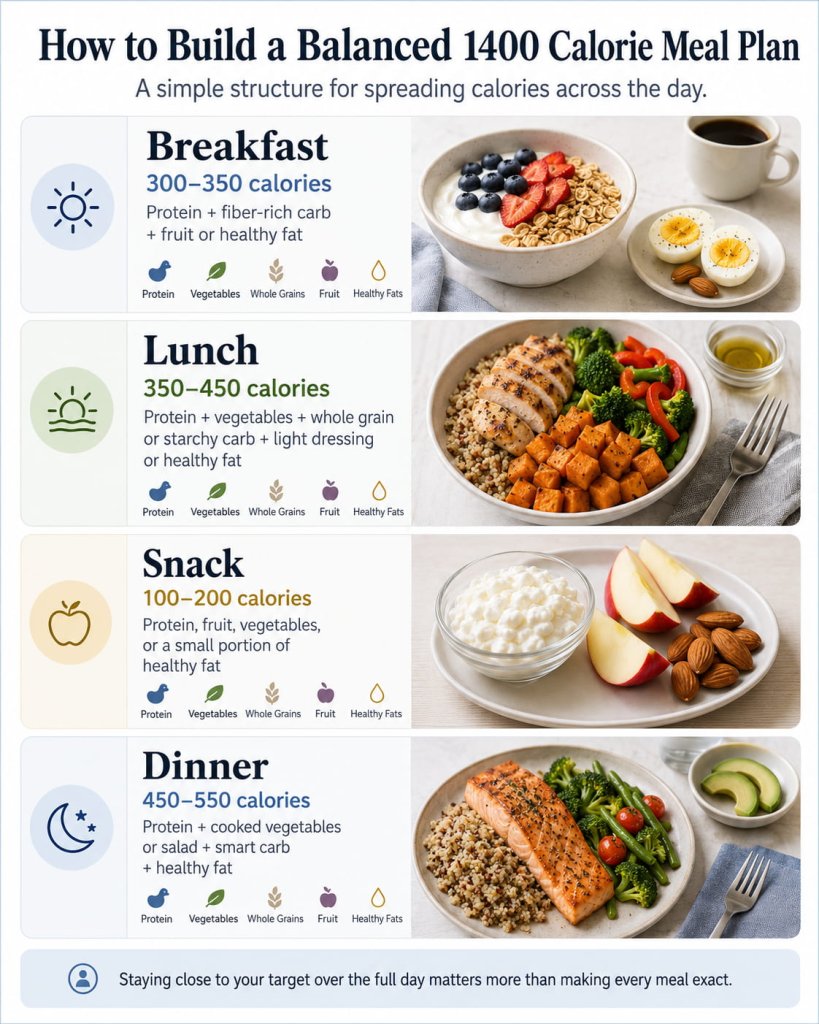
A healthy 1400 calorie meal plan should include enough food volume and nutrients to keep meals satisfying.
A simple structure looks like this:
| Meal | Approximate Calories | What to Include |
|---|---|---|
| Breakfast | 300–350 | Protein + fiber-rich carb + fruit or healthy fat |
| Lunch | 350–450 | Protein + vegetables + whole grain or starchy carb + light dressing or healthy fat |
| Snack | 100–200 | Protein, fruit, vegetables, or a small portion of healthy fat |
| Dinner | 450–550 | Protein + cooked vegetables or salad + smart carb + healthy fat |
Calories do not need to be perfect. Staying close to your target over the full day matters more than making every meal exact.
Example 1400 Calorie Macro Targets
A 1400 calorie meal plan can be built in different ways, but it should include enough protein, fiber-rich carbohydrates, and healthy fats to keep meals balanced.
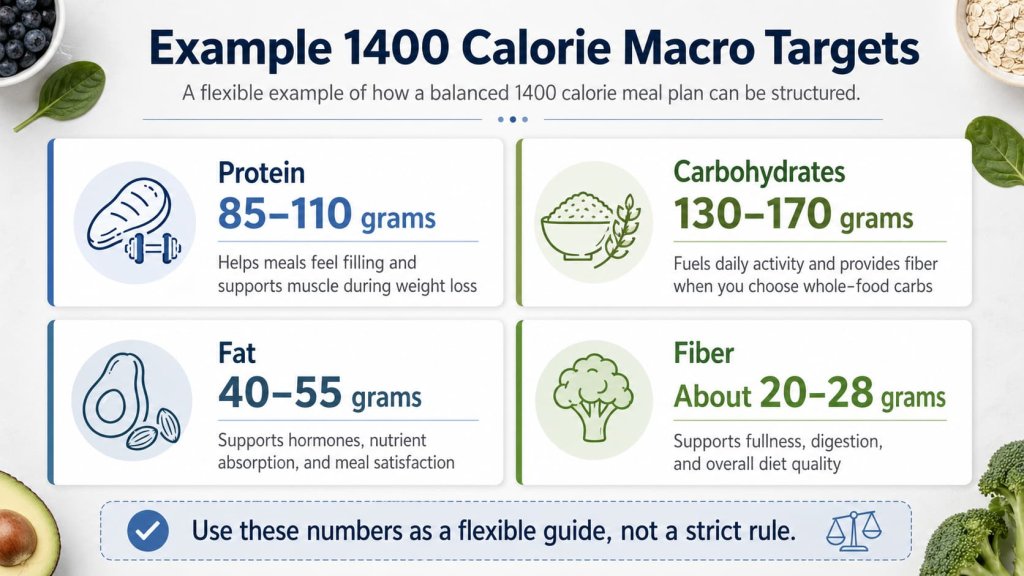
Here is a simple example:
| Nutrient | Example Daily Target | Why It Matters |
|---|---|---|
| Protein | 85–110 grams | Helps meals feel filling and supports muscle during weight loss |
| Carbohydrates | 130–170 grams | Fuels daily activity and provides fiber when you choose whole-food carbs |
| Fat | 40–55 grams | Supports hormones, nutrient absorption, and meal satisfaction |
| Fiber | About 20–28 grams | Supports fullness, digestion, and overall diet quality |
These numbers do not need to be exact every day. Use them as a flexible guide, not a strict rule. The most important goal is to build meals from mostly whole, nutrient-dense foods and keep your calorie intake close to your target over time.
Best Foods for a 1400 Calorie Meal Plan
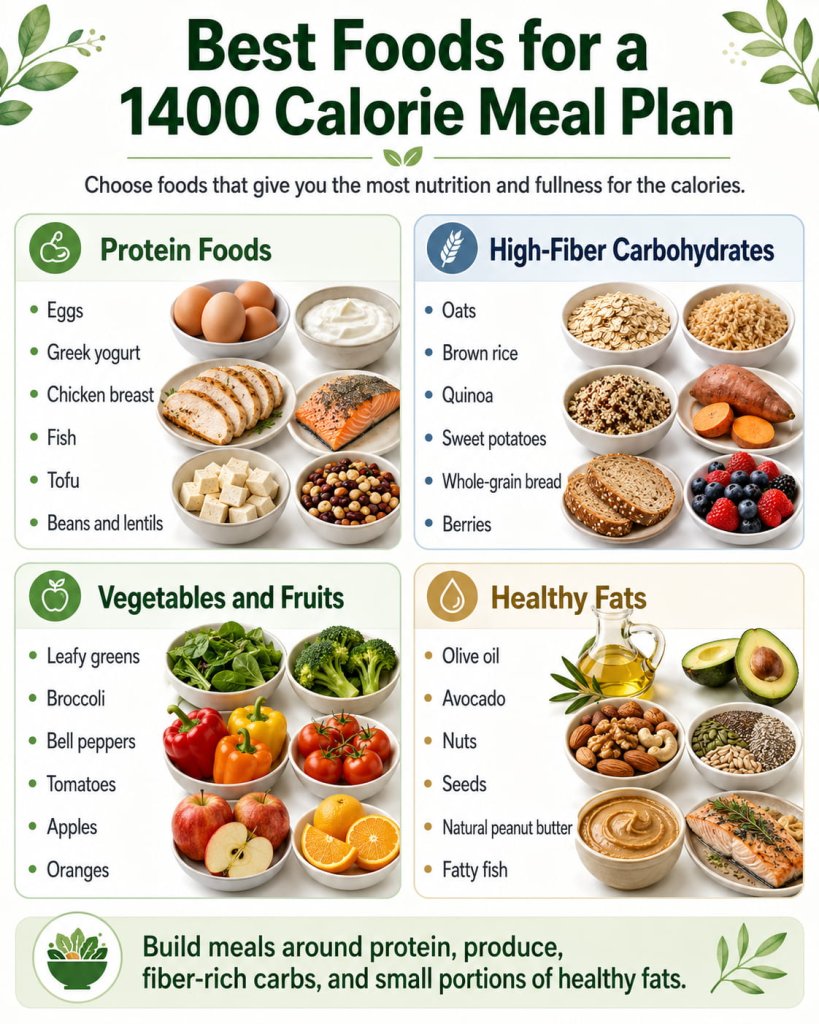
Choose foods that give you the most nutrition and fullness for the calories.
1. Protein Foods
Good options include:
- Eggs
- Greek yogurt
- Cottage cheese
- Chicken breast
- Turkey
- Fish
- Shrimp
- Lean beef in moderate portions
- Tofu
- Tempeh
- Beans
- Lentils
- Edamame
Protein helps meals feel more filling. It is especially important during weight loss because very low-calorie or poorly planned diets can increase the risk of muscle loss.
2. High-Fiber Carbohydrates
Good options include:
- Oats
- Brown rice
- Quinoa
- Sweet potatoes
- Beans
- Lentils
- Whole-grain bread
- Whole-wheat tortillas
- Berries
- Apples
- Pears
- Vegetables
The FDA lists the Daily Value for fiber as 28 grams and recommends choosing foods higher in dietary fiber, vitamin D, calcium, iron, and potassium while choosing foods lower in saturated fat, sodium, and added sugars.
3. Vegetables and Fruits
Vegetables and fruits help add volume, fiber, vitamins, minerals, and color to your meals.
The World Health Organization recommends healthy diets built around adequacy, balance, moderation, and diversity, with minimally processed foods and plenty of fruits, vegetables, whole grains, pulses, and lean protein sources.
Easy choices include:
- Leafy greens
- Broccoli
- Carrots
- Bell peppers
- Tomatoes
- Cucumbers
- Zucchini
- Cauliflower
- Berries
- Apples
- Oranges
- Bananas
- Melon
4. Healthy Fats
Healthy fats are calorie-dense, so portions matter on a 1400 calorie plan.
Good options include:
Use small portions, such as 1 teaspoon to 1 tablespoon of oil, ¼ avocado, or 1 tablespoon of nut butter.
Sample 1-Day 1400 Calorie Meal Plan With Portions
This example shows how 1,400 calories can look in a real day. Calories are approximate and may change based on brands, cooking methods, and portion sizes.
| Meal | Food | Approx. Calories |
|---|---|---|
| Breakfast | ¾ cup plain Greek yogurt, ½ cup berries, ⅓ cup oats, 1 teaspoon chia seeds | 320 |
| Snack | 1 medium apple with 1 tablespoon peanut butter | 190 |
| Lunch | 4 ounces grilled chicken, 2 cups mixed greens, ½ cup chickpeas, cucumber, tomato, and 1 tablespoon vinaigrette | 400 |
| Snack | ½://wellfitinsider.com/nutrition/benefits-of-salmon/” title=”10 Proven Health Benefits of Salmon (Science-Based)” data-wpil-keyword-link=”linked” data-wpil-monitor-id=”20438″>salmon, ½ cup cooked quinoa, 1½ cups broccoli, and 1 teaspoon olive oil | 370 |
Daily total: About 1,400 calories
This kind of structure works because it includes protein at every main meal, fiber-rich foods, colorful produce, and a small amount of healthy fat.
7-Day 1400 Calorie Meal Plan
This 7-day 1400 calorie meal plan is designed as a flexible example. Calories are approximate because brands, cooking methods, and portion sizes vary. Use the USDA FoodData Central database or Nutrition Facts labels if you need more precise tracking.
Day 1
| Meal | Food |
|---|---|
| Breakfast | Greek yogurt bowl with plain Greek yogurt, berries, oats, and chia seeds |
| Snack | Apple with 1 tablespoon peanut butter |
| Lunch | Grilled chicken salad with mixed greens, cucumber, tomato, chickpeas, and light vinaigrette |
| Snack | Carrot sticks with hummus |
| Dinner | Baked salmon with quinoa and steamed broccoli |
Day 2
| Meal | Food |
|---|---|
| Breakfast | 2 eggs with sautéed spinach and 1 slice whole-grain toast |
| Snack | Cottage cheese with sliced strawberries |
| Lunch | Turkey and avocado wrap with lettuce, tomato, and a side of cucumber |
| Snack | Orange or small banana |
| Dinner | Turkey chili with beans, tomatoes, peppers, and a side salad |
Day 3
| Meal | Food |
|---|---|
| Breakfast | Oatmeal with protein-rich milk, blueberries, cinnamon, and a small spoon of nuts |
| Snack | Hard-boiled egg and baby carrots |
| Lunch | Tuna salad bowl with greens, brown rice, cucumber, tomato, and olive oil-lemon dressing |
| Snack | Plain Greek yogurt |
| Dinner | Chicken stir-fry with mixed vegetables and a small serving of brown rice |
Day 4
| Meal | Food |
|---|---|
| Breakfast | Smoothie with Greek yogurt, berries, spinach, and ground flaxseed |
| Snack | Pear with a small handful of almonds |
| Lunch | Lentil soup with side salad and a small whole-grain roll |
| Snack | Celery sticks with hummus |
| Dinner | Grilled shrimp tacos with cabbage slaw, salsa, and corn tortillas |
Day 5
| Meal | Food |
|---|---|
| Breakfast | Scrambled eggs with vegetables and a small roasted sweet potato |
| Snack | Apple slices with cottage cheese |
| Lunch | Chicken quinoa bowl with roasted vegetables and a yogurt-based sauce |
| Snack | Boiled egg or low-fat string cheese |
| Dinner | Lean beef or tofu lettuce bowls with rice, vegetables, and light sauce |
Day 6
| Meal | Food |
|---|---|
| Breakfast | Overnight oats with Greek yogurt, berries, and chia seeds |
| Snack | Cucumber slices with hummus |
| Lunch | Salmon salad sandwich on whole-grain bread with lettuce and tomato |
| Snack | Small fruit and a few nuts |
| Dinner | Turkey meatballs with zucchini noodles, marinara, and side salad |
Day 7
| Meal | Food |
|---|---|
| Breakfast | Cottage cheese bowl with berries, walnuts, and cinnamon |
| Snack | Hard-boiled egg and fruit |
| Lunch | Black bean and vegetable bowl with brown rice, salsa, lettuce, and avocado |
| Snack | Greek yogurt or carrots with hummus |
| Dinner | Baked chicken with roasted vegetables and a small baked potato |
Simple 1400 Calorie Meal Plan Template
Use this template when you do not want to follow a strict menu.
1. Breakfast Formula
Choose:
- 1 protein
- 1 fiber-rich carb
- 1 fruit or vegetable
- Optional small healthy fat
Examples:
- Greek yogurt + berries + oats
- Eggs + whole-grain toast + spinach
- Cottage cheese + fruit + chia seeds
- Oatmeal + milk + berries + walnuts
2. Lunch Formula
Choose:
- 3 to 5 ounces lean protein
- 2 cups vegetables
- ½ cup whole grain, beans, or starchy vegetable
- 1 small serving healthy fat
Examples:
- Chicken salad bowl with chickpeas
- Turkey wrap with vegetables
- Lentil soup with salad
- Tuna bowl with brown rice and greens
3. Dinner Formula
Choose:
- 4 to 5 ounces protein
- 2 cups non-starchy vegetables
- ½ to 1 cup smart carb
- 1 small serving healthy fat or sauce
Examples:
- Salmon + quinoa + broccoli
- Chicken stir-fry + brown rice
- Tofu vegetable bowl
- Turkey chili with salad
4. Snack Formula
Choose one:
- Fruit + protein
- Vegetables + hummus
- Greek yogurt
- Cottage cheese
- Hard-boiled egg
- Small handful of nuts
- Low-fat cheese stick
Easy Portion Guide for a 1400 Calorie Meal Plan
Portion sizes matter on a 1400 calorie meal plan because small extras can add up quickly. You do not need to weigh every food forever, but measuring for a few days can help you learn what realistic portions look like.
Use these simple serving guides:
| Food Type | Easy Portion Guide |
| Lean protein | 3 to 5 ounces cooked, or about the size of your palm |
| Cooked grains | ½ cup cooked rice, quinoa, oats, or pasta |
| Starchy vegetables | ½!– /wp:table –>
The easiest way to stay full is to make non-starchy vegetables the largest part of the plate, add a solid protein source, then use smaller portions of grains, starches, fats, and sauces. High-Protein 1400 Calorie Meal Plan TipsA high-protein 1400 calorie meal plan can feel more satisfying than a plan built around mostly refined carbs. Try these simple tips:
Vegetarian 1400 Calorie Meal Plan IdeasA vegetarian 1400 calorie meal plan can work well when protein is planned carefully. Good vegetarian protein choices include:
Easy vegetarian meal ideas:
Budget-Friendly 1400 Calorie Meal Plan TipsYou do not need expensive foods to follow a balanced 1400 calorie meal plan. Affordable staples include:
To save money, build meals around simple combinations:
Meal Prep Tips for a 1400 Calorie Meal PlanMeal prep makes a lower-calorie plan easier because you do not have to make every food decision while hungry. Try this weekly prep routine:
A useful meal-prep plate looks like this:
Common Mistakes on a 1400 Calorie Meal PlanCutting Protein Too LowLow protein can make meals less filling. It can also make it harder to support muscle while losing weight. Skipping VegetablesVegetables add volume for fewer calories. Without them, a 1400 calorie plan can feel small and unsatisfying. Drinking Too Many CaloriesSweet coffee drinks, juice, soda, alcohol, and smoothies can use up calories quickly. Choose water, unsweetened tea, black coffee, or low-calorie drinks most of the time. Going Too Low in FatFat is calorie-dense, but you still need some healthy fat. Add small portions from olive oil, avocado, nuts, seeds, or fatty fish. Relying on “Diet” Packaged FoodsLow-calorie packaged foods can help sometimes, but they should not replace most whole foods. Many are low in protein and fiber, which may leave you hungry. Ignoring Activity LevelIf you exercise often, walk a lot, lift weights, or have a physically demanding job, 1,400 calories may not be enough. The CDC physical activity guidance notes that adults need at least 150 minutes of moderate-intensity aerobic activity per week and at least 2 days of muscle-strengthening activity for overall health. How to Adjust a 1400 Calorie Meal PlanA meal plan should fit your body, not the other way around. If You Feel Too HungryTry:
If You Are Losing Weight Too FastTry:
If You Are Not Losing WeightTry:
What to Do After Reaching Your GoalA 1400 calorie meal plan is usually a weight-loss phase, not always a forever target. Once you reach your goal, you may need to slowly increase calories to maintain your weight. A simple approach is to add 100 to 200 calories per day for one to two weeks, then monitor your weight, hunger, energy, and workout performance. Good additions include:
The goal is to find a sustainable maintenance intake that keeps your weight stable without feeling overly restricted. 1400 Calorie Meal Plan Grocery ListProtein
Carbohydrates
Vegetables
Healthy Fats
Flavor Builders
How to Read Labels on a 1400 Calorie Meal PlanNutrition labels can make or break a lower-calorie plan. Check:
The FDA says 5% Daily Value or less is considered low, while 20% Daily Value or more is considered high. For a 1400 calorie meal plan, that can help you choose foods higher in fiber and key nutrients, while keeping sodium, added sugar, and saturated fat under control. Frequently Asked QuestionsIs 1400 calories enough for a day?It depends. For some smaller or less active adults, 1,400 calories may be enough for weight loss. For many men, active adults, athletes, pregnant or breastfeeding people, and teens, it may be too low. Can I lose weight on a 1400 calorie meal plan?Yes, if 1,400 calories creates a calorie deficit for your body. Weight loss depends on your usual calorie needs, activity level, consistency, sleep, stress, medications, and health conditions. How much protein should I eat on a 1400 calorie meal plan?There is no single perfect number for everyone. A practical goal is to include a protein source at each meal and snack. Many balanced 1400 calorie plans include roughly 85 to 110 grams of protein per day, depending on food choices and personal needs. Can I exercise on 1400 calories?Some people can exercise comfortably on 1,400 calories, but others may feel underfed. If you train hard, lift weights, run, or have an active job, you may need more food. Watch for dizziness, weakness, poor recovery, sleep issues, or intense hunger. What should I drink on a 1400 calorie meal plan?Water is the best default. Unsweetened tea, black coffee, sparkling water, and other low-calorie drinks can also fit. Limit sugary drinks, large coffee beverages, juice, and alcohol because they can add calories quickly. Can I follow a 1400 calorie meal plan every day?Some adults may follow it for a period of time, but it is not a universal long-term target. Your calorie needs may change as your weight, activity, and goals change. ConclusionA 1400 calorie meal plan can be a helpful weight-loss tool for some adults, but it works best when it is balanced, realistic, and nutrient-dense. Focus on protein, vegetables, fruit, whole grains, beans, lentils, and healthy fats instead of simply eating the smallest amount possible. Use the sample plan as a starting point, adjust portions to your needs, and talk with a healthcare professional if you are unsure whether 1,400 calories is appropriate for you. This content is for informational purposes only and is not medical advice. References
Written by Natalie |