
If you are searching for how to lose 5 pounds in a week, the safest answer is this: you may see the scale drop by 5 pounds in 7 days, but losing 5 pounds of body fat in one week is not realistic or recommended for most people. A safer long-term target is usually 1 to 2 pounds per week, which the CDC connects with better long-term weight management.
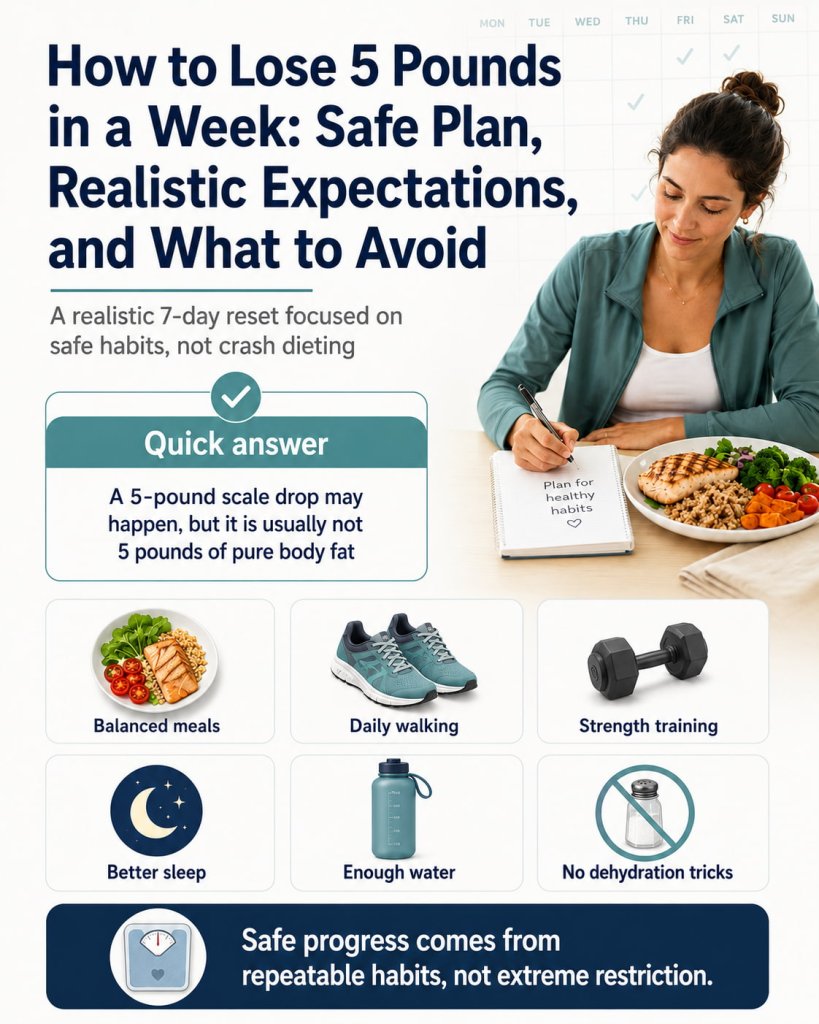
That does not mean your first week cannot be productive. It means the goal should be safe fat loss, less bloating, better habits, and a realistic plan instead of crash dieting. This guide explains what can happen in one week, what to eat, how to move, and what to avoid.
Quick Answer: What Can You Realistically Do in 7 Days?
In one week, your safest goal is not to force 5 pounds of fat loss. Your goal is to create momentum.
A realistic 7-day result may include:
- Losing some water weight
- Reducing bloating from salty or highly processed foods
- Starting a modest calorie deficit
- Building a walking and strength-training routine
- Losing about 1 to 2 pounds of body fat if the plan is appropriate for your body
If you lose more than that in the first week, it is likely a mix of water, food volume, and some fat loss.
Can You Really Lose 5 Pounds in a Week?
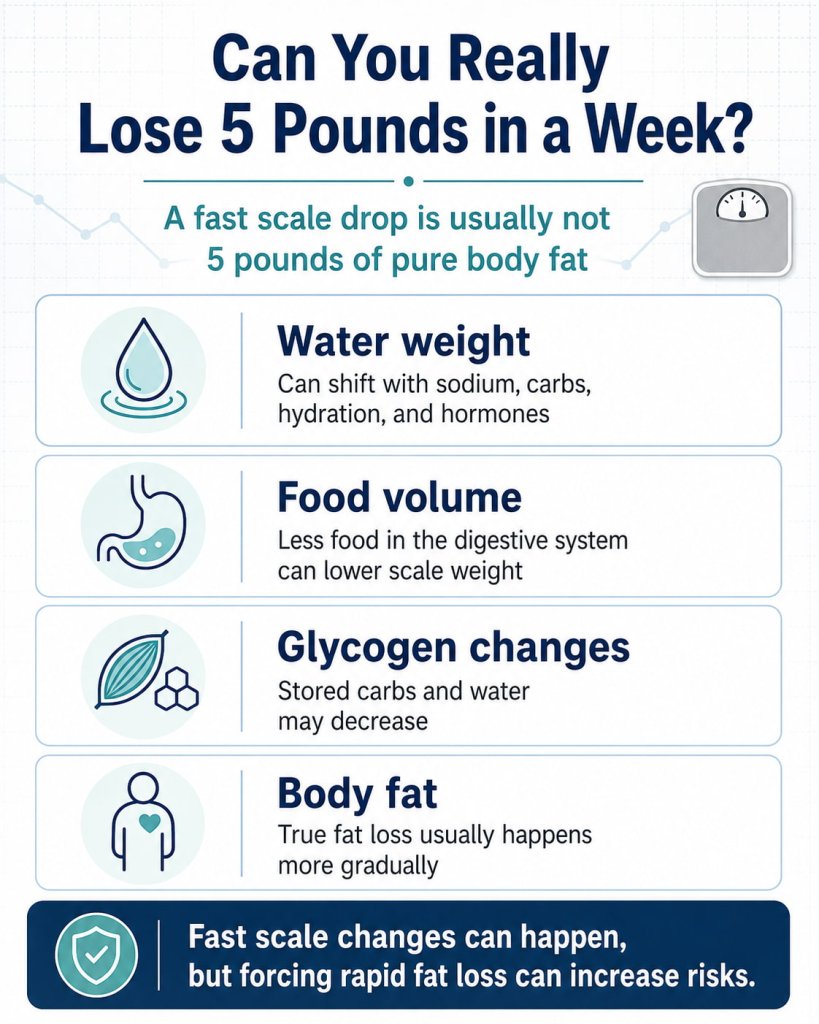
You might lose 5 pounds on the scale in one week, especially if you recently ate more salty foods, large portions, or highly processed meals. But that drop is usually not 5 pounds of body fat.
A fast scale drop may include:
| What changes | What it means |
|---|---|
| Water weight | Your body may hold or release water based on sodium, carbs, hydration, hormones, and activity |
| Food volume | Eating smaller, higher-fiber meals may reduce the amount of food sitting in your digestive system |
| Glycogen changes | When carb intake drops, stored carbohydrate and water may decrease |
| Body fat | True fat loss usually happens more gradually |
For most adults, trying to force 5 pounds of fat loss in one week requires an extreme calorie deficit. That can increase the risk of fatigue, muscle loss, dehydration, rebound overeating, and nutrient gaps. The Academy of Nutrition and Dietetics warns that rapid weight loss may cause more muscle loss than fat loss and may raise the risk of regain, dehydration, hair loss, and gallstones.
The Safe Answer to How to Lose 5 Pounds in a Week
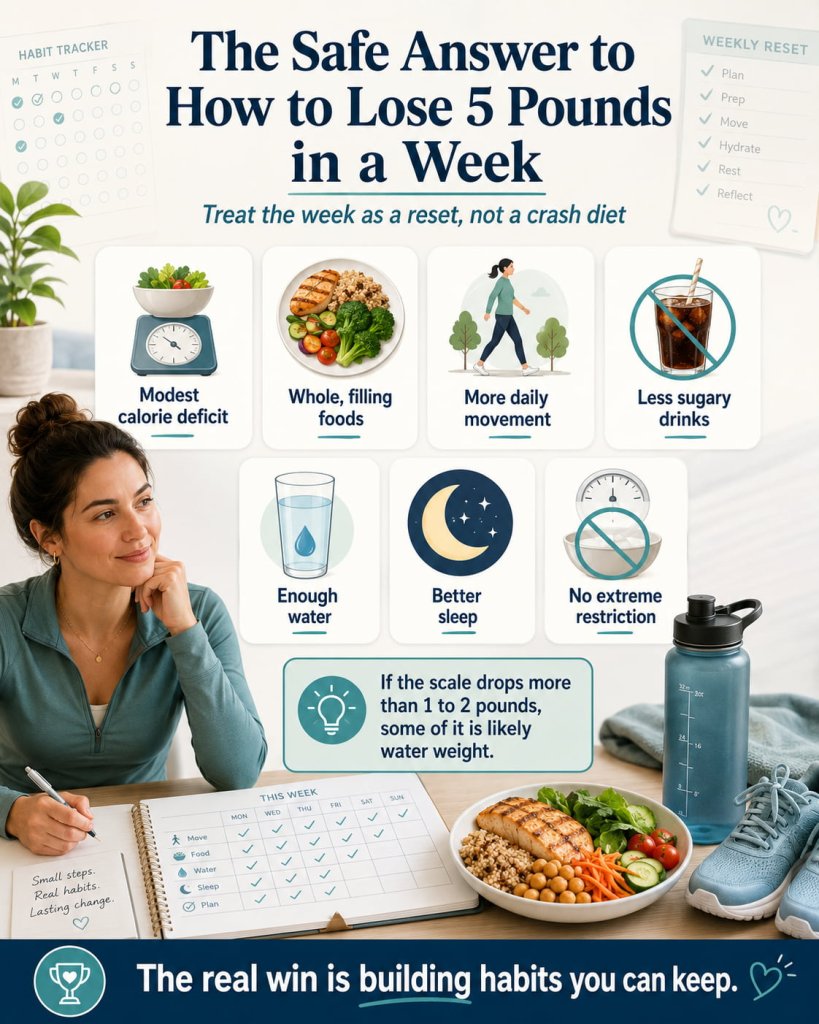
The safest way to approach how to lose 5 pounds in a week is to treat it as a short-term reset, not a crash diet.
A smart first-week goal is to:
- Create a modest calorie deficit
- Eat mostly whole, nutrient-dense foods
- Increase daily movement
- Reduce ultra-processed, salty, sugary foods
- Drink enough water
- Sleep well
- Avoid dehydration tricks and extreme restriction
If the scale drops more than 1 to 2 pounds in the first week, assume some of it is water weight, not pure fat loss. That is normal. The real win is building habits you can keep.
A Safe 7-Day Weight-Loss Reset for Adults
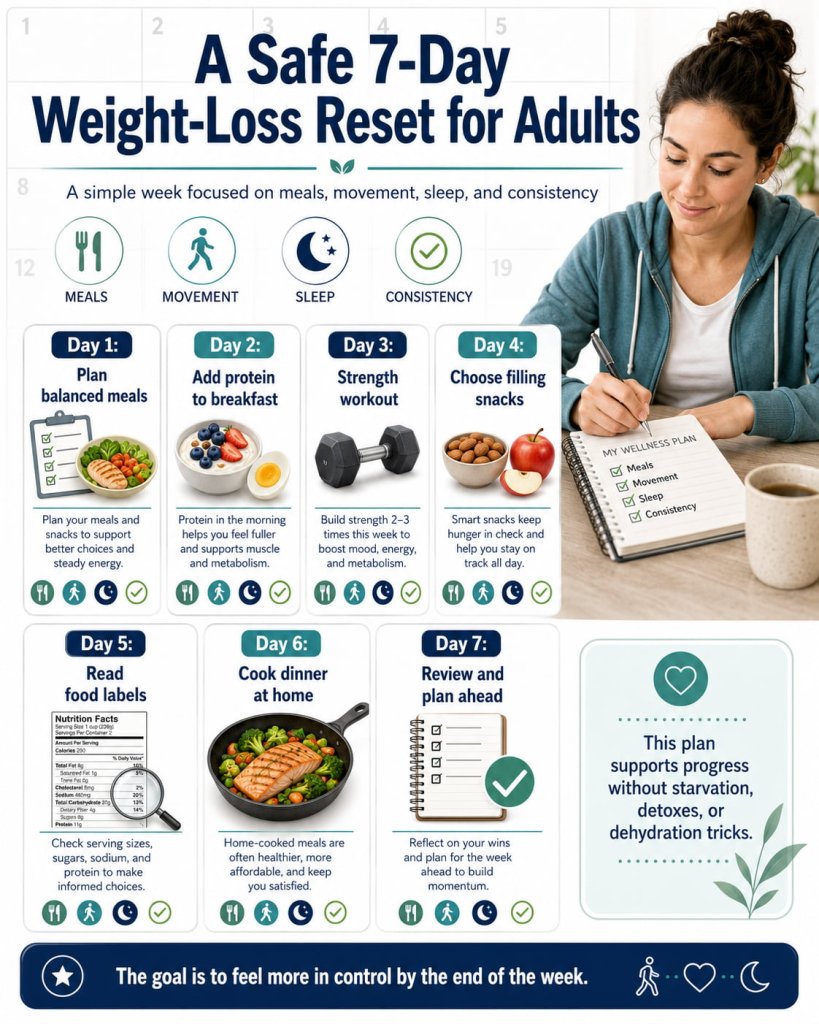
This plan is not about starving yourself. It is about creating a steady, realistic routine that can help you feel lighter, more energized, and more in control by the end of the week.
Day 1: Set a Realistic Goal
Start with a goal you can actually maintain.
Instead of saying, “I must lose 5 pounds this week,” try:
- “I will eat balanced meals for 7 days.”
- “I will walk most days this week.”
- “I will reduce sugary drinks and late-night snacking.”
- “I will aim for 1 to 2 pounds of real fat loss.”
The NIDDK says safe weight-loss programs should include realistic goals, a healthy lower-calorie eating plan, physical activity, guidance or support, and a plan for keeping weight off.
Create a Modest Calorie Deficit, Not a Starvation Diet
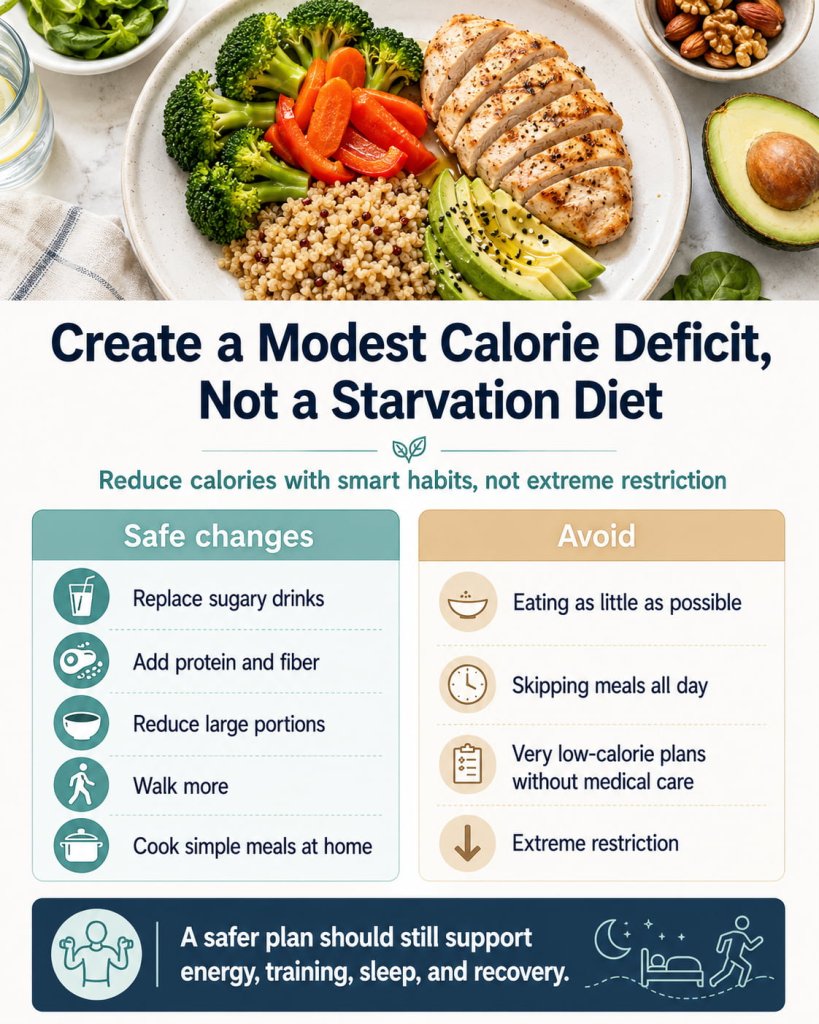
Weight loss happens when you consistently use more energy than you take in. But the deficit should be reasonable.
A practical starting point is to reduce calories through simple changes such as:
- Replacing sugary drinks with water or unsweetened drinks
- Eating more protein and fiber at meals
- Reducing large portions of fried foods, desserts, and snack foods
- Walking more throughout the day
- Cooking more meals at home
Do not try to eat as little as possible. Very low-calorie plans can be hard to sustain and may increase the risk of fatigue, nutrient gaps, muscle loss, and rebound overeating. A safer plan should still give you enough food to function, train, sleep, and recover.
Days 1 to 7: Build Every Meal Around Filling Foods
The easiest way to reduce calories without feeling deprived is to make meals more filling.
Use this simple plate structure:
- Half your plate: vegetables or fruit
- One quarter: protein such as eggs, chicken, fish, Greek yogurt, beans, lentils, tofu, or lean meat
- One quarter: whole grains or starchy foods such as oats, brown rice, potatoes, quinoa, or whole-grain bread
- Small amount: healthy fats such as avocado, olive oil, nuts, seeds, or nut butter
The CDC healthy eating guidance emphasizes vegetables, fruits, protein foods, dairy without added sugars, healthy fats, and whole grains while limiting added sugars, sodium, saturated fats, trans fats, and cholesterol.
Replace High-Calorie Drinks First
Liquid calories can add up quickly because they often do not keep you full.
For one week, reduce or replace:
- Sugary coffee drinks
- Soda
- Sweet tea
- Energy drinks
- Juice-heavy drinks
- Alcohol, if applicable
Choose water, sparkling water without added sugar, unsweetened tea, or black coffee if you tolerate it. The FDA Nutrition Facts label can help you check serving size, calories, added sugars, sodium, and saturated fat in packaged foods and drinks.
Walk Most Days This Week
You do not need extreme workouts to start losing weight. A daily walk can help increase calorie burn, support digestion, improve mood, and make the plan easier to follow.
A good beginner target:
- Walk 20 to 30 minutes most days
- Keep the pace brisk but manageable
- Break it into 10-minute sessions if needed
- Add steps by taking stairs, parking farther away, or walking after meals
Current CDC physical activity guidance says adults need at least 150 minutes of moderate-intensity aerobic activity per week, or 75 minutes of vigorous activity, plus at least 2 days of muscle-strengthening activity.
Strength Train 2 Days This Week
Strength training helps preserve muscle while you lose weight. That matters because muscle supports strength, function, and long-term weight management.
A simple full-body routine can include:
- Squats or sit-to-stands
- Glute bridges
- Wall push-ups or incline push-ups
- Dumbbell rows or band rows
- Planks or dead bugs
Do 1 to 3 sets of 8 to 12 controlled reps. Use a weight or resistance level that feels challenging but safe. Stop if you feel sharp pain, dizziness, chest pain, or unusual shortness of breath.
Sleep 7 to 9 Hours When Possible
Sleep affects hunger, cravings, energy, and recovery. A week of better sleep can make it easier to stick with meals and avoid late-night snacking.
Try these steps:
- Keep a consistent bedtime
- Reduce screens before bed
- Avoid heavy meals late at night
- Keep caffeine earlier in the day
- Make your room cool, dark, and quiet
The CDC includes enough sleep and stress management as part of a healthy weight-loss lifestyle, along with healthy eating and regular physical activity.
What to Eat to Support Weight Loss This Week
You do not need a perfect diet. You need a repeatable one.
The best foods for weight loss are usually the foods that help you feel full, support your energy, and make it easier to stay consistent. Build meals around protein, fiber-rich carbs, vegetables, fruit, and small portions of healthy fats.
Simple Grocery List for the Week
Keep the grocery list simple so healthy meals are easier to repeat.
Choose a few options from each group:
| Category | Examples |
|---|---|
| Protein | Eggs, Greek yogurt, chicken, tuna, salmon, tofu, beans, lentils, cottage cheese |
| High-fiber carbs | Oats, potatoes, brown rice, quinoa, whole-grain bread, beans, fruit |
| Vegetables | Leafy greens, broccoli, carrots, peppers, cucumbers, frozen mixed vegetables |
| Healthy fats | Avocado, olive oil, nuts, seeds, peanut butter |
| Easy snacks | Fruit, yogurt, boiled eggs, hummus, air-popped popcorn, cottage cheese |
This helps you build quick meals without relying on takeout or ultra-processed snacks.
Here are simple food swaps that can help reduce calories while keeping meals satisfying.
| Instead of | Try |
|---|---|
| Sugary cereal | Oats with fruit and Greek yogurt |
| Fried fast-food meal | Grilled protein with potatoes, rice, salad, or vegetables |
| Chips as a snack | Fruit with yogurt, boiled eggs, roasted chickpeas, or air-popped popcorn |
| Creamy, sugary coffee | Coffee with milk or unsweetened options |
| Large dessert every night | Smaller portion, fruit, or yogurt with berries |
| White bread with little protein | Whole-grain toast with eggs, tuna, cottage cheese, or nut butter |
The Dietary Guidelines for Americans currently prioritize whole, healthy, nutritious foods and limiting highly processed foods, added sugars, and refined carbohydrates.
Simple One-Day Meal Example
Use this as a flexible example, not a strict rule.
| Meal | Example |
|---|---|
| Breakfast | Greek yogurt with berries and oats, or eggs with whole-grain toast and fruit |
| Lunch | Chicken, tuna, tofu, or beans with rice, vegetables, and a small amount of healthy fat |
| Snack | Apple with peanut butter, cottage cheese, boiled eggs, or carrots with hummus |
| Dinner | Fish, lean meat, eggs, beans, or tofu with vegetables and potatoes, rice, or quinoa |
| Drink | Water, unsweetened tea, or sparkling water without added sugar |
The key is not to eat as little as possible. The key is to eat enough protein, fiber, and balanced meals so you can stay consistent.
What to Avoid When Trying to Lose Weight Fast
Some quick-weight-loss methods can make the scale drop temporarily, but they are not safe or useful for long-term fat loss.
Avoid:
- Detox teas or cleanse products
- Diuretics or laxatives for weight loss
- Skipping meals all day and overeating later
- Sweat suits, sauna dehydration, or water-cutting tricks
- Very low-calorie diets without medical supervision
- Cutting out entire food groups without a medical reason
- “Fat burner” supplements that promise rapid results
- Weighing yourself many times a day
Very low-calorie diets should not be treated as a DIY plan. NIDDK guidance says medical care is needed if someone plans to lose weight using a special formula diet, such as a very low-calorie diet.
Who Should Talk to a Doctor Before Trying to Lose Weight?
Some people should get medical guidance before starting a weight-loss plan, especially if weight loss is rapid or intentional.
Talk to a healthcare professional first if you:
- Are under 18
- Are pregnant or breastfeeding
- Have diabetes, kidney disease, heart disease, or gallbladder disease
- Take medication that affects blood sugar, blood pressure, appetite, or fluid balance
- Have a history of an eating disorder or disordered eating
- Have unexplained weight loss
- Feel dizzy, weak, faint, or unwell when dieting
- Are considering a very low-calorie diet, fasting plan, or weight-loss medication
For teens, this point is especially important. The American Academy of Pediatrics’ HealthyChildren.org says any adolescent planning to go on a weight-loss diet should first talk with a pediatrician.
Stop and Get Help If These Symptoms Happen
A weight-loss plan should not make you feel unsafe or out of control.
Stop the plan and speak with a healthcare professional if you notice:
- Dizziness, fainting, or feeling weak
- Chest pain or unusual shortness of breath
- Rapid heartbeat that feels abnormal
- Severe fatigue that does not improve with food or rest
- Skipping meals because you feel afraid to eat
- Feeling unable to stop tracking, weighing, or restricting food
- Using laxatives, diuretics, vomiting, or dehydration methods to change your weight
These are not normal parts of healthy weight loss. Your plan should support your health, not harm it.
A Realistic 7-Day Plan to Feel Lighter and Start Losing Weight
Here is a safe, practical one-week plan you can repeat.
| Day | Food focus | Movement focus |
|---|---|---|
| Day 1 | Plan 3 balanced meals and remove sugary drinks | 20-minute walk |
| Day 2 | Add protein to breakfast | 20 to 30-minute walk |
| Day 3 | Build lunch around vegetables, protein, and whole grains | Full-body strength workout |
| Day 4 | Choose fruit, yogurt, eggs, or nuts instead of ultra-processed snacks | 20-minute walk |
| Day 5 | Read labels for added sugar and sodium | 20 to 30-minute walk |
| Day 6 | Cook one simple dinner at home | Full-body strength workout |
| Day 7 | Review what worked and plan meals for the next week | Easy walk or recovery day |
This plan can help reduce excess calories, improve food quality, increase activity, and lower bloating. It does not promise 5 pounds of fat loss in one week, but it can start real progress safely.
What to Do After the First Week
The first week is only the starting point. After 7 days, look at what felt realistic and repeat the habits that worked.
For the next 2 to 4 weeks, focus on:
- Keeping the same balanced meal structure
- Walking most days
- Strength training 2 days per week
- Planning protein-rich meals before you get too hungry
- Limiting sugary drinks and frequent ultra-processed snacks
- Checking your weekly average weight instead of reacting to one daily number
If your weight does not change after 2 to 3 weeks, make one small adjustment at a time. For example, reduce liquid calories, increase steps, improve portion sizes, or add another short walk. Avoid making several extreme changes at once.
How to Track Progress Without Obsessing Over the Scale
Scale weight can change daily because of water, sodium, hormones, digestion, and exercise soreness. That is why daily scale changes are not always meaningful.
Track progress with:
- Energy levels
- Hunger and cravings
- Sleep quality
- Workout consistency
- Step count or walking time
- How your clothes feel
- Weekly average weight, if weighing is helpful for you
A healthy plan should make you feel more steady, not more anxious. If tracking food or weight makes you feel stressed or out of control, pause and speak with a healthcare professional or registered dietitian.
FAQs About How to Lose 5 Pounds in a Week
Can I lose 5 pounds in a week without exercise?
You may see a scale drop from food changes alone, but exercise supports health, muscle maintenance, and long-term weight management. A safer plan combines balanced eating with regular movement.
Is losing 5 pounds in a week dangerous?
It depends on the person and the method. A temporary scale drop may happen, but forcing rapid fat loss through extreme restriction, dehydration, or supplements can be risky. Most people should aim for a slower, steadier pace.
What is the fastest safe way to lose weight?
The fastest safe approach is usually not extreme. Focus on a modest calorie deficit, mostly whole foods, enough protein and fiber, regular walking, strength training, hydration, and sleep.
Will cutting carbs help me lose 5 pounds in a week?
Reducing refined carbs and sugary foods may lower calories and water weight, but cutting carbs too aggressively is not necessary for everyone. Whole-food carbs such as fruit, beans, oats, potatoes, and whole grains can fit into a healthy weight-loss plan.
Should I fast to lose 5 pounds quickly?
Fasting is not the best choice for everyone, and long or extreme fasts can be risky. If you have a medical condition, take medication, are under 18, or have a history of disordered eating, do not start a fasting plan without medical guidance.
Conclusion
The best answer to how to lose 5 pounds in a week is to be honest with your body: a 5-pound scale drop can happen, but 5 pounds of fat loss in 7 days is not a safe or realistic target for most people.
A better goal is to use this week to start strong. Eat balanced meals, reduce sugary drinks and ultra-processed foods, walk most days, strength train twice, sleep well, and avoid crash-diet tactics. Those habits can help you lose weight safely and keep the progress going beyond one week.
This content is for informational purposes only and is not medical advice.
References
- Mayo Clinic — Weight Loss: 6 Strategies for Success
- NIDDK — Choosing a Safe and Successful Weight-loss Program
- CDC — Tips for Healthy Eating for a Healthy Weight
- FDA — How to Understand and Use the Nutrition Facts Label
- USDA Food and Nutrition Service — Dietary Guidelines for Americans
- Academy of Nutrition and Dietetics — Staying Away from Fad Diets
- HealthyChildren.org — Fads and Diets