
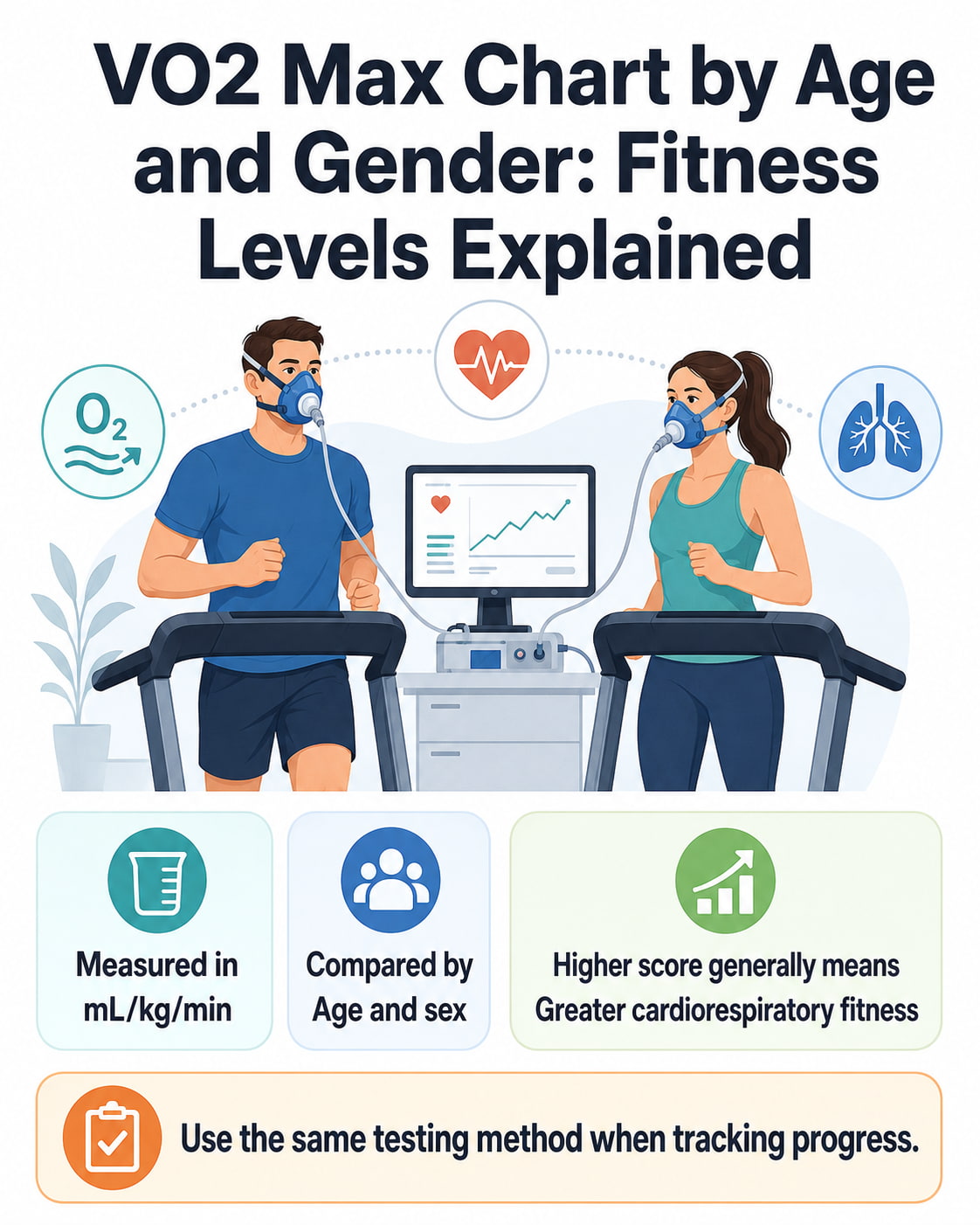
A good VO2 max depends on your age, sex, and testing method—not on one universal target. The VO2 max chart by age and gender below compares your result with treadmill-tested adults in the same age and sex group.
The numbers are expressed in milliliters of oxygen used per kilogram of body weight per minute, or mL/kg/min. Higher values generally indicate greater cardiorespiratory fitness, but your personal trend, health status, activity level, and testing method also matter.
VO2 Max Chart by Age and Gender
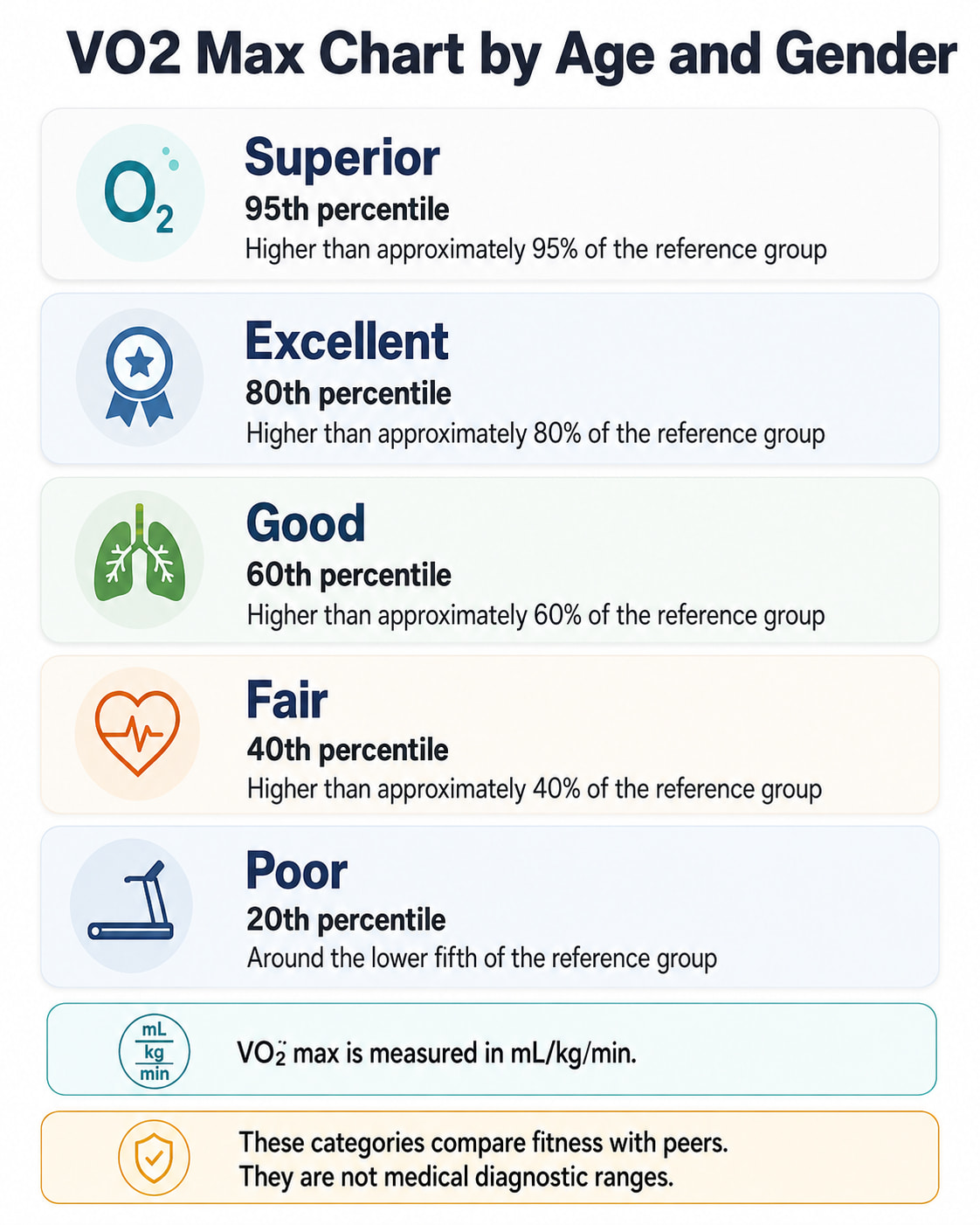
The following adult reference values come from the current treadmill-based classifications presented in Cleveland Clinic’s updated VO2 max chart. The chart draws on the 12th edition of the American College of Sports Medicine’s Guidelines for Exercise Testing and Prescription.
Each number represents a percentile benchmark:
| Fitness level | Percentile benchmark | General meaning |
|---|---|---|
| Superior | 95th | Higher than approximately 95% of the reference group |
| Excellent | 80th | Higher than approximately 80% |
| Good | 60th | Higher than approximately 60% |
| Fair | 40th | Higher than approximately 40% |
| Poor | 20th | Around the lower fifth of the reference group |
These categories compare fitness with peers. They are not medical diagnostic ranges.
VO2 Max Chart for Men
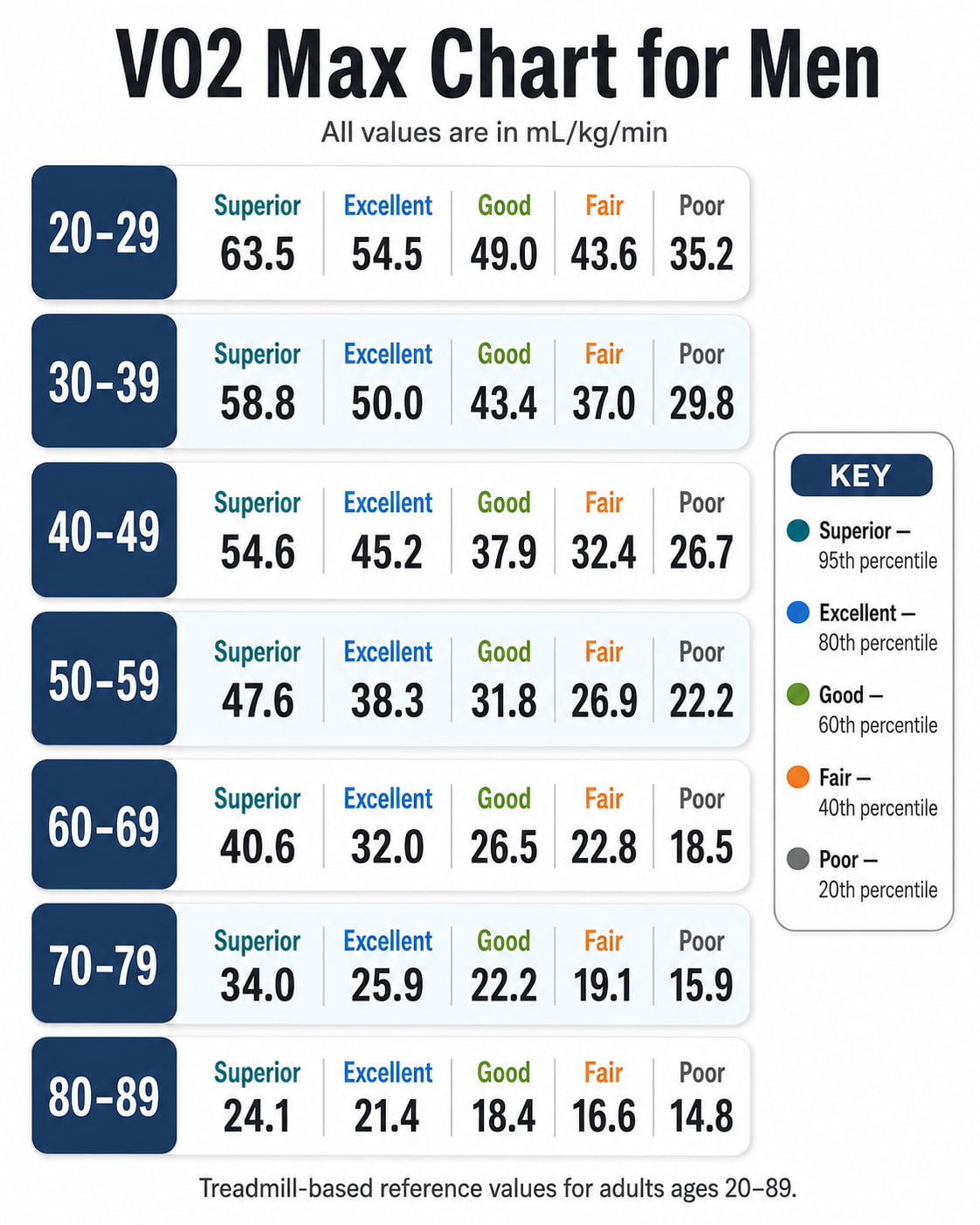
All values are in mL/kg/min.
| Fitness level | Percentile | 20–29 | 30–39 | 40–49 | 50–59 | 60–69 | 70–79 | 80–89 |
|---|---|---|---|---|---|---|---|---|
| Superior | 95th | 63.5 | 58.8 | 54.6 | 47.6 | 40.6 | 34.0 | 24.1 |
| Excellent | 80th | 54.5 | 50.0 | 45.2 | 38.3 | 32.0 | 25.9 | 21.4 |
| Good | 60th | 49.0 | 43.4 | 37.9 | 31.8 | 26.5 | 22.2 | 18.4 |
| Fair | 40th | 43.6 | 37.0 | 32.4 | 26.9 | 22.8 | 19.1 | 16.6 |
| Poor | 20th | 35.2 | 29.8 | 26.7 | 22.2 | 18.5 | 15.9 | 14.8 |
The values are treadmill-based reference points for adults ages 20 through 89. A cycling test, field test, or wearable may produce a different result.
VO2 Max Chart for Women
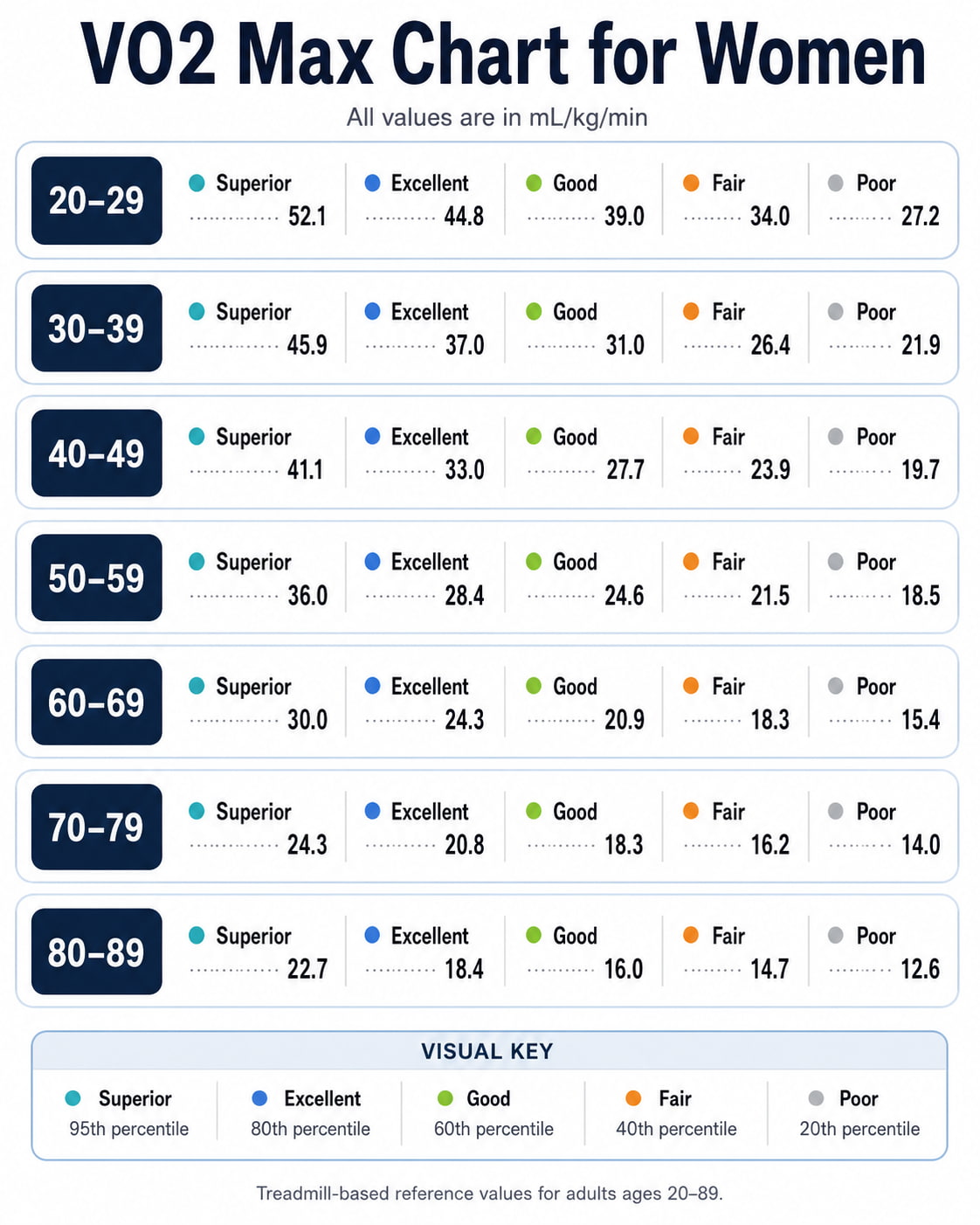
All values are in mL/kg/min.
| Fitness level | Percentile | 20–29 | 30–39 | 40–49 | 50–59 | 60–69 | 70–79 | 80–89 |
|---|---|---|---|---|---|---|---|---|
| Superior | 95th | 52.1 | 45.9 | 41.1 | 36.0 | 30.0 | 24.3 | 22.7 |
| Excellent | 80th | 44.8 | 37.0 | 33.0 | 28.4 | 24.3 | 20.8 | 18.4 |
| Good | 60th | 39.0 | 31.0 | 27.7 | 24.6 | 20.9 | 18.3 | 16.0 |
| Fair | 40th | 34.0 | 26.4 | 23.9 | 21.5 | 18.3 | 16.2 | 14.7 |
| Poor | 20th | 27.2 | 21.9 | 19.7 | 18.5 | 15.4 | 14.0 | 12.6 |
These values also represent treadmill-based percentile benchmarks rather than universal clinical cutoffs.
Language note: People commonly search for a VO2 max chart by “gender.” However, the source data classify participants by recorded sex as men and women. The chart does not provide separate reference values based on gender identity.
How to Read the VO2 Max Chart
Find the table that matches the sex category used by the reference data, then locate your age group and compare your score with the benchmark values.
For example, consider a 45-year-old man with a treadmill VO2 max of 40 mL/kg/min:
- The good benchmark for men ages 40–49 is 37.9.
- The excellent benchmark is 45.2.
- A score of 40 is above the good benchmark but below the excellent benchmark.
It would therefore fall roughly within the good range for that reference group.
Here are two more examples:
| Example | Comparison | Approximate interpretation |
|---|---|---|
| Woman, age 55, VO2 max 25 | Above good benchmark of 24.6 but below excellent benchmark of 28.4 | Good |
| Man, age 72, VO2 max 17 | Above poor benchmark of 15.9 but below fair benchmark of 19.1 | Between poor and fair |
A result below the listed poor benchmark is below approximately the 20th percentile. It does not automatically mean that a person has a heart or lung condition.
What Does an Average VO2 Max Mean?
The average, or 50th-percentile, result generally falls between the chart’s fair 40th-percentile benchmark and good 60th-percentile benchmark.
For a man ages 40–49, for example, the middle of the reference distribution falls between 32.4 and 37.9 mL/kg/min. For a woman of the same age, it falls between 23.9 and 27.7 mL/kg/min.
What Is VO2 Max?
VO2 max is the maximum rate at which your body can take in, transport, and use oxygen during increasingly difficult exercise.
The term breaks down as follows:
- V means volume.
- O2 means oxygen.
- Max means maximum.
Relative VO2 max is normally reported as:
Milliliters of oxygen ÷ kilograms of body weight ÷ minutes of exercise
A VO2 max of 40 mL/kg/min means that, at maximum effort, the body can use approximately 40 milliliters of oxygen per kilogram of body weight each minute.
The number reflects how well several systems work together, including your heart, lungs, blood, blood vessels, and muscles.
VO2 Max Versus VO2 Peak
A true VO2 max requires evidence that oxygen consumption has reached a maximum despite an increasing workload. Many people stop a test because of fatigue, discomfort, symptoms, or muscle limitations before reaching that plateau.
In these cases, a laboratory may report VO2 peak, which is the highest oxygen-use value reached during that specific test. The terms are often used interchangeably in general fitness discussions, but they are not always technically identical.
What Is a Good VO2 Max for Your Age?
A “good” result in this chart is approximately the 60th-percentile benchmark for your age and sex group. That means the score is higher than the results of about 60% of people in the reference group.
However, you should not treat the good benchmark as a minimum requirement for health. A result below it may still represent meaningful progress, particularly for someone who has recently become more active, has a chronic health condition, or has physical limitations.
Your own change over time can be more useful than comparing yourself with strangers. Increasing from 25 to 29 mL/kg/min, for example, may represent worthwhile improvement even when both values remain in the same broad category.
Why VO2 Max Changes With Age
VO2 max usually decreases as people get older. The chart reflects this pattern: the same numerical score may be fair for a younger adult but excellent or superior for an older adult.
Several age-related changes can influence aerobic capacity:
- Maximum heart rate tends to decrease.
- The heart may pump less blood at maximum effort.
- Muscle mass and mitochondrial function may decline.
- The muscles may extract and use oxygen less efficiently.
- Many people become less physically active with age.
Aging does not affect everyone at the same rate. Regular endurance and strength training may help preserve cardiorespiratory fitness, although some decline can still occur.
The updated US FRIEND Registry study analyzed 22,379 exercise tests from adults ages 20–89 and found clear differences across age groups, sex categories, and exercise modes.
Why Reference Values Differ Between Men and Women
Men have higher average VO2 max values than women in these population-based tables. This difference can reflect average sex-related differences in hemoglobin concentration, heart size, stroke volume, lean body mass, and body-fat percentage.
These are group averages, not rules for individuals. A well-trained woman may have a much higher VO2 max than an inactive man of the same age. Genetics, training history, health, body composition, and testing effort create considerable overlap between individuals.
How Is VO2 Max Measured?
Laboratory Cardiopulmonary Exercise Test
A laboratory cardiopulmonary exercise test, or CPET, is the most accurate way to measure oxygen use during exercise.
During a typical test:
- You walk or run on a treadmill or pedal a stationary cycle.
- The workload gradually increases.
- You wear a mask or mouthpiece that analyzes inhaled and exhaled gases.
- Equipment records oxygen consumption, carbon dioxide production, breathing, heart rate, and sometimes an electrocardiogram.
- The test continues until you reach your maximum safe effort or a clinician stops it.
Because a maximal test places substantial demand on the cardiovascular system, trained professionals should supervise it and follow appropriate screening procedures.
Field Fitness Tests
Field tests estimate VO2 max from exercise performance. Common examples include:
- The 12-minute run
- The 1.5-mile run
- Shuttle-run tests
- Step tests
- Timed walking tests
Field tests are more accessible than laboratory testing, but factors such as pacing, motivation, weather, terrain, and the prediction equation can affect the result.
Smartwatches and Fitness Trackers
Wearables usually estimate VO2 max from heart rate, speed, pace, movement, and personal details such as age and body weight. They do not directly analyze respiratory gases.
A wearable can be useful for monitoring trends, especially when you:
- Use the same device consistently.
- Record similar activities.
- Exercise under similar conditions.
- Keep your age and weight information current.
Do not compare a watch estimate directly with a treadmill laboratory result and assume that a difference represents a real fitness change. Cleveland Clinic notes that changes smaller than approximately 3%–5% may reflect ordinary testing variation.
Why Treadmill and Cycling Results Differ
Exercise mode can change your result because running and walking usually involve more total muscle mass than cycling.
In the updated FRIEND analysis, average treadmill VO2 peak values were approximately 21% higher than cycle-ergometer values. Cycling results may also be limited by local leg fatigue, especially in people who do not regularly cycle.
For meaningful comparisons, repeat the same type of test rather than comparing:
- A cycling result with a treadmill chart
- A smartwatch estimate with a laboratory measurement
- A running field test with an indoor cycling test
What Factors Affect VO2 Max?
Age and sex are only two influences. Your result may also be affected by:
- Genetics
- Aerobic training history
- Recent physical inactivity
- Body weight and body composition
- Hemoglobin and red blood cell levels
- Heart and lung function
- Certain medications
- Altitude
- Heat and humidity
- Illness, fatigue, or poor sleep
- Test protocol and exercise mode
- Motivation and maximum effort
Because relative VO2 max divides oxygen use by body weight, gaining or losing weight can change the number even when absolute oxygen capacity changes less. This is one reason athletes and clinicians may consider both relative and absolute oxygen consumption.
Why VO2 Max Matters
VO2 max is a useful measure of endurance performance, but its importance extends beyond sports.
Higher cardiorespiratory fitness is consistently associated with better long-term health outcomes. A 2024 British Journal of Sports Medicine review combined 26 systematic reviews representing more than 20.9 million observations from 199 cohort studies. It found that each 1-MET higher level of fitness was associated with an approximately 11%–17% lower risk of all-cause mortality.
One MET equals approximately 3.5 mL/kg/min. These findings show an association rather than proving that increasing VO2 max by a specific amount guarantees a particular reduction in personal risk. The certainty of evidence varied from very low to moderate across outcomes.
VO2 max can also help you:
- Establish a fitness baseline.
- Monitor aerobic training progress.
- Set realistic endurance goals.
- Evaluate changes after illness or inactivity.
- Identify when performance is declining unexpectedly.
A low result does not reveal the cause by itself. It should be considered alongside symptoms, medical history, physical activity, and other test findings.
How to Improve VO2 Max Safely
Regular aerobic exercise may improve or help maintain VO2 max. Suitable activities include brisk walking, jogging, cycling, swimming, rowing, dancing, and hiking.
The American Heart Association’s physical activity recommendations advise most adults to work toward:
- At least 150 minutes of moderate-intensity aerobic activity per week, or
- At least 75 minutes of vigorous aerobic activity, or
- An equivalent combination of moderate and vigorous activity.
Adults should also include muscle-strengthening exercise on at least two days per week and increase exercise amount and intensity gradually.
Begin With Consistent Moderate Exercise
Someone who is currently inactive may start with 10- to 20-minute sessions of comfortable walking or cycling. Gradually increase the duration until you can perform moderate exercise for about 30 minutes on most days.
During moderate exercise, you should breathe harder than usual but still be able to speak in short sentences.
Add Intensity Gradually
After establishing a consistent aerobic base, short controlled intervals may provide an additional fitness challenge. For example, you might alternate a brief faster effort with several minutes of easier movement.
High-intensity training is not necessary for everyone. Your routine should reflect your current conditioning, health, recovery, and injury risk.
Keep the Testing Method Consistent
Measure progress with the same device, activity, protocol, and similar environmental conditions. A steady upward trend over several weeks or months is more informative than one unusually high or low reading.
When to Get Medical Guidance
Speak with a healthcare professional before maximal exercise testing or vigorous training if you:
- Have known heart, lung, kidney, or metabolic disease
- Have been inactive and plan to begin strenuous exercise
- Take medication that affects heart rate or blood pressure
- Have unexplained exercise intolerance
- Are recovering from a major illness or surgery
- Have been advised to limit exercise
Stop exercising and seek prompt medical evaluation if activity causes chest pressure, fainting, severe or unusual shortness of breath, new irregular heartbeats, or other concerning symptoms.
Limitations of This VO2 Max Chart
Keep the following limitations in mind when interpreting the tables:
- The chart covers adults ages 20–89. Children and teenagers require age-appropriate youth standards.
- The values are treadmill-based. Cycling and other exercise modes produce different results.
- The source data are primarily US-derived. Results may differ across populations and regions.
- The tables use recorded sex categories. They do not provide individualized standards for every body type or gender identity.
- Fitness categories are not diagnoses. A poor score cannot determine whether a medical condition is present.
- Body weight affects relative VO2 max. A change in weight can alter mL/kg/min without an equal change in absolute aerobic capacity.
- Effort and protocol matter. Two tests may differ because of pacing, equipment, fatigue, or normal measurement variability.
Frequently Asked Questions
What is a good VO2 max for my age?
A good VO2 max is approximately the 60th-percentile benchmark for your age and sex in the tables above. For example, the good benchmark is 37.9 mL/kg/min for men ages 40–49 and 27.7 mL/kg/min for women in the same age group.
Is a VO2 max of 40 good?
It depends on age and sex. A score of 40 is around the good range for a man in his 40s and above the superior benchmark for many older age groups. For women, 40 is good for ages 20–29, excellent for several middle-age groups, and superior for most groups over 50.
You must also consider whether the number came from a treadmill test, cycling test, field test, or wearable.
Can walking improve VO2 max?
Brisk walking may improve cardiorespiratory fitness, particularly for people who are inactive or have a low starting level. Progressively increasing walking speed, duration, incline, or frequency can create a greater aerobic challenge.
How accurate is a smartwatch VO2 max result?
A smartwatch provides an estimate rather than a direct measurement. It can be useful for tracking long-term trends, but its accuracy depends on the device, heart-rate data, activity type, personal information, and algorithm. A laboratory CPET remains the most accurate option.
Why is my cycling VO2 max lower than my running result?
Cycling often produces a lower value because it uses less total muscle mass and may cause the legs to fatigue before the cardiovascular system reaches its maximum capacity. The difference may be particularly noticeable in people who run regularly but rarely cycle.
Does losing weight increase VO2 max?
Losing body weight can raise relative VO2 max because the calculation divides oxygen consumption by kilograms of body weight. However, losing muscle, under-fueling, or using extreme diets may reduce performance. A higher relative score does not always mean that absolute oxygen capacity improved by the same amount.
Is a low VO2 max a sign of heart disease?
Not necessarily. A low result may reflect inactivity, test method, incomplete effort, body composition, medication effects, anemia, recent illness, or heart or lung limitations. VO2 max alone cannot diagnose the cause.
Conclusion
A VO2 max chart by age and gender helps you compare aerobic fitness with people in a similar reference group, but it should serve as a guide rather than a medical cutoff. Use the correct age column, confirm how the result was measured, and pay attention to your progress over time.
Start with a sustainable aerobic routine, build intensity gradually, and repeat the same testing method under similar conditions. Meaningful improvement does not require reaching an elite score—moving steadily from your current baseline can support endurance, daily function, and long-term health.
This content is for informational purposes only and not medical advice.
References
- Cleveland Clinic: How Can Increasing Your VO2 Max Improve Your Fitness and Health?
- American College of Sports Medicine: Guidelines for Exercise Testing and Prescription, 12th Edition
- Mayo Clinic Proceedings: Updated Reference Standards for Cardiorespiratory Fitness
- British Journal of Sports Medicine: Cardiorespiratory Fitness and Adult Health Outcomes
- American Heart Association: Physical Activity Recommendations for Adults