
Agility ladder exercises are structured footwork drills designed to improve speed, coordination, balance, and movement control. They are widely used in sports training, fitness programs, and movement skill development because they help your body learn to move quickly and efficiently while staying controlled.
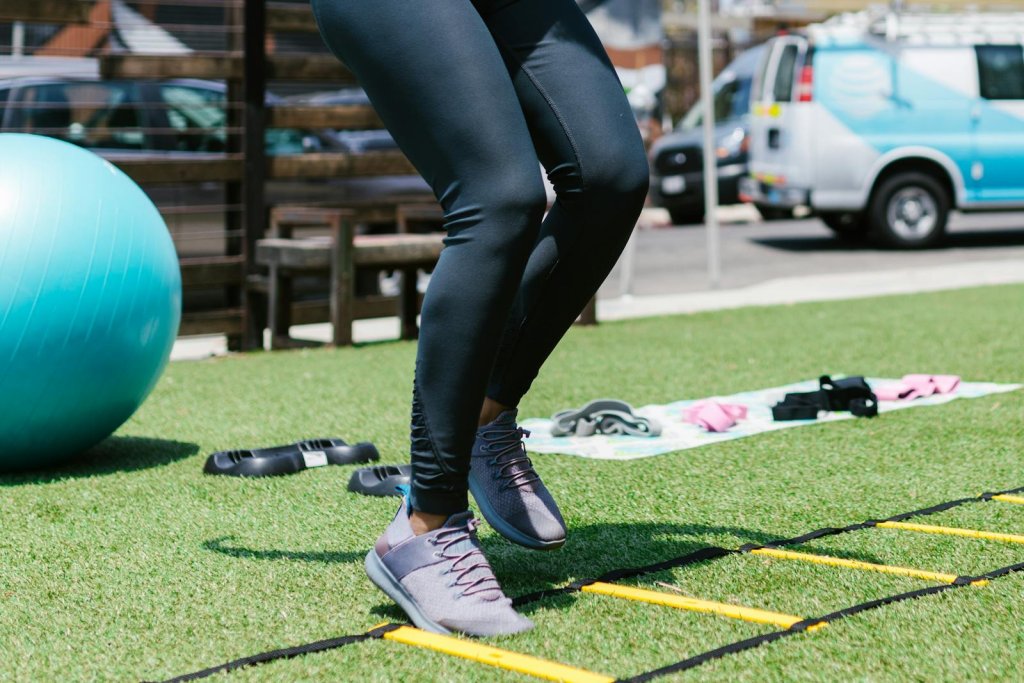
Understanding agility ladder exercises matters because quick feet alone are not enough—good agility also depends on coordination, balance, and body awareness. When used correctly, ladder drills can support better athletic performance, safer movement patterns, and improved confidence during dynamic activities.
What Are Agility Ladder Exercises?
Agility ladder exercises are footwork drills performed using a flat ladder placed on the ground. The goal is to step in, out, and around the ladder rungs in specific patterns while maintaining posture, rhythm, and control.
These drills typically focus on:
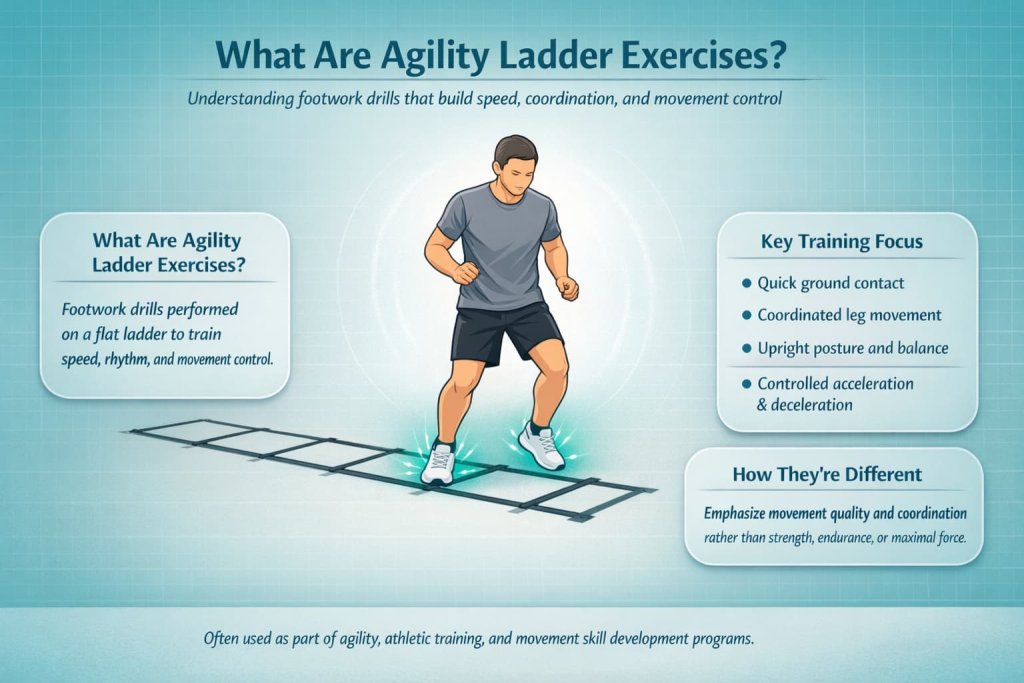
- Quick ground contact
- Coordinated leg movement
- Upright posture and balance
- Controlled acceleration and deceleration
Unlike traditional cardio or strength exercises, agility ladder exercises emphasize movement quality and coordination, not maximal force or endurance.
Why Agility Ladder Exercises Important
Agility ladder exercises may help support:
- Faster foot turnover and rhythm
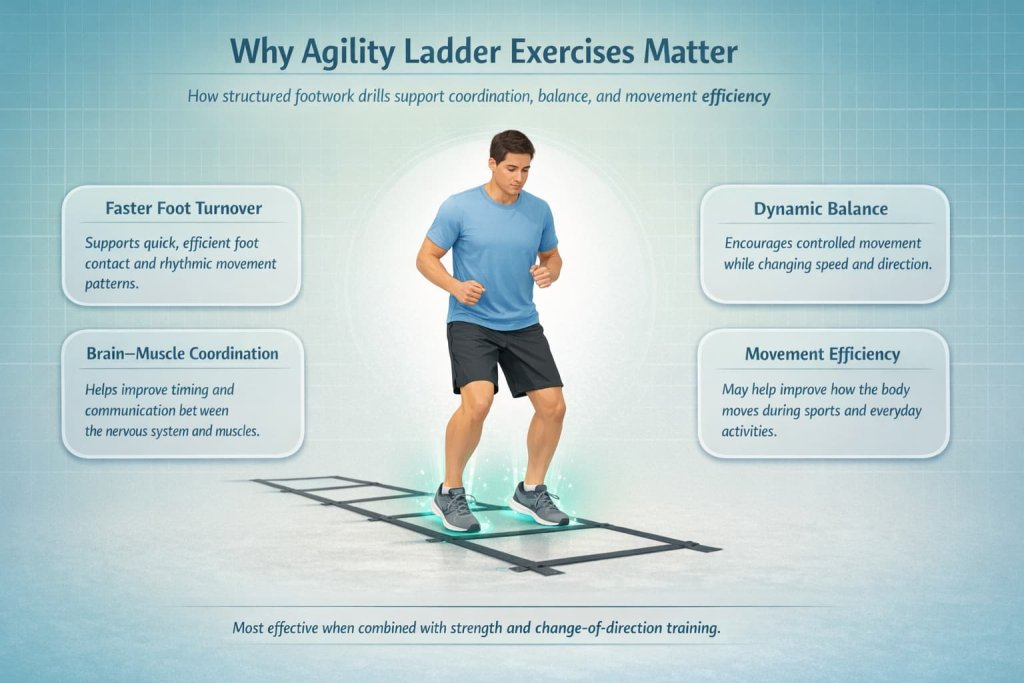
- Improved coordination between the brain and muscles
- Better balance during dynamic movement
- Improved movement efficiency in sports and daily activities
15 Best Agility Ladder Exercises
These agility ladder exercises focus on improving foot speed, coordination, balance, and movement control through structured, progressive drills. When practiced consistently and combined with strength and change-of-direction training, they support better agility and overall athletic movement.
1. One-Foot Run
How to do it
- Stand at the start of the ladder facing forward
- Step one foot into each square as quickly as possible
- Keep steps light and rhythmic
- Move forward until you reach the end of the ladder
Why it works
This drill reinforces fast foot turnover and timing while teaching the body to maintain posture at higher movement speeds. It is often used to develop basic agility rhythm before progressing to more complex drills.
Muscles worked
Calves, tibialis anterior, quadriceps, glutes, hip flexors, core stabilizers
Trainer Tip
Focus on staying tall and relaxed—speed should come from quick ground contact, not overstriding.
2. Two-Feet In Each Square
How to do it
- Start at one end of the ladder
- Step both feet into the first square
- Move both feet into the next square together
- Continue forward with a consistent rhythm
Why it works
This drill improves coordination between both legs and reinforces symmetrical landing mechanics, which are important for balance and joint control.
Muscles worked
Quadriceps, calves, glutes, hip stabilizers, core
Trainer Tip
Land softly on the balls of your feet to reduce impact and maintain flow.
3. In-In-Out-Out
How to do it
- Step both feet into the first square
- Step both feet out to the sides of the ladder
- Move forward and repeat the pattern through each square
Why it works
The alternating in-and-out pattern challenges lateral control and teaches the body to transition quickly between narrow and wide stances.
Muscles worked
Glutes, adductors, abductors, quadriceps, calves, core
Trainer Tip
Keep your hips level and avoid bouncing upward between steps.
4. Lateral Quick Steps
How to do it
- Stand sideways next to the ladder
- Step laterally into and out of each square
- Move down the ladder while facing the same direction
Why it works
This drill develops side-to-side movement speed and hip control, which are essential for cutting, shuffling, and defensive movements.
Muscles worked
Gluteus medius, quadriceps, calves, hip stabilizers, core
Trainer Tip
Lead with the hips, not just the feet, to maintain full-body control.
5. Icky Shuffle
How to do it
- Step one foot into a square
- Bring the second foot into the same square
- Step the first foot out to the side
- Repeat the pattern while moving forward
Why it works
The Icky Shuffle challenges coordination, rhythm, and cognitive focus by combining forward and lateral movement patterns.
Muscles worked
Quadriceps, glutes, calves, hip flexors, core
Trainer Tip
Start slow until the pattern feels automatic, then gradually increase speed.
6. High-Knee Ladder Run
How to do it
- Run through the ladder lifting knees toward hip height
- Place one foot in each square
- Maintain upright posture and controlled arm swing
Why it works
This drill reinforces active hip flexion and posture control while maintaining fast foot contacts.
Muscles worked
Hip flexors, quadriceps, glutes, calves, core
Trainer Tip
Avoid leaning back—keep ribs stacked over hips.
7. Forward Hop Drill
How to do it
- Stand at the start of the ladder
- Hop forward into each square with both feet
- Land softly and immediately hop to the next square
Why it works
Forward hopping introduces a low-impact plyometric element that trains elastic strength and landing control.
Muscles worked
Glutes, quadriceps, calves, hamstrings, core
Trainer Tip
Stick the landing briefly if balance is challenging before increasing speed.
8. Lateral Hop Drill
How to do it
- Stand beside the ladder
- Hop sideways into each square
- Move laterally down the ladder
Why it works
This drill improves single-leg stability and lateral force control, both important for injury prevention and agility.
Muscles worked
Glutes, adductors, abductors, calves, core
Trainer Tip
Control the landing first—speed comes after stability.
9. Scissor Steps
How to do it
- Step one foot forward into a square
- Step the opposite foot back behind the ladder
- Switch feet quickly in a scissor-like pattern
Why it works
Alternating foot positions improve coordination, timing, and lower-body control across different planes of movement.
Muscles worked
Quadriceps, hamstrings, hip flexors, calves, core
Trainer Tip
Keep movements compact to maintain rhythm.
10. Carioca (Grapevine) Steps
How to do it
- Stand sideways to the ladder
- Cross one foot over the other into the square
- Alternate crossing patterns as you move laterally
Why it works
Carioca steps develop rotational control and hip mobility while reinforcing coordination during crossover movements.
Muscles worked
Hip rotators, glutes, adductors, core
Trainer Tip
Move smoothly rather than rushing the crossover.
11. Diagonal In-Out Steps
How to do it
- Step diagonally into the ladder square
- Step diagonally out to the opposite side
- Continue alternating angles down the ladder
Why it works
Diagonal movement patterns challenge spatial awareness and prepare the body for multi-directional agility demands.
Muscles worked
Glutes, quadriceps, calves, hip stabilizers, core
Trainer Tip
Control foot placement before increasing tempo.
12. Single-Leg Ladder Run
How to do it
- Perform a one-foot run using only one leg
- Switch legs on the next set
- Maintain balance and rhythm throughout
Why it works
Single-leg drills improve unilateral balance and coordination, which are essential for athletic movement and injury resilience.
Muscles worked
Glutes, quadriceps, calves, ankle stabilizers, core
Trainer Tip
Keep the free leg relaxed to avoid unnecessary tension.
13. Backward Ladder Run
How to do it
- Face forward but move backward through the ladder
- Place one foot in each square
- Stay controlled and aware of foot placement
Why it works
Moving backward enhances proprioception and challenges coordination in a less familiar direction.
Muscles worked
Quadriceps, calves, glutes, core stabilizers
Trainer Tip
Move slower than forward drills to maintain accuracy.
14. Split-Step Drill
How to do it
- Start with feet together outside the ladder
- Perform a quick split step into the square
- Reset and repeat down the ladder
Why it works
The split-step trains reactive readiness and efficient foot positioning, especially useful for court and field sports.
Muscles worked
Calves, quadriceps, glutes, hip stabilizers, core
Trainer Tip
Stay light on your feet—avoid heavy landings.
15. Reaction-Based Ladder Drill
How to do it
- Perform any ladder pattern
- React to visual or verbal cues to change direction or speed
- Continue responding while maintaining control
Why it works
Adding reaction cues improves decision-making and real-world agility by linking movement with cognitive processing.
Muscles worked
Full lower body, core stabilizers, coordination systems
Trainer Tip
Quality reactions matter more than raw speed—stay sharp, not rushed.
How to Program Agility Ladder Exercises
Agility ladder exercises work best when programmed for quality, not fatigue.
General programming guidelines:
- Perform drills early in your workout or after a warm-up
- Keep sets short (10–20 seconds per drill)
- Rest fully between sets
- Focus on clean foot placement and posture
- Progress complexity before increasing speed
Professional training recommendations often emphasize movement efficiency over exhaustion, a principle also reflected in physical activity guidance from the World Health Organization.
How Agility Ladder Exercises Improve Speed (What They Do—and Don’t Do)
Agility ladder exercises can support aspects of speed by improving how quickly and efficiently your feet contact the ground. They train rhythm, coordination, timing, and body control, which are foundational qualities for agile movement.
What they do well
- Improve foot speed and cadence
- Enhance coordination between the brain and lower body
- Reinforce posture and balance during quick movements
- Help beginners learn efficient movement patterns
What they don’t do
- They do not significantly increase maximal sprint speed on their own
- They do not replace strength training, plyometrics, or sprint mechanics work
- They do not fully replicate sport-specific change-of-direction demands
For best results, agility ladder exercises should be used as a skill-building or warm-up tool alongside strength training, sprinting, and change-of-direction drills. This balanced approach helps ensure realistic performance improvements while avoiding exaggerated claims.
Who Should Avoid or Modify Agility Ladder Exercises
Agility ladder exercises are not appropriate for everyone in their standard form. Certain individuals should avoid or modify these drills to reduce injury risk.
You may need modification or professional guidance if you:
- Have acute ankle, knee, or hip injuries
- Experience persistent joint pain or swelling
- Have balance disorders or frequent falls
- Are recovering from surgery or a recent lower-body injury
- Are new to exercise and struggle with basic balance
Modification options include:
- Slowing the drill pace
- Reducing pattern complexity
- Using fewer ladder rungs
- Holding a stable support nearby
When in doubt, starting with simple marching or stepping patterns can help build confidence and control before progressing to faster drills.
Safety Guidelines Before Starting Agility Ladder Training
Following basic safety guidelines helps ensure agility ladder exercises remain effective and low risk.
Key safety considerations:
- Warm up with light cardio and dynamic mobility first
- Use flat, non-slip surfaces for ladder placement
- Wear supportive athletic footwear
- Keep movements controlled before increasing speed
- Stop if you feel sharp pain, dizziness, or loss of balance
Agility ladder training should prioritize precision over speed, especially for beginners. Quality movement, proper posture, and gradual progression are more important than moving as fast as possible.
Common Mistakes to Avoid
- Looking down excessively instead of maintaining posture
- Rushing drills with poor foot placement
- Using ladder drills as the only form of agility training
- Turning ladder work into long cardio circuits
- Ignoring strength and stability training
Who Can Benefit From Agility Ladder Exercises?
Agility ladder exercises may be suitable for:
- Athletes seeking better coordination and foot speed
- Beginners learning movement control
- Older adults focusing on balance and coordination
- Fitness enthusiasts adding variety to workouts
For individuals with joint pain, balance limitations, or recent injuries, drills should be modified and progressed gradually. Educational resources from the National Institute on Aging emphasize adapting movement activities to individual ability.
Frequently Asked Questions
Are agility ladder exercises good for beginners?
Yes. Simple drills help beginners build coordination and movement confidence when performed at a controlled pace.
Do agility ladder exercises improve speed?
They may help improve foot speed and coordination, but maximal sprint speed typically requires strength and sprint-specific training as well.
How often should I do agility ladder exercises?
Two to three times per week is common when combined with other training methods.
Can agility ladder exercises replace agility training?
No. They are best used as a supplement alongside strength, plyometrics, and change-of-direction drills.
Are agility ladder exercises safe for older adults?
They can be, when drills are simplified and balance support is considered.
How long should an agility ladder workout be?
Most ladder sessions last 10–20 minutes, focusing on quality movement rather than fatigue.
Conclusion
Agility ladder exercises are a practical way to improve coordination, footwork, and movement control when used correctly. While they are not a standalone solution for speed or athletic performance, they fit well into a balanced training program that also includes strength and sport-specific movement. Start with simple drills, progress gradually, and focus on precision for the best results.
References
- The Effects of Agility Ladders on Performance (Systematic Review) — Sports Medicine International Open (2020)
- Effects of Training With an Agility Ladder on Sprint, Agility, and Dribbling in Youth Soccer Players — Biology of Sport (2020, full text)
- Effect of Different Physical Training Forms on Change of Direction Ability (Systematic Review and Meta-analysis) — Sports Medicine Open (2019)
- ACSM Position Stand: Quantity and Quality of Exercise (Includes Neuromotor: Balance, Agility, Coordination) — MSSE (2011)
- Physical Activity Guidelines for Americans, 2nd edition (PDF) — U.S. HHS (2018)
- WHO Guidelines on Physical Activity and Sedentary Behaviour (Full Guideline PDF) — World Health Organization (2020)
- Older Adult Physical Activity Guidelines (Balance and Fall Prevention) — CDC (Updated Dec 4, 2025)
- Exercise and Physical Activity — National Institute on Aging (NIA)