
Mobility exercises for seniors are simple, controlled movements that help maintain joint range of motion, balance, and everyday movement skills needed for independent living. Regular mobility training supports safer walking, easier standing and sitting, improved reaching, and better confidence with daily activities.
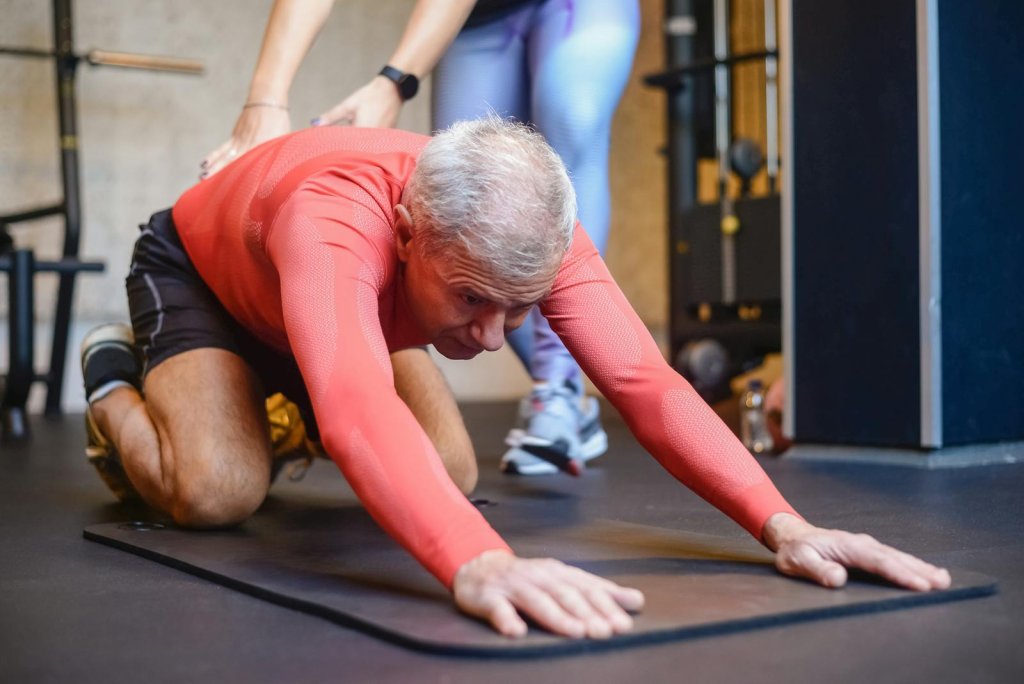
As we age, joints may feel stiffer and balance reactions may slow down. Understanding and practicing mobility exercises is important because they focus on how you move, not just how strong you are. These exercises are widely recommended by organizations such as the Centers for Disease Control and Prevention, World Health Organization, and National Health Service as part of healthy aging and fall-prevention strategies.
Below is a clear, safe, and evidence-informed guide to the 12 best mobility exercises for seniors, including how they help and who they are best suited for.
What Are Mobility Exercises for Seniors?
Mobility exercises for seniors are low-impact movements designed to improve how joints move through their natural range while maintaining control and balance. Unlike stretching alone, mobility exercises emphasize active movement and coordination.
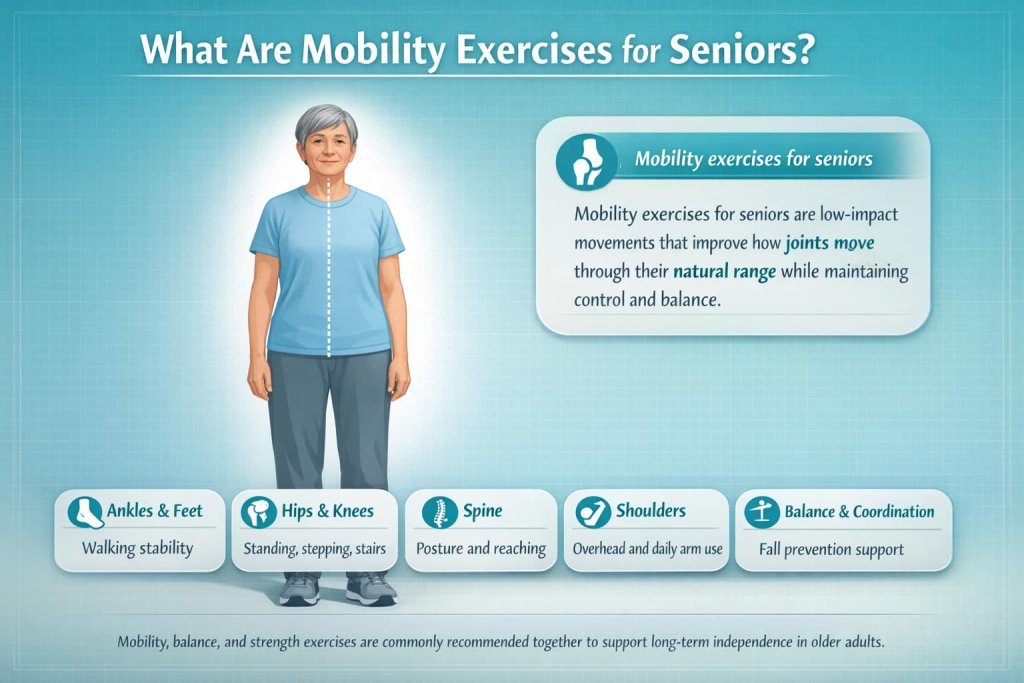
They commonly focus on:
- Ankles and feet for walking stability
- Hips and knees for standing, stepping, and stairs
- Spine for posture and reaching
- Shoulders for overhead and daily arm use
- Balance and coordination for fall prevention
Public health guidelines for older adults consistently recommend combining mobility, balance, and strength exercises for long-term independence.
Why Mobility Exercises for Seniors Matter
Regular mobility exercises may help support:

- Easier walking and smoother transitions (sit-to-stand, turning)
- Better balance and postural control
- Reduced stiffness from prolonged sitting
- Improved confidence during daily tasks
- Long-term joint comfort and movement quality
The American College of Sports Medicine emphasizes multicomponent exercise programs—mobility, balance, and strength—as a cornerstone of healthy aging.
12 Best Mobility Exercises for Seniors
These mobility exercises focus on improving joint movement, balance, and coordination to support daily activities and independence. When practiced regularly and safely, they may help seniors move with greater confidence and stability.
1. Ankle Circles
Why it works:
Ankle circles gently move the ankle joint through its natural range of motion, which is essential for walking, balance reactions, and foot clearance during steps. Regular ankle mobility may help reduce stiffness from prolonged sitting and support smoother gait patterns.
Muscles worked:
This exercise activates and mobilizes the muscles around the ankle, including the tibialis anterior, calf muscles (gastrocnemius and soleus), and small stabilizing muscles of the foot and ankle.
How to do it:
- Sit upright in a chair with one foot lifted slightly off the floor
- Slowly rotate the ankle in a circular motion
- Perform 8–10 circles in one direction
- Reverse the direction for another 8–10 circles
- Switch legs and repeat
Trainer Tip:
Move slowly and deliberately—avoid forcing the range. Small, controlled circles are more effective than fast, sloppy movement.
2. Heel-to-Toe Rocking
Why it works:
Heel-to-toe rocking improves ankle control and weight transfer, both of which are critical for stable walking. This movement trains awareness of foot placement and helps reinforce balance during forward motion.
Muscles worked:
The calves, tibialis anterior, intrinsic foot muscles, and stabilizing muscles around the ankle joint are all engaged during the rocking motion.
How to do it:
- Stand tall near a wall or chair for support
- Shift weight onto your heels, lifting the toes
- Slowly rock forward onto the balls of your feet, lifting the heels
- Move back and forth in a controlled manner
- Repeat for 10–15 repetitions
Trainer Tip:
Keep movements slow and controlled. Use support lightly rather than leaning fully on it.
3. Seated Marches
Why it works:
Seated marches promote hip mobility and coordination without placing stress on the knees or lower back. This makes them ideal for warming up and for individuals with limited standing tolerance.
Muscles worked:
Primary muscles include the hip flexors, quadriceps, and core stabilizers that help maintain upright posture.
How to do it:
- Sit tall in a chair with feet flat on the floor
- Lift one knee toward the chest as high as comfortable
- Lower it back down with control
- Alternate legs in a marching pattern
- Perform 10–15 repetitions per side
Trainer Tip:
Avoid leaning back as you lift the leg—stay tall to encourage better posture and core engagement.
4. Sit-to-Stand
Why it works:
Sit-to-stand directly mimics one of the most important daily movements. Practicing this pattern supports independence by reinforcing strength, coordination, and balance during transitions.
Muscles worked:
This exercise primarily works the quadriceps, glutes, hamstrings, and core muscles, with secondary involvement from the calves.
How to do it:
- Sit near the front of a chair with feet hip-width apart
- Lean slightly forward from the hips
- Press through your feet to stand up
- Slowly lower yourself back to the chair
- Repeat for 8–12 repetitions
Trainer Tip:
If needed, place hands on the chair or thighs for assistance, but gradually aim to use less support over time.
5. Hip Circles (Standing or Seated)
Why it works:
Hip circles move the hips through multiple planes of motion, supporting smoother stepping, turning, and posture control. This is especially useful for daily activities that involve rotation.
Muscles worked:
The glutes, hip flexors, adductors, abductors, and deep hip stabilizers all contribute to controlled circular movement.
How to do it:
- Stand holding a chair, or sit upright in a chair
- Shift weight slightly and begin drawing small circles with the hips
- Move slowly through the full comfortable range
- Perform 6–8 circles in one direction
- Reverse direction and repeat
Trainer Tip:
Keep the movement slow and controlled—avoid letting the lower back do the work instead of the hips.
6. Standing Side Leg Swings
Why it works:
Side leg swings improve lateral hip mobility and help train balance during single-leg support. This is important for walking stability and changing direction.
Muscles worked:
This exercise targets the hip abductors (especially the gluteus medius), inner thigh muscles, and balance stabilizers of the standing leg.
How to do it:
- Stand next to a chair or wall for support
- Shift weight onto one leg
- Gently swing the opposite leg out to the side and back
- Keep the torso upright
- Perform 10–12 swings per leg
Trainer Tip:
Avoid swinging too high. Controlled, low-range movement is more effective and safer.
7. Cat–Cow (Chair or Floor Version)
Why it works:
Cat–cow gently moves the spine through flexion and extension, which may help reduce stiffness and promote spinal awareness. It supports comfortable posture and easier movement throughout the day.
Muscles worked:
The spinal extensors, abdominal muscles, and muscles around the neck and shoulders are gently engaged and stretched.
How to do it:
- Sit upright in a chair or position yourself on hands and knees
- Inhale and gently arch the back, lifting the chest
- Exhale and round the spine, drawing the chin slightly down
- Move slowly between positions
- Repeat for 6–10 cycles
Trainer Tip:
Coordinate movement with breathing to encourage relaxation and smoother spinal motion.
8. Thoracic Rotation (Seated)
Why it works:
Thoracic rotation helps maintain upper-back mobility needed for reaching, driving, and turning. Many seniors lose rotation due to prolonged sitting.
Muscles worked:
The muscles of the upper back, obliques, and spinal stabilizers contribute to controlled rotational movement.
How to do it:
- Sit tall with feet flat on the floor
- Cross arms over the chest or place hands on thighs
- Slowly rotate the torso to one side
- Return to center with control
- Alternate sides for 8–10 repetitions
Trainer Tip:
Rotate only as far as comfortable—this should feel smooth, not forced.
9. Shoulder Rolls
Why it works:
Shoulder rolls promote gentle shoulder joint movement and relaxation. They are helpful for easing upper-body stiffness and preparing the shoulders for daily arm use.
Muscles worked:
This exercise activates the upper trapezius, deltoids, and muscles surrounding the shoulder blades.
How to do it:
- Sit or stand tall with arms relaxed at your sides
- Slowly lift shoulders upward
- Roll them back and down in a smooth circle
- Perform 8–10 repetitions
- Reverse direction and repeat
Trainer Tip:
Move slowly and avoid shrugging aggressively—gentle motion is the goal.
10. Wall Shoulder Slides
Why it works:
Wall shoulder slides encourage shoulder mobility while reinforcing good posture. They are often used in senior fitness programs to support overhead movement control.
Muscles worked:
The shoulders, upper back muscles, and postural stabilizers are all involved during controlled sliding motion.
How to do it:
- Stand with back against a wall, elbows bent
- Keep head, upper back, and hips lightly touching the wall
- Slowly slide arms upward as comfortable
- Lower them back down with control
- Perform 6–10 repetitions
Trainer Tip:
Do not force the arms overhead. Stop where movement feels smooth and controlled.
11. Single-Leg Stand (Supported)
Why it works:
Single-leg standing challenges balance and coordination between the ankle, hip, and core. It is commonly used to support fall-prevention strategies.
Muscles worked:
The standing leg’s ankle stabilizers, glutes, quadriceps, and core muscles work together to maintain balance.
How to do it:
- Stand next to a chair or counter
- Shift weight onto one leg
- Lift the opposite foot slightly off the floor
- Hold for 10–30 seconds
- Switch legs and repeat
Trainer Tip:
Light fingertip support is better than gripping tightly—this encourages balance development.
12. Tandem Stance (Heel-to-Toe Balance)
Why it works:
Tandem stance narrows the base of support, increasing balance demand. It improves awareness and control during walking and standing.
Muscles worked:
Ankle stabilizers, calves, hips, and core muscles all contribute to maintaining alignment.
How to do it:
- Stand near a support surface
- Place one foot directly in front of the other, heel touching toes
- Hold the position while staying upright
- Maintain for 10–30 seconds
- Switch foot positions and repeat
Trainer Tip:
Look straight ahead rather than down to improve balance control and posture.
How Often Should Seniors Do Mobility Exercises?
Authoritative guidelines suggest:
- Daily light mobility movement to reduce stiffness
- 2–3 days per week of balance-focused exercises
- 2 days per week of muscle-strengthening activities
The Physical Activity Guidelines for Americans and WHO both highlight balance and mobility training for seniors with reduced movement capacity.
Common Mistakes Seniors Should Avoid During Mobility Exercises
Avoiding common mistakes helps ensure mobility exercises remain effective and safe. Many issues arise not from the exercises themselves, but from how they are performed.
Common mistakes include:
- Moving too quickly or using momentum instead of control
- Forcing joints beyond a comfortable range of motion
- Holding the breath during movement
- Skipping balance support when it is needed
- Ignoring early signs of fatigue or discomfort
Mobility exercises should feel smooth and controlled—not strenuous or painful. The American College of Sports Medicine consistently recommends controlled movement, proper breathing, and appropriate support when training older adults.
If an exercise feels uncomfortable or unstable, it should be modified or replaced with a safer option.
How to Safely Start Mobility Exercises as a Senior
Starting mobility exercises safely is essential for building confidence and reducing injury risk. Seniors should begin with slow, controlled movements that stay within a comfortable, pain-free range of motion. Mobility training is about improving movement quality, not pushing limits.
For best results and safety:
- Begin with seated or supported exercises before progressing to standing movements
- Use a sturdy chair, wall, or countertop for balance support
- Move slowly and deliberately—avoid fast or jerky motions
- Breathe normally throughout each exercise
- Stop immediately if you feel dizziness, sharp pain, or unusual discomfort
Public health organizations such as the Centers for Disease Control and Prevention and the World Health Organization emphasize gradual progression and balance-focused activity for older adults, especially those with reduced mobility.
Consistency matters more than intensity. Even short daily mobility sessions can support long-term movement confidence when performed safely.
Who Should Be Cautious or Seek Professional Guidance
While mobility exercises are generally safe for most seniors, some individuals should take extra precautions or seek guidance from a qualified healthcare or exercise professional before starting.
Extra caution is advised for seniors who:
- Have experienced recent falls
- Have severe joint pain or swelling
- Are recovering from surgery or injury
- Have neurological conditions affecting balance or coordination
- Experience frequent dizziness or unexplained pain
Professional guidance can help ensure exercises are selected, modified, and progressed safely based on individual needs.
Safety Tips for Mobility Exercises for Seniors
To keep mobility training safe and effective:
- Move slowly and with control
- Use a chair, wall, or rail for support
- Stay within a comfortable, pain-free range
- Wear supportive footwear
- Stop if dizziness, sharp pain, or discomfort occurs
If you have existing medical conditions or a history of falls, consult a qualified healthcare or exercise professional before starting a new routine.
Who Can Benefit Most From Senior Mobility Exercises?
Mobility exercises may be especially helpful for:
- Adults aged 60 and older
- Seniors returning to activity after inactivity
- Individuals who sit for long periods
- Older adults focusing on fall prevention
- Anyone aiming to maintain independence at home
Frequently Asked Questions
Are mobility exercises safe for seniors?
Yes, when performed slowly, with support, and within a comfortable range, mobility exercises are generally considered safe for older adults.
Can seniors do mobility exercises every day?
Light mobility exercises can usually be done daily, especially gentle joint movements and posture-focused drills.
Do mobility exercises replace strength training?
No. Mobility exercises complement strength training. Both are recommended together for healthy aging.
Can mobility exercises help with balance?
Yes. Many mobility exercises include balance and coordination components that may help reduce fall risk.
Do I need equipment for senior mobility exercises?
Most mobility exercises require little to no equipment. A sturdy chair or wall is often sufficient.
How long should a mobility routine be?
A typical routine may last 10–20 minutes, depending on the number of exercises and rest periods.
Conclusion
Mobility exercises for seniors play a key role in staying active, stable, and independent as we age. By practicing gentle, controlled movements that support joints, balance, and posture, older adults can maintain confidence and function in daily life.
Start with a few exercises, move consistently, and prioritize safety. Small daily efforts can make a meaningful difference in long-term mobility and independence.
References
- CDC: Older Adult Activity Guidelines (65+)
- WHO: Guidelines on Physical Activity and Sedentary Behaviour (Official PDF)
- U.S. HHS: Physical Activity Guidelines for Americans, 2nd Edition (PDF)
- NHS: Physical Activity Guidelines for Older Adults (65+)
- NHS: Balance Exercises (Heel-to-Toe, One-Leg Stand, Step-Ups)
- CDC: STEADI Older Adult Fall Prevention (Core Hub)
- Cochrane: Exercise for Preventing Falls in Older People Living in the Community (Evidence Summary)
- NIH National Institute on Aging: Exercise and Physical Activity (Older Adults)