
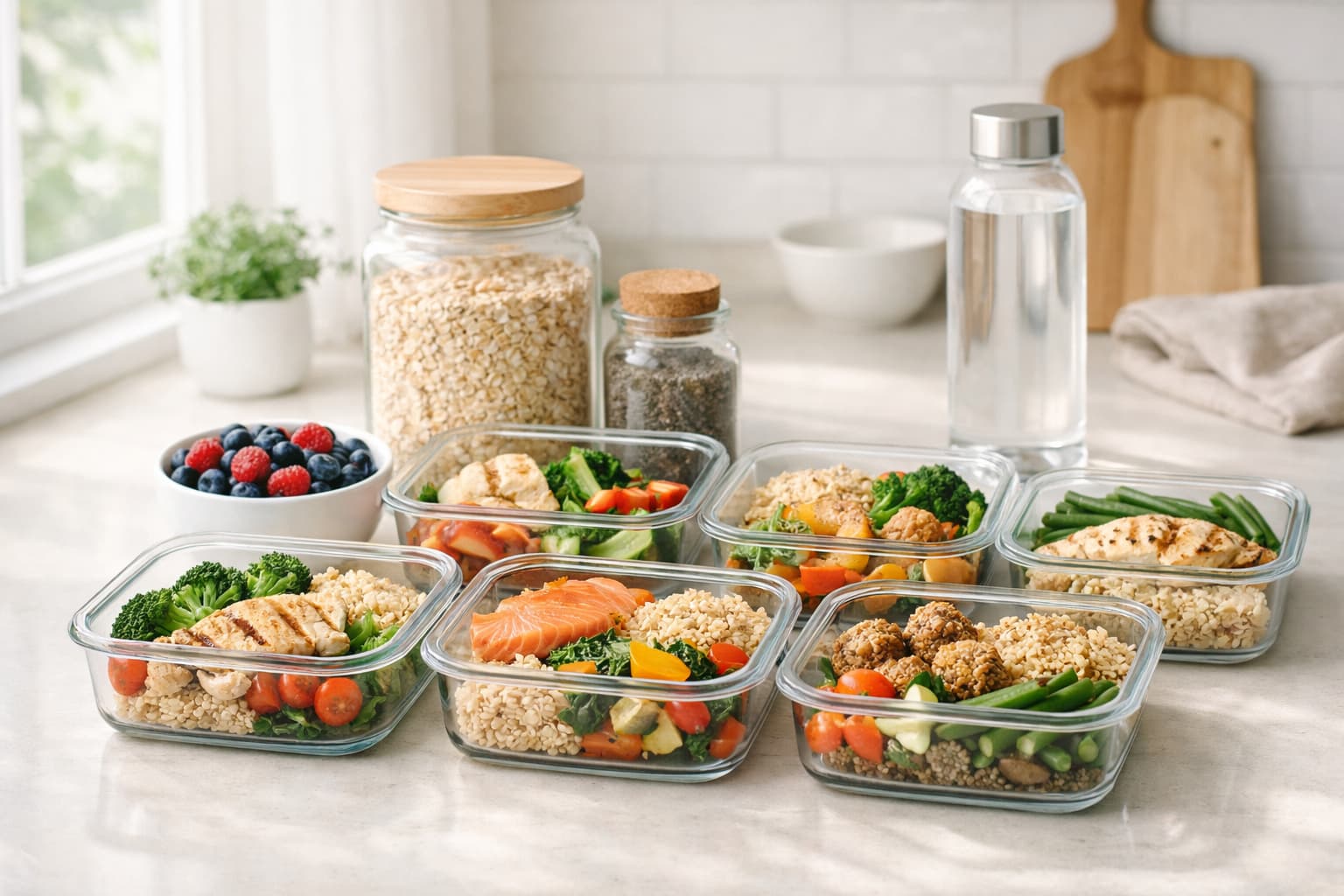
A “rapid weight loss plan” that supports overall wellness is one that aims for steady, realistic progress—typically about 1–2 pounds per week—rather than extreme restriction. That pace is more likely to be sustainable and safer than “crash” approaches, per the Centers for Disease Control and Prevention (CDC).
If you’re trying to see results quickly, the safest way to do it is to focus on nutrition quality, consistent routines, and habits you can repeat—while avoiding very low-calorie plans unless medically supervised.
Rapid weight loss plan fundamentals for nutrition and overall wellness
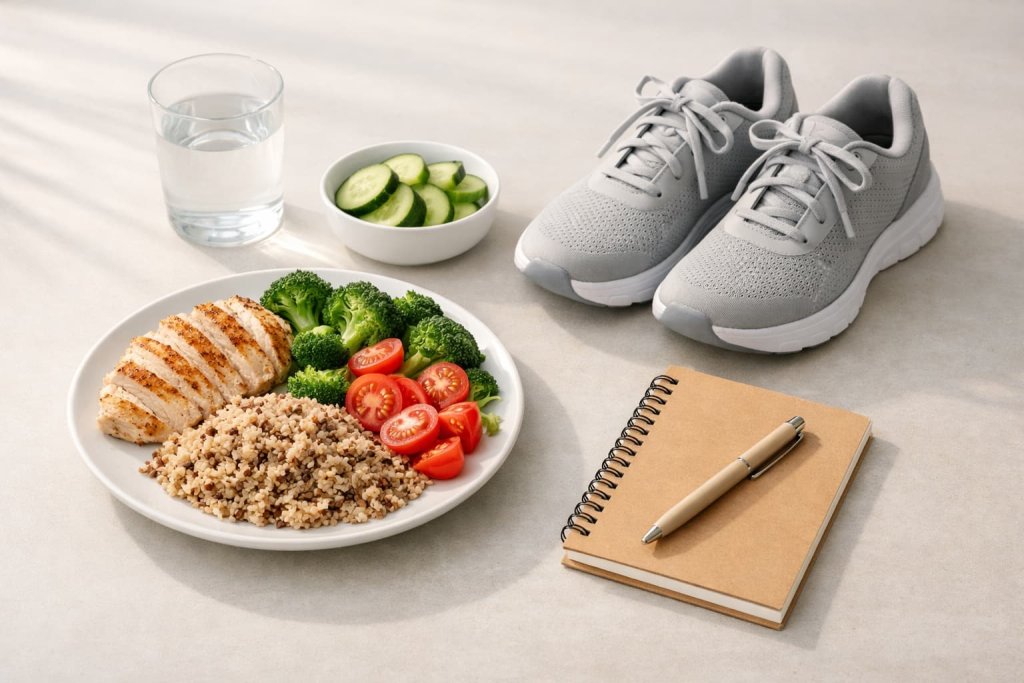
A wellness-first “rapid weight loss plan” is really a rapid habit plan—fast improvements in:
- Meal structure (protein + fiber + minimally processed carbs)
- Portion consistency
- Daily movement (especially walking)
- Sleep and stress basics (because they affect appetite and choices)
The current Dietary Guidelines for Americans framework emphasizes nutrient-dense foods and patterns you can maintain over time—use that as your anchor, not diet trends.
What “rapid” should mean and what to avoid
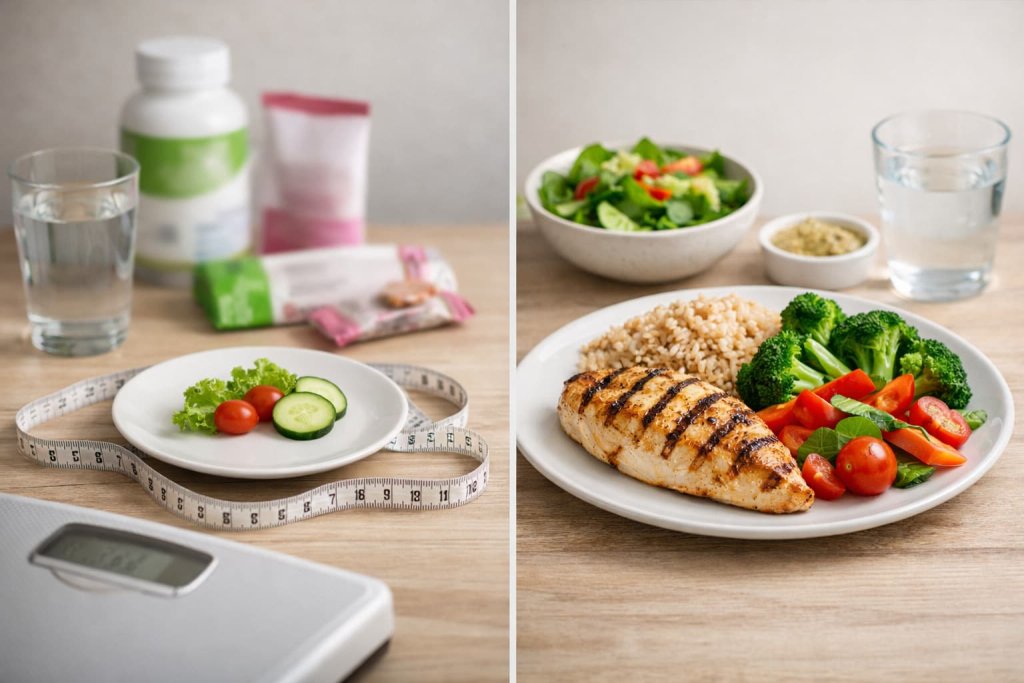
“Rapid” should mean fast routine setup, not fast scale drops.
Safer expectations
- Aim for steady weekly loss (often ~1–2 lb/week), not dramatic week-to-week swings, per the CDC.
- Expect early scale changes to include water weight—that’s not the same as body fat loss.
Approaches to avoid without medical supervision
- Very low-calorie diets and extreme restriction can increase health risks. The National Institute of Diabetes and Digestive and Kidney Diseases (NIDDK) notes that rapid loss from very low-calorie diets or surgery can raise the risk of gallstone problems.
- “Detoxes,” laxative teas, fasting challenges, or anything that makes you dizzy, weak, or unwell.
Also be cautious with “fat burner” supplements, detox products, or extreme cleanse programs. Many are not necessary for weight loss and may cause side effects or interact with medications. For a safer plan, focus on food quality, portions, and repeatable routines.
If you’re under 18, pregnant, have a medical condition, take medications, or have a history of disordered eating, a clinician-guided plan is the safest route.
Rapid weight loss plan safety checklist (read this first)
A wellness-first plan should not make you feel faint, weak, or unwell. Consider pausing and getting clinician guidance before making major changes if any of these apply:
- You are under 18, pregnant, breastfeeding, or recently postpartum
- You have diabetes, kidney disease, heart disease, a history of gallstones, or other medical conditions
- You take medications that affect appetite, blood sugar, blood pressure, or fluid balance
- You have a history of disordered eating or intense anxiety around food/weight
Stop the plan and seek medical help if you notice warning signs like chest pain, fainting, severe dizziness, confusion, or persistent vomiting.
Rapid weight loss plan nutrition: the plate method that’s easy to repeat
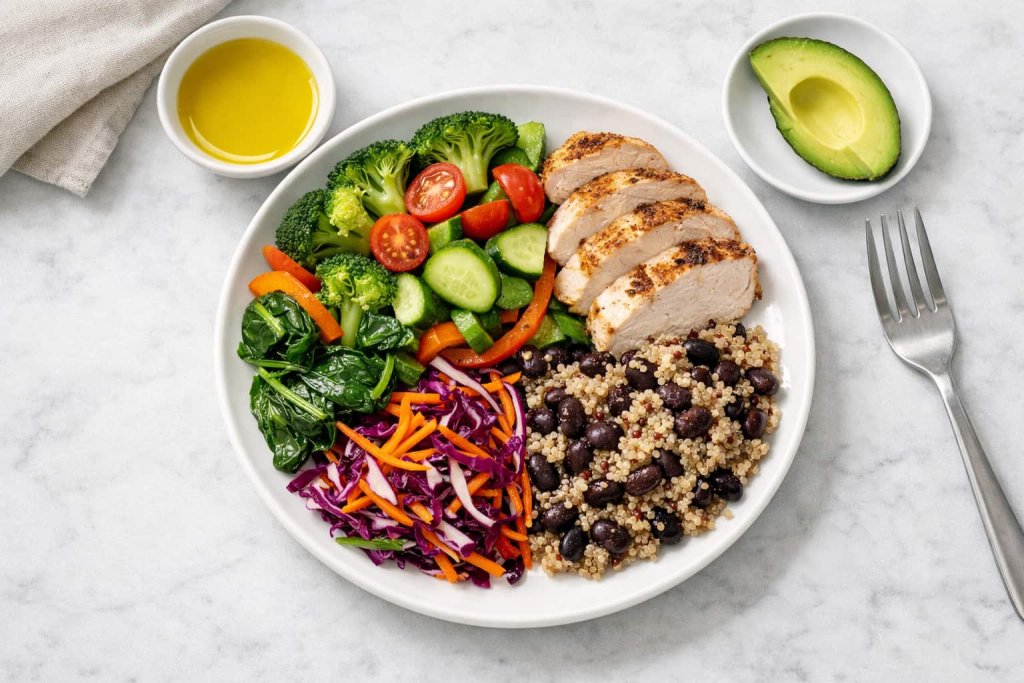
Use this simple plate structure for most meals:
- Half the plate: non-starchy vegetables (fiber + volume)
- One quarter: protein (helps with fullness and maintaining lean mass)
- One quarter: high-fiber carbs (whole grains, beans, fruit, starchy veg)
- Add healthy fats: small portions (olive oil, nuts, seeds, avocado)
This supports a calorie deficit without needing extreme rules.
Protein and fiber targets that support fullness
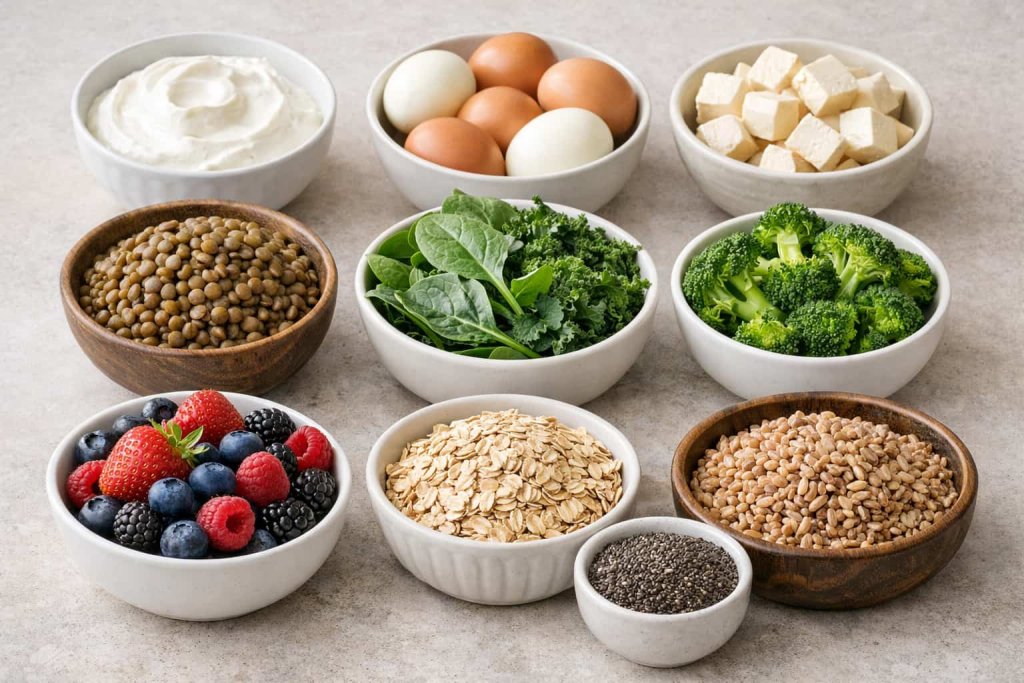
You don’t need perfection—just consistency.
Quick targets to keep it simple
- Protein: aim for a clear protein source at every meal (and optionally one snack)
- Fiber: aim for at least two high-fiber choices daily (vegetables, fruit, beans/lentils, oats, whole grains)
If you increase fiber quickly, add it gradually and drink enough water to stay comfortable.
Protein (each meal)
Choose one:
- Eggs, Greek yogurt, cottage cheese
- Fish, chicken, turkey
- Tofu, tempeh, lentils, beans
Fiber (each meal)
Add one:
- Vegetables (salad, broccoli, peppers, carrots)
- Fruit (berries, apples, oranges)
- Beans/lentils, oats, chia, whole grains
Higher-protein and higher-fiber patterns may help reduce hunger and support steadier energy compared with low-protein, refined-carb meals.
Smart carbs: keep them, upgrade them
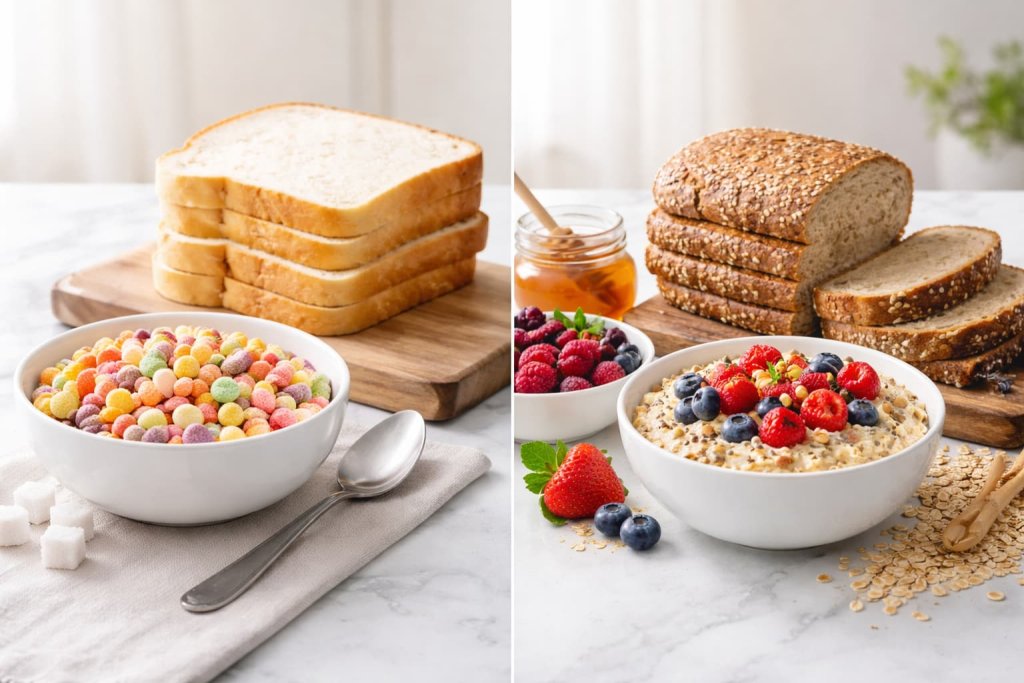
For faster progress, swap refined carbs for high-fiber carbs more often:
- White bread → whole grain bread
- Sugary cereal → oats with fruit
- Chips/cookies → fruit + yogurt or nuts
- Sweet drinks → water or unsweetened tea
This supports better satiety and helps many people naturally reduce calories.
Healthy fats: small amounts, big impact
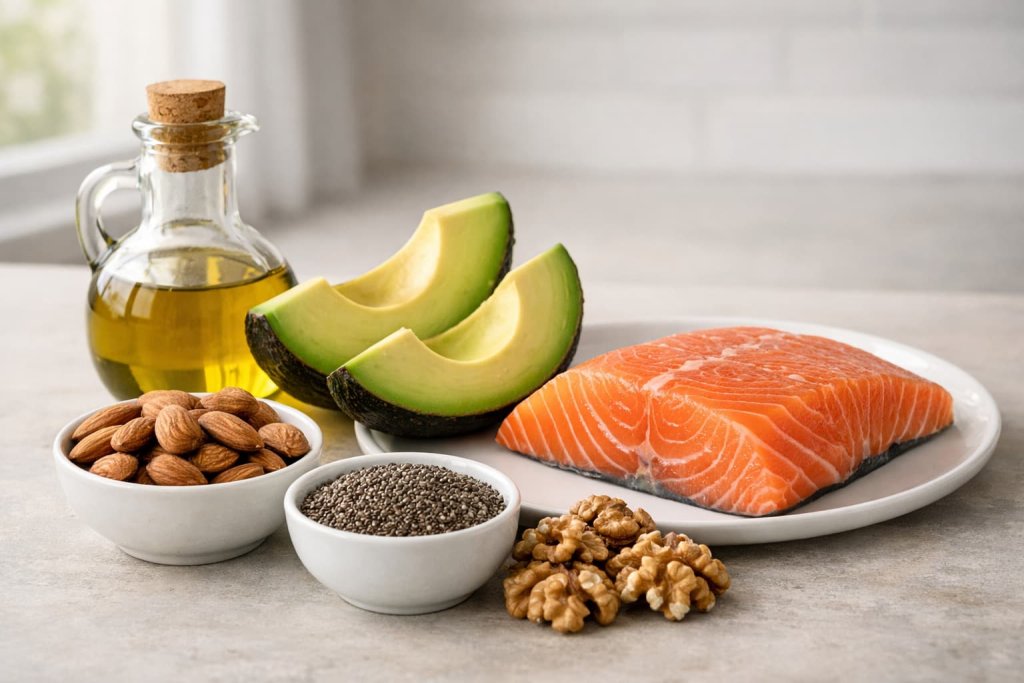
Fats support fullness and meal satisfaction—just keep portions realistic:
A “no-fat” approach often backfires because meals feel unsatisfying.
Hydration and “hidden calories” checklist
A lot of “rapid” progress comes from removing easy, liquid calories.
Check these daily:
- Sugary coffee drinks
- Soda/energy drinks
- Juice
- Oversized sauces/dressings
- Frequent snacking while distracted
How to set a calorie deficit without extreme restriction
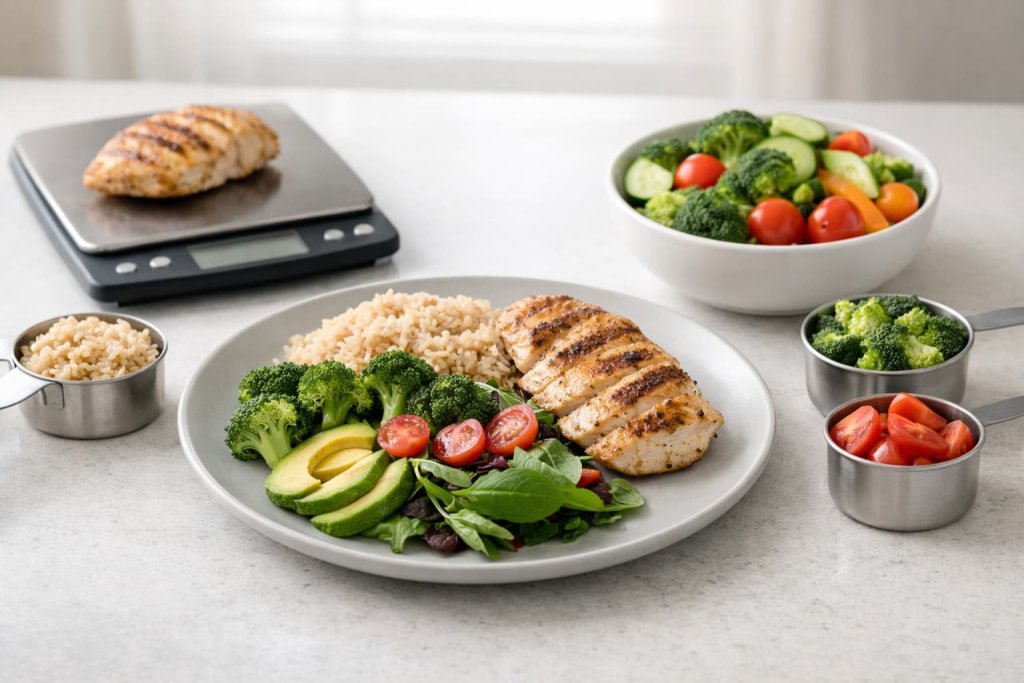
You don’t need to crash diet to see faster results. A practical approach is to start with a moderate deficit and adjust based on your weekly trend:
- Start by reducing intake modestly (often the equivalent of about 500 calories/day for many adults), then reassess after 2 weeks.
- If your energy, mood, or performance drops sharply, the deficit may be too aggressive.
- If weight is not changing after 2–3 weeks and you’re consistent, tighten portions slightly (especially added fats, sweets, and drinks) or add a bit more daily walking.
If you prefer not to track calories, use the plate method consistently and keep portions steady for 2 weeks before making any changes.
A 7-day rapid weight loss plan framework (nutrition-focused)
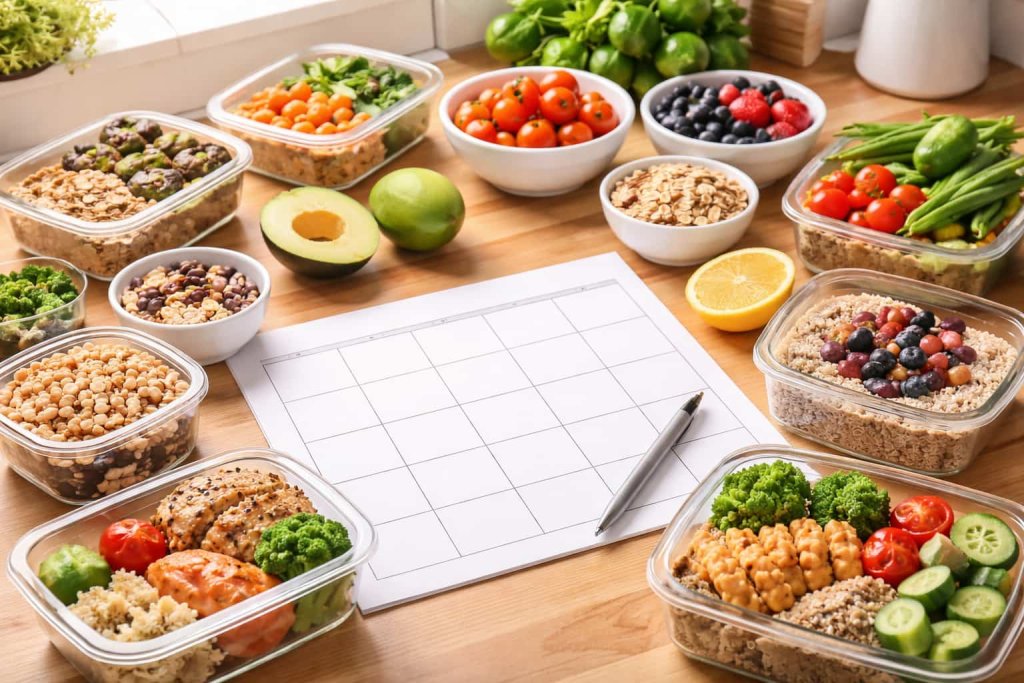
This is a repeatable weekly structure (not a crash diet). The goal is to make your meals predictable, filling, and nutrient-dense so you naturally stay in a calorie deficit without extreme restriction. For most people, the “rapid” part comes from reducing liquid calories, upgrading carbs, and building meals around protein + fiber—all of which may help appetite control and consistency.
Use this framework for 7 days, then repeat it with small swaps (different proteins, vegetables, and seasonings) so it stays easy.
Daily rhythm
Keep the same structure every day. The foods can change, but the pattern stays consistent.
Breakfast: protein + fiber
Choose 1 protein + 1–2 fiber foods. This combination often supports better fullness and steadier energy.
Protein options (pick 1):
- Greek yogurt (plain) or cottage cheese
- Eggs (boiled, scrambled, veggie omelet)
- Tofu scramble
- Protein smoothie (milk/soy milk + yogurt or protein powder)
Fiber options (pick 1–2):
- Berries, apple, orange, banana
- Oats, chia, flax
- Whole-grain toast
- Spinach, tomatoes, peppers (easy to add to eggs/tofu)
Portion guide (simple, not strict):
- Protein: a clear serving you can see (e.g., a bowl of yogurt or 2–3 eggs)
- Fiber: at least one fruit and/or oats/chia most days
Fast breakfast combos:
- Greek yogurt + berries + chia
- Eggs + spinach + whole-grain toast
- Oatmeal + chia + fruit + a side of yogurt
- Smoothie: milk/soy milk + Greek yogurt + frozen berries + spinach
Lunch: plate method
Use the plate method to keep lunch balanced and predictable:
- Half plate: non-starchy vegetables
- Quarter plate: protein
- Quarter plate: high-fiber carbs
- Add fat: small portion (olive oil, nuts, avocado)
Easy lunch templates (mix and match):
- Bowl: grain + protein + lots of vegetables + salsa/lemon + small fat
- Big salad: greens + protein + beans or whole grains + olive oil/vinegar
- Wrap: whole-grain wrap + protein + crunchy veggies + yogurt-based sauce
- Soup + side: lentil/bean soup + side salad
Lunch “fast wins” that often reduce calories automatically:
- Start with vegetables (salad or roasted veg)
- Keep sauces measured (dressings and oils add up)
- Choose whole grains/beans over refined carbs most days
Dinner: plate method
Dinner is the same structure as lunch—this is what makes the plan repeatable.
Dinner templates:
- Sheet-pan meal: protein + mixed vegetables + potatoes (or a smaller portion of grains)
- Stir-fry: protein + lots of vegetables + a small serving of rice + light sauce
- Taco bowl: protein + beans + vegetables + salsa + a small fat
- Protein + veg + carb: fish/chicken/tofu + roasted veg + quinoa/potato
Dinner tips that support “rapid” progress without crash dieting:
- Keep dinner portions consistent (don’t “save up” calories all day)
- Add vegetables first, then carbs
- Keep late-night snacking optional, not automatic
Snack (optional): protein or fruit + protein
Snacks are optional. Use one if it helps you stay consistent and avoid overeating later.
Best snack formula:
- Protein alone OR fruit + protein
Protein snack options:
- Greek yogurt or cottage cheese
- Roasted chickpeas
- A handful of nuts (small portion)
- Hard-boiled eggs
Fruit + protein pairs:
- Apple + peanut butter
- Banana + yogurt
- Berries + cottage cheese
- Orange + nuts
Snack rule: If you snack, keep it planned and simple—don’t snack while distracted.
Example day
Breakfast: Greek yogurt + berries + oats/chia
Why it works: protein supports fullness; berries/oats/chia add fiber for longer-lasting energy.
How to build it:
- Bowl of plain Greek yogurt
- Add berries (fresh or frozen)
- Add oats and/or chia
- Optional: cinnamon or a small handful of nuts
Easy swaps:
- Cottage cheese instead of yogurt
- Apple slices instead of berries
- Ground flax instead of chia
- Oats on the side if you prefer a lighter bowl
Lunch: rice/beans bowl + lots of veggies + salsa + a small fat (olive oil/avocado)
Why it works: beans + veggies add fiber; the bowl format makes portions easier to control.
How to build it:
- Base: brown rice or quinoa (or smaller portion if you’re less active)
- Protein + fiber: beans or lentils
- Volume: add lots of vegetables (fresh, roasted, or frozen)
- Flavor: salsa, lime, spices
- Fat: small portion of olive oil or avocado
Easy swaps:
- Use chicken, tuna, tofu, or eggs instead of beans some days
- Swap rice for cauliflower rice or extra veggies if you want lighter lunches
- Use Greek yogurt as a creamy topping instead of heavy sauces
Dinner: chicken/tofu + roasted vegetables + baked potato or quinoa
Why it works: protein + vegetables are filling; one high-fiber carb supports energy without feeling deprived.
How to build it:
- Protein: chicken, fish, tofu, or beans
- Vegetables: roast a big tray (broccoli, carrots, peppers, onions)
- Carb: baked potato/sweet potato or quinoa
- Optional fat: small drizzle of olive oil or a sprinkle of seeds
Easy swaps:
- Stir-fry instead of roasting
- Soup or chili night (beans + lean protein + vegetables)
- Salad + protein + small carb side when you want lighter dinners
Snack: apple + peanut butter, or cottage cheese + fruit
Why it works: fruit gives volume and fiber; protein/fat helps it stick.
Smart alternatives:
- Greek yogurt + berries
- Eggs + fruit
- Roasted chickpeas + orange
- Nuts + apple (small portion)
Full 7-day sample menu (rapid weight loss plan, nutrition-focused)
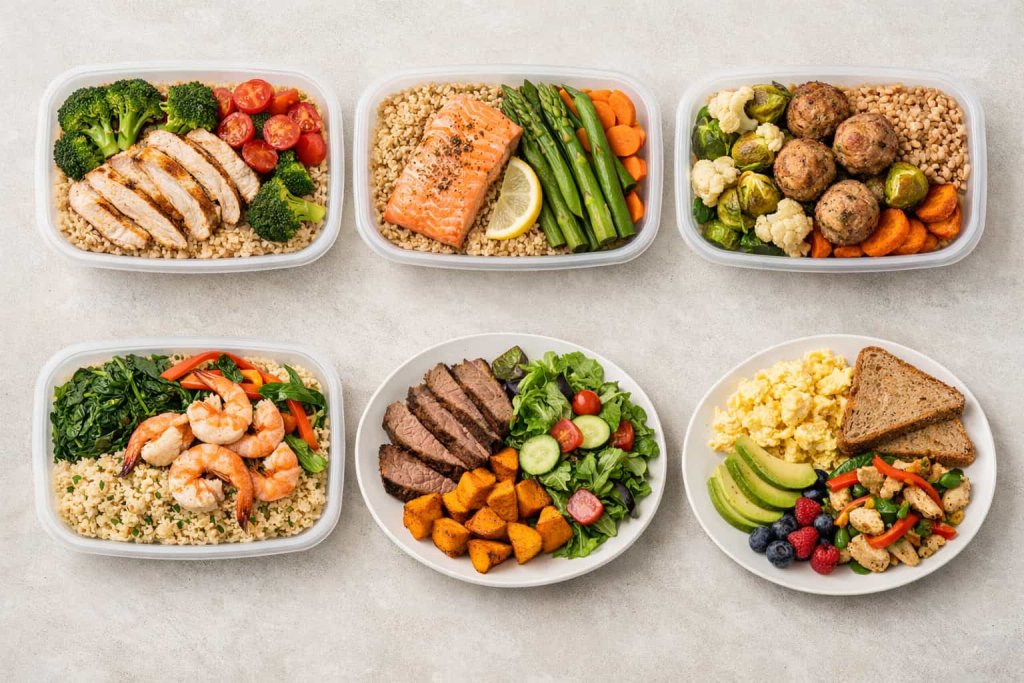
Use this as a plug-and-play week. It follows the same daily rhythm: Breakfast (protein + fiber), Lunch (plate method), Dinner (plate method), Snack (optional: protein or fruit + protein). Swap similar items as needed.
Day 1
Breakfast: Greek yogurt + berries + chia + a spoon of oats
Lunch: Brown rice + black beans bowl + mixed veggies + salsa + small avocado portion
Dinner: Baked chicken (or tofu) + roasted broccoli and peppers + baked sweet potato
Snack (optional): Apple + peanut butter
Day 2
Breakfast: 2–3 eggs (or tofu scramble) + spinach + whole-grain toast
Lunch: Big salad (greens + cucumber + tomatoes + carrots) + tuna/chicken/tofu + chickpeas + olive oil + vinegar
Dinner: Stir-fry (tofu/chicken) + mixed vegetables + small serving of quinoa
Snack (optional): Cottage cheese + pineapple or berries
Day 3
Breakfast: Oatmeal cooked with milk/soy milk + chia + sliced banana + cinnamon (add yogurt on the side if you want more protein)
Lunch: Lentil soup + side salad + a small piece of whole-grain bread
Dinner: Salmon (or beans/tofu) + roasted green beans + small serving of brown rice
Snack (optional): Greek yogurt + berries
Day 4
Breakfast: Smoothie (milk/soy milk + Greek yogurt + frozen berries + spinach + chia)
Lunch: Whole-grain wrap with chicken/turkey/tofu + lettuce + tomatoes + peppers + yogurt-based sauce; side fruit
Dinner: Turkey/bean chili with extra vegetables + side salad
Snack (optional): Orange + a small handful of nuts
Day 5
Breakfast: Cottage cheese + mixed berries + ground flax (or chia)
Lunch: Quinoa bowl + lentils/beans + roasted vegetables + salsa + small olive oil drizzle
Dinner: Sheet-pan meal: chicken/tofu + zucchini + onions + carrots + potatoes
Snack (optional): Banana + peanut butter
Day 6
Breakfast: Veggie omelet (or tofu scramble) + fruit on the side
Lunch: “Leftover dinner” plate method bowl: protein + lots of vegetables + small carb portion
Dinner: Shrimp/chicken/tofu fajita bowl: peppers/onions + beans + salsa + small avocado portion
Snack (optional): Roasted chickpeas or edamame + fruit
Day 7
Breakfast: Greek yogurt + apple slices + oats + cinnamon + chia
Lunch: Bean and vegetable soup + side salad + whole-grain crackers (small serving)
Dinner: Baked fish/chicken/tofu + roasted mixed vegetables + quinoa or baked potato
Snack (optional): Cottage cheese + fruit
Simple notes to make this work all week
- Repeat meals on purpose: repetition reduces decision fatigue and supports consistency.
- Keep portions steady and focus on protein + vegetables first, then carbs, then fats.
- If hunger is high, add more non-starchy vegetables before cutting calories further.
Grocery list for a rapid weight loss plan week
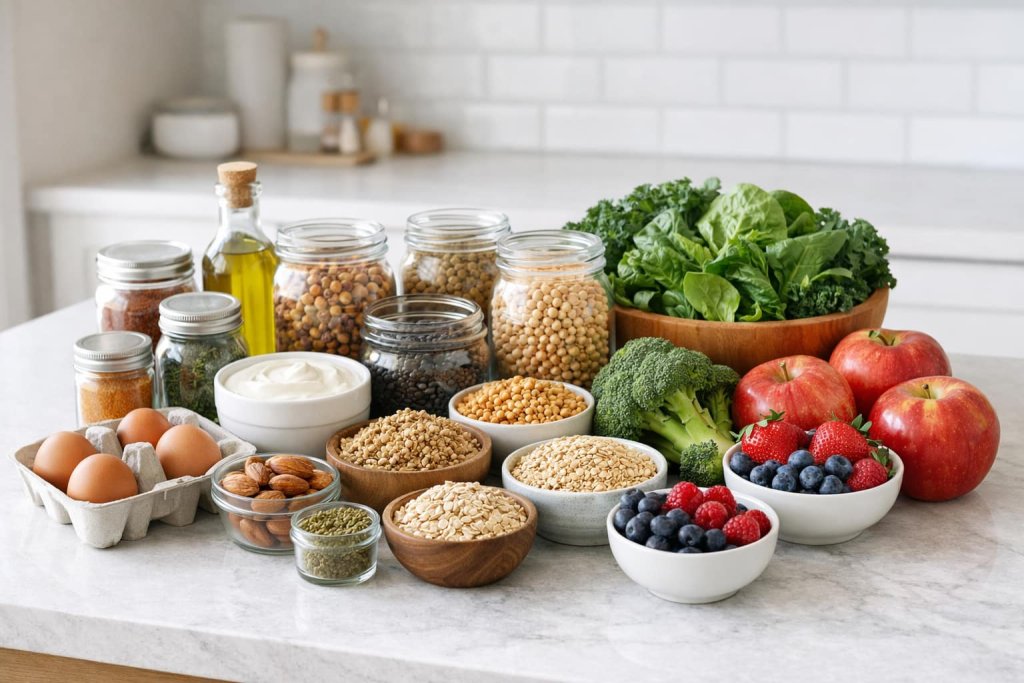
Use this list to build repeatable meals without overthinking:
- Proteins: eggs, Greek yogurt or cottage cheese, chicken/turkey, fish (canned or fresh), tofu/tempeh, beans/lentils
- High-fiber carbs: oats, brown rice or quinoa, whole-grain bread, potatoes/sweet potatoes
- Vegetables: salad greens, broccoli, carrots, peppers, onions, frozen mixed vegetables
- Fruits: berries (fresh or frozen), apples, oranges, bananas
- Healthy fats: olive oil, avocado, nuts/seeds, natural nut butter
- Flavor boosters: salsa, herbs/spices, lemon/lime, vinegar, low-sugar sauces
Choose 2 proteins + 2 carbs + 4 vegetables and repeat meals to stay consistent.
Rapid weight loss plan table: what to do each day
| Daily action | Why it matters | Easy example |
|---|---|---|
| Build meals around protein | May help fullness and consistency | Add eggs, yogurt, tofu, beans |
| Add 2–3 high-fiber foods daily | Supports satiety and digestion | Veg + fruit + beans or oats |
| Limit ultra-processed snacks | Helps reduce “accidental” calories | Swap to fruit + nuts/yogurt |
| Keep drinks mostly calorie-free | Liquid calories add up fast | Water, unsweetened tea |
| Walk most days | Supports a calorie deficit | 20–45 minutes total/day |
| Strength train 2–3x/week | Supports lean mass and function | Squats, push-ups, rows |
Movement that supports the plan without overdoing it
For overall wellness:
- Walking most days (easy to recover from)
- 2–3 short strength sessions/week (bodyweight or light weights)
You don’t need punishing workouts. Consistency beats intensity for most people.
Simple 20-minute strength template (2–3 times per week)
Do 2–3 rounds at a comfortable pace:
- Squat to chair (8–12 reps)
- Push-ups (wall, incline, or floor) (6–12 reps)
- Row (band or dumbbells) (8–12 reps)
- Hip hinge (Romanian deadlift with light weights or good-mornings) (8–12 reps)
- Plank or dead bug (20–40 seconds)
Keep the effort moderate. Your goal is consistency, not exhaustion.
Common mistakes that slow progress (even on a “rapid” plan)
- Skipping meals, then overeating later
- Under-eating protein, leading to constant snacking
- “Healthy” portions that are still very large (nuts, oils, granola)
- Relying on willpower instead of meal structure
- Expecting daily scale drops (water swings are normal)
How to measure progress without obsessing over the scale
Scale weight can swing day to day due to water, digestion, and salt. Use a weekly trend instead:
- Weigh 3–7 times per week and compare weekly averages (or pick one consistent day/time)
- Track waist measurement every 2–4 weeks
- Notice fitness wins: longer walks, stronger lifts, better energy, improved sleep consistency
- Watch consistency metrics: number of home-cooked meals, sugary drinks avoided, steps per day
If the weekly trend stalls for 2–3 weeks, adjust one lever at a time: portion sizes, liquid calories, or daily walking.
People also ask about rapid weight loss plans
Is a rapid weight loss plan safe?
It can be safer when “rapid” means rapid habit changes, not extreme calorie cutting. The CDC supports steady loss (often 1–2 lb/week) as a realistic, maintainable pace.
What is the fastest safe way to lose weight?
For most people: improve meal structure (protein + fiber), reduce sugary drinks and ultra-processed snacks, and increase daily walking. Avoid very low-calorie dieting unless supervised.
Can I lose 10 pounds in a week?
That type of change is often mostly water and is not a reliable or safe goal for most people. Focus on a steady weekly routine instead.
Do I need to count calories?
Not always. Many people can create a deficit using the plate method, consistent meals, and reducing liquid calories. If counting helps, keep it flexible—not obsessive.
FAQ
1) How much weight loss is realistic in a week?
Many public-health resources emphasize that steady loss—often about 1–2 lb/week—is more likely to last than quick loss.
2) What should I eat for breakfast on a rapid weight loss plan?
A simple combo works best: protein + fiber, like Greek yogurt with berries, eggs with vegetables, or oatmeal with chia and fruit plus a protein.
3) Are carbs bad for rapid weight loss?
No. High-fiber carbs (beans, oats, whole grains, fruit, starchy vegetables) can fit well and support fullness. The upgrade matters more than “cutting carbs.”
4) What snacks support faster progress?
Protein-forward snacks tend to be more filling: yogurt, cottage cheese, roasted chickpeas, nuts (small portion), or fruit paired with protein.
5) Why is rapid weight loss sometimes risky?
Rapid loss from very low-calorie diets can raise gallstone risk in some people, and extreme restriction can be hard to sustain. NIDDK highlights gallstone concerns with rapid loss methods.
6) When should I talk to a clinician before starting?
If you’re under 18, pregnant, managing a health condition, taking medications, or have a history of disordered eating, clinician guidance is strongly recommended.
Conclusion
A rapid weight loss plan that supports nutrition and overall wellness is built on repeatable habits: protein at meals, higher-fiber foods, fewer liquid/ultra-processed calories, and consistent walking plus basic strength work. Skip extreme shortcuts—your goal is progress you can keep.
This content is for informational purposes only and not medical advice.