
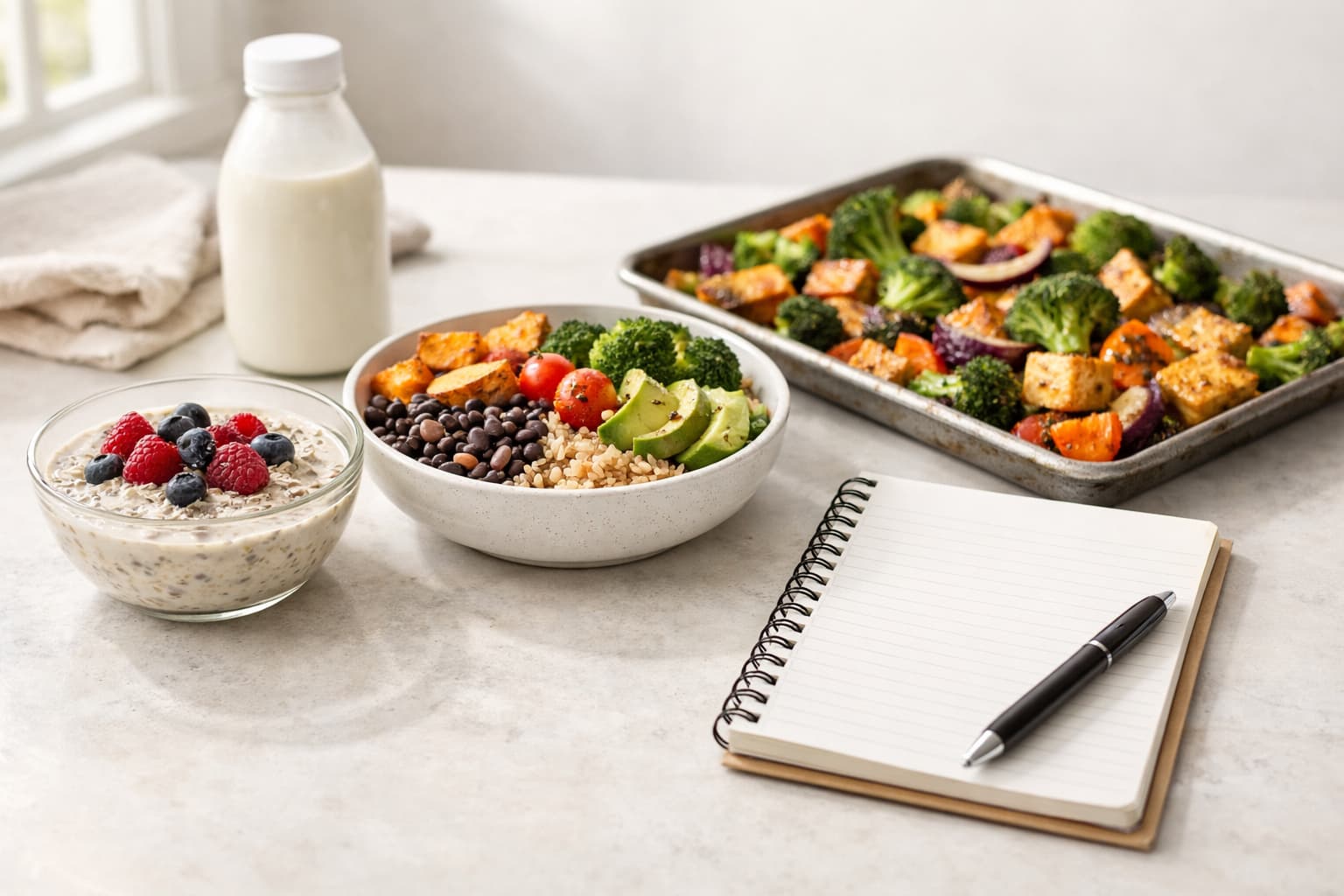
A dairy free diet meal plan is a 7-day menu of balanced meals that avoid milk-based foods (milk, cheese, yogurt, butter, cream) while still covering key nutrients like protein, fiber, calcium, vitamin D, and iodine. Understanding this matters because when you cut dairy, you may need smarter swaps to meet calcium and vitamin D needs (nutrients many people already under-consume), while keeping meals simple and satisfying—especially if you’re avoiding dairy for allergy or intolerance reasons. According to the U.S. Department of Agriculture MyPlate, fortified soy milk and fortified soy yogurt (with added calcium, vitamin A, and vitamin D) are the closest dairy-group alternatives for people who don’t consume dairy.
What “dairy-free” means and what to watch for
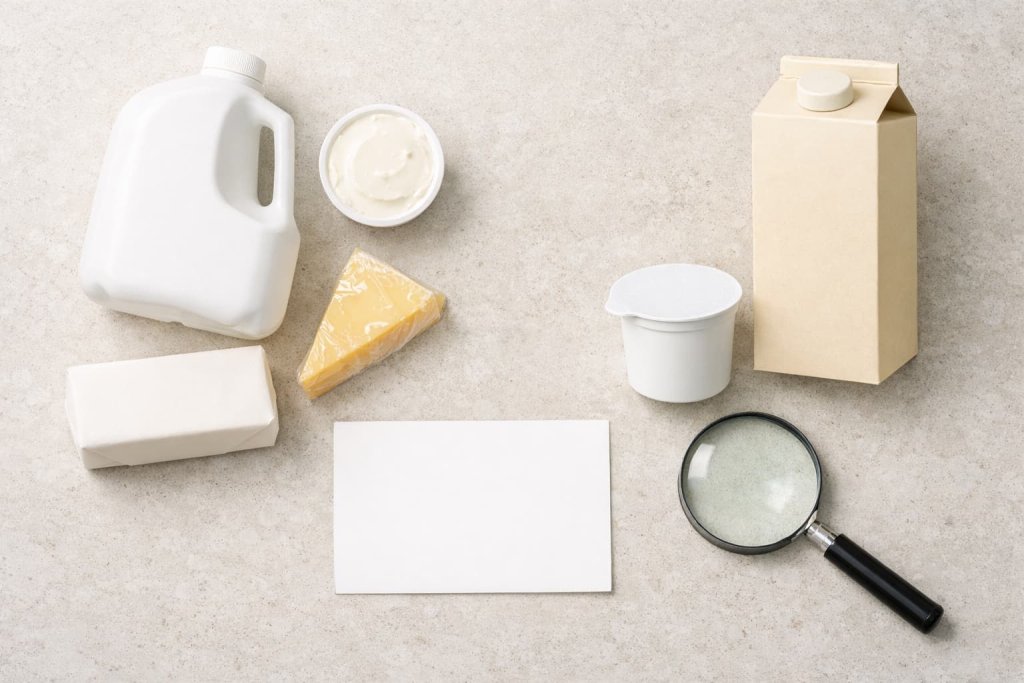
A dairy-free diet removes foods made from animal milk. That includes:
- Milk, cheese, yogurt, butter, ghee, cream, sour cream
- Whey, casein, milk solids, milk powder (common in packaged foods)
This is different from lactose intolerance, which is trouble digesting lactose (milk sugar) and may affect nutrient intake if it limits food choices, per the National Institute of Diabetes and Digestive and Kidney Diseases.
Quick label-reading checklist: common hidden dairy ingredients
When you’re shopping for packaged foods, scan ingredient lists for dairy-derived terms such as whey, casein/caseinates, milk solids, milk powder, buttermilk, cream, curds, ghee, and lactalbumin. If you avoid dairy due to milk allergy, also watch for “may contain milk” or shared-facility statements and choose products with clear allergen labeling.
Nutrients to plan for when you cut dairy
Going dairy-free can be very nutritious, but it helps to plan around common gaps:
- Calcium: Many adults need about 1,000–1,200 mg/day depending on age and sex, per the NIH Office of Dietary Supplements.
- Vitamin D: Vitamin D supports calcium absorption and bone health; needs vary by life stage, and fortified foods can help, per the NIH Office of Dietary Supplements.
- Iodine: If you rely on specialty salts, note that many are not iodized; labels will indicate if salt is iodized, per the NIH Office of Dietary Supplements.
- Protein: Easy to meet without dairy, but you’ll want a clear plan (eggs, poultry, fish, beans, lentils, tofu/tempeh, soy yogurt, nuts/seeds).
Who this dairy free diet meal plan is best for (and who should be careful)
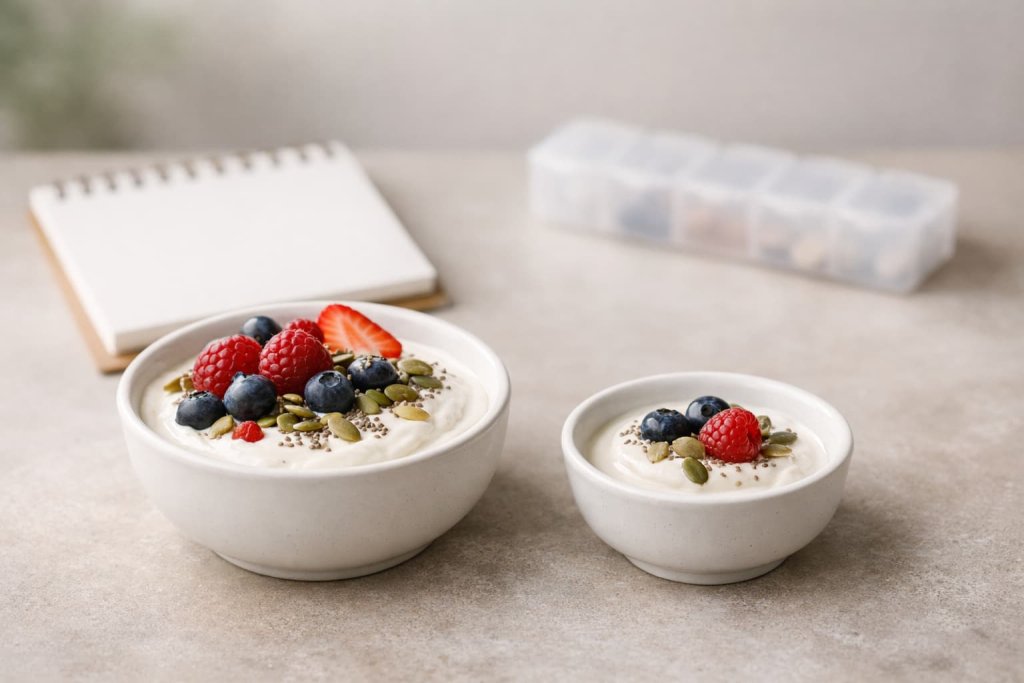
This plan can work well if you:
- Have lactose intolerance and feel better reducing dairy
- Prefer dairy-free eating for personal reasons
- Need structure for balanced meals (protein + fiber + plants)
Be extra careful if you:
- Have milk allergy: milk is a major food allergen, and label reading matters, per the U.S. Food and Drug Administration.
- Are pregnant, older, immunocompromised, or feeding young children and considering unpasteurized dairy: the Centers for Disease Control and Prevention explains pasteurization is crucial for safety and recommends choosing pasteurized products.
The simple “balanced plate” formula (use this all week)
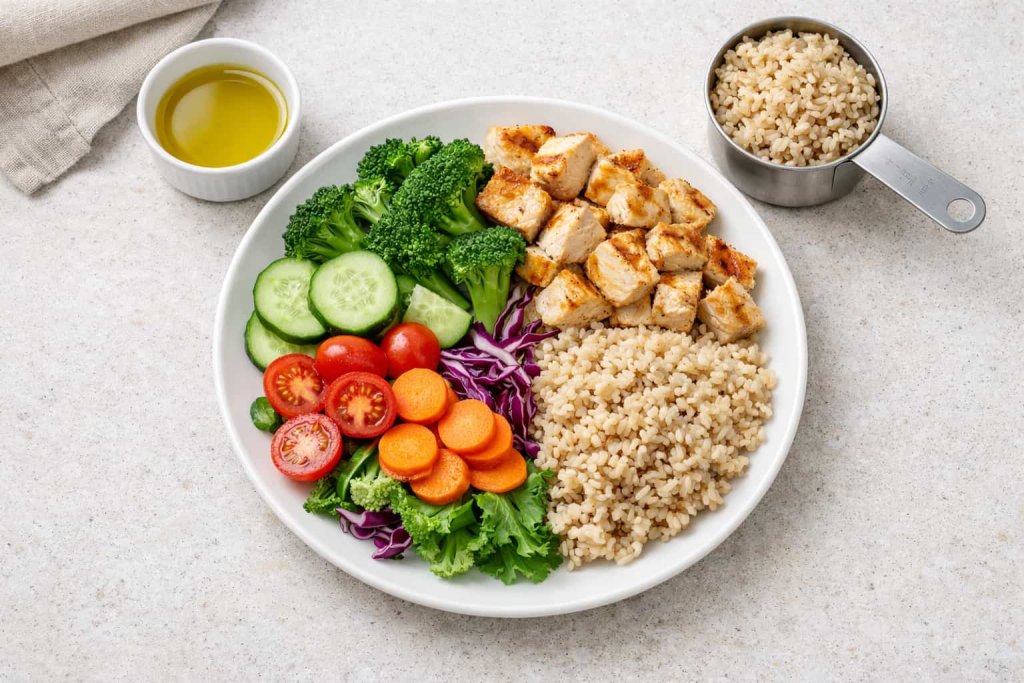
Use this template to keep your dairy-free week easy and consistent:
- Protein: 20–35 g per meal (a palm-sized portion of chicken/fish/tofu, or ¾–1 cup beans/lentils)
- Fiber carb: ½–1 cup cooked whole grains or starchy veg (brown rice, quinoa, oats, potatoes, corn)
- Non-starchy vegetables: 1–2 cups (salad, roasted veg, stir-fry mix)
- Healthy fat: 1–2 tbsp olive oil, avocado, nuts/seeds
- Calcium “touch” 2–3 times/day: fortified soy beverage, fortified soy yogurt, calcium-set tofu, canned salmon/sardines with bones, or calcium-rich greens (mix and match)
Easy portion guide (adjust to your goal)
- Weight loss: keep starches/grains to ½ cup cooked most meals, load up on non-starchy vegetables, and measure oils/nuts (they add up fast).
- Maintenance: ½–1 cup cooked grains/starches per meal is often reasonable, with consistent protein and vegetables.
- Higher energy needs (teens, athletes, very active): increase carbs to 1–1½ cups cooked and add an extra snack; keep protein steady and don’t skip fats.
Dairy-free swaps that actually work
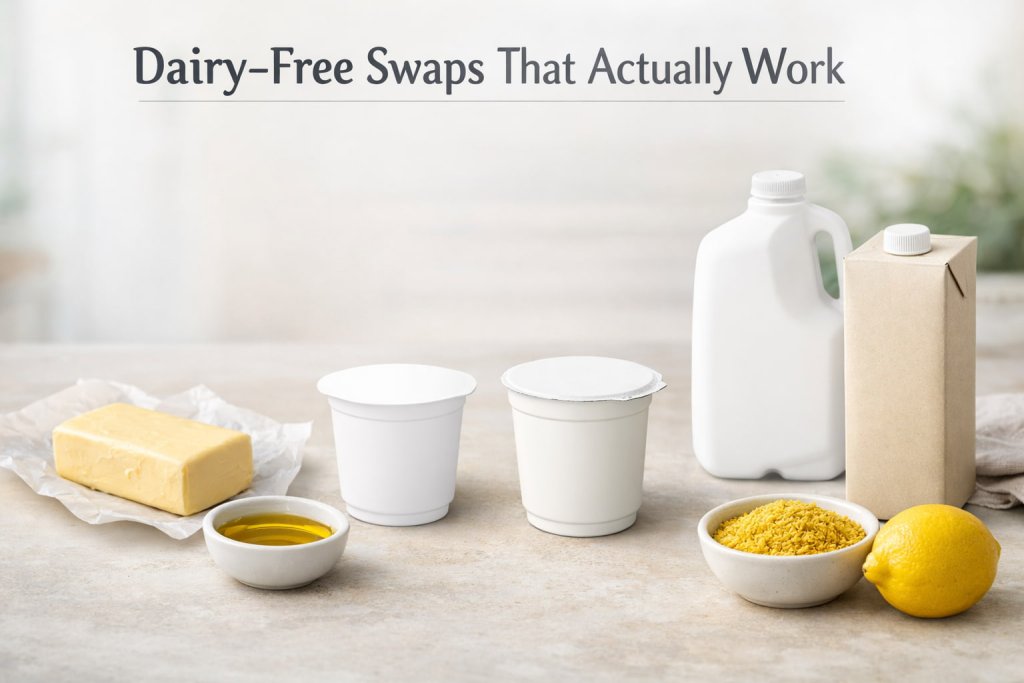
Use these swaps to keep flavor and nutrition strong:
- Milk → unsweetened fortified soy milk (best “dairy-like” nutrition profile) or other fortified plant milks
- Yogurt → unsweetened fortified soy yogurt or coconut yogurt (often lower protein—check labels)
- Butter → olive oil, avocado oil, or dairy-free butter alternative (watch ingredients if allergic)
- Sour cream → blended cashews, dairy-free yogurt, or mashed avocado + lime
- Cheese flavor → nutritional yeast, tahini-lemon sauce, pesto (no cheese), salsa, olives
How to choose the best dairy-free milk or yogurt (fast rules)
Use these label rules to keep your swaps nutritionally solid:
- Choose unsweetened options most days (flavored versions can add a lot of sugar).
- Look for calcium + vitamin D fortification on the Nutrition Facts panel.
- Aim for a higher-protein option if you use it as a snack (soy is often highest).
- Check sodium and added gums only if they bother your digestion—most are safe for most people.
- If you have a milk allergy, avoid products that include milk-based ingredients and use clear allergen statements.
7-day dairy free diet meal plan (breakfast, lunch, dinner, snack)
Portions below fit many adults, but adjust for your hunger, goals, and activity. If you’re aiming for weight loss, keep grains/starches closer to ½ cup cooked per meal and prioritize vegetables and lean protein.
7-day plan table
| Day | Breakfast | Lunch | Dinner | Snack (choose 1) |
|---|---|---|---|---|
| Day 1 | Overnight oats with fortified soy milk, chia, berries, peanut butter | Turkey (or chickpea) salad wrap + veggie sticks | Salmon, roasted sweet potato, broccoli + olive oil | Apple + almonds |
| Day 2 | Veggie scramble (eggs or tofu) + whole-grain toast | Quinoa bowl: black beans, corn, peppers, salsa, avocado | Chicken stir-fry with mixed veg + brown rice | Hummus + carrots/cucumbers |
| Day 3 | Smoothie: fortified soy milk, banana, spinach, peanut butter, flax | Lentil soup + side salad + bread | Tofu/tempeh tacos with cabbage slaw + pico | Dairy-free yogurt (soy) + berries |
| Day 4 | Chia pudding with fortified soy milk + walnuts + fruit | Tuna (or white bean) bowl + whole grains + greens | Beef (or lentil) chili + baked potato | Popcorn + pumpkin seeds |
| Day 5 | Oatmeal + cinnamon + berries + hemp seeds | Leftover chili bowl + salad | Shrimp (or tofu) veggie skillet + quinoa | Orange + mixed nuts |
| Day 6 | Avocado toast + egg (or tofu) + tomato | Chicken (or chickpea) pasta salad (olive oil-based) | Sheet-pan chicken (or tofu), veggies + rice | Trail mix (nuts/seeds + dried fruit) |
| Day 7 | Breakfast burrito: eggs/tofu, beans, salsa, spinach | Big salad: protein + chickpeas + quinoa + olive oil vinaigrette | Turkey (or lentil) meatballs + marinara + pasta or zucchini noodles | Banana + peanut butter |
Simple substitutions (so the plan fits you)
- Egg-free: use tofu scramble, chickpea flour scramble, or add extra beans at breakfast.
- Fish-free: swap salmon/shrimp with chicken, turkey, tofu/tempeh, or beans.
- Soy-free: use another fortified plant milk you tolerate and build protein from beans/lentils, eggs, poultry, fish, nuts/seeds (or a soy-free protein powder).
- Nut-free: use seeds (pumpkin, sunflower, chia, flax) and more olive oil/avocado for healthy fats.
Day-by-day details with quick recipes
Day 1
Breakfast: Overnight oats
- ½ cup oats + ¾–1 cup fortified soy milk + 1 tbsp chia + berries + 1 tbsp peanut butter
Tip: Add a pinch of salt and cinnamon for better flavor.
Lunch: Wrap
- Whole-grain wrap + turkey (or mashed chickpeas) + lettuce + tomato + mustard/hummus
Dinner: Salmon plate
- 4–6 oz salmon, 1 medium sweet potato, 2 cups broccoli
Calcium add-on: add a side of calcium-set tofu cubes in a salad, or include fortified soy milk in a smoothie later.
Day 2
Breakfast: Veggie scramble
- Eggs or crumbled tofu + spinach + peppers + onions
Add: salsa or hot sauce, and 1 slice whole-grain toast.
Lunch: Quinoa bean bowl
- ¾!– /wp:list-item –>
- Chicken breast (or tofu) + frozen stir-fry veg + garlic/ginger + ½–1 cup cooked brown rice
- Fortified soy milk + banana + spinach + peanut butter + flax
Tip: For more protein, add silken tofu or a dairy-free protein powder you tolerate. - Lentils + carrots + celery + tomatoes + spices
Serve with salad and a slice of bread. - Tofu/tempeh (or lean ground turkey) + taco seasoning + tortillas + cabbage slaw
- 3 tbsp chia + 1 cup fortified soy milk, chill overnight
Top with walnuts + fruit. - Tuna (or white beans) + greens + cooked grain + olive oil + lemon
- Beef chili or lentil chili (beans + tomatoes + peppers + spices)
Tip: Make extra—this becomes lunch. - Oats cooked with fortified soy milk, topped with berries + hemp seeds
- Add chopped greens or extra veg to stretch it.
- Shrimp or tofu + zucchini + peppers + onion + olive oil
Serve with quinoa. - Whole-grain toast + avocado + egg (or tofu) + tomato + pepper
- Pasta + chicken (or chickpeas) + cucumber + tomatoes + olives
Dress with olive oil + lemon + herbs. - Chicken thighs (or tofu) + broccoli + carrots + potatoes
Roast on one pan for low effort. - Eggs/tofu + beans + salsa + spinach in a tortilla
- Greens + protein + chickpeas + quinoa + olive oil vinaigrette
- Turkey or lentil meatballs + marinara
Serve with pasta or zucchini noodles.
Dinner: Stir-fry
Day 3
Breakfast: Protein smoothie
Lunch: Lentil soup
Dinner: Tacos
Day 4
Breakfast: Chia pudding
Lunch: Tuna/bean bowl
Dinner: Chili
Day 5
Breakfast: Oatmeal
Lunch: Leftover chili
Dinner: Shrimp/tofu veggie skillet
Day 6
Breakfast: Avocado toast
Lunch: Pasta salad
Dinner: Sheet-pan meal
Day 7
Breakfast: Breakfast burrito
Lunch: Big salad
Dinner: Meatballs + marinara
Grocery list for the week (dairy-free)
Proteins
- Chicken breast/thighs, turkey (or extra beans/lentils)
- Salmon, shrimp (optional), canned tuna (or canned beans)
- Tofu/tempeh
- Eggs (optional)
Carbs and grains
- Oats, quinoa, brown rice, whole-grain bread/wraps, pasta
- Potatoes/sweet potatoes, tortillas
Fruits and vegetables
- Spinach/greens, broccoli, peppers, onions, carrots, cucumbers, tomatoes
- Cabbage/slaw mix, mixed stir-fry veg (frozen is fine)
- Berries, bananas, apples, oranges (choose your favorites)
Fats, flavor, and pantry
- Olive oil, nut butter, nuts/seeds (chia, flax, hemp, pumpkin seeds)
- Beans/lentils (canned or dry), salsa, marinara, spices (garlic, cumin, chili powder)
- Hummus, olives, lemon/lime
Dairy-free essentials
- Unsweetened fortified soy milk
- Unsweetened fortified soy yogurt (optional but helpful)
Batch prep (60 minutes) to make the week effortless
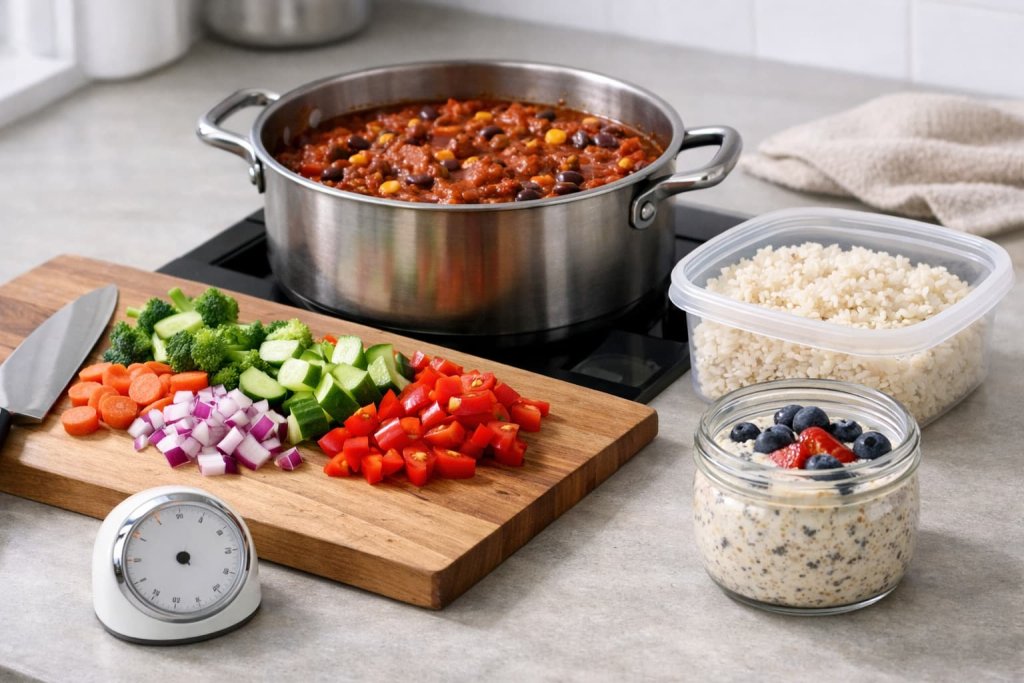
- Cook 1–2 grains (quinoa + rice) for bowls and dinners.
- Make a big pot of lentil soup or chili (2–3 meals).
- Chop a tray of roast vegetables.
- Mix overnight oats for 2–3 days.
- Wash greens and prep snack boxes (nuts, fruit, cut veggies).
Eating out on a dairy-free meal plan (quick wins)
Staying dairy-free is usually easiest when you choose meals that are naturally dairy-free and request simple swaps:
- Choose grilled proteins, rice/potatoes, and vegetables; ask for oil + lemon instead of creamy sauces.
- Request no cheese/no butter and ask if breads, marinades, or soups contain milk ingredients.
- Watch common “sneaky dairy” items: creamy dressings, mashed potatoes (often butter/cream), pesto (often cheese), and many desserts.
- If you’re dairy-free for allergy reasons, tell the restaurant it’s an allergy and ask about cross-contact procedures.
Safety box: dairy-free eating without nutrition gaps
- If you’re dairy-free due to milk allergy, always check labels for milk ingredients and allergen statements.
- Choose unsweetened fortified plant milks/yogurts when possible (look for added calcium and vitamin D).
- If you use specialty salts, confirm whether they’re iodized; many are not iodized.
Practical iodine tip: If you don’t regularly eat seafood or eggs, consider using iodized salt at home (within your sodium goals). If you’re unsure about your iodine intake—especially during pregnancy—ask a clinician before using iodine supplements. - If you’re considering supplements (calcium/vitamin D/iodine), it’s smart to discuss dosing with a clinician—needs vary, and excessive vitamin D can be harmful, per NIH ODS.
People Also Ask about a dairy free diet meal plan
Can I get enough calcium on a dairy-free diet?
Yes—many people meet needs with a plan that includes fortified beverages, calcium-set tofu, canned fish with bones, and calcium-rich greens. The key is consistency across the week.
Is lactose-free milk the same as dairy-free?
No. Lactose-free milk is still dairy; it just has lactose broken down. Dairy-free removes milk proteins (important for milk allergy).
Which plant milk is best for a dairy-free meal plan?
Fortified soy milk is often the closest match nutritionally to dairy milk (especially for protein), but the “best” choice depends on your preferences, allergies, and label details.
How do I stay full without cheese and yogurt?
Build meals around protein + fiber + healthy fats: beans/lentils, tofu, eggs/fish/chicken, whole grains, nuts/seeds, and lots of vegetables.
What’s the easiest dairy-free snack pattern?
Pick one: fruit + nuts, hummus + veggies, soy yogurt + berries, popcorn + seeds, or a small leftover portion of a balanced meal.
FAQ
1) Is this dairy free diet meal plan also gluten-free?
Not automatically, but it’s easy to adapt: use gluten-free oats, gluten-free wraps/pasta, and swap grains as needed.
2) Can I follow this plan if I’m vegan?
Yes. Use tofu/tempeh, beans/lentils, and skip eggs/fish/meat. Prioritize fortified soy milk/yogurt and consider B12 planning.
3) What if I don’t like soy?
Use another fortified plant milk you tolerate, and get protein from beans, lentils, eggs, fish, poultry, and nuts/seeds. For yogurt-like snacks, consider coconut yogurt plus added protein elsewhere.
4) How can I make this plan lower calorie?
Keep grains/starches to ½ cup cooked per meal, double non-starchy vegetables, choose lean proteins, and measure oils/nuts.
5) How can I make this plan higher protein?
Increase protein portions slightly, add tofu to smoothies, choose higher-protein snacks (soy yogurt, tuna packets, roasted edamame), and add beans to bowls and salads.
6) What’s the fastest way to meal prep this plan?
Cook one big pot (chili or lentil soup), one grain, and one sheet pan of veggies. Then rotate proteins and sauces.
Weekly checklist (use this to stay on track)
- Pick 2 breakfasts, 2 lunches, and 3 dinners from the plan and repeat them.
- Prep one pot meal (chili or lentil soup) and one grain (rice or quinoa).
- Keep 2–3 calcium-rich choices daily (fortified soy beverage/yogurt, calcium-set tofu, canned fish with bones, or calcium-rich greens).
- Include a protein at every meal and a fiber-rich food at most meals (beans, lentils, oats, whole grains, veggies, fruit).
- Choose unsweetened fortified dairy-free alternatives most days.
Conclusion
A dairy free diet meal plan can be simple, filling, and nutrient-dense when you rely on a repeatable formula and smart swaps—especially fortified options plus whole foods like beans, tofu, fish, greens, and whole grains. Start with the 7-day schedule above, batch prep just a few basics, and adjust portions to your goals.
This content is for informational purposes only and not medical advice.