
A slim thick body usually means a stronger, curvier lower body with a defined waistline, but the healthiest way to work toward this look is through strength training, balanced nutrition, recovery, and realistic expectations. Your exact shape is influenced by genetics, bone structure, hormones, age, muscle mass, and body-fat distribution.
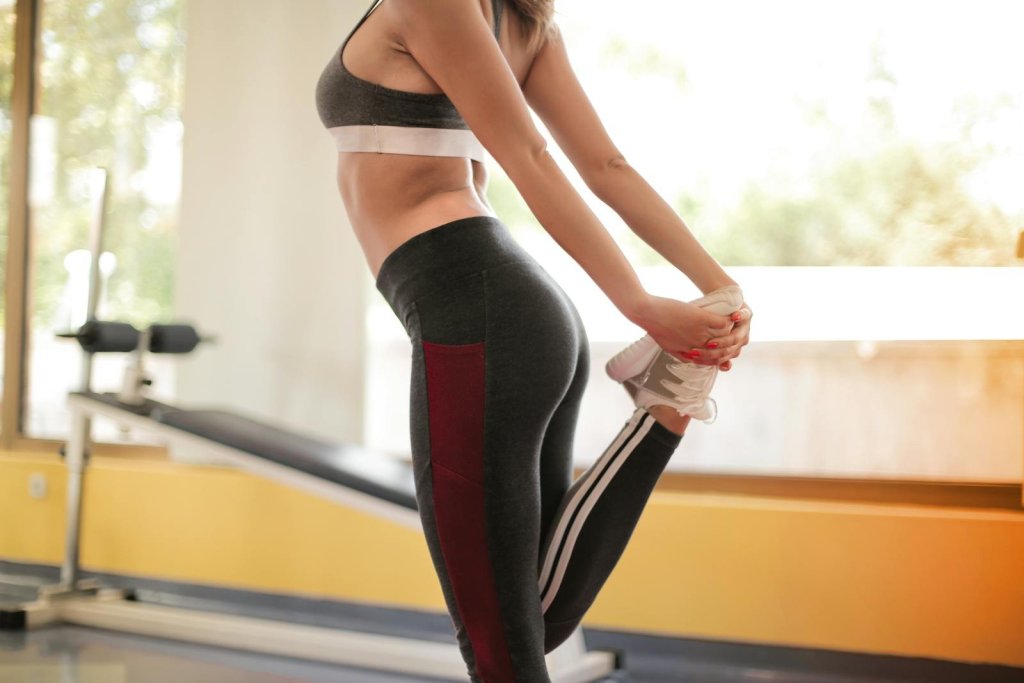
The goal should not be to chase one social-media body type. A better goal is to build stronger glutes, legs, core, and upper body while eating in a way that supports training, energy, and long-term health. Research published on PubMed has linked stronger aspiration toward the “slim-thick ideal” with higher body-image concerns and dietary restraint in some people, so it is important to keep the focus on strength, confidence, and healthy habits rather than comparison.
What Is a Slim Thick Body?
A slim thick body is commonly described as a body shape with fuller glutes, hips, and thighs, paired with a more defined waist and upper body. It is a popular phrase on social media, but it is not a medical term or a fitness diagnosis.
In real life, no two bodies build muscle or store fat in exactly the same way. Some people naturally gain muscle in their glutes and thighs more easily. Others may build strength well but not develop the same hourglass shape.
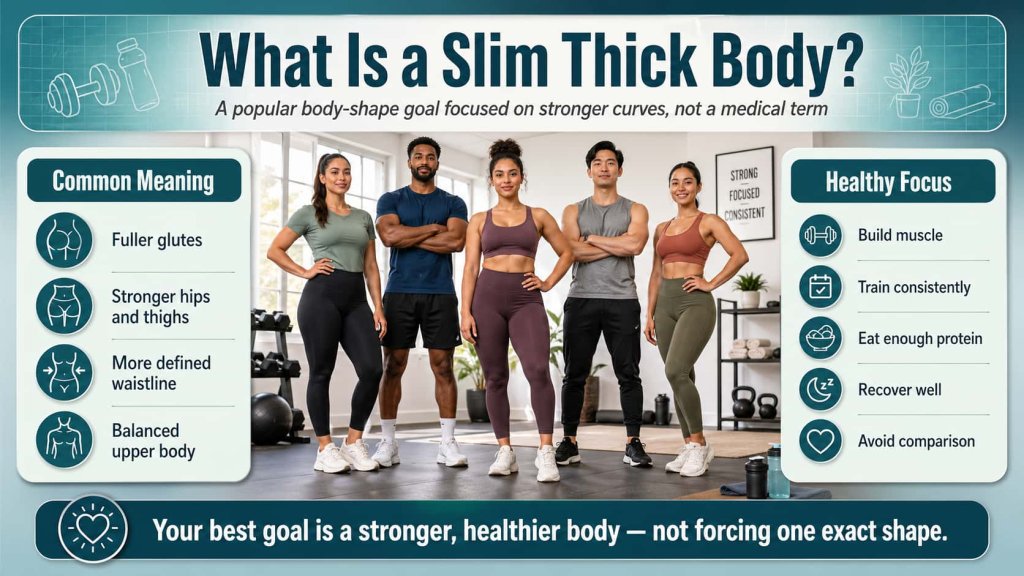
That does not mean training is pointless. It means your plan should focus on what you can control:
- Building glute and leg muscle
- Strengthening your core and posture
- Eating enough protein and nutrient-dense foods
- Managing recovery and sleep
- Avoiding extreme diets or excessive cardio
- Measuring progress by strength, energy, and consistency
Can You Build a Slim Thick Body Naturally?
Yes, you can build stronger curves naturally by gaining muscle, especially in the glutes and legs. However, you cannot fully control where your body loses fat, stores fat, or changes shape.
A good slim thick body plan usually combines:
- Progressive strength training
- Glute-focused lower-body workouts
- Enough calories and protein to support muscle growth
- Moderate cardio for health and conditioning
- Core training for strength, not spot fat loss
- Patience over months, not days
The CDC physical activity guidelines recommend at least 150 minutes of moderate-intensity activity per week and muscle-strengthening activity on at least 2 days per week for adults. This gives a strong health-based foundation for any body-composition goal.
What You Can and Cannot Control
You can control your training consistency, exercise form, protein intake, sleep, recovery, and daily habits. These are the areas that help you build strength and muscle over time.
You cannot fully control your hip width, waist shape, bone structure, genetics, hormone patterns, or where your body naturally stores fat. Two people can follow the same workout and diet plan and still look different.
A healthy goal is to build a stronger, more confident body — not to force your body into one exact shape.
Slim Thick Body Workout Goals
The best workout plan for a slim thick body should not only train your glutes. It should build your whole body while giving extra attention to the lower body.
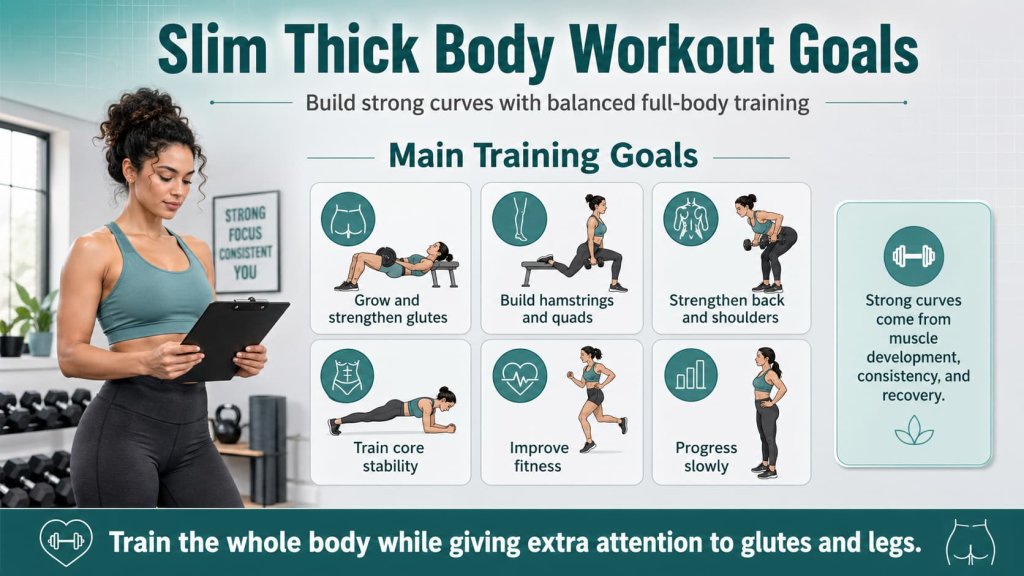
Your main workout goals are:
- Grow and strengthen the glutes
- Build the hamstrings and quads for balanced legs
- Strengthen the back and shoulders for posture
- Train the core for stability
- Improve overall fitness without overdoing cardio
- Progress slowly so your joints, muscles, and tendons adapt
A balanced approach matters because strong curves come from muscle development, not just one exercise or one body part.
Best Exercises for a Slim Thick Body
The best exercises are movements that train the glutes, hips, thighs, and core through a full range of motion. You do not need every exercise in one workout. Pick a few, practice good form, and progress over time.
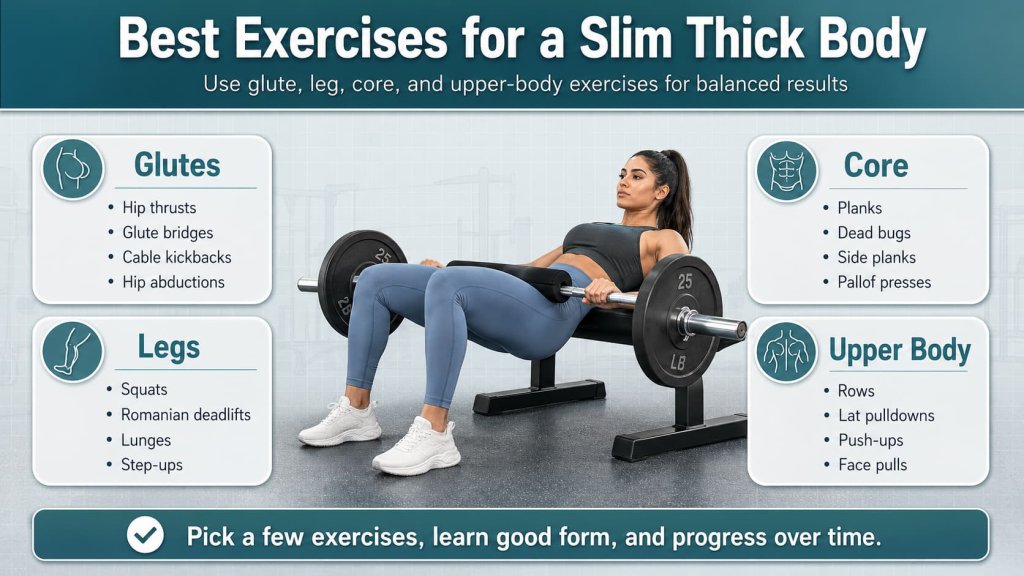
Glute-Building Exercises
These exercises should be the foundation of your lower-body training:
- Hip thrusts
- Glute bridges
- Romanian deadlifts
- Squats
- Bulgarian split squats
- Walking lunges
- Step-ups
- Cable kickbacks
- Hip abductions
- Banded lateral walks
The glutes include the gluteus maximus, gluteus medius, and gluteus minimus. Cleveland Clinic explains that these muscles help support the body, stabilize the pelvis and hips, and power movements like walking, running, climbing, and standing.
Leg Exercises for Strong Curves
Your glutes work best when your legs are strong too. Include exercises that train your quads, hamstrings, and inner thighs.
Good options include:
- Goblet squats
- Leg press
- Reverse lunges
- Hamstring curls
- Deadlifts
- Sumo squats
- Split squats
- Front-foot elevated lunges
Training the full lower body helps create better balance and reduces the risk of overloading one area.
Core Exercises for a Strong Waistline
Core training can help improve posture, stability, and control during lifts. But core exercises do not directly burn fat from your waist.
Good core exercises include:
- Dead bugs
- Planks
- Side planks
- Pallof presses
- Bird dogs
- Farmer carries
- Cable chops
A PubMed-indexed study on abdominal exercise and abdominal fat found that six weeks of abdominal exercise alone was not enough to reduce abdominal subcutaneous fat or overall body-composition measures. This means crunches and ab workouts can strengthen your core, but they should not be treated as a shortcut for waist fat loss.
Upper-Body Exercises for Balance
A slim thick workout plan should still train the upper body. This helps posture, shoulder strength, and overall muscle balance.
Include exercises such as:
- Rows
- Lat pulldowns
- Push-ups
- Dumbbell presses
- Face pulls
- Lateral raises
- Rear delt flyes
Upper-body training will not “ruin” curves. It usually makes the body look more balanced and helps you lift better during lower-body exercises.
Before You Start the Slim Thick Body Workout Plan
Good form matters more than heavy weight. Before adding more resistance, make sure you can control each movement through the full range of motion.
Use these simple rules:
- Warm up for 5 to 10 minutes before lifting.
- Keep your ribs stacked over your hips during most exercises.
- Brace your core before each rep.
- Move slowly enough to feel the target muscles working.
- Keep knees tracking in the same direction as your toes during squats, lunges, and step-ups.
- Stop the set if your form breaks down.
- Choose a weight that feels challenging but controlled.
If you are new to lifting, start with bodyweight, resistance bands, dumbbells, or machines before moving to heavier barbell exercises.
Sample Slim Thick Body Workout Plan
This plan uses 3 lower-body focused days and 2 upper-body or conditioning days. Beginners can start with 3 total workout days per week instead.
Weekly Schedule
| Day | Workout Focus |
|---|---|
| Monday | Glutes and hamstrings |
| Tuesday | Upper body and core |
| Wednesday | Rest or light walking |
| Thursday | Glutes and quads |
| Friday | Rest or mobility |
| Saturday | Full body with glute focus |
| Sunday | Rest |
Day 1: Glutes and Hamstrings
- Hip thrusts: 3 sets of 8–12 reps
- Romanian deadlifts: 3 sets of 8–10 reps
- Glute bridges: 2–3 sets of 10–15 reps
- Hamstring curls: 2–3 sets of 10–15 reps
- Banded lateral walks: 2 sets of 12–20 steps each side
- Plank: 2–3 sets of 20–45 seconds
Day 2: Upper Body and Core
- Lat pulldowns: 3 sets of 8–12 reps
- Dumbbell rows: 3 sets of 8–12 reps each side
- Push-ups or chest press: 2–3 sets of 8–12 reps
- Lateral raises: 2 sets of 12–15 reps
- Dead bugs: 2–3 sets of 8–12 reps each side
- Farmer carries: 2–3 short carries
Day 3: Glutes and Quads
- Squats: 3 sets of 8–12 reps
- Bulgarian split squats: 2–3 sets of 8–10 reps each side
- Step-ups: 2–3 sets of 10 reps each side
- Hip abductions: 2–3 sets of 12–20 reps
- Cable kickbacks: 2–3 sets of 10–15 reps each side
- Side plank: 2 sets each side
Day 4: Full Body With Glute Focus
- Deadlifts or trap-bar deadlifts: 3 sets of 5–8 reps
- Walking lunges: 2–3 sets of 10–12 reps each side
- Hip thrusts: 2–3 sets of 10–12 reps
- Seated rows: 3 sets of 8–12 reps
- Dumbbell shoulder press: 2–3 sets of 8–12 reps
- Pallof press: 2–3 sets of 10–12 reps each side
How Many Sets and Reps Should You Do?
For most beginners and intermediate lifters, a simple starting range works well:
| Goal | Sets | Reps |
|---|---|---|
| Learn form | 1–2 sets | 10–15 reps |
| Build muscle | 3–4 sets | 8–15 reps |
| Build strength | 3–5 sets | 4–8 reps |
| Glute activation | 1–2 sets | 12–20 reps |
Start with lighter weight and controlled form. When an exercise becomes too easy, progress slowly by adding a few reps, one extra set, or a small amount of weight.
Mayo Clinic notes that using resistance that tires the muscles around 12 to 15 repetitions can be effective, and that muscles need recovery time between sessions.
How Often Should You Train Glutes?
Most people can train glutes 2 to 3 days per week. The key is recovery.
If your glutes are still very sore, your performance is dropping, or your form feels worse, you may need more rest. Training harder is not always better.
A simple guide:
- Beginners: 2 glute-focused days per week
- Intermediate lifters: 2 to 3 glute-focused days per week
- Advanced lifters: 3 days per week with smart volume control
Mayo Clinic advises avoiding training the same muscles two days in a row, which is a helpful rule for glute and lower-body workouts.
Progressive Overload for Strong Curves
Progressive overload means gradually making your workouts more challenging over time. This is one of the most important parts of building muscle.
You can progress by:
- Adding weight
- Adding reps
- Adding sets
- Slowing down the lowering phase
- Improving range of motion
- Improving form and control
- Reducing unnecessary momentum
You do not need to increase weight every workout. Small progress over several weeks is enough.
Recovery Matters for Glute Growth
Muscle does not grow only during the workout. It adapts when you recover from training with enough food, sleep, and rest.
To recover better:
- Leave at least one rest day between hard glute sessions.
- Sleep enough to support energy and performance.
- Eat regular meals with protein and carbs.
- Avoid turning every workout into a maximum-effort session.
- Take an easier week if your strength drops, soreness lingers, or motivation crashes.
More training is not always better. The best plan is one you can repeat consistently without feeling exhausted or injured.
Slim Thick Body Diet Basics
A slim thick body diet should support muscle growth, training performance, and overall health. It should not be a crash diet.
Your nutrition plan should include:
- Protein at meals
- High-fiber carbohydrates
- Healthy fats
- Fruits and vegetables
- Enough fluids
- Regular meals that support energy
- A flexible approach you can maintain
The current Dietary Guidelines for Americans emphasize whole, nutritious foods and limiting highly processed foods, added sugars, and refined carbohydrates.
How Much Protein Do You Need?
Protein helps support muscle repair and growth after resistance training. Most active people do better when they spread protein across the day instead of saving it all for one meal.
The International Society of Sports Nutrition states that 1.4 to 2.0 grams of protein per kilogram of body weight per day is sufficient for most exercising individuals who want to build or maintain muscle.
Here is a simple example:
| Body Weight | Daily Protein Range |
|---|---|
| 120 lb | About 76–109 g |
| 150 lb | About 95–136 g |
| 180 lb | About 114–164 g |
Good protein sources include:
- Eggs
- Greek yogurt
- Chicken
- Turkey
- Fish
- Lean beef
- Tofu
- Tempeh
- Beans and lentils
- Cottage cheese
- Protein-rich dairy or fortified alternatives
Carbs Are Not the Enemy
Carbohydrates help fuel hard workouts. If you cut carbs too low, your training may feel weaker, especially on leg days.
Choose mostly high-fiber, nutrient-dense carbs such as:
Carbs are especially helpful before and after lower-body workouts because glute and leg training can be demanding.
Healthy Fats Matter Too
Healthy fats support overall nutrition and help meals feel satisfying.
Good options include:
- Avocado
- Olive oil
- Nuts
- Seeds
- Nut butters
- Fatty fish
- Whole eggs
You do not need to avoid fat to build a leaner, stronger body. The goal is balance.
Should You Bulk, Cut, or Recomp?
Your best nutrition approach depends on your starting point, training history, and goal.
| Goal | Best Approach |
|---|---|
| Build more glutes and legs | Eat enough food and protein to support muscle gain |
| Lose body fat slowly | Use a modest calorie deficit and keep protein high |
| Build muscle while slowly leaning out | Strength train consistently and focus on protein, whole foods, and patience |
If you are new to strength training, body recomposition may happen naturally. That means you may gain muscle and lose some fat at the same time, especially if your training and protein intake improve.
If weight loss is appropriate for your health goal, avoid extreme dieting. The CDC healthy weight guidance states that gradual weight loss of about 1 to 2 pounds per week is more likely to be maintained than faster weight loss.
What to Eat Before and After Workouts
You do not need a perfect meal schedule, but eating around workouts can help performance and recovery.
Before a Workout
Choose a meal or snack with carbs and some protein.
Good options include:
- Banana with Greek yogurt
- Oatmeal with fruit
- Toast with eggs
- Rice with chicken
- Smoothie with protein and fruit
After a Workout
Aim for protein plus carbs to support recovery.
Good options include:
- Chicken, rice, and vegetables
- Eggs with potatoes and fruit
- Greek yogurt with oats and berries
- Tofu bowl with rice and vegetables
- Tuna sandwich with fruit
Foods That Support a Slim Thick Body Goal
No single food creates curves. Your overall pattern matters most.
Helpful foods include:
- Lean proteins for muscle repair
- Whole grains for training energy
- Fruits and vegetables for fiber and micronutrients
- Beans and lentils for protein, carbs, and fiber
- Healthy fats for satisfying meals
- Water for hydration and performance
A simple plate can look like this:
| Plate Section | What to Add |
|---|---|
| Protein | Chicken, eggs, fish, tofu, beans, Greek yogurt |
| Carbs | Rice, oats, potatoes, fruit, whole grains |
| Vegetables | Leafy greens, peppers, carrots, broccoli |
| Fats | Avocado, olive oil, nuts, seeds |
Foods and Habits to Limit
You do not need to ban your favorite foods. But some habits can make it harder to train well, recover, and feel energized.
Limit:
- Skipping meals often
- Very low-calorie dieting
- Excessive cardio for appearance goals
- Too little protein
- Too little sleep
- Frequent sugary drinks
- Highly processed snacks as your main food source
- Training hard every day with no recovery
The goal is not perfection. The goal is consistency.
Can You Get a Smaller Waist With Exercise?
You cannot choose exactly where fat loss happens. A smaller waist may happen for some people when they build muscle, improve posture, reduce overall body fat, and follow healthy habits consistently.
However, waist size is also affected by:
- Genetics
- Rib cage and pelvis structure
- Digestion and bloating
- Hormones
- Stress
- Sleep
- Medical conditions
- Overall body-fat distribution
Core training can strengthen your midsection, but it should not be promoted as a waist-shrinking shortcut.
Cardio for a Slim Thick Body
Cardio supports heart health, endurance, and recovery. It does not need to be extreme.
Good options include:
- Brisk walking
- Cycling
- Incline walking
- Swimming
- Dancing
- Light jogging
- Stair climbing in moderation
For many people trying to build glutes, 2 to 4 moderate cardio sessions per week is enough. Keep cardio balanced so it supports your fitness without interfering with lower-body recovery.
Common Mistakes to Avoid
Doing Only Glute Exercises
Glutes matter, but your body works as a system. Train your hamstrings, quads, back, core, and upper body too.
Going Too Heavy Too Soon
Heavy lifting can help build muscle, but only when your form is ready. Poor form increases injury risk and reduces the quality of the exercise.
Chasing Soreness
Soreness does not prove a workout was better. Progress comes from consistent training, recovery, and gradual overload.
Eating Too Little
If you undereat, glute growth becomes harder. Muscle building requires enough energy, protein, and recovery.
Comparing Your Body to Social Media
Lighting, posing, genetics, editing, and surgery can all change how bodies look online. Use your own strength, energy, and consistency as better progress markers.
How Long Does It Take to Build Strong Curves?
Most people need several months of consistent training to see noticeable muscle changes. Strength can improve sooner, but visible body changes take time.
A realistic timeline may look like this:
| Timeframe | Possible Progress |
|---|---|
| 2–4 weeks | Better form, coordination, and workout confidence |
| 6–8 weeks | Strength improvements and better muscle awareness |
| 3–6 months | More noticeable glute and leg development |
| 6–12 months | Bigger changes if training, nutrition, and recovery stay consistent |
Progress is not always linear. Sleep, stress, food intake, and training consistency can all affect how you feel and perform.
How to Track Progress in a Healthy Way
Progress is not only about the scale or waist measurements. For a slim thick body goal, strength and performance are often better signs that your plan is working.
Track progress with:
- Heavier lifts over time
- More reps with the same weight
- Better glute activation during exercises
- Improved energy during workouts
- Better posture and movement control
- Clothes fitting differently
- More confidence with your routine
Progress photos and measurements are optional. If they make you feel stressed, obsessive, or unhappy with your body, skip them and focus on strength-based goals instead.
A Safer Note for Teens and Growing Bodies
If you are a teenager, your body is still growing and changing. Avoid extreme dieting, cutting calories aggressively, or trying to force a specific body shape.
The CDC youth physical activity guidance recommends that children and adolescents get 60 minutes or more of moderate-to-vigorous physical activity daily, with muscle-strengthening and bone-strengthening activities at least 3 days per week. For teens, the focus should be fitness, strength, sports performance, confidence, and healthy habits — not strict weight-loss dieting.
The American Academy of Pediatrics, summarized by HealthyChildren.org, encourages focusing on healthy habits rather than weight and dieting, while discouraging weight talk and weight teasing.
If you are under 18 and want to change your diet or training plan, it is best to involve a parent, doctor, registered dietitian, coach, or qualified fitness professional.
Who Should Be Careful With a Slim Thick Body Plan?
Some people should get extra guidance before changing workouts or diet.
Be careful if you:
- Are pregnant or postpartum
- Are under 18 and considering weight-loss dieting
- Have a history of disordered eating
- Have diabetes, kidney disease, heart disease, or another medical condition
- Are recovering from injury or surgery
- Have ongoing hip, knee, back, or pelvic pain
- Feel anxious or distressed about your body shape
In these cases, it is best to work with a qualified healthcare professional, registered dietitian, or certified fitness professional.
Safety Box
Keep your plan safe and realistic:
- Warm up for 5 to 10 minutes before lifting.
- Start with lighter weights until your form is solid.
- Stop if you feel sharp, unusual, or worsening pain.
- Do not train the same muscle group hard two days in a row.
- Eat enough to support energy and recovery.
- Avoid crash diets, detoxes, and extreme challenges.
- Rest when your body needs it.
Slim Thick Body FAQ
Can I get a slim thick body without weights?
Yes, beginners can start with bodyweight exercises like glute bridges, squats, lunges, step-ups, and band walks. Over time, adding resistance usually helps build more muscle.
Do squats make your glutes bigger?
Squats can help train the glutes, especially when done with good depth and control. However, hip thrusts, Romanian deadlifts, lunges, split squats, and glute bridges are also important for glute growth.
Can I lose belly fat and grow glutes at the same time?
Some people can, especially beginners. This is called body recomposition. It works best with strength training, enough protein, consistent meals, good sleep, and patience.
Should I do cardio if I want a slim thick body?
Yes, cardio is good for health and fitness. Just avoid using excessive cardio as a quick-fix method, especially if your main goal is building glutes and legs.
How many days a week should I work out?
Most people do well with 3 to 5 workout days per week. Beginners can start with 3 days and increase later if recovery is good.
Is a slim thick body possible for everyone?
Everyone can build strength and muscle, but not everyone will have the same shape. Genetics, bone structure, hormones, and fat distribution all affect results. Focus on building your strongest and healthiest version.
Conclusion
A slim thick body plan should be about building strength, muscle, confidence, and healthy habits — not forcing your body into one online ideal. Train your glutes and legs consistently, eat enough protein and whole foods, include rest days, and give your body time to adapt.
Start with simple workouts, progress slowly, and judge success by strength, energy, and consistency. Strong curves are built through patience, not extremes.
This content is for informational purposes only and is not medical advice.
References
- CDC — Steps for Losing Weight
- CDC — Youth Physical Activity Guidelines
- USDA — Dietary Guidelines for Americans
- Mayo Clinic — Strength Training: Get Stronger, Leaner, Healthier
- Mayo Clinic — Weight Training: Do’s and Don’ts of Proper Technique
- International Society of Sports Nutrition — Protein and Exercise Position Stand
- PubMed — Eating and Body Image Characteristics of Those Who Aspire to the Slim-Thick Ideal
- PubMed — The Effect of Abdominal Exercise on Abdominal Fat