
The most reliable approach to weight loss for women is a manageable calorie deficit supported by nutritious meals, regular movement, strength training, adequate sleep, and habits you can maintain. You do not need a crash diet, a “hormone reset,” or an exhausting workout schedule.
According to the CDC’s healthy weight guidance, people who lose weight gradually—about 1 to 2 pounds per week—are more likely to maintain their results than people who lose weight faster. The best pace for you may be slower depending on your starting weight, health, age, and lifestyle.
Women may also face challenges related to menstrual cycles, menopause, PCOS, pregnancy, medications, sleep, stress, and age-related muscle loss. These factors can affect appetite, energy, water retention, and calorie needs, but they do not make lasting weight loss impossible.
The following 12 tips are based on current nutrition and physical activity guidance. “Proven” means supported by research and public health recommendations—not guaranteed to produce the same result for every woman.
Weight Loss for Women: What Actually Works?
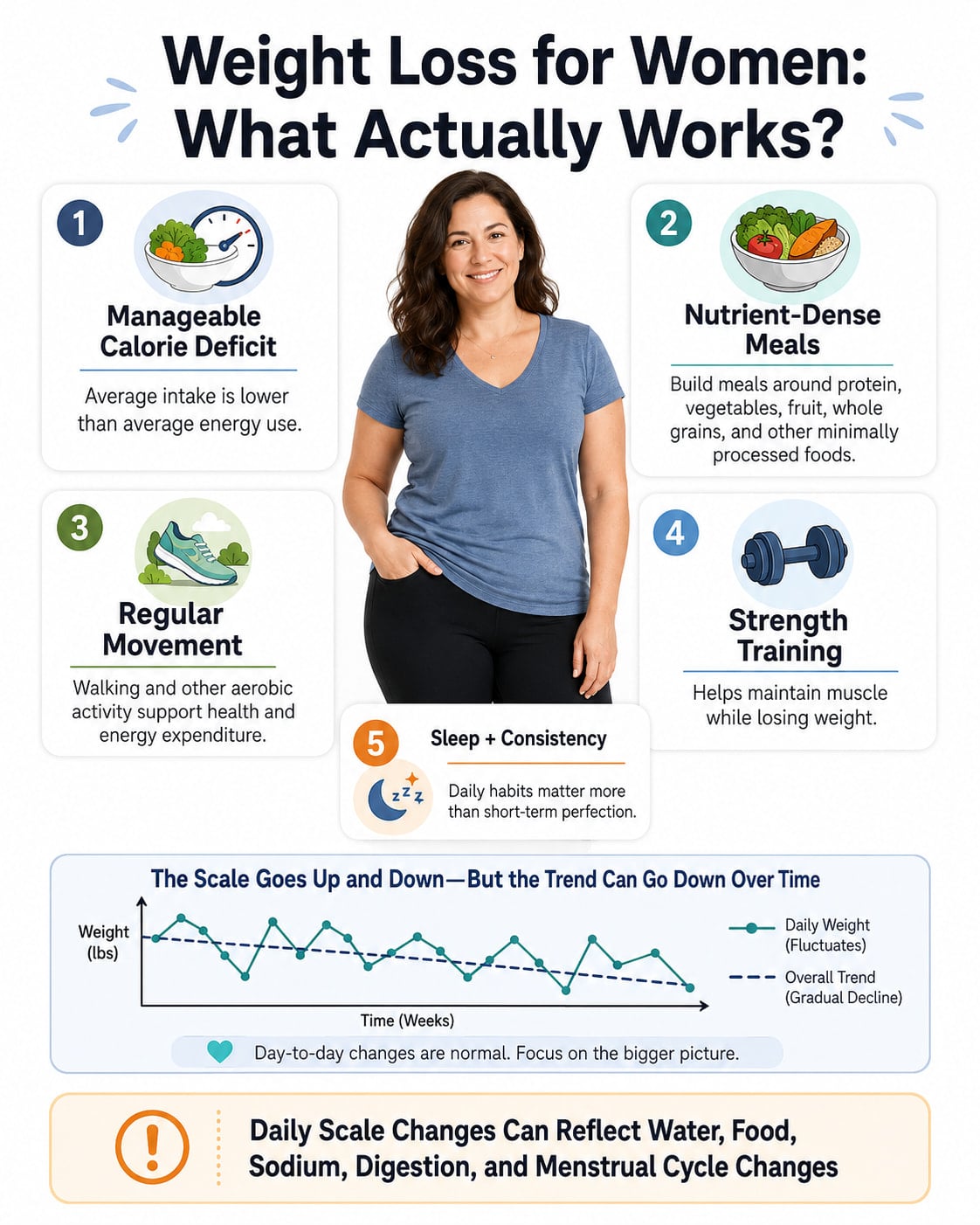
Body fat decreases when your average calorie intake remains below the amount of energy your body uses. This is called a calorie deficit.
However, your body weight does not decrease in a perfectly straight line. It can temporarily rise or stall because of:
- Water retention
- Menstrual cycle changes
- Sodium or carbohydrate intake
- Constipation
- Muscle soreness after exercise
- Changes in sleep or stress
- The amount of food still being digested
That is why a single scale reading cannot tell you whether your plan is working. Look at trends over several weeks rather than expecting a lower number every morning.
A successful plan should also provide enough protein, fiber, vitamins, minerals, and energy for your normal activities. The current Dietary Guidelines for Americans, 2025–2030 emphasizes nutrient-dense protein foods, vegetables, fruits, healthy fats, and whole grains while recommending less added sugar, refined carbohydrates, excess sodium, and highly processed food.
Why Weight Loss Can Be Different for Women
The basic requirements for fat loss apply to everyone, but several women-specific factors can influence the process.
| Factor | How It May Affect Progress | Practical Response |
|---|---|---|
| Menstrual cycle | Water retention, cravings, and digestive changes may temporarily affect scale weight | Compare your weight at similar points in your cycle and follow longer-term trends |
| Perimenopause and menopause | Hormonal changes, sleep disruption, lower activity, and age-related muscle loss may reduce calorie needs | Prioritize strength training, protein, daily movement, and sleep |
| PCOS | Insulin resistance, appetite changes, and irregular cycles may make weight management more complicated | Use a sustainable eating and activity plan and seek individualized medical support |
| Pregnancy and breastfeeding | Calorie and nutrient needs are different during these stages | Avoid aggressive dieting and work with a qualified healthcare professional |
| Medical conditions and medications | Thyroid disorders, sleep apnea, diabetes, steroids, and some other medications may influence weight | Ask a healthcare professional to review possible contributing factors |
The Office on Women’s Health notes that age, menopause, activity, eating habits, and muscle loss can all influence women’s weight. PCOS may also involve metabolic and reproductive symptoms that require individualized care.
12 Proven Weight Loss Tips for Women
1. Set a Realistic Weight-Loss Goal
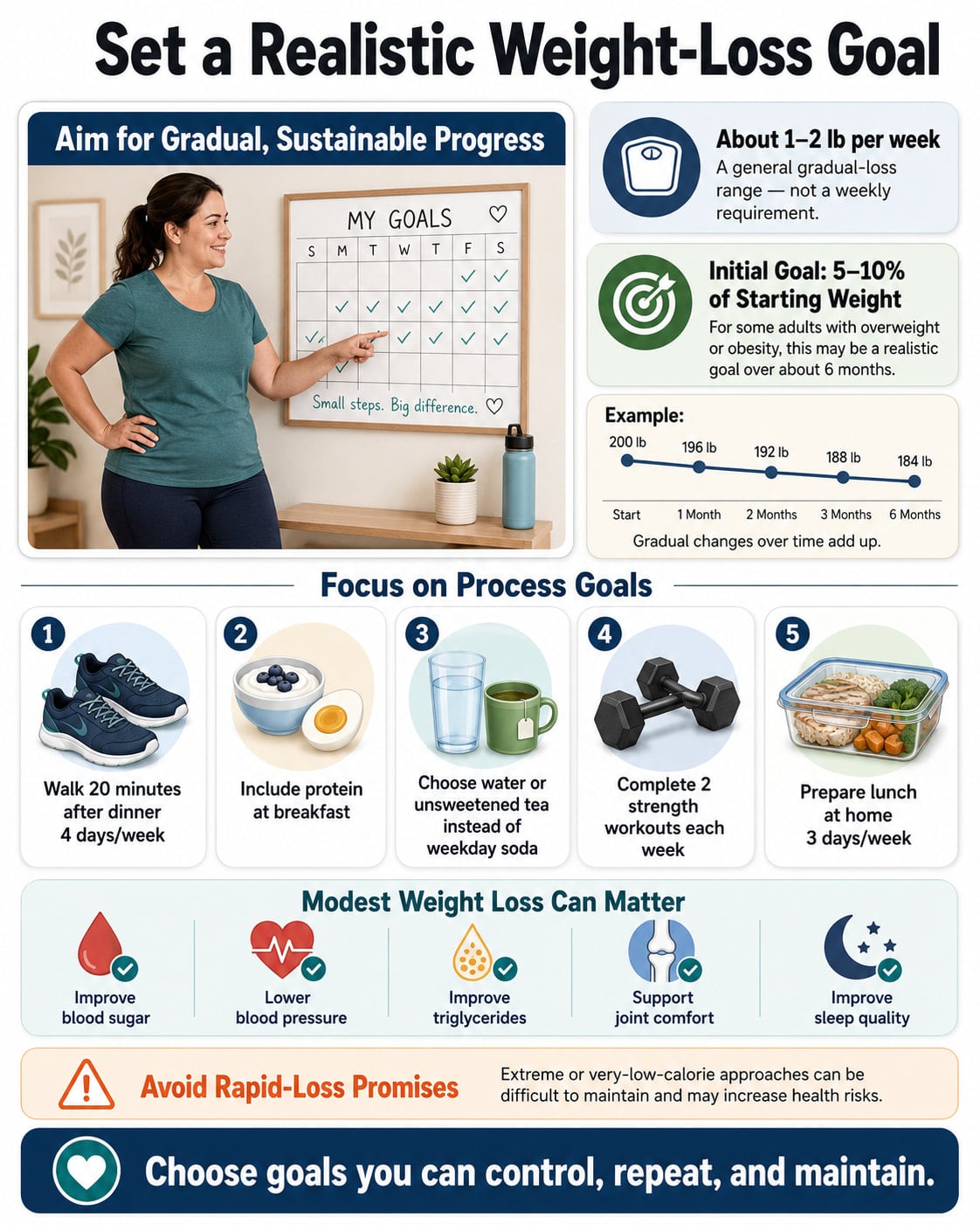
A reasonable goal is one that improves your health without requiring extreme restrictions.
The CDC describes about 1 to 2 pounds per week as a gradual rate that is more likely to be maintained. However, this is a general range, not a weekly requirement. Women with smaller bodies or less weight to lose may progress more slowly.
For adults with overweight or obesity, an initial goal of losing approximately 5% to 10% of starting weight over six months may be realistic and medically meaningful. Even modest weight loss may support improvements in blood sugar, blood pressure, triglycerides, joint discomfort, and sleep apnea.
Instead of focusing only on a final weight, choose two or three process goals, such as:
- Walk for 20 minutes after dinner four days per week.
- Include a protein food at breakfast.
- Replace weekday soda with water or unsweetened tea.
- Complete two strength workouts each week.
- Prepare lunch at home three days per week.
These goals are easier to control than a specific number on the scale.
Avoid programs promising dramatic results in a few days. Rapid weight loss can be difficult to maintain and may increase the risk of gallstones, especially during very-low-calorie diets.
2. Create a Modest Calorie Deficit—Not a Crash Diet
You do not need the lowest possible calorie intake. You need an intake that is low enough to support gradual fat loss but high enough to provide nutrition, energy, and reasonable satisfaction.
There is no universal calorie target for women. Your needs depend on your:
- Age
- Height and weight
- Daily activity
- Muscle mass
- Health conditions
- Medications
- Pregnancy or breastfeeding status
- Weight-loss goal and timeline
The NIDDK Body Weight Planner can estimate how changes in calorie intake and activity may affect weight over time. It is more personalized than assuming every woman should eat the same number of calories.
A simple meal structure can make a calorie deficit easier to maintain:
| Meal Component | Practical Options |
|---|---|
| Protein | Eggs, poultry, fish, Greek yogurt, cottage cheese, tofu, beans, lentils |
| Vegetables or fruit | Salad, cooked vegetables, berries, apples, oranges, frozen vegetables |
| Fiber-rich carbohydrate | Oats, potatoes, beans, brown rice, whole-grain bread, quinoa |
| Fat or flavor | Nuts, seeds, avocado, olive oil, cheese, tahini |
Fats can be part of a healthy diet, but foods such as oil, nuts, cheese, and nut butter are calorie-dense. Measure or portion them intentionally rather than pouring or eating directly from a container.
Start with small changes instead of cutting out entire meals. You might reduce a large restaurant portion, cook with less oil, replace a sweetened drink, or add vegetables while slightly reducing a calorie-dense side.
3. Choose an Eating Pattern You Can Maintain
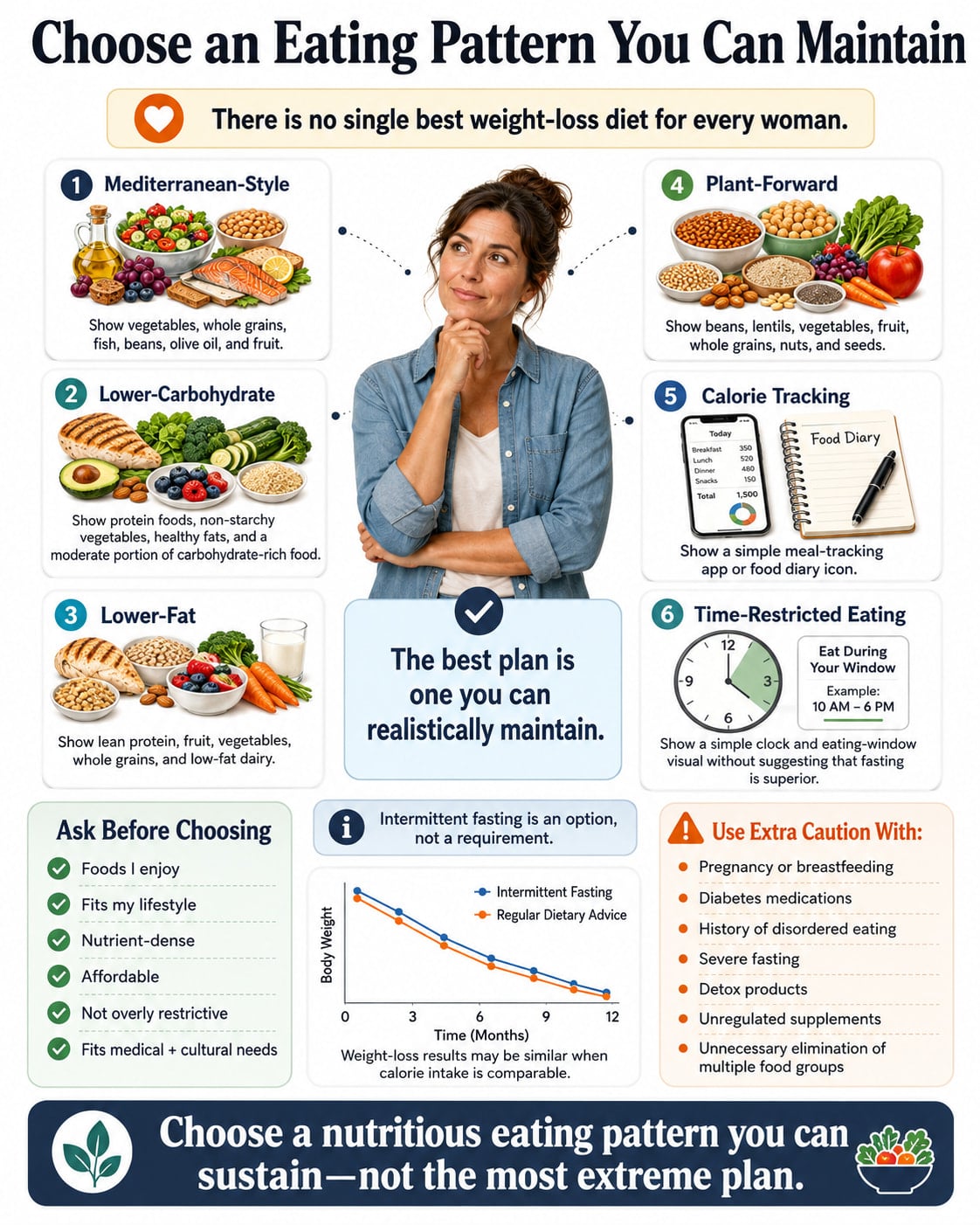
There is no single best weight-loss diet for every woman.
Mediterranean-style diets, lower-carbohydrate plans, lower-fat diets, plant-forward diets, calorie tracking, and time-restricted eating can all work when they help someone maintain a calorie deficit.
The main question is not, “Which diet produces the fastest result?” It is, “Which nutritious eating pattern can I realistically maintain?”
Before choosing a plan, ask:
- Does it include foods I enjoy?
- Can I follow it at work, at home, and while traveling?
- Does it provide adequate protein, produce, and other nutrient-dense foods?
- Is it affordable?
- Can I eat this way without feeling constantly deprived?
- Does it fit my medical and cultural needs?
Intermittent fasting is an option, not a requirement. A 2026 Cochrane review found that intermittent fasting may produce little to no difference in weight loss compared with regular dietary advice. Its main advantage may be simplicity for people who prefer a limited eating window.
Fasting may be inappropriate during pregnancy or breastfeeding and may require medical supervision for people using diabetes medication. It may also be unsuitable for anyone with a history of disordered eating.
Be cautious of plans built around detox products, unregulated supplements, severe fasting, or the permanent elimination of several food groups without a medical reason.
4. Include Protein in Each Meal
Protein can make meals more satisfying and supports the maintenance of muscle during weight loss.
The Dietary Guidelines for Americans, 2025–2030 lists a general protein target of approximately 1.2 to 1.6 grams per kilogram of body weight per day, adjusted for individual calorie requirements. For example, a woman weighing 150 pounds is approximately 68 kilograms, which would equal roughly 82 to 109 grams of protein per day. This is a general example, not a personal prescription.
A 2024 systematic review found that increased protein intake may help limit muscle-mass loss in adults with overweight or obesity who are losing weight.
Useful protein foods include:
- Eggs
- Fish and seafood
- Chicken and turkey
- Lean meats
- Greek yogurt and cottage cheese
- Milk or fortified alternatives
- Beans, peas, and lentils
- Tofu, tempeh, and edamame
- Nuts and seeds
Try spreading protein across the day instead of eating very little at breakfast and lunch and a large amount at dinner.
For example:
- Breakfast: Greek yogurt with oats and berries
- Lunch: Chicken, tofu, or lentil salad
- Snack: Cottage cheese, yogurt, edamame, or an egg
- Dinner: Fish, poultry, beans, or tofu with vegetables and a high-fiber carbohydrate
Protein shakes can be convenient, but they are not required. Whole foods usually provide additional nutrients and may be more satisfying.
Women with kidney disease or another condition that affects protein needs should ask a healthcare professional or registered dietitian for individualized guidance.
5. Build Meals Around Fiber-Rich Foods
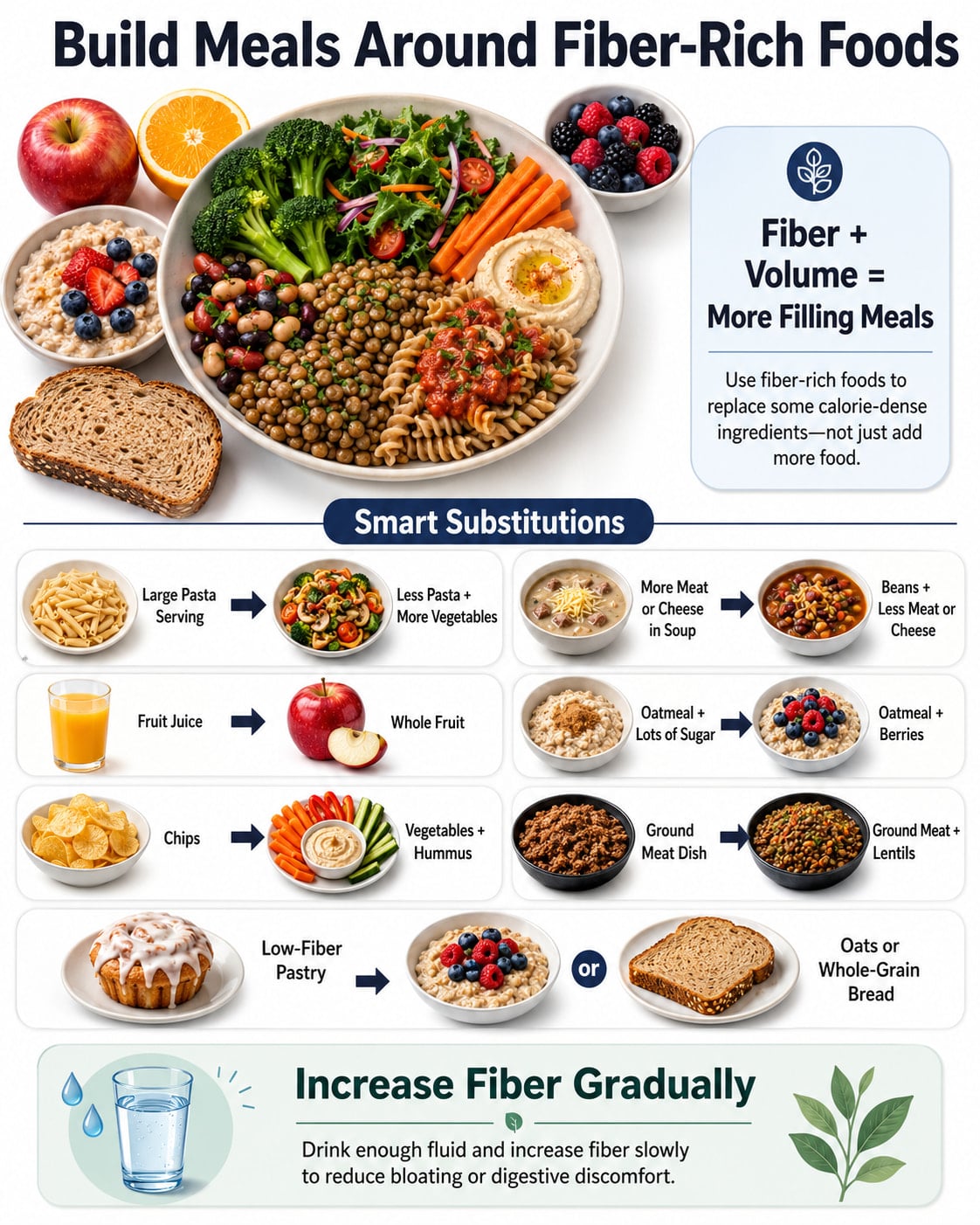
Vegetables, whole fruits, beans, lentils, and whole grains provide fiber and volume. These qualities can make a meal more filling without requiring an extremely large number of calories.
The key is substitution. Simply adding vegetables to an unchanged meal may add nutrition, but it may not reduce calorie intake. Replacing some calorie-dense ingredients with vegetables, fruit, or beans is more likely to create a meaningful difference.
Practical examples include:
- Replace part of a large pasta serving with vegetables.
- Add beans to soup while using less meat or cheese.
- Choose whole fruit instead of juice.
- Add berries to oatmeal instead of a large amount of sugar.
- Use vegetables and hummus in place of some chips.
- Add lentils to ground meat dishes.
- Choose oats or whole-grain bread instead of a low-fiber breakfast pastry.
Increase fiber gradually and drink enough fluid. A sudden large increase may cause bloating or digestive discomfort.
6. Reduce Calories From Drinks
Calories from beverages are easy to overlook because drinks may not provide the same fullness as a meal.
A 12-ounce regular soda contains more than 10 teaspoons of added sugar and approximately 150 calories. Sweetened coffee, energy drinks, sports drinks, fruit drinks, sweet tea, large juice servings, and alcoholic beverages can also contribute significant calories.
Useful swaps include:
| Instead of | Try |
|---|---|
| Regular soda | Water, sparkling water, or unsweetened tea |
| Sweetened iced tea | Unsweetened tea with lemon |
| Large flavored coffee | A smaller drink with less syrup or sugar |
| Fruit drink | Water plus whole fruit |
| Frequent alcoholic drinks | Fewer servings or a nonalcoholic, low-calorie alternative |
Milk and limited amounts of 100% juice can provide nutrients, so they do not have to be treated like soda. Their calories should still be considered within your overall intake.
You also do not need to force excessive water consumption. Drink regularly and pay attention to thirst, activity, climate, and any medical fluid restrictions.
7. Make Highly Processed Foods Less Automatic
Highly processed foods can be convenient, inexpensive, and enjoyable. You do not need to eliminate them completely.
However, foods designed to be easy to eat quickly—such as chips, candy, pastries, fast food, and some packaged snacks—can make portion control difficult. Current federal nutrition guidance recommends reducing highly processed foods, especially those high in refined carbohydrates, added sugars, excess sodium, and less-healthful fats.
Make these foods less automatic by:
- Plating snacks instead of eating from a package.
- Buying smaller portions when practical.
- Keeping fruit, yogurt, eggs, or prepared vegetables visible and ready.
- Preparing two or three reliable meals each week.
- Freezing individual portions of home-cooked food.
- Checking hunger before getting a second serving.
- Eating at a table instead of while watching television or scrolling.
Not every processed food is a poor choice. Frozen vegetables, canned beans, plain yogurt, canned fish, whole-grain bread, and pre-cooked grains can make nutritious eating more convenient.
The goal is not dietary perfection. It is to make the foods that support your plan easier to choose most of the time.
8. Track the Behaviors That Matter
Tracking can reveal patterns that are difficult to notice from memory alone.
For one or two weeks, consider recording:
- Meals and snacks
- Drinks
- Hunger before and after eating
- Daily movement
- Planned workouts
- Sleep duration
- Stress levels
- Menstrual cycle timing
- Situations that lead to unplanned eating
You do not need to count every calorie forever. A short tracking period may be enough to identify frequent restaurant meals, oversized portions, liquid calories, low-protein breakfasts, or evening snacking.
NIDDK guidance recommends setting specific goals and using food, activity, and weight tracking when these tools are helpful. Successful programs also include feedback, support, and a plan for maintaining results.
When tracking weight, use similar conditions—for example, in the morning after using the bathroom. Compare weekly averages or several weeks of measurements instead of reacting to each reading.
Tracking should not create guilt, anxiety, or obsessive behavior. Women with a history of eating disorders may benefit from tracking behaviors such as meal regularity, sleep, or exercise rather than calories or weight. Eating disorders are serious conditions, and extreme restriction, purging, misuse of laxatives, or compulsive exercise requires professional support.
9. Increase Daily Movement and Cardio Gradually
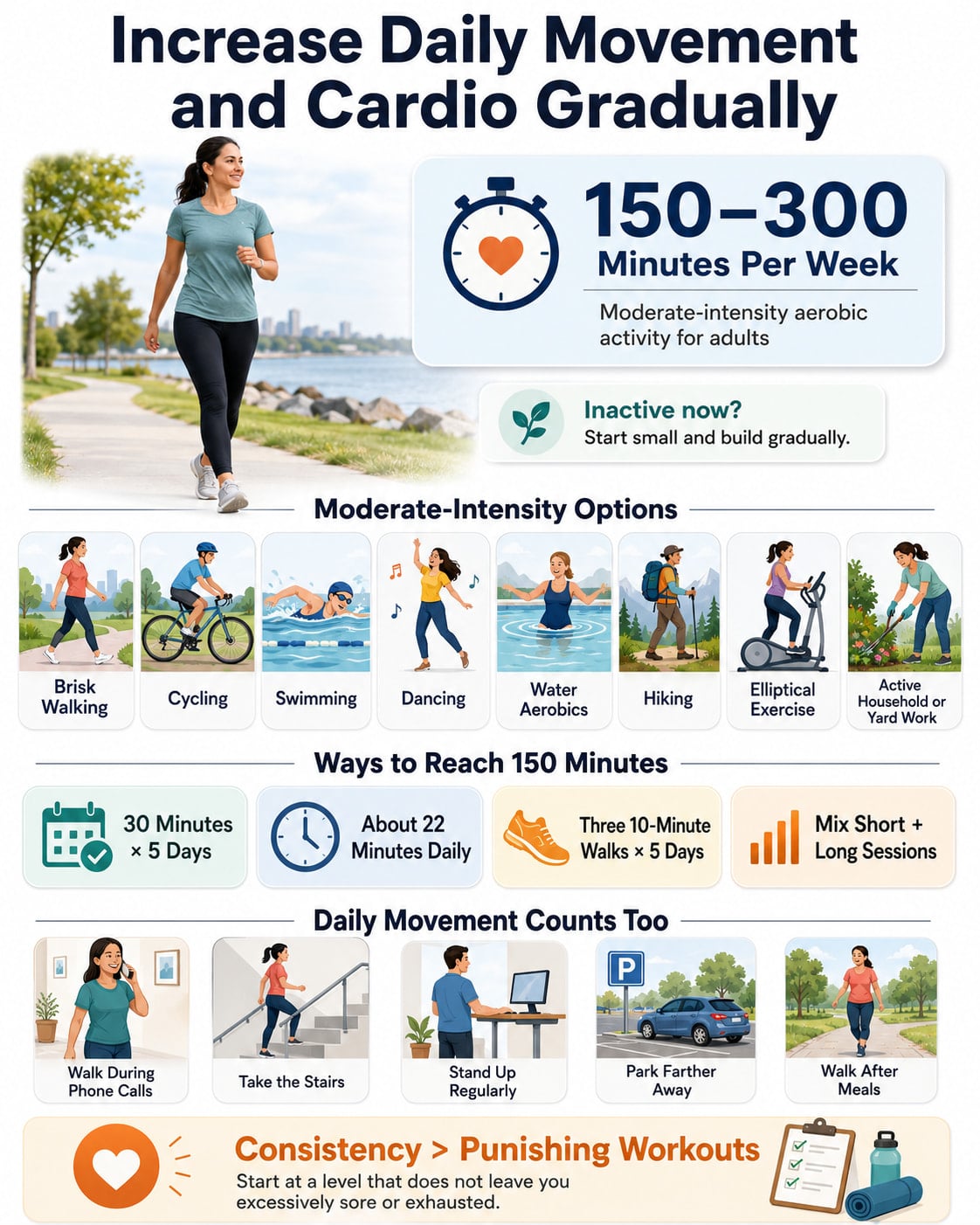
Exercise supports cardiovascular health, fitness, sleep, mood, weight maintenance, and calorie expenditure. However, you do not need to rely on punishing workouts to lose weight.
The Physical Activity Guidelines for Americans recommends 150 to 300 minutes of moderate-intensity aerobic activity per week for adults. People who are currently inactive should begin with smaller amounts and increase gradually.
Moderate-intensity activities may include:
- Brisk walking
- Cycling
- Swimming
- Dancing
- Water aerobics
- Hiking
- Elliptical exercise
- Active household or yard work
You can reach 150 minutes in different ways:
- 30 minutes on five days
- About 22 minutes each day
- Three 10-minute walks on five days
- A mix of short and long sessions
Daily movement outside formal exercise matters too. Walk during phone calls, take the stairs when practical, stand up regularly, park farther away, or add a short walk after meals.
Start at a level that does not leave you excessively sore or exhausted. Consistency matters more than completing an impressive workout once and then needing several days to recover.
10. Strength Train at Least Twice a Week
Strength training is especially valuable during weight loss because calorie restriction may reduce both fat and lean tissue.
Federal guidelines recommend muscle-strengthening activity on at least two days per week. Research reviews indicate that resistance training can reduce body fat and help preserve or improve lean mass, particularly when combined with an appropriate eating plan.
A basic full-body routine can include movements from five categories:
- Squat: Chair squat, goblet squat, or leg press
- Hinge: Glute bridge, hip hinge, or Romanian deadlift
- Push: Wall push-up, chest press, or overhead press
- Pull: Resistance-band row or cable row
- Core and carry: Bird dog, dead bug, farmer carry, or suitcase carry
Begin with exercises you can perform with controlled technique. One to three sets per movement may be enough for a beginner. Gradually add repetitions, resistance, or a more challenging variation as you become stronger.
You can use:
- Body weight
- Resistance bands
- Dumbbells
- Weight machines
- Household items
- A combination of these options
Strength training does not make most women suddenly “bulky.” Building substantial muscle usually requires consistent progressive training, adequate nutrition, and time.
Stop an exercise that causes sharp pain, dizziness, chest discomfort, or unusual shortness of breath. Women who are pregnant, recently postpartum, recovering from surgery, or managing pelvic-floor symptoms should seek individualized guidance.
11. Protect Your Sleep and Manage Stress
Sleep is not a fat-loss shortcut, but insufficient sleep can make a weight-loss plan harder to follow.
Adults ages 18 to 60 are generally advised to get at least seven hours of sleep per night. CDC sleep guidance recommends consistent sleep and wake times, a quiet and cool room, less screen exposure before bed, and avoiding late caffeine, large meals, and alcohol.
Try these practical steps:
- Set a realistic bedtime based on when you must wake.
- Create a short, repeatable wind-down routine.
- Stop caffeine early enough that it does not disturb sleep.
- Keep your phone away from the bed when possible.
- Address snoring, gasping, or persistent daytime sleepiness with a healthcare professional.
Stress can also influence food choices, sleep, motivation, and appetite. Stress management does not have to mean long meditation sessions. It might involve walking, breathing exercises, journaling, counseling, social support, hobbies, or setting boundaries around work.
Do not blame yourself for struggling during periods of high stress. Adjust the plan to make it simpler. A basic meal, a 10-minute walk, or an earlier bedtime may be more useful than trying to follow an ideal routine.
12. Build Maintenance Into Your Plan
Maintaining weight loss is easier when the behaviors used to lose weight are realistic enough to continue.
Do not build your plan around foods you never intend to eat again or a workout schedule you cannot sustain. Practice maintenance skills from the beginning:
- Keep several easy meals available.
- Learn how to manage weekends and restaurant meals.
- Include favorite foods in intentional portions.
- Continue strength training and regular movement.
- Monitor trends without expecting perfection.
- Return to your routine after holidays, travel, or illness.
- Ask for help when the plan stops working.
Weight-loss plateaus are normal. As body weight decreases, calorie needs may also decrease, and the original plan may no longer produce the same rate of loss. Before making a major change, review your portions, drinks, activity, sleep, and adherence over several weeks.
Support may come from a registered dietitian, healthcare professional, qualified fitness professional, friend, family member, or evidence-based lifestyle program. NIDDK describes successful programs as those that include realistic goals, a reduced-calorie eating plan, physical activity, behavior support, monitoring, and a long-term maintenance strategy.
How to Measure Progress Beyond the Scale
Scale weight is useful for some people, but it is not the only measure of progress.
| Measure | What to Look For | Suggested Frequency |
|---|---|---|
| Weight trend | Change over several weeks rather than one day | Weekly or using a weekly average |
| Waist measurement | Gradual change under similar measuring conditions | About once per month |
| Clothing fit | Changes in comfort or fit | Occasionally |
| Strength | More repetitions, resistance, or control | Record during workouts |
| Cardio fitness | Longer duration, faster pace, or easier breathing | Every few weeks |
| Daily habits | Consistency with meals, movement, workouts, and sleep | Weekly review |
| Health markers | Blood pressure, glucose, cholesterol, or other clinician-recommended tests | As advised by a healthcare professional |
Premenstrual water retention may temporarily increase scale weight. This does not necessarily mean body fat has increased. Comparing measurements at similar points in your menstrual cycle may provide a clearer picture.
Weight Loss During Menopause or With PCOS
Weight Loss After 40 and During Menopause
Weight loss may feel more difficult during perimenopause or after menopause, but menopause does not make it impossible.
The Office on Women’s Health weight-loss guidance explains that lower estrogen may play a role in weight changes. Aging, lower activity levels, eating habits, sleep disruption, and gradual muscle loss can also contribute. Many women gain an average of approximately five pounds after menopause, although individual experiences vary.
The most useful priorities are generally:
- Strength training at least twice per week
- Adequate protein
- Regular walking or other aerobic activity
- Portions matched to current activity and calorie needs
- Consistent sleep
- Medical support for disruptive menopause symptoms
You do not automatically need to remove carbohydrates, follow a ketogenic diet, or begin fasting because you have reached menopause.
Weight Loss With PCOS
PCOS is a hormonal and metabolic condition that may involve irregular periods, excess androgen activity, insulin resistance, fertility challenges, and weight-management difficulties.
For women with PCOS who have overweight or obesity, losing a modest amount of weight and becoming more active may support more regular ovulation and menstrual cycles and may improve insulin and cholesterol levels. Results vary, and weight loss is not the only part of PCOS care.
There is no single mandatory “PCOS diet.” A sustainable plan that controls overall calories, provides protein and fiber, limits excessive added sugar, and fits your preferences is more practical than an extremely restrictive plan.
A healthcare professional can also evaluate medications, fertility goals, blood sugar, cholesterol, sleep apnea, and other symptoms.
Weight Loss During Pregnancy or Breastfeeding
Do not intentionally try to lose weight during pregnancy unless your medical team gives you specific instructions. Pregnancy requires individualized guidance on nutrition, weight gain, and physical activity.
After childbirth, recovery, sleep, breastfeeding, mental health, and nutrient needs should come before rapid weight loss. Discuss an appropriate timeline with your obstetric clinician or a registered dietitian, especially after a complicated delivery or cesarean birth.
When to Talk to a Healthcare Professional
Consider professional guidance before or during weight loss when you:
- Are pregnant, breastfeeding, or planning a pregnancy
- Have diabetes, kidney disease, heart disease, or gallbladder disease
- Have irregular or missing periods
- Suspect PCOS or a thyroid condition
- Experience unexplained or rapid weight changes
- Take medication that may affect appetite or weight
- Have severe fatigue, dizziness, fainting, or weakness
- Have a history of binge eating, purging, extreme restriction, or compulsive exercise
- Continue gaining weight despite consistent changes
- Need help determining whether weight loss is medically appropriate
Prescription weight-management medication may be considered for some adults with a BMI of at least 30, or at least 27 with a weight-related health condition such as type 2 diabetes or high blood pressure. BMI is only one screening measure, and medication decisions must account for health history, potential benefits, side effects, other medications, cost, and personal goals.
Weight-management medications should not be used during pregnancy or when planning pregnancy and are not recommended while breastfeeding. Do not buy unapproved injections, pills, or compounded products from unverified online sellers.
Frequently Asked Questions
How much weight can a woman safely lose in a month?
A gradual rate of about 1 to 2 pounds per week equals roughly 4 to 8 pounds over four weeks. This is a general range, not a requirement. Women with smaller bodies or less weight to lose may progress more slowly, and short-term water changes can hide fat loss.
What is the best diet for women to lose weight?
The best diet is a nutritious, reduced-calorie eating pattern you can maintain. Mediterranean-style, lower-carbohydrate, lower-fat, and plant-forward plans may all work. No single diet is best for every woman.
Choose a plan that includes adequate protein, vegetables, fruits, fiber-rich carbohydrates, and foods you enjoy.
How many calories should a woman eat to lose weight?
There is no universal number. Calorie needs vary with age, body size, activity, muscle mass, health, and life stage. A personalized calculator such as the NIDDK Body Weight Planner can provide a starting estimate, but a registered dietitian can offer more individualized guidance.
Can walking every day help a woman lose weight?
Yes. Walking increases activity and calorie expenditure and may support weight loss when combined with an appropriate eating plan. Walking also supports cardiovascular fitness, mood, sleep, and weight maintenance.
Begin with a manageable duration and increase gradually. Strength training should also be included when possible.
Why does my weight increase before my period?
Hormonal changes may cause temporary water retention, appetite changes, and digestive changes around your period. A short-term increase does not automatically represent fat gain.
Compare your weight over several weeks or at similar points in your cycle instead of judging progress from one measurement.
Is intermittent fasting effective for women?
Intermittent fasting can help some women reduce calorie intake because it limits eating times. However, current review evidence suggests it may produce little to no additional weight-loss benefit compared with regular dietary advice. It is optional rather than necessary.
Avoid fasting during pregnancy or breastfeeding. Seek medical guidance if you use diabetes medication, have frequent dizziness, or have a history of disordered eating.
Why is it harder to lose weight after age 40?
Muscle mass, activity, sleep, and calorie needs may change with age. Perimenopause and menopause may also affect body-fat distribution, symptoms, and daily habits.
Strength training, protein-rich meals, daily movement, portion awareness, and adequate sleep become especially valuable, but there is no need for an extreme “menopause diet.”
Conclusion
Lasting weight loss for women does not require a perfect diet. It requires a plan that creates a manageable calorie deficit while protecting nutrition, energy, muscle, and quality of life.
Start with two changes you can repeat for the next two weeks. For example, add protein to breakfast and walk for 20 minutes after dinner. Once those actions feel routine, add another habit.
Focus on consistency across months rather than perfection each day. Small actions become meaningful when they are realistic enough to continue.
This content is for informational purposes only and not medical advice.
References
- Office on Women’s Health: Weight Loss and Women
- NIDDK: Body Weight Planner
- NIDDK: Prescription Medications to Treat Overweight and Obesity
- CDC: About Sleep
- NICHD: PCOS Treatments and Lifestyle Changes
- PubMed: Resistance Training and Body Composition Systematic Review
- PubMed: Protein Intake and Muscle Preservation During Weight Loss
- PubMed: Intermittent Fasting for Adults With Overweight or Obesity