
Bodyweight leg exercises are movements that strengthen your lower body using only your own body weight—no equipment required. These exercises target your quads, glutes, hamstrings, calves, and core through natural movement patterns like squatting, lunging, stepping, and bridging.
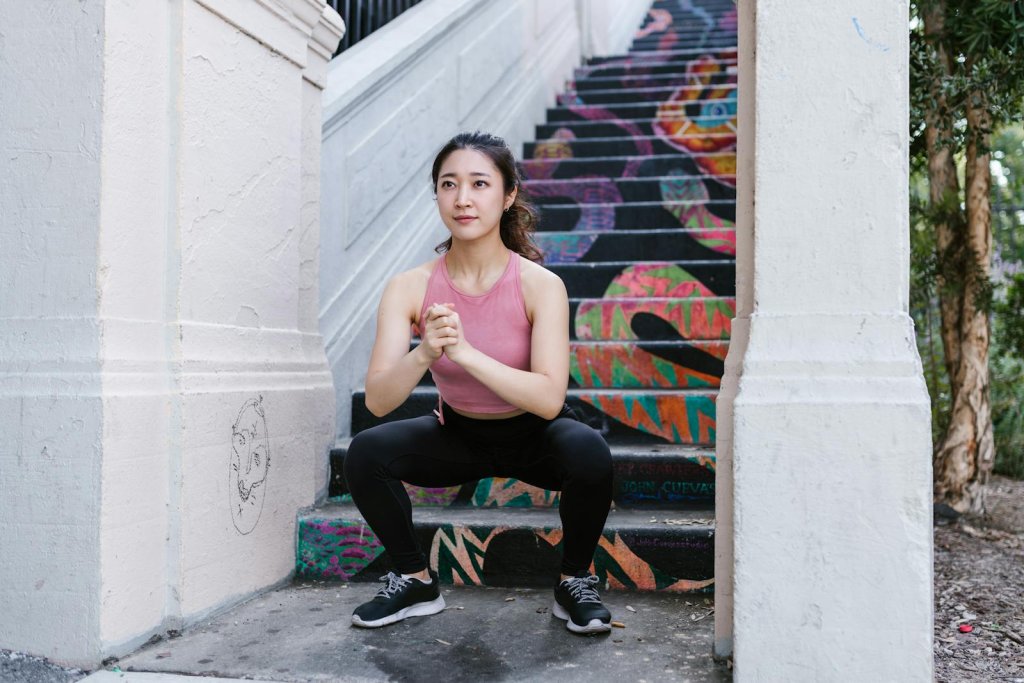
Understanding bodyweight leg exercises matters because they help you build strength, improve balance, maintain mobility, and meet the CDC’s recommendation for muscle-strengthening activity at least 2 days per week. They’re accessible for all fitness levels and can be done at home, making them ideal for beginners, busy people, and anyone without access to equipment.
Below, you’ll find the best exercises, proper form cues, progression tips, and safety guidelines to help you train effectively and confidently.
15 Best Bodyweight Leg Exercises (With How-To Steps)
A foundational lower-body move that builds strength in the quads, glutes, and hamstrings. Perfect for improving mobility and everyday functional movement.
1. Bodyweight Squat
Why it works:
Strengthens the entire lower body through a natural movement pattern that improves mobility, hip strength, and leg power. Ideal for building foundational strength.
Muscles worked:
Quads, glutes, hamstrings, core.
How to do it:
- Stand with feet shoulder-width apart.
- Sit your hips back as if lowering into a chair.
- Keep chest lifted and core engaged.
- Push through your heels to return to standing.
Trainer Tip:
If your heels lift, widen your stance slightly or turn your toes out 10–15 degrees.
2. Reverse Lunge
Why it works:
Reduces forward knee pressure while improving leg strength, balance, and unilateral control.
Muscles worked:
Glutes, quads, hamstrings.
How to do it:
- Step one foot backward.
- Lower your hips until both knees reach about 90 degrees.
- Keep your front heel grounded as you push back up to standing.
Trainer Tip:
Keep your torso tall—avoid leaning forward when stepping back.
3. Forward Lunge
Why it works:
Targets the quads more intensely and trains balance while teaching proper knee alignment.
Muscles worked:
Quads, glutes.
How to do it:
- Step forward with one leg.
- Bend both knees and lower your back knee toward the floor.
- Push through the front leg to return to standing.
Trainer Tip:
Don’t overstride—shorter steps help protect your knees.
4. Lateral Lunge
Why it works:
Strengthens inner and outer thigh muscles and improves side-to-side movement, which supports hip health.
Muscles worked:
Glutes, quads, adductors.
How to do it:
- Step out to one side.
- Bend the stepping leg while keeping the other leg straight.
- Push off the bent leg to return to center.
Trainer Tip:
Keep your toes facing forward—avoid turning the foot out.
5. Step-Up
Why it works:
Builds unilateral strength, balance, and functional power for climbing stairs and everyday movement.
Muscles worked:
Quads, glutes.
How to do it:
- Step onto a stable bench or step with one foot.
- Push through your front heel to lift yourself up.
- Step down slowly and switch legs.
Trainer Tip:
Choose a step height that allows you to keep your knee tracking over your toes—not collapsing inward.
6. Glute Bridge
Why it works:
Strengthens the glutes and hamstrings while improving hip stability and reducing lower-back strain.
Muscles worked:
Glutes, hamstrings.
How to do it:
- Lie on your back with knees bent and feet flat.
- Lift your hips until your body forms a straight line.
- Squeeze your glutes at the top and lower with control.
Trainer Tip:
Avoid pushing with your lower back—focus on driving through your heels.
7. Hip Thrust (Couch or Bench)
Why it works:
Creates strong glute activation by increasing hip extension. More glute-focused than the standard bridge.
Muscles worked:
Glutes, hamstrings.
How to do it:
- Sit with your upper back on a bench or couch edge.
- Lift your hips until your torso is parallel to the ground.
- Pause at the top and lower slowly.
Trainer Tip:
Tuck your chin slightly to keep your spine neutral throughout the movement.
8. Wall Sit
Why it works:
Builds isometric strength and endurance in the quads and glutes, making it great for stamina.
Muscles worked:
Quads, glutes.
How to do it:
- Press your back against a wall and slide down.
- Stop when your knees reach 90 degrees.
- Hold for 20–45 seconds while keeping heels grounded.
Trainer Tip:
Push your lower back gently into the wall to maintain proper alignment.
9. Single-Leg Romanian Deadlift
Why it works:
Improves balance, coordination, and posterior chain strength while targeting deep stabilizing muscles.
Muscles worked:
Hamstrings, glutes, core.
How to do it:
- Stand on one leg.
- Hinge forward at the hips while extending the other leg behind you.
Trainer Tip:
Keep your hips square—imagine headlights pointing straight down.
10. Bulgarian Split Squat
Why it works:
One of the best unilateral leg exercises for building glute size, stability, and quad strength.
Muscles worked:
Glutes, quads.
How to do it:
- Place your rear foot on a bench behind you.
- Lower your back knee toward the floor.
- Push through your front heel to rise.
Trainer Tip:
Scoot your front foot forward if you feel knee pressure—your shin should stay vertical.
11. Curtsy Lunge
Why it works:
Targets the outer glutes (glute medius) and hip stabilizers through diagonal movement.
Muscles worked:
Glute medius, quads, inner thighs.
How to do it:
- Step one leg behind and diagonally across your body.
- Lower into a lunge.
- Return to the start position.
Trainer Tip:
Keep your hips square—don’t rotate toward the back leg.
12. Sumo Squat
Why it works:
Uses a wider stance to target the inner thighs and glutes more directly than a standard squat.
Muscles worked:
Quads, glutes, adductors.
How to do it:
- Stand with wide stance and toes pointed slightly outward.
- Lower hips straight down.
- Drive through heels to stand.
Trainer Tip:
Push your knees out to match the angle of your toes for proper alignment.
13. Single-Leg Glute Bridge
Why it works:
Enhances glute isolation and challenges hip stability on one side.
Muscles worked:
Glutes, hamstrings, core.
How to do it:
- Extend one leg while lying on your back.
- Lift your hips using the planted foot.
- Lower with control and switch sides.
Trainer Tip:
Keep hips level—avoid letting one side drop.
14. Calf Raise
Why it works:
Strengthens the calves and improves ankle mobility and stability for better balance and walking mechanics.
Muscles worked:
Calves (gastrocnemius, soleus).
How to do it:
- Stand tall.
- Lift your heels as high as possible.
- Lower slowly for full range.
Trainer Tip:
Pause for 1 second at the top to increase muscle engagement.
15. Squat to Chair (Beginner-Friendly)
Why it works:
Builds proper squat mechanics and confidence while reducing strain on the knees and back.
Muscles worked:
Quads, glutes.
How to do it:
- Stand with a chair behind you.
- Sit down slowly with control.
- Stand back up by pushing through your heels.
Trainer Tip:
Avoid collapsing onto the chair—keep tension in your legs the entire time.
How Often Should You Do Bodyweight Leg Workouts?
According to ACSM and CDC strength-training guidelines:
- 2–3 days per week of lower-body or full-body training is optimal.
- Perform 2–4 sets per exercise.
- Use 8–12 reps for strength, 12–20 reps for endurance, or more when using only bodyweight.
- Rest 60–90 seconds between sets.
- Increase challenge through progression (variations, higher reps, slower tempo, pauses).
These guidelines help ensure consistent progress while avoiding overtraining.
Common Mistakes to Avoid
- Knees collapsing inward – Reduces glute activation and increases knee stress; keep knees aligned with toes.
- Rushing through reps – Lowers muscle engagement and balance; move slowly and with control.
- Heels lifting during squats – Shifts stress to the knees; keep heels grounded and sit hips back.
- Overstriding on lunges – Strains hips or knees; use a natural, comfortable step length.
- Hinging from the back – Increases back strain; hinge from the hips, not the low back.
- Not engaging the core – Causes poor alignment; gently brace your core throughout.
- Holding your breath – Increases tension; breathe steadily and exhale on effort.
Safety Tips for Bodyweight Leg Training
- Warm up first – Spend 3–5 minutes preparing hips, knees, and ankles.
- Use a pain-free range – Feel muscle effort, not sharp pain; reduce depth if needed.
- Start with easier variations – Chair squats, short-step lunges, or supported moves.
- Maintain proper alignment – Knees over toes, chest lifted, spine neutral.
- Progress gradually – Increase reps or difficulty slowly to avoid overuse.
- Use support if needed – Hold a chair or wall for balance.
- Train on stable surfaces – Avoid slippery floors.
- Stop if symptoms appear – Rest if you feel dizziness, sharp pain, or unusual discomfort.
Who Should Avoid or Modify These Exercises
Modify or avoid certain leg exercises if you:
- Have knee or hip pain during squats or lunges
- Recently had surgery, injury, or mobility limitations
- Have balance issues (choose supported variations)
- Experience sharp or unusual pain during movement
Always consult a healthcare professional if you have underlying health conditions, persistent pain, or uncertainty about exercise safety.
Frequently Asked Questions
1. Can bodyweight leg exercises build real muscle?
Yes. Beginners and intermediates can build significant strength and muscle with consistent bodyweight leg training.
2. How long should a bodyweight leg workout last?
Most sessions are 15–30 minutes depending on sets, reps, and rest times.
3. Are bodyweight leg exercises good for beginners?
Absolutely. They’re joint-friendly, easy to learn, and require no equipment.
4. Can I do leg workouts every day?
It’s best to allow 48 hours of recovery between intense sessions.
5. What if I have knee pain during squats?
Start with chair squats, reduce depth, or focus on glute bridges, step-ups, and hip thrusts.
6. Is this type of workout good for weight loss?
Leg exercises engage large muscles, which may support calorie burn and metabolism.
7. What’s the best exercise for glutes without weights?
Hip thrusts and single-leg glute bridges offer some of the strongest activation.
Conclusion
Bodyweight leg exercises make strength training accessible to everyone—no equipment required. With the right form, consistency, and progression, these movements can build strong quads, glutes, hamstrings, and calves from home. Start with the basics, improve your technique, and gradually move to more advanced variations to continue progressing safely.
Ready to take it further? Build your complete lower-body routine using the 15 exercises above.
References
- WHO – Physical Activity
- Physical Activity Guidelines for Americans, 2nd Edition (HHS PDF)
- Harvard Health – The Advantages of Body-Weight Exercise
- Effects of Free Weight and Body Mass-Based Resistance Training (Ogawa et al., 2023)
- Effects of a Daily, Home-Based, 5-Minute Eccentric Exercise Routine (Kirk et al., 2025)