
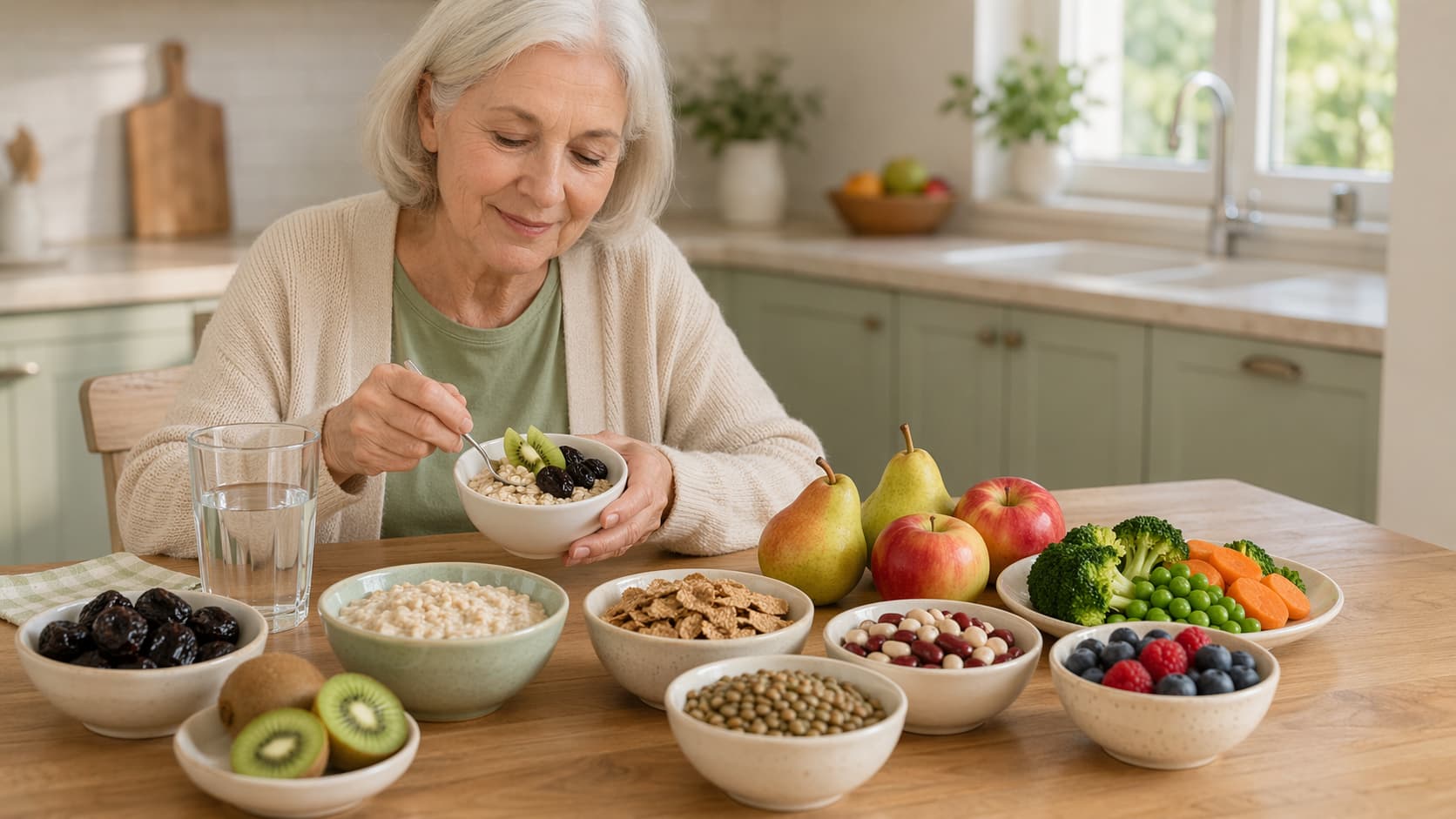
The best foods for constipation in seniors are prunes, kiwifruit, oatmeal, bran cereal, pears, apples, berries, lentils, beans, and cooked vegetables like peas or broccoli. These foods help because they add fiber, support softer stools, and are practical to eat regularly. Constipation is common in older adults, and the National Institute on Aging says about one-third of older adults have occasional symptoms. In most cases, the best results come from combining the right foods with enough fluids and a gradual increase in fiber.
Why constipation is common in seniors
Constipation becomes more common with age, but aging itself is not usually the only reason. The National Institute on Aging says common causes include not getting enough fiber, not drinking enough fluids, low physical activity, and side effects from medicines. The same source notes that some antidepressants, calcium- or aluminum-containing antacids, antihistamines, some pain medicines, diuretics, anticholinergics, and iron supplements can contribute.

That is why the best foods for constipation in seniors should be part of a bigger routine, not treated like a stand-alone fix. The National Institute of Diabetes and Digestive and Kidney Diseases recommends enough fiber, plenty of liquids, and regular physical activity. It also notes that bowel training and medication review may matter when constipation keeps coming back.
How to tell if it is really constipation
Many older adults assume they are constipated if they do not have a bowel movement every day, but that is not always true. Constipation usually means fewer than three bowel movements a week, stools that are hard, dry, or lumpy, stools that are difficult or painful to pass, or a feeling that you have not fully emptied your bowels. Normal bowel patterns can vary from person to person, so the bigger issue is a clear change from your usual pattern, as explained by NIDDK.
How to use constipation foods safely in older adults
Before adding a lot of fiber, start with one change at a time. NIDDK advises increasing fiber gradually because a sudden jump can lead to more gas and bloating. Drinking water and other liquids also matters because fluids help fiber work better and can make stools softer and easier to pass.
For many seniors, texture matters just as much as nutrition. Softer options such as oatmeal, stewed prunes, ripe kiwi, cooked peas, or well-cooked lentils may be easier to manage than dry, tough, or very bulky foods. National Institute on Aging caregiver guidance also notes that cutting food into small pieces and making it soft enough to eat can help when chewing or swallowing is difficult.
If a doctor has told you to limit fluids because of heart, kidney, or another medical condition, do not force extra fluids on your own. MedlinePlus notes that higher fluid targets may not apply when a medical condition requires fluid restriction.
If chewing or swallowing is difficult
For seniors with dental problems, low appetite, or swallowing difficulty, softer high-fiber foods are often the most practical place to start.
- Choose oatmeal instead of dry cereals
- Use stewed prunes, ripe kiwi, soft pears, or cooked apples
- Try lentil soup, bean soup, or mashed beans instead of firmer legumes
- Serve vegetables well-cooked until tender
- Cut foods into small pieces and make them soft enough to chew comfortably
- If needed, puree foods to make them easier to swallow
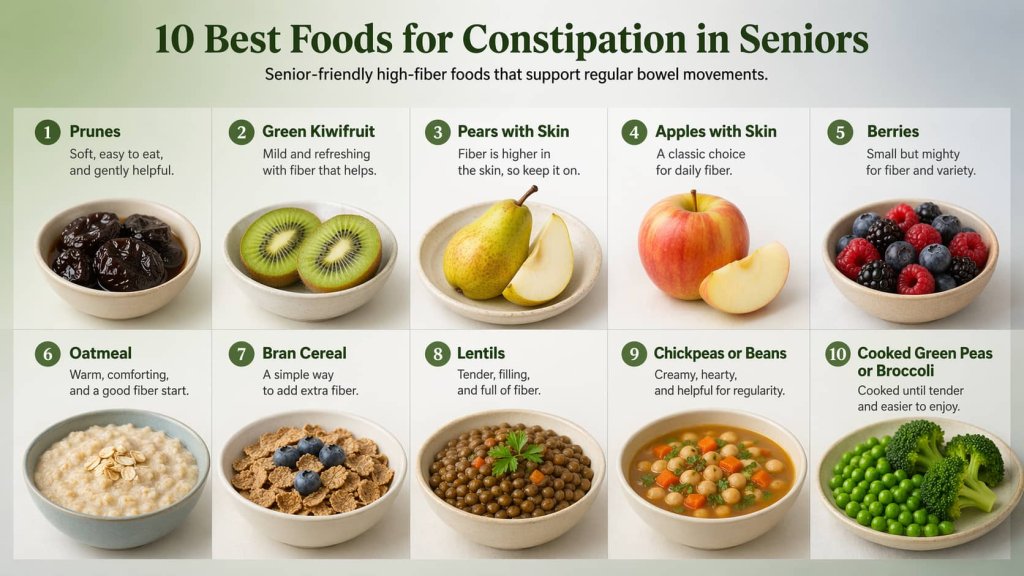
10 best foods for constipation in seniors
1. Prunes
Prunes are one of the strongest evidence-backed foods for constipation. In a clinical trial indexed by PubMed, dried plums were found to be safe, palatable, and more effective than psyllium for mild to moderate constipation. For seniors, prunes are often an easy first choice because they are simple to portion and can be eaten plain, chopped into oatmeal, or stewed until softer.
2. Kiwifruit
Kiwifruit is another top option with direct human research behind it. A 2023 international randomized trial published in The American Journal of Gastroenterology found that eating two green kiwifruits daily improved complete spontaneous bowel movements and abdominal comfort. This makes kiwi one of the best whole-food options when someone wants something gentler than a supplement.
3. Pears with the skin on
NIDDK lists pears among good fruit choices for constipation because they provide fiber, especially when eaten with the skin. Pears can work well for seniors because ripe pears are soft, easy to slice, and usually easier to chew than many raw high-fiber snacks.
4. Apples with the skin on
Apples are another practical fiber source specifically listed by NIDDK. For seniors, softer apple varieties, thin slices, or cooked apples can be easier to eat while still helping raise total daily fiber intake.
5. Berries
Berries are one of the best foods for constipation in seniors because they add fiber without requiring a large portion size. NIDDK includes berries among helpful fruit choices, and options like raspberries or blackberries can be added to yogurt, oatmeal, or cereal for an easy breakfast upgrade.
6. Oatmeal
Oatmeal is one of the most senior-friendly constipation foods because it is soft, warm, easy to prepare, and naturally rich in fiber. NIDDK specifically lists oatmeal among the whole-grain foods that can help relieve or prevent constipation. It is also easy to pair with prunes, berries, or chopped pear for a more effective meal.
7. Bran cereal or other high-fiber cereal
When constipation is frequent, bran cereal can be one of the fastest ways to raise fiber intake through food. NIDDK lists bran flake cereals as a recommended high-fiber grain, and its fiber tables show that high-fiber bran cereal can provide a substantial amount of fiber in a small serving. For seniors with smaller appetites, that can be especially useful.
8. Lentils
Lentils are a strong choice because they are fiber-rich, filling, and easy to serve in soups or stews. NIDDK specifically lists lentils among recommended legumes for constipation. Cooked lentils are often easier to chew than many dry whole-grain side dishes, which makes them a practical dinner option for older adults.
9. Chickpeas, black beans, or kidney beans
Beans are some of the highest-fiber foods regularly recommended for constipation, and NIDDK includes chickpeas, black beans, and kidney beans on its list. For seniors, softer preparations such as bean soup, mashed chickpeas, or well-cooked beans may work better than firmer salads or grain bowls.
10. Cooked green peas or broccoli
Vegetables matter too, especially when they are easy to chew and digest. NIDDK lists both broccoli and green peas as helpful high-fiber vegetable choices, and its fiber table shows cooked green peas are especially fiber-rich. In many seniors, cooked vegetables are more realistic than large raw salads.
What to eat first for gentle relief
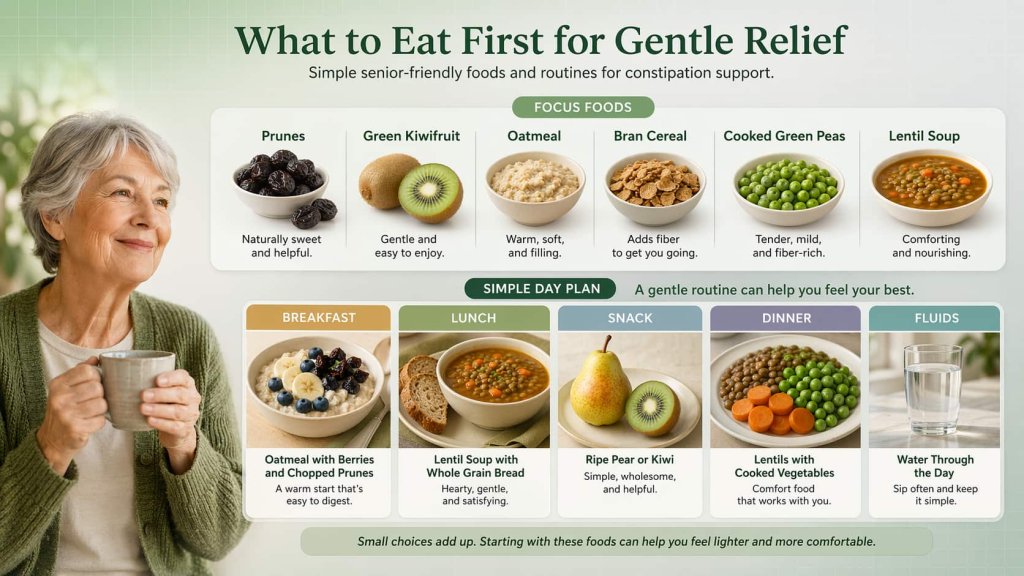
If you want the simplest starting point, begin with these:
- Prunes
- Kiwifruit
- Oatmeal
- Bran cereal
- Cooked peas or lentil soup
This group works well because it combines the two foods with the strongest direct evidence, prunes and kiwifruit, with easy, fiber-rich staples recommended by NIDDK.
A simple senior-friendly routine could look like this:
- Breakfast: oatmeal or bran cereal with berries or chopped prunes
- Lunch: lentil soup or bean soup
- Snack: a ripe pear, apple slices, or kiwi
- Dinner: cooked vegetables such as peas or broccoli alongside the meal
- Fluids: water, soup, or other clinician-approved liquids through the day
That pattern matches the official advice to get more fiber from fruits, vegetables, legumes, and whole grains while drinking enough liquids to help fiber work better.
Food works better when paired with routine
Diet changes usually work best when they are combined with a few simple daily habits. Regular physical activity, even gentle walking, can help support bowel function. It also helps to try using the bathroom at the same time each day so your body gets into a routine.
If food, fluids, and activity are not helping, ask a clinician or pharmacist to review medicines and supplements that may be contributing. Some older adults may also need short-term help from options such as a fiber supplement, stool softener, or osmotic laxative under medical guidance, as explained in NIDDK treatment guidance.
Foods that may make constipation worse
Low-fiber foods can make the problem harder to fix. NIDDK says foods with little to no fiber include chips, fast food, meat, prepared foods, and many processed foods. MedlinePlus constipation self-care guidance also recommends avoiding processed or fast foods such as white breads, pastries, doughnuts, sausage, burgers, chips, and fries when constipation is a problem.
This does not mean a senior can never eat these foods. It means they should not crowd out the foods that actually help bowel regularity.
Safety box for seniors and caregivers
Food can help, but constipation in older adults is not always just a diet issue. Get medical advice sooner rather than later if constipation is new, keeps returning, or seems linked to a medicine change. Do not stop prescription medicines without talking to a clinician first.
Seek urgent medical care if constipation happens with any of these warning signs:
- Blood in the stool or rectal bleeding
- Severe or constant belly pain
- Inability to pass gas
- Vomiting
- Fever
- Unintentional weight loss
- Lower back pain
- A major change in bowel habits or narrowing of the stool
These are red flags highlighted by the National Institute on Aging, NIDDK, and the American Academy of Family Physicians.
FAQ
What is the best fruit for constipation in seniors?
Prunes and kiwifruit have the strongest direct clinical evidence. Pears, apples with skin, and berries are also good choices because NIDDK lists them as fiber-rich foods that can help with constipation.
Is prune juice or whole prunes better?
Whole prunes usually give you the benefit of both fiber and a food form that has been directly studied in constipation trials. Prune juice can still be useful for some seniors, especially if chewing is difficult, but the stronger direct trial evidence is for dried plums.
How much fiber do seniors need?
NIDDK says adults generally need 22 to 34 grams of fiber per day, depending on age and sex. The important part is not just the number, but increasing fiber slowly and pairing it with enough fluids.
What if fiber makes bloating worse?
That usually means the increase happened too quickly. NIDDK advises adding fiber a little at a time, and slow increases are generally easier to tolerate.
When should a senior see a doctor for constipation?
A senior should get medical advice if constipation does not improve with self-care or if it comes with warning signs such as blood in the stool, vomiting, fever, inability to pass gas, constant abdominal pain, or unintentional weight loss.
Final thoughts
The best foods for constipation in seniors are the ones that are both effective and realistic to eat often. Prunes and kiwifruit stand out most, while oatmeal, bran cereal, pears, apples, berries, lentils, beans, and cooked vegetables help build a daily routine that supports regularity.
Start small, stay consistent, and focus on fiber plus fluids rather than chasing a quick fix. If constipation keeps returning, or if there are any red-flag symptoms, get medical guidance so the real cause is not missed.
This content is for informational purposes only and not medical advice.
References
- National Institute on Aging — Concerned About Constipation
- National Institute of Diabetes and Digestive and Kidney Diseases — Eating, Diet, & Nutrition for Constipation
- American Academy of Family Physicians — Chronic Constipation in Adults
- PubMed — Dried plums versus psyllium for constipation
- PubMed — Consumption of 2 Green Kiwifruits Daily Improves Constipation and Abdominal Comfort
- MedlinePlus — Constipation self-care
- National Institute on Aging — Tips for Caregivers: Helping People With Alzheimer’s Disease Eat Well