
High protein snacks are snacks that provide about 10 grams or more of protein per serving. Good options include Greek yogurt, cottage cheese, eggs, tuna, chicken, edamame, tofu, lentils, nuts, seeds, and balanced protein snack boxes.
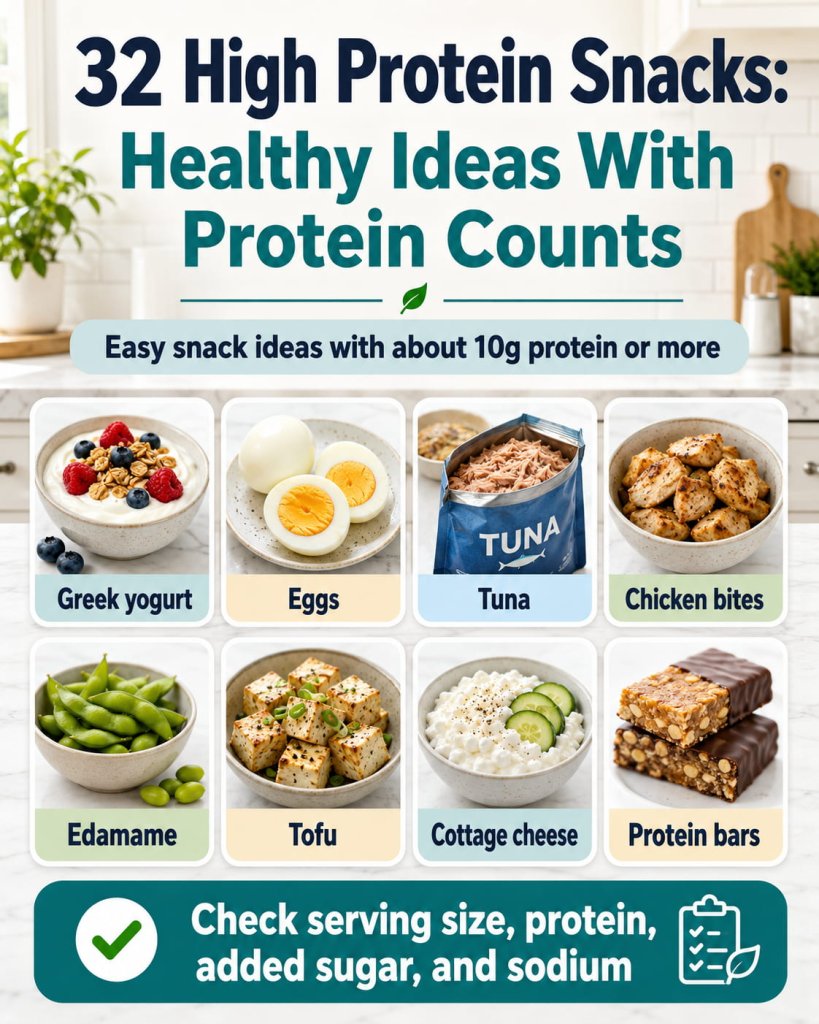
Choosing the right high protein snacks can make it easier to meet your daily protein needs, stay satisfied between meals, and build more balanced eating habits. The best choices are not just high in protein; they also fit your routine, taste good, and include helpful nutrients like fiber, calcium, healthy fats, vitamins, or minerals.
This guide gives you 32 healthy high protein snack ideas with approximate protein counts, simple serving tips, and label-reading advice based on USDA and FDA nutrition guidance.
What Counts as a High Protein Snack?
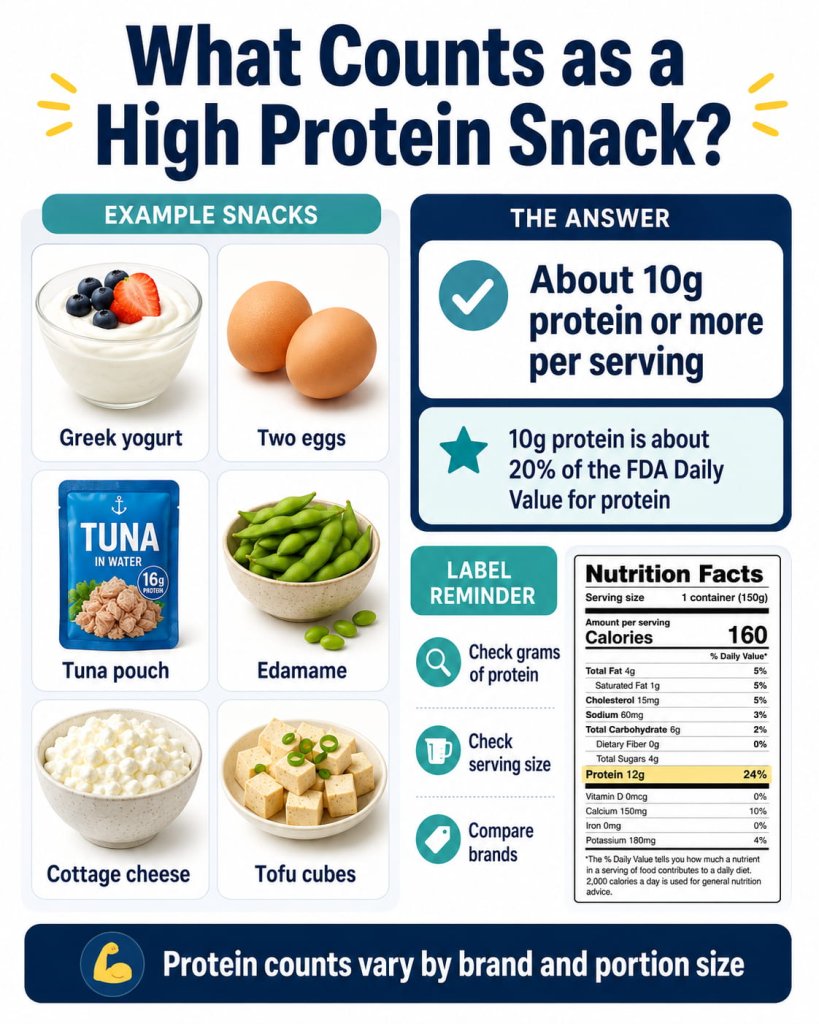
A practical high protein snack contains about 10 grams of protein or more per serving. This is a helpful benchmark because the FDA lists the Daily Value for protein as 50 grams per day, and 10 grams is about 20% of that amount. Protein does not always show a percent Daily Value on food labels, so the FDA recommends using grams as a guide when comparing products.
Some snacks have 20 grams or more of protein, such as chicken breast bites, tuna pouches, sardines, Greek yogurt chia pudding, and some protein bars. Others may have 6 to 9 grams alone but become higher-protein when paired with another food, such as peanut butter with milk or hummus with eggs.
Why Protein Snacks Can Be Helpful
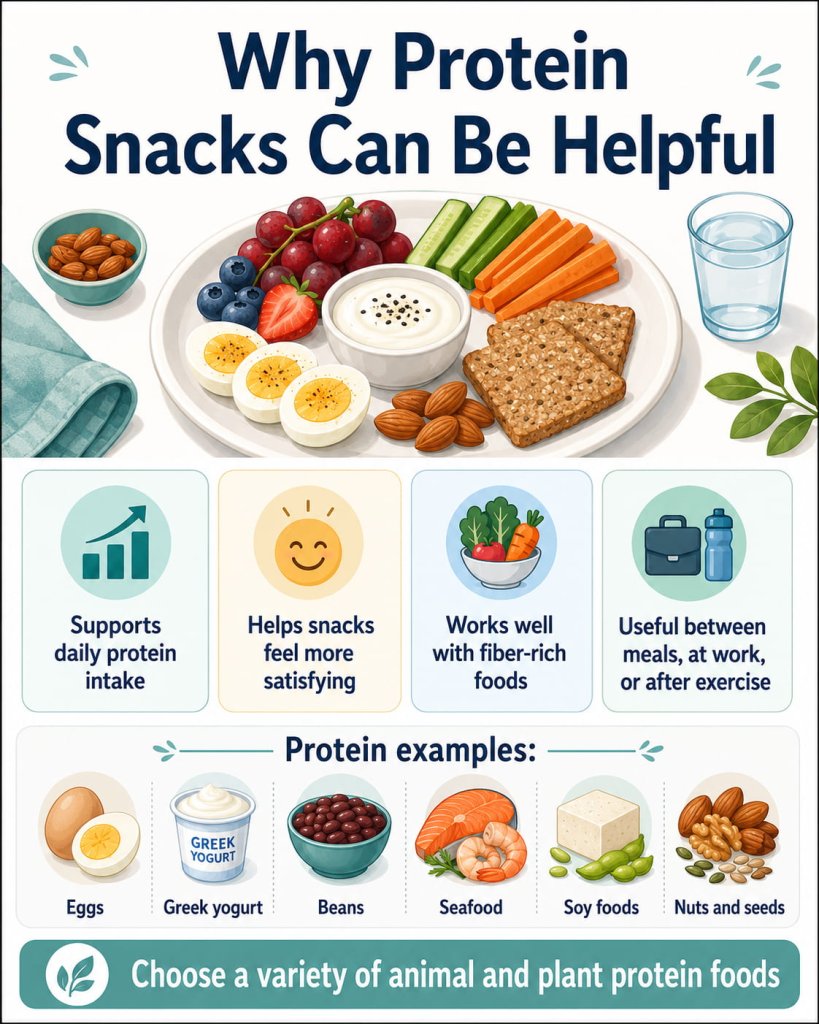
Protein is part of every healthy eating pattern. It helps your body build and maintain tissues, supports normal growth and repair, and makes snacks more filling when paired with fiber-rich foods.
The current Dietary Guidelines for Americans, 2025–2030 recommend eating a variety of nutrient-dense protein foods from both animal and plant sources, including eggs, poultry, seafood, meat, beans, peas, lentils, nuts, seeds, and soy foods.
A smart high protein snack can help when you:
- Need something between meals
- Want a more filling grab-and-go option
- Need a post-workout snack
- Want easy protein without cooking a full meal
- Prefer balanced snacks over sugary packaged foods
Protein needs vary by age, body size, activity level, health status, pregnancy, lactation, and medical conditions. If you have kidney disease, a medical nutrition plan, food allergies, or other health concerns, ask a healthcare professional or registered dietitian before making major diet changes.
How to Choose Healthy High Protein Snacks
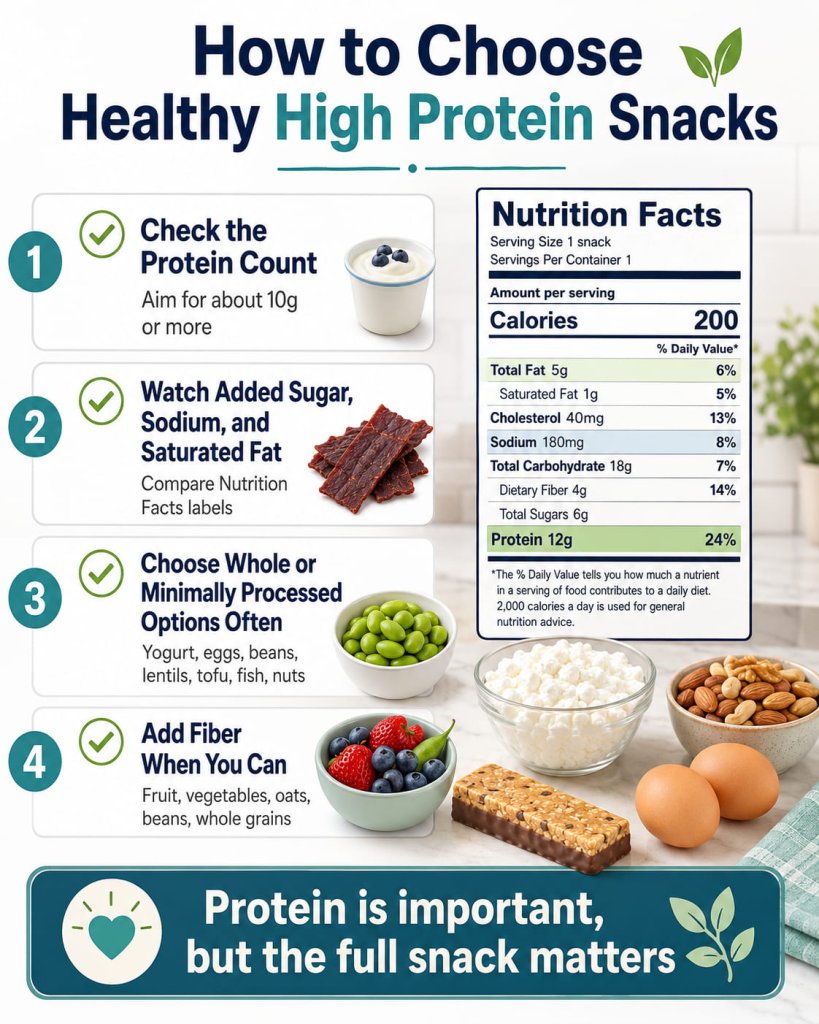
Not every snack labeled “high protein” is automatically a healthy choice. A better approach is to look at the full snack.
Check the Protein Count
Look for snacks with 10 grams or more protein when possible. If a snack has less protein, pair it with another protein source.
For example:
- Hummus plus hard-boiled eggs
- Peanut butter toast plus milk
- Fruit plus cottage cheese
- Crackers plus tuna
- Nuts plus Greek yogurt
Watch Added Sugar, Sodium, and Saturated Fat
The FDA recommends using the Nutrition Facts label to compare serving size, calories, nutrients, and percent Daily Value. It also recommends choosing more foods that are lower in saturated fat, sodium, and added sugars.
This matters because some protein bars, flavored yogurts, jerky, deli meats, and packaged snack packs can be high in added sugar or sodium.
Choose Whole or Minimally Processed Options Often
The FDA’s updated “healthy” claim focuses on foods that contribute to recommended food groups while staying within limits for added sugars, saturated fat, and sodium.
Good examples include plain yogurt, eggs, beans, lentils, nuts, seeds, fish, tofu, and lean poultry.
Add Fiber When You Can
Protein plus fiber is a strong snack combination. Add fruits, vegetables, beans, lentils, oats, whole-grain crackers, or whole-grain toast to make snacks more satisfying.
32 High Protein Snacks With Protein Counts
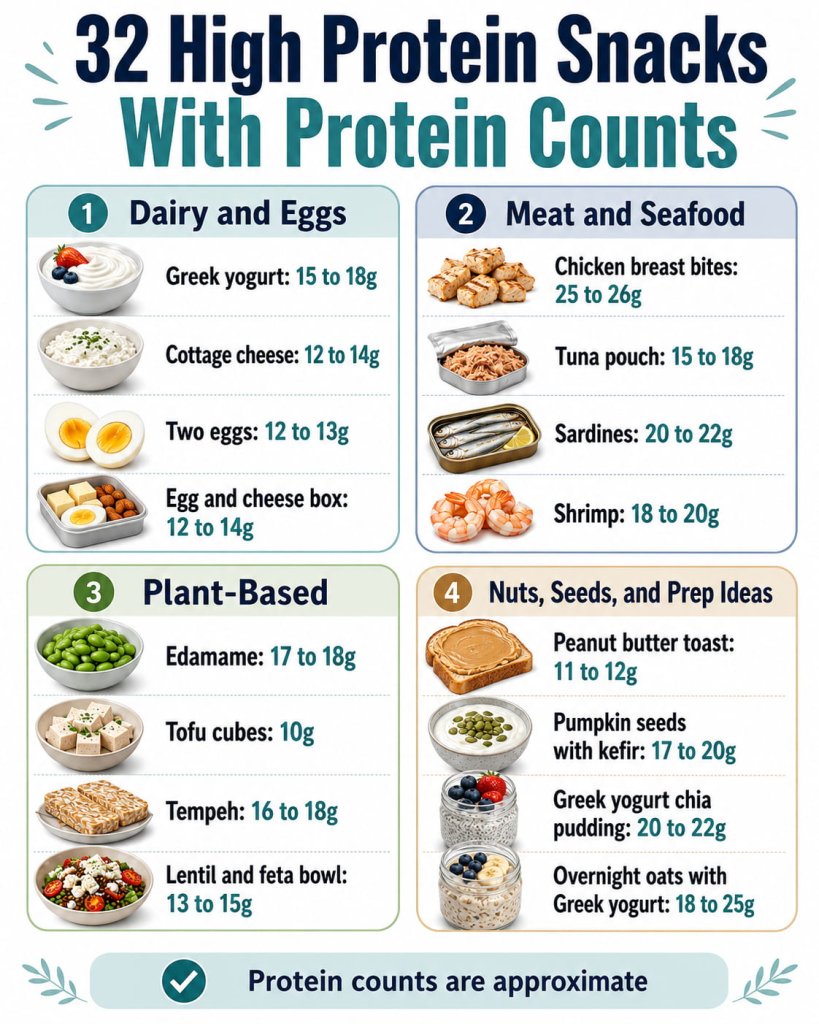
Protein counts are approximate. Exact numbers vary by brand, serving size, preparation method, and product label. USDA FoodData Central is the best source for checking specific food composition data, and packaged foods should always be checked by their Nutrition Facts label.
| # | High Protein Snack | Serving Idea | Approx. Protein |
|---|---|---|---|
| 1 | Plain Greek yogurt | 6 oz container | 15 to 18 g |
| 2 | Cottage cheese bowl | ½ cup cottage cheese with fruit | 12 to 14 g |
| 3 | Skyr or high-protein yogurt | 5.3 to 6 oz cup | 15 to 18 g |
| 4 | Kefir smoothie | 1 cup kefir blended with fruit | 9 to 11 g |
| 5 | Two hard-boiled eggs | 2 large eggs | 12 to 13 g |
| 6 | Egg and cheese snack box | 1 egg plus 1 oz cheese | 12 to 14 g |
| 7 | Turkey or chicken roll-ups | 3 oz turkey or chicken slices | 18 to 21 g |
| 8 | String cheese with turkey slices | 1 cheese stick plus 2 oz turkey | 18 to 20 g |
| 9 | Tuna pouch with crackers | 1 tuna pouch plus whole-grain crackers | 15 to 18 g |
| 10 | Canned salmon snack plate | 3 oz salmon with cucumber or crackers | 16 to 18 g |
| 11 | Sardines on whole-grain crackers | 1 small can sardines | 20 to 22 g |
| 12 | Shrimp cocktail | 3 oz cooked shrimp | 18 to 20 g |
| 13 | Chicken breast bites | 3 oz cooked chicken breast | 25 to 26 g |
| 14 | Beef or turkey jerky | 1 oz jerky | 9 to 15 g |
| 15 | Steamed edamame | 1 cup shelled edamame | 17 to 18 g |
| 16 | Dry-roasted edamame | 1 oz dry-roasted edamame | 12 to 13 g |
| 17 | Firm tofu cubes | ½ cup firm tofu | 10 g |
| 18 | Tempeh bites | 3 oz tempeh | 16 to 18 g |
| 19 | Lentil and feta mini bowl | ½ cup lentils plus 1 oz feta | 13 to 15 g |
| 20 | Black bean and cheese bowl | ½ cup black beans plus 1 oz cheese | 14 to 16 g |
| 21 | Hummus snack box | ½ cup hummus plus vegetables | 8 to 10 g |
| 22 | Peanut butter toast | 2 tbsp peanut butter plus whole-grain toast | 11 to 12 g |
| 23 | Apple with peanut butter and milk | Apple, 2 tbsp peanut butter, 1 cup milk | 15 to 16 g |
| 24 | Almonds with string cheese | 1 oz almonds plus 1 cheese stick | 12 to 13 g |
| 25 | Pistachios with cottage cheese | 1 oz pistachios plus ½ cup cottage cheese | 18 to 20 g |
| 26 | Pumpkin seeds with kefir | 1 oz pumpkin seeds plus 1 cup kefir | 17 to 20 g |
| 27 | Trail mix with roasted edamame | ¼ to ⅓ cup mix | 12 to 15 g |
| 28 | Cottage cheese toast | ½ cup cottage cheese on whole-grain toast | 16 to 18 g |
| 29 | Ricotta with berries and seeds | ½ cup ricotta plus seeds | 12 to 17 g |
| 30 | Greek yogurt chia pudding | Greek yogurt plus 2 tbsp chia seeds | 20 to 22 g |
| 31 | Overnight oats with Greek yogurt | Oats, Greek yogurt, and milk | 18 to 25 g |
| 32 | Protein bar | 1 bar | 10 to 20 g |
Best High Protein Snacks From Dairy and Eggs
Dairy and eggs are easy, affordable, and simple to prep ahead. They also work well for quick snacks because they do not need much cooking.
Plain Greek Yogurt
Plain Greek yogurt is one of the easiest high protein snacks. A 6-ounce serving usually gives around 15 to 18 grams of protein.
For a balanced snack, add berries, chia seeds, cinnamon, or a small handful of nuts. Choose plain yogurt most often, because flavored yogurts can contain more added sugar.
Cottage Cheese Bowl
Cottage cheese gives about 12 to 14 grams of protein per ½ cup. It works with sweet or savory toppings.
Try cottage cheese with pineapple, berries, cucumber, tomatoes, black pepper, or whole-grain crackers. If sodium is a concern, compare labels because cottage cheese sodium can vary by brand.
Skyr or High-Protein Yogurt
Skyr is a thick Icelandic-style cultured dairy product that is often high in protein. Many single-serve cups provide around 15 to 18 grams.
Choose plain or lower-sugar options when possible. Add fruit if you want sweetness.
Kefir Smoothie
Kefir is a fermented dairy drink. One cup usually provides around 9 to 11 grams of protein, depending on the brand.
Blend kefir with frozen berries and oats for a quick snack. For extra protein, add Greek yogurt or milk.
Two Hard-Boiled Eggs
Two large hard-boiled eggs provide about 12 to 13 grams of protein. They are portable, simple, and easy to prep.
Add fruit, vegetables, or whole-grain toast if you want a more filling snack.
Egg and Cheese Snack Box
Pairing one hard-boiled egg with 1 ounce of cheese gives about 12 to 14 grams of protein.
Add grapes, carrots, cucumber slices, or whole-grain crackers to make it more balanced.
Best High Protein Snacks With Meat, Seafood, and Poultry
These snacks are often very high in protein, but packaged versions can be high in sodium. Choose lean options, compare labels, and keep perishable foods cold.
Turkey or Chicken Roll-Ups
Turkey or chicken roll-ups can provide about 18 to 21 grams of protein from a 3-ounce serving.
Use lower-sodium turkey or chicken when possible. Roll slices around cucumber sticks, avocado, lettuce, or cheese.
String Cheese With Turkey Slices
A cheese stick paired with turkey slices is a quick high protein snack with about 18 to 20 grams of protein.
This is useful for school, work, or travel when packed in an insulated lunch bag with an ice pack.
Tuna Pouch With Crackers
A tuna pouch usually gives around 15 to 18 grams of protein. Pair it with whole-grain crackers or cucumber slices.
Choose tuna packed in water if you want a lighter option. For variety, try tuna with avocado, mustard, Greek yogurt, or lemon juice.
Canned Salmon Snack Plate
Canned salmon provides about 16 to 18 grams of protein per 3-ounce serving. It also adds seafood variety to your snack routine.
Serve it with crackers, sliced cucumber, or a small whole-grain wrap.
Sardines on Whole-Grain Crackers
Sardines are rich in protein, and one small can often provides around 20 to 22 grams. They are also a convenient shelf-stable seafood option before opening.
Pair them with whole-grain crackers, tomatoes, or lemon juice.
Shrimp Cocktail
Three ounces of cooked shrimp provides about 18 to 20 grams of protein.
Use a simple dipping sauce and add vegetables or whole-grain crackers for balance.
Chicken Breast Bites
Cooked chicken breast is one of the highest-protein snack options. A 3-ounce serving can provide about 25 to 26 grams of protein.
Prep chicken ahead and store it in small containers with vegetables, fruit, or a small serving of whole grains.
Beef or Turkey Jerky
Jerky can provide around 9 to 15 grams of protein per ounce. It is convenient, shelf-stable, and easy to carry.
The downside is sodium. Compare brands and choose lower-sodium options when available.
Best Plant-Based High Protein Snacks
Plant-based protein snacks can be filling and nutrient-dense. They often provide fiber, which many animal-based protein snacks do not.
Steamed Edamame
Shelled edamame provides around 17 to 18 grams of protein per cup. It is one of the strongest plant-based high protein snacks.
Add a small pinch of salt, chili flakes, garlic powder, or lemon juice for flavor.
Dry-Roasted Edamame
Dry-roasted edamame is crunchy, portable, and usually provides about 12 to 13 grams of protein per ounce.
It works well in trail mix or as a simple desk snack.
Firm Tofu Cubes
Firm tofu provides about 10 grams of protein per ½ cup. It can be baked, air-fried, or pan-seared.
Try tofu cubes with a light dipping sauce, vegetables, or rice crackers.
Tempeh Bites
Tempeh is a fermented soy food that provides about 16 to 18 grams of protein in a 3-ounce serving.
Slice it into cubes or strips, season it, and bake or pan-sear it for a make-ahead snack.
Lentil and Feta Mini Bowl
A small bowl with ½ cup cooked lentils and 1 ounce feta can provide about 13 to 15 grams of protein.
Add chopped cucumber, tomato, parsley, and lemon juice for a simple Mediterranean-style snack.
Black Bean and Cheese Bowl
Black beans plus cheese create a filling snack with about 14 to 16 grams of protein.
Use ½ cup black beans, 1 ounce cheese, salsa, and a few tortilla chips or vegetables for dipping.
Hummus Snack Box
A ½ cup serving of hummus can provide about 8 to 10 grams of protein. It is slightly lower than some other options, but it becomes stronger when paired with eggs, cheese, roasted edamame, or whole-grain pita.
Add carrots, peppers, cucumbers, or cherry tomatoes for fiber and crunch.
Best High Protein Snacks With Nuts and Seeds
Nuts and seeds contain protein, but they are also rich in fats, so portions matter. They work best when paired with dairy, eggs, soy, or whole grains.
Peanut Butter Toast
Two tablespoons of peanut butter with one slice of whole-grain toast gives about 11 to 12 grams of protein.
Use banana slices, cinnamon, or chia seeds for more flavor and texture.
Apple With Peanut Butter and Milk
An apple with 2 tablespoons peanut butter and 1 cup milk gives around 15 to 16 grams of protein.
This snack is simple, filling, and easy to prepare.
Almonds With String Cheese
One ounce of almonds plus one cheese stick gives around 12 to 13 grams of protein.
This is a good no-cook snack for busy days.
Pistachios With Cottage Cheese
Pistachios plus cottage cheese provide about 18 to 20 grams of protein.
This snack gives a nice mix of creamy, crunchy, salty, and slightly sweet flavors.
Pumpkin Seeds With Kefir
One ounce of pumpkin seeds paired with 1 cup kefir can provide about 17 to 20 grams of protein.
This is a good option when you want something quick but more interesting than a plain drink.
Trail Mix With Roasted Edamame
A trail mix made with roasted edamame, nuts, seeds, and a small amount of dried fruit can provide about 12 to 15 grams of protein per serving.
Keep portions moderate because trail mix can become calorie-dense quickly.
Easy Make-Ahead High Protein Snacks
These options are helpful if you want snacks ready in the fridge before the week gets busy.
Cottage Cheese Toast
Cottage cheese toast gives about 16 to 18 grams of protein when you use ½ cup cottage cheese and whole-grain toast.
Top it with tomato, cucumber, avocado, berries, cinnamon, or a drizzle of honey.
Ricotta With Berries and Seeds
A ½ cup of ricotta plus seeds can provide about 12 to 17 grams of protein, depending on the type of ricotta and seed portion.
Use berries for natural sweetness and fiber.
Greek Yogurt Chia Pudding
Greek yogurt chia pudding can provide around 20 to 22 grams of protein per serving.
Mix Greek yogurt, chia seeds, milk, and fruit. Refrigerate until thick. Choose plain Greek yogurt and add your own fruit to control added sugar.
Overnight Oats With Greek Yogurt
Overnight oats with Greek yogurt and milk can provide about 18 to 25 grams of protein.
Use oats, Greek yogurt, milk, chia seeds, and berries. This snack also works as a small breakfast.
Protein Bar
A protein bar can provide 10 to 20 grams of protein, depending on the brand.
Read the label before buying. Look for enough protein, reasonable added sugar, and ingredients that fit your needs. Some bars contain sugar alcohols or fibers that may bother sensitive stomachs.
High Protein Snacks Without Protein Powder
You do not need protein powder to make a high protein snack. Whole-food options can work well.
Good choices include:
- Greek yogurt with chia seeds
- Cottage cheese with fruit
- Tuna pouch with crackers
- Hard-boiled eggs with vegetables
- Edamame with sea salt
- Tofu cubes with dipping sauce
- Turkey roll-ups with cucumber
- Lentil and feta mini bowl
- Peanut butter toast with milk
Protein powder can be convenient for some people, but it is not required for a high protein diet.
High Protein Snacks for Work, School, and Travel
For busy days, choose snacks that are easy to pack and not messy.
Good portable options include:
- Tuna pouch with crackers
- Jerky with fruit
- Protein bar
- Roasted edamame
- Trail mix with soy nuts
- Almonds and string cheese
- Turkey roll-ups in a lunch container
- Greek yogurt in a cooler bag
- Hard-boiled eggs in an insulated container
For perishable foods like yogurt, cheese, eggs, cooked chicken, and seafood, use an insulated lunch bag with an ice pack.
Food Safety Tips for Protein Snacks
Protein-rich foods like eggs, dairy, meat, poultry, seafood, tofu, and cooked beans need safe storage.
FoodSafety.gov lists cooked meat or poultry leftovers as safe in the refrigerator for 3 to 4 days. The FDA advises storing eggs in a refrigerator at 40°F or below and eating hard-cooked eggs within 1 week after cooking.
Use these safety tips:
- Keep cold snacks cold at 40°F or below.
- Refrigerate cooked meat, poultry, seafood, dairy, eggs, tofu, and cooked beans promptly.
- Use cooked meat and poultry leftovers within 3 to 4 days.
- Eat hard-boiled eggs within 1 week.
- Pack perishable snacks with an ice pack when leaving home.
- Throw away foods that smell off, look spoiled, or were left out too long.
What Snack Has 20 Grams of Protein?
Several snacks can give about 20 grams of protein or more:
| Snack | Approx. Protein |
|---|---|
| Greek yogurt chia pudding | 20 to 22 g |
| Sardines on crackers | 20 to 22 g |
| Chicken breast bites | 25 to 26 g |
| Tuna pouch plus cheese stick | 20 to 25 g |
| Cottage cheese plus pistachios | 18 to 20 g |
| Overnight oats with Greek yogurt | 18 to 25 g |
| Protein bar | 10 to 20 g |
If your snack only has 8 to 10 grams, you can increase protein by adding Greek yogurt, cottage cheese, milk, tofu, eggs, tuna, chicken, edamame, or cheese.
Quick High Protein Snack Pairing Formula
Use this simple formula:
Protein food plus fiber-rich food plus flavor
Examples:
- Greek yogurt plus berries plus cinnamon
- Cottage cheese plus cucumber plus pepper
- Tuna plus crackers plus lemon
- Edamame plus vegetables plus chili flakes
- Eggs plus fruit plus whole-grain toast
- Tofu plus vegetables plus dipping sauce
- Peanut butter plus toast plus banana
This formula keeps snacks simple, balanced, and easier to repeat.
FAQ About High Protein Snacks
What are the best high protein snacks?
Some of the best high protein snacks are Greek yogurt, cottage cheese, hard-boiled eggs, tuna pouches, chicken breast bites, edamame, tofu, tempeh, lentils, sardines, shrimp, and Greek yogurt chia pudding. These options give meaningful protein and can fit into balanced meals or snacks.
How much protein should a snack have?
A good target is about 10 grams or more per snack. Some people may prefer 15 to 25 grams, especially after exercise or when a snack needs to be more filling. Protein needs vary, so this is a practical snack guide, not a personal medical target.
What snack has the most protein?
Chicken breast bites, tuna, sardines, shrimp, Greek yogurt chia pudding, and some protein bars are among the highest-protein snack options. A 3-ounce serving of cooked chicken breast can provide about 25 grams of protein.
Are protein bars healthy?
Protein bars can be convenient, but quality varies. Choose bars with enough protein, reasonable added sugar, and ingredients that fit your needs. Check the Nutrition Facts label for serving size, added sugars, sodium, saturated fat, fiber, and total protein.
What are high protein vegetarian snacks?
Good vegetarian high protein snacks include Greek yogurt, cottage cheese, skyr, eggs, edamame, tofu, tempeh, lentils, beans with cheese, ricotta with berries, pumpkin seeds with kefir, and overnight oats with Greek yogurt.
What are high protein vegan snacks?
Vegan high protein snacks include edamame, dry-roasted edamame, tofu cubes, tempeh bites, lentil salad, black bean bowls without cheese, hummus with whole-grain pita, soy yogurt, roasted chickpeas, and trail mix with soy nuts or pumpkin seeds.
Can high protein snacks help with fullness?
High protein snacks may help support fullness, especially when paired with fiber-rich foods like fruit, vegetables, oats, beans, lentils, or whole grains. For best results, choose balanced snacks instead of relying only on protein bars or processed snacks.
Conclusion
High protein snacks do not have to be complicated. A good snack can be as simple as Greek yogurt with berries, two hard-boiled eggs, tuna with crackers, edamame, cottage cheese toast, tofu cubes, or a balanced protein snack box.
Aim for about 10 grams of protein or more, check labels for added sugar and sodium, and choose a variety of animal and plant-based protein foods. Start with a few easy options from this list, prep them ahead, and keep your snacks simple, satisfying, and realistic.
This content is for informational purposes only and not medical advice.