
An anti-inflammatory eating pattern focuses on vegetables, fruits, whole grains, beans, nuts, seeds, fish, and unsaturated fats while limiting sugary drinks, processed meats, refined carbohydrates, and heavily processed foods. You do not need a restrictive detox, expensive supplements, or a list of forbidden ingredients.
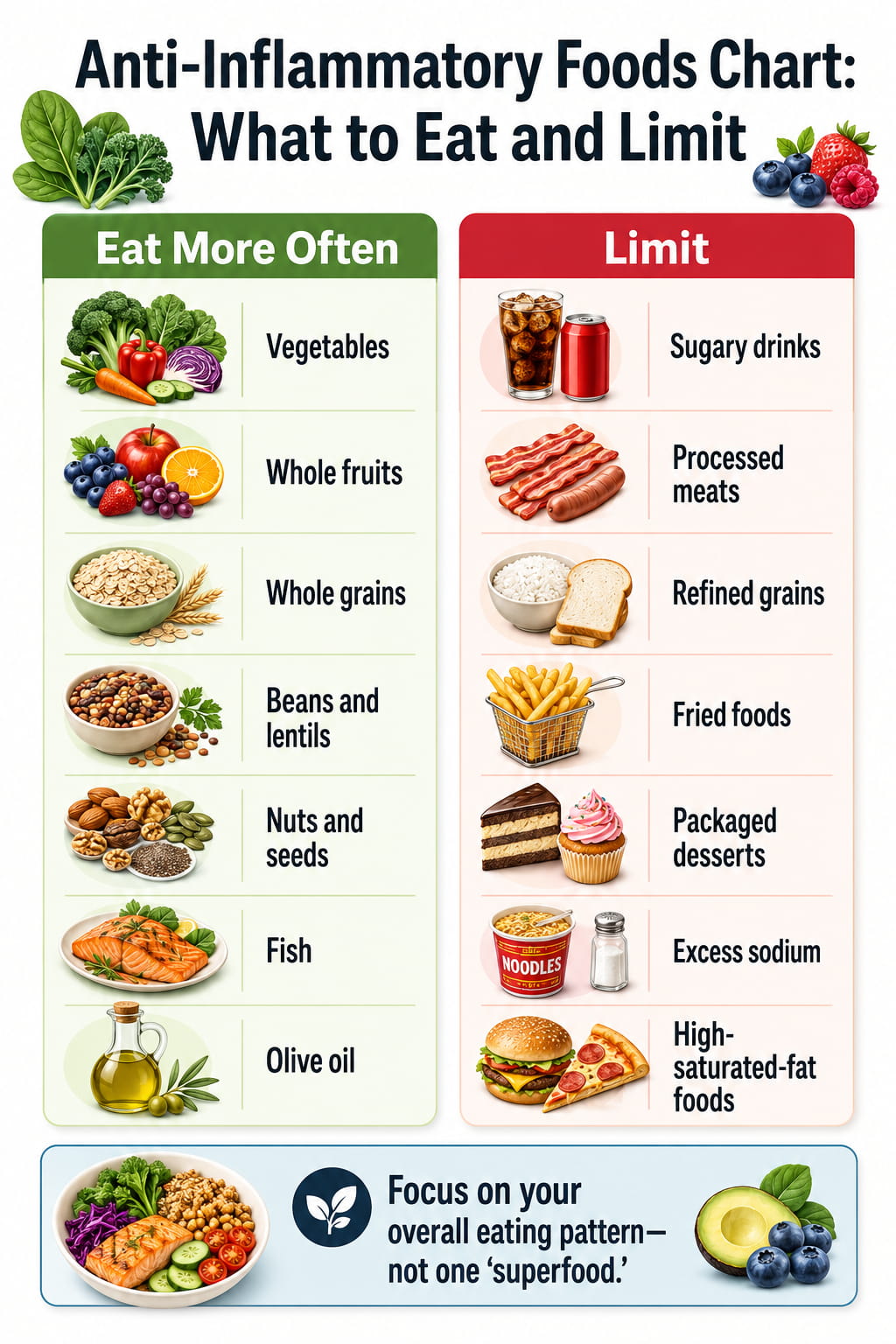
The most practical approach resembles a Mediterranean-style diet. It emphasizes overall food quality rather than relying on one “superfood.” In a 2025 review of 33 randomized controlled trials involving 3,476 adults, Mediterranean-style diets improved some inflammatory markers, including high-sensitivity C-reactive protein and interleukin-6, but did not significantly change every marker studied. This means diet may support healthier inflammatory processes, but results vary and food is not a substitute for medical care.
Anti-Inflammatory Foods Chart
Use this anti-inflammatory foods chart as a flexible shopping and meal-planning guide. Foods in the “limit” column do not necessarily need to be completely avoided. The goal is to eat them less often and in smaller portions.
| Food group | Eat more often | Limit or replace |
|---|---|---|
| Vegetables | Leafy greens, broccoli, cauliflower, cabbage, carrots, tomatoes, peppers, onions, mushrooms, squash | Deep-fried vegetables, vegetables in heavy cream sauce, heavily salted vegetable dishes |
| Fruits | Berries, cherries, oranges, apples, pears, grapes, peaches, plums, avocado | Fruit drinks, fruit canned in heavy syrup, sweetened dried fruit, large amounts of juice |
| Whole grains | Oats, barley, brown rice, quinoa, bulgur, whole-wheat bread, whole-grain pasta | White bread, sugary cereal, pastries, refined-flour crackers, many packaged baked goods |
| Beans and legumes | Lentils, chickpeas, black beans, kidney beans, peas, edamame | Beans prepared with large amounts of processed meat, salt, butter, or sugary sauces |
| Nuts and seeds | Walnuts, almonds, pistachios, pecans, chia, flax, sunflower seeds, pumpkin seeds | Sugar-coated nuts, heavily salted nuts, oversized portions |
| Fish and seafood | Salmon, sardines, trout, herring, mackerel, tuna, mussels | Deep-fried fish, heavily breaded seafood, processed fish products high in sodium |
| Other proteins | Tofu, tempeh, eggs, skinless poultry, lean unprocessed meat | Bacon, sausage, hot dogs, salami, pepperoni, heavily processed deli meat |
| Fats and oils | Olive oil, avocado, nuts, seeds, canola oil, natural nut butter | Butter, lard, shortening, partially hydrogenated oils, frequent use of coconut or palm oil |
| Dairy or alternatives | Plain unsweetened yogurt, kefir, lower-fat milk, fortified unsweetened soy milk | Sweetened yogurt, milkshakes, heavy cream, large amounts of high-fat cheese |
| Flavorings | Garlic, ginger, turmeric, cinnamon, rosemary, oregano, basil | Excess salt, sugary sauces, heavy cream sauces |
| Drinks | Water, sparkling water, unsweetened tea, plain coffee | Soda, sweet tea, energy drinks, fruit drinks, heavily sweetened coffee |
| Snacks and desserts | Fresh fruit, vegetables with hummus, plain yogurt, nuts, air-popped popcorn | Candy, cookies, doughnuts, pastries, chips, packaged snack cakes |
This pattern is consistent with current American Heart Association dietary recommendations, which prioritize vegetables, fruits, whole grains, plant proteins, fish, unsaturated fats, and minimally processed foods.
What Makes a Food Anti-Inflammatory?
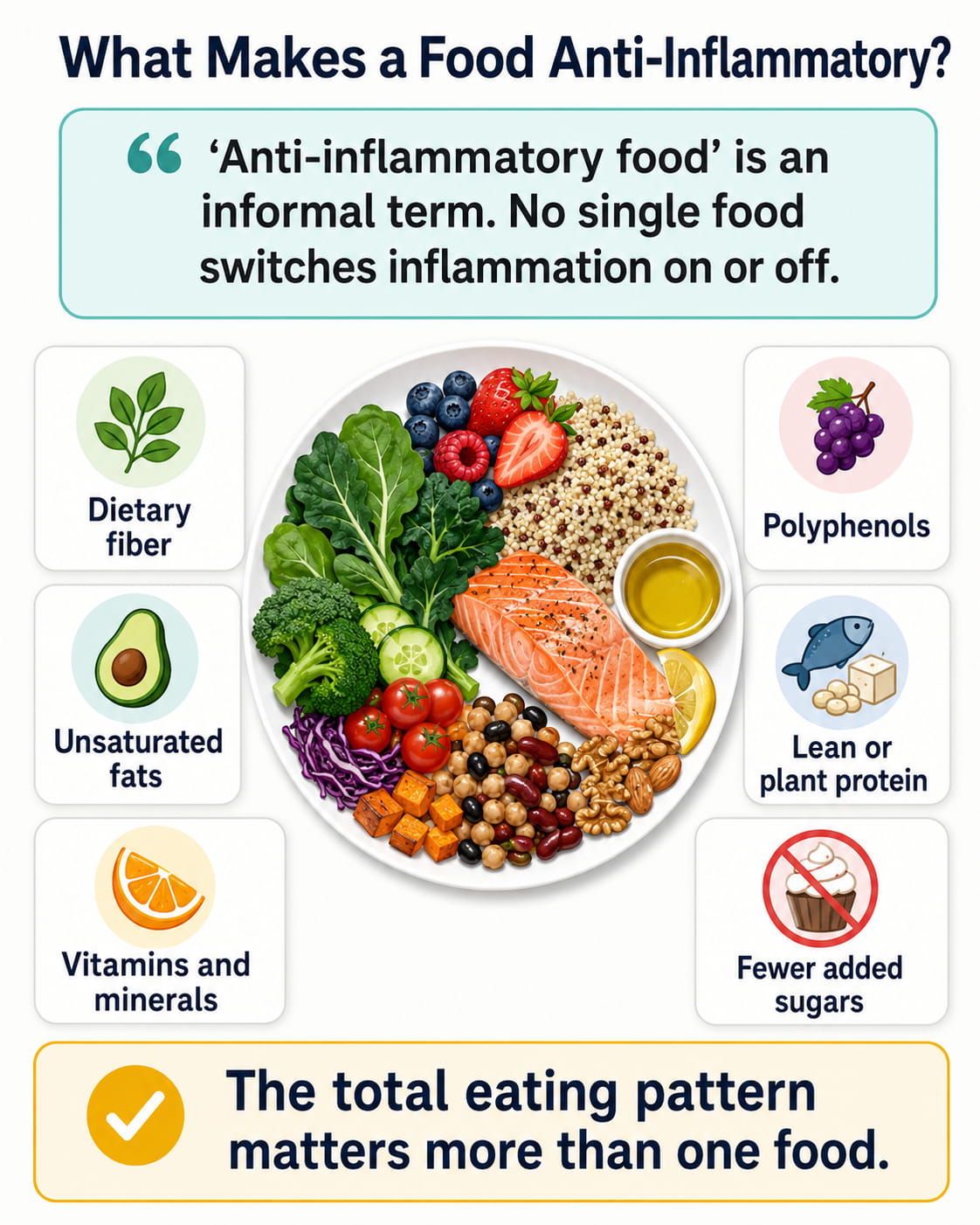
“Anti-inflammatory food” is an informal term. A food does not switch inflammation on or off by itself.
Foods commonly included in an anti-inflammatory pattern tend to provide combinations of:
- Dietary fiber
- Unsaturated fats
- Vitamins and minerals
- Plant compounds such as polyphenols
- Protein with relatively little saturated fat
- Fewer added sugars and refined carbohydrates
The total eating pattern matters more than whether you eat one serving of berries, salmon, or turmeric. Eating vegetables occasionally will not cancel a diet dominated by sugary drinks and highly processed snacks. Likewise, one dessert does not make an otherwise balanced diet unhealthy.
A Mediterranean-style pattern typically includes vegetables, fruits, beans, whole grains, nuts, seeds, olive oil, fish, and moderate amounts of eggs, poultry, and dairy. It limits added sugars, refined carbohydrates, processed meat, and highly processed foods.
Best Anti-Inflammatory Foods to Eat Regularly
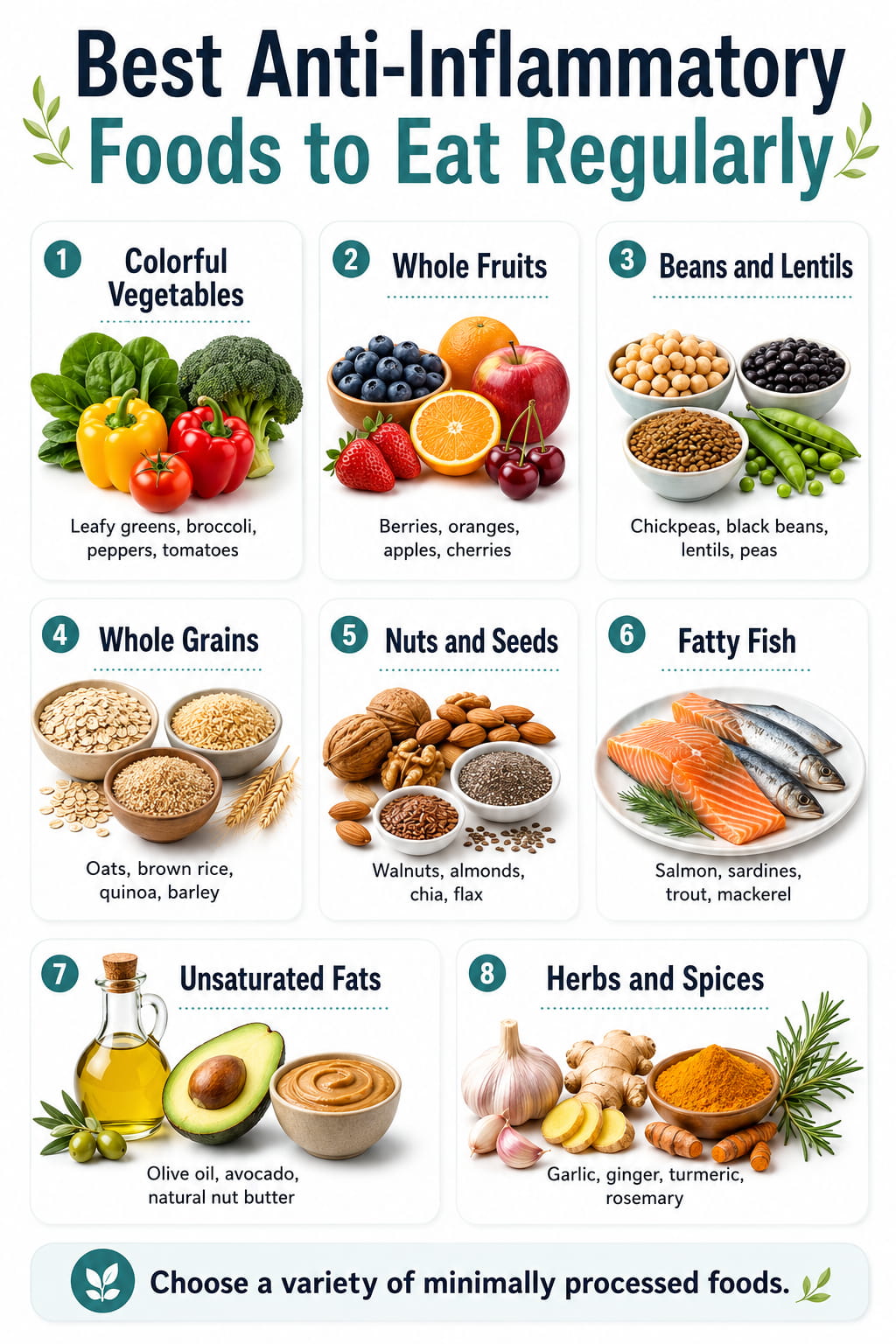
Colorful Vegetables
Vegetables should form a large part of most meals. Different colors provide different nutrients and plant compounds, so variety matters more than choosing one “best” vegetable.
Useful options include:
- Spinach, kale, collard greens, and other leafy vegetables
- Broccoli, cauliflower, Brussels sprouts, and cabbage
- Tomatoes, peppers, carrots, and squash
- Onions, garlic, mushrooms, and green beans
Fresh vegetables are not automatically better than frozen ones. Frozen vegetables without added sauces can be affordable, nutritious, and convenient. Canned vegetables can also fit when they are low in sodium or drained and rinsed before use.
Whole Fruits
Whole fruit provides fiber along with vitamins and plant compounds. Berries and cherries are frequently promoted as anti-inflammatory, but apples, oranges, pears, grapes, peaches, and other fruits also belong in a healthy pattern.
Choose whole fruit more often than juice because juice is less filling and usually contains less fiber. Unsweetened frozen fruit is a practical alternative when fresh fruit is unavailable or expensive.
Beans, Lentils, and Peas
Beans and other legumes provide plant protein, dietary fiber, and minerals. They can replace some processed or high-fat meats in soups, bowls, salads, tacos, curries, and pasta dishes.
Examples include:
- Black beans
- Chickpeas
- Kidney beans
- Lentils
- Split peas
- Edamame
- Black-eyed peas
When using canned beans, choose no-salt-added or lower-sodium varieties when possible. Draining and rinsing them can remove some of the sodium.
Whole Grains
Whole grains retain more of the grain’s natural fiber and nutrients than refined grains.
Good choices include:
- Oatmeal
- Barley
- Brown or wild rice
- Quinoa
- Bulgur
- Whole-grain bread
- Whole-wheat pasta
- Air-popped popcorn
Look for a whole grain, such as whole wheat or oats, near the beginning of the ingredient list. Brown coloring, seeds on the crust, or the word “multigrain” does not guarantee that a product is primarily whole grain.
Nuts and Seeds
Nuts and seeds provide unsaturated fats, fiber, protein, and minerals. Useful choices include walnuts, almonds, pistachios, chia seeds, ground flaxseed, pumpkin seeds, and sunflower seeds.
They are calorie-dense, so a small handful is usually more practical than eating directly from a large bag. Choose unsalted or lightly salted options without candy coatings or added syrups.
Fatty Fish
Fatty fish provide protein and long-chain omega-3 fats. Options include salmon, sardines, trout, herring, and mackerel.
The American Heart Association recommends eating two servings of fish per week, particularly fatty fish. One serving is approximately 3 ounces cooked. Pregnant people, those who may become pregnant, breastfeeding parents, and caregivers of young children should follow current FDA advice about lower-mercury fish choices. See the AHA fish and omega-3 guidance for details.
If you do not eat fish, beans, tofu, tempeh, nuts, and seeds can still support a plant-forward eating pattern. Fish oil supplements are not required to follow this chart.
Olive Oil and Other Unsaturated Fats
Olive oil is commonly used in Mediterranean-style eating. Other liquid plant oils, avocado, nuts, seeds, and natural nut butter also provide unsaturated fats.
The benefit comes partly from what these foods replace. Using olive oil instead of butter, for example, reduces reliance on saturated fat. The American Heart Association recommends replacing foods high in saturated and trans fats with foods containing monounsaturated and polyunsaturated fats.
Herbs and Spices
Garlic, ginger, turmeric, rosemary, cinnamon, oregano, and other herbs and spices can make minimally processed foods more flavorful without requiring large amounts of salt or sugar.
Use turmeric and ginger as culinary ingredients rather than assuming concentrated supplements provide the same benefits. The National Center for Complementary and Integrative Health states that evidence is not strong enough to conclude that turmeric or curcumin benefits any specific health condition. Highly absorbable curcumin supplements have also been linked to liver injury in some people. Review the NCCIH turmeric safety information before considering a supplement.
Foods to Limit on an Anti-Inflammatory Diet
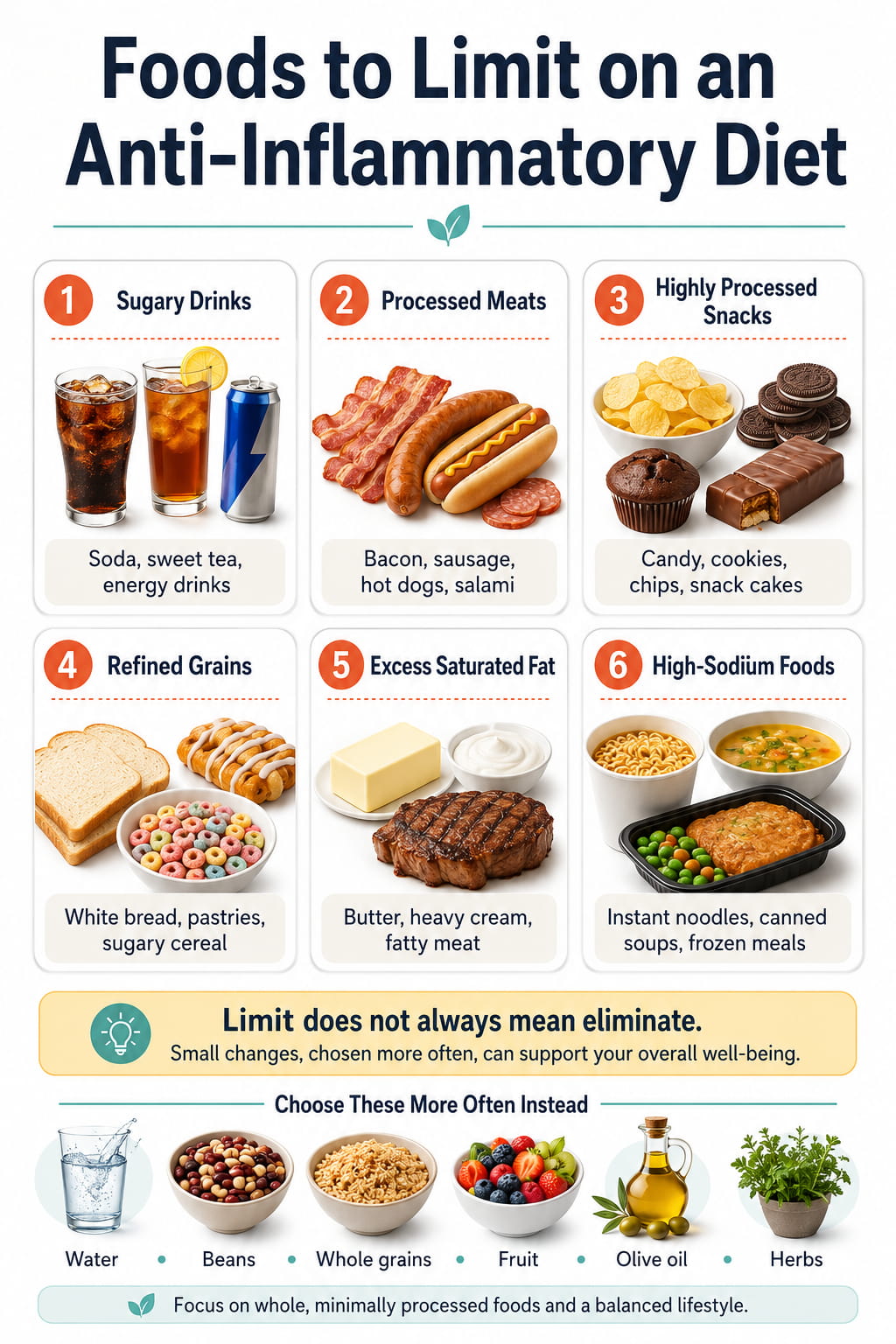
Sugary Drinks
Sugary beverages are one of the easiest categories to reduce because they can add substantial sugar without being filling.
Common examples include:
- Regular soda
- Sweet tea
- Energy drinks
- Fruit drinks
- Sweetened coffee beverages
- Flavored milk
- Sweetened bottled smoothies
Replace them with water, sparkling water, unsweetened tea, or coffee with little or no added sugar.
The American Heart Association recommends limiting added sugar to no more than approximately 6% of daily calories. For most women, that is about 6 teaspoons per day; for most men, about 9 teaspoons. Individual calorie needs vary.
Processed Meats
Bacon, sausage, hot dogs, salami, pepperoni, and many deli meats are commonly high in sodium and may also contain substantial saturated fat.
You do not have to replace all animal protein. More practical substitutions include:
- Beans instead of sausage in a soup
- Tuna or chickpeas instead of salami in a sandwich
- Grilled chicken instead of processed chicken nuggets
- Lentils or lean ground turkey instead of part of the ground beef in a recipe
Highly Processed Snack and Dessert Foods
Many cookies, pastries, packaged snack cakes, chips, candy, and frozen desserts combine refined carbohydrates, added sugar, sodium, and saturated fat.
These foods can still fit occasionally. The important distinction is whether they are occasional extras or major daily calorie sources.
Refined Grains
White bread, refined-flour pastries, many crackers, and sugary breakfast cereals usually contain less fiber than whole-grain alternatives.
Simple swaps include:
| Instead of | Try |
|---|---|
| Sugary cereal | Oatmeal with fruit and nuts |
| White bread | Whole-grain bread |
| Regular pasta every time | Whole-wheat pasta or a half-and-half mixture |
| Pastry for breakfast | Whole-grain toast with eggs or nut butter |
| Refined crackers | Whole-grain crackers with hummus |
Excess Saturated Fat
Butter, heavy cream, fatty cuts of meat, high-fat cheese, coconut oil, palm oil, and many fried foods can contribute substantial saturated fat.
Rather than attempting to eliminate fat, replace some saturated fat with olive oil, nuts, seeds, avocado, fish, beans, or tofu.
Excess Sodium
Sodium can be high in canned soups, frozen dinners, instant noodles, processed meats, salty snacks, sauces, seasoning packets, and restaurant meals.
Reduce sodium without making meals bland by using:
Compare similar products because sodium can differ significantly between brands.
Alcohol
Alcohol is not necessary for an anti-inflammatory or Mediterranean-style diet. People who do not drink should not start for a possible health benefit. If you drink, discuss safe limits with a healthcare professional, particularly if you take medication, are pregnant, have liver disease, or have difficulty controlling alcohol use.
Practical Daily Serving Guide
The following amounts are general starting points for an adult eating approximately 2,000 calories per day. Your needs may differ based on age, body size, activity, pregnancy, health conditions, and weight goals.
| Food group | General starting point |
|---|---|
| Vegetables | About 2½ cups daily |
| Fruit | About 2 cups daily |
| Grains | About 3–6 ounce-equivalents daily, with at least half from whole grains |
| Fish | Two servings weekly |
| Beans, nuts, seeds, or lentils | Include regularly as plant protein |
| Oils | Use modest amounts of liquid plant oils in place of solid fats |
These are guides, not requirements for every meal or every person. The American Heart Association recommends assessing intake over several days rather than expecting every day to be perfectly balanced.
How to Build an Anti-Inflammatory Plate
A simple plate can make the chart easier to use:
- Fill approximately half the plate with vegetables and fruit, emphasizing vegetables.
- Use approximately one-quarter for a protein such as beans, lentils, fish, tofu, eggs, or lean poultry.
- Use approximately one-quarter for a whole grain or other fiber-rich carbohydrate.
- Add a small amount of olive oil, nuts, seeds, or avocado.
- Choose water or another unsweetened beverage.
Examples include:
- Salmon, roasted broccoli, and brown rice
- Lentil curry, mixed vegetables, and a small serving of brown rice
- Chickpea salad with tomatoes, cucumber, greens, olive oil, and whole-grain bread
- Tofu stir-fry with vegetables and quinoa
- Egg and vegetable scramble with whole-grain toast and fruit
Easy Anti-Inflammatory Food Swaps
Small replacements are often easier to maintain than a complete diet overhaul.
| Current choice | Practical replacement |
|---|---|
| Soda | Sparkling water with lemon |
| Sweet tea | Unsweetened tea with fruit slices |
| Bacon or sausage | Eggs, beans, tofu, or leftover chicken |
| White bread | Whole-grain bread |
| Butter on vegetables | Olive oil and herbs |
| Candy bar | Fruit with a small handful of nuts |
| Sweetened yogurt | Plain yogurt with berries |
| Chips | Air-popped popcorn or vegetables with hummus |
| Cream-based sauce | Tomato, herb, or olive oil-based sauce |
| Large meat portion | Smaller meat portion plus beans or vegetables |
Start with one or two changes you can repeat most days. Consistency matters more than attempting to eat perfectly for a week.
How to Read Food Labels
The FDA Nutrition Facts Label guide provides a quick way to compare packaged foods:
- 5% Daily Value or less per serving is considered low.
- 20% Daily Value or more per serving is considered high.
For an anti-inflammatory eating pattern, compare similar products and generally favor options:
- Higher in dietary fiber
- Lower in added sugars
- Lower in sodium
- Lower in saturated fat
Always check the serving size first. A package may contain two or more servings, so eating the entire package can multiply every number on the label.
Also read the ingredient list. A shorter list is not automatically healthier, but the ingredients can reveal whether a product is mostly whole grains, nuts, beans, or fruit—or primarily refined flour, sugars, and oils.
One-Day Anti-Inflammatory Meal Example
This is an example, not a personalized medical meal plan.
Breakfast
Oatmeal topped with berries, walnuts, and cinnamon, served with plain yogurt or unsweetened fortified soy milk.
Lunch
A chickpea and vegetable bowl with leafy greens, tomatoes, cucumber, quinoa, olive oil, and lemon.
Snack
An apple with natural peanut or almond butter.
Dinner
Baked salmon or tofu with roasted broccoli and brown rice.
Optional Dessert
Fresh fruit or plain yogurt with fruit.
Adjust portions and ingredients for your calorie needs, allergies, food preferences, culture, budget, and medical requirements.
Do You Need to Avoid Dairy, Gluten, or Nightshades?
Dairy
Dairy is not automatically excluded from a Mediterranean-style eating pattern. Plain yogurt, kefir, and other unsweetened dairy foods may fit if you tolerate them.
Choose alternatives if you have a diagnosed milk allergy, lactose intolerance, or another reason to avoid dairy. Fortified unsweetened soy milk is usually a closer nutritional replacement for dairy milk than many other plant beverages.
Gluten
A general anti-inflammatory diet does not require everyone to avoid gluten. People with celiac disease must avoid gluten, while those with a diagnosed wheat allergy or medically evaluated sensitivity may need individualized restrictions.
Removing gluten without a clear reason can make a diet more expensive or unnecessarily restrictive. Whole grains that contain gluten can provide valuable fiber and nutrients.
Nightshade Vegetables
Tomatoes, peppers, eggplant, and potatoes are not automatically prohibited. They provide useful nutrients and can fit into a balanced diet.
Anyone who notices repeatable symptoms after a particular food can record what they eat and discuss the pattern with a registered dietitian or clinician before eliminating an entire food group.
Who Should Get Personalized Nutrition Advice?
Speak with a registered dietitian or healthcare professional before making major dietary changes if you:
- Have diabetes, kidney disease, liver disease, or digestive disease
- Have a history of an eating disorder
- Are pregnant or breastfeeding
- Take warfarin or another medicine affected by food
- Have multiple food allergies
- Are unintentionally losing weight
- Need to follow a low-potassium, low-sodium, or other prescribed diet
- Are considering concentrated turmeric, ginger, fish oil, or other supplements
An anti-inflammatory eating pattern may support overall health, but it does not replace prescribed medication or treatment.
Frequently Asked Questions
What are the best foods for an anti-inflammatory diet?
Vegetables, whole fruits, beans, lentils, whole grains, nuts, seeds, fish, olive oil, and other minimally processed foods form the foundation. No single food is required, and variety is more useful than repeatedly eating one “superfood.”
What foods are commonly limited on an anti-inflammatory diet?
Sugary drinks, processed meats, refined grains, deep-fried foods, heavily processed snacks, excess sodium, and foods high in added sugar or saturated fat are generally limited. They do not need to be treated as forbidden foods, but they should not dominate the diet.
Are eggs anti-inflammatory?
Eggs can fit into an overall balanced eating pattern. They provide protein and several nutrients, but they should not be marketed as a food that directly lowers inflammation. Prepare them with vegetables and whole grains rather than consistently pairing them with processed meats and refined bread.
Are coffee and tea allowed?
Plain coffee and unsweetened tea can fit. The main concern is often what is added to them. Large amounts of syrup, sugar, whipped topping, or sweetened creamer can turn a low-calorie drink into a major source of added sugar.
Can frozen and canned foods be anti-inflammatory?
Yes. Unsweetened frozen fruits, plain frozen vegetables, canned beans, canned fish, and lower-sodium canned vegetables can all fit. Choose products without heavy syrup, sugary sauces, or large amounts of sodium. Drain and rinse canned beans and vegetables when appropriate.
How quickly can an anti-inflammatory diet work?
There is no reliable timeline that applies to everyone. Research studies vary in length, participant health, food choices, and biomarkers measured. A 2025 meta-analysis found improvements in certain markers but not others, so claims that a diet will “remove inflammation” within days are not supported.
Do turmeric supplements reduce inflammation?
Evidence is not strong enough to conclude that turmeric or curcumin supplements benefit a specific health condition. Supplements can also cause side effects, interact with medications, and, in some formulations, have been linked to liver injury. Culinary amounts used in food are different from concentrated supplements.
Conclusion
An anti-inflammatory foods chart is most useful when it helps you build better meals—not when it creates a long list of forbidden foods. Start by adding vegetables, fruit, beans, whole grains, nuts, seeds, fish, and unsaturated fats to meals you already enjoy. Then gradually replace sugary drinks, processed meats, refined grains, and heavily processed snacks.
Choose one manageable change today, such as adding vegetables to dinner, switching to whole-grain bread, or replacing soda with an unsweetened drink. Repeatable habits are more valuable than a restrictive plan you cannot maintain.
This content is for informational purposes only and not medical advice.
References
- American Heart Association Diet and Lifestyle Recommendations
- American Heart Association Suggested Servings From Each Food Group
- American Heart Association Fish and Omega-3 Fatty Acids Guidance
- FDA Percent Daily Value Guide
- NCCIH Turmeric: Usefulness and Safety
- Mediterranean Diet and Inflammatory Biomarkers: 2025 Systematic Review